
In brief
Engineering guidance on Network Packet Broker Deployment Playbook for Australian network and security teams, covering traffic visibility, capacity modelling, tool.
Key takeaways
- Australian enterprise and data center networks are under simultaneous pressure from three directions: AI training and inference traffic is reshaping east-west flows inside data centers, campus networks are densifying with Wi-Fi 7 and PoE endpoints, and regulatory expectations around data residency and security monitoring continue to tighten.
- A network packet broker (NPB) sits between your network infrastructure and your monitoring and security tools.
- This guide is for network architects, NetOps leads, and security operations teams in Australia who are evaluating, sizing, or deploying packet broker infrastructure.
Why Network Visibility Is a Non-Negotiable in 2026
Australian enterprise and data center networks are under simultaneous pressure from three directions: AI training and inference traffic is reshaping east-west flows inside data centers, campus networks are densifying with Wi-Fi 7 and PoE endpoints, and regulatory expectations around data residency and security monitoring continue to tighten. Each of these trends makes one thing clear — you cannot protect, troubleshoot, or optimize what you cannot see.
A network packet broker (NPB) sits between your network infrastructure and your monitoring and security tools. Its job is to collect traffic from multiple network links, then filter, aggregate, replicate, deduplicate, and load-balance that traffic before delivering it to the right tools. Without a packet broker, your intrusion detection systems, application performance monitors, forensic capture appliances, and network observability platforms are either blind to significant portions of traffic or drowning in noise they cannot process.
This guide is for network architects, NetOps leads, and security operations teams in Australia who are evaluating, sizing, or deploying packet broker infrastructure. It covers the primary use cases, architecture decision criteria, a deployment checklist, and integration points with xSONiC packet broker platforms.
What a Network Packet Broker Does
A network packet broker is a hardware or software appliance that directs network traffic from multiple source ports, manipulates that traffic to match tool requirements, and delivers processed output to monitoring and security tools. As NETSCOUT defines it, packet brokers are tasked with “gathering traffic from numerous network links, then filtering and redirecting the individual packets to the optimal network monitoring tool” [1].
Core packet broker functions include:
- Traffic aggregation: Combining traffic from multiple lower-speed links onto fewer, higher-speed tool ports.
- Traffic replication: Copying a single traffic stream to multiple tools simultaneously (for example, sending the same feed to both an IDS and a packet recorder).
- Filtering: Applying Layer 2 through Layer 4 rules to pass, drop, or redirect specific flows, reducing the volume of irrelevant data delivered to each tool.
- Load balancing: Distributing traffic across a tool farm so no single tool is overwhelmed.
- Deduplication: Removing duplicate copies of the same packet that appear on multiple source taps or SPAN ports.
- Packet slicing: Truncating packets at a configurable byte offset to strip payloads while preserving headers — useful for metadata-only analytics.
- Tunnel stripping and processing: Removing GRE, VXLAN, or other encapsulation headers so that monitoring tools can inspect inner packet contents.
Each of these capabilities addresses a specific operational pain point that Australian enterprise and data center teams encounter daily.
Primary Use Cases for Packet Brokers
Use Case 1: Data Center East-West Traffic Visibility
In modern spine-leaf data center architectures, the majority of traffic moves laterally between servers, virtual machines, and containers rather than north-south to the internet. Traditional perimeter-focused monitoring misses this east-west traffic entirely.
A packet broker deployed at the leaf-spine interconnect layer captures intra-fabric traffic and delivers it to observability tools without requiring inline insertion. For xSONiC customers running AI Fabric or EVPN-VXLAN architectures, this means visibility into GPU-to-GPU communication flows, storage replication traffic, and microservice API calls — all without adding latency to the production path.
Key consideration: In AI training clusters using RoCE v2, packet brokers can deliver flow metadata to telemetry platforms that track congestion, retransmissions, and RDMA completion times without touching the data path.
Use Case 2: Security Monitoring and Threat Investigation
Security operations centres (SOCs) need access to raw packet data for threat hunting, incident response, and compliance forensics. Packet brokers enable this by replicating selected traffic streams to security information and event management (SIEM) systems, network detection and response (NDR) platforms, and packet capture appliances.
Filtering is critical here. Without intelligent filtering, security tools receive a firehose of irrelevant traffic — inter-VLAN chatter, backup data streams, or monitoring protocols — that consumes processing capacity and obscures real threats. A well-configured packet broker acts as a pre-processing layer, ensuring each security tool receives only the traffic it needs.
Use Case 3: Application Performance Monitoring
Application performance monitoring (APM) tools often rely on packet-level metadata to measure latency, throughput, transaction timing, and error rates without requiring application-level instrumentation. Packet brokers can deliver filtered application flows (for example, only HTTPS traffic to a specific application tier) to APM tools, reducing processing overhead and improving signal-to-noise ratio.
Use Case 4: Compliance and Data Residency Monitoring
For Australian organizations subject to data residency requirements — particularly in financial services, healthcare, and government sectors — packet brokers can be configured to flag or redirect traffic that crosses geographic boundaries, enters or leaves specific network segments, or matches patterns associated with sensitive data handling.
Use Case 5: Campus Network Troubleshooting
In enterprise campus environments with hundreds of access switches, VLANs, and wireless access points, packet brokers aggregate SPAN and RSPAN traffic from distribution and core layers. This provides centralized visibility for troubleshooting connectivity issues, VoIP quality problems, and wireless client authentication failures without requiring on-site packet captures at every switch.
Architecture Decision Criteria
Choosing the right packet broker architecture depends on your network topology, traffic volume, tool ecosystem, and growth trajectory. Use the following decision framework:
Decision Table: Packet Broker Architecture Selection
| Criterion | Inline Aggregation | Out-of-Band TAP + Broker | Hybrid (TAP + Inline Broker) |
|---|---|---|---|
| Deployment risk | Higher — broker is in the data path | Lower — traffic is copied, not inserted | Moderate — TAPs for collection, broker out-of-band |
| Traffic manipulation | Full (filter, slice, dedup, load balance) | Full | Full |
| Latency impact | Possible if not wire-speed | None on production traffic | None on production traffic |
| Failure mode | Must include fail-to-wire bypass | Traffic continues if broker fails | TAPs are passive; broker failure does not affect production |
| Recommended for | Inline security tools (IPS, WAF) | Out-of-band monitoring, forensics, APM | Mixed environments with both inline and out-of-band tools |
| Typical Australian use | Branch offices with single ISP link | Data centers, campus core | Large enterprise campuses with security stack |
Key Sizing Questions
Before selecting a packet broker platform, answer these questions:
- How many source ports do you need to monitor today, and in 24 months?
- What is the aggregate traffic volume (in Gbps) from all source ports?
- How many monitoring and security tools will receive traffic?
- Do you need 1G, 10G, 25G, 40G, or 100G tool interfaces?
- Do you require VXLAN, GRE, or MPLS tunnel header stripping?
- Is packet slicing required for compliance (payload stripping before delivery to tools)?
- Do you need deduplication across multiple tap points?
- Will the broker integrate with INT telemetry or IPTPath telemetry infrastructure?
Deployment Checklist
Use this checklist during planning, staging, and go-live phases:
Pre-Deployment Planning
- Document all network segments requiring visibility (spine-leaf fabric, campus core, WAN edge, DMZ)
- Inventory existing TAPs, SPAN sessions, and mirror ports
- Catalogue monitoring and security tools with their interface types, speeds, and traffic requirements
- Define filtering policy per tool: which VLANs, subnets, ports, and protocols each tool needs
- Identify VXLAN/GRE/MPLS tunnels requiring header stripping
- Confirm rack space, power, and cooling requirements for physical broker appliances
- Assess whether out-of-band or inline deployment is appropriate per network segment
- Review data residency and privacy obligations for packet capture under Australian law
Staging and Configuration
- Configure source ports (network TAPs, SPAN ports, or direct fiber taps)
- Define filter rules per monitoring tool and validate with test traffic
- Configure traffic aggregation maps for multi-source to tool-port mapping
- Enable deduplication on paths where multiple TAPs cover overlapping segments
- Configure packet slicing where payload stripping is required
- Set up load balancing across tool farms where traffic volume exceeds single-tool capacity
- Enable VXLAN/GRE tunnel stripping for overlay monitoring
- Configure SNMP, syslog, or streaming telemetry for broker health monitoring
Go-Live Validation
- Verify traffic is flowing from all configured source ports to assigned tools
- Confirm filter rules are correctly dropping irrelevant traffic (check tool-side counters)
- Validate deduplication is removing duplicates without dropping unique packets
- Test failover behavior (for inline deployments, confirm bypass mode triggers correctly)
- Run packet loss test: compare source-port ingress counts with tool-port egress counts
- Confirm monitoring tools are receiving expected data (spot-check with packet capture)
- Document baseline traffic volumes and broker utilization for capacity planning
- Set alerting thresholds for broker CPU, memory, buffer utilization, and port errors
Integrating Packet Brokers with xSONiC Network Infrastructure
xSONiC packet broker platforms are designed for open-architecture deployment alongside xSONiC data center and campus switches. Key integration points include:
- Direct TAP integration with xSONiC access-aggregate switches: Mirror ports on campus distribution switches feed into the packet broker for centralized campus visibility.
- VXLAN tunnel processing for EVPN-VXLAN fabrics: xSONiC packet brokers can strip VXLAN headers from overlay traffic, enabling monitoring tools to inspect inner frames without modification.
- Compatibility with INT and IPTPath telemetry: For customers deploying INT telemetry or IPTPath telemetry on their data center fabric, packet brokers can aggregate and forward telemetry metadata alongside raw packet data.
- AI Fabric visibility: In GPU backend clusters using RoCE v2, xSONiC packet brokers can filter and forward RDMA traffic to performance monitoring tools, helping identify congestion, slow completions, and fabric-level bottlenecks.
Common Pitfalls to Avoid
- Overloading SPAN ports: Production switch SPAN ports can drop traffic under load. Dedicated network TAPs are more reliable for critical monitoring points.
- Ignoring east-west traffic: Focusing only on perimeter taps misses the majority of data center traffic. Plan tap points at spine-leaf interconnects.
- Sending unfiltered traffic to tools: Tools have finite processing capacity. A packet broker without intelligent filtering shifts the bottleneck to the tool layer.
- Underestimating growth: Network traffic grows faster than most forecasts predict, especially in AI and hybrid cloud environments. Size broker platforms for 2-3x current volumes.
- Neglecting deduplication: Duplicate packets from overlapping TAP coverage waste tool processing cycles and inflate storage requirements for packet recorders.
- Treating packet brokers as set-and-forget: Filter rules, tool mappings, and capacity thresholds need regular review as network topology and application patterns change.
Summary
A network packet broker is the visibility foundation for any serious network operations and security monitoring program. For Australian enterprise and data center teams, the combination of rising east-west traffic, AI workload growth, and regulatory expectations makes packet broker infrastructure a strategic investment, not a tactical afterthought.
The right approach starts with use case identification, proceeds through architecture and sizing decisions, and ends with disciplined deployment validation. xSONiC packet broker platforms are built to serve as that visibility foundation — with open-architecture flexibility, deep tunnel processing, and integration with modern telemetry frameworks.
Contact the xSONiC team to discuss packet broker sizing and architecture for your environment.
Engineering FAQ
What should be measured before sizing a packet broker? Measure source link speed, 95th-percentile utilisation, burst peaks, replication factor, filter complexity, tunnel handling needs, and tool-port capacity. Packet broker sizing fails when it is based on average traffic rather than copied and filtered traffic.
What proves that a visibility design is production ready? The design should prove aggregation, filtering, replication, load balancing, packet slicing or deduplication if required, and tool failover under realistic traffic. Security teams should also verify that drops are reported rather than hidden.
Where do Australian buyers most often under-scope visibility projects? The common gaps are east-west data centre traffic, encrypted or tunneled flows, AI cluster bursts, retention requirements, and tool oversubscription. A procurement brief should model those before asking vendors for a bill of materials.
Related xSONiC Resources
Sources Reviewed
- Ethernet Network Adapters - ConnectX NICs | NVIDIA
- NVIDIA BlueField Data Processing Unit
- NVIDIA Spectrum-X Ethernet Platform
- ACSC Essential Eight
- OAIC Notifiable Data Breaches
- APRA CPS 234 Information Security
- NETSCOUT Network Packet Definition
- Cloudflare Network Packet Definition
- IEEE 802.11be Wireless LAN Standard
- IEEE 802.3bt Power over Ethernet
- SONiC Project Documentation
- Broadcom Ethernet Switching
- Marvell Switching
- NVIDIA Ethernet Switching
- Open Compute Networking
- SONiC GitHub
- SONiC Foundation
Product fit
Products referenced for evaluation
These products are referenced for evaluation context in the article. Confirm workload, port, optics, software, interoperability, and support requirements against the exact deployment before procurement.
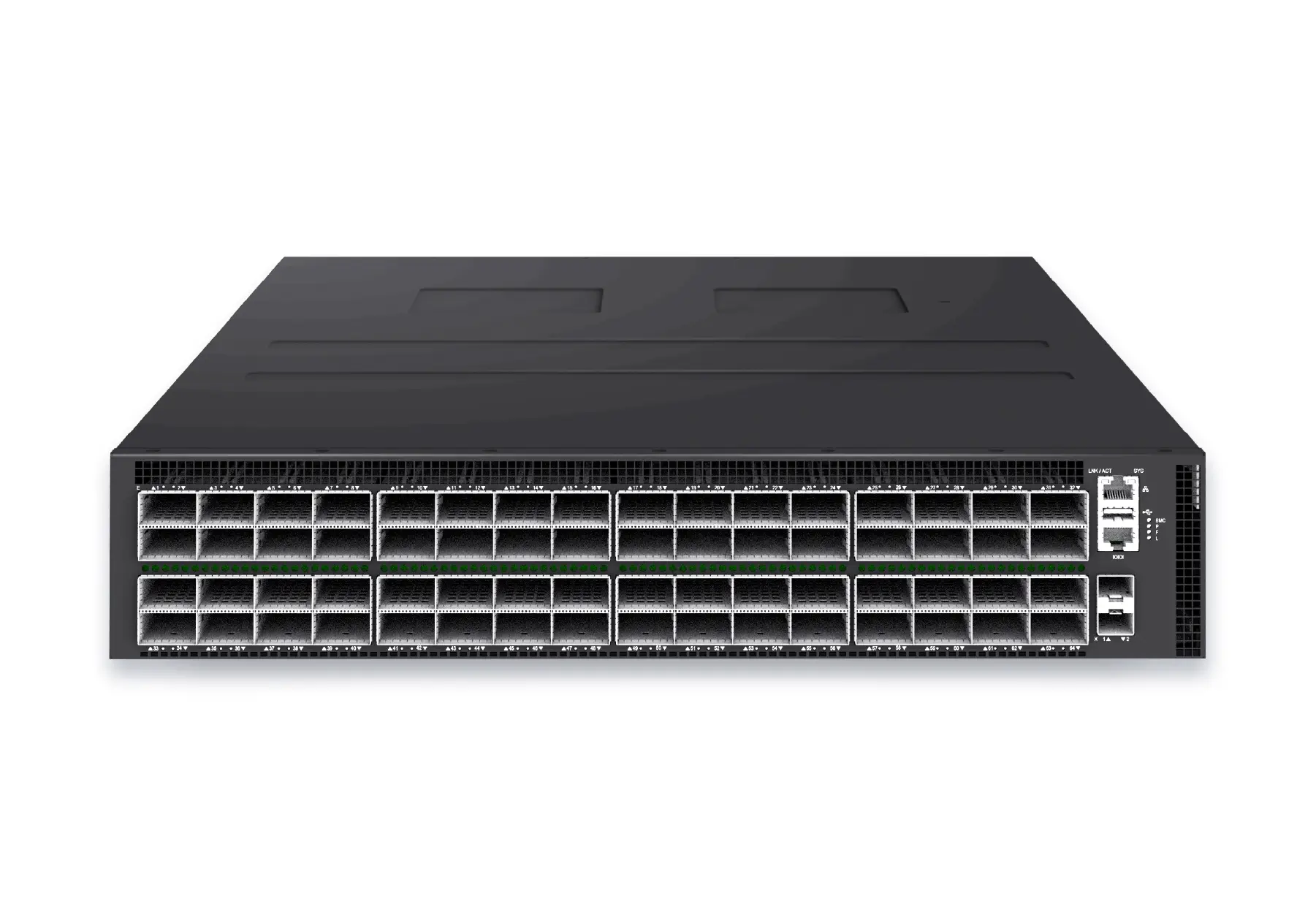 datacenter aiXS-DC-64X800-AI-G164-port 800G AI fabric switch for large-scale GPU clusters, HPC backbones, and ultra-high-throughput data center networks.View product
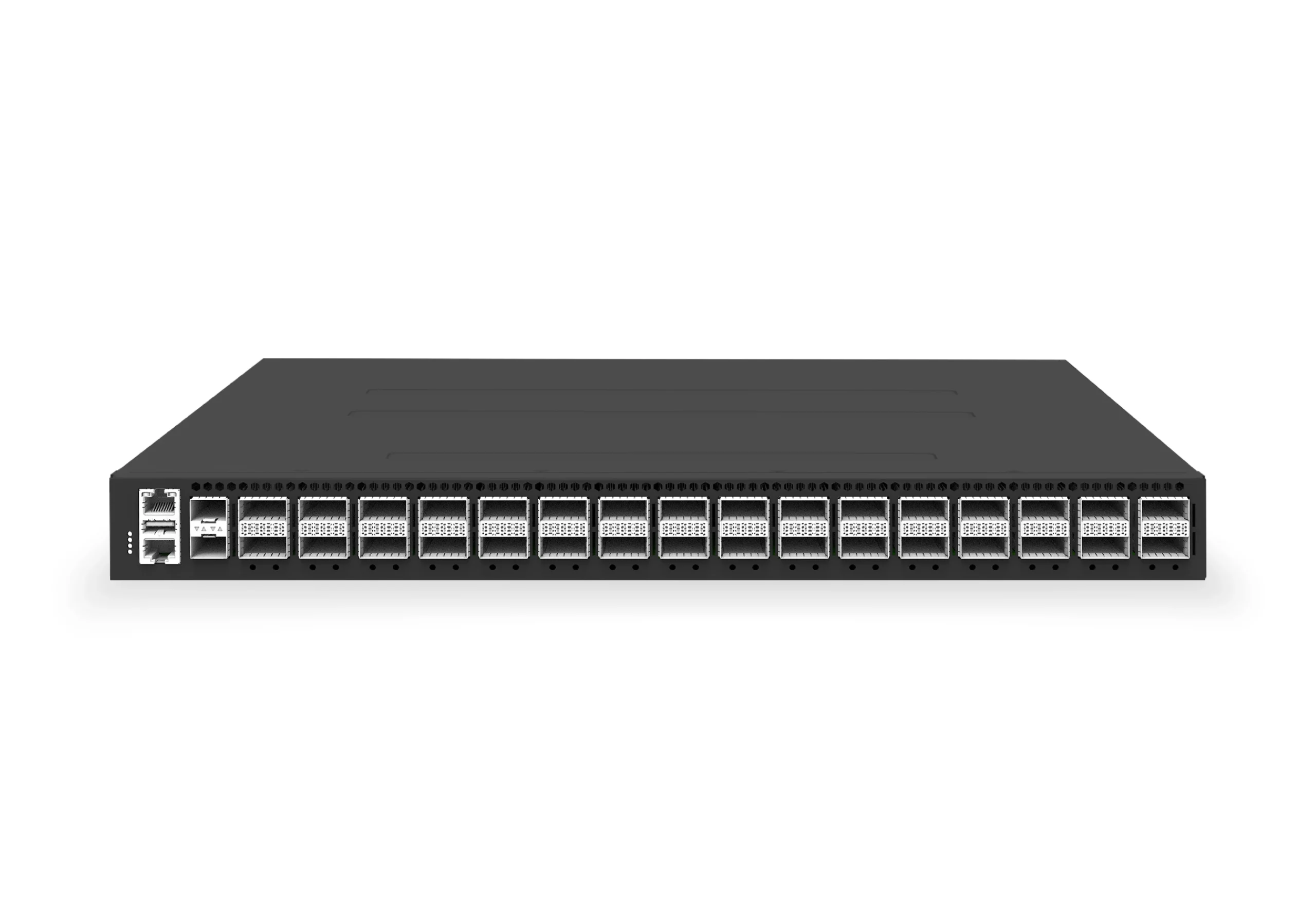 datacenter aiXS-DC-32X400-SP-G232-port 400G spine/core switch for high-capacity data center fabrics and AI-ready backbones.View product
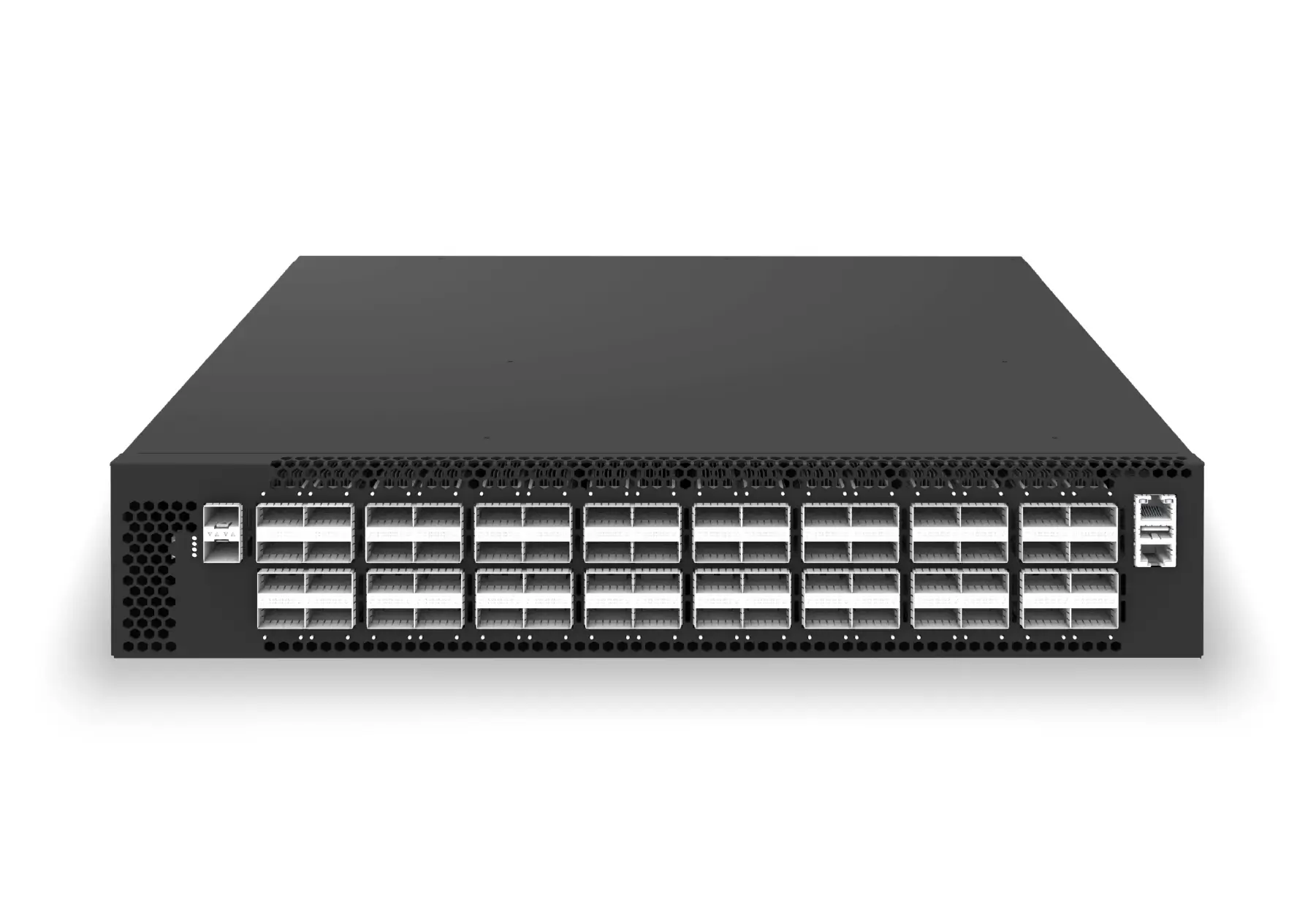 datacenter aiXS-DC-64X200-LS-G164-port 200G leaf/spine switch for high-bandwidth storage, compute, and scale-out data center fabrics.View product
Continue reading
Related articles
 Technical ArticleINT Telemetry and Path Visibility for AI Data Center Switches: An xSONiC Deployment PlaybookEngineering guidance on INT Telemetry and Path Visibility for AI Data Center Switches for Australian network operators, covering gNMI, NETCONF/YANG, OpenConfig.Read article
 Technical ArticleClosing the Packet Broker Visibility Gap: A Practical Analysis for Security and Observability TeamsA practical engineering analysis of where packet visibility gaps form, how packet brokers reduce them, and what Australian security teams should validate before deployment.Read article
 Technical ArticleNetwork Packet Broker Runbook for Australian Procurement LeadsA practical runbook for Australian teams evaluating packet brokers for traffic visibility, aggregation, filtering, tool load balancing, and compliance monitoring.Read article