In brief
Engineering guide for campus switching teams covering PoE, access design, MC-LAG/STP risk, telemetry, support, and pilot validation.
Key takeaways
- When your campus aggregation layer needs redundancy, two technologies dominate the conversation: Multi-Chassis Link Aggregation (MC-LAG) and Spanning Tree Protocol (STP).
- This article breaks down how MC-LAG and STP interact, where multi-vendor interoperability breaks down, and why Australian enterprise campus teams evaluating aggregation refresh projects should factor protocol behaviour into their vendor shortlist before committing to a multi-year stack.
- In a typical enterprise campus, access switches connect to a pair of aggregation or distribution switches for redundancy.
When your campus aggregation layer needs redundancy, two technologies dominate the conversation: Multi-Chassis Link Aggregation (MC-LAG) and Spanning Tree Protocol (STP). On paper, both provide path redundancy. In practice, combining them across different switch vendors at the distribution and aggregation tiers can create subtle, hard-to-diagnose failure modes.
This article breaks down how MC-LAG and STP interact, where multi-vendor interoperability breaks down, and why Australian enterprise campus teams evaluating aggregation refresh projects should factor protocol behaviour into their vendor shortlist before committing to a multi-year stack.
Why Campus Aggregation Designs Rely on Both MC-LAG and STP
In a typical enterprise campus, access switches connect to a pair of aggregation or distribution switches for redundancy. The aggregation pair must appear as a single logical device to downstream access switches. Two common approaches achieve this:
- MC-LAG (Multi-Chassis Link Aggregation): Two aggregation switches form a logical LAG across chassis, allowing access switches to bundle uplinks to both peers without STP blocking one path. Active-active forwarding keeps both uplinks operational.
- STP-based designs: STP elects a single root bridge and blocks redundant links to prevent loops. Only one uplink path forwards traffic at a time. Variants like RSTP (Rapid Spanning Tree) and MSTP (Multiple Spanning Tree) improve convergence but still rely on blocking.
Many campus designs use MC-LAG at the aggregation pair and STP as a safety net downstream or between aggregation and core layers. The assumption is that MC-LAG handles primary redundancy while STP catches edge cases.
The problem starts when the aggregation pair runs one vendor’s MC-LAG implementation and downstream or upstream devices run another vendor’s STP stack.
Where MC-LAG and STP Interoperability Breaks Down
Proprietary MC-LAG Control Plane Variations
MC-LAG is not a single IEEE standard. It is a category of implementations. Different vendors build MC-LAG using proprietary control-plane protocols between the two chassis peers. Common mechanisms include:
- ICCP (Inter-Chassis Control Protocol): Defined in RFC 7275, ICCP provides a standards-based framework for MC-LAG state synchronisation. However, vendor implementations vary in supported TLVs, failover timers, and LACP synchronisation behaviour.
- Proprietary peer-link protocols: Some vendors use custom keepalive and state-sync mechanisms that do not interoperate with other vendors’ MC-LAG peers at all.
- Virtual Chassis or stacking as a substitute: Some vendors replace MC-LAG with proprietary stacking, presenting two physical chassis as one logical switch. This eliminates MC-LAG interoperability concerns but introduces its own vendor lock-in.
When your aggregation pair uses one vendor’s MC-LAG and an adjacent switch runs a different vendor’s LACP or STP stack, the following issues can surface:
STP Version Mismatches at the Edge
Even if the aggregation pair handles MC-LAG correctly, the access layer may run a different STP variant. For example:
- Access switches running PVST+ (Cisco-proprietary per-VLAN STP) connected to aggregation switches running MSTP (IEEE standard).
- Edge devices with default STP timers that do not match the aggregation layer’s tuned RSTP hello and forward-delay settings.
These version mismatches can cause per-VLAN topology inconsistencies, delayed convergence, or in worst cases, temporary loops during failover events.
Design Patterns That Reduce Multi-Vendor MC-LAG and STP Risk
For campus network teams evaluating aggregation refresh options, the following design patterns reduce interoperability risk:
1. Standardise on IEEE Protocols Where Possible
Choose aggregation switches that support IEEE 802.1AX (LAG), 802.1D/802.1w/802.1s (STP/RSTP/MSTP), and use ICCP-based MC-LAG or documented LACP-based multi-chassis aggregation. Avoid aggregation platforms that require proprietary stacking cables or single-vendor control planes for redundancy.
2. Isolate MC-LAG and STP Domains
Design the network so that MC-LAG operates at the aggregation pair and STP operates at the access-to-aggregation boundary with clear root bridge placement. Do not rely on STP inside the MC-LAG domain. If STP must span across the aggregation pair, verify BPDU forwarding behaviour explicitly.
3. Validate Failover Behaviour Before Deployment
Lab-test the following failure scenarios with your specific vendor combination:
- MC-LAG peer-link failure (does the backup peer correctly quiesce its MLAG ports?)
- MC-LAG peer keepalive loss (is split-brain handled gracefully?)
- Single uplink failure from access switch to one MC-LAG peer (does traffic shift within sub-second convergence?)
- STP topology change notification propagation across the MC-LAG boundary
4. Consider Open Networking as a Vendor-Neutral Baseline
SONiC (Software for Open Networking in the Cloud) is an open-source network operating system that runs on switches from multiple hardware vendors and ASICs. SONiC is built on a container-based architecture where each network function runs in its own Docker container, providing fault isolation and modular upgradability.
For campus aggregation, SONiC-based platforms offer a path to standardise the NOS layer across aggregation and access switches regardless of the underlying hardware vendor. This reduces the risk of MC-LAG control-plane incompatibility because both peers run the same software stack on potentially different hardware.
SONiC has gained broad industry support from network chip vendors and is production-hardened in large-scale cloud environments, according to the SONiC Foundation. For enterprise campus teams, the key benefit is decoupling hardware procurement from software feature development — you can evaluate switches on port density, PoE budget, and price without being locked into a single vendor’s aggregation protocol.
Practical Checklist for Australian Campus Aggregation Refresh Projects
Australian enterprise campus networks face specific considerations during aggregation refresh:
- Multi-site consistency: Organisations with offices across Sydney, Melbourne, Brisbane, and regional sites need aggregation designs that work identically across locations. Standardising on an open NOS reduces per-site configuration drift.
- PoE and edge integration: If the aggregation refresh includes PoE access switches, ensure the chosen platform supports 802.3af/at/bt PoE standards and integrates with the aggregation layer’s VLAN and QoS policies. See the xSONiC PoE Campus Guide for edge integration guidance.
- Future-proofing for Wi-Fi 7: As Wi-Fi 7 access points roll out, aggregation uplinks must handle increased throughput. Plan aggregation port speeds of 10G/25G minimum per access switch uplink, with 40G/100G spine links between aggregation and core.
- Policy-based routing at aggregation: If your campus design uses PBR for traffic steering (e.g., directing guest traffic through a security appliance), verify that the MC-LAG implementation does not interfere with policy routing on the standby peer. See the xSONiC PBR Guide for design patterns.
MC-LAG vs. Virtual Chassis vs. STP-Only: Decision Framework
| Criterion | MC-LAG | Virtual Chassis / Stacking | STP-Only (RSTP/MSTP) |
|---|---|---|---|
| Active-active uplinks | Yes | Yes (single logical switch) | No (one path blocked) |
| Multi-vendor interoperability | Moderate (depends on ICCP/LACP alignment) | Low (proprietary) | High (IEEE standard) |
| Failover speed | Sub-second with LACP fast | Sub-second (stack failover) | 1-2 seconds typical with RSTP |
| Configuration complexity | Medium (peer-link, keepalive, LACP config) | Low (single management plane) | Low (root bridge tuning) |
| Vendor lock-in risk | Medium | High | Low |
| Suitable for campus aggregation pair | Yes (recommended) | Common but locks hardware | Acceptable for small campuses |
For campus aggregation, MC-LAG provides the best balance of active-active forwarding and multi-vendor flexibility. However, the interoperability advantages only hold if both MC-LAG peers run a compatible implementation.
How Open Networking Changes the MC-LAG Interoperability Equation
When both aggregation peers run the same open-source NOS, such as SONiC, the MC-LAG interoperability problem shifts from a vendor mismatch problem to a configuration and version management problem. This is a fundamentally easier problem to solve because:
- Both peers share the same MC-LAG codebase, eliminating control-plane incompatibility.
- LACP parameters, STP bridge priorities, and BPDU forwarding behaviour are configured through a consistent interface.
- NOS upgrades apply to both peers simultaneously (or in a controlled rolling fashion), reducing version skew risk.
- Community-driven development means bug fixes and interoperability improvements benefit all hardware platforms running SONiC.
The SONiC architecture, which uses standard Linux interfaces and Docker containers for modular network functions, supports modern network programming paradigms. For campus teams, this means automation tools (Ansible, NETCONF/YANG, gNMI) work consistently across the aggregation layer regardless of the switch hardware underneath.
Next Steps
If your campus aggregation refresh is evaluating MC-LAG and STP designs, start with these actions:
- Document your current MC-LAG and STP configuration across all aggregation pairs, including vendor-specific parameters.
- Lab-test your proposed vendor combination using the failure scenarios listed above.
- Evaluate SONiC-compatible aggregation switches as a vendor-neutral baseline for your shortlist. Visit the xSONiC Access and Aggregation product page for campus switching options.
- Review the xSONiC MC-LAG and STP Solution Guide for detailed design templates.
- Contact the xSONiC team to discuss your campus aggregation requirements and available hardware options for the Australian market.
MC-LAG and STP interoperability is a solvable problem, but only if you evaluate it before procurement, not after deployment. Open networking gives you the tools to solve it on your terms.
Engineering FAQ
What should be tested before moving campus switching to SONiC or open networking? Test PoE behaviour, NAC integration, VLAN and policy design, STP or MC-LAG interaction, multicast, monitoring, upgrade rollback, and help-desk workflows. Campus readiness is an operations test, not only a forwarding test.
Where do campus refresh projects usually carry hidden risk? The risk often sits in closets: power budget, old cabling, undocumented uplinks, mixed endpoint types, voice devices, cameras, badge systems, and change windows. Those details should be inventoried before selecting switch models.
How should Australian campus teams structure a pilot? Choose one representative site or building, document endpoint classes, run PoE and failover tests, verify monitoring, train operations staff, and define rollback steps before expanding to the broader estate.
Related xSONiC Resources
Sources Reviewed
- IEEE 802.1Q Bridges and Bridged Networks
- IEEE 802.1AX Link Aggregation
- Ethernet Network Adapters - ConnectX NICs | NVIDIA
- NVIDIA BlueField Data Processing Unit
- NVIDIA Spectrum-X Ethernet Platform
- OpenConfig gNMI Specification
- OpenConfig
- RFC 7950 - The YANG 1.1 Data Modeling Language
- RFC 6241 - Network Configuration Protocol (NETCONF)
- ACSC Essential Eight
- OAIC Notifiable Data Breaches
- APRA CPS 234 Information Security
- NETSCOUT Network Packet Definition
- Cloudflare Network Packet Definition
- IEEE 802.11be Wireless LAN Standard
- IEEE 802.3bt Power over Ethernet
- SONiC Project Documentation
- Broadcom Ethernet Switching
- Marvell Switching
- NVIDIA Ethernet Switching
- Open Compute Networking
- SONiC GitHub
- SONiC Foundation
Product fit
Products referenced for evaluation
These products are referenced for evaluation context in the article. Confirm workload, port, optics, software, interoperability, and support requirements against the exact deployment before procurement.
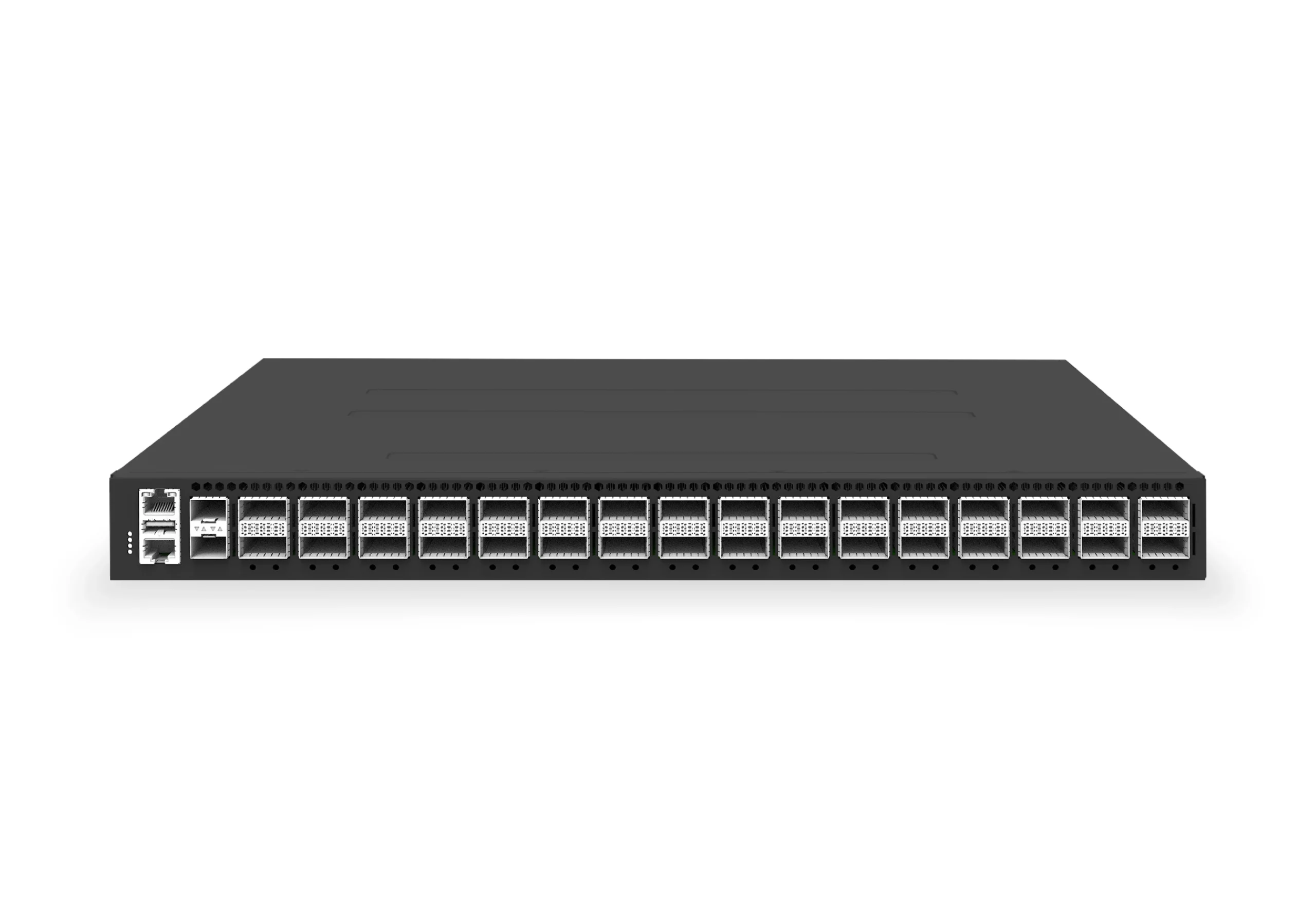 datacenter aiXS-DC-32X400-SP-G232-port 400G spine/core switch for high-capacity data center fabrics and AI-ready backbones.View product
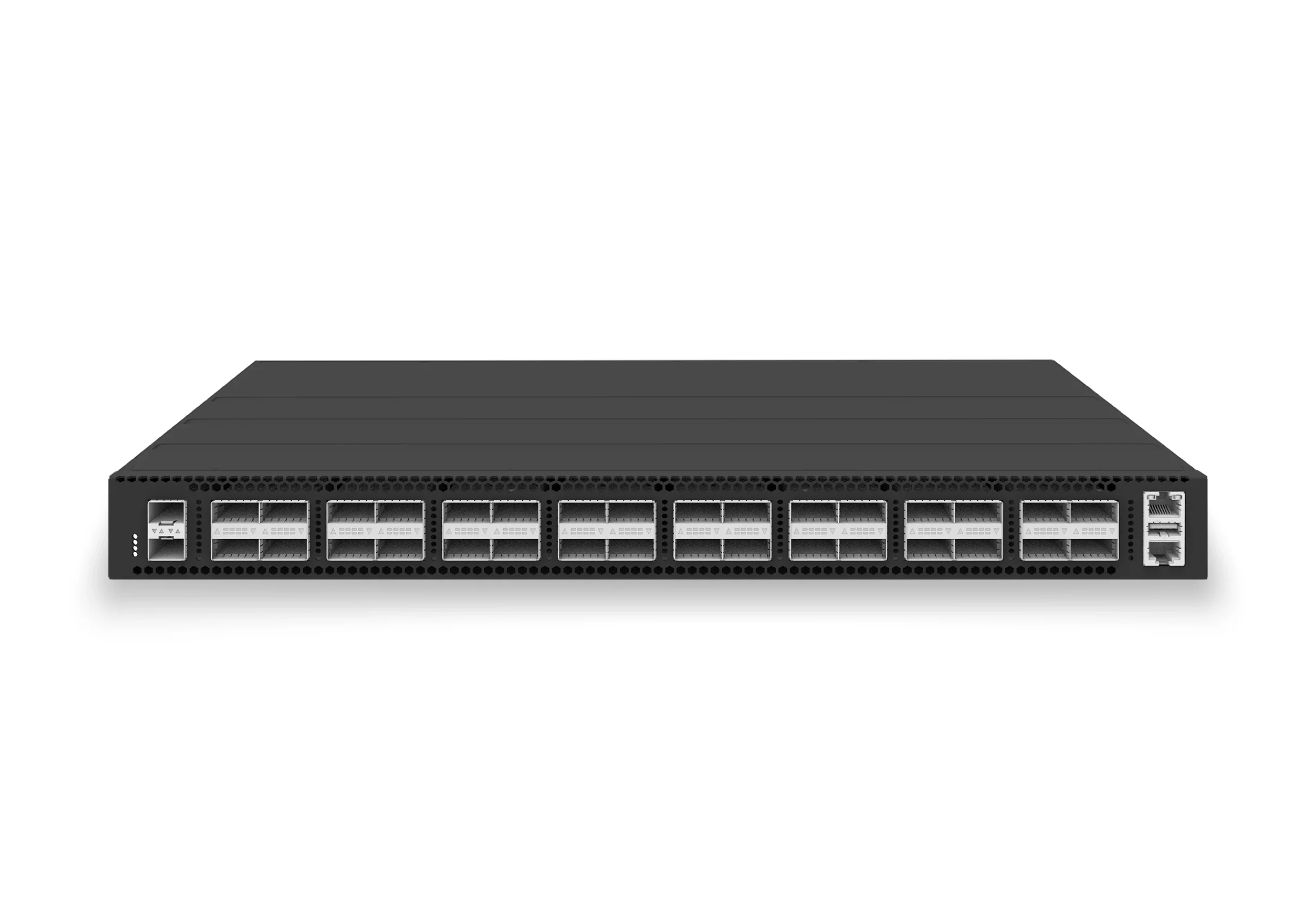 datacenter aiXS-DC-32X100-LS-G232-port 100G leaf/spine switch for VXLAN fabrics, RoCE-ready workloads, and tenant-scale routing.View product
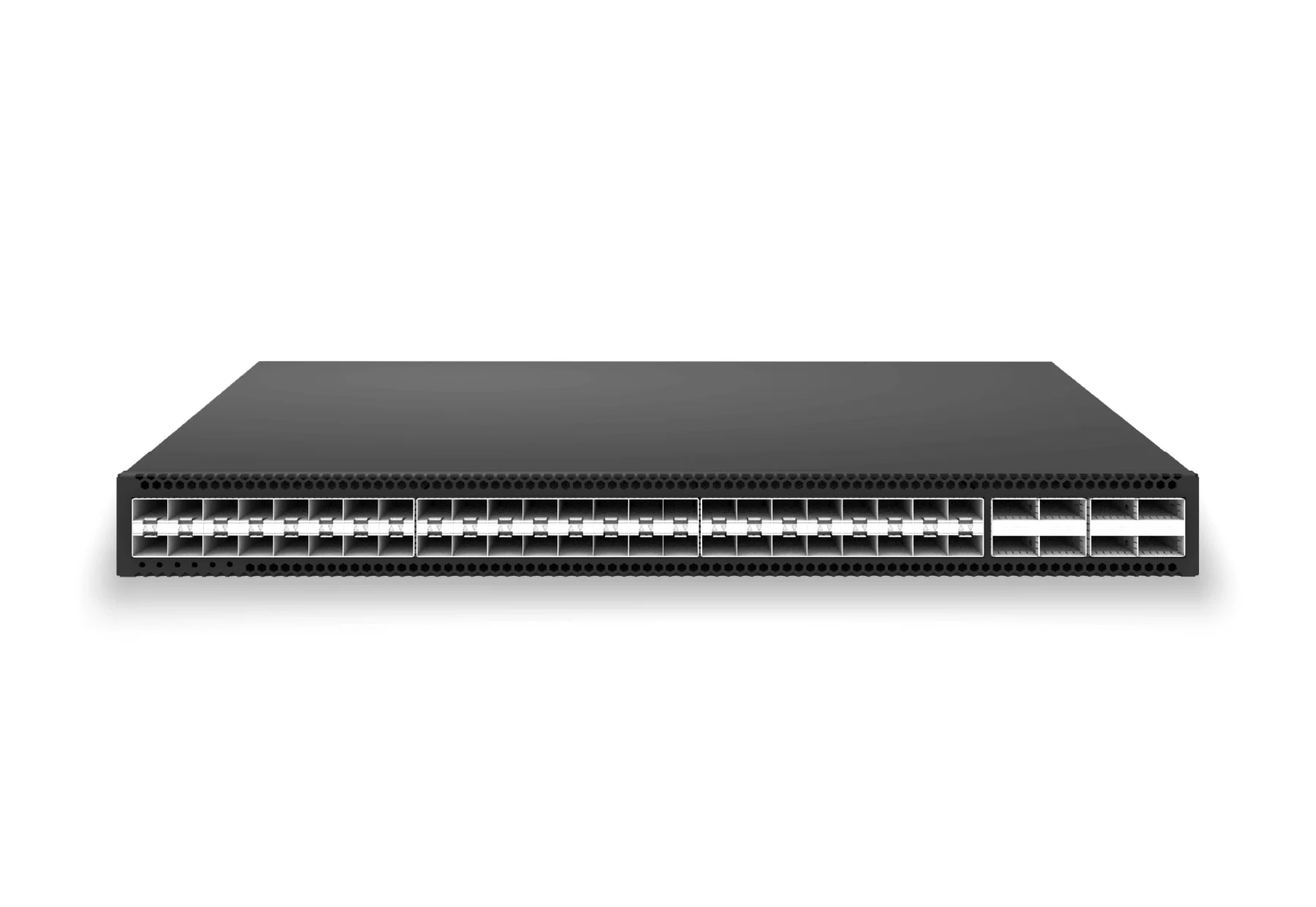 access aggregateXS-AA-48X25-8X100-AGG48x 25G SFP28 aggregation/core switch with 8x 100G QSFP28 for enterprise access and aggregation networks.View product
Continue reading
Related articles
 Technical ArticleWhy Enterprise SONiC Is Gaining Ground in Campus Access and Aggregation: An Australian PerspectiveEngineering guide for campus switching teams covering PoE, access design, MC-LAG/STP risk, telemetry, support, and pilot validation.Read article
 Technical ArticleCampus Access and Aggregation Refresh with Enterprise SONiCEngineering guide for campus switching teams covering PoE, access design, MC-LAG/STP risk, telemetry, support, and pilot validation.Read article
 Technical ArticlePoE Campus Planning Checklist for Enterprise SONiC Access SwitchesEngineering guidance on PoE Campus Planning Checklist for Enterprise SONiC Access Switches for Australian campus networks, covering RF planning, security controls.Read article