In brief
A CIO and network architect guide to breaking data center switch lock-in with SONiC, covering lock-in audit, open networking pilots, optics, support, and migration.
Key takeaways
- Every data center refresh cycle forces the same uncomfortable conversation.
- For Australian enterprises running hybrid clouds, AI inference clusters, or multi-site campus-to-DC fabrics, this lock-in problem is not theoretical.
- This article breaks down what data center switch lock-in actually costs, how SONiC-based open networking changes the equation, and what a practical evaluation and migration path looks like for CIOs and network architects working in Australian enterprise and service provider environments.
The hidden cost of switch lock-in
Every data center refresh cycle forces the same uncomfortable conversation. Your current switch vendor offers a roadmap that looks compelling, but the migration path always ends at the same place: their hardware, their NOS, their optics, their support contract, their pricing. Switching costs compound over time. License renewals stack. Feature access often depends on hardware generations you did not choose.
For Australian enterprises running hybrid clouds, AI inference clusters, or multi-site campus-to-DC fabrics, this lock-in problem is not theoretical. It shapes every procurement decision, every capacity expansion, and every conversation about long-term infrastructure strategy.
This article breaks down what data center switch lock-in actually costs, how SONiC-based open networking changes the equation, and what a practical evaluation and migration path looks like for CIOs and network architects working in Australian enterprise and service provider environments.
What lock-in looks like in practice
Vendor lock-in in data center switching is not just about premium pricing on hardware. It is a system of dependencies that compounds over refresh cycles:
- Proprietary NOS licensing: Network operating systems tied to a single vendor’s hardware platform, with features gated behind license tiers. Adding telemetry or automation capabilities can trigger unexpected costs.
- Optics and transceiver restrictions: Vendor-coded optics that force you to buy approved modules at a significant markup, even when identical-spec third-party optics exist.
- Management and telemetry silos: Vendor-specific controllers and dashboards that do not integrate cleanly with multi-vendor environments or open-source automation stacks like Ansible, Terraform, or NAPALM.
- Upgrade timing dependence: When your vendor decides to EOL a platform, your refresh timeline is dictated by their product cycle, not your business needs.
- Skill lock-in: Network teams trained exclusively on one CLI, one operating system, one debugging workflow become a human capital dependency on that vendor.
For Australian organizations, there is an additional dimension: supply chain and support geography. When a global vendor’s APAC support centre is the only escalation path, response times and parts availability can lag behind what a diversified, multi-vendor approach offers.
How SONiC changes the lock-in equation
Software for Open Networking in the Cloud (SONiC) is a free, open-source network operating system built on Linux that runs on switches from multiple vendors and multiple ASIC families. Originally developed and production-hardened in hyperscaler data centres, SONiC has matured into a community-supported NOS under the Linux Foundation with broad ecosystem backing.
The core architectural value proposition is straightforward: SONiC decouples the network operating system from the switching hardware. This means:
- Hardware portability: You choose switches based on port density, ASIC capability, power profile, and price — not based on which NOS is bundled. SONiC runs on hardware from multiple vendors using the Switch Abstraction Interface (SAI).
- Container-based modularity: SONiC breaks monolithic switch software into containerised components. You can upgrade, debug, or replace individual services (BGP, LLDP, telemetry, DHCP relay) without touching the entire stack.
- Standard Linux tooling: SONiC exposes standard Linux interfaces. Your existing Linux skills, shell scripts, monitoring agents, and automation frameworks work at the switch level.
- Programmability: SONiC supports modern network programming paradigms and standard APIs, making it suitable for infrastructure-as-code workflows.
- Multi-vendor ASIC support: SONiC runs on switches using silicon from multiple chip vendors, not just one. This is a direct counter to the single-vendor ASIC lock-in that characterises many proprietary platforms.
For network architects evaluating AI fabric builds, spine-leaf DC fabrics, or campus aggregation refreshes, SONiC provides a path where the NOS is a community asset, not a vendor moat.
A practical evaluation framework for Australian enterprises
Moving from a proprietary switch stack to SONiC-based open networking requires structured evaluation. Here is a framework that reflects how Australian CIOs and network architects can approach the decision.
1. Audit your current lock-in surface
Map every dependency on your current vendor:
- Hardware platforms and EOL timelines
- NOS license costs and feature gates
- Optics and transceiver vendor coding requirements
- Management platform integrations and API dependencies
- Staff training and certification investments
- Support SLA terms and geographic coverage
This audit creates your baseline. It also reveals which lock-in points are most costly and which are easiest to break.
2. Define workload requirements, not brand requirements
Separate what your network needs to do from which vendor you buy it from:
- What port speeds and densities do your compute, storage, and AI workloads require?
- What latency and jitter targets matter for your RoCE or RDMA traffic?
- What telemetry and visibility do your operations and security teams need?
- What automation interfaces (NETCONF/YANG, gNMI, REST, CLI) does your toolchain require?
- What EVPN-VXLAN or other overlay fabric architecture are you standardising on?
When you define requirements in workload terms rather than vendor terms, you create space to evaluate open networking alternatives on merit.
3. Evaluate SONiC on your actual use cases
SONiC is not a universal answer for every network role. It excels in:
- Data centre spine-leaf fabrics running BGP EVPN
- AI and ML cluster backends requiring low-latency, lossless Ethernet with RoCE v2 support
- Cloud-scale leaf switching where containerised NOS modularity is an operational advantage
- Environments where multi-vendor hardware procurement and competitive bidding reduce capex
For campus access layers, packet broker roles, and optical transport, the evaluation should look at complementary xSONiC product families that extend the open networking model beyond the DC core.
4. Plan the migration in stages
A rip-and-replace approach to de-lock-in is high risk. A staged migration works better:
- Stage 1 — Greenfield build: Deploy SONiC on a new DC fabric, AI cluster, or DR site. Prove operational viability in a controlled environment.
- Stage 2 — Brownfield bridge: Introduce SONiC switches into an existing fabric alongside your current vendor. Use EVPN-VXLAN or other standard overlays to create a unified control plane across both environments.
- Stage 3 — Phased replacement: As current vendor hardware reaches EOL or license renewal, replace with SONiC-based alternatives. Prioritise the highest-cost, highest-lock-in segments first.
- Stage 4 — Full fabric standardisation: Standardise on SONiC as the DC NOS, with a multi-vendor hardware procurement strategy for switches, optics, and accessories.
5. Invest in operations, not just hardware
The biggest migration risk is not hardware compatibility. It is operational readiness. Plan for:
- SONiC-specific training for your network operations team
- Integration testing with your existing monitoring, alerting, and ticketing platforms
- Validation of your automation playbooks against SONiC’s configuration model (config_db.json, sonic-cli, REST/gNMI)
- Support model design: community support, third-party SONiC support contracts, or vendor-backed enterprise SONiC distributions
Where xSONiC fits in the open networking stack
xSONiC is an open networking infrastructure brand built for exactly this migration path. The product families map to the roles where SONiC-based or open networking delivers the most value:
- Data centre AI switches: Spine-leaf and AI fabric switches designed for Enterprise SONiC deployment, supporting 100G, 400G, and 800G port speeds for low-latency RDMA workloads.
- Bare-metal switches: Open switching hardware evaluated for custom NOS deployments, white-box evaluation, and engineering-led network programs — the hardware foundation for a de-lock-in strategy.
- Optical transceivers: SFP, SFP+, SFP28, QSFP28, QSFP-DD, and OSFP modules that break the optics lock-in of vendor-coded transceivers.
- Packet brokers: Network visibility appliances for traffic aggregation, filtering, and replication — critical for maintaining observability during multi-vendor migration phases.
For AI fabric and GPU backend fabric use cases, xSONiC’s solution pages on AI Fabric, GPU Backend Fabric, and EVPN-VXLAN provide architecture-level guidance for designing SONiC-based fabrics that handle RDMA, lossless Ethernet, and overlay networking.
The xSONiC AIDC Controller addresses the management and automation layer, providing a centralised control plane for SONiC-based switches that replaces vendor-specific controller lock-in.
What to watch out for
Open networking is not a risk-free proposition. Honest evaluation requires acknowledging the gaps:
- Feature parity: Not every SONiC release matches every proprietary NOS feature. Evaluate against your specific feature requirements, not marketing feature lists.
- Support maturity: Community SONiC support differs from enterprise-grade commercial support. Understand what support model your organisation needs.
- Ecosystem compatibility: Some network services (firewall integration, load balancer APIs, SD-WAN overlay compatibility) may require integration work that proprietary vendors bundle.
- Training investment: SONiC operations are Linux-centric. If your team’s skills are proprietary-CLI-centric, plan for an enablement ramp.
The strategic case for breaking lock-in now
The timing argument for de-lock-in is strong. AI infrastructure buildout is accelerating. Data centre refresh cycles are compressing. Optics and switch ASICs are becoming more commoditised. And the SONiC ecosystem is mature enough for production enterprise deployment, not just hyperscaler labs.
For Australian CIOs, the question is not whether open networking works. It is whether you can afford another three-to-five-year lock-in cycle when the alternative is a multi-vendor, SONiC-based stack that gives your architecture team real procurement leverage.
The first step is an honest lock-in audit. The second is a greenfield SONiC proof of concept. xSONiC provides the product and solution foundation for both.
Lock-In Audit and Migration Matrix
| Lock-In Area | Current-State Evidence | SONiC / Open Networking Evidence | Decision Test |
|---|---|---|---|
| NOS and licensing | Feature licences, support tiers, renewal dates, EoL exposure | SONiC image, support contract, release cadence, rollback path | Compare 36-month and 60-month lifecycle cost |
| Hardware dependency | Switch SKUs, ASIC family, optics restrictions, spare strategy | Multi-vendor switch options, SAI support, ONIE recovery, optics policy | Prove at least 2 viable sourcing paths for critical roles |
| Operations tooling | Controller dependency, CLI workflows, telemetry export limits | Linux tooling, NETCONF/YANG, gNMI/OpenConfig, config backup | Push, diff, restore, monitor, and rollback a golden config |
| AI fabric readiness | Proprietary RoCE/telemetry features, upgrade constraints | RoCE v2, PFC, ECN, DCBX, telemetry on proposed SONiC image | Run 24-48 hours of traffic with counters and failure injection |
| Support boundary | Vendor TAC, partner path, APAC response, RMA | xSONiC or supplier support across hardware, NOS, optics, controller | Open a pilot support ticket and verify ownership |
This matrix makes the lock-in conversation concrete. It turns “we want more freedom” into measured procurement options, migration risk, and operating evidence.
Engineering FAQ
What is the first practical step in breaking switch lock-in? Audit the current dependency surface: NOS licences, optics policy, controller lock-in, support renewal dates, EoL timelines, automation limits, and skills dependency. Without that baseline, open networking cannot be evaluated honestly.
Does SONiC remove all vendor dependency? No. SONiC reduces NOS and hardware coupling, but buyers still choose switch suppliers, ASICs, optics, support contracts, and operations tooling. The benefit is optionality, not magic independence.
Where should Australian teams pilot first? Start with a greenfield AI fabric, DR site, lab spine-leaf, or bounded aggregation block. Avoid starting with the most politically sensitive production core until image, telemetry, rollback, and support are proven.
Where does xSONiC fit in a de-lock-in strategy? xSONiC provides SONiC-aligned switching, optics, packet broker, and AI fabric guidance. The buyer should validate the stack through a pilot before using it as a broad incumbent replacement.
Related xSONiC Resources
Sources Reviewed
- Ethernet Network Adapters - ConnectX NICs | NVIDIA
- NVIDIA BlueField Data Processing Unit
- NVIDIA Spectrum-X Ethernet Platform
- OpenConfig gNMI Specification
- OpenConfig
- RFC 7950 - The YANG 1.1 Data Modeling Language
- RFC 6241 - Network Configuration Protocol (NETCONF)
- ACSC Essential Eight
- OAIC Notifiable Data Breaches
- APRA CPS 234 Information Security
- NETSCOUT Network Packet Definition
- Cloudflare Network Packet Definition
- SONiC Project Documentation
- Broadcom Ethernet Switching
- Marvell Switching
- NVIDIA Ethernet Switching
- Open Compute Networking
- SONiC GitHub
- SONiC Foundation
Product fit
Products referenced for evaluation
These products are referenced for evaluation context in the article. Confirm workload, port, optics, software, interoperability, and support requirements against the exact deployment before procurement.
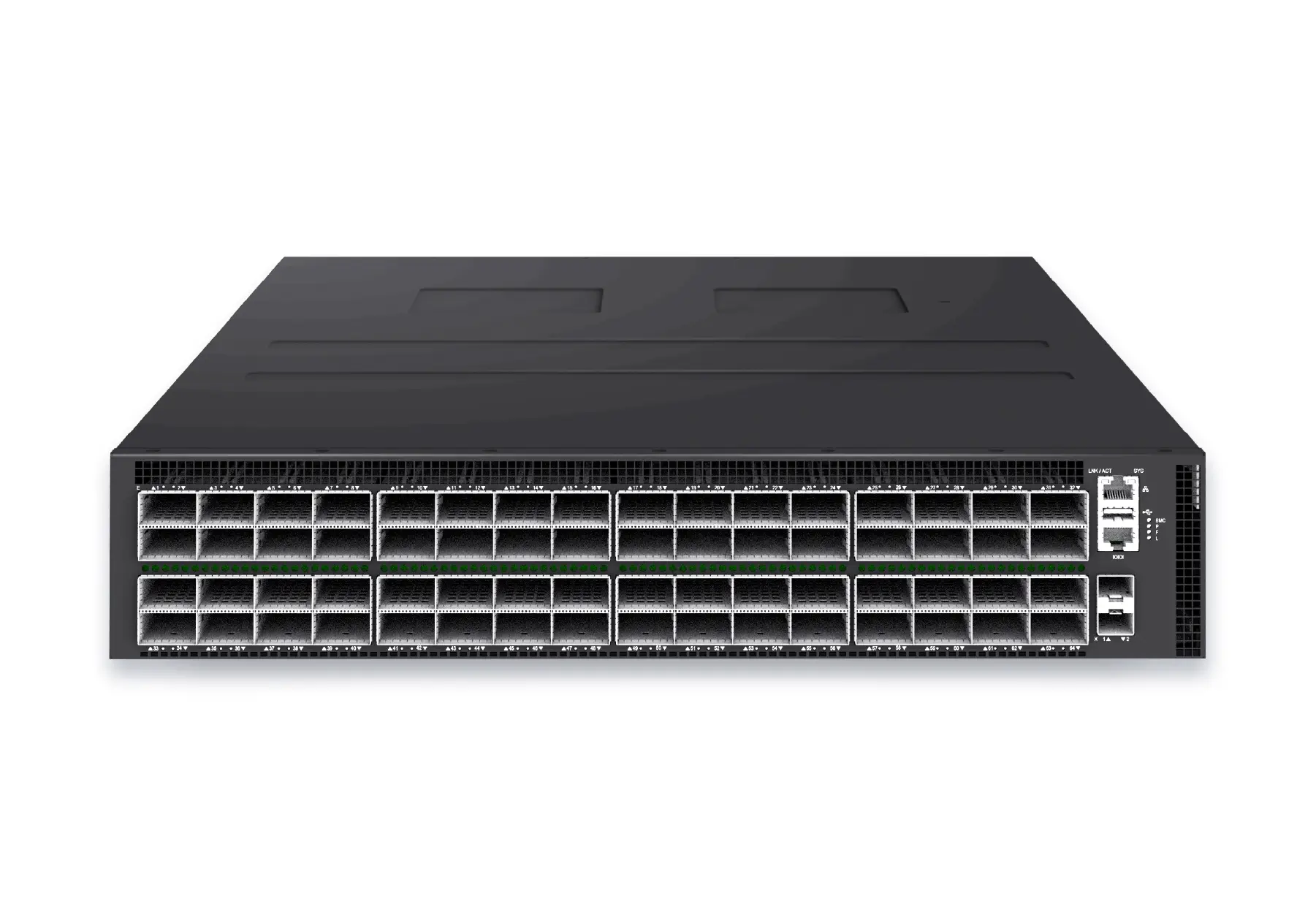 datacenter aiXS-DC-64X800-AI-G164-port 800G AI fabric switch for large-scale GPU clusters, HPC backbones, and ultra-high-throughput data center networks.View product
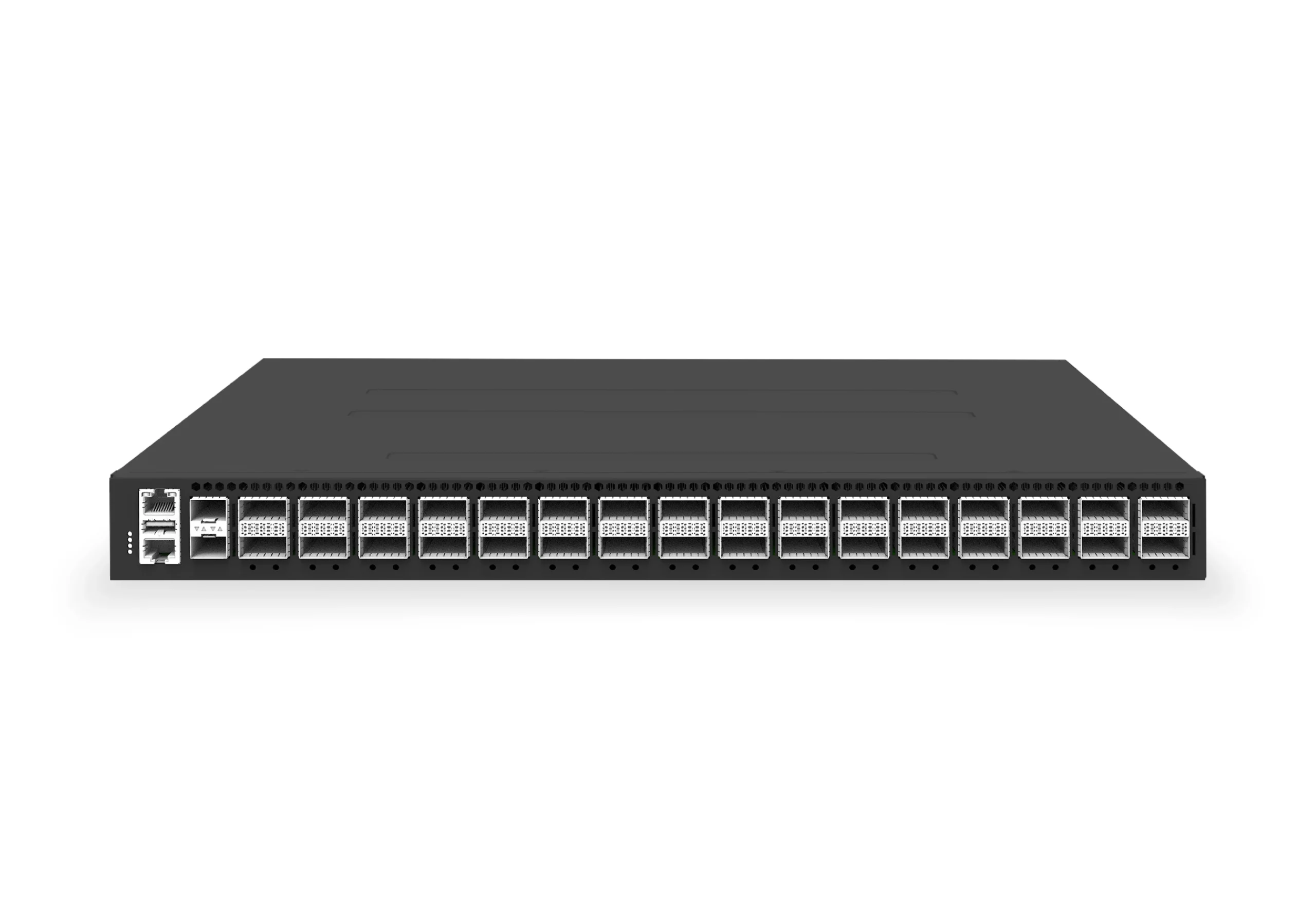 datacenter aiXS-DC-32X400-SP-G232-port 400G spine/core switch for high-capacity data center fabrics and AI-ready backbones.View product
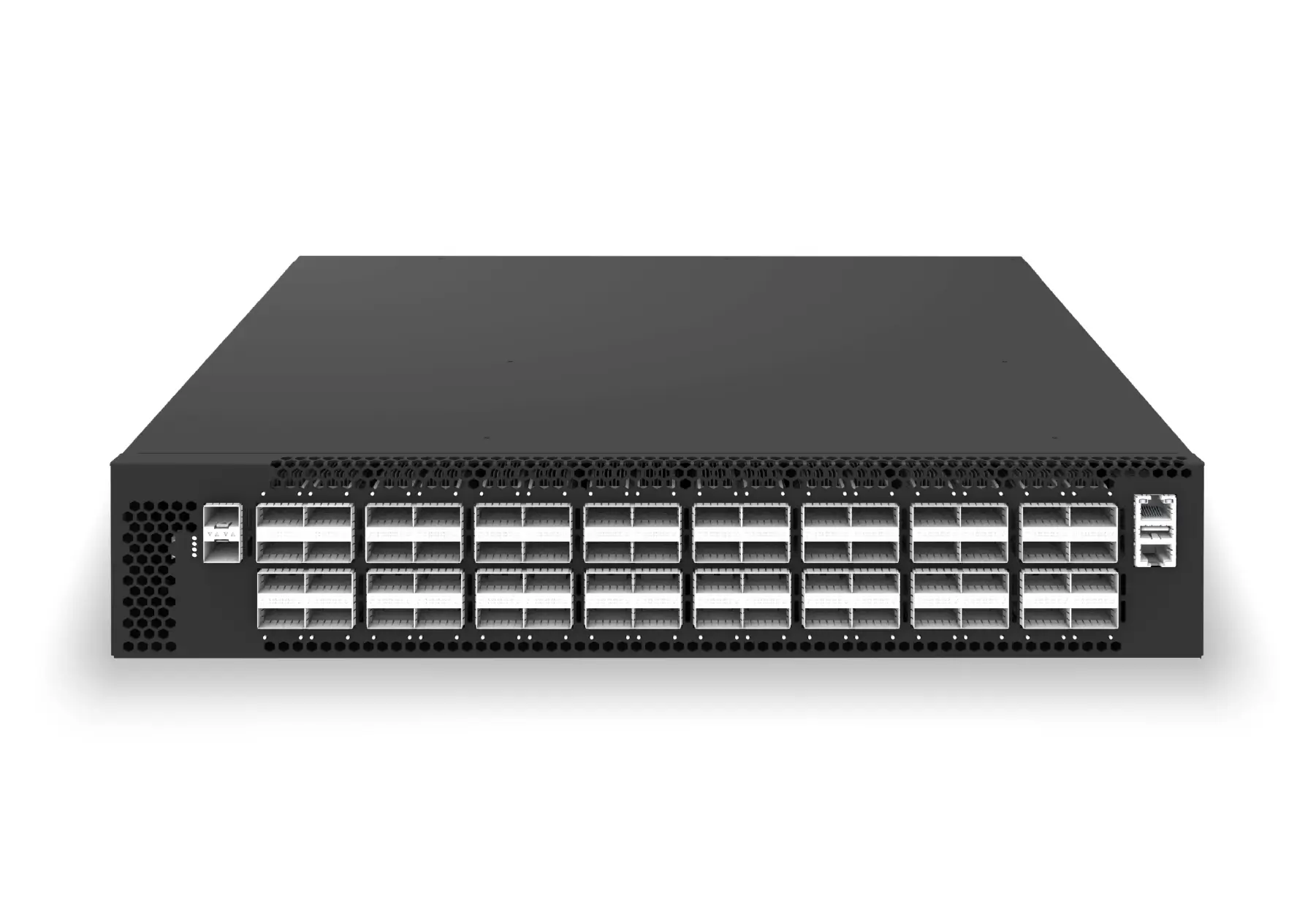 datacenter aiXS-DC-64X200-LS-G164-port 200G leaf/spine switch for high-bandwidth storage, compute, and scale-out data center fabrics.View product
Continue reading
Related articles
 Technical ArticleOpen Networking Support for Enterprise Buyers: How SONiC and Open NOS Models Actually WorkEngineering guidance on Open Networking Support for Enterprise Buyers for Australian campus teams, covering PoE budgets, access-layer resilience, migration risk.Read article
 Technical ArticleFrom Proprietary Lock-In to Open Networking: A Practical Enterprise SONiC Migration PlaybookA practical Enterprise SONiC migration playbook for Australian buyers moving from proprietary switch OS to open networking.Read article
 Technical ArticleWhy Centralized AI Fabric Management Is the Missing Layer in Open NetworkingEngineering guidance on Centralized AI Fabric Management Is the Missing Layer in Open Networking for Australian network teams, covering underlay design, EVPN-VXLAN.Read article