
In brief
A practical review of EVPN-VXLAN operations on SONiC switches for Australian data center teams evaluating open networking.
Key takeaways
- EVPN-VXLAN has become the default overlay fabric architecture for enterprises that need scalable Layer 2 extension over Layer 3 underlays.
- The question is no longer whether SONiC can run EVPN-VXLAN. It can.
- SONiC is an open-source network operating system built on Linux, maintained under the Linux Foundation through the SONiC Foundation.
Why EVPN-VXLAN Configuration on SONiC Matters Now
EVPN-VXLAN has become the default overlay fabric architecture for enterprises that need scalable Layer 2 extension over Layer 3 underlays. For years, this was proprietary territory — Cisco NX-OS, Juniper Junos, and Arista EOS dominated EVPN-VXLAN deployment guides. But SONiC (Software for Open Networking in the Cloud) has matured from its hyperscaler origins into a platform that Australian enterprise buyers are now evaluating seriously.
The question is no longer whether SONiC can run EVPN-VXLAN. It can. The question is how the configuration and operational experience compares to incumbent NOS stacks, and what that means for teams planning a fabric refresh, an AI cluster build, or a campus-to-data-center overlay migration.
What SONiC Provides Today
SONiC is an open-source network operating system built on Linux, maintained under the Linux Foundation through the SONiC Foundation. According to the SONiC Foundation, it runs on switches from multiple vendors and ASICs, offers a full suite of network functionality including BGP and RDMA, and has been production-hardened in the data centers of the largest cloud service providers.
The SONiC GitHub repository confirms the architecture: modular Docker containers for each network function, JSON-based configuration files, standard Linux interfaces and tools, and support for both CLI and programmatic configuration methods.
For EVPN-VXLAN specifically, SONiC supports:
- BGP EVPN as the control plane for MAC/IP route learning and VTEP discovery
- VXLAN tunnel endpoint (VTEP) termination on switches running SONiC
- Layer 2 and Layer 3 VNI mapping for bridged and routed overlays
- Asymmetric and symmetric routing modes for inter-VLAN communication
- Static and BGP-based underlay configurations
NVIDIA’s Ethernet switching portfolio lists Pure SONiC as a supported NOS option alongside Cumulus Linux for Spectrum-2, Spectrum-3, Spectrum-4, and the new Spectrum-6 switches. This means SONiC EVPN-VXLAN is not limited to white-box hardware; it runs on purpose-built ASIC platforms with port speeds up to 800 Gb/s.
Configuration Operations: Where It Works and Where It Gaps
What Works Well
BGP EVPN control plane. SONiC uses FRRouting (FRR) as its BGP stack, which is the same routing engine used by Cumulus Linux and several other open NOS distributions. FRR has mature EVPN support, including Type-2 (MAC/IP), Type-3 (Inclusive Multicast Ethernet Tag), and Type-5 (IP Prefix) route types. For teams already comfortable with FRR or similar routing stacks, the BGP EVPN configuration in SONiC is approachable.
JSON-based configuration model. SONiC’s config_db.json format stores EVPN-VXLAN parameters in structured, version-controllable files. This aligns with infrastructure-as-code practices and makes configuration templating straightforward for automation tools like Ansible, Salt, or custom Python scripts.
Multi-vendor hardware support. Because SONiC uses the Switch Abstraction Interface (SAI), the same EVPN-VXLAN configuration can theoretically apply across switches from different ASIC vendors. For Australian buyers evaluating multiple hardware options, this reduces vendor lock-in risk at the NOS layer.
Where Gaps Remain
Day-2 operational tooling. SONiC’s show and debug commands for EVPN-VXLAN are functional but less polished than what enterprise NOS platforms provide. Troubleshooting VTEP-to-VTEP reachability, MAC mobility events, or ARP suppression state requires more manual CLI work than Arista CloudVision or Cisco Nexus Dashboard workflows.
GUI and controller integration. Enterprise buyers accustomed to fabric controller dashboards — Arista CloudVision, Cisco DCNM/NDFC, or Juniper Apstra — will find SONiC’s native management interface limited. The AIDC Controller is one path xSONiC buyers should evaluate for closing this gap in Australian deployments.
Feature parity for advanced use cases. While basic EVPN-VXLAN works, advanced features like EVPN multi-site, EVPN-MPLS interworking, MAC-VRF with per-VRF routing, and controlled VXLAN-to-VXLAN stitching are at varying levels of maturity in the SONiC community. Teams planning complex multi-site or hybrid cloud overlays should verify feature support against their specific SONiC version and hardware platform.
Documentation density. The SONiC Wiki and community documentation cover EVPN-VXLAN configuration, but it is not as structured or scenario-driven as vendor-specific deployment guides. For Australian network engineers evaluating open networking for the first time, this documentation gap can extend proof-of-concept timelines.
What This Means for Australian Buyers
AI Fabric and Data Center Refresh
Australian enterprises building AI clusters or refreshing data center fabrics are the primary buyers evaluating SONiC EVPN-VXLAN. The combination of data center AI switches running SONiC with EVPN-VXLAN overlays and BGP EVPN underlays offers a credible alternative to proprietary fabric stacks — but only if the operations team has Linux and FRR experience, or is willing to invest in tooling to bridge the management gap.
For GPU backend fabrics using RoCE v2, EVPN-VXLAN on SONiC provides the overlay foundation, but the real operational complexity sits in DCBX, PFC, and ECN configuration. SONiC supports these, but the configuration surface is fragmented across config_db, FRR, and SAI-level parameters.
Campus-to-DC Overlay Migration
For Australian campus networks considering EVPN-VXLAN as a unified overlay from campus access to data center core, SONiC on access and aggregation switches is a newer proposition. Campus-focused features like PoE management, MC-LAG, STP integration, and policy-based routing interact with EVPN-VXLAN in ways that require careful validation on SONiC. This is a migration trigger that deserves its own deep-dive analysis.
Vendor Lock-In Calculus
The strongest editorial case for SONiC EVPN-VXLAN is the lock-in argument. Proprietary NOS stacks bundle EVPN-VXLAN with their hardware, licensing, and support models. SONiC decouples these. For Australian buyers negotiating multi-year networking contracts, this decoupling is a real lever — but only if the operational cost of running SONiC EVPN-VXLAN is lower than the licensing premium of the incumbent.
A Decision Framework for SONiC EVPN-VXLAN Evaluation
| Criterion | SONiC Advantage | SONiC Gap | Action for Buyer |
|---|---|---|---|
| BGP EVPN control plane | Mature FRR-based, multi-vendor | Debug tooling less polished than vendor NOS | Run parallel CLI validation in PoC |
| VXLAN data plane | SAI-based, supports 100G/400G/800G | Advanced multi-site features vary by version | Confirm feature matrix against SONiC release |
| Configuration model | JSON, IaC-friendly | No native GUI controller | Evaluate AIDC Controller or third-party overlay |
| Hardware flexibility | Multi-vendor, SAI decoupled | Per-ASIC feature differences exist | Test on target switch platform, not just emulator |
| Documentation | Community wiki, growing | Less structured than vendor guides | Use xSONiC EVPN-VXLAN guide as evaluation baseline |
| Operations tooling | Standard Linux, REST API | Limited fabric-wide visibility | Plan NetQ-equivalent or custom telemetry stack |
| Australian support ecosystem | Growing community, VARs emerging | No local TAC-equivalent for pure SONiC | Evaluate xSONiC support or managed service options |
Editorial Position
SONiC EVPN-VXLAN is no longer a hyperscaler-only proposition. It is a legitimate evaluation candidate for Australian enterprise data center and campus fabric refreshes. But “legitimate” is not the same as “drop-in replacement.” The operational model is different, the tooling expectations are different, and the team skills required are different.
The aggressive editorial takeaway: if your incumbent vendor is charging a premium for EVPN-VXLAN as a licensed feature on proprietary hardware, SONiC on open networking switches gives you a credible negotiation lever and a real migration path. But plan the PoC carefully, validate feature parity against your specific use case, and do not assume that SONiC’s cloud-origin maturity automatically translates to enterprise operational simplicity.
For xSONiC buyers in Australia, the EVPN-VXLAN guide provides a structured evaluation baseline. Pair it with the NETCONF guide for automation context and the AI Fabric solution for data center-specific deployment patterns.
Engineering FAQ
What should be tested before moving campus switching to SONiC or open networking? Test PoE behaviour, NAC integration, VLAN and policy design, STP or MC-LAG interaction, multicast, monitoring, upgrade rollback, and help-desk workflows. Campus readiness is an operations test, not only a forwarding test.
Where do campus refresh projects usually carry hidden risk? The risk often sits in closets: power budget, old cabling, undocumented uplinks, mixed endpoint types, voice devices, cameras, badge systems, and change windows. Those details should be inventoried before selecting switch models.
How should Australian campus teams structure a pilot? Choose one representative site or building, document endpoint classes, run PoE and failover tests, verify monitoring, train operations staff, and define rollback steps before expanding to the broader estate.
Related xSONiC Resources
Sources Reviewed
- IEEE 802.1Q Bridges and Bridged Networks
- IEEE 802.1AX Link Aggregation
- Ethernet Network Adapters - ConnectX NICs | NVIDIA
- NVIDIA BlueField Data Processing Unit
- NVIDIA Spectrum-X Ethernet Platform
- OpenConfig gNMI Specification
- OpenConfig
- RFC 7950 - The YANG 1.1 Data Modeling Language
- RFC 6241 - Network Configuration Protocol (NETCONF)
- IEEE 802.11be Wireless LAN Standard
- IEEE 802.3bt Power over Ethernet
- SONiC Project Documentation
- Broadcom Ethernet Switching
- Marvell Switching
- NVIDIA Ethernet Switching
- Open Compute Networking
- SONiC GitHub
- SONiC Foundation
Product fit
Products referenced for evaluation
These products are referenced for evaluation context in the article. Confirm workload, port, optics, software, interoperability, and support requirements against the exact deployment before procurement.
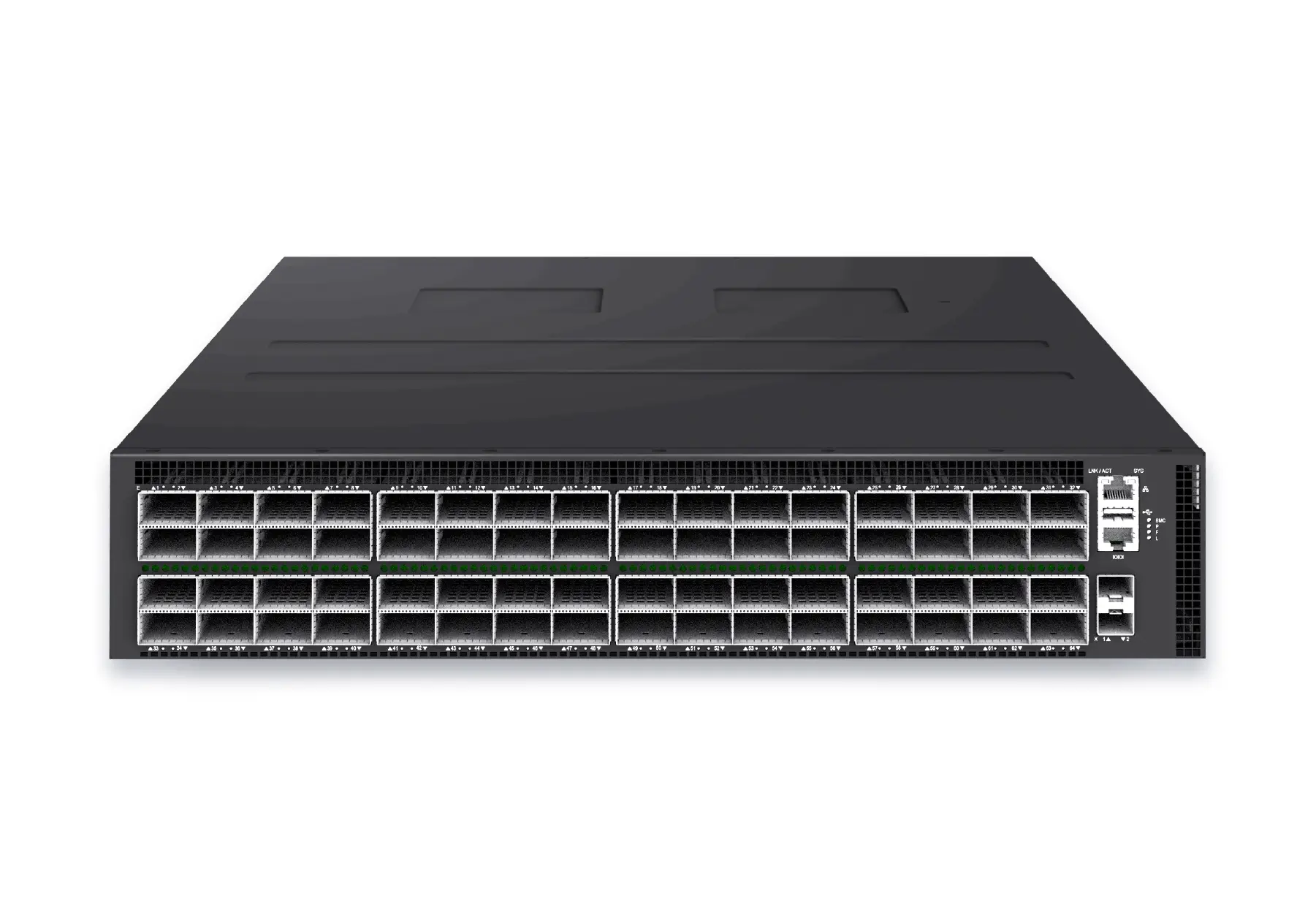 datacenter aiXS-DC-64X800-AI-G164-port 800G AI fabric switch for large-scale GPU clusters, HPC backbones, and ultra-high-throughput data center networks.View product
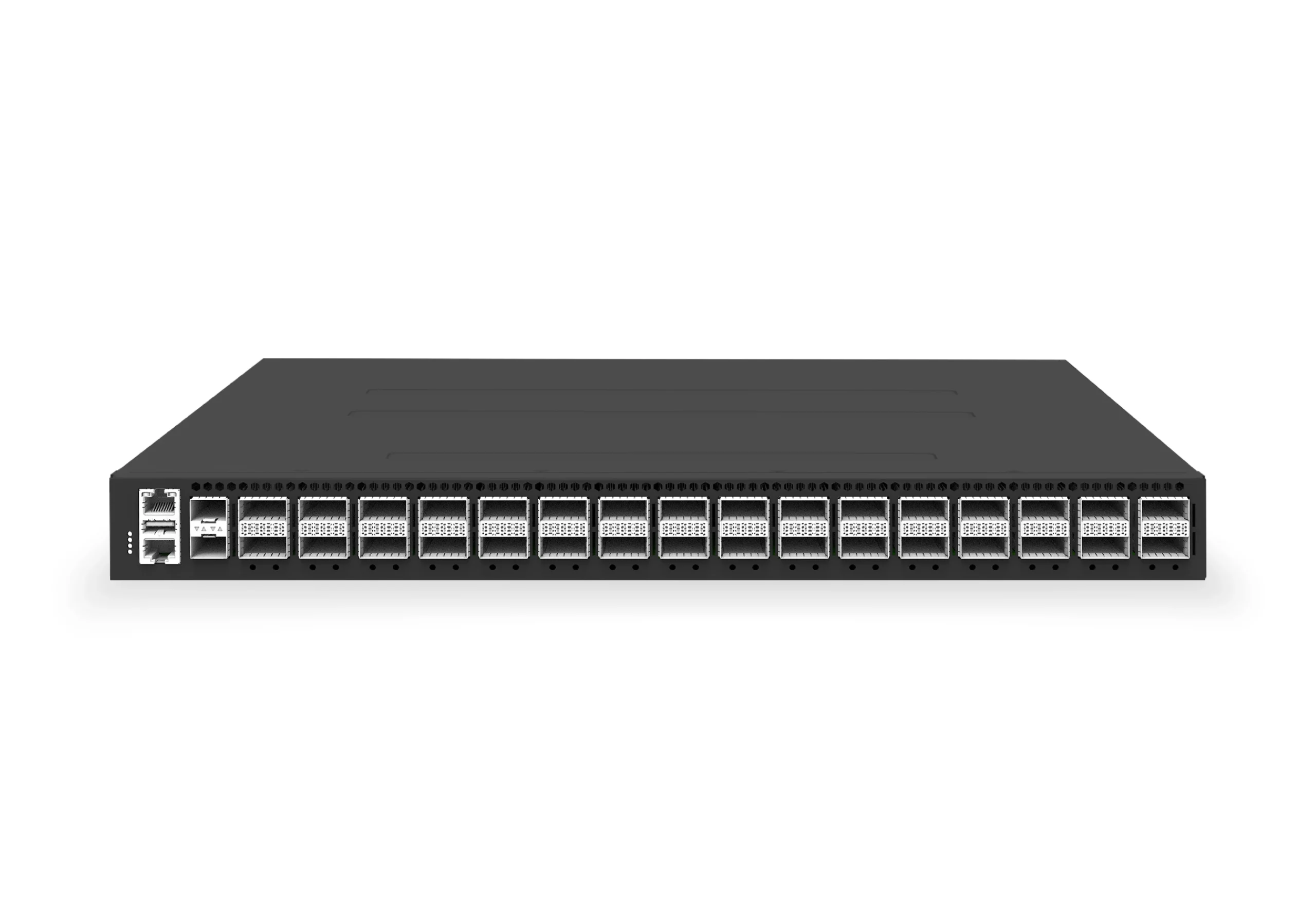 datacenter aiXS-DC-32X400-SP-G232-port 400G spine/core switch for high-capacity data center fabrics and AI-ready backbones.View product
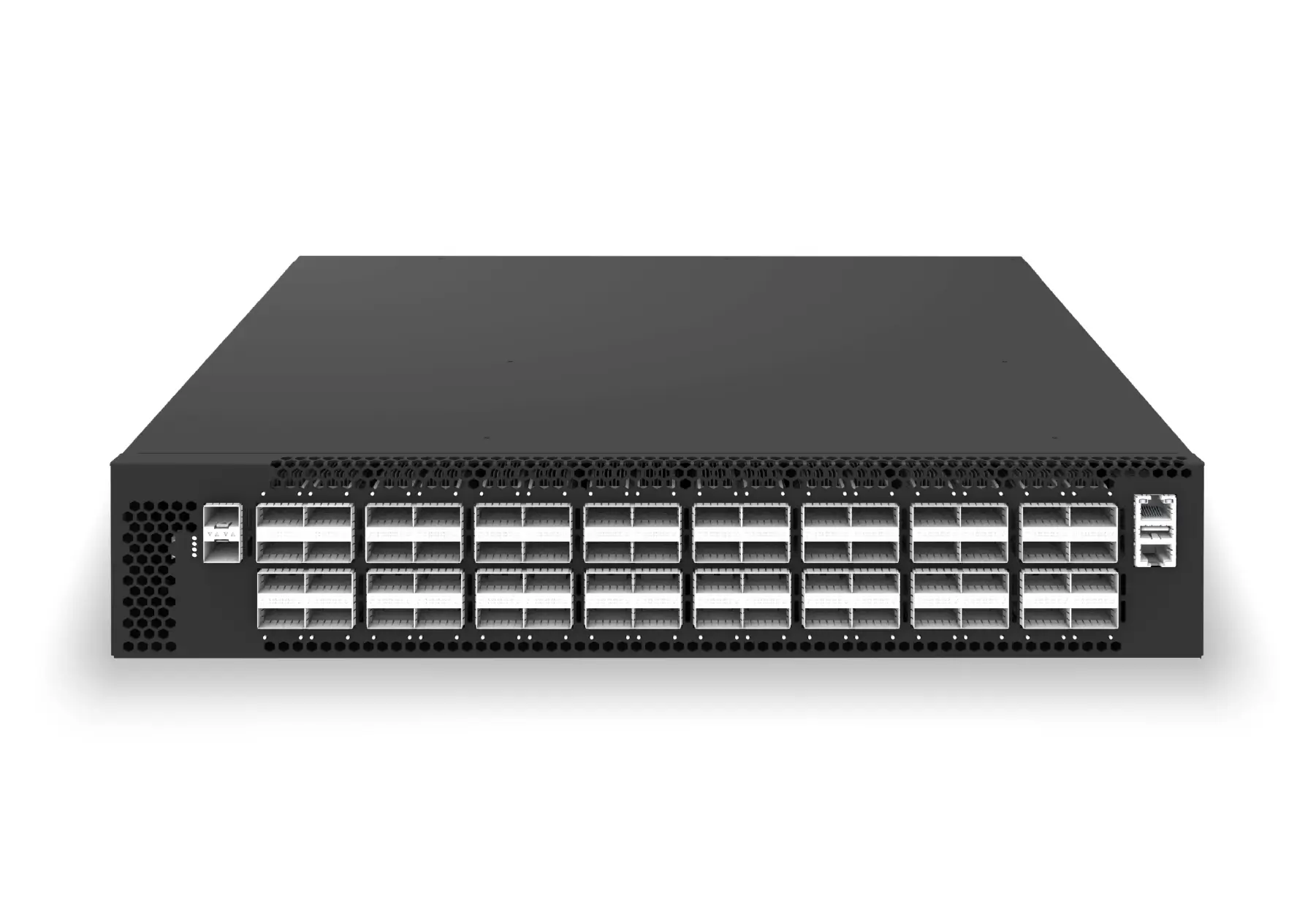 datacenter aiXS-DC-64X200-LS-G164-port 200G leaf/spine switch for high-bandwidth storage, compute, and scale-out data center fabrics.View product
Continue reading
Related articles
 Technical ArticleWhat Enterprise Buyers Actually Get From Open Networking Support: A SONiC Reality CheckA SONiC support reality check for Australian enterprise buyers covering community, commercial distribution, hardware, integration, SLA, and escalation.Read article
 Technical ArticleWarm Reboot and Fast Reboot in SONiC: How to Validate High Availability Without a Full OutageEngineering guide to validating SONiC warm reboot and fast reboot, covering ASIC support, control-plane recovery, traffic loss, telemetry, and rollback.Read article
 Technical ArticleSONiC Security Hardening: A Practical Guide for Data Center Network TeamsA practical SONiC security hardening guide for data center teams covering management access, patching, logging, RBAC, image provenance, telemetry, and audit evidence.Read article