In brief
A practical deployment playbook for selecting Ethernet switches in AI and HPC clusters, covering 400G/800G fabrics, RoCE, QoS, telemetry, optics, and validation.
Key takeaways
- AI and HPC clusters need Ethernet switches that can prove loss, latency, congestion handling, and telemetry behaviour under workload-like traffic.
- For Australian data centres, the right switch selection process starts with workload and topology, then validates ASIC, buffer, QoS, optics, NOS, and support together.
- Different AI and HPC workloads create different network stress:
Engineering Position
AI and HPC clusters need Ethernet switches that can prove loss, latency, congestion handling, and telemetry behaviour under workload-like traffic. Port speed alone is not a selection criterion. A 400G or 800G switch that cannot expose queue pressure, support the required RoCE traffic class, or keep optics stable under thermal load is not ready for a GPU backend fabric.
For Australian data centres, the right switch selection process starts with workload and topology, then validates ASIC, buffer, QoS, optics, NOS, and support together.
Step 1: Define the Workload
Different AI and HPC workloads create different network stress:
| Workload | Traffic pattern | Fabric requirement |
|---|---|---|
| LLM training | Heavy east-west, collective communication, bursty all-reduce/all-gather. | High bisection bandwidth, congestion control, queue telemetry. |
| Inference | Often north-south plus service-to-service traffic. | Predictable latency, flexible segmentation, operational simplicity. |
| RAG / vector search | Storage and database-heavy flows. | Storage path visibility, consistent latency, scalable leaf uplinks. |
| HPC simulation | Tightly coupled MPI-style exchanges. | Low latency, flow symmetry, strong failure isolation. |
| Multi-tenant AI platform | Mixed jobs and tenants. | EVPN-VXLAN or equivalent segmentation plus traffic class control. |
The fabric should be selected against these patterns, not against a generic “AI-ready” claim.
Step 2: Select the Speed Tier
IEEE Ethernet development continues through 400G, 800G, and 1.6T work. IEEE P802.3dj covers 200G, 400G, 800G, and 1.6T Ethernet task force work, while UEC and OCP ESUN focus on Ethernet behaviour for AI and HPC scale. For buyers, this means speed roadmaps are real, but availability, optics cost, and validation maturity still matter.
Practical guidance:
- 100G server links / 400G uplinks: sensible for smaller inference and early training clusters.
- 400G server links / 400G or 800G spine: common direction for larger GPU clusters and storage-heavy AI.
- 800G and 1.6T planning: relevant for new facilities and large training designs, but validate optics, FEC, and thermal load early.
Do not mix speed tiers casually. Breakout, FEC mode, cable type, and optics qualification can create operational failures long before the switch ASIC runs out of bandwidth.
Step 3: Validate Lossless and Low-Loss Behaviour
RoCE-based AI fabrics rely on correct queue and congestion behaviour. The validation set should include:
- PFC and ECN behaviour by traffic class.
- DCBX consistency between NICs and switches.
- Buffer occupancy and drop counters during incast.
- Congestion marking before packet loss.
- Recovery behaviour after link flap, optic replacement, or switch process restart.
- Separation between AI traffic, storage traffic, management traffic, and telemetry.
Do not accept a yes/no RoCE checkbox. Ask for the queue profile, counter names, PFC watchdog behaviour, and test results for the exact switch/NOS/ASIC build.
Step 4: Choose the Topology
Most Australian enterprise AI clusters should start with a routed leaf-spine design. It is operationally familiar, works with ECMP, and scales in a controlled way. Rail-optimised designs can be useful for larger training systems, but they require stricter cabling, job placement, and troubleshooting discipline.
| Topology | Fit | Validation focus |
|---|---|---|
| Leaf-spine | Inference, moderate training, storage, mixed workloads. | ECMP distribution, bisection bandwidth, failure domains. |
| Rail-aligned fabric | Larger training environments with predictable GPU placement. | Cabling correctness, rail locality, path imbalance. |
| Multi-stage Clos | Large facilities and AI factories. | Scale, telemetry, optics, automation, and operational runbooks. |
Step 5: Prove Observability
AI fabric problems often appear as training slowdown rather than an obvious network outage. The switch must expose enough telemetry to connect workload symptoms to fabric behaviour:
- Interface and queue drops.
- PFC pause counters.
- ECN marking counters.
- Buffer occupancy.
- Path and hop visibility through INT or path telemetry.
- Flow summaries through IPFIX or equivalent collectors.
- Packet evidence through packet brokers for incident windows.
NVIDIA Spectrum-X, UEC, and OCP ESUN all point in the same direction: Ethernet for AI is not only faster Ethernet. It is Ethernet with congestion control, telemetry, and end-to-end operational evidence.
Step 6: Build the Acceptance Test
Before production, run a test that includes:
- The intended switch model, NOS image, ASIC, SAI/platform version, optics, and cables.
- Representative packet sizes and flows, including elephant flows and incast.
- RoCE or workload-like traffic classes.
- Link failure and optic replacement.
- Config rollback and image upgrade.
- Telemetry export and packet broker delivery.
- Documentation of every known limitation.
xSONiC Fit
xSONiC data center AI switches should be evaluated with the same proof pack used for production approval. The fabric can then connect to AI fabric, RoCE v2, INT telemetry, IPTPath telemetry, and packet broker designs.
Bottom Line
For AI and HPC, Ethernet switch selection is not a port-speed comparison. It is a validation process covering topology, ASIC behaviour, RoCE traffic classes, congestion response, telemetry, optics, automation, and support ownership.
Engineering Evidence Floor
For this topic, treat the article as buyer-ready only when the fabric claim is tied to measurable acceptance data. The baseline evidence package should include the selected switch SKU, SONiC image, ASIC/SAI version, NIC firmware, optics list, RoCE policy, telemetry counters, support owner, and rollback method. In a small pilot, capture at least 30 minutes of traffic at the intended 100G/400G/800G speed, one link failure, one switch reboot, one optics fault, and one support handoff. That evidence separates a credible AI fabric plan from a bandwidth brochure.
| Evidence area | What to validate | Acceptance gate | Rework trigger |
|---|---|---|---|
| Transport | PFC, ECN, DCBX, MTU, queue mapping, and CNP counters | 30 minutes load test at 100G/400G/800G | RoCE is asserted but not measured |
| Platform | Switch SKU, ASIC, SAI, SONiC image, and optics list | 2 switch roles pass upgrade and rollback | Generic compatibility is used as proof |
| Failure | Link loss, switch reboot, route convergence, and workload impact | 3 failure cases captured with timestamps | Steady-state throughput is the only evidence |
| Telemetry | Queue depth, drops, optics DOM, gNMI, and packet visibility | Operators explain a slowdown within 15 minutes | GPU and network teams use different data |
| Support | APAC escalation, RMA, spares, and patch lifecycle | 12 months operating plan approved | Ownership splits across vendors |
This section deliberately avoids treating the topic as a feature checklist. The buyer should be able to hand the evidence to engineering, security, finance, and support teams and have each group understand what was tested, what failed, what was accepted, and what still needs rework. That is also the content pattern most useful for generative search: the page states a clear conclusion, names measurable parameters, identifies risk, and cites the operational proof required before deployment.
Engineering FAQ
What is the first technical decision in an AI Ethernet switch selection? Define the workload and topology before choosing a port speed. Training, inference, storage-heavy RAG, HPC simulation, and multi-tenant AI platforms create different network stress.
Why is RoCE validation more important than a feature checkbox? RoCE depends on the combined behaviour of NICs, switches, queues, PFC, ECN, DCBX, buffers, and telemetry. A checkbox does not prove the fabric survives incast or failure recovery.
How should buyers treat 800G and 1.6T roadmaps? Treat them as facility and lifecycle planning inputs, not automatic procurement targets. Optics availability, FEC mode, power, cooling, support, and cable handling can decide whether the speed tier is deployable.
What should be rejected during vendor evaluation? Reject proposals that cannot name the ASIC, NOS image, optics matrix, counter names, failure tests, upgrade path, and support owner for switch, SAI, SDK, and optics issues.
Related xSONiC Resources
Sources Reviewed
- Ethernet Network Adapters - ConnectX NICs | NVIDIA
- NVIDIA BlueField Data Processing Unit
- NVIDIA Spectrum-X Ethernet Platform
- ACSC Essential Eight
- OAIC Notifiable Data Breaches
- APRA CPS 234 Information Security
- NETSCOUT Network Packet Definition
- Cloudflare Network Packet Definition
- SONiC Project Documentation
- Broadcom Ethernet Switching
- Marvell Switching
- NVIDIA Ethernet Switching
- Open Compute Networking
- SONiC GitHub
- SONiC Foundation
Product fit
Products referenced for evaluation
These products are referenced for evaluation context in the article. Confirm workload, port, optics, software, interoperability, and support requirements against the exact deployment before procurement.
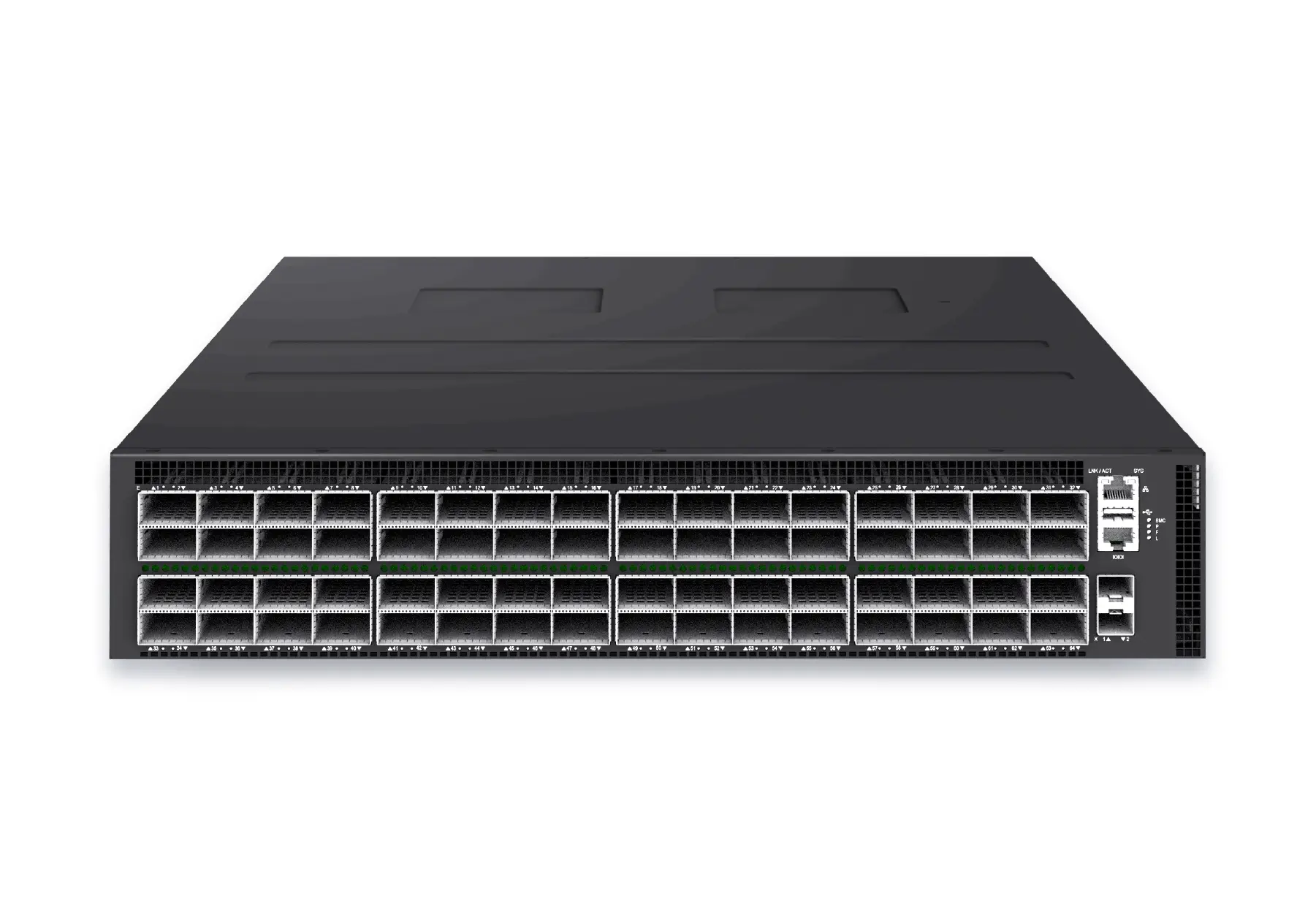 datacenter aiXS-DC-64X800-AI-G164-port 800G AI fabric switch for large-scale GPU clusters, HPC backbones, and ultra-high-throughput data center networks.View product
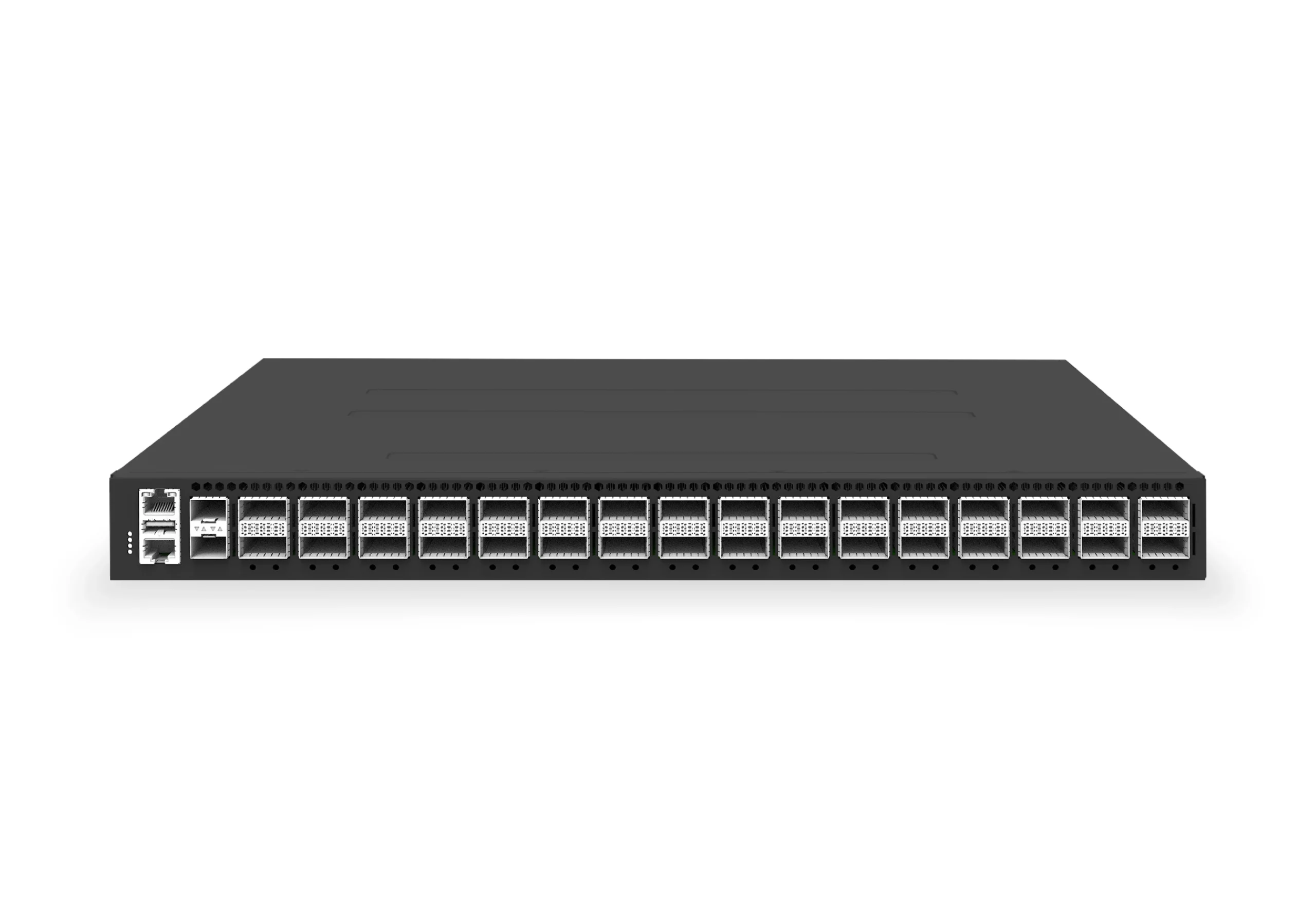 datacenter aiXS-DC-32X400-SP-G232-port 400G spine/core switch for high-capacity data center fabrics and AI-ready backbones.View product
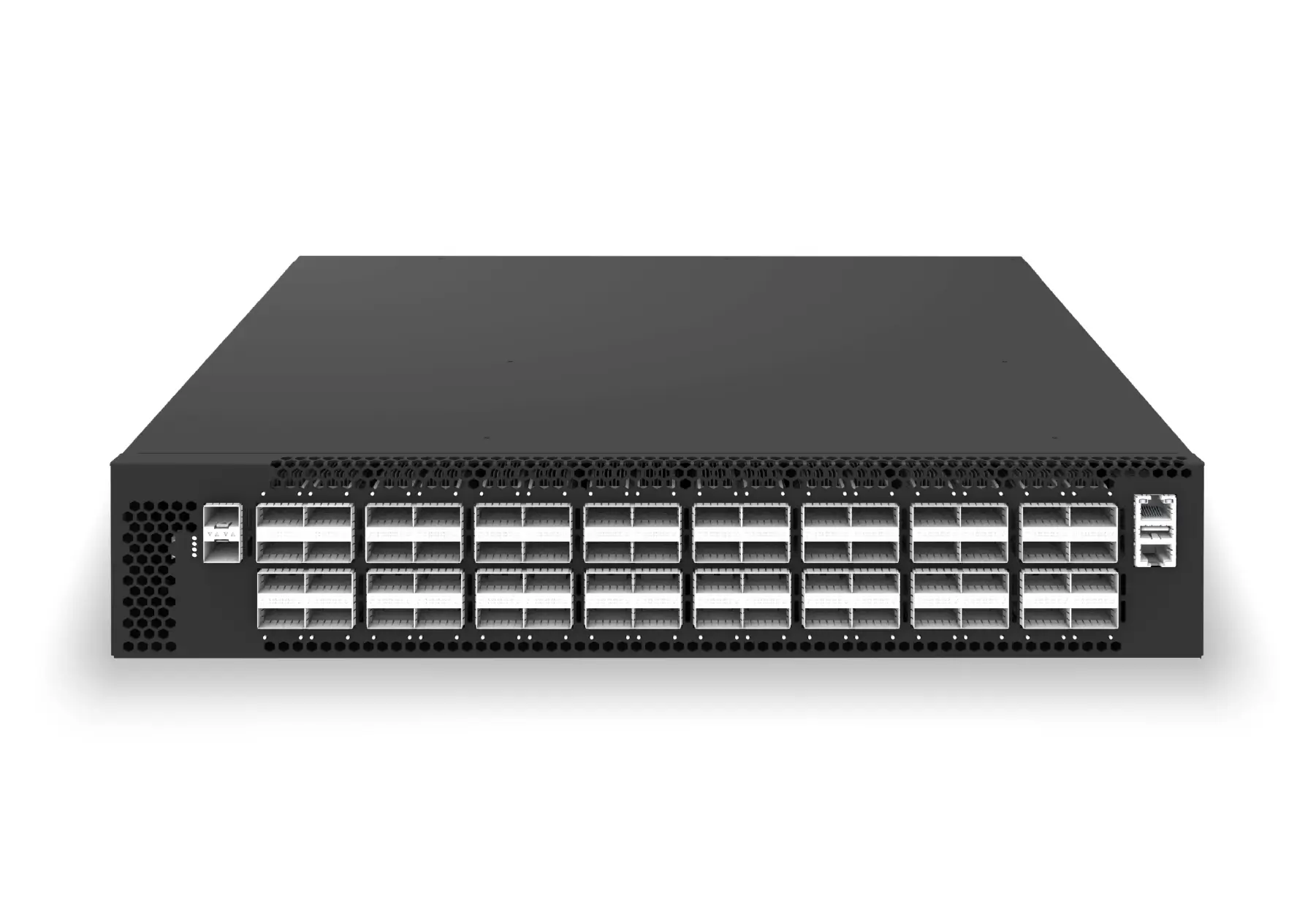 datacenter aiXS-DC-64X200-LS-G164-port 200G leaf/spine switch for high-bandwidth storage, compute, and scale-out data center fabrics.View product
Continue reading
Related articles
 Technical ArticleDesigning GPU Backend Fabrics with RoCE v2: How SONiC 400G/800G Switches Transform AI Data CentersEngineering guide for AI fabric buyers covering RoCE, SONiC, telemetry, optics, support ownership, and deployment validation.Read article
 Technical ArticleWhy Open SONiC Ethernet Is Becoming the Default AI Fabric for GPU Backend ClustersEngineering guidance on Open SONiC Ethernet Is Becoming the Default AI Fabric for GPU Backend Clusters for Australian network teams, covering underlay design.Read article
 Technical ArticleGPU Cluster Fabric Design: Why AI Workloads Need Purpose-Built EthernetArchitecture guide to GPU cluster fabrics covering RoCE v2, PFC, ECN, DCBX, SONiC, 400G/800G, telemetry, InfiniBand trade-offs, and acceptance evidence.Read article