In brief
An engineering guide to Ethernet switch fabric architecture, covering ASIC pipelines, buffers, Clos fabrics, AI traffic classes, optics, telemetry, and deployment validation.
Key takeaways
- Ethernet switch fabric architecture is the part of a network design that decides whether port-speed promises survive real traffic.
- For Australian data centre, AI cluster, and campus refresh projects, the useful question is not "what is Ethernet?" It is whether the selected switch fabric can move the required traffic pattern at the required loss, latency, and observability level.
- Both layers matter. A non-blocking leaf-spine topology cannot compensate for a weak buffer design, and a strong ASIC cannot compensate for an oversubscribed topology with poor traffic placement.
Engineering Position
Ethernet switch fabric architecture is the part of a network design that decides whether port-speed promises survive real traffic. A buyer can purchase 100G, 400G, or 800G ports and still end up with drops, hot paths, queue pressure, or tool visibility gaps if the internal ASIC pipeline, buffers, forwarding tables, telemetry, and optics plan are not validated together.
For Australian data centre, AI cluster, and campus refresh projects, the useful question is not “what is Ethernet?” It is whether the selected switch fabric can move the required traffic pattern at the required loss, latency, and observability level.
Two Meanings of Switch Fabric
The term “switch fabric” is used in two related ways:
- Inside the switch: the ASIC, packet buffers, forwarding tables, scheduler, QoS pipeline, and port interconnect that move frames from ingress to egress.
- Across the network: the topology formed by multiple switches, usually a routed Clos or spine-leaf design in data centres and AI clusters.
Both layers matter. A non-blocking leaf-spine topology cannot compensate for a weak buffer design, and a strong ASIC cannot compensate for an oversubscribed topology with poor traffic placement.
Internal Fabric: What to Validate
| Area | What it affects | Evidence to request |
|---|---|---|
| ASIC forwarding pipeline | L2/L3 forwarding, ACLs, ECMP, VXLAN, telemetry, and QoS behaviour. | Feature matrix tied to ASIC and NOS release. |
| Buffer architecture | Microburst absorption, RoCE/PFC behaviour, and drop profile. | Queue occupancy, drop counters, and congestion tests. |
| Scheduler and QoS | Traffic class isolation for storage, management, AI, and control-plane traffic. | Traffic class tests with mixed packet sizes and priorities. |
| ECMP hashing | Path distribution across spine links. | Flow distribution under realistic 5-tuple and elephant-flow patterns. |
| Telemetry | Ability to find queue pressure and packet loss. | Streaming counters, INT/path telemetry, and time-correlated captures. |
| Optics support | Link stability, FEC behaviour, DOM/DDM, breakout, and thermal load. | Qualified optics list and link flap tests. |
The mistake is to accept “line rate” as a complete answer. Line-rate forwarding with no ACLs, no tunnel processing, no telemetry, and no mixed traffic is not the same as production AI or campus traffic.
External Fabric: Clos and Leaf-Spine
AI and cloud data centres usually use a Clos-style leaf-spine fabric. Each leaf connects to multiple spines, and ECMP distributes flows across equal-cost paths. This gives predictable hop count and horizontal growth: add leaves for more endpoints, add spines for more bisection bandwidth.
For AI clusters, the fabric must be validated against the workload:
- Are GPU endpoints on the correct leaves or rails?
- Does ECMP spread flows evenly, or do large flows create hot spines?
- Are PFC, ECN, DCBX, and buffer thresholds consistent across the fabric?
- Can telemetry show the path and queue behaviour of a slow training step?
- Can the team replace optics or reboot a leaf without losing operational visibility?
IEEE 802.3 defines Ethernet PHY and MAC work across generations, while IEEE P802.3dj is the active task force for 200G, 400G, 800G, and 1.6T Ethernet work. For buyers, the standards direction matters because a fabric built today should have a credible optics and cabling path into the next refresh.
Campus and Aggregation Fabrics
Campus fabrics have a different traffic profile. They need PoE power planning, Wi-Fi 6E/7 uplink capacity, multicast behaviour, voice QoS, segmentation, and operational simplicity. The fabric architecture still matters:
- Access switches need enough internal bandwidth for uplinks and PoE-driven endpoint growth.
- Aggregation switches need MC-LAG or equivalent dual-homing behaviour.
- Virtual chassis designs simplify management but must be tested for control-plane failure and upgrade behaviour.
- Packet broker and visibility feeds should be planned before the campus is saturated with IoT, camera, and wireless traffic.
The same engineering principle applies: validate the traffic pattern, not the brochure.
xSONiC Evaluation Path
xSONiC buyers should evaluate switch fabric architecture through a proof pack:
- Switch model, ASIC, NOS image, SAI or platform abstraction version, and optics list.
- Port map for endpoint, uplink, management, and visibility ports.
- Forwarding tests for L2, L3, ECMP, EVPN-VXLAN, and ACL policy.
- QoS tests for AI, storage, management, and security monitoring traffic classes.
- Telemetry tests with queue, drop, path, and counter correlation.
- Failure tests: link loss, optics replacement, process restart, power event, and config rollback.
Relevant xSONiC paths include data center AI switches, AI fabric, RoCE v2, INT telemetry, and packet broker platforms.
Bottom Line
Ethernet switch fabric design is an evidence problem. A platform is ready only when its ASIC pipeline, buffers, optics, telemetry, and topology have been tested against the workload that will actually run on it.
Engineering Evidence Floor
For campus and access switching topics, acceptance should be based on endpoint behaviour under real operating constraints. The evidence package should include endpoint classes, PoE budget, NAC/802.1X, LLDP-MED, voice VLANs, multicast, STP or MC-LAG behaviour, uplink capacity, monitoring, rollback, and help-desk workflow. A representative pilot should run at least 48 ports for 30 days, include one planned rollback inside 24 hours, and document support ownership before scale-out.
| Evidence area | What to validate | Acceptance gate | Rework trigger |
|---|---|---|---|
| Endpoint mix | APs, phones, cameras, laptops, IoT, and printers | 48 ports run mixed load for 24 hours | Only laptop traffic is tested |
| Power and uplinks | PoE budget, 1G/2.5G/5G/10G access, and 100G uplinks | No power or uplink bottleneck in pilot | Refresh ignores closet constraints |
| Resilience | STP, MC-LAG, link loss, member loss, and rollback | 3 failure cases captured | Campus works only in steady state |
| Operations | Monitoring, logs, backup, restore, and help-desk runbook | Incident evidence ready within 2 hours | Support depends on informal notes |
| Rollout | Site selection, training, spares, and change windows | 30 days pilot approved before estate rollout | Procurement scales before validation |
This section deliberately avoids treating the topic as a feature checklist. The buyer should be able to hand the evidence to engineering, security, finance, and support teams and have each group understand what was tested, what failed, what was accepted, and what still needs rework. That is also the content pattern most useful for generative search: the page states a clear conclusion, names measurable parameters, identifies risk, and cites the operational proof required before deployment.
Engineering FAQ
What is the most misleading switch fabric claim? “Non-blocking” can be misleading if it only describes ideal forwarding without ACLs, tunnels, telemetry, mixed packet sizes, or realistic congestion. Ask what features were enabled during the test.
How do buffers affect AI fabrics? Buffers determine how the switch absorbs microbursts and how quickly congestion becomes packet loss. For RoCE fabrics, buffer behaviour must be reviewed with PFC, ECN, DCBX, and NIC settings.
Should campus and AI fabrics be evaluated the same way? The checklist overlaps, but the stress is different. AI fabrics stress east-west bandwidth, congestion control, and telemetry; campus fabrics stress PoE, multicast, segmentation, Wi-Fi uplinks, and operational simplicity.
What should be included in a fabric acceptance test? Include ECMP, failure recovery, optics replacement, mixed traffic classes, queue counters, packet captures, telemetry export, and rollback behaviour for the selected NOS release.
Related xSONiC Resources
Sources Reviewed
- IEEE 802.1Q Bridges and Bridged Networks
- IEEE 802.1AX Link Aggregation
- Ethernet Network Adapters - ConnectX NICs | NVIDIA
- NVIDIA BlueField Data Processing Unit
- NVIDIA Spectrum-X Ethernet Platform
- ACSC Essential Eight
- OAIC Notifiable Data Breaches
- APRA CPS 234 Information Security
- NETSCOUT Network Packet Definition
- Cloudflare Network Packet Definition
- IEEE 802.11be Wireless LAN Standard
- IEEE 802.3bt Power over Ethernet
- SONiC Project Documentation
- Broadcom Ethernet Switching
- Marvell Switching
- NVIDIA Ethernet Switching
- Open Compute Networking
- SONiC GitHub
- SONiC Foundation
Product fit
Products referenced for evaluation
These products are referenced for evaluation context in the article. Confirm workload, port, optics, software, interoperability, and support requirements against the exact deployment before procurement.
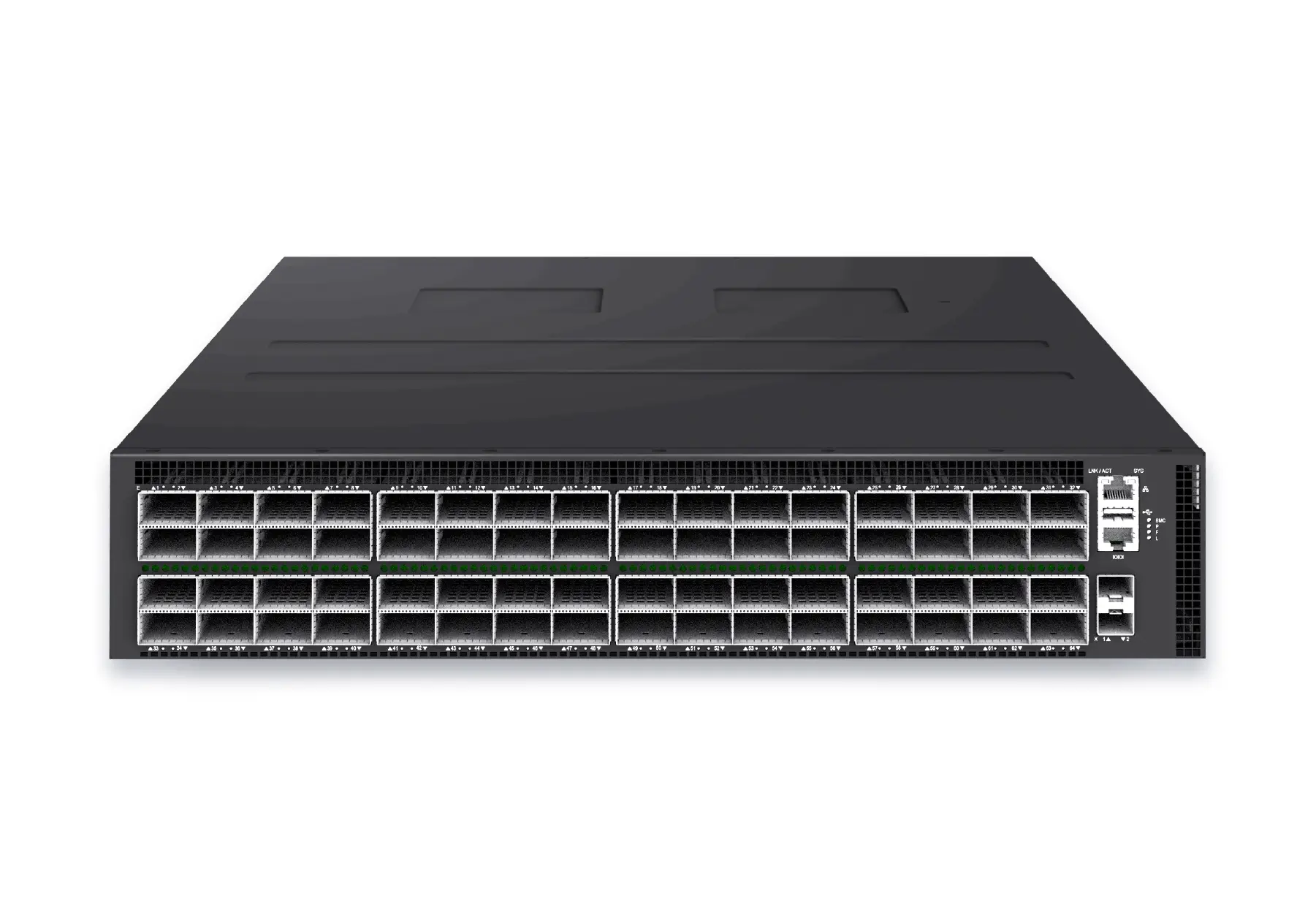 datacenter aiXS-DC-64X800-AI-G164-port 800G AI fabric switch for large-scale GPU clusters, HPC backbones, and ultra-high-throughput data center networks.View product
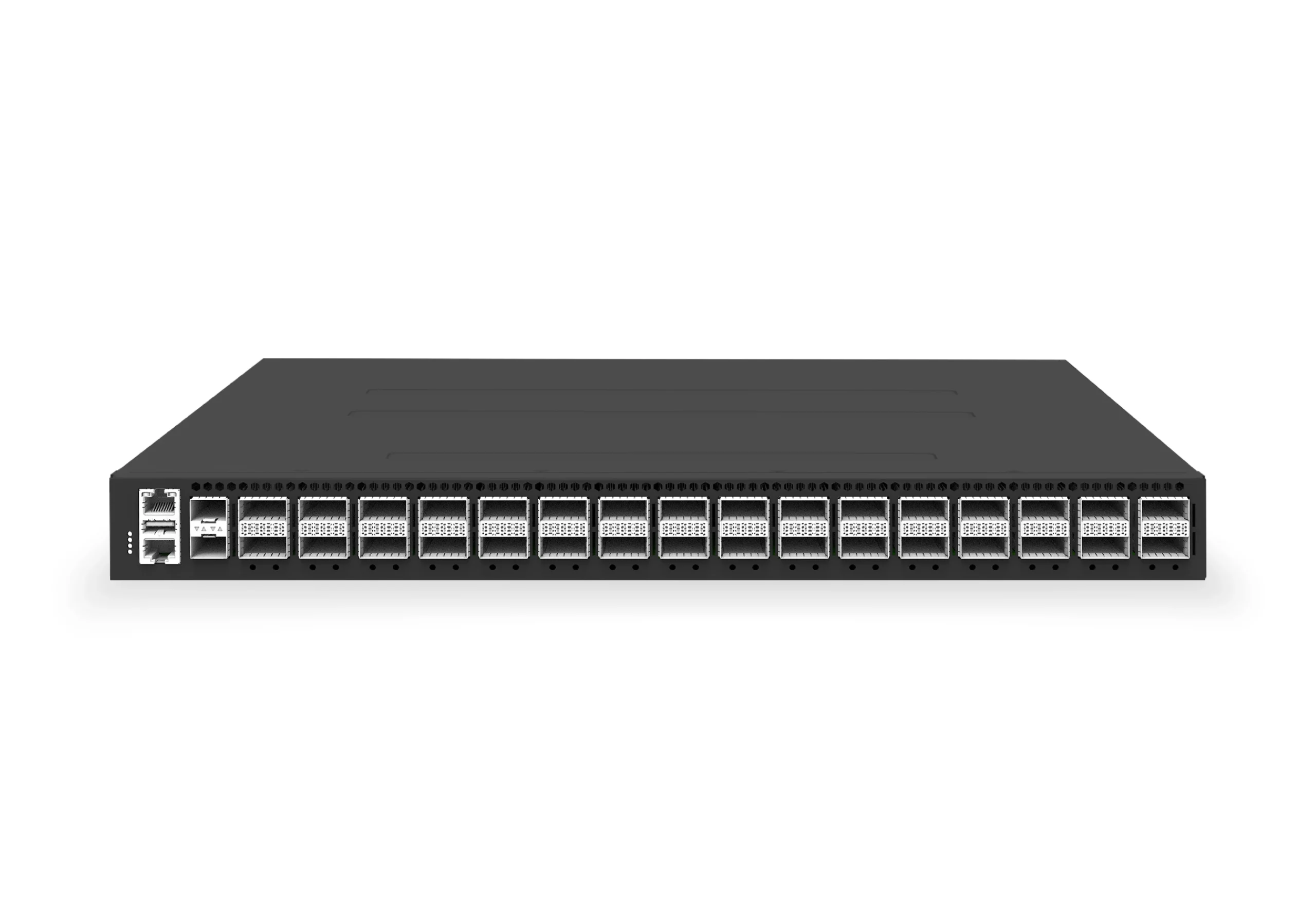 datacenter aiXS-DC-32X400-SP-G232-port 400G spine/core switch for high-capacity data center fabrics and AI-ready backbones.View product
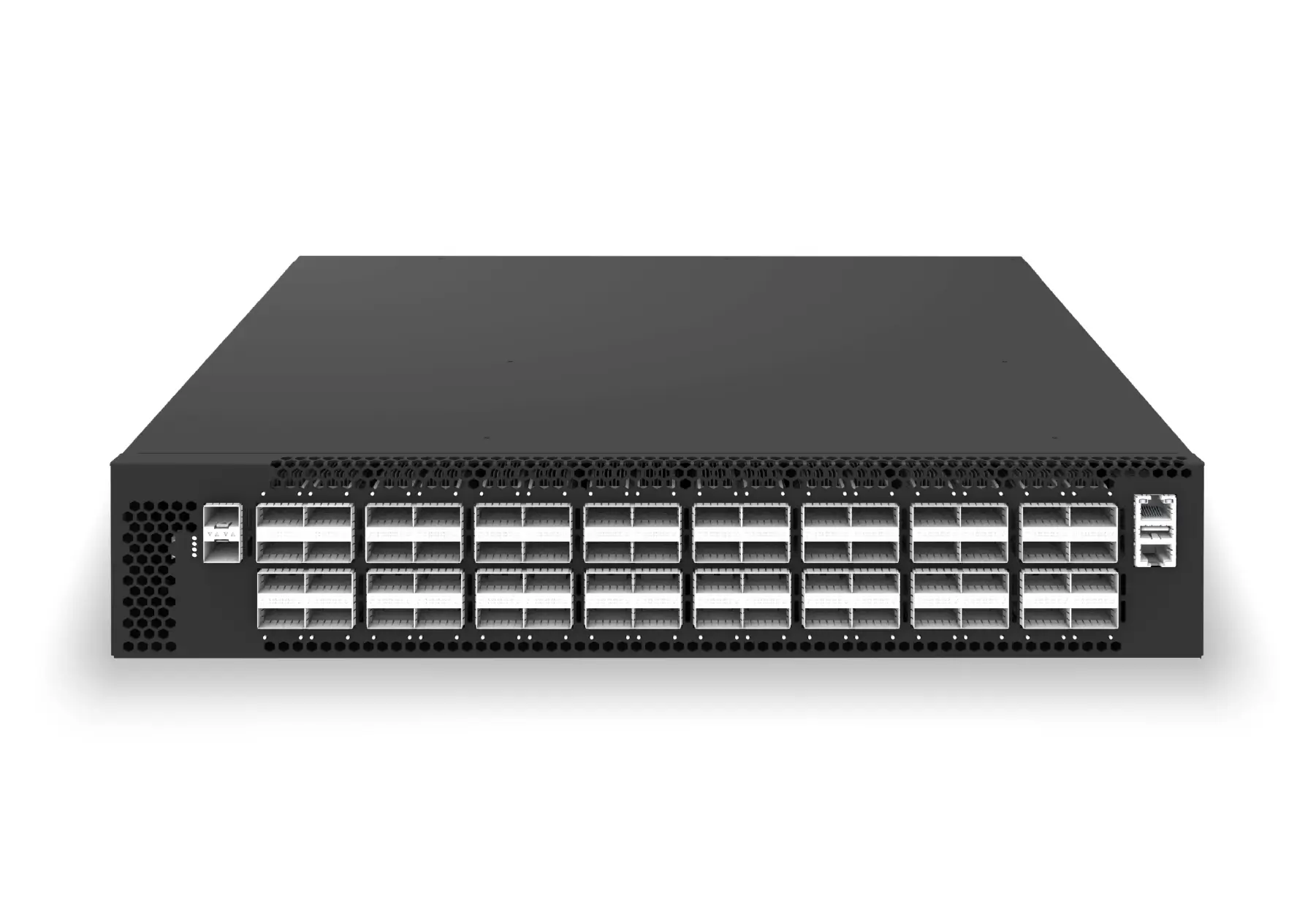 datacenter aiXS-DC-64X200-LS-G164-port 200G leaf/spine switch for high-bandwidth storage, compute, and scale-out data center fabrics.View product
Continue reading
Related articles
 Technical ArticleWhy Enterprise SONiC Is Gaining Ground in Campus Access and Aggregation: An Australian PerspectiveEngineering guide for campus switching teams covering PoE, access design, MC-LAG/STP risk, telemetry, support, and pilot validation.Read article
 Technical ArticleWhy Australian Enterprises Are Rethinking Campus Switching with Enterprise SONiCEngineering guide for campus switching teams covering PoE, access design, MC-LAG/STP risk, telemetry, support, and pilot validation.Read article
 Technical ArticleEthernet Switch Speeds Explained: Choosing the Right Network Fabric from 1G Campus Access to 800G AI BackbonesEngineering guide for campus switching teams covering PoE, access design, MC-LAG/STP risk, telemetry, support, and pilot validation.Read article