In brief
Engineering guide to Australian campus SONiC access refresh planning, covering PoE, 802.1X, Wi-Fi 7 backhaul, telemetry, rollout risk, and support.
Key takeaways
- Australia's largest campus organizations are in the middle of a physical infrastructure cycle that demands networking attention.
- Campus access and aggregation networks present a distinct economics problem for Australian IT teams.
- The scale of the Australian campus networking opportunity becomes clear when examining the physical estates involved.
What Happened: Australia’s Campus Networking Landscape Is Under Pressure
Australia’s largest campus organizations are in the middle of a physical infrastructure cycle that demands networking attention. The University of Sydney operates teaching and research locations stretching from inner-city Camperdown to the Great Barrier Reef, with facilities spanning Camperdown/Darlington, Camden, Surry Hills, Westmead, and CBD locations across New South Wales. UNSW Sydney runs its main Kensington campus alongside Paddington, CBD, and Canberra sites, each requiring high-density connectivity for research labs, student accommodation, and maker spaces. TAFE NSW Ultimo, the largest TAFE in NSW, serves as a hub in one of Sydney’s strongest education precincts, surrounded by Central Station, UTS, and the CBD. Even beyond education, corporate campuses like Microsoft’s Redmond headquarters — which spans 83 buildings and over 8 million square feet — demonstrate the scale of campus networking challenges that large organizations face globally. The common thread across these environments is that physical campus expansion and modernization are outpacing network infrastructure refresh cycles. When universities invest $80 million or more in precinct infrastructure upgrades, as the University of Sydney has done at Westmead, the switching fabric underneath cannot remain an afterthought.
Why It Matters: Vendor Lock-In Hits Hardest at the Campus Edge
Campus access and aggregation networks present a distinct economics problem for Australian IT teams. Unlike data center fabrics where a small number of high-value switches dominate, campus environments deploy hundreds or thousands of access-layer switches across distributed buildings, floors, labs, classrooms, and outdoor spaces. Each PoE port powering a Wi-Fi access point, IP camera, VoIP phone, or IoT sensor represents ongoing operational cost. When a university or TAFE campus standardizes on a proprietary NOS, every future refresh cycle locks that organization into the same vendor’s pricing, licensing, and upgrade cadence. For Australian campuses that operate across multiple sites — the University of Sydney alone has locations in Camperdown, Camden, Surry Hills, Westmead, and regional NSW — this vendor dependency multiplies across every building, every VLAN, and every support contract. Enterprise SONiC on access and aggregation hardware changes this equation by separating the switching silicon and hardware lifecycle from the network operating system, giving campus network teams the ability to choose hardware on merit and manage the software stack independently. This is not a theoretical advantage. The SONiC ecosystem has matured in data center fabrics, and the same architectural principles — disaggregated NOS, standardized management, community-driven development — are now being applied to campus access and aggregation use cases.
The Australian Campus Networking Opportunity by the Numbers
The scale of the Australian campus networking opportunity becomes clear when examining the physical estates involved. The University of Sydney operates across multiple major precincts with thousands of staff and students, investing heavily in precinct infrastructure including partnerships with major hospitals. UNSW Sydney runs its Kensington campus alongside satellite locations with dedicated facilities like the Design Futures Lab and Engineering Makerspaces that require high-bandwidth, low-latency connectivity. TAFE NSW operates a statewide network of campuses, with Ultimo alone serving as a major hub with specialized facilities including computer labs, performance spaces, science laboratories, and simulated training environments. Each of these campus types has distinct networking requirements:
- Education campuses need high-density PoE for Wi-Fi 6/6E/7 access points, extensive VLAN segmentation for student, staff, research, and IoT networks, and scalable aggregation for bandwidth-heavy research traffic.
- TAFE and vocational campuses require reliable PoE for training facilities, video-enabled labs, and simulated environments, often with tighter operational budgets.
- Corporate campuses like Microsoft’s 83-building Redmond estate demand controlled roaming, building-to-building aggregation, and centralized policy management at scale.
In each case, the access and aggregation layer is where the majority of switch ports, PoE budgets, and operational complexity reside. A campus refresh with Enterprise SONiC switches targets this layer specifically, offering a disaggregated alternative to the proprietary stacks that dominate Australian campus networks today.
The Enterprise SONiC Campus Refresh Argument
The case for Enterprise SONiC in campus access and aggregation rests on three pillars that matter to Australian campus network operators:
1. Hardware and software lifecycle independence. Campus switches typically have a 7-10 year refresh cycle. When the NOS is tied to the hardware vendor, organizations cannot upgrade silicon without also replacing the software stack and retraining operations teams. Enterprise SONiC separates these lifecycles, allowing campus teams to refresh hardware on the silicon cadence while maintaining operational consistency in the NOS layer.
2. Operational consistency across distributed sites. Australian universities and TAFEs operate across multiple physical locations that may span different cities or regions. Enterprise SONiC provides a single, consistent network operating model across all sites, reducing the operational overhead of managing vendor-specific CLI variations, proprietary management platforms, and separate support contracts per location.
3. Cost transparency and procurement flexibility. Campus access switches represent the highest volume purchase in any campus refresh. When procurement is locked to a single vendor, pricing leverage shifts to the supplier. Enterprise SONiC on open switching hardware gives Australian campus operators the ability to evaluate multiple hardware suppliers on silicon quality, PoE capability, and build quality — while maintaining a consistent software platform.
For Australian campuses, the relevant SONiC features for access and aggregation include PoE management, VLAN and ACL configuration, 802.1X authentication, LLDP-based device discovery, and integration with centralized campus management platforms. The xSONiC access and aggregation switch portfolio is designed to address these campus-specific requirements with Enterprise SONiC as the foundation.
What This Means for Australian Campus Network Teams
Australian campus network operators evaluating a refresh cycle should consider Enterprise SONiC as a strategic alternative to proprietary campus switching stacks. The evaluation criteria should include:
- PoE budget and port density: Can the platform deliver the PoE power budget needed for Wi-Fi 6E/7 access points, security cameras, and IoT endpoints across all building types?
- Multi-site management: Does the NOS support centralized configuration, monitoring, and policy enforcement across distributed campus locations?
- Integration with existing campus infrastructure: How does the platform integrate with existing NAC (Network Access Control), wireless controllers, and campus management tools?
- Australian support and supply chain: Is there local technical support, stock availability, and integration partner capability for Australian deployments?
- Total cost of ownership: What is the 5-year and 10-year TCO comparison against incumbent vendor refresh pricing?
The campus refresh opportunity in Australia is not limited to universities. Government departments, healthcare precincts, large retail complexes, and corporate headquarters all face similar switching economics. The question for Australian IT leaders is no longer whether open networking works for campus — SONiC’s data center track record has answered that — but whether their campus refresh cycle is the right time to break the proprietary dependency.
Campus access refresh acceptance matrix
An Enterprise SONiC campus refresh should be accepted building by building. Large estates fail when the network team approves a generic switch model before checking endpoint diversity, PoE draw, cabling, authentication, monitoring, and change windows.
| Campus decision area | Evidence to capture | Reject or rework if |
|---|---|---|
| Site inventory | Building list, closet map, copper/fibre condition, endpoint classes, uplink speed, and change windows | The refresh assumes every building has the same cabling, endpoint mix, and access policy |
| PoE and Wi-Fi backhaul | AP model, IEEE 802.3bt/at requirement, camera/phone load, 2.5G/5G/10G access ports, and failed-PSU behaviour | Wi-Fi 6E/7 is planned but access switch power and uplink headroom are not proven |
| Access control | 802.1X, MAB, guest VLAN, RADIUS failover, quarantine policy, and help-desk exception workflow | Unknown devices or NAC outages require manual switch-by-switch intervention |
| Operations and telemetry | Syslog, gNMI/OpenConfig or equivalent, config backup, image version, PoE alerts, and NMS/SIEM integration | Operators cannot see PoE faults, endpoint moves, loop events, or config drift centrally |
| Pilot and rollout | Representative building, rollback image, spare switch, training, known caveats, and Australian escalation path | The pilot proves a clean lab but not a real building with users, cameras, APs, and change constraints |
Competitor Context: Where Incumbent Campus Vendors Create Gaps
The Australian campus switching market has been dominated by a small number of incumbent vendors whose proprietary stacks are deeply embedded in education and enterprise procurement. This creates several gaps that Enterprise SONiC is positioned to address:
- Licensing complexity: Many incumbent campus vendors have moved to subscription-based licensing models that add recurring cost to every switch port. For campuses with thousands of access ports, this licensing model significantly increases the total cost of ownership over a refresh cycle.
- Feature parity lag: Incumbent vendors often gate advanced campus features (segmentation, telemetry, automation) behind their premium licensing tiers, forcing campus operators to pay for capabilities they may not need across all switch types.
- Vendor roadmap dependency: When a campus standardizes on a proprietary NOS, the organization’s networking roadmap becomes entirely dependent on that vendor’s release cadence and feature priorities, which may not align with Australian campus requirements.
Enterprise SONiC as an open-source NOS removes these friction points, though it requires campus network teams to invest in understanding the operational model. The xSONiC campus refresh approach is designed to lower this adoption barrier with pre-validated configurations, PoE management tooling, and integration support tailored to campus access and aggregation use cases.
Engineering FAQ
What should be validated before a Wi-Fi 6E or Wi-Fi 7 rollout? Validate channel plan, 6 GHz client readiness, PoE budget, uplink capacity, roaming, authentication, RF density, interference, and management tooling. The AP standard alone does not prove campus performance.
Why does backhaul planning matter for modern access points? Wi-Fi 6E and Wi-Fi 7 can expose bottlenecks in access switching, PoE, cabling, and uplink design. Buyers should confirm whether 2.5G, 5G, 10G, and PoE budgets match the real AP deployment plan.
What evidence should vendors provide for enterprise WLAN projects? Ask for supported security modes, firmware lifecycle, controller or cloud management model, RF planning assumptions, client compatibility notes, and a pilot report from a representative building or floor.
Related xSONiC Resources
Sources Reviewed
- University of Sydney Campus Locations
- UNSW Sydney Campuses
- TAFE NSW Ultimo Campus
- ACSC Essential Eight
- OAIC Notifiable Data Breaches
- IEEE 802.11be Wireless LAN Standard
- IEEE 802.3bt Power over Ethernet
- OpenConfig gNMI Specification
- OpenConfig
- SONiC Project Documentation
- Open Compute Networking
- SONiC GitHub
- SONiC Foundation
Product fit
Products referenced for evaluation
These products are referenced for evaluation context in the article. Confirm workload, port, optics, software, interoperability, and support requirements against the exact deployment before procurement.
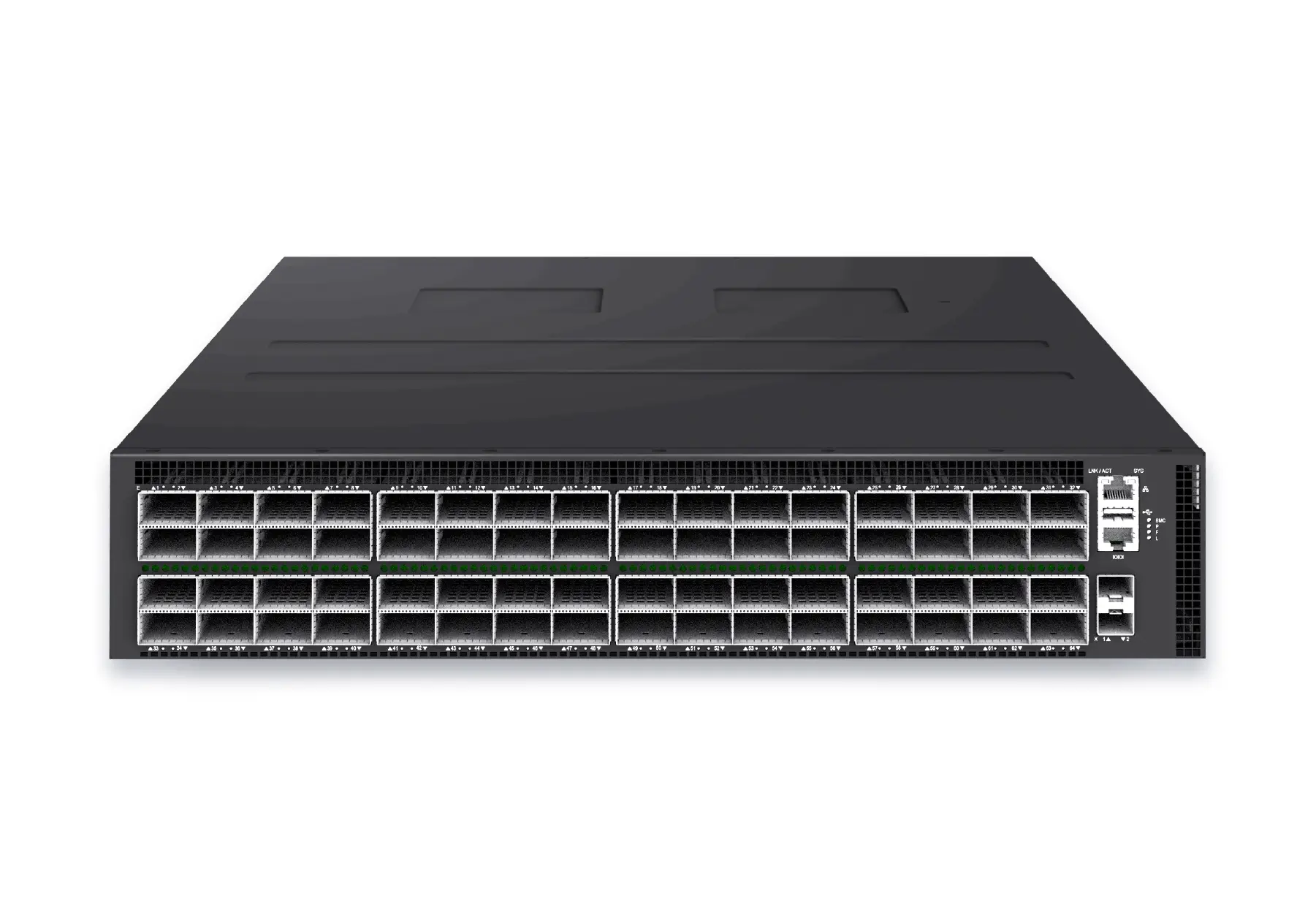 datacenter aiXS-DC-64X800-AI-G164-port 800G AI fabric switch for large-scale GPU clusters, HPC backbones, and ultra-high-throughput data center networks.View product
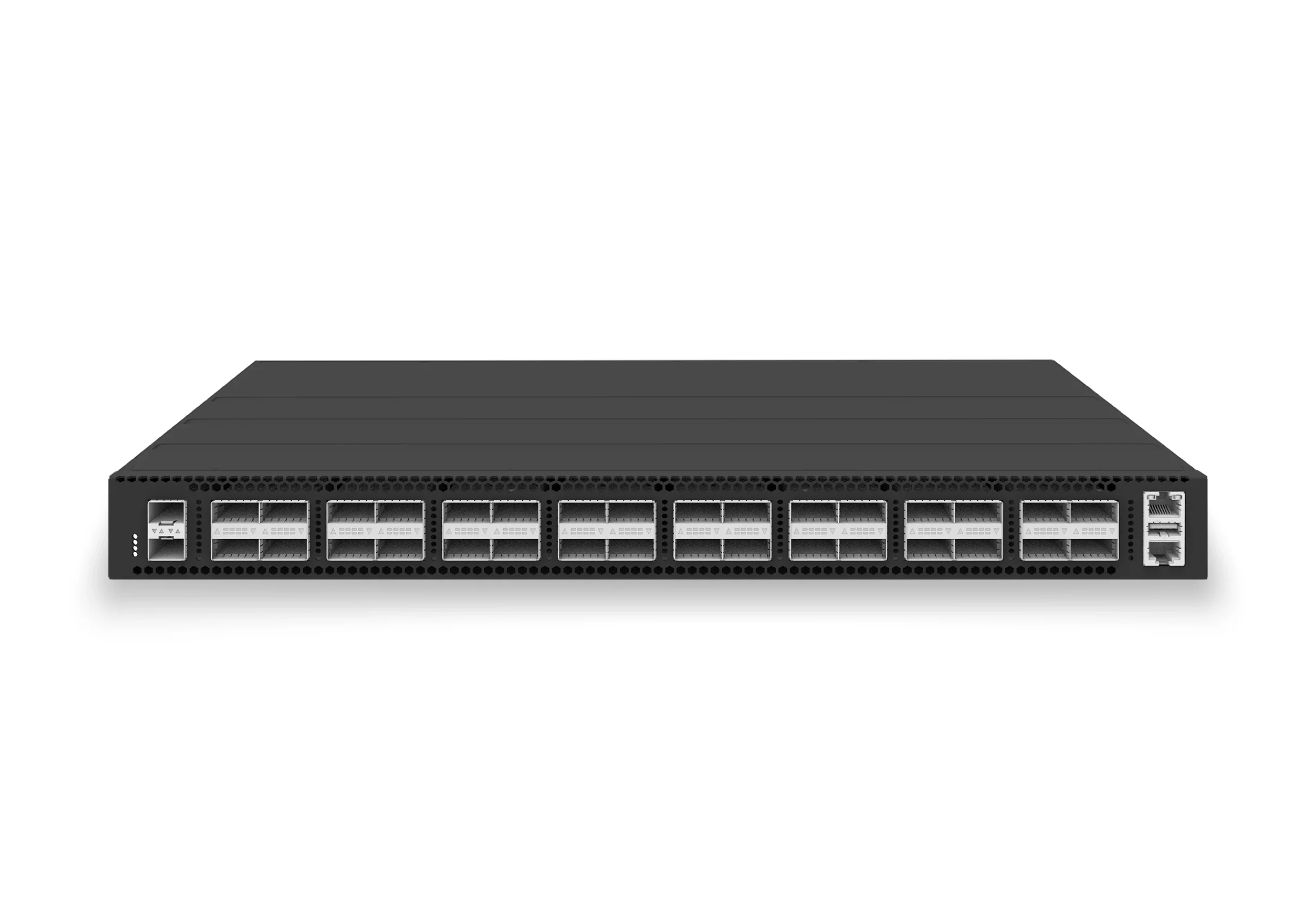 datacenter aiXS-DC-32X100-LS-G232-port 100G leaf/spine switch for VXLAN fabrics, RoCE-ready workloads, and tenant-scale routing.View product
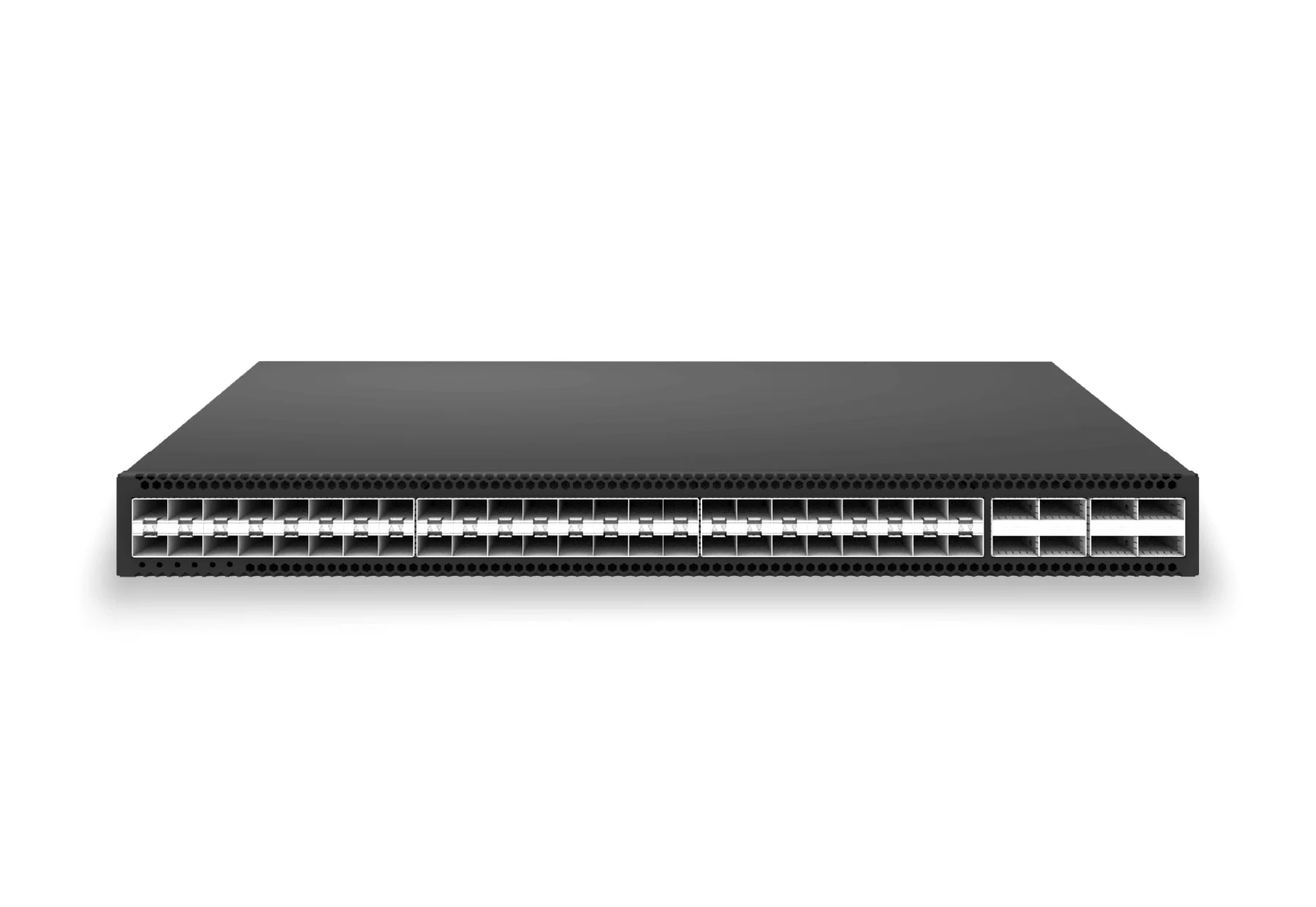 access aggregateXS-AA-48X25-8X100-AGG48x 25G SFP28 aggregation/core switch with 8x 100G QSFP28 for enterprise access and aggregation networks.View product
Continue reading
Related articles
 Technical ArticleMC-LAG, STP, and Policy-Based Routing: Building Resilient Enterprise Campus Networks on Open SwitchingEngineering guidance on MC-LAG, STP, and policy-based routing for Australian campus teams building resilient open switching designs with SONiC.Read article
 Technical ArticleUniversity Campus Access and Aggregation with Enterprise SONiC: An Australian Evaluation GuideA practical Australian university campus guide to evaluating Enterprise SONiC for PoE access, resilient aggregation, migration, and operations.Read article
 Technical ArticleWhy Australian Enterprise Campus Networks Are Looking Beyond Proprietary SwitchingWhy Australian campus teams are evaluating Enterprise SONiC for aggregation, automation, telemetry and reduced switching lock-in.Read article