In brief
An engineering analysis of the congestion-control stack behind RoCE v2 AI Ethernet fabrics, including DCBX, PFC, ECN, Fast CNP, SONiC validation, and buyer acceptance tests.
Key takeaways
- AI Ethernet fabrics do not become reliable because the switch has enough port speed.
- The practical buyer question is not "does this switch support RoCE?" The practical question is whether the exact switch SKU, ASIC, SONiC build, optics set, NIC firmware, and QoS profile have been tested under workload-like congestion.
- Data Center Bridging Capability Exchange (DCBX) is the negotiation layer that tells adjacent devices which data center bridging capabilities are enabled and how traffic classes should be treated.
Engineering Position
AI Ethernet fabrics do not become reliable because the switch has enough port speed. They become reliable when congestion control is designed, validated, and operated as a system. For RoCE v2 GPU backend networks, that system usually includes DCBX, PFC, ECN, congestion notification, queue telemetry, optics validation, and a rollback procedure that operators can execute under pressure.
The practical buyer question is not “does this switch support RoCE?” The practical question is whether the exact switch SKU, ASIC, SONiC build, optics set, NIC firmware, and QoS profile have been tested under workload-like congestion. A paper feature matrix is not acceptance evidence.
Why DCBX Comes First
Data Center Bridging Capability Exchange (DCBX) is the negotiation layer that tells adjacent devices which data center bridging capabilities are enabled and how traffic classes should be treated. In an AI fabric, DCBX is where the network team validates that the RoCE priority, PFC state, ETS bandwidth allocation, and peer behaviour agree between the switch and the host NIC.
If DCBX is wrong, the rest of the stack can look configured but behave incorrectly. A GPU NIC may transmit RoCE traffic on one priority while the switch expects another. A leaf switch may advertise a PFC profile that the peer does not accept. A workload may run at low load and then collapse during incast because the lossless class was never negotiated the way the design assumed.
For xSONiC evaluations, the DCBX acceptance step should capture the local configuration, peer-advertised state, negotiated result, and counters after traffic begins. That evidence is more useful than a screenshot of a QoS template.
PFC: Necessary, but Not Harmless
Priority Flow Control (PFC), standardized in IEEE 802.1Qbb, allows Ethernet pause behaviour to apply per priority instead of pausing an entire link. That makes it useful for RoCE traffic because RDMA flows are sensitive to packet loss, while ordinary best-effort traffic should continue to use normal Ethernet behaviour.
PFC is also a risk if it is overused or poorly tuned. A pause storm can propagate congestion backward through the fabric. Head-of-line blocking can affect unrelated flows that share the same priority. Buffer thresholds that work at 100G may not be stable at 400G or 800G. This is why a serious AI fabric test plan must include PFC pause counters, queue occupancy, incast traffic, link failure during load, and recovery time.
The engineering rule is simple: enable PFC only for the traffic class that needs lossless treatment, then prove the rest of the fabric remains observable and recoverable when that class congests.
ECN and CNP Close the Feedback Loop
Explicit Congestion Notification (ECN), specified by the IETF in RFC 3168, lets a congestion-aware network mark packets instead of dropping them. In RoCE v2 environments, ECN marking can trigger Congestion Notification Packets (CNPs), telling senders to reduce injection rate before queues overflow.
This mechanism is important because PFC alone is a blunt instrument. PFC reacts by pausing traffic on a priority. ECN and CNP are designed to signal congestion earlier and help endpoints reduce load before the fabric reaches a pause-heavy state. Fast CNP or accelerated congestion notification approaches shorten that feedback loop by reducing the delay between congestion detection and sender reaction.
For buyers, the evidence should include ECN marking thresholds, CNP counters, sender rate response, and queue-depth behaviour during incast. If the vendor cannot show how the fabric behaves when multiple GPU nodes converge on the same destination, the congestion-control claim is incomplete.
Where SONiC Changes the Validation Model
SONiC gives buyers an open NOS model and a hardware abstraction path through SAI, but it does not remove the need to validate ASIC behaviour. The SAI layer provides a vendor-independent API for controlling forwarding elements, yet QoS, buffer management, telemetry, and congestion handling still depend on ASIC capability, SDK implementation, platform integration, and release quality.
That means an xSONiC AI fabric review should validate the full stack:
| Layer | Acceptance evidence |
|---|---|
| Host and NIC | RoCE mode, MTU, priority mapping, firmware, CNP behaviour |
| Leaf switch | PFC, ECN, DCBX, buffer thresholds, queue counters, optics health |
| Spine switch | ECMP behaviour, congestion marking, link failure recovery, telemetry |
| SONiC build | SAI version, QoS config persistence, reboot behaviour, rollback |
| Operations | alert thresholds, runbook, spare optics, change control, escalation path |
The open networking advantage is flexibility. The engineering burden is that buyers must ask for proof, not just a supported-features list.
Engineering Evidence Floor
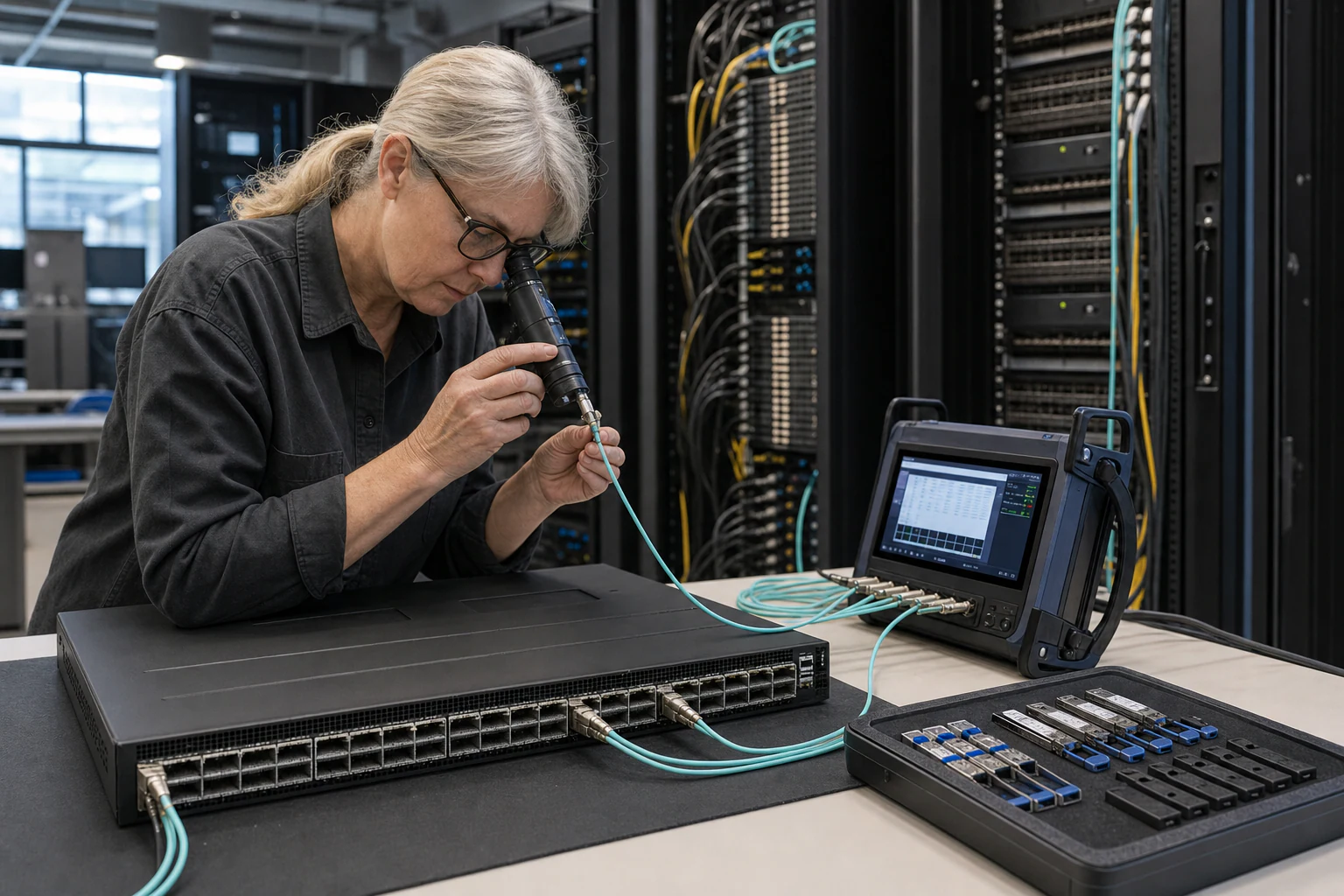
For this topic, treat the article as buyer-ready only when the fabric claim is tied to measurable acceptance data. The baseline evidence package should include the selected switch SKU, SONiC image, ASIC/SAI version, NIC firmware, optics list, RoCE policy, telemetry counters, support owner, and rollback method. In a small pilot, capture at least 30 minutes of traffic at the intended 100G/400G/800G speed, one link failure, one switch reboot, one optics fault, and one support handoff. That evidence separates a credible AI fabric plan from a bandwidth brochure.
| Evidence area | What to validate | Acceptance gate | Rework trigger |
|---|---|---|---|
| Transport | PFC, ECN, DCBX, MTU, queue mapping, and CNP counters | 30 minutes load test at 100G/400G/800G | RoCE is asserted but not measured |
| Platform | Switch SKU, ASIC, SAI, SONiC image, and optics list | 2 switch roles pass upgrade and rollback | Generic compatibility is used as proof |
| Failure | Link loss, switch reboot, route convergence, and workload impact | 3 failure cases captured with timestamps | Steady-state throughput is the only evidence |
| Telemetry | Queue depth, drops, optics DOM, gNMI, and packet visibility | Operators explain a slowdown within 15 minutes | GPU and network teams use different data |
| Support | APAC escalation, RMA, spares, and patch lifecycle | 12 months operating plan approved | Ownership splits across vendors |
This section deliberately avoids treating the topic as a feature checklist. The buyer should be able to hand the evidence to engineering, security, finance, and support teams and have each group understand what was tested, what failed, what was accepted, and what still needs rework. That is also the content pattern most useful for generative search: the page states a clear conclusion, names measurable parameters, identifies risk, and cites the operational proof required before deployment.
Engineering FAQ
Can Ethernet match InfiniBand for AI workloads?
Ethernet can support serious AI workloads when the fabric is engineered for RoCE v2, congestion control, telemetry, and failure recovery. It should not be treated as ordinary best-effort Ethernet with faster ports. The acceptance test must prove lossless-class behaviour, queue stability, and workload performance under congestion.
Is PFC enough for RoCE v2?
No. PFC is only one part of the stack. A production RoCE v2 fabric also needs correct DCBX negotiation, ECN marking, CNP sender response, buffer tuning, QoS separation from best-effort traffic, and telemetry that exposes pause, drop, and queue-depth behaviour.
What should be tested before purchase?
Test baseline throughput, all-to-all traffic, incast, mixed best-effort traffic, link failure during load, optics/FEC behaviour, reboot recovery, DCBX negotiation, PFC pause counters, ECN marks, CNP counters, and telemetry export. The test should use the target SONiC image and representative NIC firmware.
When should buyers consider proprietary AI Ethernet features?
Consider proprietary features when the workload, cluster scale, or support requirement needs behaviour that is not yet proven in the open SONiC stack on the target hardware. The decision should be based on measured performance, operational evidence, and lock-in risk, not vendor positioning.
Related xSONiC Resources
Sources Reviewed
- Ethernet Network Adapters - ConnectX NICs | NVIDIA
- NVIDIA BlueField Data Processing Unit
- NVIDIA Spectrum-X Ethernet Platform
- SONiC Project Documentation
- Broadcom Ethernet Switching
- Marvell Switching
- NVIDIA Ethernet Switching
- Open Compute Networking
- SONiC GitHub
- SONiC Foundation
Product fit
Products referenced for evaluation
These products are referenced for evaluation context in the article. Confirm workload, port, optics, software, interoperability, and support requirements against the exact deployment before procurement.
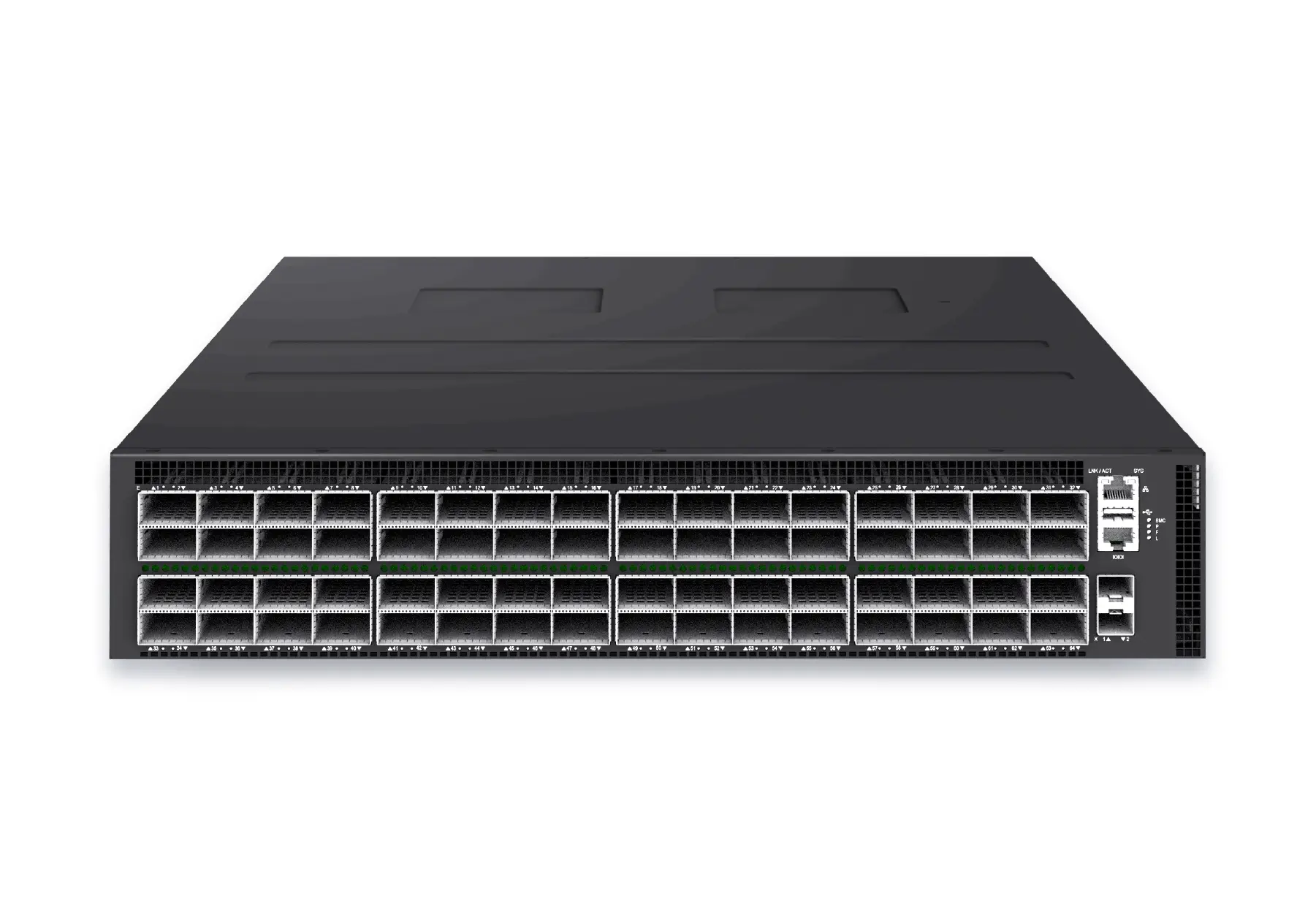 datacenter aiXS-DC-64X800-AI-G164-port 800G AI fabric switch for large-scale GPU clusters, HPC backbones, and ultra-high-throughput data center networks.View product
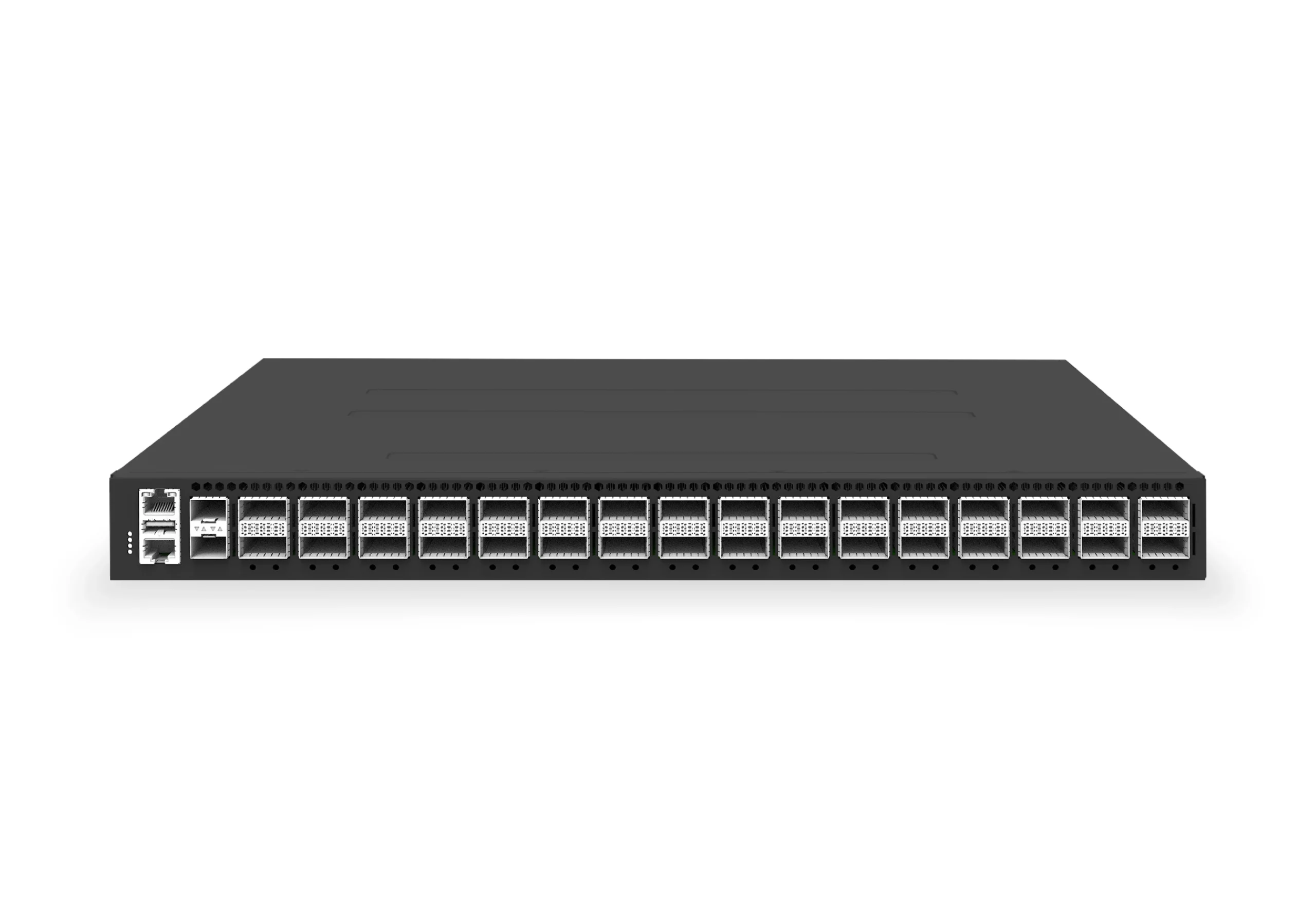 datacenter aiXS-DC-32X400-SP-G232-port 400G spine/core switch for high-capacity data center fabrics and AI-ready backbones.View product
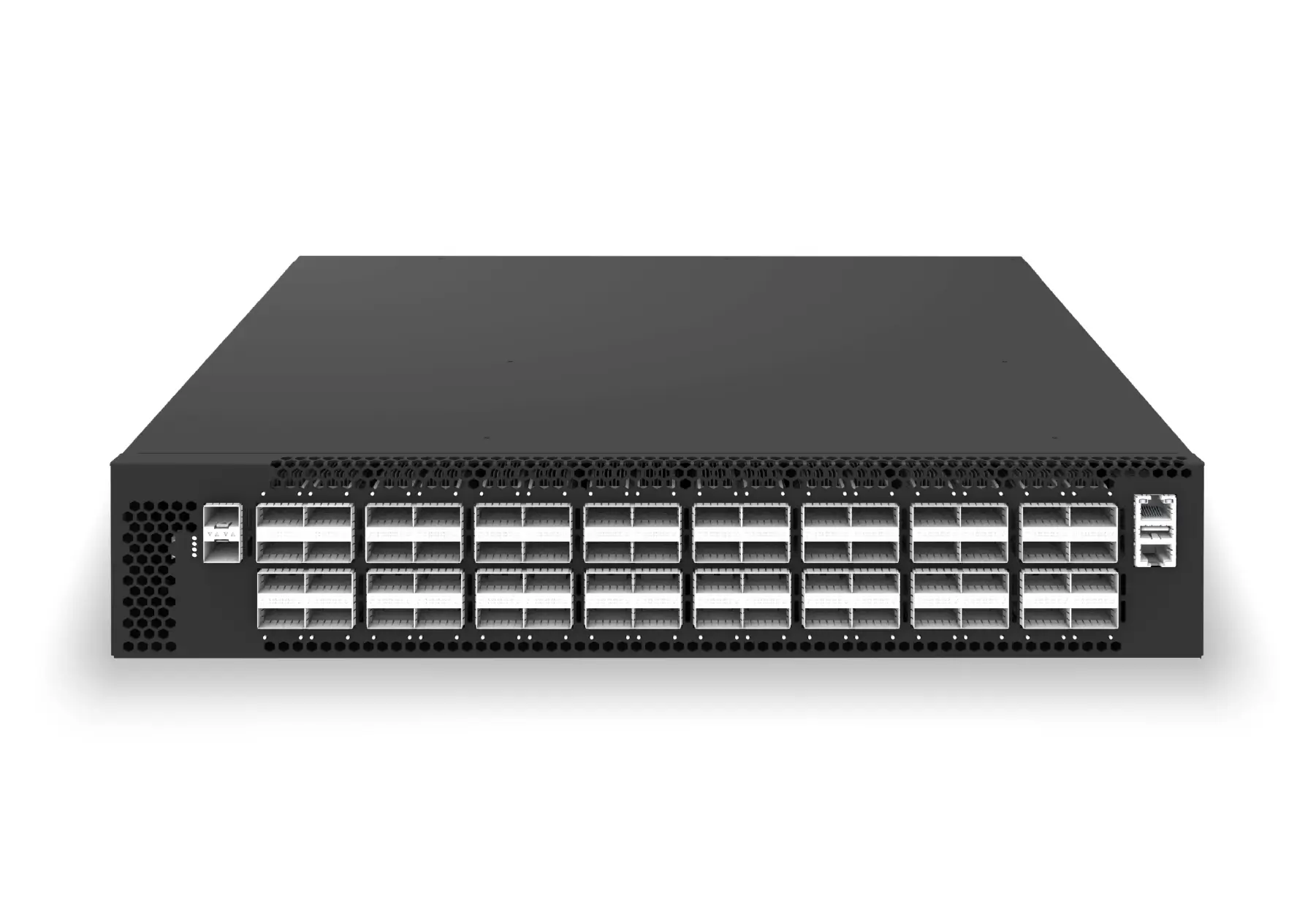 datacenter aiXS-DC-64X200-LS-G164-port 200G leaf/spine switch for high-bandwidth storage, compute, and scale-out data center fabrics.View product
Continue reading
Related articles
 Technical ArticleHow SONiC-Powered 400G and 800G Switches Change AI Data Center Fabric Design in AustraliaEngineering guide for 400G and 800G optics planning covering form factor, reach, telemetry, thermal limits, supply risk, and validation.Read article
 Technical ArticleRoCE v2 GPU Backend Fabrics at 400G and 800G: What Australian Data Center Operators Need to Know in 2026Engineering guide for AI fabric buyers covering RoCE, SONiC, telemetry, optics, support ownership, and deployment validation.Read article
 Technical ArticleWhat Australian Data Center Buyers Need to Know Before Choosing SONiC Switches for 400G and 800G UpgradesEngineering guide for 400G and 800G optics planning covering form factor, reach, telemetry, thermal limits, supply risk, and validation.Read article