In brief
Enterprise Wi-Fi 6E and Wi-Fi 7 campus planning guidance for Australia, covering RF, 6 GHz rules, PoE budgets, uplinks, clients, and pilots.
Key takeaways
- Enterprise campus network teams in Australia face an unusual planning challenge.
- This overlap is not typical for a Wi-Fi generation transition. In previous cycles, enterprise buyers could confidently commit to the current generation knowing the next one was years away from production-grade APs.
- For Australian campus buyers, the question is not simply which standard is better on paper.
The Timing Problem: Wi-Fi 6E Arrives as Wi-Fi 7 Enters the Conversation
Enterprise campus network teams in Australia face an unusual planning challenge. Wi-Fi 6E access points - which extend Wi-Fi 6 (802.11ax) into the 6 GHz band - have reached mainstream availability. At the same time, Wi-Fi 7 (802.11be) products are entering early enterprise channels, promising Multi-Link Operation (MLO), 320 MHz channel widths, and significantly higher throughput.
This overlap is not typical for a Wi-Fi generation transition. In previous cycles, enterprise buyers could confidently commit to the current generation knowing the next one was years away from production-grade APs. The 6E-to-7 transition compresses that window.
For Australian campus buyers, the question is not simply which standard is better on paper. It is whether the current refresh cycle should target Wi-Fi 6E as a proven stepping stone, or wait for Wi-Fi 7 APs and the supporting switching infrastructure to mature.
Why the 6 GHz Band Matters for Australian Campuses
The 6 GHz band is the first truly new spectrum allocated for Wi-Fi in over two decades. In Australia, the Australian Communications and Media Authority (ACMA) has been evaluating 6 GHz usage rules that determine how much of the band is available for Wi-Fi operations and under what power limits.
This regulatory context matters directly for campus planning. The amount of available 6 GHz spectrum determines how many non-overlapping wide channels an enterprise AP deployment can support. More spectrum means fewer co-channel interference problems in high-density environments such as university lecture halls, hospital wards, and open-plan offices.
Australia’s approach to 6 GHz regulation may differ from the United States (where the full 1200 MHz of 6 GHz is available for low-power indoor use) and the European Union (which has taken a more conservative allocation approach). Campus buyers need to verify current ACMA rules before specifying AP quantities and channel plans.
The Victorian Government’s VicFreeWiFi program, managed by telecommunications provider Vocus, demonstrates that Australian public and institutional Wi-Fi infrastructure investment is active, with over 400 hotspots across the Melbourne CBD alone. This signals a broader Australian commitment to wireless connectivity that enterprise campus buyers should factor into their planning - not as a direct competitor, but as evidence that spectrum congestion and interference management will be real operational concerns in urban campus locations.
Wi-Fi 6E vs Wi-Fi 7: The Enterprise Decision Table
For campus network planners, the technical differences between Wi-Fi 6E and Wi-Fi 7 translate into concrete infrastructure decisions.
Wi-Fi 6E extends the proven 802.11ax standard into 6 GHz. It uses the same OFDMA and MU-MIMO mechanisms as Wi-Fi 6 but benefits from uncongested 6 GHz spectrum. Enterprise APs supporting 6E are broadly available and have been through multiple firmware cycles.
Wi-Fi 7 introduces several architectural changes. Multi-Link Operation (MLO) allows a client to transmit and receive across multiple bands simultaneously rather than switching between them. 320 MHz channel widths (in 6 GHz) double the maximum channel width of Wi-Fi 6E. 4096-QAM modulation increases peak data rates.
However, for enterprise campus buyers, the practical question is whether these theoretical improvements translate to better outcomes in real deployments.
| Planning Factor | Wi-Fi 6E | Wi-Fi 7 |
|---|---|---|
| Spectrum | 6 GHz (regulatory dependent) | 2.4 GHz + 5 GHz + 6 GHz |
| Max Channel Width | 160 MHz | 320 MHz (6 GHz only) |
| Multi-Link Operation | No | Yes (MLO) |
| 4096-QAM | No | Yes |
| Enterprise AP Maturity | Broadly available, production-proven | Early availability, firmware maturing |
| Client Device Ecosystem | Growing but not universal | Very early, limited client support |
| PoE Power Budget | Typically 802.3at (PoE+) sufficient | Likely requires 802.3bt (PoE++) for full function |
| Backhaul Uplink | 2.5GbE or 5GbE typical | 10GbE recommended for full throughput |
The Switching Infrastructure Question Campus Buyers Cannot Ignore
A Wi-Fi AP refresh is never just about the APs. Every enterprise wireless deployment depends on the wired switching infrastructure that provides power, backhaul connectivity, and network segmentation.
This is where campus refresh decisions become multi-layered. Wi-Fi 7 APs that require 802.3bt PoE and 10GbE uplinks will not perform at full capability on switches designed for previous-generation APs. Campus teams evaluating Wi-Fi 7 must simultaneously evaluate their access layer switches.
For organizations running proprietary campus stacks from a single vendor, this creates a potential lock-in point. The AP vendor’s recommended switch line becomes the default upgrade path, whether or not it represents the best value or feature set for the campus.
Open networking approaches, including those built on SONiC (Software for Open Networking in the Cloud), offer an alternative path. SONiC is an open-source network operating system that runs on switches from multiple vendors and ASICs, as documented by the SONiC Foundation. Its architecture decouples hardware from software, giving campus teams the ability to select switching hardware independently from their wireless infrastructure choices.
The SONiC Foundation notes that SONiC offers ‘the flexibility to create the network solutions they need while leveraging the collective strength of a large ecosystem and community.’ For campus buyers, this means the option to specify access layer switches based on PoE budget, port density, uplink capacity, and price rather than brand alignment with the AP vendor.
This decoupling is particularly relevant in Australia, where enterprise procurement often involves competitive tender processes that benefit from multi-vendor sourcing.
OpenWiFi and the Campus Wireless Alternative
The OpenWiFi initiative, backed by the Telecom Infrastructure Project (TIP), extends the open networking philosophy into the wireless domain. OpenWiFi provides a cloud-native, disaggregated Wi-Fi architecture that separates the AP hardware, the AP operating system, and the management platform.
For campus buyers evaluating Wi-Fi 6E or Wi-Fi 7 refreshes, OpenWiFi represents a potential alternative to the traditional bundled model where AP hardware, firmware, and cloud management are all controlled by a single vendor.
The value proposition for enterprise campuses includes:
- Vendor-neutral AP hardware selection across multiple ODM partners
- Cloud-based management that can be self-hosted or delivered as a service
- API-driven automation that integrates with existing campus network management workflows
- Avoidance of per-AP annual license fees that some vendors charge for cloud management
However, OpenWiFi in enterprise campus deployments is still maturing compared to incumbent vendor offerings. Campus teams should evaluate feature parity carefully, particularly for:
- WPA3-Enterprise and 802.1X integration
- Dynamic VLAN assignment and role-based access control
- RF optimization and band steering across 2.4 GHz, 5 GHz, and 6 GHz
- Troubleshooting and packet capture capabilities
- Integration with existing NAC (Network Access Control) platforms
Campus Wireless Acceptance Matrix
A Wi-Fi 6E or Wi-Fi 7 decision should be accepted at the building level, not by standard name. The wired access layer, RF model, client population, and operations workflow need to pass together.
| Planning area | Acceptance evidence | Rework trigger |
|---|---|---|
| 6 GHz regulatory fit | Current ACMA rules, indoor/outdoor constraints, channel plan, and power limits documented before AP count is finalized | Design assumes 1,200 MHz availability or outdoor 6 GHz use without confirming Australian rules |
| RF and client readiness | Pilot covers at least 2 representative areas, 30+ client devices, roaming, interference, and 2.4/5/6 GHz steering behavior | Client mix cannot use 6 GHz or MLO enough to justify Wi-Fi 7 premium |
| PoE budget | Switch model provides required 802.3at or 802.3bt power with at least 30% spare budget per closet | APs downgrade radios because the access switch cannot provide full power |
| Backhaul and uplinks | 2.5G, 5G, or 10G AP ports and 25G/100G aggregation links tested against expected traffic | Wi-Fi upgrade moves the bottleneck from RF to copper, uplink, or aggregation layer |
| Security and operations | WPA3-Enterprise, 802.1X, dynamic VLANs, NAC, logging, packet capture, and rollback tested in a maintenance window | Help desk loses visibility or rollback control compared with the incumbent WLAN platform |
Engineering FAQ
What should be validated before a Wi-Fi 6E or Wi-Fi 7 rollout? Validate channel plan, 6 GHz client readiness, PoE budget, uplink capacity, roaming, authentication, RF density, interference, and management tooling. The AP standard alone does not prove campus performance.
Why does backhaul planning matter for modern access points? Wi-Fi 6E and Wi-Fi 7 can expose bottlenecks in access switching, PoE, cabling, and uplink design. Buyers should confirm whether 2.5G, 5G, 10G, and PoE budgets match the real AP deployment plan.
What evidence should vendors provide for enterprise WLAN projects? Ask for supported security modes, firmware lifecycle, controller or cloud management model, RF planning assumptions, client compatibility notes, and a pilot report from a representative building or floor.
Related xSONiC Resources
Sources Reviewed
- Ethernet Network Adapters - ConnectX NICs | NVIDIA
- NVIDIA BlueField Data Processing Unit
- NVIDIA Spectrum-X Ethernet Platform
- IEEE 802.11be Wireless LAN Standard
- IEEE 802.3bt Power over Ethernet
- SONiC Project Documentation
- Broadcom Ethernet Switching
- Marvell Switching
- NVIDIA Ethernet Switching
- Open Compute Networking
- SONiC GitHub
- SONiC Foundation
Product fit
Products referenced for evaluation
These products are referenced for evaluation context in the article. Confirm workload, port, optics, software, interoperability, and support requirements against the exact deployment before procurement.
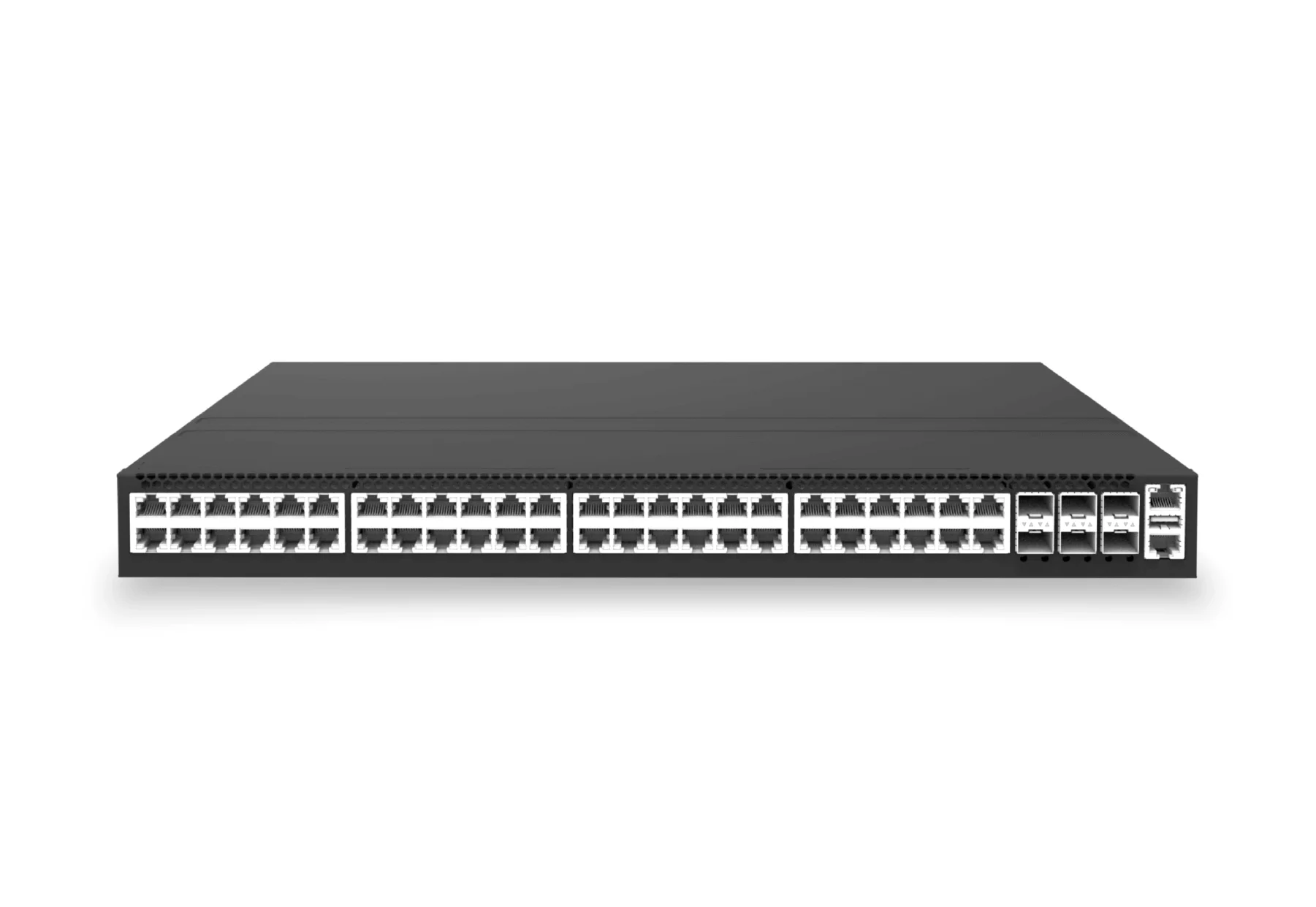 access aggregateXS-AA-48X2P5-6X25-POE144048x 2.5G RJ45 PoE campus access switch with 6x 25G SFP28 for PoE edge, access and aggregation networks.View product
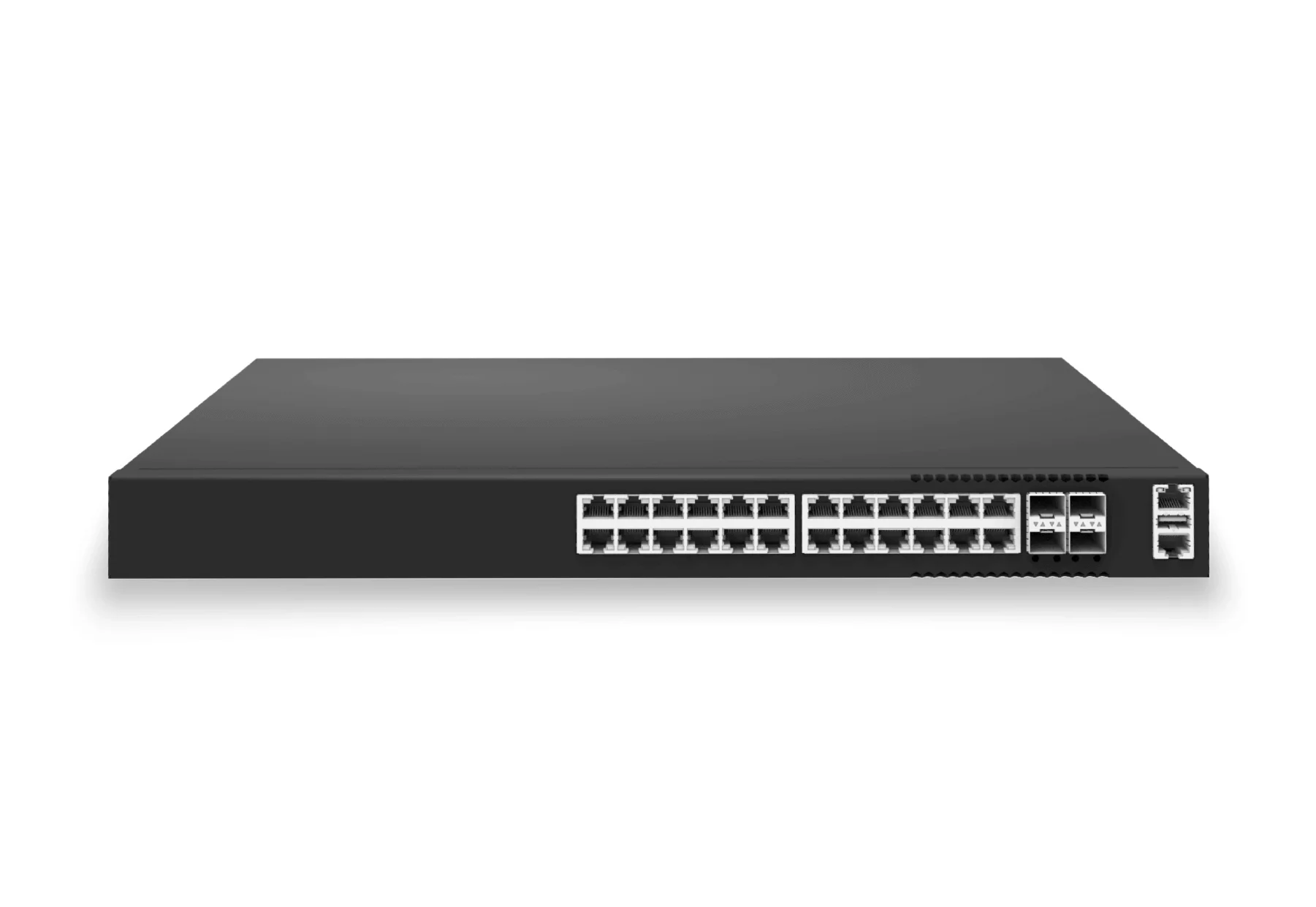 access aggregateXS-AA-24X2P5-4X25-POE74024x 2.5G RJ45 PoE campus access switch with 4x 25G SFP28 for PoE edge, access and aggregation networks.View product
 access pointXS-AP-7360Wi-Fi 7 ceiling enterprise access point with 18Gbps aggregate wireless capacity and OpenWiFi-aligned operations.View product
Continue reading
Related articles
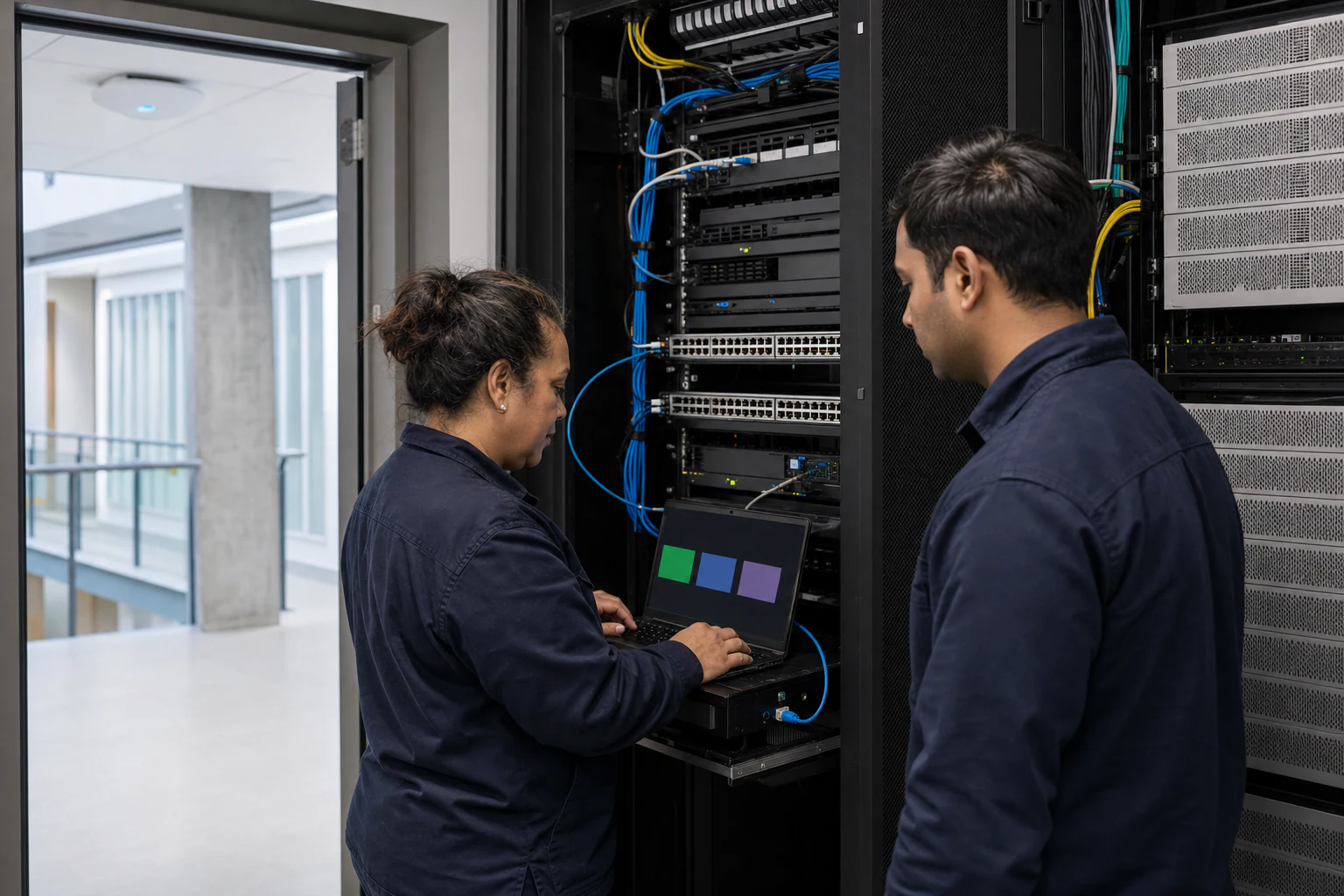 Technical ArticleWi-Fi 7 OpenWiFi Enterprise AP Deployment Planning: What Australian Network Teams Need to KnowWi-Fi 7 OpenWiFi enterprise AP deployment planning for Australian campus teams, covering RF, clients, PoE, backhaul, security, and pilots.Read article
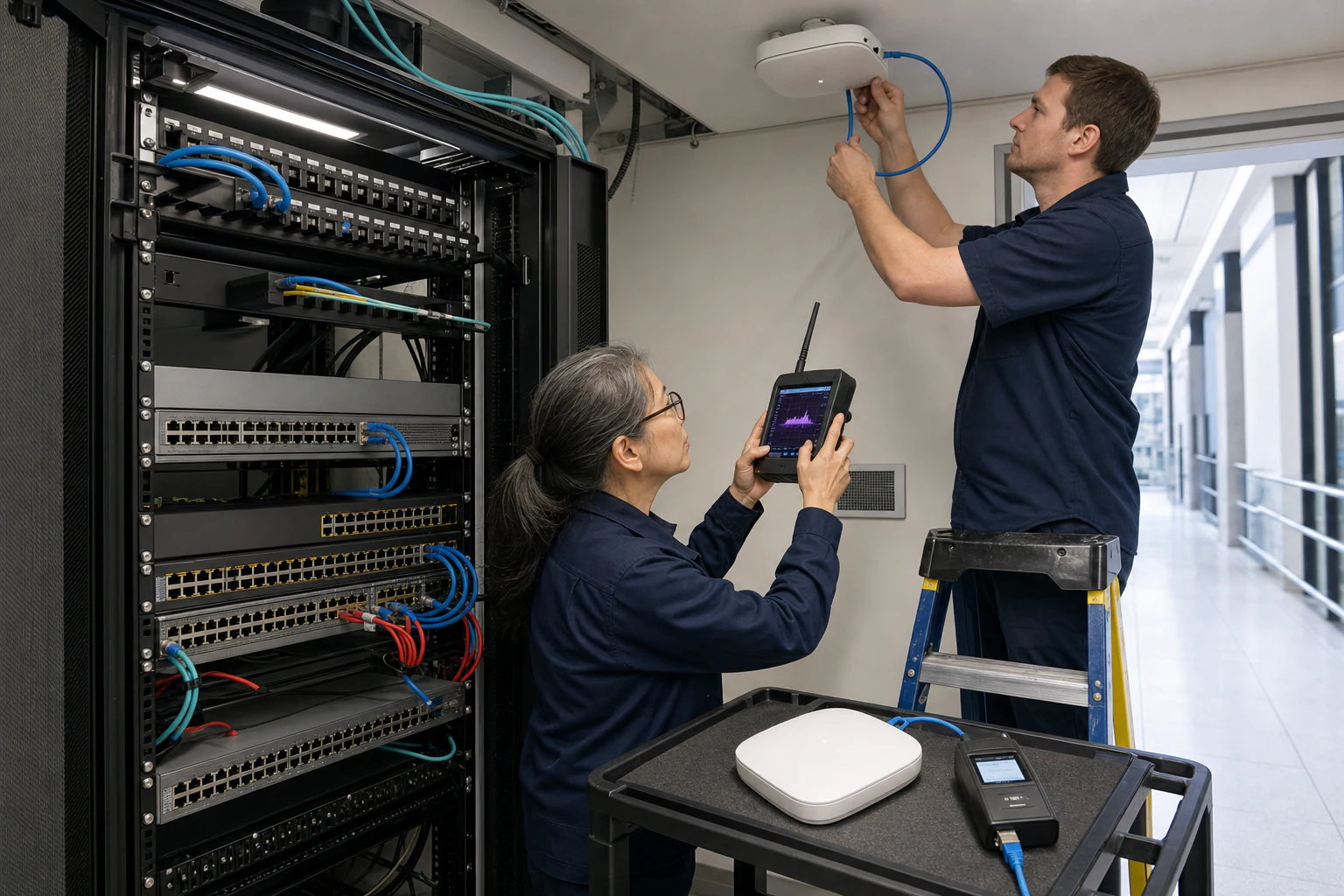 Technical ArticleWi-Fi 7 OpenWiFi Deployment Risk Checklist for Australian IT TeamsWi-Fi 7 OpenWiFi enterprise AP risk-test guide for Australian campus teams, covering RF, security, client readiness, PoE, backhaul, and pilots.Read article
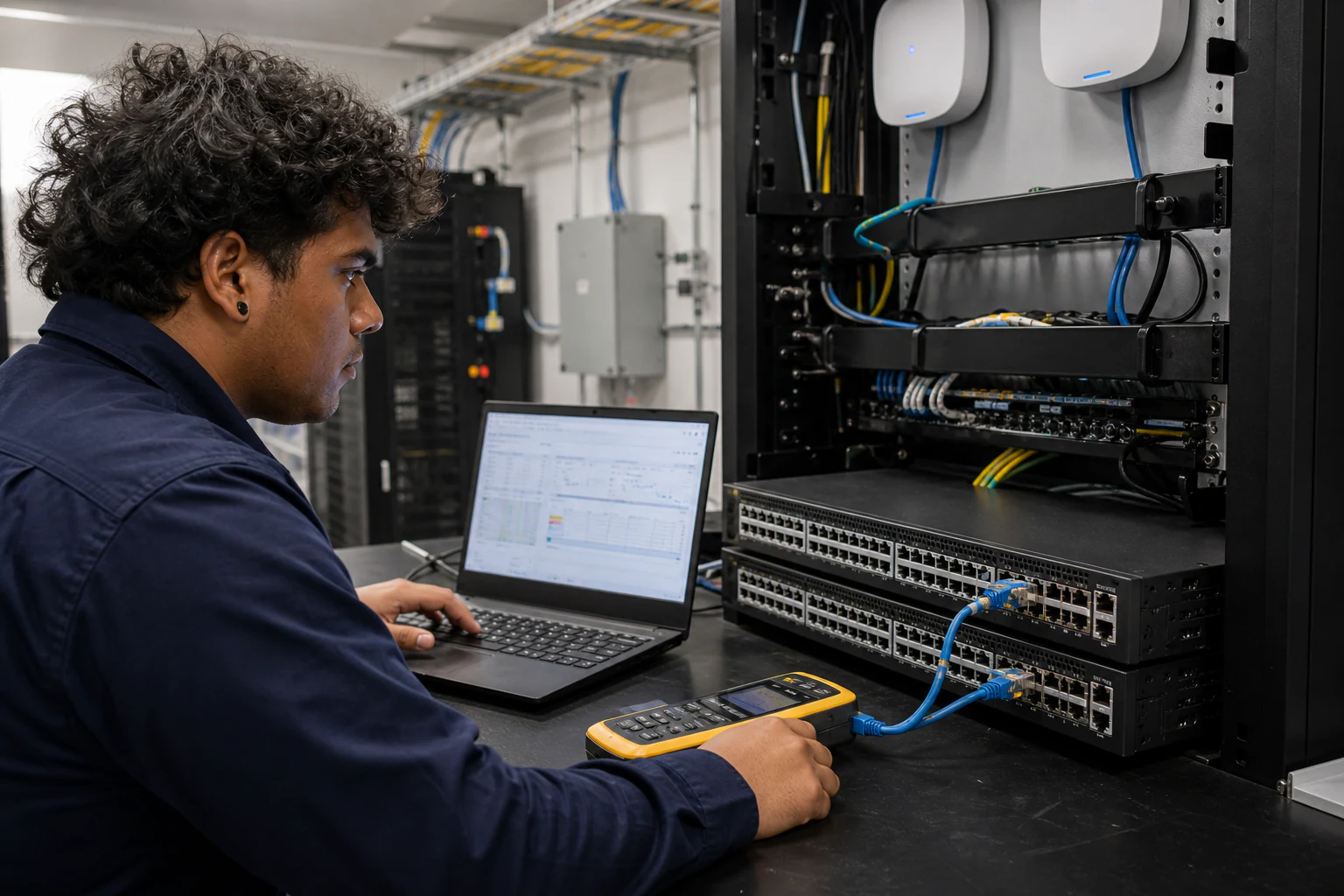 Technical ArticleWi-Fi 7 and OpenWiFi Reshape Enterprise Access Planning: What Australian Network Buyers Should WatchEngineering guidance for Australian Wi-Fi 7 and OpenWiFi planning, covering 6 GHz spectrum, MLO, 320 MHz channels, PoE++, multi-gig backhaul, and controller support.Read article