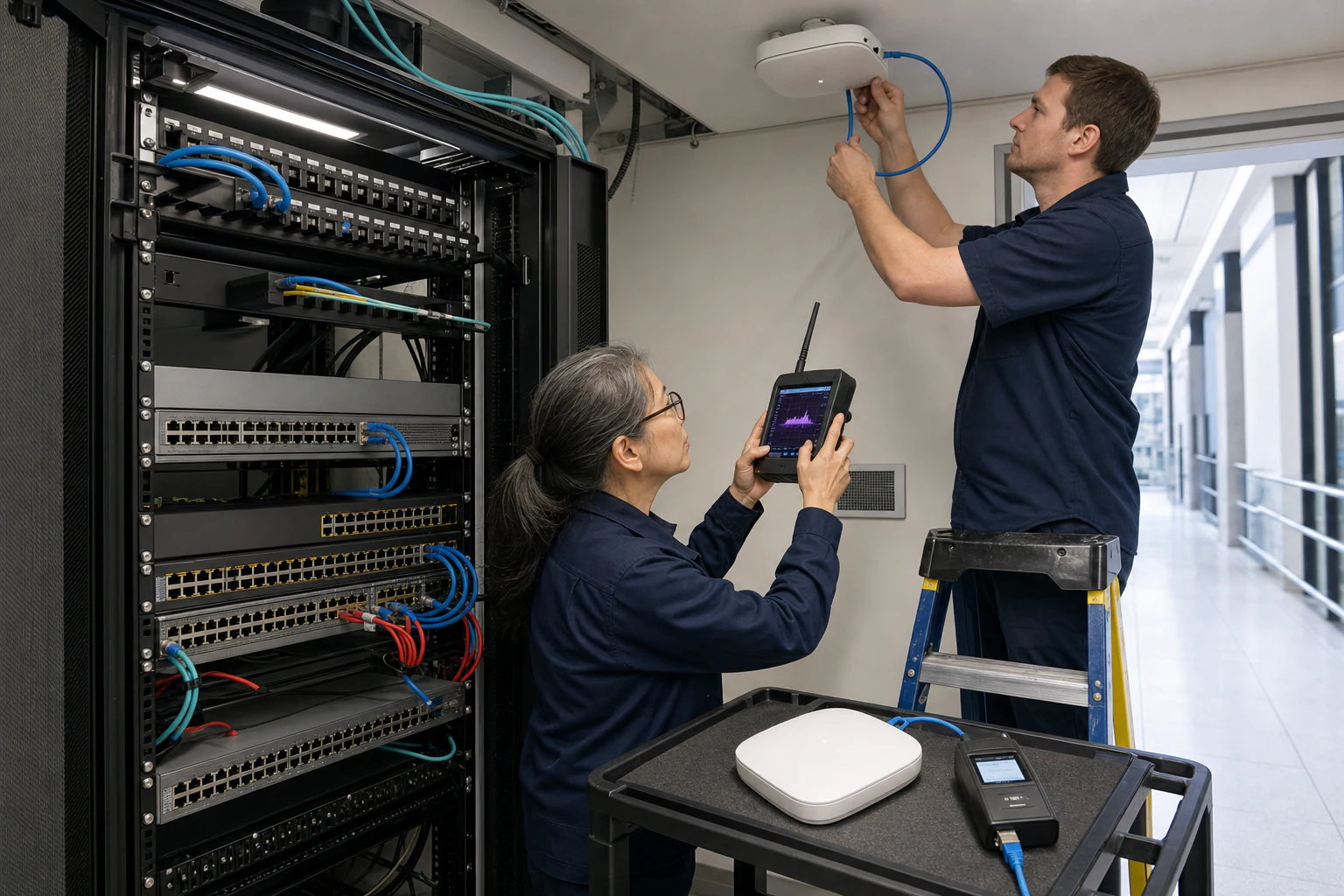
In brief
Wi-Fi 7 OpenWiFi enterprise AP risk-test guide for Australian campus teams, covering RF, security, client readiness, PoE, backhaul, and pilots.
Key takeaways
- The OpenWiFi ecosystem, backed by the Telecom Infra Project and aligned with the Open Compute Project's broader disaggregation mission, is approaching enterprise readiness for Wi-Fi 7 access point deployments.
- The open networking movement has matured significantly in the data center.
- However, the gap between data center disaggregation maturity and campus wireless disaggregation maturity is substantial.
What Happened: OpenWiFi Meets Real-World Australian Campus Networks
The OpenWiFi ecosystem, backed by the Telecom Infra Project and aligned with the Open Compute Project’s broader disaggregation mission, is approaching enterprise readiness for Wi-Fi 7 access point deployments. For Australian enterprise and data center teams planning campus refresh cycles in 2026 Q2, this creates a specific decision point: evaluate OpenWiFi-aligned Wi-Fi 7 APs against entrenched proprietary controller stacks, or extend existing vendor commitments for another cycle.
The open networking movement has matured significantly in the data center. SONiC, the open-source network operating system incubated through OCP and now governed by the SONiC Foundation under the Linux Foundation, has been production-hardened at hyperscale cloud providers and is gaining traction in enterprise data center fabrics. The same disaggregation logic — decoupling hardware from software, enabling multi-vendor switching, and reducing controller lock-in — is now being applied to enterprise wireless through OpenWiFi.
However, the gap between data center disaggregation maturity and campus wireless disaggregation maturity is substantial. Australian IT teams evaluating Wi-Fi 7 OpenWiFi APs in 2026 Q2 need to risk-test deployment assumptions against real operational constraints that vendor marketing rarely surfaces.
Why It Matters: UNSW Sydney Shows How Complex Enterprise Wi-Fi Gets in Practice
UNSW Sydney’s campus Wi-Fi deployment offers a useful window into the operational complexity that any enterprise wireless refresh must account for. The university runs multiple distinct wireless networks — eduroam for staff and students using 802.1X certificate-based authentication, a separate UNSW-IoT network for non-standard devices like smart TVs, 3D printers, sensors, and lab equipment that cannot use eduroam’s standard login, and a guest network with time-limited access.
Several details from UNSW’s public IT documentation highlight deployment risks that apply equally to OpenWiFi evaluations:
Certificate lifecycle management. UNSW’s eduroam onboarding installs security certificates that expire after one year, requiring device re-onboarding. Any Wi-Fi 7 AP refresh must integrate cleanly with existing certificate infrastructure and identity providers. OpenWiFi APs must prove they handle 802.1X certificate validation, RADIUS integration, and periodic re-authentication at enterprise scale.
IoT device segmentation. UNSW maintains a dedicated IoT Wi-Fi network because many devices do not support standard 802.1X authentication. Australian enterprises with smart building, healthcare, or laboratory IoT deployments face the same segmentation challenge. OpenWiFi solutions must demonstrate robust per-SSID policy enforcement and device isolation without proprietary controller dependencies.
Privacy and data sovereignty. UNSW’s privacy notice reveals that its Wi-Fi infrastructure — running on Aruba Central Software as a Service with Azure Platform as a Service — collects location data based on proximity to specific access points, device MAC addresses, IP addresses, operating systems, and hostnames. Under Australia’s Privacy Act 1988 and state-level legislation such as the Privacy and Personal Information Protection Act 1998 (NSW), Australian enterprises must ensure that Wi-Fi management platforms, including any cloud-based OpenWiFi controller or analytics service, comply with data handling obligations. Cloud-managed OpenWiFi solutions that route telemetry to offshore infrastructure raise sovereignty questions that enterprise procurement teams must address before deployment.
Multi-OS device support. UNSW’s onboarding portal handles Windows, macOS, Linux, iOS, and Android devices, plus specialty and IoT endpoints. Any OpenWiFi AP deployment must support the same breadth of client devices and operating systems, including enterprise certificate provisioning across platforms.
The xSONiC Buyer Angle: Open Networking Principles Applied to Campus Wireless
xSONiC operates in the open networking infrastructure space, covering access and aggregation switches, access points, and the broader campus networking stack. For Australian enterprise buyers evaluating a campus refresh in 2026 Q2, the OpenWiFi-aligned approach aligns with the same value proposition that drives SONiC adoption in the data center: hardware-software disaggregation, multi-vendor flexibility, and reduced dependence on a single vendor’s controller and licensing model.
The SONiC Foundation’s architecture — containerized network functions running on Linux with the Switch Abstraction Interface (SAI) providing multi-ASIC support — demonstrates that open-source networking at scale is viable. OCP’s networking project, which encompasses ONIE, SAI, and SONiC as sub-projects, has established the ecosystem foundations for disaggregated switching. Extending these principles to campus wireless through OpenWiFi is the logical next step, but the wireless domain introduces client-facing complexity that data center fabrics do not face.
Australian data center operators are also pushing into new territory. In a January 2026 OCP Podcast episode, David Hirst, CEO of Macquarie Data Centres, discussed how AI workloads are reshaping Australian data center design, the importance of Australia’s sovereign approach to digital infrastructure, and the unique regulatory and geographic factors that distinguish the Australian market. While Hirst’s comments focused on data center buildouts rather than campus wireless, the underlying theme applies: Australian enterprise and data center teams cannot simply transplant global infrastructure strategies without accounting for local regulatory, supply chain, and operational realities.
For campus network buyers, this means OpenWiFi Wi-Fi 7 AP evaluations must include:
- Local channel and support availability. Can the OpenWiFi vendor or integrator provide Australian-based TAC and field support?
- Regulatory compliance. Does the AP firmware support Australian Communications and Media Authority (ACMA) spectrum rules for 6 GHz (Wi-Fi 6E and Wi-Fi 7)?
- Integration with existing campus switching. Does the OpenWiFi AP work with the enterprise’s existing access layer switches, PoE budgets, and VLAN architectures?
- Management plane sovereignty. Where does the management data go? Is there an on-premises or Australian-hosted cloud option?
Risk Checklist for 2026 Q2 Australian Wi-Fi 7 OpenWiFi AP Planning
Australian enterprise and data center IT teams evaluating Wi-Fi 7 OpenWiFi access points for 2026 Q2 campus refreshes should risk-test the following areas before committing to a deployment:
| Risk Area | What to Verify | Why It Matters in Australia |
|---|---|---|
| 802.1X and RADIUS integration | Does the OpenWiFi AP support enterprise RADIUS, certificate-based auth, and eduroam federation? | Australian universities and research institutions depend on eduroam; corporate campuses use 802.1X with AD or Azure AD integration |
| IoT device segmentation | Does the solution support dedicated SSIDs with device isolation for non-802.1X endpoints? | Smart building, lab, and healthcare IoT devices are proliferating across Australian campuses |
| OWE and WPA3 client compatibility | Has the vendor tested against the enterprise’s actual client device fleet? | Many Australian enterprises still run mixed device fleets with varying WPA3/OWE support |
| Privacy and data sovereignty | Where is management telemetry stored and processed? Does the platform comply with Australian Privacy Act and state legislation? | Cloud-managed Wi-Fi platforms that route data offshore create compliance risk under Australian law |
| ACMA 6 GHz compliance | Does the AP firmware include Australian-specific 6 GHz channel and power settings? | Wi-Fi 7’s 6 GHz operation requires ACMA regulatory compliance; global firmware may not include AU settings |
| PoE power budget | Does the AP require PoE++ (802.3bt) or can it run on PoE+ (802.3at)? | Campus switch PoE budgets must be verified; many Australian campus closets run PoE+ only |
| Management plane options | Is there an on-premises or AU-hosted cloud management option? | Sovereign data handling requirements may prohibit offshore cloud-managed APs for government and critical infrastructure |
| Vendor support and SLA | Is there Australian-based technical support with enterprise SLA? | Timezone-aligned support matters for Australian enterprises that cannot wait for US or EU business hours |
| Firmware update cadence and security patching | How frequently does the vendor release security patches? Is there a CVE disclosure process? | Australian Cyber Security Centre (ACSC) Essential Eight maturity expectations apply to network infrastructure |
| Integration with campus switching | Does the AP work with existing access layer switches, NAC, and VLAN architectures? | Campus refreshes rarely replace the entire switching stack; AP compatibility with existing infrastructure is critical |
What the Sources Do and Do Not Prove
This analysis draws on several source categories, each with different evidentiary weight:
Source-backed findings:
- UNSW Sydney operates a multi-network campus Wi-Fi environment using Aruba Central SaaS and Azure PaaS, with eduroam, IoT, and guest networks. This is confirmed by UNSW’s public IT documentation.
- UNSW collects location, MAC, IP, OS, and hostname data from Wi-Fi users, with privacy obligations under NSW and Commonwealth legislation. This is confirmed by UNSW’s published terms and privacy notice.
- SONiC is an open-source, container-based NOS with multi-vendor hardware support via SAI, governed by the SONiC Foundation under the Linux Foundation. This is confirmed by the SONiC Foundation website and GitHub repository.
- OCP’s networking project covers ONIE, SAI, SONiC, and optical circuit switching as sub-projects. This is confirmed by the OCP website.
- Macquarie Data Centres CEO David Hirst discussed Australia’s sovereign data center approach, AI workload impact, and unique Australian market factors in a January 2026 OCP Podcast episode.
Engineering FAQ
What should be validated before a Wi-Fi 6E or Wi-Fi 7 rollout? Validate channel plan, 6 GHz client readiness, PoE budget, uplink capacity, roaming, authentication, RF density, interference, and management tooling. The AP standard alone does not prove campus performance.
Why does backhaul planning matter for modern access points? Wi-Fi 6E and Wi-Fi 7 can expose bottlenecks in access switching, PoE, cabling, and uplink design. Buyers should confirm whether 2.5G, 5G, 10G, and PoE budgets match the real AP deployment plan.
What evidence should vendors provide for enterprise WLAN projects? Ask for supported security modes, firmware lifecycle, controller or cloud management model, RF planning assumptions, client compatibility notes, and a pilot report from a representative building or floor.
Related xSONiC Resources
Sources Reviewed
- Wi-Fi 7 OpenWiFi Enterprise AP Deployment Risk Test Context
- xSONiC Enterprise AP and Campus Access Portfolio
- IEEE 802.11be Wireless LAN Standard
- IEEE 802.3bt Power over Ethernet
- Telecom Infra Project OpenWiFi
- Wi-Fi Alliance Wi-Fi 7
- Australian Communications and Media Authority Spectrum Planning
- Open Compute Networking
- SONiC GitHub
- SONiC Foundation
Product fit
Products referenced for evaluation
These products are referenced for evaluation context in the article. Confirm workload, port, optics, software, interoperability, and support requirements against the exact deployment before procurement.
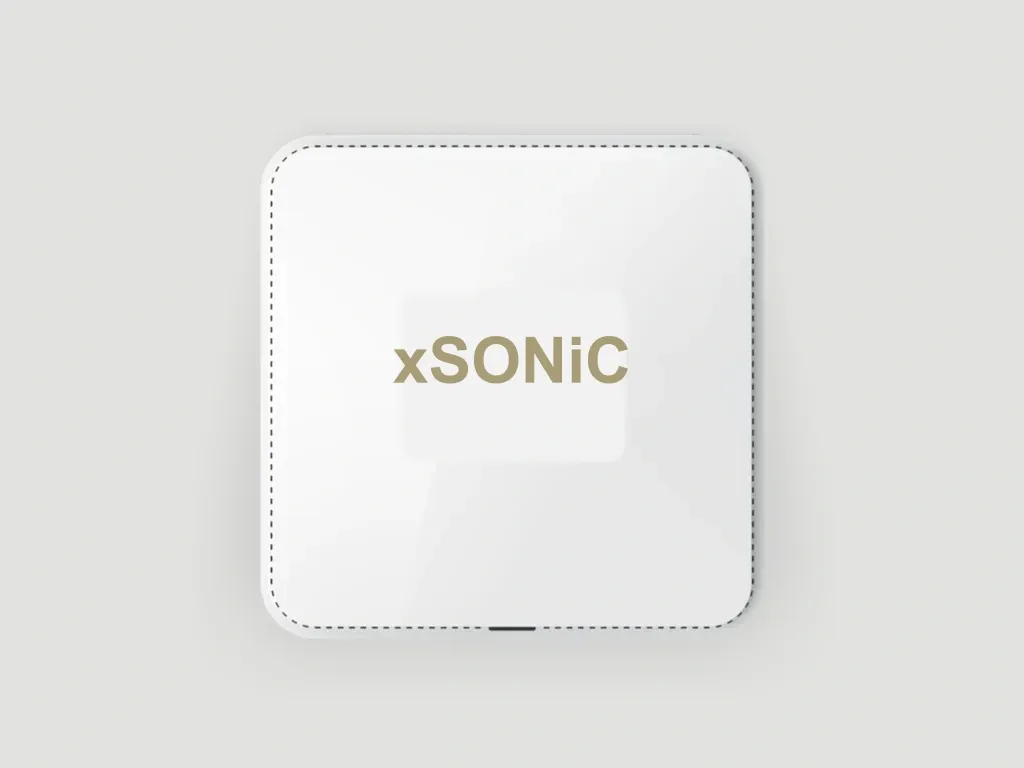 access pointXS-AP-7360Wi-Fi 7 ceiling enterprise access point with 18Gbps aggregate wireless capacity and OpenWiFi-aligned operations.View product
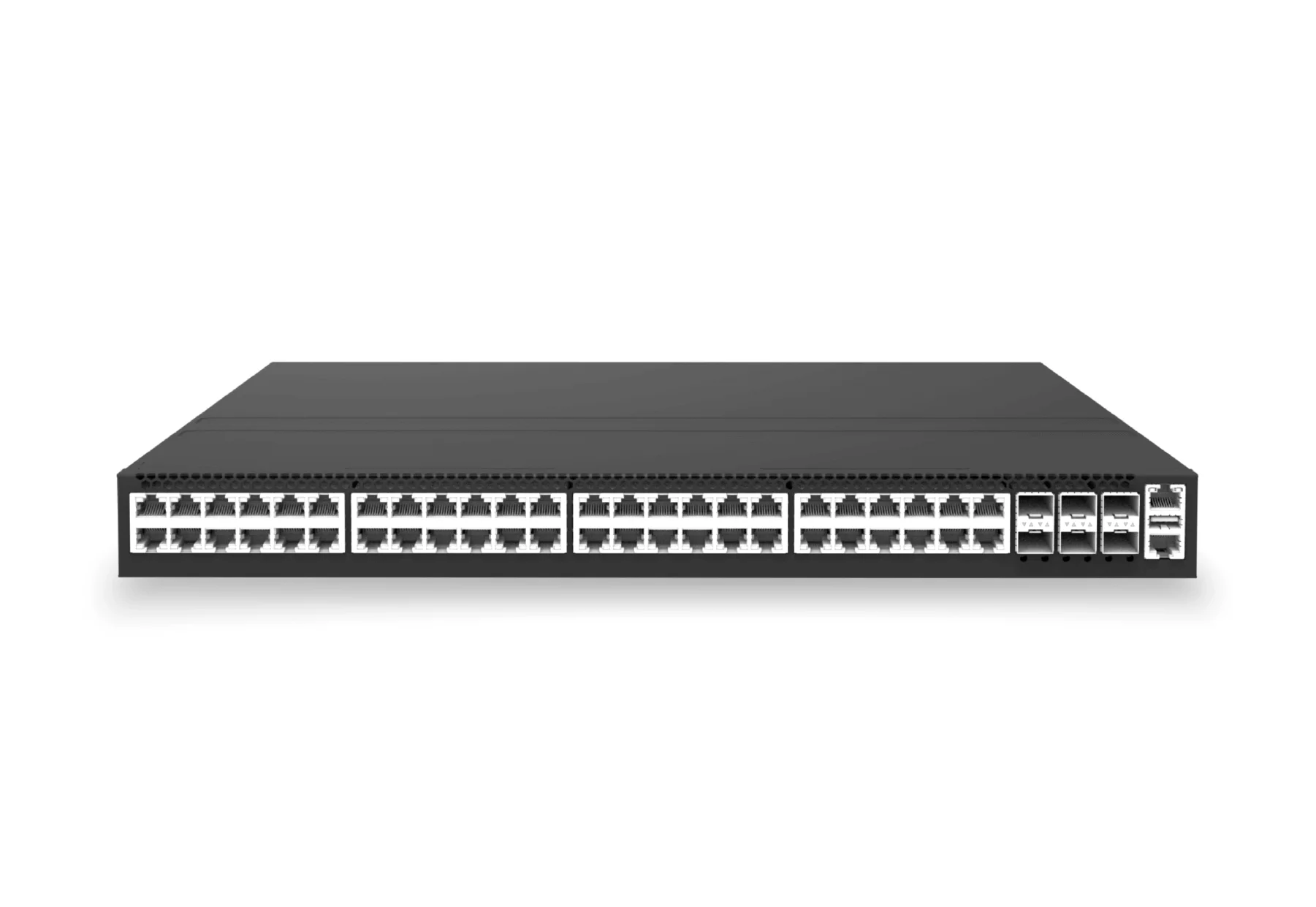 access aggregateXS-AA-48X2P5-6X25-POE144048x 2.5G RJ45 PoE campus access switch with 6x 25G SFP28 for PoE edge, access and aggregation networks.View product
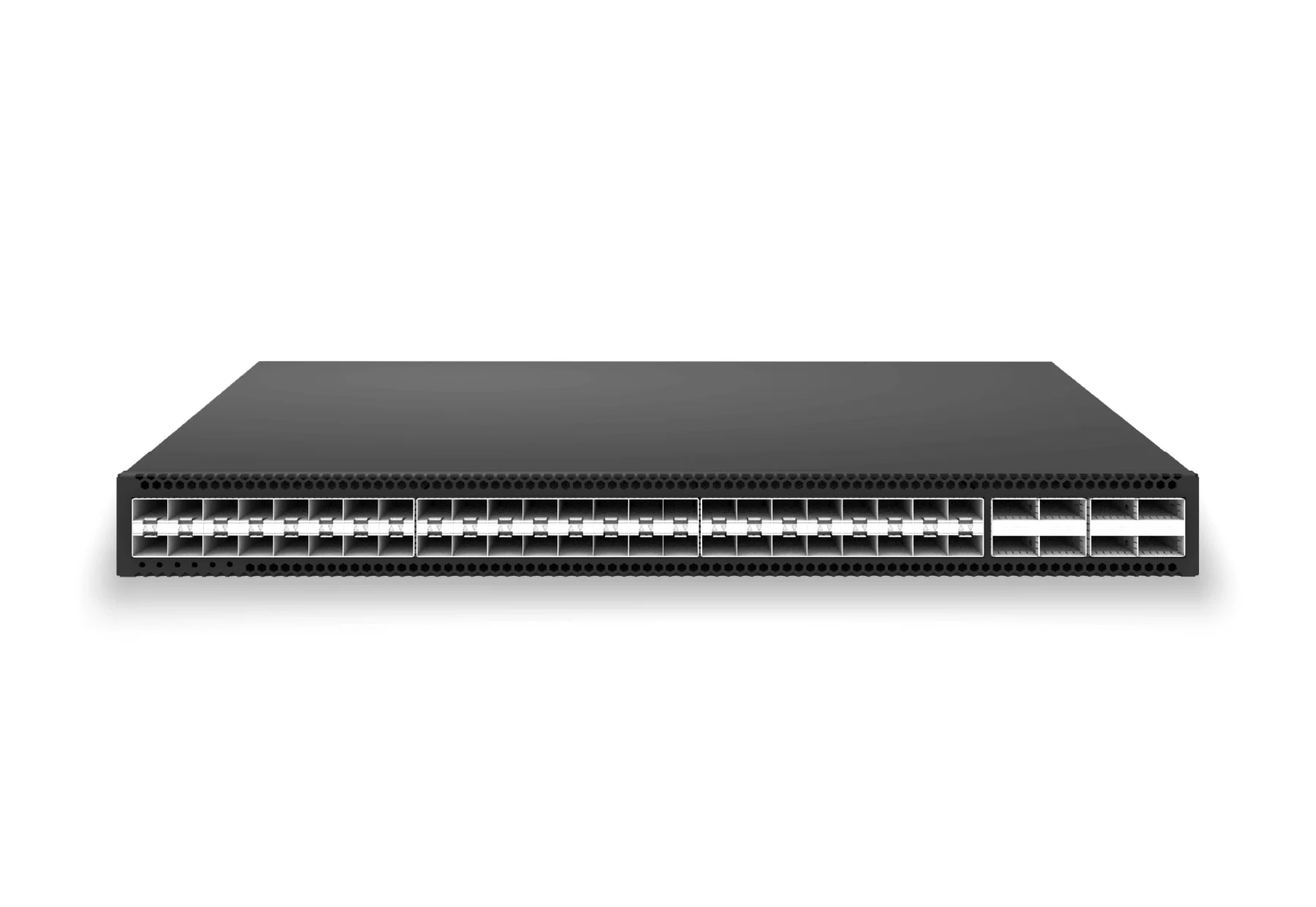 access aggregateXS-AA-48X25-8X100-AGG48x 25G SFP28 aggregation/core switch with 8x 100G QSFP28 for enterprise access and aggregation networks.View product
Continue reading
Related articles
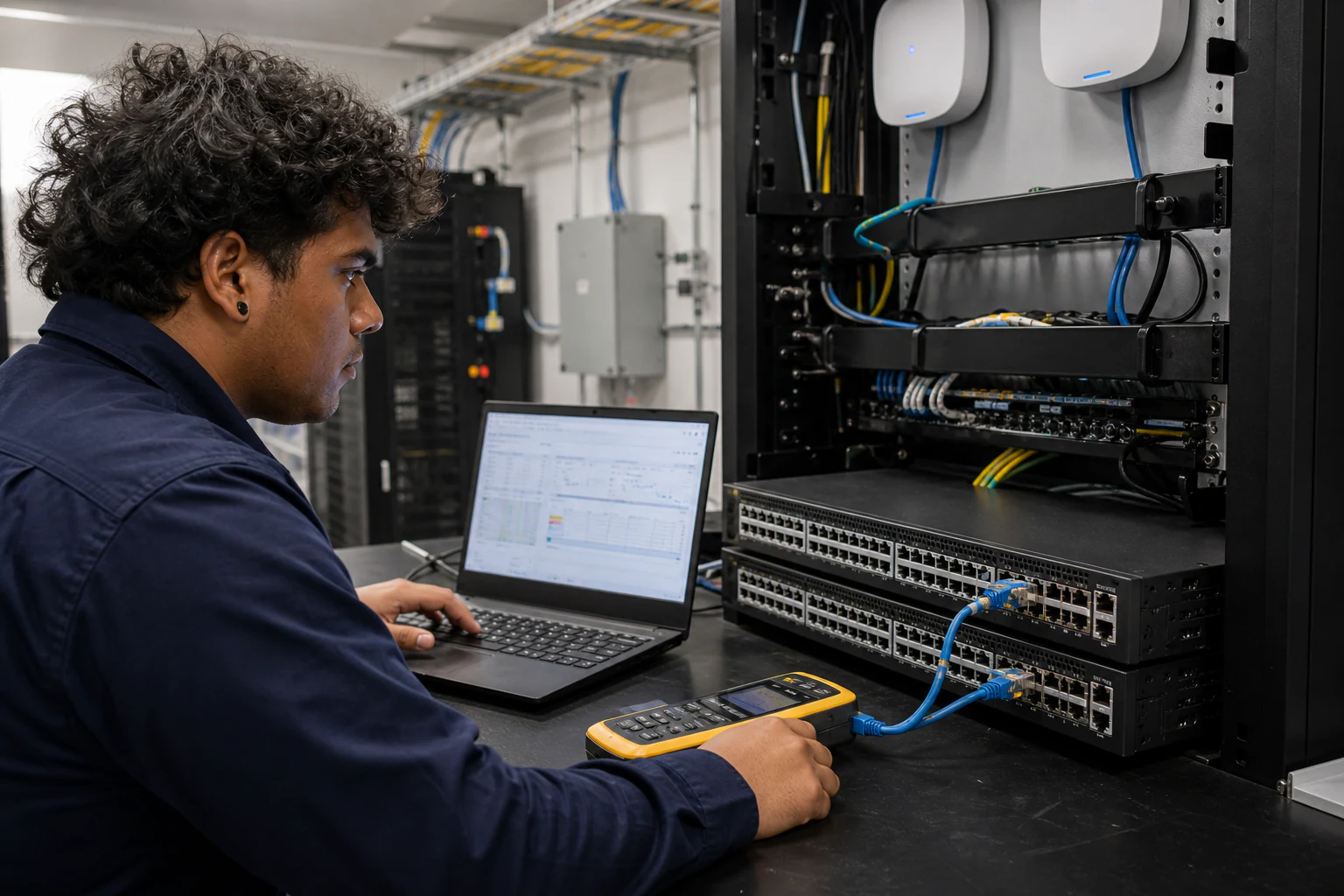 Technical ArticleWi-Fi 7 and OpenWiFi Reshape Enterprise Access Planning: What Australian Network Buyers Should WatchEngineering guidance for Australian Wi-Fi 7 and OpenWiFi planning, covering 6 GHz spectrum, MLO, 320 MHz channels, PoE++, multi-gig backhaul, and controller support.Read article
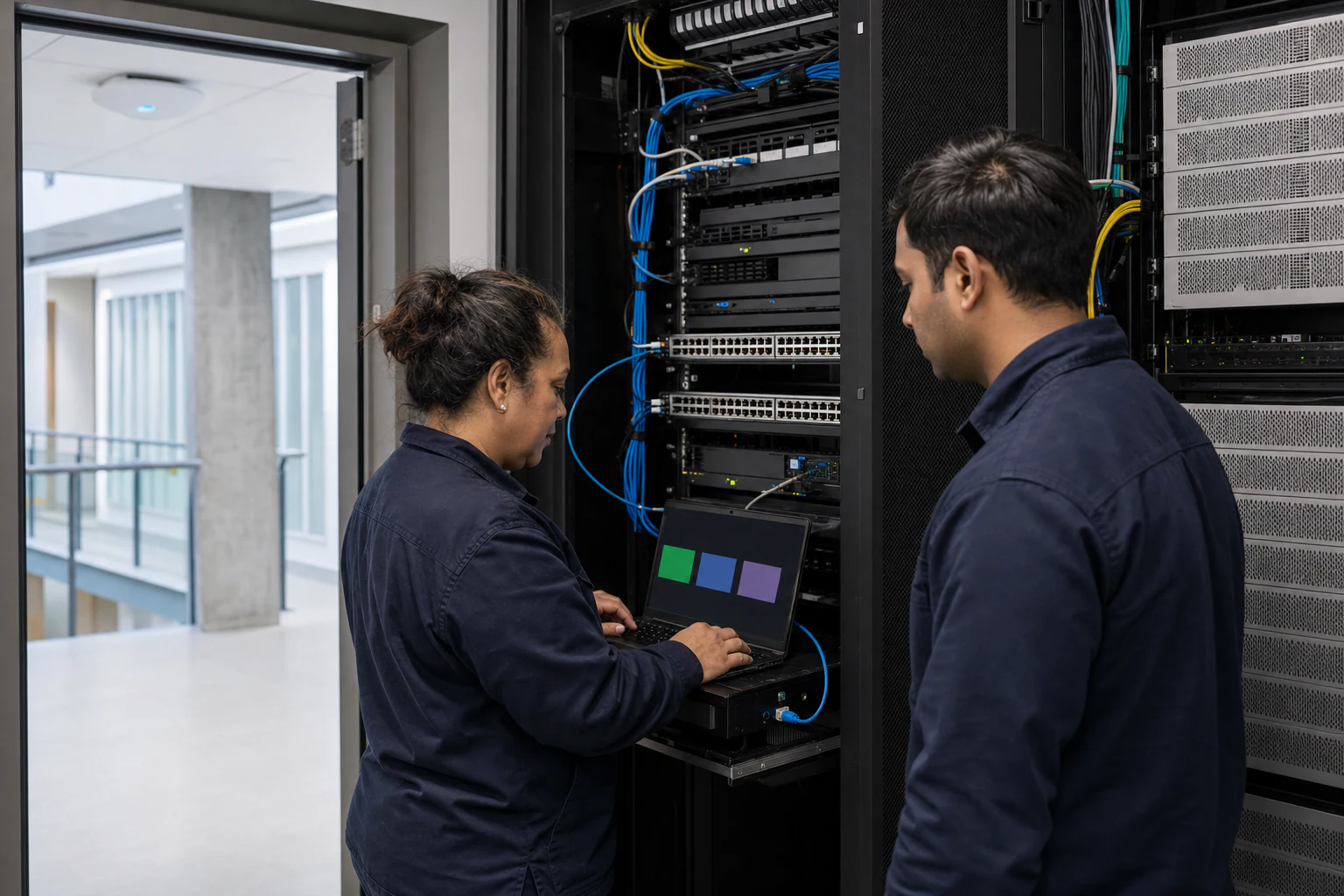 Technical ArticleWi-Fi 7 OpenWiFi Enterprise AP Deployment Planning: What Australian Network Teams Need to KnowWi-Fi 7 OpenWiFi enterprise AP deployment planning for Australian campus teams, covering RF, clients, PoE, backhaul, security, and pilots.Read article
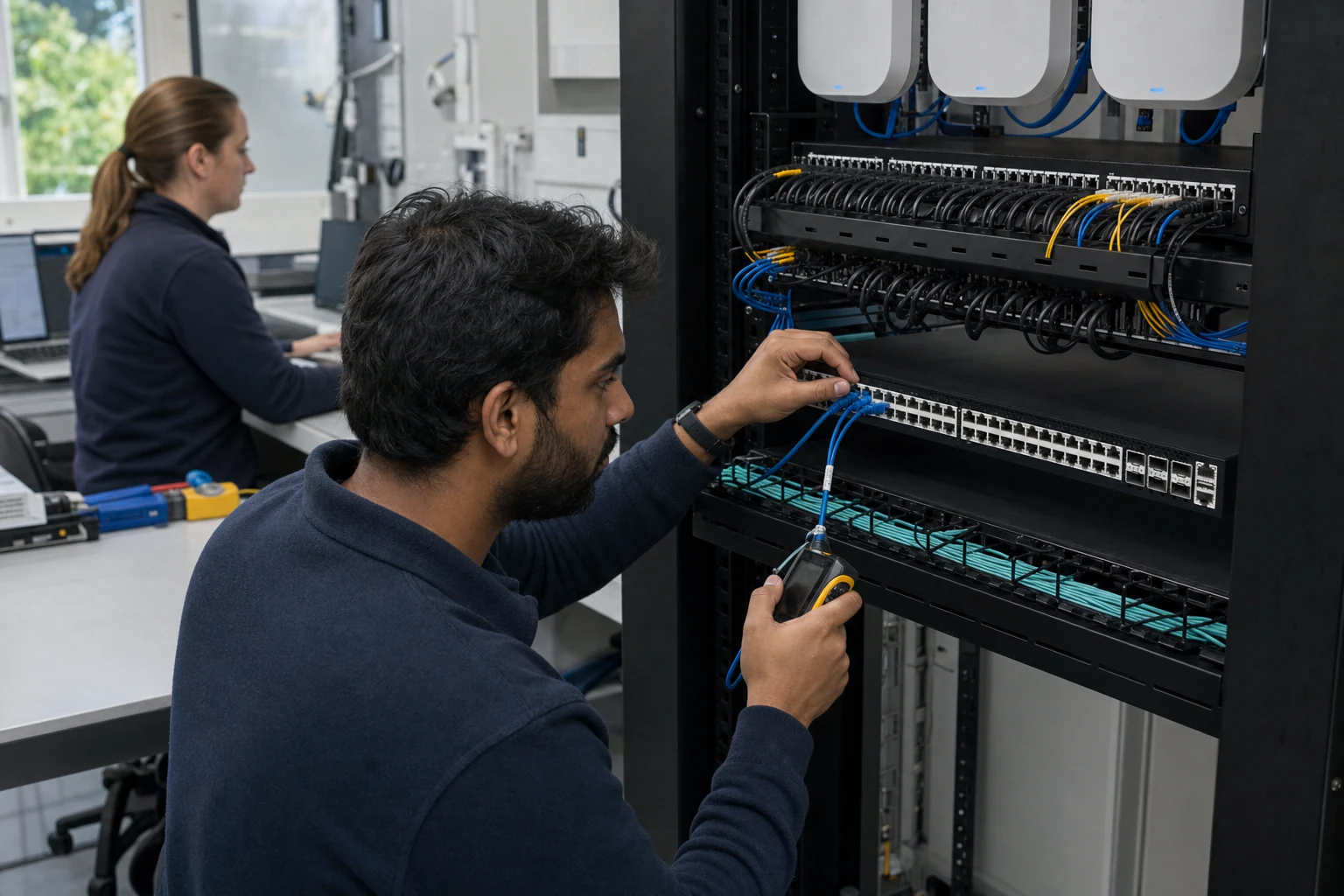 Technical ArticleWi-Fi 6E and Wi-Fi 7 Enterprise Campus Planning in Australia: What Network Buyers Need to Know NowEnterprise Wi-Fi 6E and Wi-Fi 7 campus planning guidance for Australia, covering RF, 6 GHz rules, PoE budgets, uplinks, clients, and pilots.Read article