In brief
Engineering guide for AI fabric buyers covering RoCE, SONiC, telemetry, optics, support ownership, and deployment validation.
Key takeaways
- When an Australian enterprise deploys dozens or hundreds of GPUs for model training or inference, the network quickly becomes the performance gate.
- For years, InfiniBand was the default answer. It delivered lossless, low-latency transport out of the box.
- This article explains why that shift matters, what SONiC and RoCE actually deliver for AI workloads, and how Australian data center buyers can evaluate open Ethernet fabrics for their next GPU cluster build.
The Networking Bottleneck Inside Every AI Cluster
When an Australian enterprise deploys dozens or hundreds of GPUs for model training or inference, the network quickly becomes the performance gate. GPU-to-GPU communication must sustain predictable microsecond-level latency and line-rate throughput across the entire cluster. A single poorly configured link or congested switch fabric can stall a training job for seconds at a time, wasting expensive accelerator cycles.
For years, InfiniBand was the default answer. It delivered lossless, low-latency transport out of the box. But InfiniBand locks buyers into a single vendor ecosystem, limits hardware choice, and often comes with premium pricing that is hard to justify for mid-scale AI deployments. Today, a growing number of hyperscale operators and enterprise AI teams are proving that standards-based Ethernet, combined with RDMA over Converged Ethernet version 2 (RoCE v2) and an open network operating system like SONiC, can match or exceed InfiniBand-class performance for GPU backend fabrics.
This article explains why that shift matters, what SONiC and RoCE actually deliver for AI workloads, and how Australian data center buyers can evaluate open Ethernet fabrics for their next GPU cluster build.
What SONiC Brings to the AI Fabric Table
SONiC, which stands for Software for Open Networking in the Cloud, is an open-source network operating system built on Linux. It runs on switches from multiple hardware vendors and across different ASIC families. The project is governed under the Linux Foundation and has been production-hardened in the data centers of some of the largest cloud service providers worldwide.
Several architectural characteristics make SONiC relevant for AI fabric builds:
-
Hardware-software decoupling. SONiC is built on the Switch Abstraction Interface (SAI), which separates the network operating system from the underlying switching silicon. This means buyers can select switch hardware based on port density, power budget, and price-performance without being tied to a single vendor’s software stack. For Australian data centers evaluating 100G, 400G, or 800G leaf and spine switches, this flexibility translates directly into procurement leverage and supply chain resilience.
-
Container-based modularity. SONiC breaks monolithic switch software into multiple Docker containers, each handling a specific function such as BGP routing, DHCP relay, or SNMP. This architecture accelerates software evolution, simplifies troubleshooting, and allows teams to upgrade individual components without taking down the entire switch.
-
Production-grade routing. SONiC supports BGP, VXLAN, and EVPN out of the box, which are the same overlay and underlay protocols that large-scale AI clusters use for east-west traffic segmentation and multi-tenant isolation. For Australian enterprises building multi-team AI infrastructure on shared fabric, EVPN-VXLAN on SONiC provides a well-understood, standards-based segmentation model.
-
RDMA and RoCE support. Critically for AI workloads, SONiC supports RDMA over Converged Ethernet. RoCE v2 allows GPU memory to be transferred directly across the network without CPU involvement, which is the same zero-copy, kernel-bypass performance model that InfiniBand provides, but running on standard Ethernet.
How RoCE v2 Makes Ethernet Viable for GPU Backend Communication
RoCE v2 encapsulates RDMA operations in UDP packets, allowing them to traverse standard IP-routed Ethernet fabrics. For GPU clusters running collective communication operations such as AllReduce, AllGather, and ReduceScatter, RoCE v2 delivers the following capabilities:
-
Lossless or near-lossless transport. RoCE v2 relies on Priority Flow Control (PFC) and Data Center Bridging Capability Exchange Protocol (DCBX) to prevent packet drops on the congestion-prone paths between GPUs. When configured correctly, PFC pauses traffic on a per-priority basis so that RDMA traffic is never dropped, even under burst conditions.
-
Congestion notification. Explicit Congestion Notification (ECN) and Congestion Notification Packets (CNP) work together to signal congestion back to the sending NIC before queues overflow. Fast CNP mechanisms reduce tail latency by speeding up this feedback loop, which directly improves training job completion times.
-
Telemetry and visibility. In-band Network Telemetry (INT) and IPTPath telemetry let operators observe per-hop latency, queue depth, and congestion status in real time. For Australian AI teams operating clusters that span multiple racks or rooms, this visibility is essential for diagnosing performance regressions without taking the network offline.
The combination of PFC, ECN, DCBX, Fast CNP, and INT telemetry is what transforms a standard Ethernet switch into an AI-grade fabric node. All of these features are supported in SONiC and can be managed through its configuration framework.
Evaluating Open Ethernet for Your AI Cluster: A Practical Checklist
Australian data center teams evaluating an open SONiC-based AI fabric should work through the following criteria:
| Criterion | What to Verify |
|---|---|
| Switch ASIC compatibility | Confirm the switch platform supports SAI and SONiC with the ASIC family required for your port speed (100G/400G/800G) |
| Port density and fan-out | Map GPU NIC counts per rack to leaf switch port density. A 64-port 400G leaf switch can typically serve 32 dual-port 400G NICs with appropriate uplink headroom |
| RoCE v2 feature depth | Verify PFC, ECN, DCBX, and Fast CNP are fully implemented and tested in the SONiC image for your hardware platform |
| Telemetry support | Check for INT and IPTPath telemetry capability for per-hop visibility across the fabric |
| EVPN-VXLAN overlay | Confirm overlay support if you need multi-tenant isolation or workload segmentation across teams |
| Optical interconnect | Select appropriate transceiver form factors (QSFP28, QSFP-DD, OSFP) for rack-to-rack and row-to-row links |
| Operational tooling | Evaluate NETCONF/YANG or gNMI-based automation for configuration management at scale |
| Community and support | Assess the availability of vendor or partner support for SONiC on your chosen hardware platform |
Why This Matters for Australian AI Infrastructure
Australia’s AI infrastructure market is growing rapidly, driven by sovereign data requirements, latency-sensitive applications in mining, healthcare, and financial services, and the expansion of GPU-as-a-service offerings by local cloud providers. Many of these deployments are at a scale where InfiniBand is either over-specified for the budget or unavailable through preferred local channels.
Open SONiC-based Ethernet fabrics address several buyer pain points specific to the Australian market:
-
Vendor diversity. By decoupling the NOS from the hardware, buyers are not locked into a single switch vendor’s pricing, roadmap, or support model. This is particularly relevant in Australia, where hardware availability and lead times can vary significantly across vendors.
-
Operational familiarity. Australian network teams with existing Linux and BGP skills can apply those competencies directly to SONiC, reducing the learning curve compared to proprietary NOS platforms.
-
Scalable economics. A spine-leaf Ethernet fabric built on SONiC and commodity switching hardware can scale from a single rack of GPUs to hundreds of nodes without a fundamental architecture change. Buyers can start small and expand as AI workload demands grow.
-
Integration with existing infrastructure. Many Australian enterprises already run Ethernet in their data centers. Adding RoCE v2 and SONiC to existing 100G or 400G switching layers is a lower-friction path than deploying an entirely separate InfiniBand fabric.
Common Pitfalls to Avoid
Building an AI fabric on SONiC and RoCE is not without challenges. Teams should be aware of the following:
-
PFC misconfiguration. Incorrect PFC settings can cause head-of-line blocking or deadlock. Thorough testing with realistic traffic patterns before production deployment is essential.
-
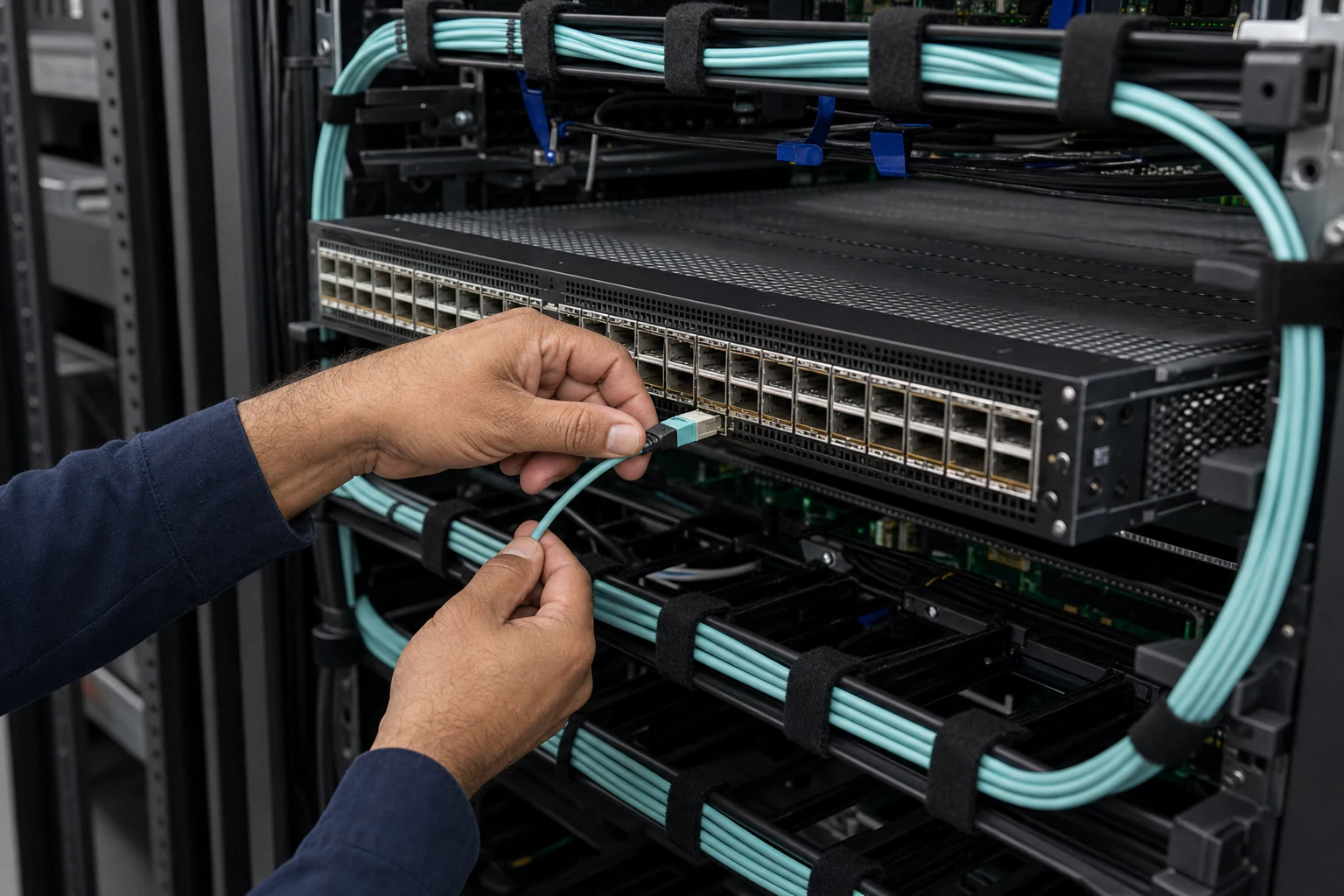
Transceiver and cabling selection. Not all optical transceivers are created equal. Using transceivers that are not qualified for the switch platform can cause link flaps or degraded signal integrity, which is catastrophic for RDMA traffic.
-
Firmware and SONiC image maturity. Not every SONiC distribution has the same level of RoCE and telemetry feature maturity. Evaluate the specific SONiC image for your hardware platform and confirm that the features you need are production-ready, not experimental.
-
Scaling telemetry. INT and IPTPath telemetry generate additional in-band data. At large cluster sizes, telemetry overhead must be accounted for in bandwidth planning.
Taking the Next Step
If your team is evaluating networking options for an AI training or inference cluster, an open SONiC-based Ethernet fabric with RoCE v2 deserves serious consideration. It offers the low-latency, lossless transport that GPU workloads demand, with the hardware choice, operational transparency, and economic flexibility that open networking provides.
The key is to start with a structured evaluation: map your GPU NIC requirements to switch port density, verify RoCE feature depth on your target platform, plan your optical interconnect strategy, and test with real traffic patterns before committing to production.
For teams in Australia looking for guidance on AI fabric design, RoCE configuration, or switch platform selection, the xSONiC team can help you navigate the evaluation process.
Engineering FAQ
What should be proven before adopting EVPN-VXLAN on SONiC? Prove underlay routing, BGP sessions, VTEP behaviour, MAC/IP learning, route scale, multi-homing design, failure convergence, and observability. The overlay should be accepted as a system, not a feature checkbox.
Why does the underlay design still matter in an overlay network? EVPN-VXLAN depends on a stable routed underlay. MTU, ECMP, addressing, route policy, link failure behaviour, and telemetry determine whether the overlay remains predictable under load and during faults.
What should be included in an EVPN-VXLAN operations runbook? Include naming, IP plan, BGP policy, VNI mapping, change process, rollback commands, failure checks, telemetry fields, backup and restore steps, and escalation ownership for the selected SONiC image.
Related xSONiC Resources
Sources Reviewed
- Ethernet Network Adapters - ConnectX NICs | NVIDIA
- NVIDIA BlueField Data Processing Unit
- NVIDIA Spectrum-X Ethernet Platform
- OpenConfig gNMI Specification
- OpenConfig
- RFC 7950 - The YANG 1.1 Data Modeling Language
- RFC 6241 - Network Configuration Protocol (NETCONF)
- ACSC Essential Eight
- OAIC Notifiable Data Breaches
- APRA CPS 234 Information Security
- NETSCOUT Network Packet Definition
- Cloudflare Network Packet Definition
- SONiC Project Documentation
- Broadcom Ethernet Switching
- Marvell Switching
- NVIDIA Ethernet Switching
- Open Compute Networking
- SONiC GitHub
- SONiC Foundation
Product fit
Products referenced for evaluation
These products are referenced for evaluation context in the article. Confirm workload, port, optics, software, interoperability, and support requirements against the exact deployment before procurement.
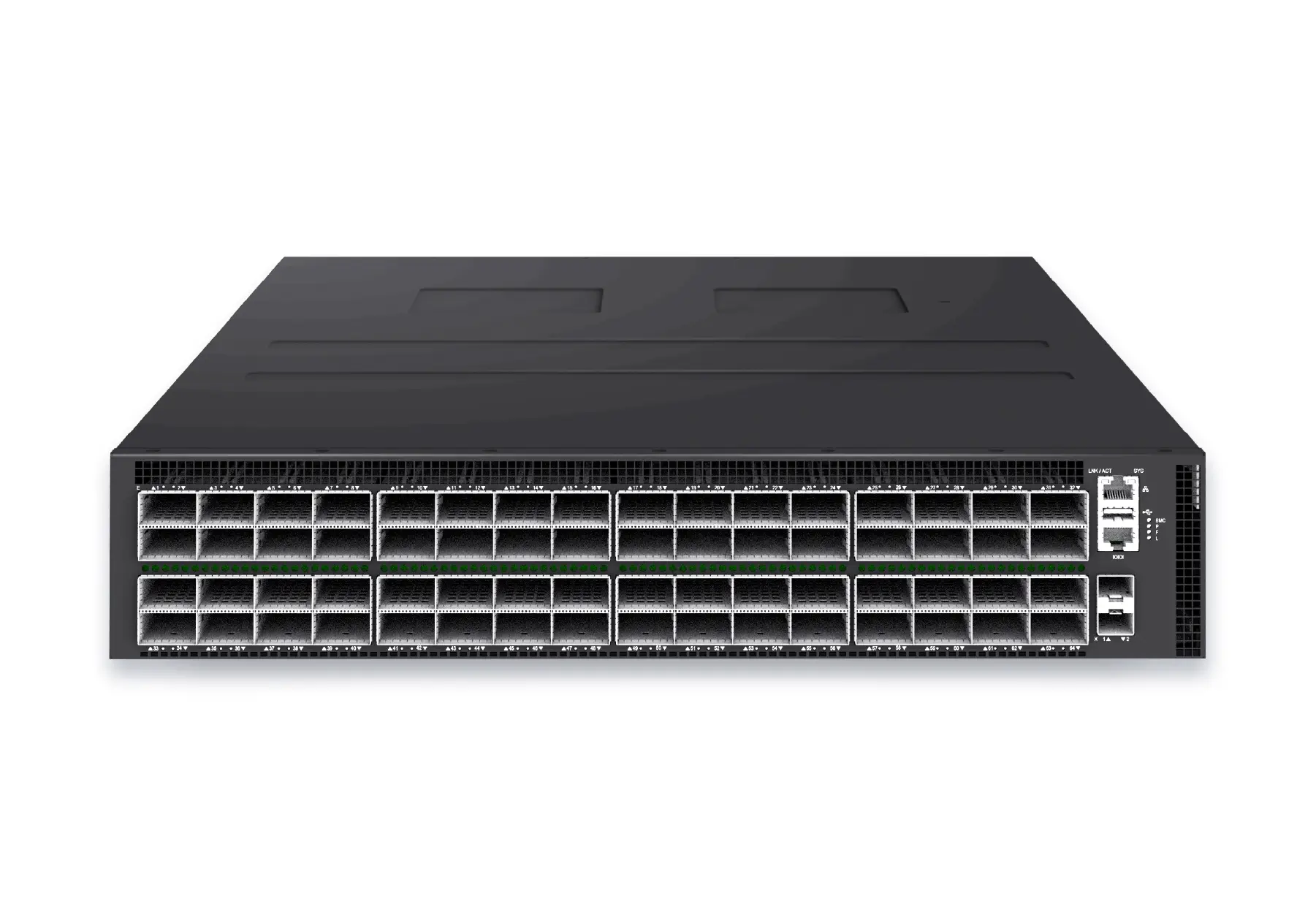 datacenter aiXS-DC-64X800-AI-G164-port 800G AI fabric switch for large-scale GPU clusters, HPC backbones, and ultra-high-throughput data center networks.View product
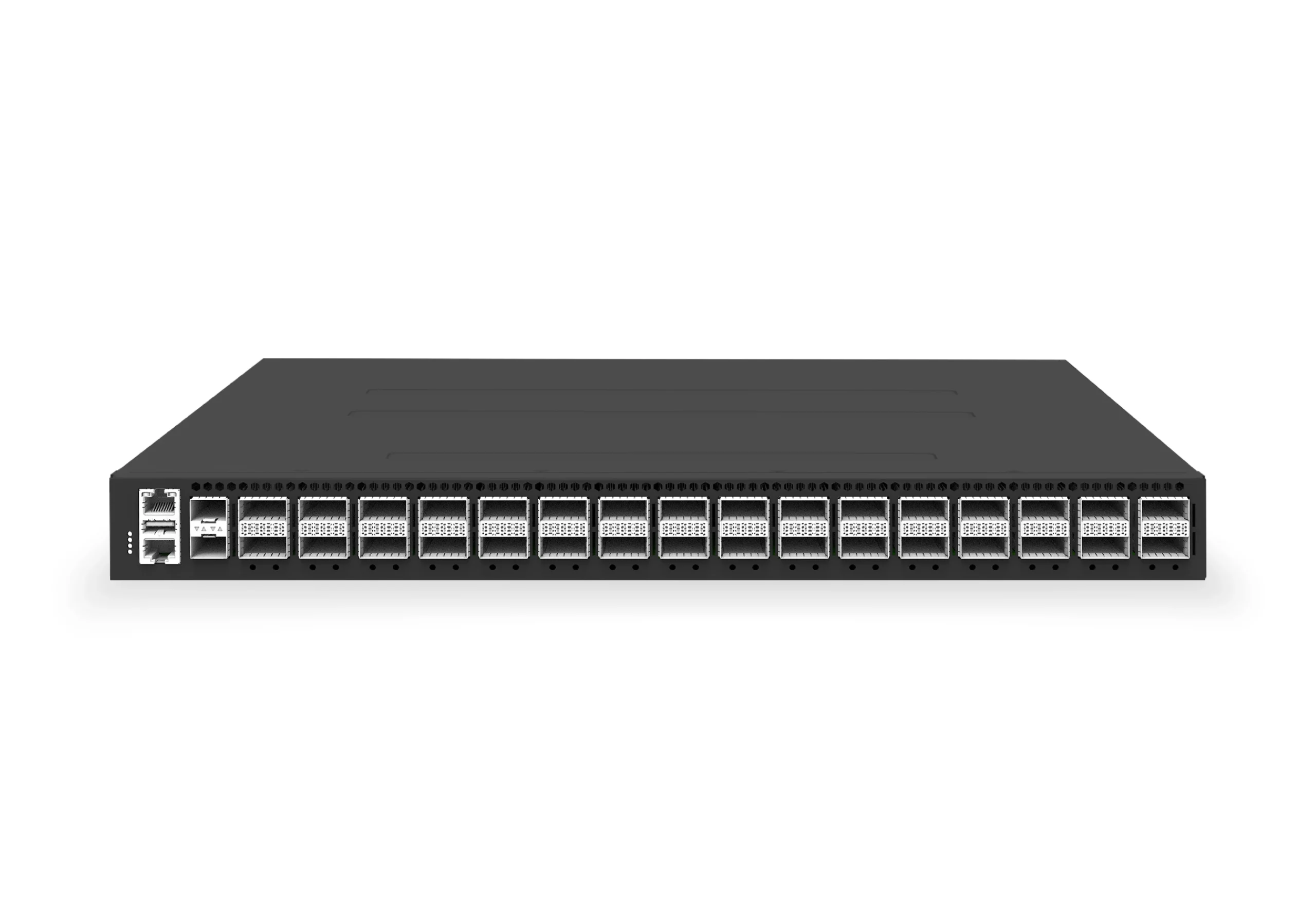 datacenter aiXS-DC-32X400-SP-G232-port 400G spine/core switch for high-capacity data center fabrics and AI-ready backbones.View product
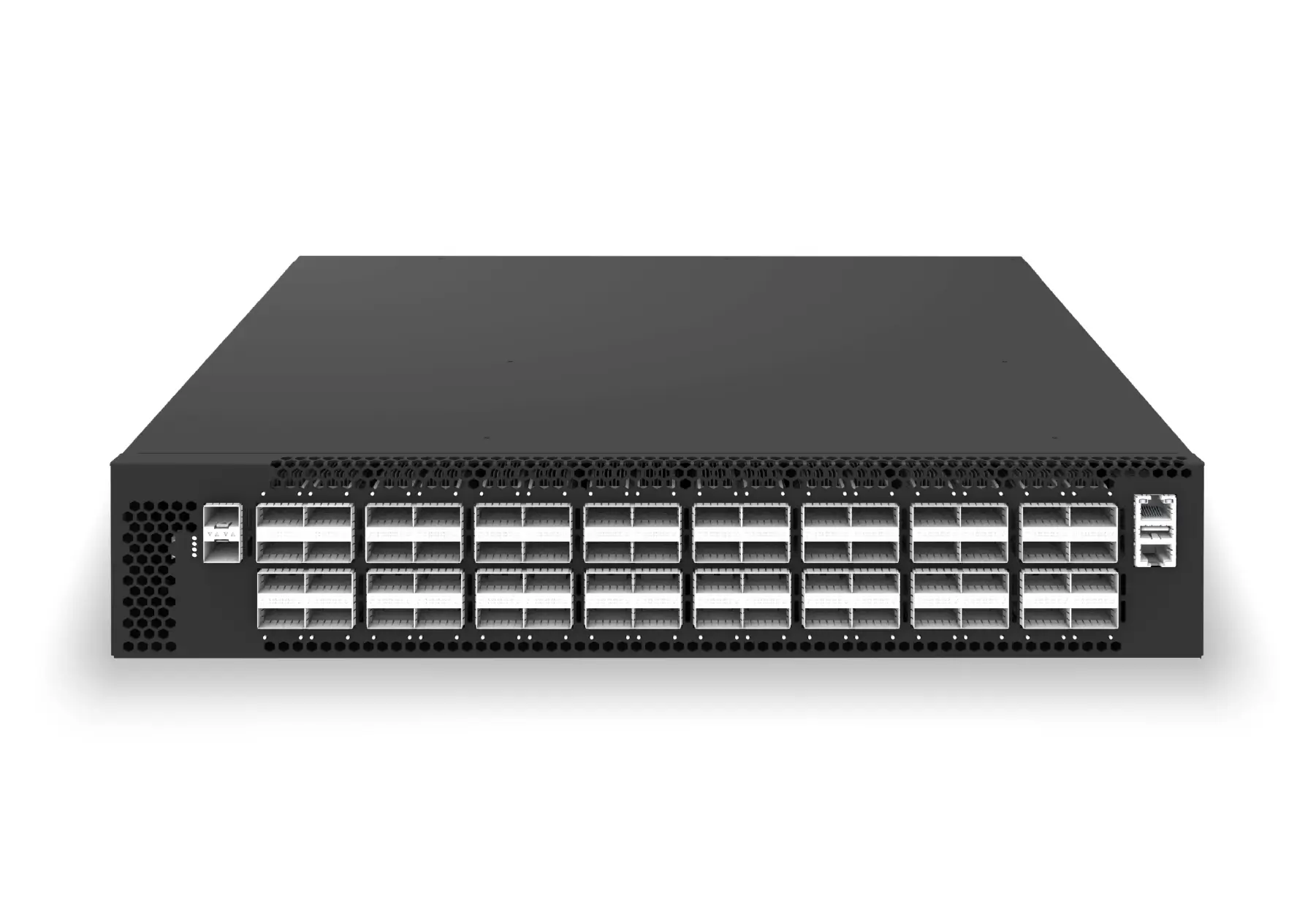 datacenter aiXS-DC-64X200-LS-G164-port 200G leaf/spine switch for high-bandwidth storage, compute, and scale-out data center fabrics.View product
Continue reading
Related articles
 Technical ArticleHow SONiC-Powered 400G and 800G Switches Change AI Data Center Fabric Design in AustraliaEngineering guide for 400G and 800G optics planning covering form factor, reach, telemetry, thermal limits, supply risk, and validation.Read article
 Technical ArticleRoCE v2 GPU Backend Fabrics at 400G and 800G: What Australian Data Center Operators Need to Know in 2026Engineering guide for AI fabric buyers covering RoCE, SONiC, telemetry, optics, support ownership, and deployment validation.Read article
 Technical ArticleWhat Australian Data Center Buyers Need to Know Before Choosing SONiC Switches for 400G and 800G UpgradesEngineering guide for 400G and 800G optics planning covering form factor, reach, telemetry, thermal limits, supply risk, and validation.Read article