
In brief
Engineering guidance on SONiC and Ethernet Switching Are Reshaping AI Data Center Networking for Australian network teams, covering underlay design, EVPN-VXLAN.
Key takeaways
- Every enterprise running AI workloads at scale eventually collides with the same wall: the network.
- For years, the default answer was proprietary. Buy the vendor switch, run the vendor NOS, and accept the vendor roadmap.
- This article explains why SONiC matters for AI data center networking, how modern Ethernet switch hardware competes with proprietary alternatives, and what practical steps buyers should take when evaluating a fabric refresh.
The networking bottleneck no AI project can ignore
Every enterprise running AI workloads at scale eventually collides with the same wall: the network. Training runs stall. Inference latency spikes. GPU utilization drops below the threshold where the economics make sense. The root cause is rarely the GPU itself. It is the fabric connecting those GPUs, the switches moving RDMA traffic between nodes, and the network operating system governing how that traffic flows.
For years, the default answer was proprietary. Buy the vendor switch, run the vendor NOS, and accept the vendor roadmap. That model is under pressure. SONiC (Software for Open Networking in the Cloud) has emerged from hyperscaler data centers into the enterprise mainstream, and it is changing the calculus for how Australian organisations build AI-capable networks.
This article explains why SONiC matters for AI data center networking, how modern Ethernet switch hardware competes with proprietary alternatives, and what practical steps buyers should take when evaluating a fabric refresh.
What SONiC actually is and why it exists
SONiC is a free, open-source network operating system built on Linux. It runs on switches from multiple hardware vendors and supports multiple switching ASICs through a common Switch Abstraction Interface (SAI). Originally developed for the data centers of some of the largest cloud service providers, SONiC has been production-hardened at a scale most enterprises will never approach. That matters for buyers: the software has already survived the stress tests that enterprise networks rarely push to their limits.
The architecture is modular. Each network function runs in its own Docker container: BGP, LLDP, DHCP relay, telemetry, and others are isolated components rather than a monolithic image. This design brings three practical benefits to AI data center operations:
- Fault isolation. A crash in one container does not take down the entire switch.
- Independent upgrades. Teams can patch or update a single service without rebuilding the full NOS image.
- Debugging clarity. Container-level logs and health checks make troubleshooting faster.
For AI fabric teams accustomed to treating the network as a black box, this modularity is a meaningful operational advantage.
Why Ethernet, not just InfiniBand, for AI fabrics
InfiniBand has long dominated the conversation around AI cluster interconnects. The narrative is familiar: low latency, high bandwidth, native RDMA. But Ethernet has closed the gap significantly, and for many enterprise AI deployments, it now represents the more practical choice. The reasons are structural.
Multi-vendor availability. Ethernet switches are available from a broad ecosystem of hardware vendors. SONiC amplifies this advantage by decoupling the NOS from the hardware. Buyers are not locked into a single switch OEM or a single ASIC vendor. They can evaluate platforms on price, port density, power consumption, and form factor without rewriting their operational tooling.
Ecosystem maturity. The SONiC community includes major network chip vendors and a growing list of contributing organisations. The supported devices and platforms list continues to expand, covering switches across 100G, 400G, and 800G speed classes. This breadth of support reduces procurement risk for Australian enterprises that cannot afford six-month hardware lead times tied to a single supplier.
Production-hardened at hyperscale. SONiC has been battle-tested in cloud-scale environments running BGP, RDMA, and traffic engineering at volumes that dwarf typical enterprise AI clusters. The software quality bar set by those deployments benefits every downstream user.
Standards-based RDMA. RoCE v2 (RDMA over Converged Ethernet version 2) delivers remote direct memory access over standard Ethernet infrastructure. When combined with Data Center Bridging Capability Exchange (DCBX) for priority flow control and congestion notification mechanisms like ECN and fast CNP, Ethernet-based RDMA can deliver the deterministic, low-latency transport that AI training workloads demand. This is not theoretical: it is the architecture running inside some of the world’s largest GPU clusters today.
Anatomy of a SONiC-based AI fabric
A modern AI data center fabric built on SONiC and Ethernet typically follows a spine-leaf topology. Each GPU server connects to a leaf switch. Leaf switches connect upward to spine switches, creating a non-blocking, predictable forwarding mesh. The key components are:
Switch hardware
Ethernet switch platforms in the 400G and 800G classes provide the port bandwidth needed for GPU backend interconnects. Modern switching silicon supports features critical to AI workloads:
- Large forwarding tables for EVPN-VXLAN overlays
- Hardware-level RDMA support with RoCE v2
- Priority flow control via DCBX
- INT (In-band Network Telemetry) for real-time visibility into fabric health
- Deep buffers or shared-memory architectures for burst tolerance
Network operating system
SONiC provides the software layer. It handles BGP-based underlay routing, EVPN-VXLAN overlay management, RDMA configuration, telemetry streaming, and operational tooling. The container-based architecture means teams can extend SONiC with custom telemetry agents or automation hooks without forking the core codebase.
Optical connectivity
High-speed links between leaf and spine switches demand appropriate optical transceivers. For 400G inter-switch links, QSFP-DD or OSFP form factor transceivers are standard. For 800G, the OSFP form factor and emerging co-packaged optics options are relevant. Transceiver selection directly impacts link budget, power consumption, and physical reach within the data center hall.
Telemetry and observability
INT telemetry and streaming telemetry (gNMI/gNOI) give fabric operators real-time visibility into packet paths, queue depths, latency, and congestion events. For AI training clusters where tail latency matters, this visibility is not optional. It is how teams identify and remediate fabric hotspots before they corrupt a multi-hour training run.
The open networking value proposition for Australian enterprises
Australian organisations building AI infrastructure face a specific set of constraints: geographic distance from major hardware distribution hubs, limited local engineering support for niche networking platforms, and procurement cycles that reward vendor diversity and supply chain resilience.
Open networking addresses these constraints directly:
| Constraint | Proprietary stack risk | SONiC + open hardware advantage |
|---|---|---|
| Supply chain | Single-vendor dependency | Multi-vendor hardware sourcing |
| Support | Vendor-specific TAC only | Community + commercial SONiC support options |
| Skills | Proprietary CLI training | Linux-based skills, industry-portable |
| Upgrades | Vendor release cadence | Open-source release cadence, container-level patching |
| Cost | License + support bundles | No per-switch NOS license fees |
This does not mean SONiC is risk-free. Open-source networking requires in-house or partner engineering capability. The learning curve for teams moving from a proprietary CLI to SONiC’s configuration model (JSON-based config, Linux tooling, Docker container management) is real. But for organisations investing in AI infrastructure as a multi-year strategic capability, the operational flexibility of SONiC compounds over time.
What to evaluate before committing to a SONiC-based AI fabric
If your organisation is considering SONiC and open Ethernet switching for an AI data center deployment, the following evaluation checklist covers the critical decision points:
Looking ahead: Ethernet’s role in next-generation AI clusters
The trajectory is clear. Ethernet switching silicon continues to advance: 51.2 Tb/s switching capacity per chip is shipping today, and 102.4 Tb/s platforms are on the horizon. Co-packaged optics promise to reduce power consumption and improve reliability for high-density AI interconnects. SONiC’s ecosystem continues to expand, with new platform support, improved RDMA feature maturity, and growing community tooling.
For Australian enterprises planning AI infrastructure investments over the next two to five years, SONiC-based Ethernet switching is no longer an alternative. For many use cases, it is the primary path.
The question is not whether open networking can deliver AI-grade performance. The evidence from hyperscaler deployments and the breadth of the SONiC ecosystem have settled that debate. The question is whether your organisation has the evaluation framework and partner network to deploy it with confidence.
Next steps
If you are evaluating SONiC-based Ethernet switching for an AI data center project, start with your fabric requirements: port speed, port count, RDMA feature set, and telemetry needs. Then match those requirements against available switch platforms and SONiC build maturity.
Explore xSONiC Data Center AI Switches for SONiC-native switching platforms built for AI and ML workloads.
Learn about the xSONiC AI Fabric solution for architecture guidance on spine-leaf designs with RoCE v2.
Review xSONiC Optical Transceivers for 400G and 800G transceiver options matched to AI fabric link budgets.
Contact the xSONiC team to discuss your AI data center networking requirements with an engineer.
Engineering FAQ
What should be proven before adopting EVPN-VXLAN on SONiC? Prove underlay routing, BGP sessions, VTEP behaviour, MAC/IP learning, route scale, multi-homing design, failure convergence, and observability. The overlay should be accepted as a system, not a feature checkbox.
Why does the underlay design still matter in an overlay network? EVPN-VXLAN depends on a stable routed underlay. MTU, ECMP, addressing, route policy, link failure behaviour, and telemetry determine whether the overlay remains predictable under load and during faults.
What should be included in an EVPN-VXLAN operations runbook? Include naming, IP plan, BGP policy, VNI mapping, change process, rollback commands, failure checks, telemetry fields, backup and restore steps, and escalation ownership for the selected SONiC image.
Related xSONiC Resources
Sources Reviewed
- Ethernet Network Adapters - ConnectX NICs | NVIDIA
- NVIDIA BlueField Data Processing Unit
- NVIDIA Spectrum-X Ethernet Platform
- OpenConfig gNMI Specification
- OpenConfig
- RFC 7950 - The YANG 1.1 Data Modeling Language
- RFC 6241 - Network Configuration Protocol (NETCONF)
- SONiC Project Documentation
- Broadcom Ethernet Switching
- Marvell Switching
- NVIDIA Ethernet Switching
- Open Compute Networking
- SONiC GitHub
- SONiC Foundation
Product fit
Products referenced for evaluation
These products are referenced for evaluation context in the article. Confirm workload, port, optics, software, interoperability, and support requirements against the exact deployment before procurement.
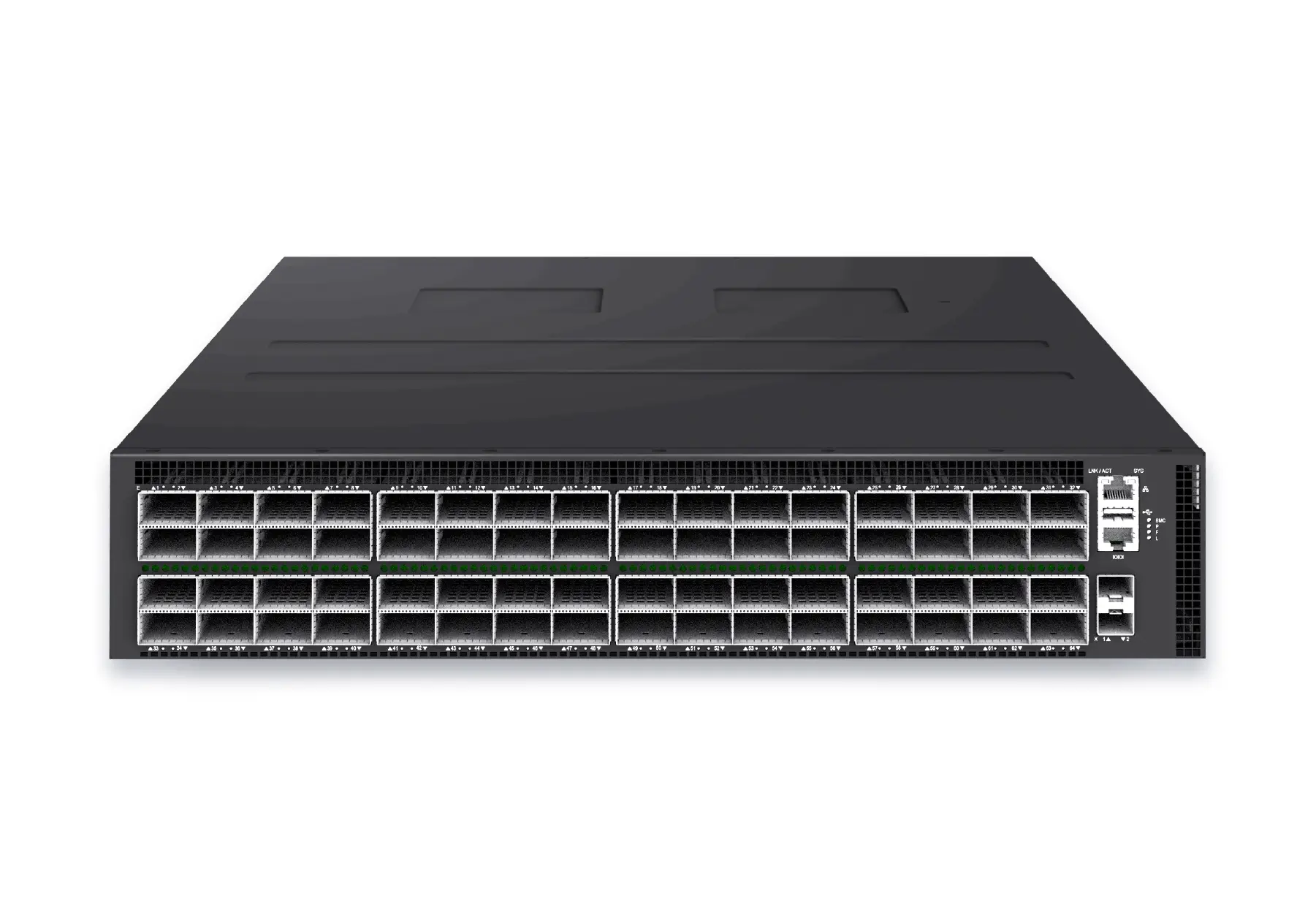 datacenter aiXS-DC-64X800-AI-G164-port 800G AI fabric switch for large-scale GPU clusters, HPC backbones, and ultra-high-throughput data center networks.View product
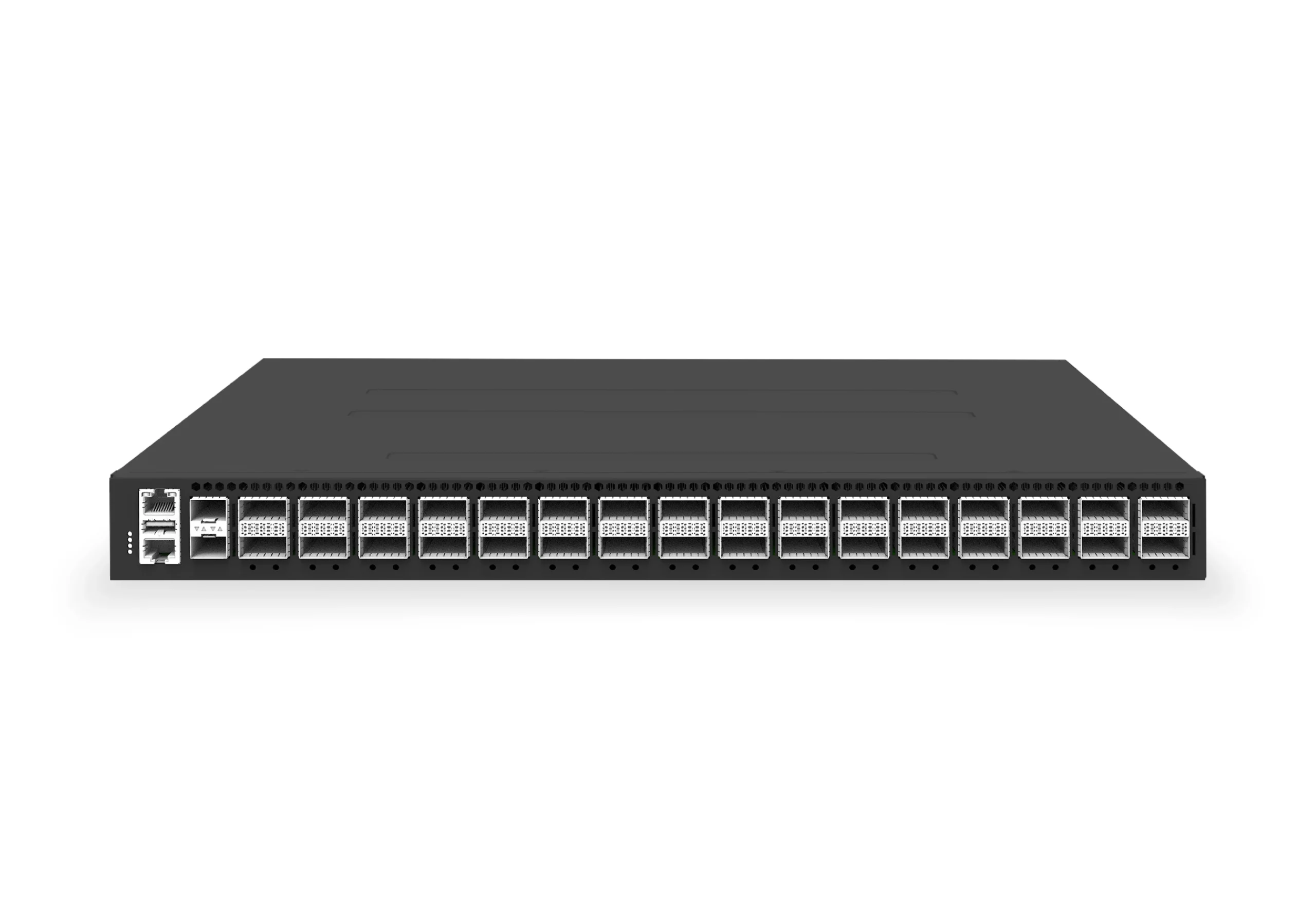 datacenter aiXS-DC-32X400-SP-G232-port 400G spine/core switch for high-capacity data center fabrics and AI-ready backbones.View product
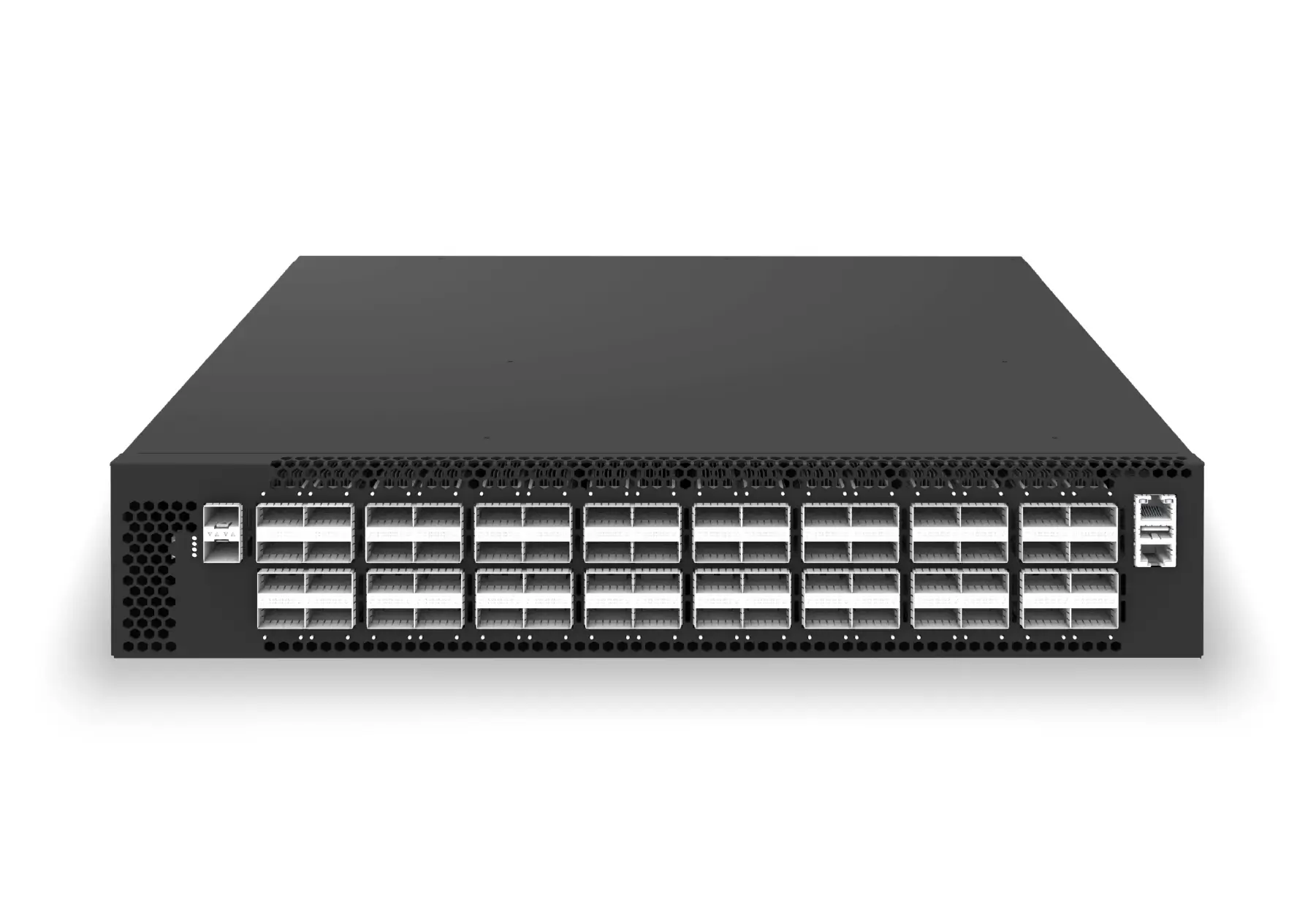 datacenter aiXS-DC-64X200-LS-G164-port 200G leaf/spine switch for high-bandwidth storage, compute, and scale-out data center fabrics.View product
Continue reading
Related articles
 Technical ArticleOpen Networking Support for Enterprise Buyers: How SONiC and Open NOS Models Actually WorkEngineering guidance on Open Networking Support for Enterprise Buyers for Australian campus teams, covering PoE budgets, access-layer resilience, migration risk.Read article
 Technical ArticleFrom Proprietary Lock-In to Open Networking: A Practical Enterprise SONiC Migration PlaybookA practical Enterprise SONiC migration playbook for Australian buyers moving from proprietary switch OS to open networking.Read article
 Technical ArticleWhy Centralized AI Fabric Management Is the Missing Layer in Open NetworkingEngineering guidance on Centralized AI Fabric Management Is the Missing Layer in Open Networking for Australian network teams, covering underlay design, EVPN-VXLAN.Read article