In brief
An engineering guide to why private AI inference networking in Australia is shifting toward open SONiC fabrics, covering RoCE v2, 400G/800G, sovereignty, and telemetry.
Key takeaways
- Three independent developments in 2025 and early 2026 point to a structural shift in how GPU infrastructure networking is being designed for private AI inference workloads.
- First, the SONiC Foundation (a Linux Foundation project) continues to position SONiC as the open-source network operating system purpose-built for cloud-scale data centers.
- Second, NVIDIA's Ethernet networking portfolio has made SONiC a visible option for AI switching.
What Happened: Three Signals Converging on AI Inference Networking
Three independent developments in 2025 and early 2026 point to a structural shift in how GPU infrastructure networking is being designed for private AI inference workloads.
First, the SONiC Foundation (a Linux Foundation project) continues to position SONiC as the open-source network operating system purpose-built for cloud-scale data centers. SONiC runs on switches from multiple vendors and ASICs, offers a full suite of network functionality including BGP and RDMA, and has been production-hardened in some of the largest hyperscaler environments globally. The project emphasizes hardware-software decoupling through the Switch Abstraction Interface (SAI) and a container-based modular architecture (sonicfoundation.dev, github.com/sonic-net/SONiC).
Second, NVIDIA’s Ethernet networking portfolio has made SONiC a visible option for AI switching. Spectrum-X and Spectrum Ethernet platforms position 400G and 800G Ethernet as credible AI fabric transport, while NVIDIA’s switch portfolio lists Pure SONiC alongside other NOS choices. That matters because the same vendor most associated with GPU infrastructure is signalling that Ethernet plus open NOS choice belongs in the AI networking conversation.
Third, the OCP Podcast featured an in-depth January 2026 conversation with David Hirst, CEO of Macquarie Data Centres, discussing how AI workloads are reshaping data center design in Australia. Hirst described the shift from ‘real estate thinking’ to ‘chip-out thinking,’ the rise of liquid cooling and megawatt-per-rack designs, and the importance of Australia’s sovereign approach to AI infrastructure. He flagged data sovereignty, compliance, and long-term operational capability as distinguishing factors in the Australian market (opencompute.org/ocp-podcast, Episode 18, January 6, 2026).
These three signals - SONiC maturity, NVIDIA’s SONiC endorsement for AI networking, and Australia’s sovereign AI infrastructure buildout - are converging on a single question: what NOS and switching architecture should underpin private GPU inference clusters?
Why It Matters: Private AI Inference Demands a New Networking Layer
Private AI inference - running LLMs, RAG pipelines, and multimodal models on dedicated GPU servers inside an organization’s own infrastructure - places unique demands on the network fabric that connects GPUs to each other and to storage.
Unlike general-purpose data center traffic, GPU-to-GPU communication during inference (and fine-tuning) is latency-sensitive, bandwidth-intensive, and often uses RDMA over Converged Ethernet (RoCE v2) for zero-copy memory transfers. Packet loss, jitter, or congestion in this fabric directly degrades inference throughput and user-facing response times.
This is driving a networking architecture shift from traditional three-tier campus designs to dedicated spine-leaf GPU backend fabrics with:
- Non-blocking 100G/400G/800G leaf-to-spine links
- RoCE v2 with DCBX negotiation and priority flow control
- Congestion notification mechanisms such as ECN and Fast CNP
- Telemetry for real-time visibility into packet loss, latency, and path integrity
- Lossless or near-lossless Ethernet behavior across the GPU backend
For Australian enterprises building private AI inference - whether for regulatory compliance, data sovereignty, latency, or IP protection - the networking layer is no longer a commodity purchase. It is a performance-critical component that determines whether the GPU investment delivers its full inference throughput.
The Open Networking Angle: SONiC as the AI Fabric NOS
SONiC’s architecture is relevant to AI inference networking for several reasons documented by the SONiC Foundation and the OCP Networking project.
Hardware-software decoupling: SONiC runs on top of SAI, which abstracts the ASIC layer. This means network teams can select switching hardware based on port density, throughput, and ASIC capability (e.g., Broadcom-based switching fabric, or merchant silicon from other vendors) without being locked into a single vendor’s NOS ecosystem.
RDMA and BGP support: SONiC includes production-grade BGP (essential for spine-leaf ECMP fabrics) and RDMA support - both prerequisites for GPU backend networking using RoCE v2.
Containerized modularity: SONiC’s Docker-based architecture allows individual network services to be upgraded or debugged independently, which matters in AI environments where fabric uptime directly impacts expensive GPU utilization.
Ecosystem validation: The OCP Networking project lists SONiC as a sub-project alongside ONIE and SAI, with the stated goal of ‘fully disaggregated and open networking hardware and software’ (opencompute.org/projects/networking). NVIDIA’s inclusion of Pure SONiC on its Spectrum-X platform adds vendor-backed validation that SONiC is production-viable for AI Ethernet networking.
For Australian buyers evaluating private AI inference infrastructure, open SONiC-based fabrics present an alternative to proprietary networking stacks that tie the NOS, hardware, and management plane to a single vendor. This is particularly relevant in the Australian context where data sovereignty requirements may favor infrastructure that can be fully audited, operated locally, and adapted without vendor-specific dependencies.
The Australian Context: Sovereign AI Infrastructure and Colocation Scale
The OCP Podcast episode with Macquarie Data Centres CEO David Hirst (recorded in early 2026) provides a window into the Australian AI infrastructure landscape.
Hirst described several factors shaping AI data center design in Australia:
Sovereign approach: Australia’s regulatory and cultural emphasis on data sovereignty means organizations handling sensitive data - government, financial services, healthcare, legal - have strong incentives to run inference workloads domestically rather than sending data to offshore cloud regions.
Liquid cooling and high-density racks: AI GPU clusters are pushing rack densities into the multiple-hundreds-of-kilowatt range, requiring liquid cooling (direct-to-chip or immersion) and rethinking traditional data center layouts. Hirst noted the move from ‘real estate thinking’ to ‘chip-out thinking’ - designing infrastructure around the silicon, not the building.
Compliance as a competitive advantage: For Australian colocation operators and enterprises, demonstrating local control over AI infrastructure - including the network fabric - is becoming a differentiator, not just a cost center.
Power and community constraints: Building high-density AI infrastructure in dense Australian cities involves navigating power availability, community engagement, and long lead times for grid capacity.
These factors create a market environment where the networking decisions for private AI inference clusters are not just technical but strategic. An open, auditable, locally-operable network fabric running SONiC aligns with the same sovereign infrastructure principles that drive domestic GPU deployment.
xSONiC Buyer Angle: Building an Open GPU Backend Fabric
For Australian network architects and infrastructure leaders evaluating private AI inference networking, the combination of SONiC maturity and vendor-validated AI Ethernet platforms creates a viable path to an open GPU backend fabric. The xSONiC product families map to this architecture as follows.
Data center AI switches (/products/datacenter-ai/): Enterprise SONiC switching at 100G/400G/800G for spine-leaf GPU backend fabrics. These switches would serve as the leaf and spine tiers connecting GPU inference servers, with RoCE v2, DCBX, and congestion management for lossless or near-lossless operation.
AI infrastructure systems (/products/ai-infrastructure/): GPU inference server platforms for private LLM, RAG, and multimodal AI services. These systems sit behind the leaf switches and require high-bandwidth NIC-to-switch connectivity (typically 100G or 200G per GPU server).
Optical transceivers (/products/optical-transceiver/): QSFP28, QSFP-DD, and OSFP transceivers at 100G/400G/800G for leaf-to-spine interconnects, server-to-leaf uplinks, and inter-building links in campus-style AI facilities.
Packet brokers (/products/packet-broker/): Traffic aggregation, filtering, and replication for network visibility across the GPU backend fabric. Packet brokers can deliver inference traffic telemetry to monitoring and security tools without impacting production GPU communication.
Key xSONiC solution pillars for this architecture include:
- AI Fabric (/solutions/data-center/ai-fabric/) - the overarching architecture for AI-optimized spine-leaf fabrics
- GPU Backend Fabric (/solutions/data-center/gpu-backend-fabric/) - dedicated fabric design for GPU-to-GPU communication
- RoCE v2 (/solutions/data-center/roce-v2-guide/) - RDMA over Converged Ethernet configuration and tuning
- DCBX (/solutions/data-center/dcbx-technology/) - Data Center Bridging Capability Exchange for priority flow control negotiation
- Fast CNP (/solutions/data-center/fast-cnp/) - congestion notification for low-latency RDMA fabrics
- INT Telemetry and IPTPath Telemetry (/solutions/data-center/int-technology/, /solutions/data-center/iptpath-telemetry/) - in-band and path telemetry for real-time fabric visibility
The value proposition for Australian buyers: an open SONiC-based GPU backend fabric that can be locally operated, audited for compliance, scaled incrementally, and evolved without vendor lock-in - backed by xSONiC hardware, optics, and solution-level guidance.
Private AI Inference Fabric Acceptance Matrix
| Fabric Area | Evidence to Capture | Acceptance Target | Rework Trigger |
|---|---|---|---|
| Workload profile | Token serving pattern, RAG storage calls, GPU count, NIC speed, latency target | Network design matches inference traffic, not only training assumptions | Fabric is sized from peak port speed only |
| RoCE and congestion | RoCE v2, DCBX, PFC, ECN, Fast CNP, queue telemetry | 24-48 hour inference replay captures latency, ECN, PFC, drops, and recovery | Packet loss or pause storms appear under bursty inference load |
| Open SONiC operations | SONiC image, SAI dependency, ONIE recovery, config backup, rollback | 2 switches rebuild, reload 3 times, and preserve telemetry and QoS state | Recovery depends on undocumented vendor access |
| Sovereign operations | Local support, software provenance, patch process, audit logs, data capture policy | Compliance owner can review image, logs, packet capture scope, and support jurisdiction | Observability or support routes sensitive data offshore without approval |
| Physical deployment | 100G/400G/800G optics, airflow, power, liquid-cooling adjacency, cable plan | Links remain stable in the target colocation or data center rack environment | Lab links pass but production thermals or cabling fail |
This matrix is deliberately inference-specific. Private AI inference can be burstier and more user-facing than training, so tail latency and observability matter as much as aggregate throughput.
Engineering FAQ
Why does private AI inference need a dedicated networking plan? Inference combines user-facing latency, GPU-to-GPU communication, storage access, and telemetry. A generic data center fabric may pass normal traffic while still creating tail-latency spikes for AI services.
Is SONiC enough to make an AI fabric lossless? No. SONiC provides the NOS and configuration surface, but lossless behaviour depends on switch ASICs, NICs, optics, RoCE v2, PFC, ECN, DCBX, telemetry, and support.
What should Australian buyers validate first? Validate support jurisdiction, software provenance, RoCE congestion behaviour, packet capture policy, 400G/800G optics, and rollback. Sovereignty is operational evidence, not only a hosting location.
Where does xSONiC fit? xSONiC should be evaluated as the open switch, optics, packet broker, and SONiC operations layer for private AI inference pilots. The decision should rest on measured latency and support evidence.
Related xSONiC Resources
Sources Reviewed
- Ethernet Network Adapters - ConnectX NICs | NVIDIA
- NVIDIA BlueField Data Processing Unit
- NVIDIA Spectrum-X Ethernet Platform
- NVIDIA SN5000 Hardware Introduction
- IEEE 802.1Qbb Priority Flow Control
- IEEE 802.1Qaz Enhanced Transmission Selection and DCBX
- RFC 3168 Explicit Congestion Notification
- OCP Podcast - Solving Data Center Demands: Australia’s Macquarie and OCP
- SONiC Project Documentation
- NVIDIA Ethernet Switching
- Open Compute Networking
- SONiC GitHub
- SONiC Foundation
Product fit
Products referenced for evaluation
These products are referenced for evaluation context in the article. Confirm workload, port, optics, software, interoperability, and support requirements against the exact deployment before procurement.
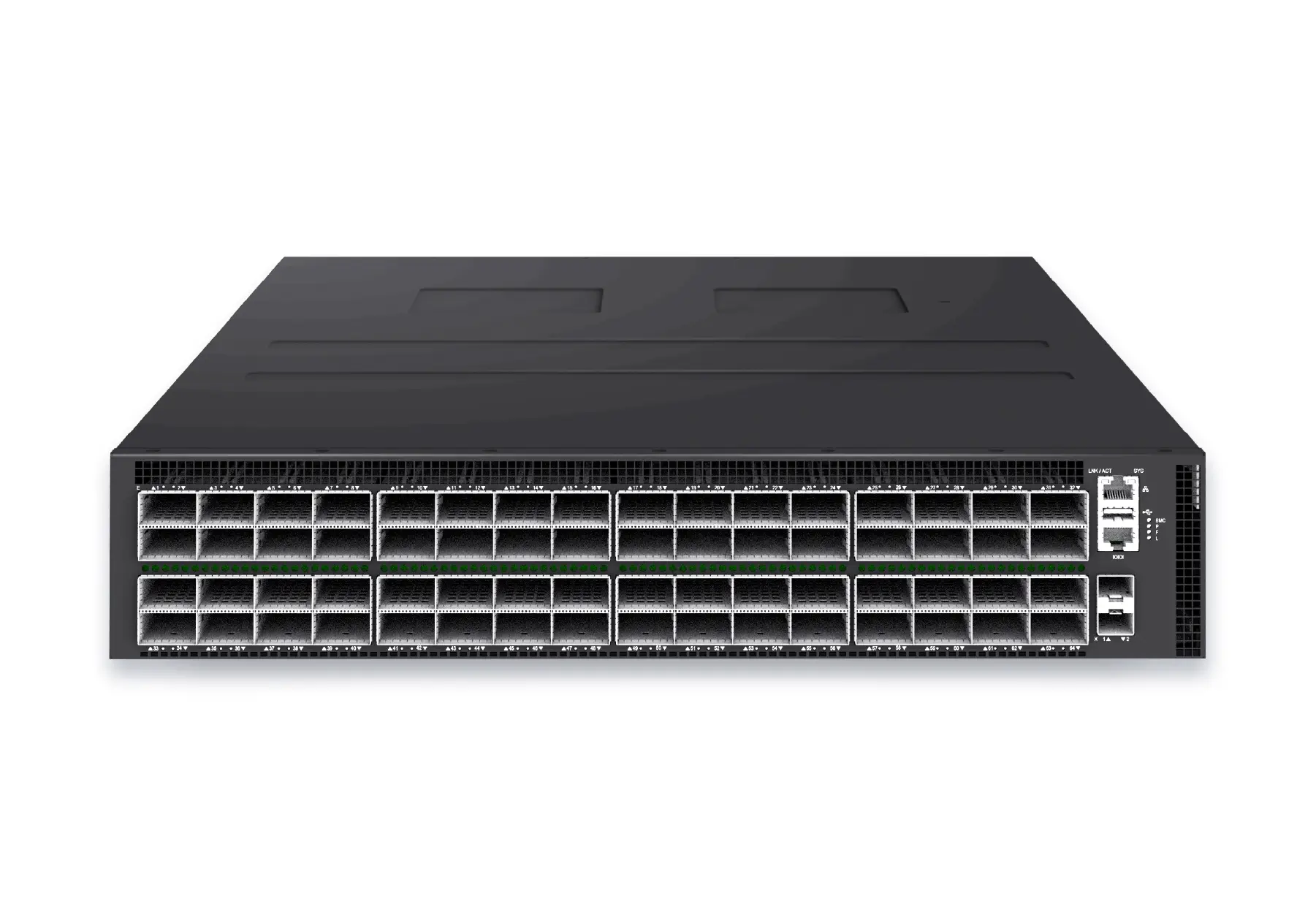 datacenter aiXS-DC-64X800-AI-G164-port 800G AI fabric switch for large-scale GPU clusters, HPC backbones, and ultra-high-throughput data center networks.View product
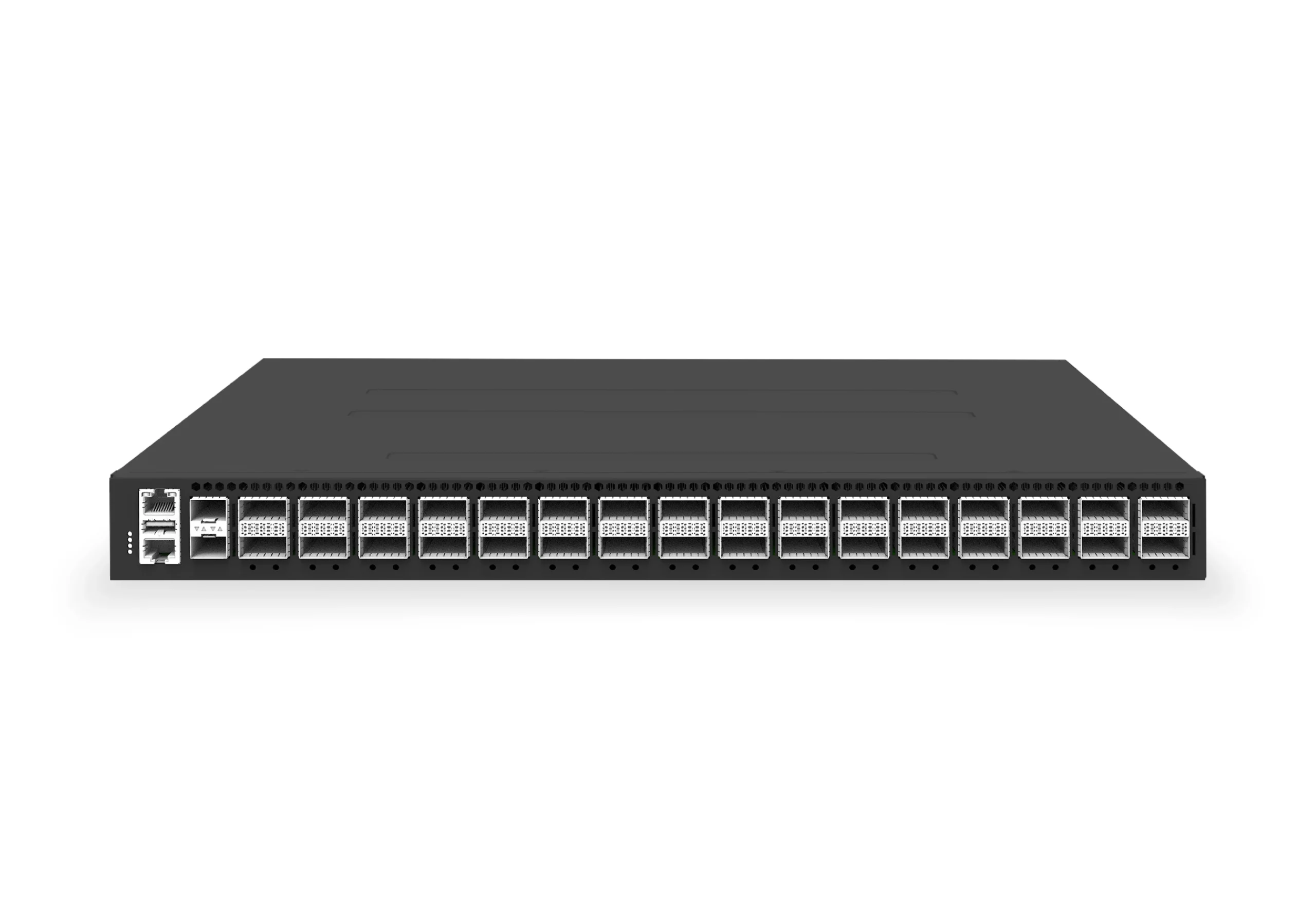 datacenter aiXS-DC-32X400-SP-G232-port 400G spine/core switch for high-capacity data center fabrics and AI-ready backbones.View product
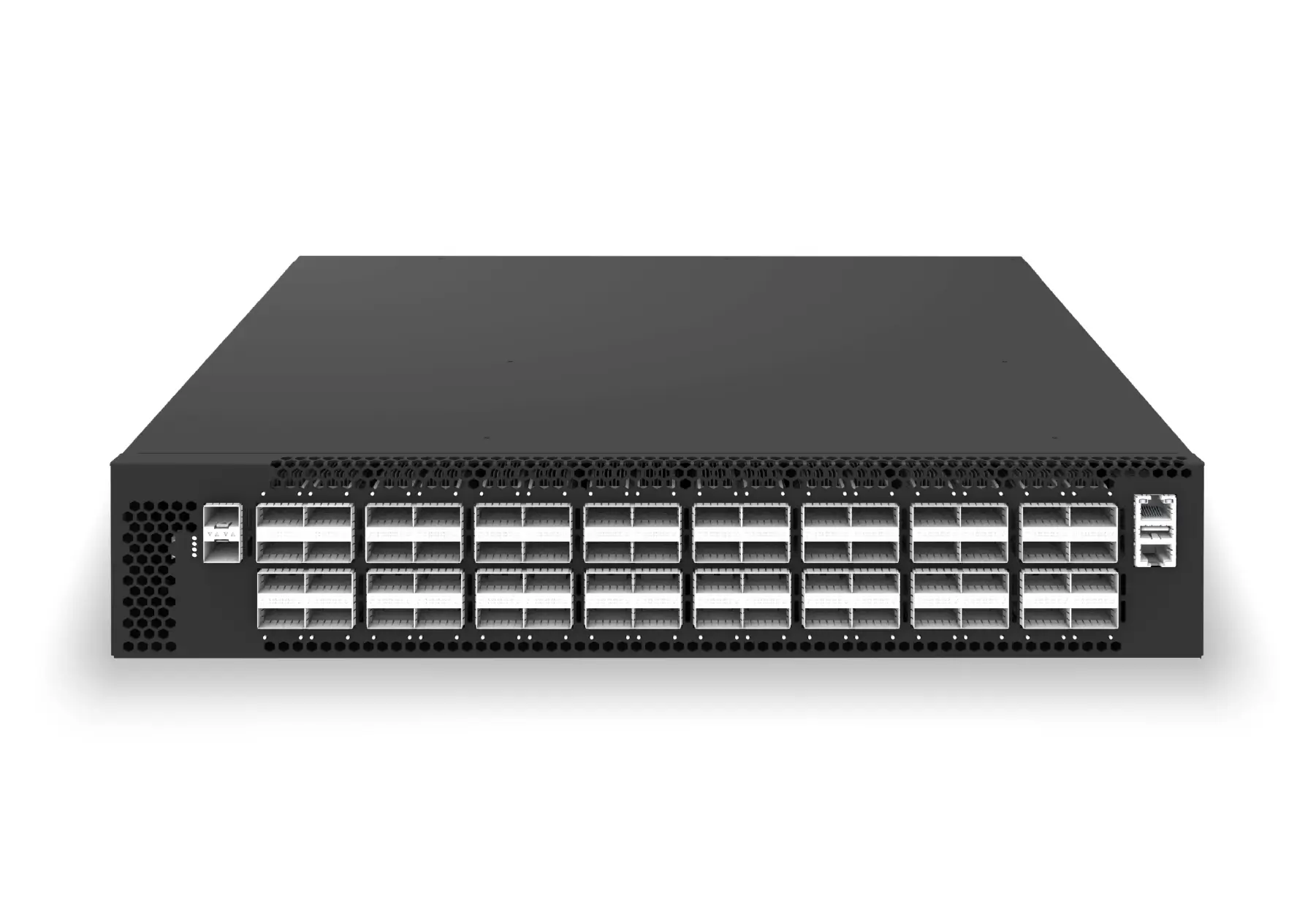 datacenter aiXS-DC-64X200-LS-G164-port 200G leaf/spine switch for high-bandwidth storage, compute, and scale-out data center fabrics.View product
Continue reading
Related articles
 Technical ArticleWhat Enterprise Buyers Actually Get From Open Networking Support: A SONiC Reality CheckA SONiC support reality check for Australian enterprise buyers covering community, commercial distribution, hardware, integration, SLA, and escalation.Read article
 Technical ArticleWarm Reboot and Fast Reboot in SONiC: How to Validate High Availability Without a Full OutageEngineering guide to validating SONiC warm reboot and fast reboot, covering ASIC support, control-plane recovery, traffic loss, telemetry, and rollback.Read article
 Technical ArticleSONiC Security Hardening: A Practical Guide for Data Center Network TeamsA practical SONiC security hardening guide for data center teams covering management access, patching, logging, RBAC, image provenance, telemetry, and audit evidence.Read article