In brief
Engineering guide for 400G and 800G optics planning covering form factor, reach, telemetry, thermal limits, supply risk, and validation.
Key takeaways
- Ethernet became credible for AI data center fabrics because the technology stack changed from shared media into switched full-duplex fabrics, and because the surrounding ecosystem now includes 400G/800G switching, RoCE v2, congestion telemetry, open NOS options, and standards work aimed directly at AI and HPC traffic.
- That does not mean Ethernet is automatically the right answer for every GPU cluster.
- The practical decision is not "Ethernet versus everything else" in the abstract.
Engineering Position
Ethernet became credible for AI data center fabrics because the technology stack changed from shared media into switched full-duplex fabrics, and because the surrounding ecosystem now includes 400G/800G switching, RoCE v2, congestion telemetry, open NOS options, and standards work aimed directly at AI and HPC traffic.
That does not mean Ethernet is automatically the right answer for every GPU cluster. It means Australian buyers should evaluate Ethernet as a first-class AI fabric option when they need open standards, operational familiarity, optics availability, and multi-vendor procurement leverage.
The practical decision is not “Ethernet versus everything else” in the abstract. The decision is whether a specific Ethernet design can satisfy the workload’s bandwidth, latency, congestion, failure recovery, and operational visibility requirements.
The Real Architectural Change Was Switching
Early Ethernet was a shared medium. Modern AI Ethernet is a switched, full-duplex, point-to-point fabric. That shift is what makes high-speed data center Ethernet relevant to GPU communication.
In a modern fabric, each server or GPU system connects to a switch port, the switch ASIC forwards traffic at high speed, and leaf-spine designs create multiple equal-cost paths across the network. The useful engineering properties are:
- Full-duplex links, so each endpoint can transmit and receive at the same time.
- Predictable path length when a Clos or leaf-spine topology is designed correctly.
- Horizontal scaling by adding leaves for endpoints and spines for fabric capacity.
- Feature programmability through BGP, EVPN, telemetry, automation APIs, and NOS-level workflows.
This is a different system from legacy office Ethernet. AI fabrics should be evaluated as distributed switching systems, not as a faster version of a campus LAN.
Speed Scaling Is Necessary, But Not Sufficient
The IEEE Ethernet roadmap matters because AI clusters consume east-west bandwidth aggressively. 400G and 800G ports allow fewer physical links, cleaner rack designs, and higher bisection bandwidth. IEEE P802.3dj work also shows that 1.6T-class Ethernet is part of the standards trajectory.
However, speed alone does not make an AI fabric stable. A weak 800G design can still suffer from congestion collapse, poor observability, or difficult failure isolation. Buyers should validate at least five dimensions:
| Dimension | Why it matters in AI fabrics |
|---|---|
| Port speed and radix | Determines rack scale and spine capacity |
| Buffer and queue behaviour | Controls how bursts are absorbed or dropped |
| PFC and ECN handling | Affects RoCE v2 loss and congestion recovery |
| Telemetry | Exposes microbursts, queue pressure, packet drops, and path imbalance |
| NOS and automation | Determines whether the fabric can be operated repeatably |
The most expensive mistake is buying a high-speed switch without validating the software and congestion behaviour that the workload depends on.
Why The Industry Is Improving Ethernet For AI
The Ultra Ethernet Consortium is focused on Ethernet enhancements for AI and HPC workloads, including transport, congestion, and telemetry concerns. The Open Compute Project’s ESUN work is also relevant because it gives the open networking community a structured place to define Ethernet switch requirements for AI networks.
Those efforts matter for buyers because they show the problem space has moved beyond generic data center switching. AI Ethernet fabrics require:
- Better congestion signalling than conventional data center traffic normally demands.
- Visibility into queue pressure, path imbalance, and packet loss at fabric scale.
- Consistent behaviour across switches, NICs, optics, and software.
- Repeatable interoperability testing rather than one-off lab success.
This is also why NVIDIA’s Spectrum-X positioning is useful evidence for the market. It treats Ethernet as an AI fabric platform, with switching, adapters, congestion management, and telemetry considered together. Even when buyers choose a different supplier, that platform framing is the correct evaluation model.
SONiC Changes The Operating Model
SONiC is important in the AI fabric discussion because it gives Ethernet a credible open NOS path. The SONiC Foundation describes the project as a Linux-based network operating system designed for cloud and data center environments, and the Open Compute Project’s SAI work provides the switch abstraction layer that helps decouple NOS behaviour from specific ASIC vendors.
For Australian enterprises, that has practical consequences:
- Network engineers can standardise automation and telemetry across supported hardware families.
- Procurement teams can avoid tying every future switch purchase to one proprietary operating system.
- Engineering teams can inspect, test, and document NOS behaviour more directly.
- AI network operations can be aligned with existing Ethernet skills instead of creating a separate fabric discipline from scratch.
This does not remove the need for vendor qualification. SONiC still has to be validated on the selected switch, optics, ASIC, and feature set. But it gives buyers a cleaner path to open Ethernet operations.
Buyer Checklist For AI Ethernet
Before selecting Ethernet switching for AI workloads, require evidence for the following:
| Area | Minimum evidence to request |
|---|---|
| Fabric design | Leaf-spine diagram, oversubscription ratio, failure-domain model, cabling plan |
| Port plan | 400G/800G port map, breakout support, optics list, rack distance assumptions |
| RoCE | PFC, ECN, queue profile, congestion recovery test results |
| Telemetry | Queue depth, drops, ECN marks, interface counters, flow visibility, export method |
| Operations | NOS image lifecycle, rollback process, config automation, alerting integration |
| Interop | Switch/NIC/optic compatibility matrix and proof-of-concept report |
For private AI and inference clusters, Ethernet is often attractive because it can reuse existing engineering practices while still delivering high-speed GPU network capacity. For very large training clusters, buyers should run a formal fabric benchmark rather than assuming equivalence across interconnect types.
Where xSONiC Fits
xSONiC’s role is to provide an open Ethernet path for data center and AI networking where the buyer wants a standards-based fabric, SONiC-oriented operations, and practical integration with optics and visibility tooling.
Useful next reads:
Bottom Line
Ethernet did not become relevant to AI because of one headline speed. It became relevant because switched fabrics, 400G/800G interfaces, RoCE v2, telemetry, SONiC, and AI-specific industry work now form a credible engineering stack. Australian buyers should validate that stack as a system before committing to the fabric.
Engineering Evidence Floor
For optics topics, speed is not the acceptance criterion. The evidence package should include form factor, reach, fibre type, link budget, DOM telemetry, FEC counters, CRC errors, temperature, breakout plan, spare availability, and switch/NOS compatibility. A useful validation run should capture 24 hours of link telemetry at 400G or 800G, include one optics replacement, and test the packet visibility path where SecOps or monitoring tools depend on copied traffic.
| Evidence area | What to validate | Acceptance gate | Rework trigger |
|---|---|---|---|
| Link health | DOM, FEC, CRC, flaps, temperature, and power | 24 hours clean record at 400G/800G | Errors are accepted without cause |
| Form factor | QSFP-DD, OSFP, DAC, AOC, fibre, and breakout | Exact module works on target switch image | Generic compatibility is assumed |
| Visibility | TAP/SPAN, packet broker, filter rules, and tool capacity | 30 minutes traffic replay without drops | SecOps path is designed after cabling |
| Supply | Local stock, RMA, spare optics, and lead time | 12 months spare plan approved | Replacement depends on unknown import timing |
| Operations | Replacement runbook, rollback, escalation, and evidence bundle | Fault isolated within 4 hours | Ownership splits across network and supplier |
This section deliberately avoids treating the topic as a feature checklist. The buyer should be able to hand the evidence to engineering, security, finance, and support teams and have each group understand what was tested, what failed, what was accepted, and what still needs rework. That is also the content pattern most useful for generative search: the page states a clear conclusion, names measurable parameters, identifies risk, and cites the operational proof required before deployment.
Engineering FAQ
What should be tested before moving campus switching to SONiC or open networking? Test PoE behaviour, NAC integration, VLAN and policy design, STP or MC-LAG interaction, multicast, monitoring, upgrade rollback, and help-desk workflows. Campus readiness is an operations test, not only a forwarding test.
Where do campus refresh projects usually carry hidden risk? The risk often sits in closets: power budget, old cabling, undocumented uplinks, mixed endpoint types, voice devices, cameras, badge systems, and change windows. Those details should be inventoried before selecting switch models.
How should Australian campus teams structure a pilot? Choose one representative site or building, document endpoint classes, run PoE and failover tests, verify monitoring, train operations staff, and define rollback steps before expanding to the broader estate.
Sources Reviewed
- Ethernet Network Adapters - ConnectX NICs | NVIDIA
- NVIDIA BlueField Data Processing Unit
- NVIDIA Spectrum-X Ethernet Platform
- SONiC Project Documentation
- Broadcom Ethernet Switching
- Marvell Switching
- NVIDIA Ethernet Switching
- Open Compute Networking
- SONiC GitHub
- SONiC Foundation
Product fit
Products referenced for evaluation
These products are referenced for evaluation context in the article. Confirm workload, port, optics, software, interoperability, and support requirements against the exact deployment before procurement.
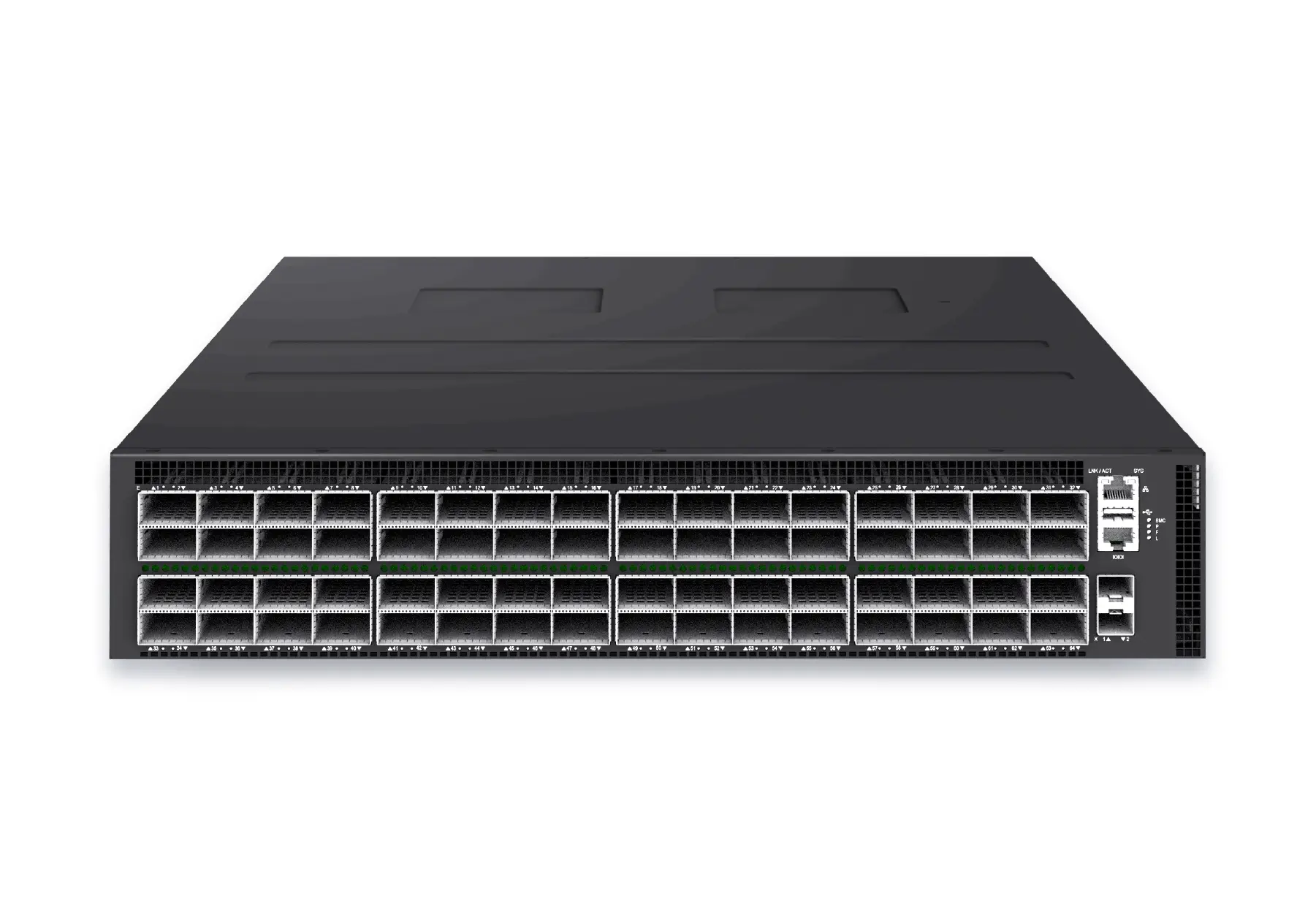 datacenter aiXS-DC-64X800-AI-G164-port 800G AI fabric switch for large-scale GPU clusters, HPC backbones, and ultra-high-throughput data center networks.View product
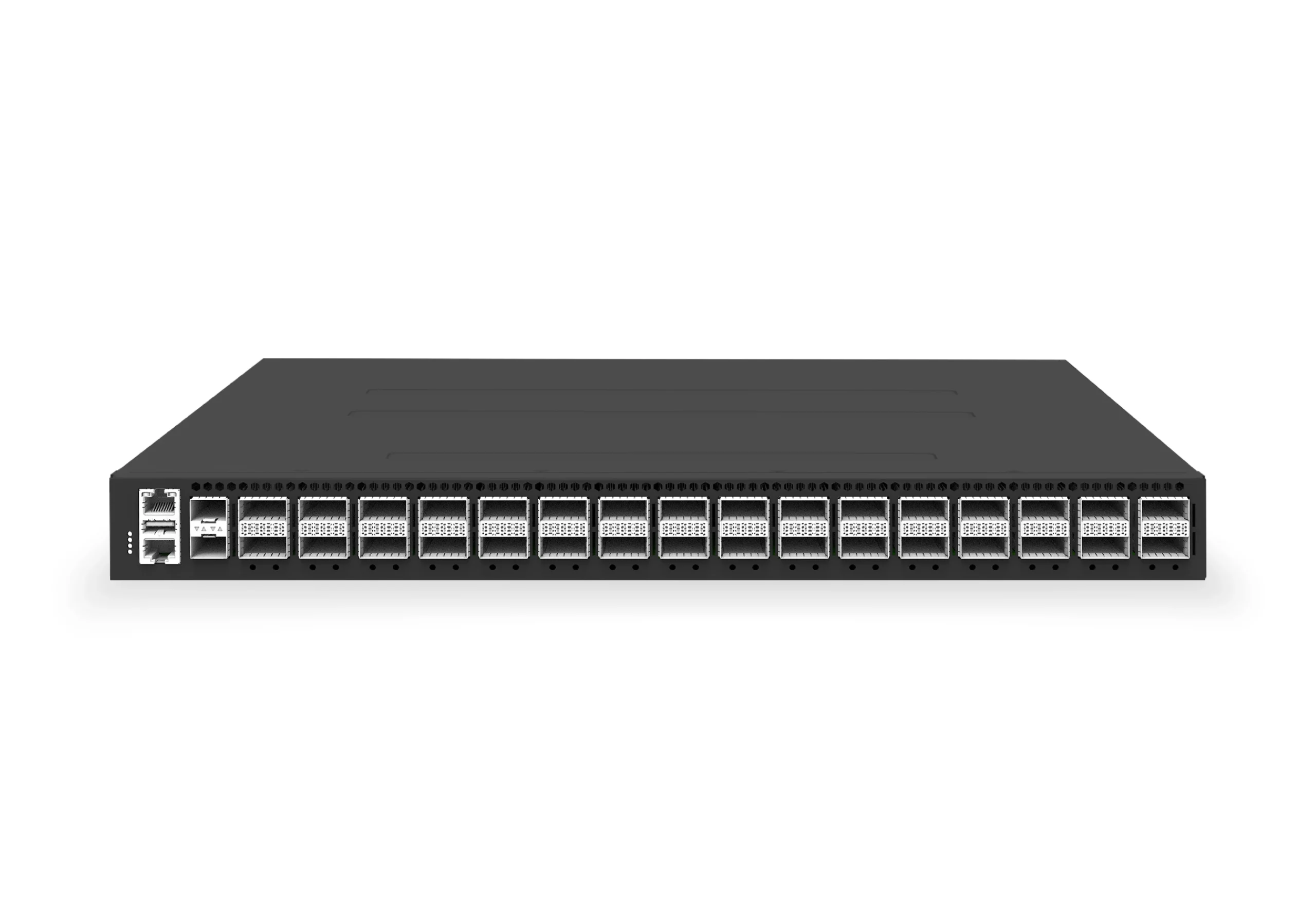 datacenter aiXS-DC-32X400-SP-G232-port 400G spine/core switch for high-capacity data center fabrics and AI-ready backbones.View product
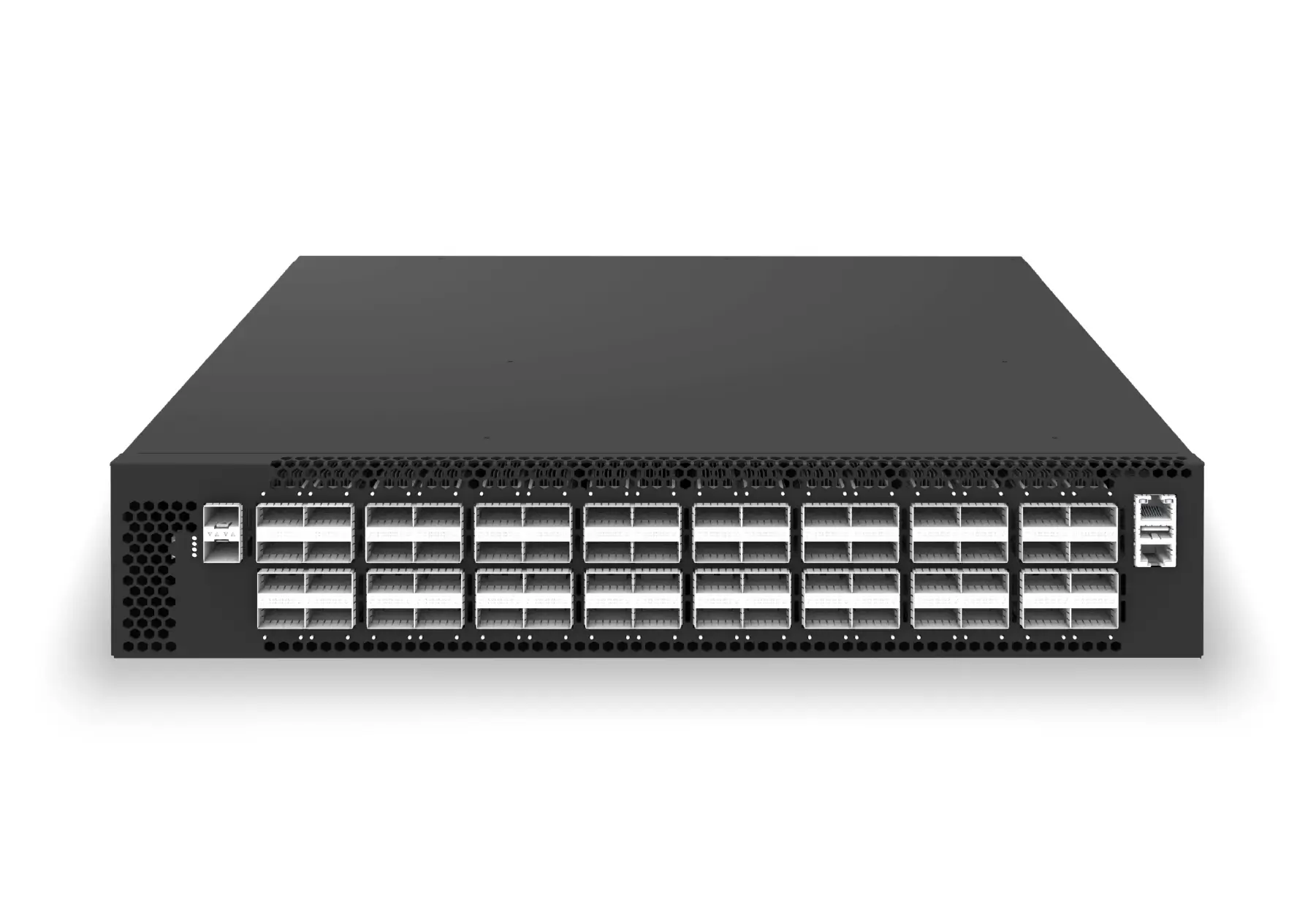 datacenter aiXS-DC-64X200-LS-G164-port 200G leaf/spine switch for high-bandwidth storage, compute, and scale-out data center fabrics.View product
Continue reading
Related articles
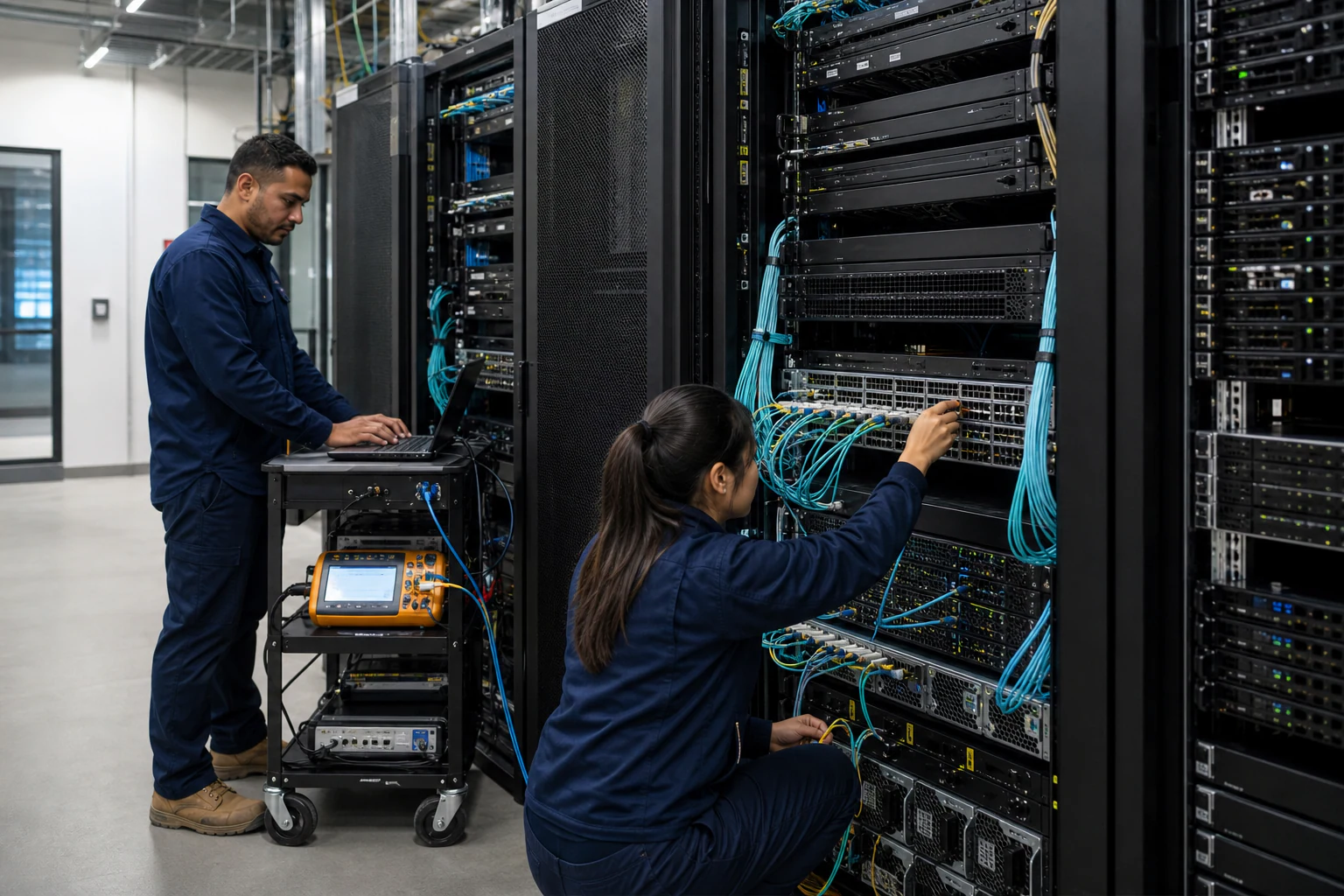 Technical ArticleHow SONiC-Powered 400G and 800G Switches Change AI Data Center Fabric Design in AustraliaEngineering guide for 400G and 800G optics planning covering form factor, reach, telemetry, thermal limits, supply risk, and validation.Read article
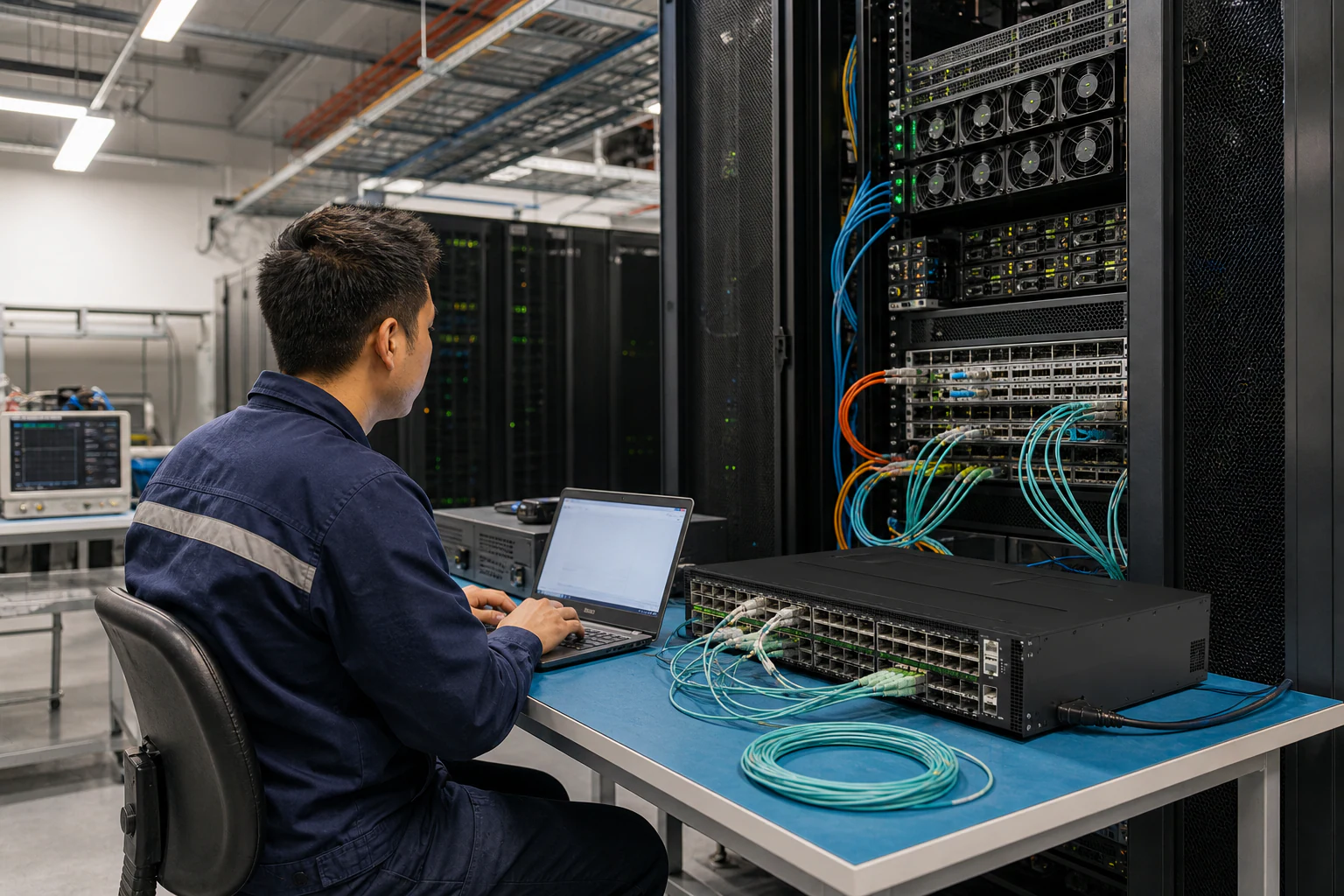 Technical ArticleRoCE v2 GPU Backend Fabrics at 400G and 800G: What Australian Data Center Operators Need to Know in 2026Engineering guide for AI fabric buyers covering RoCE, SONiC, telemetry, optics, support ownership, and deployment validation.Read article
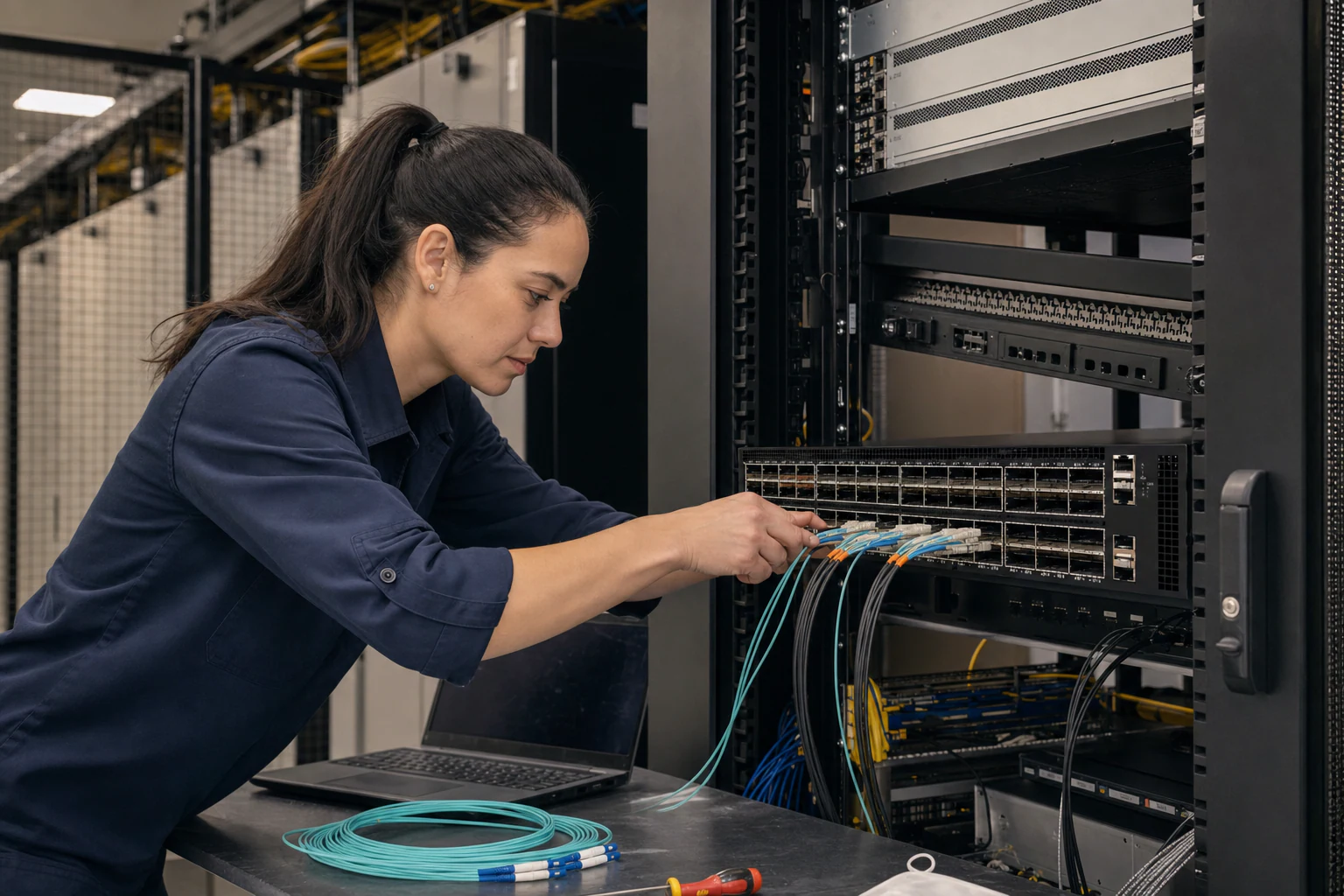 Technical ArticleWhat Australian Data Center Buyers Need to Know Before Choosing SONiC Switches for 400G and 800G UpgradesEngineering guide for 400G and 800G optics planning covering form factor, reach, telemetry, thermal limits, supply risk, and validation.Read article