In brief
Why Australian enterprises evaluate Enterprise SONiC to reduce proprietary lock-in, covering support, feature parity, automation, and TCO.
Key takeaways
- Software for Open Networking in the Cloud (SONiC) has crossed a credibility threshold.
- The SONiC Foundation's own positioning is direct: SONiC decouples hardware from software through the Switch Abstraction Interface (SAI), breaks monolithic switch software into containerized components, and runs on switches from multiple vendors.
- For Australian enterprise and data center buyers, the question is no longer whether SONiC works at scale.
What Happened: Open Networking Moves From Hyperscaler Curiosity to Enterprise Playbook
Software for Open Networking in the Cloud (SONiC) has crossed a credibility threshold. Originally production-hardened inside the data centers of the world’s largest cloud service providers, the open-source network operating system is now a Linux Foundation project with a formal charter, a growing contributor base, and a hardware ecosystem spanning multiple switch vendors and ASIC families.
The SONiC Foundation’s own positioning is direct: SONiC decouples hardware from software through the Switch Abstraction Interface (SAI), breaks monolithic switch software into containerized components, and runs on switches from multiple vendors. That architecture is precisely the kind of disaggregation that the Open Compute Project’s Networking project was created to enable. OCP states its goal is to let end users ‘forgo traditional closed and proprietary network switches in favor of a fully open network technology stack.’
For Australian enterprise and data center buyers, the question is no longer whether SONiC works at scale. Cloud hyperscalers have answered that. The question is whether the ecosystem now supports mid-market and enterprise deployments with the operational tooling, support models, and hardware breadth that Australian IT teams need.
Why It Matters for Australia: Sovereignty, AI Demand, and Vendor Concentration Risk
Australia’s data center market is under unusual pressure. In an OCP Podcast episode recorded in early 2026, David Hirst, CEO of Macquarie Data Centres, described how AI workloads are shifting data center design from a ‘real estate’ mindset to ‘chip-out thinking,’ with liquid cooling, megawatt-per-rack densities, and sovereign data requirements reshaping infrastructure decisions. Hirst noted that compliance can function as a market advantage in Australia, and that local regulatory, cultural, and geopolitical factors influence where and how AI infrastructure gets built.
That sovereign infrastructure conversation creates a natural opening for open networking. When an Australian operator must demonstrate data path control, supply chain diversity, or auditability, a single-vendor proprietary switching stack becomes a liability rather than a convenience. Enterprise SONiC, running on commodity bare-metal switch hardware from multiple ODM partners, offers a path to multi-vendor switching without sacrificing feature parity on core protocols like BGP, EVPN-VXLAN, and RDMA.
The convergence of three forces makes this moment different from earlier open networking hype cycles:
- AI fabric buildouts are demanding 100G/400G/800G leaf-spine fabrics with RoCE v2 and congestion notification — workloads SONiC supports natively.
- Sovereign cloud and data residency rules are pushing Australian enterprises toward infrastructure they can audit and control end-to-end.
- Vendor consolidation risk is top-of-mind as enterprises watch chip-level supply constraints and single-vendor licensing models create unpredictable cost trajectories.
None of this means proprietary switching is dead. It means the evaluation criteria have shifted.
The Migration Reality: What Enterprise SONiC Actually Changes in the Network Stack
SONiC’s architecture is not a marketing abstraction. The GitHub repository and SONiC Foundation documentation describe a containerized design where each network function runs in its own Docker container, providing fault isolation, simplified upgrades, and independent component scaling. Configuration uses JSON-based files and supports both CLI and programmatic methods via standard Linux interfaces.
For a network engineer accustomed to a proprietary CLI, the operational model changes in concrete ways:
| Proprietary Stack | Enterprise SONiC Stack | |---|---|---n| Vendor-specific NOS bundled with hardware | SONiC NOS decoupled via SAI from bare-metal hardware | | Proprietary telemetry and monitoring | Standard Linux tooling, Streaming Telemetry, gNMI, INT | | Single-vendor ASIC and optics qualification | Multi-vendor ASIC support (Broadcom switch silicon, Marvell Teralynx, others) | | Vendor-driven feature roadmap | Community-driven feature development with enterprise distribution optionality | | Locked service contracts | Flexible support from ODMs, integrators, or enterprise SONiC distribution vendors |
The OCP Podcast has featured multiple real-world open networking adoption stories. In Episode 6, French ISP Prosoluce described its transition to open networking with IP Infusion, emphasizing the importance of community support and continuous education. In Episode 5, solutions engineer Francois Defrocourt from Madeo discussed deploying OCP-compliant hardware to avoid vendor lock-in while simplifying network management. Episode 7 covered a collaboration between BE-Net, ThyssenKrupp, and OCP to address scaling challenges and regulatory complexity through open networking standards.
These are not hypothetical deployments. They represent a pattern: organizations that evaluated the total cost of vendor lock-in against the operational investment of open networking, and chose the latter.
The Buyer Decision Framework: When Proprietary-to-SONiC Migration Makes Sense
Not every Australian enterprise should rip and replace a functioning proprietary network. The migration case is strongest when several of these conditions align:
Migration triggers that favor Enterprise SONiC:
- Approaching end-of-support on a legacy switching platform (e.g., Cisco Catalyst 6500/6800, Juniper EX series nearing EOS)
- Building a new AI/ML fabric where RoCE v2, DCBX, and lossless Ethernet are requirements
- Scaling a data center beyond what single-vendor pricing models can sustain
- Requiring supply chain diversity for compliance, sovereign cloud, or government accreditation
- Operating at a scale where network automation via NETCONF/YANG, Ansible, or Kubernetes-style orchestration delivers measurable opex savings
Conditions where proprietary switching may still be the pragmatic choice:
- Small campus deployments where the operational overhead of an open NOS exceeds the licensing savings
- Environments with deep existing investment in vendor-specific management platforms (DNA Center, Juniper Mist, Arista CloudVision)
- Teams without Linux and container operations experience, and no budget to acquire it
The honest assessment is that Enterprise SONiC migration is an infrastructure architecture decision, not a product swap. It changes the procurement model (buy hardware and NOS separately), the support model (choose your own support tier), and the skills model (network teams need Linux fluency). Organizations that plan for those transitions report significant flexibility gains. Organizations that treat it as a drop-in replacement for a proprietary CLI encounter friction.
The Australian Channel Question: Who Supports Enterprise SONiC Locally?
One of the most frequent objections to open networking in Australia is support locality. Enterprise buyers want a partner they can call at 10am AEST, not 2am UTC. The SONiC ecosystem has matured to address this, but the Australian channel story requires careful framing.
The SONiC Foundation lists premier members and contributing organizations on its site, and the OCP marketplace includes solution providers with varying levels of regional presence. For Australian buyers, the evaluation path typically runs through one of three models:
- ODM direct engagement — purchasing bare-metal switches from ODMs (Edgecore, Celestica, Delta, others) with SONiC pre-loaded, supported by the ODM’s APAC team.
- Enterprise SONiC distribution vendors — companies that package SONiC with enterprise-grade support, management tooling, and SLA-backed services.
- Australian systems integrators — local partners who assemble bare-metal hardware, SONiC, optics, and operational support into a managed solution.
The optics layer also matters. Australian data center and campus operators need qualified transceiver supply — SFP28, QSFP28, QSFP-DD, and OSFP modules that work reliably with SONiC-qualified hardware. This is where an integrated open networking portfolio that spans switches, optics, and NOS becomes a practical advantage over sourcing components independently.
The Bigger Picture: Open Networking as Infrastructure Strategy, Not Cost Play
The earliest open networking pitches focused on hardware cost savings. Buy a white-box switch, save 40-60 percent versus a branded equivalent. That narrative was not wrong, but it was incomplete, and it undersold the strategic value.
The OCP Networking project’s stated scope goes beyond cost. It encompasses fully disaggregated and open networking hardware and software, Linux-based operating systems with REST APIs, fully automated configuration management and bare-metal provisioning, and universal multi-form-factor switch motherboard hardware. The ambition is to redesign how networks are built, not just how they are purchased.
For Australian enterprises navigating AI infrastructure buildouts, sovereign cloud mandates, and campus modernization, the strategic framing matters more than the per-port cost delta. Enterprise SONiC offers:
- Architectural optionality: swap ASIC vendors, optics suppliers, or support partners without re-architecting the network
- Protocol parity: BGP, OSPF, EVPN-VXLAN, MPLS, RoCE v2, DCBX, INT telemetry — all production-hardened at hyperscaler scale
- Automation readiness: standard Linux tooling, NETCONF/YANG, streaming telemetry, and container-native operations
- Supply chain resilience: no single-vendor dependency from silicon to NOS to optics
The Australian market is early in this transition relative to US hyperscalers, but the conditions are aligning. AI fabric demand, sovereign infrastructure requirements, and a maturing support ecosystem are creating the conditions for broader enterprise adoption.
Lock-In Escape Acceptance Matrix
| Decision area | Acceptance evidence | Rework trigger |
|---|---|---|
| Feature parity | Required BGP, EVPN, ACL, QoS, telemetry, MC-LAG, PoE, or RoCE features tested on the exact platform | Vendor claims support but cannot show release notes or test evidence |
| Operational portability | Ansible, NETCONF/YANG, gNMI, backup, and monitoring workflows run across at least 2 switch roles | The new platform recreates lock-in through proprietary tooling |
| Support | Hardware, SONiC image, optics, and integration support owners named with SLA targets | A production fault can be bounced between suppliers |
| TCO | 36-month and 60-month models include hardware, optics, support, training, lab validation, and spares | Savings depend on ignoring operational labour or support costs |
Engineering FAQ
What should be tested before moving campus switching to SONiC or open networking? Test PoE behaviour, NAC integration, VLAN and policy design, STP or MC-LAG interaction, multicast, monitoring, upgrade rollback, and help-desk workflows. Campus readiness is an operations test, not only a forwarding test.
Where do campus refresh projects usually carry hidden risk? The risk often sits in closets: power budget, old cabling, undocumented uplinks, mixed endpoint types, voice devices, cameras, badge systems, and change windows. Those details should be inventoried before selecting switch models.
How should Australian campus teams structure a pilot? Choose one representative site or building, document endpoint classes, run PoE and failover tests, verify monitoring, train operations staff, and define rollback steps before expanding to the broader estate.
Related xSONiC Resources
Sources Reviewed
- Ethernet Network Adapters - ConnectX NICs | NVIDIA
- NVIDIA BlueField Data Processing Unit
- NVIDIA Spectrum-X Ethernet Platform
- OpenConfig gNMI Specification
- OpenConfig
- RFC 7950 - The YANG 1.1 Data Modeling Language
- RFC 6241 - Network Configuration Protocol (NETCONF)
- ACSC Essential Eight
- OAIC Notifiable Data Breaches
- APRA CPS 234 Information Security
- NETSCOUT Network Packet Definition
- Cloudflare Network Packet Definition
- SONiC Project Documentation
- Broadcom Ethernet Switching
- Marvell Switching
- NVIDIA Ethernet Switching
- Open Compute Networking
- SONiC GitHub
- SONiC Foundation
Product fit
Products referenced for evaluation
These products are referenced for evaluation context in the article. Confirm workload, port, optics, software, interoperability, and support requirements against the exact deployment before procurement.
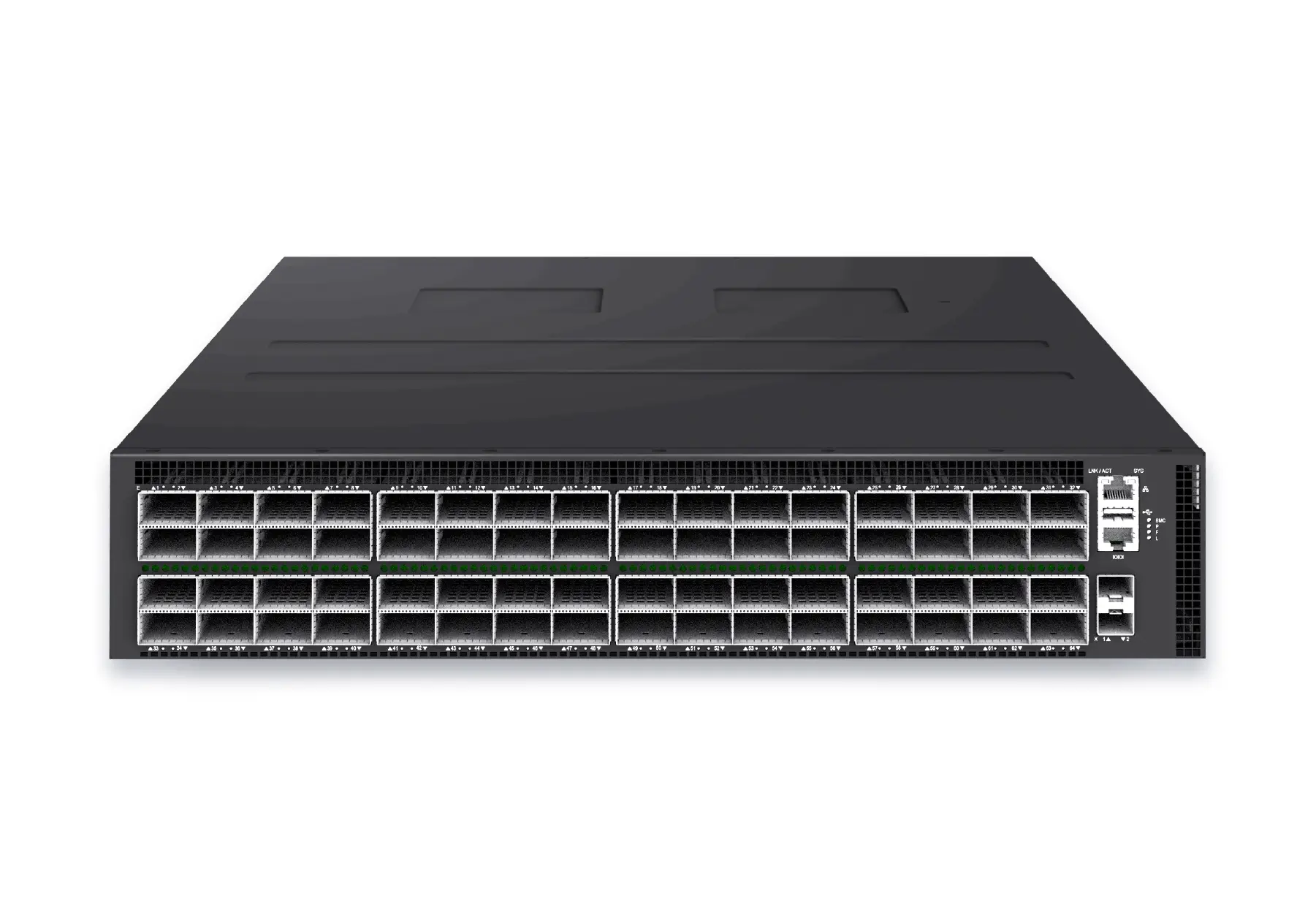 datacenter aiXS-DC-64X800-AI-G164-port 800G AI fabric switch for large-scale GPU clusters, HPC backbones, and ultra-high-throughput data center networks.View product
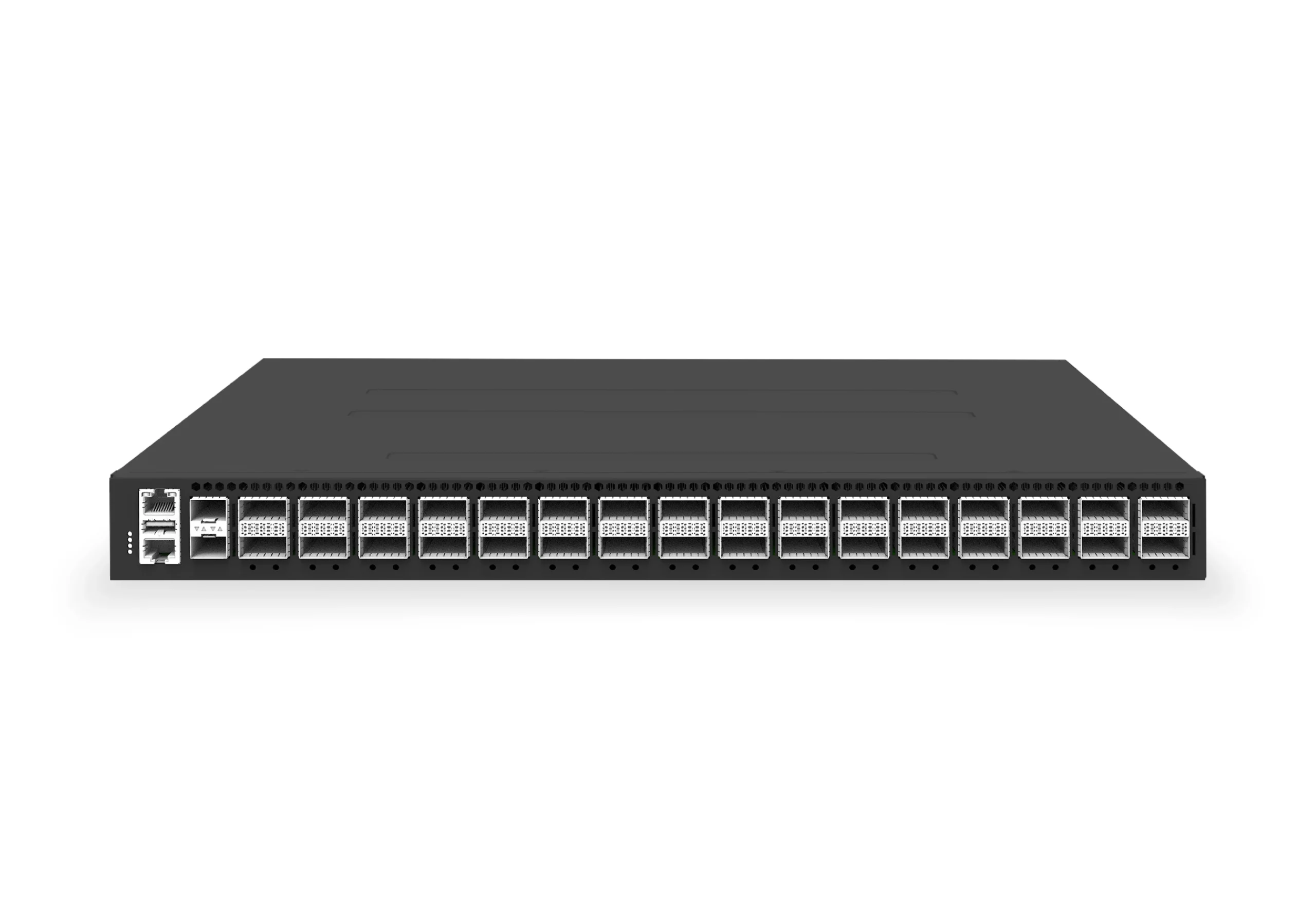 datacenter aiXS-DC-32X400-SP-G232-port 400G spine/core switch for high-capacity data center fabrics and AI-ready backbones.View product
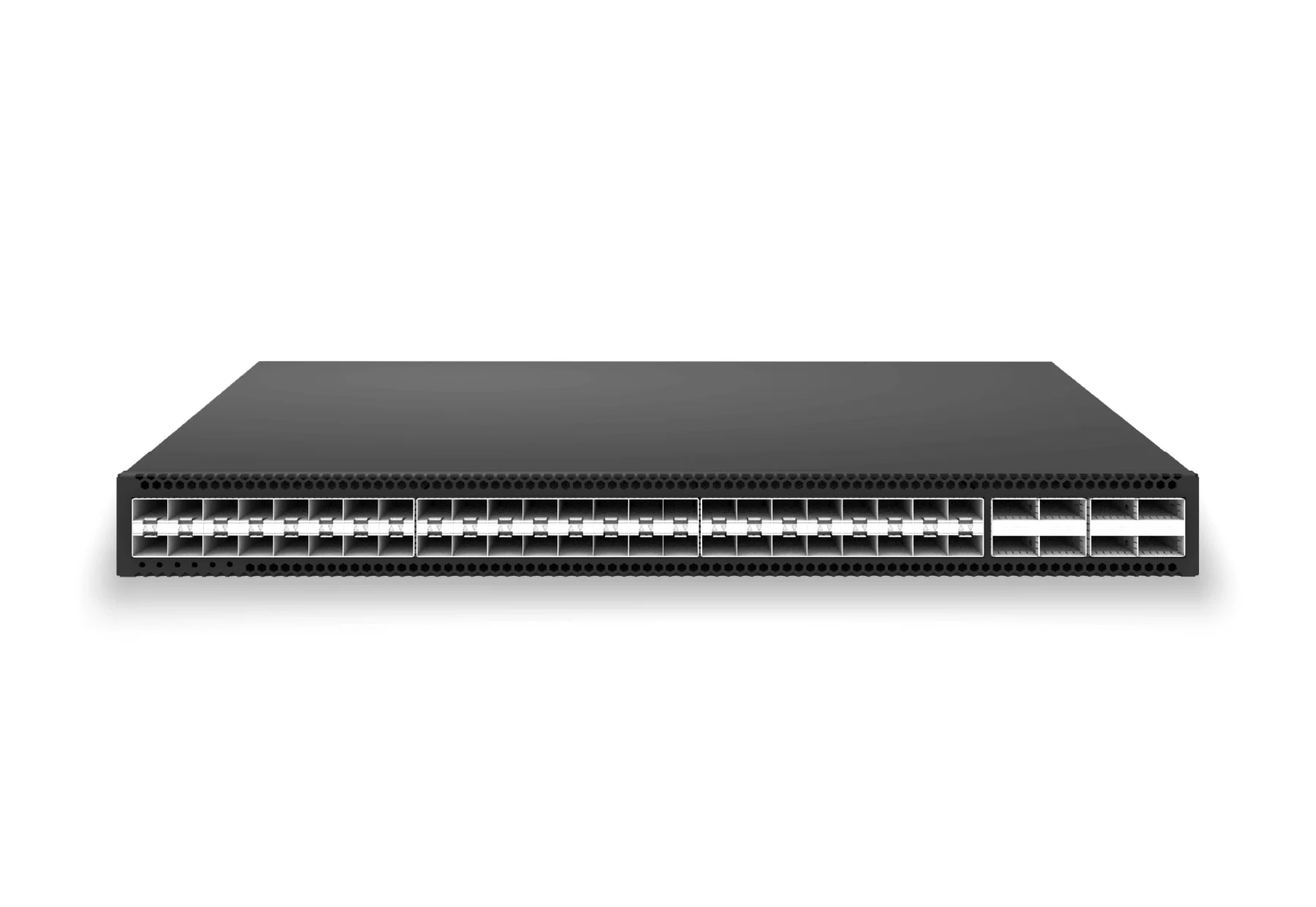 access aggregateXS-AA-48X25-8X100-AGG48x 25G SFP28 aggregation/core switch with 8x 100G QSFP28 for enterprise access and aggregation networks.View product
Continue reading
Related articles
 Technical ArticleWhy SONiC Open Networking on Celestica Data Center Switches Matters for Australian EnterprisesHow SONiC on Celestica data center switches should be evaluated by Australian operators for ASIC fit, support, RoCE, automation, and TCO.Read article
 Technical ArticleWhy Enterprise Buyers Are Moving to SONiC on White Box Switches: A Practical Guide for Australian NetworksPractical guide for Australian enterprise buyers evaluating SONiC on white-box switches, covering hardware, ASICs, support, automation, and TCO.Read article
 Technical ArticleSONiC Ecosystem: How Open Networking Runs Across OCP Vendors and Cloud OperatorsA practical guide to the SONiC ecosystem across OCP, SAI, cloud operators, ASIC vendors, and Australian enterprise adoption decisions.Read article