
In brief
A practical guide to the SONiC ecosystem across OCP, SAI, cloud operators, ASIC vendors, and Australian enterprise adoption decisions.
Key takeaways
- For decades, enterprise networking ran on vertically integrated stacks.
- SONiC -- Software for Open Networking in the Cloud -- is changing that model.
- Originally production-hardened inside the data centers of the world's largest cloud service providers, SONiC has matured into an ecosystem with hundreds of contributors, multi-vendor hardware support, and a growing presence in enterprise campus and data center networks.
Why SONiC Matters to Enterprise Network Buyers
For decades, enterprise networking ran on vertically integrated stacks. A single vendor supplied the switch hardware, the network operating system, and the management plane. Buyers paid a premium for that integration and accepted vendor lock-in as the cost of doing business.
SONiC — Software for Open Networking in the Cloud — is changing that model. Backed by the Linux Foundation and rooted in the Open Compute Project (OCP) community, SONiC is an open-source network operating system that decouples the NOS from the underlying switch hardware. It runs on switches from multiple vendors and across multiple ASIC families, giving network teams a common software layer regardless of the box underneath.
Originally production-hardened inside the data centers of the world’s largest cloud service providers, SONiC has matured into an ecosystem with hundreds of contributors, multi-vendor hardware support, and a growing presence in enterprise campus and data center networks. For Australian organizations evaluating their next network refresh, understanding the SONiC ecosystem is no longer optional — it is a prerequisite for making informed switching decisions.
The Foundation: Linux Foundation, OCP, and an Open Governance Model
SONiC operates under the SONiC Foundation, a Linux Foundation project with a formal technical charter and open governance structure. The project maintains its source code, documentation, and community coordination on GitHub, where it has accumulated nearly 3,000 commits from a broad contributor base.
The Open Compute Project (OCP Networking) provides the hardware ecosystem that makes SONiC viable. OCP’s networking workgroups define open switch hardware designs — from 1U top-of-rack switches to disaggregated chassis platforms — that multiple hardware vendors can manufacture to a common specification. When an enterprise team evaluates an OCP-compatible switch, they know it was designed from the ground up to run open NOS options like SONiC.
This governance model matters for buyers because it reduces dependency risk. If one hardware vendor raises prices or falls behind on support, SONiC can move to another vendor’s platform without rewriting automation, changing monitoring tooling, or retraining operations staff on a new CLI.
Hardware Abstraction Through SAI: One NOS, Many ASICs
The technical foundation that makes multi-vendor SONiC possible is the Switch Abstraction Interface (SAI). SAI is a standardized API layer that sits between the SONiC software and the switching ASIC. It allows SONiC to interact with silicon from multiple vendors — including Broadcom, Marvell, NVIDIA, and others — through a consistent programming interface.
For network teams, SAI eliminates the old problem of being locked to a single ASIC vendor. A SONiC image built for one SAI target can be recompiled or reconfigured for a different ASIC family, and the application-level configuration — BGP sessions, VLANs, ACLs, RDMA settings — stays the same.
This abstraction layer is particularly relevant for AI fabric deployments, where buyers often need to match specific RDMA and congestion management features to their GPU cluster topology. With SAI, the SONiC NOS can expose advanced features like RoCE v2, Data Center Bridging Capability Exchange (DCBX), and In-Band Network Telemetry (INT) across different silicon platforms, giving architects flexibility to choose the best switch silicon for each fabric tier without changing their operational tooling.
Containerized Architecture: Modular by Design
SONiC is built on a modular, container-based architecture where each network function runs in its own Docker container. Routing, switching, monitoring, configuration management, and telemetry are isolated into discrete services that can be updated, restarted, or scaled independently.
This design provides several operational advantages. Fault isolation means a crash in the LLDP daemon does not take down BGP. Upgrades can target a single container rather than requiring a full firmware flash. Debugging becomes easier because each container has its own logs and lifecycle. And for development teams, the container model allows rapid iteration — a new feature can be built, tested, and deployed without touching the rest of the NOS.
SONiC uses standard Linux interfaces and tools for configuration and management. It supports JSON-based configuration files and provides both CLI and programmatic interfaces, including NETCONF/YANG-based management for automation-first environments. This means Ansible, Terraform, and other infrastructure-as-code tools can manage SONiC switches the same way they manage Linux servers.
For Australian enterprises moving toward GitOps-style network operations, SONiC’s containerized and standards-based architecture aligns well with modern infrastructure practices. The learning curve is shorter for teams already comfortable with Linux and container orchestration.
Cloud Operator Adoption: Production-Hardened at Scale
SONiC’s credibility comes from its production track record. The NOS was originally developed to run the data center networks of the world’s largest cloud service providers, and it continues to operate at massive scale in those environments today.
Major cloud operators adopted SONiC because it solved a specific problem: managing tens of thousands of switches across multiple data centers without being locked to a single vendor’s release cycle. With SONiC, these operators could define their own feature roadmap, contribute patches upstream, and deploy changes on their own timeline.
This cloud-origin story is important for enterprise buyers because it means SONiC’s feature set — BGP, EVPN-VXLAN, RDMA over Converged Ethernet (RoCE), telemetry, and programmable data planes — was not designed in a lab. It was stress-tested in production environments handling millions of concurrent flows, massive east-west traffic patterns, and the latency-sensitive demands of distributed AI training workloads.
NVIDIA, one of the leading networking silicon and platform vendors, explicitly supports SONiC on its Spectrum Ethernet switch family alongside Cumulus Linux. NVIDIA describes SONiC as a ‘community-developed, open source network operating system based on Linux that runs on switches from multiple vendors and powers some of the largest data centers in the world.’ This vendor endorsement from a major silicon provider reinforces SONiC’s position as a production-grade NOS, not a research project.
Multi-Vendor Ecosystem: What OCP Switch Vendors Offer
The SONiC ecosystem spans a growing list of OCP-compatible switch hardware vendors. These vendors produce bare-metal and branded switches designed to run SONiC and other open NOS options. The hardware ranges from 1G campus access switches to 800G data center spine platforms.
NVIDIA’s Spectrum switch portfolio is one prominent example. The Spectrum-2, Spectrum-3, Spectrum-4, and Spectrum-6 families span port speeds from 100GbE to 800GbE and support SONiC through NVIDIA’s Pure SONiC offering. The Spectrum-X Ethernet platform, designed for AI workloads, provides features like adaptive routing, congestion control, and zero-touch RoCE acceleration — all accessible through SONiC.
Beyond NVIDIA, other major ASIC and switch vendors contribute to the SONiC ecosystem. Broadcom’s switching silicon is widely supported through SAI, and Marvell’s networking portfolio also targets SONiC-compatible platforms. On the hardware side, OCP-recognized switch manufacturers produce a range of form factors from 1U fixed-configuration switches to modular chassis platforms, all designed to run SONiC images.
For Australian buyers, this multi-vendor ecosystem translates to procurement flexibility. Rather than being limited to one vendor’s product catalog, organizations can evaluate switches from multiple manufacturers, compare price-performance, and select the platform that fits their topology — all while running the same SONiC NOS across the fleet.
Key SONiC Features for Data Center and Campus Networks
SONiC provides a full suite of network functionality relevant to both data center and enterprise campus deployments. Based on its production heritage and community development model, the feature set includes:
Data Center Features:
- BGP-based routing (EBGP and IBGP) for spine-leaf fabrics
- EVPN-VXLAN for overlay networking and multi-tenancy
- RoCE v2 support for lossless Ethernet in AI/ML and storage fabrics
- DCBX for priority-based flow control and traffic classification
- In-Band Network Telemetry (INT) for real-time path visibility
- Containerized microservice architecture for modular operations
Campus and Access Features:
- VLAN, ACL, and policy-based routing for campus segmentation
- LLDP, LACP, and STP for traditional campus topologies
- NETCONF/YANG support for automation-first management
- SNMP and streaming telemetry for monitoring integration
Operational Features:
- JSON-based configuration with CLI and API access
- Standard Linux tooling (bash, Python, systemd) for diagnostics
- Hot-patching and container-level upgrades
- Community-driven bug fixes and feature contributions
What This Means for Australian Enterprise Buyers
The SONiC ecosystem presents a credible alternative to traditional proprietary switching stacks, but Australian buyers should approach it with clear evaluation criteria.
Advantages to consider:
- Reduced vendor lock-in through hardware-software decoupling
- Lower total cost of ownership by avoiding per-port NOS licensing fees
- Access to a global open-source community for bug fixes and feature development
- Alignment with modern automation practices (GitOps, infrastructure-as-code)
- Production-proven at cloud scale, not a lab experiment
Evaluation criteria:
- Local partner and distributor availability for hardware procurement and support
- Staff skills: does your team have Linux and container experience, or is retraining required?
- Feature maturity: does the current SONiC release cover your specific use case?
- Integration with existing monitoring, automation, and security tooling
- ASIC compatibility: which switch silicon supports the features you need?
For Australian data center operators building AI clusters, SONiC’s support for RoCE v2, EVPN-VXLAN, and INT telemetry makes it a strong candidate for GPU backend fabrics. For campus networks, SONiC’s growing feature set in access switching and PoE management is worth monitoring, though buyers should verify feature completeness against their specific campus requirements.
SONiC Ecosystem Evaluation Matrix
The ecosystem story is useful only if it helps a buyer isolate responsibility. A mature SONiC evaluation should map each layer to an owner, a version, and acceptance evidence.
| Ecosystem layer | What to verify | Rework trigger |
|---|---|---|
| Governance and source | SONiC Foundation, OCP Networking, Apache 2.0 license, release cadence, and community issue process understood | Buyer treats community SONiC and vendor Enterprise SONiC as identical |
| ASIC and SAI | ASIC family, SAI version, SDK owner, supported features, and known caveats documented for each switch model | Required feature depends on an SAI behavior that is not validated on the chosen ASIC |
| Hardware platform | Port speeds, optics, thermals, power, airflow, and rack fit validated for 1U, 2U, or modular form factor | Platform choice is made from port count without optics or cooling evidence |
| NOS distribution | Community, vendor, or xSONiC Enterprise SONiC image selected with upgrade and rollback path | No named owner for image build, security patches, or TAC escalation |
| Operations ecosystem | Automation, telemetry, backup, log collection, and support runbook proven in a 30-day pilot | The pilot succeeds only because one engineer knows manual recovery steps |
Next Steps: Evaluating SONiC for Your Network
If you are considering SONiC for your next network refresh, here is a practical starting checklist:
- Define your workload. Are you building a data center AI fabric, a campus access network, or a hybrid? SONiC’s feature strengths vary by use case.
- Check hardware compatibility. Review the SONiC supported devices list on the project wiki and verify ASIC-level feature support through SAI documentation.
- Assess team readiness. SONiC is Linux-native. Teams with Linux, container, and Python skills will ramp faster than teams coming from a proprietary CLI-only background.
- Request a proof of concept. Work with a hardware partner to deploy SONiC on a small fabric segment and validate the features, automation, and monitoring workflows you need.
- Engage the community. The SONiC project has active Slack channels, mailing lists, and weekly community meetings where you can ask questions and learn from other operators.
Open networking is no longer a fringe movement. With Linux Foundation governance, OCP hardware backing, and production adoption by the world’s largest cloud operators, SONiC has earned its place as a mainstream NOS option. For Australian enterprises ready to break free from proprietary switching lock-in, the SONiC ecosystem is worth a serious look.
Engineering FAQ
What is the most important SONiC ecosystem question for buyers? Ask who owns each layer: switch hardware, ASIC SDK, SAI, SONiC image, optics, automation, monitoring, and local support. Open networking still needs accountable ownership.
Why does SAI matter to Australian enterprise buyers? SAI lets SONiC target multiple ASIC families, but feature behavior still depends on the specific ASIC, SDK, image, and validation state. It is an abstraction layer, not a magic compatibility guarantee.
How should a SONiC ecosystem pilot be scoped? Run a 30-day pilot with the intended hardware, optics, image, automation, telemetry, failure tests, and support path. The result should be evidence for procurement, not just a lab demo.
Related xSONiC Resources
Sources Reviewed
- IEEE 802.1Q Bridges and Bridged Networks
- IEEE 802.1AX Link Aggregation
- Ethernet Network Adapters - ConnectX NICs | NVIDIA
- NVIDIA BlueField Data Processing Unit
- NVIDIA Spectrum-X Ethernet Platform
- OpenConfig gNMI Specification
- OpenConfig
- RFC 7950 - The YANG 1.1 Data Modeling Language
- RFC 6241 - Network Configuration Protocol (NETCONF)
- ACSC Essential Eight
- OAIC Notifiable Data Breaches
- APRA CPS 234 Information Security
- NETSCOUT Network Packet Definition
- Cloudflare Network Packet Definition
- IEEE 802.11be Wireless LAN Standard
- IEEE 802.3bt Power over Ethernet
- SONiC Project Documentation
- Broadcom Ethernet Switching
- Marvell Switching
- NVIDIA Ethernet Switching
- Open Compute Networking
- SONiC GitHub
- SONiC Foundation
Product fit
Products referenced for evaluation
These products are referenced for evaluation context in the article. Confirm workload, port, optics, software, interoperability, and support requirements against the exact deployment before procurement.
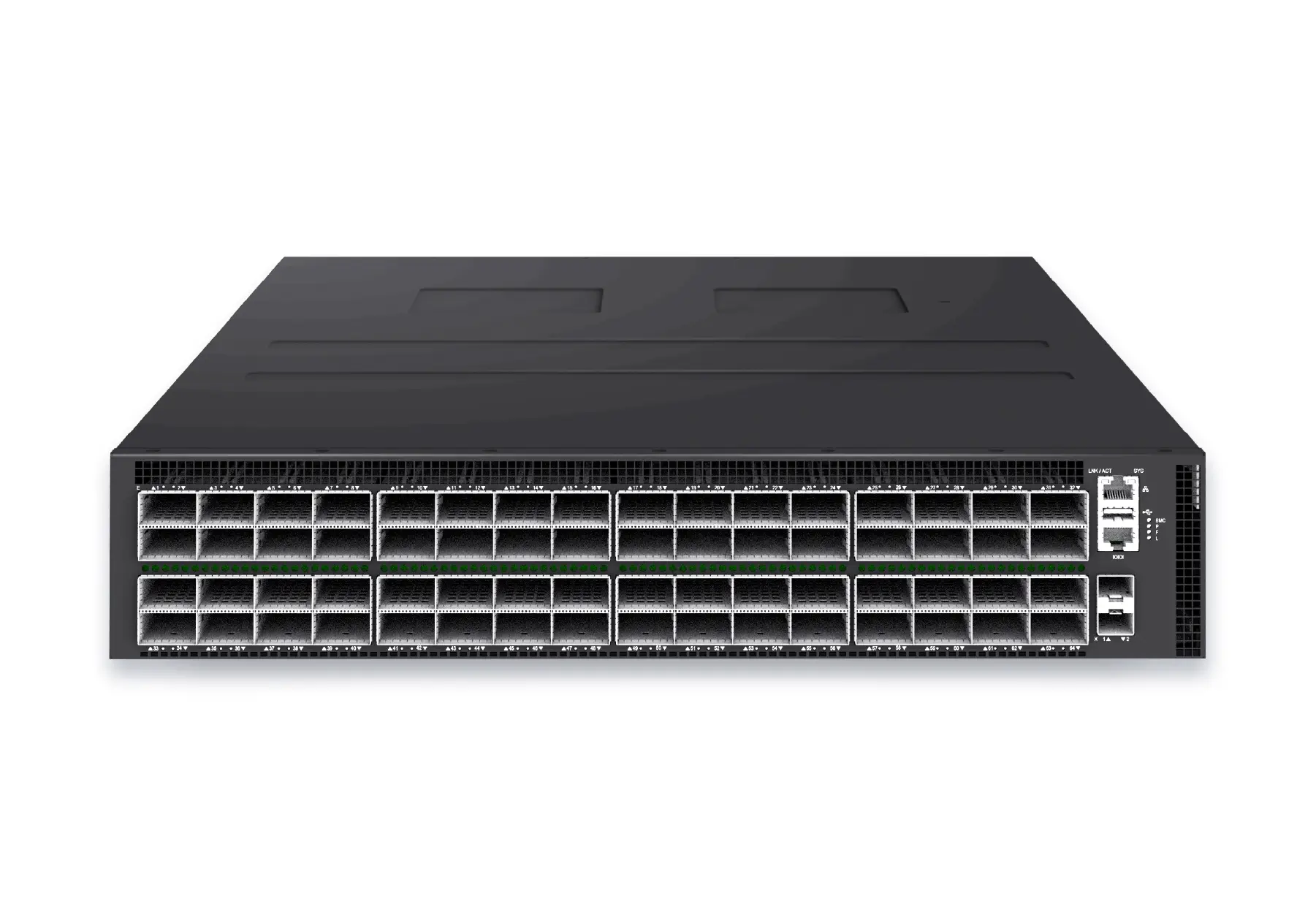 datacenter aiXS-DC-64X800-AI-G164-port 800G AI fabric switch for large-scale GPU clusters, HPC backbones, and ultra-high-throughput data center networks.View product
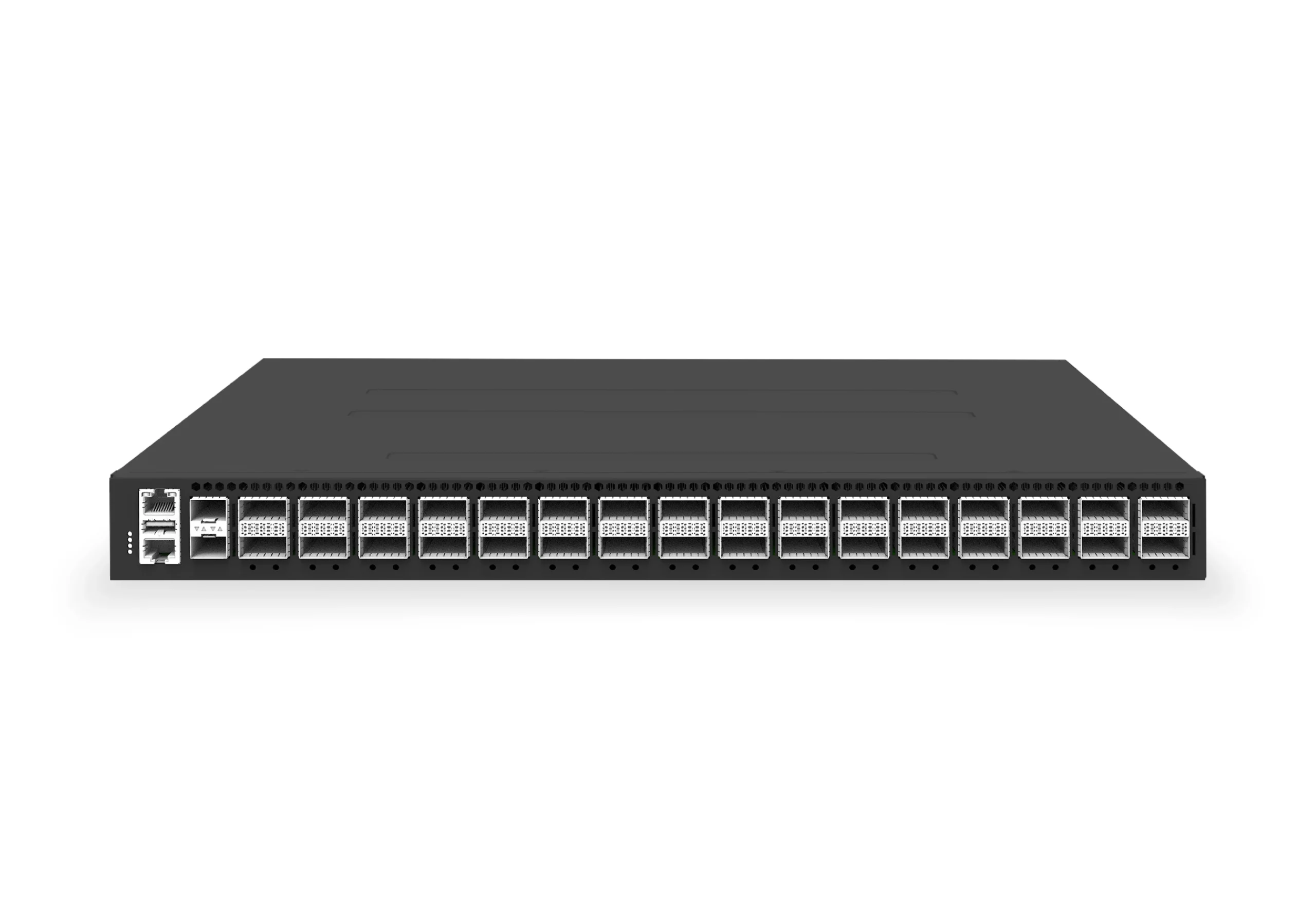 datacenter aiXS-DC-32X400-SP-G232-port 400G spine/core switch for high-capacity data center fabrics and AI-ready backbones.View product
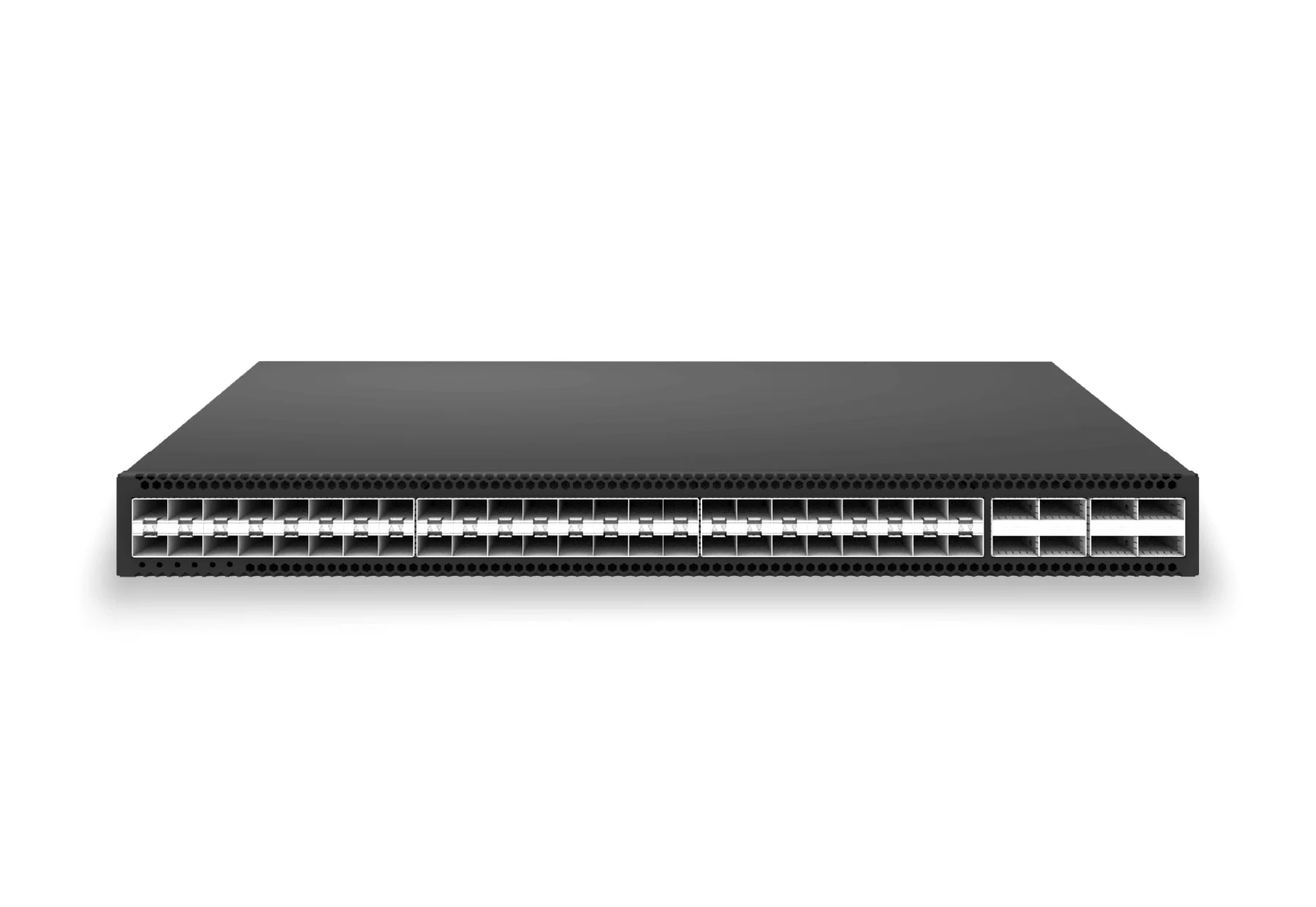 access aggregateXS-AA-48X25-8X100-AGG48x 25G SFP28 aggregation/core switch with 8x 100G QSFP28 for enterprise access and aggregation networks.View product
Continue reading
Related articles
 Technical ArticleWhy SONiC Open Networking on Celestica Data Center Switches Matters for Australian EnterprisesHow SONiC on Celestica data center switches should be evaluated by Australian operators for ASIC fit, support, RoCE, automation, and TCO.Read article
 Technical ArticleWhy Enterprise Buyers Are Moving to SONiC on White Box Switches: A Practical Guide for Australian NetworksPractical guide for Australian enterprise buyers evaluating SONiC on white-box switches, covering hardware, ASICs, support, automation, and TCO.Read article
 Technical ArticleOpen SONiC Enterprise Adoption Reaches a Turning Point: What Australian Network Buyers Should KnowWhat Australian buyers should validate as Open SONiC adoption moves into enterprise networks, covering support, features, automation, and risk.Read article