In brief
Engineering guidance on Australian Enterprise Campuses Need a Fresh Look at Enterprise SONiC for Access and Aggregation Refresh in 2026 for Australian campus networks.
Key takeaways
- Walk onto any major Australian university or enterprise campus and the physical scale hits you immediately.
- That kind of distributed, high-density environment translates directly into networking demand.
- For Australian enterprise and education IT teams planning 2026 Q2 refresh programs, Enterprise SONiC -- the community and commercial distributions built on Microsoft's open-source SONiC (Software for Open Networking in the Cloud) platform -- deserves a serious place on the evaluation shortlist.
The Scale Problem Australian Campus Networks Cannot Ignore
Walk onto any major Australian university or enterprise campus and the physical scale hits you immediately. The University of Sydney alone operates teaching and research facilities from its main Camperdown/Darlington campus through Camden, Westmead, Surry Hills, and multiple hospital clinical schools across New South Wales. Macquarie University spans 126 hectares within what is described as Australia’s largest high-tech precinct, with over 40,000 students and more than 2,000 staff converging on a single hub. UNSW runs multi-campus operations across Kensington, Paddington, and Canberra.
That kind of distributed, high-density environment translates directly into networking demand. Every building needs access-layer switching with enough PoE headroom for modern endpoints. Every inter-building link needs aggregation that does not collapse under east-west traffic patterns. And every refresh cycle is an opportunity to ask whether the incumbent vendor stack still earns its premium.
For Australian enterprise and education IT teams planning 2026 Q2 refresh programs, Enterprise SONiC — the community and commercial distributions built on Microsoft’s open-source SONiC (Software for Open Networking in the Cloud) platform — deserves a serious place on the evaluation shortlist. This article explains why, and provides a practical validation framework for campus access and aggregation deployments.
Why Campus Refresh Is a Different Problem Than Data Center Refresh
Enterprise teams that have adopted SONiC in the data center sometimes assume campus deployment is a straightforward extension. It is not. The campus access and aggregation layer introduces constraints that do not exist at the spine-leaf tier:
- PoE density: Access switches must deliver 802.3af/at/bt power to dozens of endpoints per rack — IP phones, wireless access points, surveillance cameras, IoT sensors. Power budget planning is a first-order design concern.
- Port diversity: A campus closet may need a mix of 1G, multi-gig, and 10G access ports alongside 25G or 100G uplinks. Unlike a clean data center leaf, the campus access layer is heterogeneous.
- L2/L3 boundary decisions: Campus networks still rely heavily on Layer 2 features — VLANs, spanning tree, MC-LAG — at the edge. The L3 boundary placement affects convergence time, broadcast domain size, and troubleshooting complexity.
- Environmental constraints: Closets are uncontrolled. Switches must tolerate wider temperature ranges, limited airflow, and acoustic noise limits near office spaces.
- Operational familiarity: Campus network teams often have deep CLI experience with a single vendor. Moving to Enterprise SONiC requires a plan for training, Day-2 operations tooling, and support escalation paths.
None of these are blockers, but each requires explicit validation. A refresh program that skips any of these steps risks replacing one set of problems with another.
What Enterprise SONiC Brings to the Campus Access and Aggregation Layer
Enterprise SONiC distributions for campus use share the same core architecture as their data center counterparts — a containerized, Debian-based OS with a Redis-backed state database and hardware abstraction through SAI (Switch Abstraction Interface). But campus-ready Enterprise SONiC adds features that the cloud-origin SONiC project did not originally prioritize:
| Capability | Why It Matters for Campus |
|---|---|
| 802.1X and RADIUS integration | Port-based access control is mandatory for enterprise campus compliance frameworks (Australian ISM, Essential Eight) |
| PoE management and monitoring | Per-port power budget control, LLDP-based power negotiation, and alarm thresholds for high-density AP and IoT deployments |
| MC-LAG and STP interop | Controlled failover at the access/aggregation boundary without requiring a full fabric underlay |
| Policy-Based Routing (PBR) | Traffic steering for security zones, guest networks, and compliance-segmented VLANs without hair-pinning through a central firewall |
| Virtual chassis / stacking | Simplified management of multiple physical switches as a single logical unit in distributed closets |
| NETCONF/YANG programmability | Model-driven configuration that integrates with existing Ansible, Terraform, or controller-based management workflows |
| LLDP and CDP neighbor discovery | Visibility into what is connected where — essential for troubleshooting in multi-floor, multi-building environments |
The open-source foundation means that the control plane is inspectable, the configuration model is standardized, and the operational tooling is not locked to a single vendor’s proprietary ecosystem. For Australian organizations with sovereign IT mandates or multi-vendor sourcing requirements, this matters beyond cost.
Validation Framework: What to Test Before You Commit
The following validation framework is designed for Australian enterprise and education teams evaluating Enterprise SONiC for a campus access and aggregation refresh. It is vendor-agnostic in structure but maps to xSONiC product families and solution pillars where applicable.
Phase 1: Baseline Validation (Lab)
- Provision the switch with a representative campus configuration: VLANs, trunk ports, access ports with 802.1X, PoE profiles, and uplink LACP bundles.
- Validate PoE delivery under load. Power on the maximum number of endpoints the switch specification allows and confirm stable operation for 72 hours.
- Test LLDP neighbor discovery against your existing access points, IP phones, and upstream aggregation switches.
- Confirm NETCONF/YANG connectivity with your network management platform. Verify that running-config and intended-config are both retrievable and diff-able.
Phase 2: Feature Validation (Lab)
- Configure MC-LAG with a peer switch and verify sub-second failover on link-down events.
- Deploy policy-based routing for a segmented guest VLAN and confirm that traffic does not leak to the corporate VLAN.
- Test spanning tree interoperability with the existing campus aggregation switches (PVST+, MSTP, or RPVST+ as appropriate).
- Validate virtual chassis formation if you plan to use stacking for distributed closet management.
- Run a sustained traffic load at 70 percent of line rate for 24 hours. Monitor CPU, memory, and thermal behavior.
Phase 3: Operational Validation (Pilot)
- Deploy to a single building or floor. Onboard with your standard Day-2 monitoring stack (SNMP traps, syslog forwarding, streaming telemetry).
- Test firmware upgrade and rollback procedures. Confirm that a failed upgrade does not leave the switch in a bricked state.
- Validate support escalation paths with your xSONiC partner or distribution channel. Time-to-resolution on a test ticket should meet your SLA expectations.
- Collect user experience metrics from endpoints on the pilot floor — DHCP lease times, authentication latency, and wireless handoff behavior.
Phase 4: Scale Validation (Extended Pilot)
- Expand to two or more buildings with inter-building fiber uplinks. Confirm aggregation-layer behavior under realistic traffic patterns.
- Test east-west traffic flows between buildings. If your campus runs voice, video, and building management systems on separate VLANs, verify that QoS markings are honored end-to-end.
- Validate configuration consistency across switches using your automation tooling. Drift detection should be operational before full rollout.
The Australian Context: Sovereign IT, Compliance, and Multi-Vendor Strategy
Australian enterprise and government campuses operate under regulatory frameworks that influence network sourcing decisions. The Australian Signals Directorate’s Information Security Manual (ISM) and the Essential Eight maturity model require specific network segmentation, access control, and logging capabilities. The Australian Government’s hosting certification framework and the Critical Infrastructure Act apply additional obligations to organizations operating essential services.
Enterprise SONiC’s open architecture aligns well with several of these requirements:
- Inspectable code base: Security teams can audit the control plane without relying on vendor-issued CVE disclosures alone.
- Standardized configuration models: YANG models provide a machine-readable contract for configuration compliance, reducing the gap between intended policy and running state.
- Multi-vendor flexibility: Organizations that source switches from more than one hardware vendor can maintain a consistent NOS across both, simplifying training and reducing the operational cost of vendor diversity.
For Australian university campuses — which often operate with constrained network teams supporting thousands of endpoints across dozens of buildings — the operational efficiency argument is as compelling as the cost argument. A single NOS that works across access and aggregation tiers reduces the skill matrix your team needs to maintain.
Cost and Sourcing Considerations for 2026 Refresh Cycles
Campus switch refresh programs are capital-intensive. A mid-size Australian university or enterprise with 500 to 2,000 access-layer switch ports faces a procurement event in the hundreds of thousands to low millions of Australian dollars. The cost structure of open networking hardware — where the NOS license and the switching ASIC hardware can be sourced from different suppliers — changes the negotiation dynamic.
The following table illustrates the structural cost difference, though actual pricing depends on volume, channel relationships, and support tier:
| Cost Component | Traditional Vendor Stack | Enterprise SONiC + Open Hardware |
|---|---|---|
| Hardware (per switch) | Bundled with NOS license | Purchased separately; competitive sourcing possible |
| NOS license | Included in hardware price, often with annual support uplift | Separate licensing model; community or commercial support tiers |
| Support contract | Typically 1-3 year vendor support | Available through xSONiC distribution or third-party NOC services |
| Automation tooling | Vendor-specific management platform (often additional cost) | Open-source NETCONF/YANG, Ansible, standard APIs |
| Firmware upgrades | Tied to support contract | Available through community or commercial channels |
The savings are real but not automatic. Organizations that lack automation maturity will spend more on Day-2 operations initially. The cost advantage compounds over 3-5 year ownership periods as teams build operational confidence.
Optics and Cabling: The Often-Overlooked Refresh Dependency
A campus switch refresh is also an optics refresh. Older buildings may have multimode fiber plant that was installed for 1G uplinks. New aggregation switches with 25G or 100G uplinks may require singlemode fiber, new patch panels, or updated transceiver modules.
When planning an Enterprise SONiC campus refresh, include optics validation in your scope:
- Audit existing fiber plant. Document fiber type (singlemode vs. multimode), connector types, and measured link distances.
- Match transceiver specifications to link requirements. For campus aggregation uplinks, SFP28 (25G) and QSFP28 (100G) are the common choices for 2026 refresh programs. DAC (Direct Attach Copper) cables work for short closet-to-closet runs within the same floor.
- Validate transceiver compatibility with your Enterprise SONiC switch platform. Not all third-party optics are supported on all hardware. Test before bulk procurement.
- Consider future-proofing with singlemode fiber even for short runs if your refresh cycle is 7-10 years. The incremental cost of singlemode over multimode is minimal at current market prices, and it eliminates a fiber plant dependency for future speed upgrades.
xSONiC’s optical transceiver product family covers SFP, SFP+, SFP28, QSFP28, QSFP-DD, and OSFP form factors, designed to work with Enterprise SONiC platforms. Bundling switch and optics procurement from a single source simplifies the compatibility validation step.
Wireless Integration: The Campus Access Layer Does Not Stop at the Switch
Modern campus access layers must account for wireless as a primary connectivity method. Every access-layer switch port connected to a wireless access point is a PoE delivery point, a VLAN trunk, and a potential QoS policy enforcement point.
When evaluating Enterprise SONiC for campus refresh, consider the wireless integration surface:
- PoE budget per switch: Modern Wi-Fi 6E and Wi-Fi 7 access points can draw 30-60W per unit under peak load. A 48-port switch with 24 AP-connected ports needs a PoE budget of at least 720W to 1440W for wireless alone.
- VLAN trunking to APs: Multi-SSID deployments require trunk ports with tagged VLANs for corporate, guest, and IoT SSIDs. Enterprise SONiC must handle this without performance degradation.
- Fast roaming: 802.11r and 802.11k/v support on the AP side requires consistent VLAN and subnet configuration across all switches in a mobility domain. Configuration drift across switches breaks roaming.
- Streaming telemetry for wireless: The switch should export per-port traffic, PoE, and error counters in a format that your wireless management platform can ingest for correlation.
xSONiC’s access point product family — aligned with Wi-Fi 6, Wi-Fi 6E, and Wi-Fi 7 standards — is designed to integrate with the access-aggregate switch family. The campus refresh pitch is not just about switches; it is about an access-layer stack where switches, optics, and APs are validated to work together.
Engineering FAQ
What should be validated before a Wi-Fi 6E or Wi-Fi 7 rollout? Validate channel plan, 6 GHz client readiness, PoE budget, uplink capacity, roaming, authentication, RF density, interference, and management tooling. The AP standard alone does not prove campus performance.
Why does backhaul planning matter for modern access points? Wi-Fi 6E and Wi-Fi 7 can expose bottlenecks in access switching, PoE, cabling, and uplink design. Buyers should confirm whether 2.5G, 5G, 10G, and PoE budgets match the real AP deployment plan.
What evidence should vendors provide for enterprise WLAN projects? Ask for supported security modes, firmware lifecycle, controller or cloud management model, RF planning assumptions, client compatibility notes, and a pilot report from a representative building or floor.
Related xSONiC Resources
Sources Reviewed
- IEEE 802.1Q Bridges and Bridged Networks
- IEEE 802.1AX Link Aggregation
- Ethernet Network Adapters - ConnectX NICs | NVIDIA
- NVIDIA BlueField Data Processing Unit
- NVIDIA Spectrum-X Ethernet Platform
- OpenConfig gNMI Specification
- OpenConfig
- RFC 7950 - The YANG 1.1 Data Modeling Language
- RFC 6241 - Network Configuration Protocol (NETCONF)
- ACSC Essential Eight
- OAIC Notifiable Data Breaches
- APRA CPS 234 Information Security
- NETSCOUT Network Packet Definition
- Cloudflare Network Packet Definition
- IEEE 802.11be Wireless LAN Standard
- IEEE 802.3bt Power over Ethernet
- SONiC Project Documentation
- Broadcom Ethernet Switching
- Marvell Switching
- NVIDIA Ethernet Switching
- Open Compute Networking
- SONiC GitHub
- SONiC Foundation
Product fit
Products referenced for evaluation
These products are referenced for evaluation context in the article. Confirm workload, port, optics, software, interoperability, and support requirements against the exact deployment before procurement.
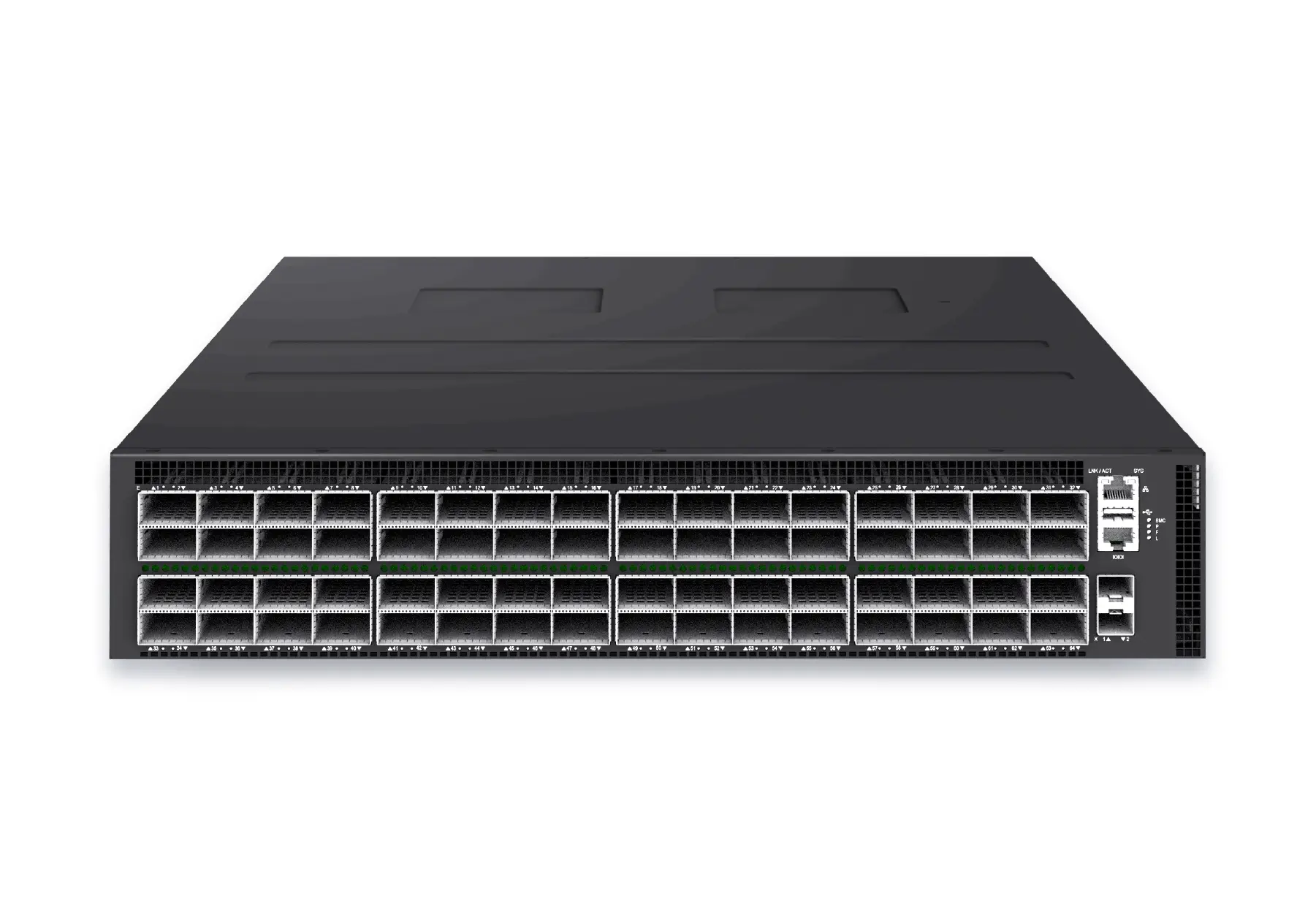 datacenter aiXS-DC-64X800-AI-G164-port 800G AI fabric switch for large-scale GPU clusters, HPC backbones, and ultra-high-throughput data center networks.View product
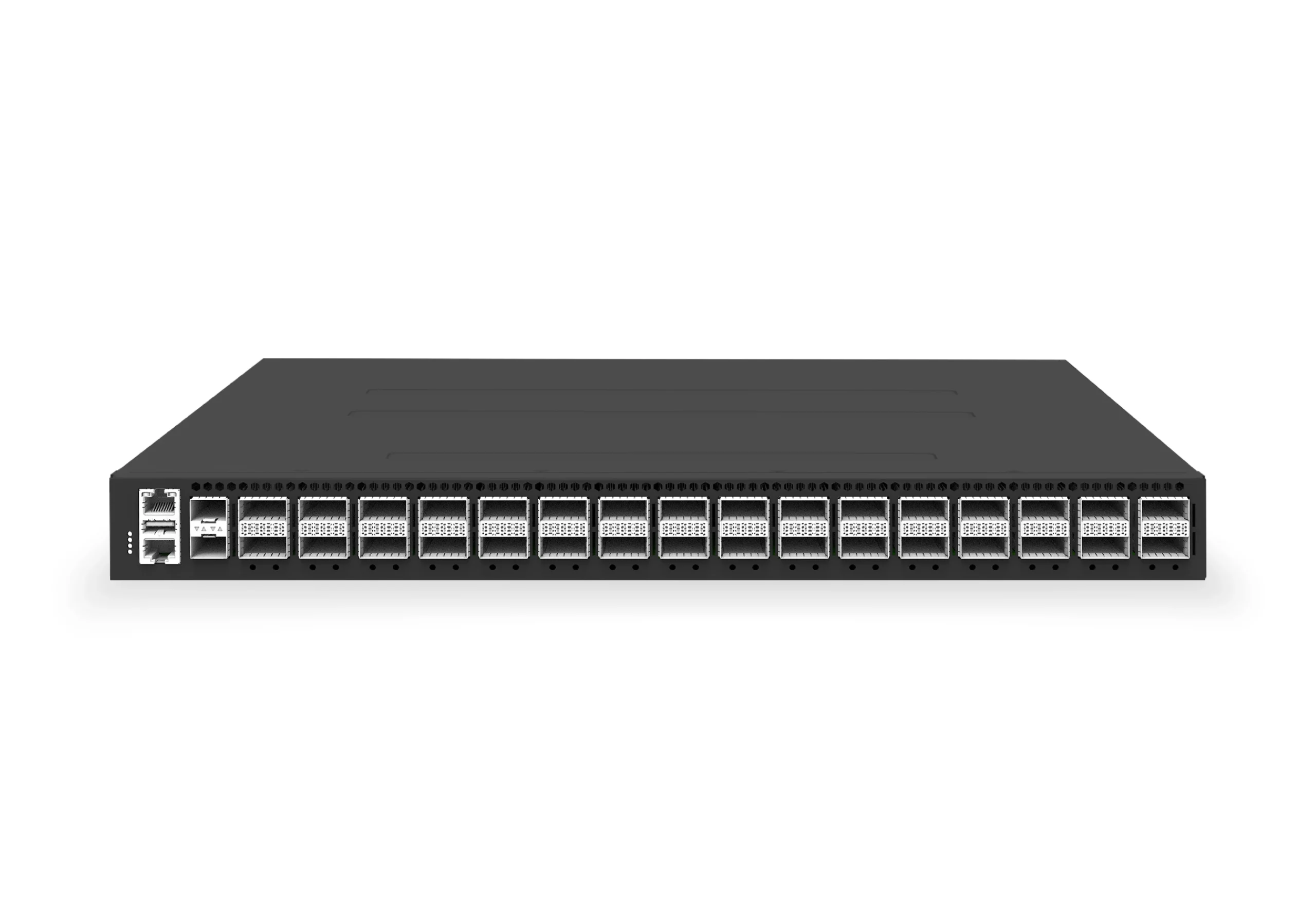 datacenter aiXS-DC-32X400-SP-G232-port 400G spine/core switch for high-capacity data center fabrics and AI-ready backbones.View product
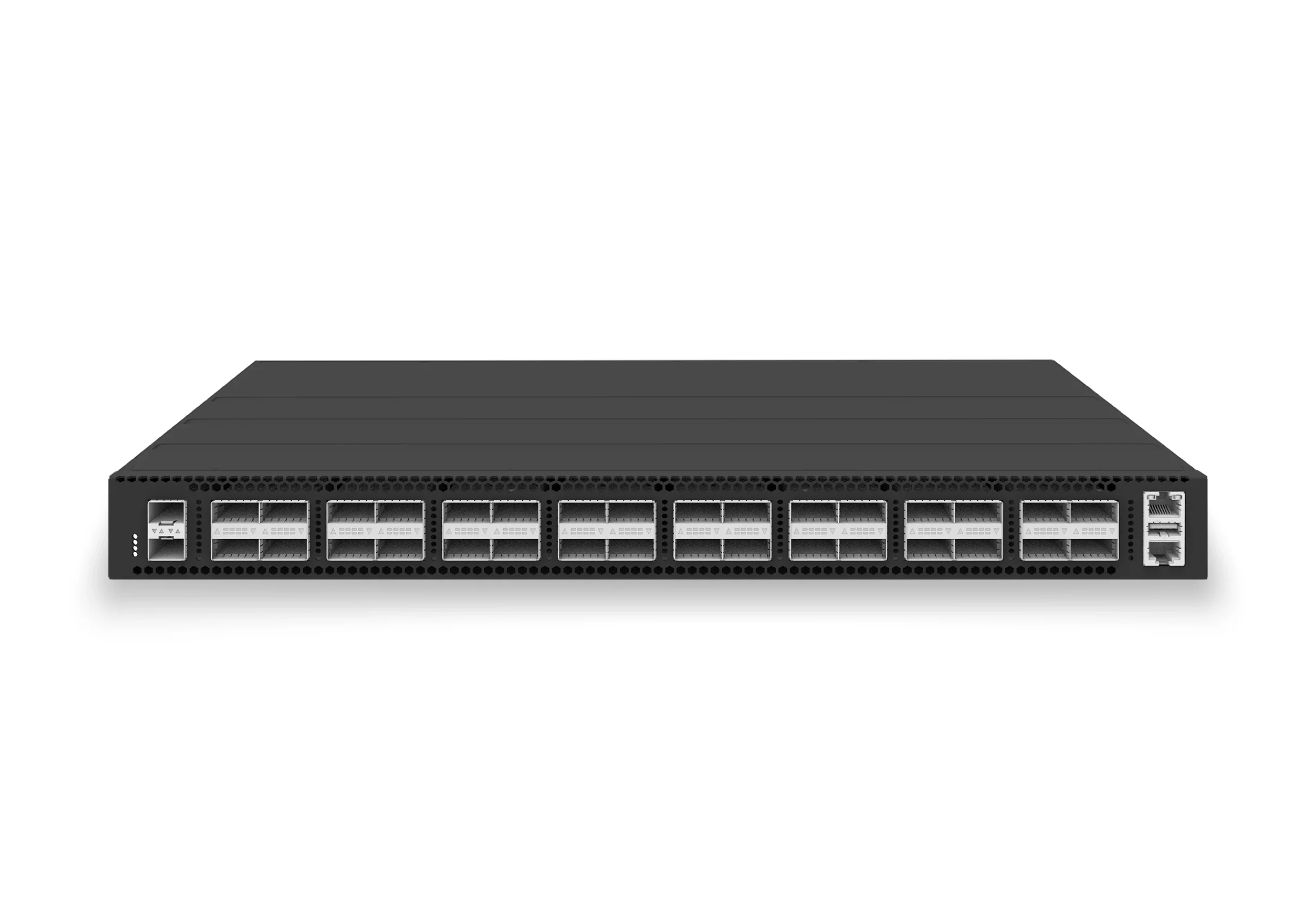 datacenter aiXS-DC-32X100-LS-G232-port 100G leaf/spine switch for VXLAN fabrics, RoCE-ready workloads, and tenant-scale routing.View product
Continue reading
Related articles
 Technical ArticleUniversity Campus Access and Aggregation with Enterprise SONiC: An Australian Evaluation GuideA practical Australian university campus guide to evaluating Enterprise SONiC for PoE access, resilient aggregation, migration, and operations.Read article
 Technical ArticleWhy Australian Enterprise Campus Networks Are Looking Beyond Proprietary SwitchingWhy Australian campus teams are evaluating Enterprise SONiC for aggregation, automation, telemetry and reduced switching lock-in.Read article
 Technical ArticleSONiC Moves Beyond the Data Center: What the Enterprise Campus Push Means for Australian Network BuyersWhat Australian buyers should validate as SONiC moves from data center fabrics into campus access and aggregation.Read article