
In brief
An engineering view of the SONiC ecosystem in 2025, covering OCP, SAI, ONIE, cloud operators, AI fabrics, campus adoption, support, and Australian buyer validation.
Key takeaways
- Software for Open Networking in the Cloud, or SONiC, began as an internal project at Microsoft to run Azure's data center network at scale.
- For Australian data center and campus network teams, SONiC represents a credible path away from proprietary NOS lock-in.
- This is not a lab project. SONiC offers a full suite of network functionality, including BGP, RDMA, and containerised architecture, that has been battle-tested at hyperscale.
Why SONiC Matters Beyond Hyperscale
Software for Open Networking in the Cloud, or SONiC, began as an internal project at Microsoft to run Azure’s data center network at scale. Today it operates as a Linux Foundation project with an ecosystem that spans chip vendors, switch manufacturers, and cloud operators worldwide. The shift from a single-operator NOS to a community-backed platform is significant for any enterprise evaluating its next network refresh.
For Australian data center and campus network teams, SONiC represents a credible path away from proprietary NOS lock-in. The core value proposition is straightforward: decouple your switching hardware from the network operating system, run the same software stack across multiple switch vendors, and benefit from the production hardening that comes from powering some of the largest cloud data centers on the planet.
This is not a lab project. SONiC offers a full suite of network functionality, including BGP, RDMA, and containerised architecture, that has been battle-tested at hyperscale. The question for enterprise buyers is no longer whether SONiC works, but how to evaluate the ecosystem and choose the right combination of hardware and software for their environment.
SONiC Architecture: Why Containerisation Changes the Game
SONiC is built on a modular architecture where each network function runs in its own Docker container. This is a fundamental departure from traditional monolithic switch software, and it has practical implications for network operations teams.
Each container handles a specific function such as BGP routing, LLDP discovery, or the redis database that stores state. The containers communicate through a centralised redis-based infrastructure. This design provides three operational advantages:
- Fault isolation: A failure in one container does not crash the entire switch. If the SNMP daemon encounters an error, your BGP sessions and data plane remain unaffected.
- Independent upgrades: Teams can update individual components without replacing the entire NOS image. This mirrors how modern application teams deploy microservices, and it reduces the blast radius of any single change.
- Simplified debugging: When a problem occurs, operators can inspect the specific container responsible rather than troubleshooting a monolithic codebase.
SONiC also relies on the Switch Abstraction Interface (SAI) to abstract ASIC-level differences across vendors. SAI is a standard API that allows the same SONiC image to run on switches built with different merchant silicon, including ASICs from major chip vendors. This abstraction layer is what enables the multi-vendor hardware support that defines the SONiC ecosystem.
The OCP Hardware Ecosystem: Who Builds SONiC-Ready Switches
The Open Compute Project (OCP) networking community has been the primary hardware innovation engine for SONiC deployments. OCP defines open hardware specifications for networking equipment, and multiple vendors build switches that conform to these designs and support SONiC.
The ecosystem includes several tiers of hardware providers:
Merchant silicon vendors supply the ASICs that power SONiC-compatible switches. Broadcom and Marvell are the dominant players in Ethernet switch silicon, with product lines spanning 1G to 800G port speeds. NVIDIA has also become a major force through its Spectrum line of Ethernet switches, which support both NVIDIA Cumulus Linux and what NVIDIA markets as Pure SONiC, a community-developed open-source NOS.
Bare-metal and white-box switch manufacturers build the physical hardware. These vendors produce OCP-compliant switches in standard form factors (1U, 2U, modular) and supply them either directly or through channel partners to end customers and system integrators. The hardware is designed to be NOS-agnostic, meaning the same switch can run SONiC, Cumulus, or another compatible operating system.
System integrators and channel partners provide the integration layer for enterprise buyers who lack the in-house expertise to deploy and manage SONiC directly. This is particularly relevant in the Australian market, where many organisations prefer a supported, integrated solution rather than assembling components independently.
For enterprise buyers, the key takeaway is that SONiC hardware is not limited to a single vendor. The OCP ecosystem provides real procurement flexibility, and the supported devices list continues to grow with each SONiC release.
Cloud Operators and Production Scale
SONiC’s credibility rests on its deployment history. The platform was originally developed by Microsoft and has been production-hardened in Azure’s data centres, which are among the largest in the world. Microsoft contributes directly to the SONiC codebase and remains a premier member of the SONiC Foundation.
Beyond Microsoft, Alibaba Cloud and other major cloud service providers have adopted SONiC for their network infrastructure. The SONiC Foundation lists premier members and contributing organisations that represent the breadth of the ecosystem, from chip vendors to cloud operators to networking companies.
NVIDIA’s involvement is particularly noteworthy for enterprise buyers. NVIDIA offers Pure SONiC as a supported NOS option alongside Cumulus Linux on its Spectrum Ethernet switch portfolio. The Spectrum product line spans from the SN2000 series (up to 100 Gb/s) through the SN5000 series (up to 800 Gb/s) and the new SN6000 series with co-packaged silicon photonics. This means enterprise buyers can purchase SONiC-ready switches from a major networking vendor with established Australian support channels.
The production scale argument matters for enterprise adoption because it validates the software at a level that most enterprises will never approach. If SONiC can handle Azure-scale traffic, it can handle enterprise data centre workloads. The question shifts from capability to operational fit.
What Enterprise Buyers in Australia Should Evaluate
Adopting SONiC is not the same as buying a traditional NOS with a vendor support contract. Enterprise buyers need to evaluate several dimensions:
1. Hardware compatibility: Not all switches support SONiC. Check the supported devices and platforms list maintained by the SONiC project. Look for OCP-recognised hardware with SAI implementations validated for the SONiC version you plan to deploy.
2. Feature requirements: SONiC offers a comprehensive feature set for data centre networking, including BGP, OSPF, VRF, VXLAN, EVPN, LLDP, LACP, and RDMA support. However, the feature set on any specific hardware depends on the SAI implementation for that ASIC. Evaluate whether your required features are supported on your target hardware.
3. Operational model: SONiC uses JSON-based configuration and supports both CLI and programmatic methods including REST API. If your team is accustomed to vendor-specific CLIs, plan for training and operational workflow changes. The containerised architecture also means that monitoring, logging, and troubleshooting workflows may differ from traditional switch platforms.
4. Support and ecosystem: For Australian organisations, evaluate whether your preferred hardware vendor offers local support for SONiC deployments. System integrators with SONiC experience can bridge the gap between open-source flexibility and enterprise support expectations.
5. Integration with existing infrastructure: SONiC supports standard protocols, so interoperability with existing network equipment is generally straightforward. However, test protocol compatibility in your specific environment before committing to a full deployment.
SONiC and AI Data Centre Fabrics
The convergence of SONiC and AI infrastructure is where the ecosystem becomes most relevant for forward-looking enterprise buyers. AI and machine learning clusters demand low-latency, high-bandwidth network fabrics that support RDMA over Converged Ethernet (RoCE v2) for GPU-to-GPU communication.
SONiC supports RDMA natively, and its production heritage in hyperscale cloud environments means that RoCE v2, Priority Flow Control (PFC), and Data Centre Bridging Capability Exchange (DCBX) are well-understood features. For organisations building private AI infrastructure, this matters because:
- RoCE v2 fabric design requires precise configuration of congestion notification, buffer management, and traffic prioritisation. SONiC’s modular architecture allows teams to manage these features through well-defined container interfaces.
- Spine-leaf topology is the standard architecture for both data centre networking and AI backend fabrics. SONiC was designed for this topology from the start.
- 100G/400G/800G uplinks are essential for GPU cluster backends. The OCP hardware ecosystem provides SONiC-compatible switches at these speeds, and vendors like NVIDIA offer Spectrum switches purpose-built for AI workloads.
For Australian organisations evaluating private LLM inference, RAG pipelines, or multimodal AI services, the network fabric is a critical decision. SONiC on bare-metal switches provides a cost-effective, vendor-neutral foundation for AI fabric deployment.
Campus and Enterprise Access: The Next Frontier
While SONiC’s heritage is in data centre networking, the ecosystem is expanding toward enterprise campus and access use cases. This expansion is driven by the same decoupling principles: organisations want to avoid vendor lock-in at the access layer just as they do in the data centre.
Enterprise campus deployments require features such as PoE (Power over Ethernet), VLAN management, access control lists, and integration with wireless infrastructure. The SONiC community is actively developing these capabilities, and enterprise-grade SONiC distributions are beginning to address campus requirements including policy-based routing, MC-LAG, and virtual chassis architectures.
For Australian organisations planning a campus network refresh, SONiC-based access and aggregation switches represent an emerging option worth monitoring. The key evaluation criteria include PoE power budget, port density, stacking or virtual chassis support, and wireless controller integration.
Getting Started with SONiC: Practical Steps
For organisations ready to evaluate SONiC, the practical path looks like this:
- Review the supported hardware list on the SONiC GitHub repository and SONiC Foundation website to identify switches that match your port speed and density requirements.
- Download a SONiC image for evaluation. SONiC supports ONIE-based installation on bare-metal switches, Docker-based installation for development, and virtual machine deployment for learning.
- Build a lab environment with a small number of switches to validate feature support, operational workflows, and integration with your existing monitoring and automation stack.
- Engage with the community through the SONiC Slack channel, GitHub issues, and weekly community meetings. The community is active and responsive to both bug reports and feature discussions.
- Evaluate commercial support options if your organisation requires enterprise-grade support SLAs. Several vendors and integrators offer supported SONiC distributions and managed deployment services.
The SONiC ecosystem is mature enough for production enterprise use, but it requires a deliberate evaluation process. Organisations that invest in the upfront assessment typically find that the operational flexibility and cost benefits justify the effort.
SONiC Ecosystem Evaluation Matrix
The ecosystem is broad enough for real enterprise procurement, but buyers should evaluate each layer separately. SONiC maturity at hyperscale does not automatically prove the support model for an Australian enterprise deployment.
| Ecosystem Layer | Evidence to Capture | Acceptance Target | Rework Trigger |
|---|---|---|---|
| Open NOS core | SONiC release, container versions, upstream status, security process, rollback image | The selected image can be installed, reloaded 3 times, rolled back, and monitored | Vendor cannot state the exact image or patch owner |
| Hardware abstraction | SAI version, ASIC family, supported features, scale limits | BGP, ACL, QoS, telemetry, and optics behaviour are validated on the target ASIC | Feature support is assumed from another silicon family |
| Installation and recovery | ONIE process, golden config, backup, restore, rescue workflow | Switch can be rebuilt from image and config during a maintenance window | Recovery depends on factory-only or undocumented steps |
| AI fabric readiness | RoCE v2, DCBX, PFC, ECN, queue telemetry, 100G/400G/800G optics | 24-48 hour traffic test captures congestion, drops, and recovery evidence | AI fabric claim is based only on port speed |
| Enterprise support | APAC escalation, spares, RMA, support boundary, 36-month roadmap | Supplier owns hardware, SONiC, optics, and escalation workflow | Community project activity is treated as an SLA |
This matrix gives Australian buyers a practical way to separate ecosystem confidence from project-specific risk. The project is mature; the proposed deployment still needs proof.
Engineering FAQ
Is SONiC now an enterprise option, or still mostly hyperscaler technology? It is an enterprise option for data center and AI fabric use cases when the buyer validates the selected hardware, SONiC image, support model, and operations workflow. Campus use is emerging and should be piloted carefully.
What is the most important ecosystem signal for buyers? Multi-vendor participation across OCP, SAI, ONIE, cloud operators, silicon vendors, and switch suppliers. The signal is strongest when it is paired with tested support for the exact switch SKU.
What should Australian teams validate first? Validate support jurisdiction, image ownership, optics, telemetry, rollback, and APAC escalation before volume purchase. The technology story is credible; the local operating model must be proven.
Where does xSONiC fit in the ecosystem? xSONiC should be evaluated as an open networking supplier that packages SONiC-aligned switches, optics, and deployment guidance for buyers who need proof before committing to disaggregated networking.
Related xSONiC Resources
Sources Reviewed
- IEEE 802.1Q Bridges and Bridged Networks
- IEEE 802.1AX Link Aggregation
- Ethernet Network Adapters - ConnectX NICs | NVIDIA
- NVIDIA BlueField Data Processing Unit
- NVIDIA Spectrum-X Ethernet Platform
- ACSC Essential Eight
- OAIC Notifiable Data Breaches
- APRA CPS 234 Information Security
- NETSCOUT Network Packet Definition
- Cloudflare Network Packet Definition
- IEEE 802.11be Wireless LAN Standard
- IEEE 802.3bt Power over Ethernet
- SONiC Project Documentation
- Broadcom Ethernet Switching
- Marvell Switching
- NVIDIA Ethernet Switching
- Open Compute Networking
- SONiC GitHub
- SONiC Foundation
Product fit
Products referenced for evaluation
These products are referenced for evaluation context in the article. Confirm workload, port, optics, software, interoperability, and support requirements against the exact deployment before procurement.
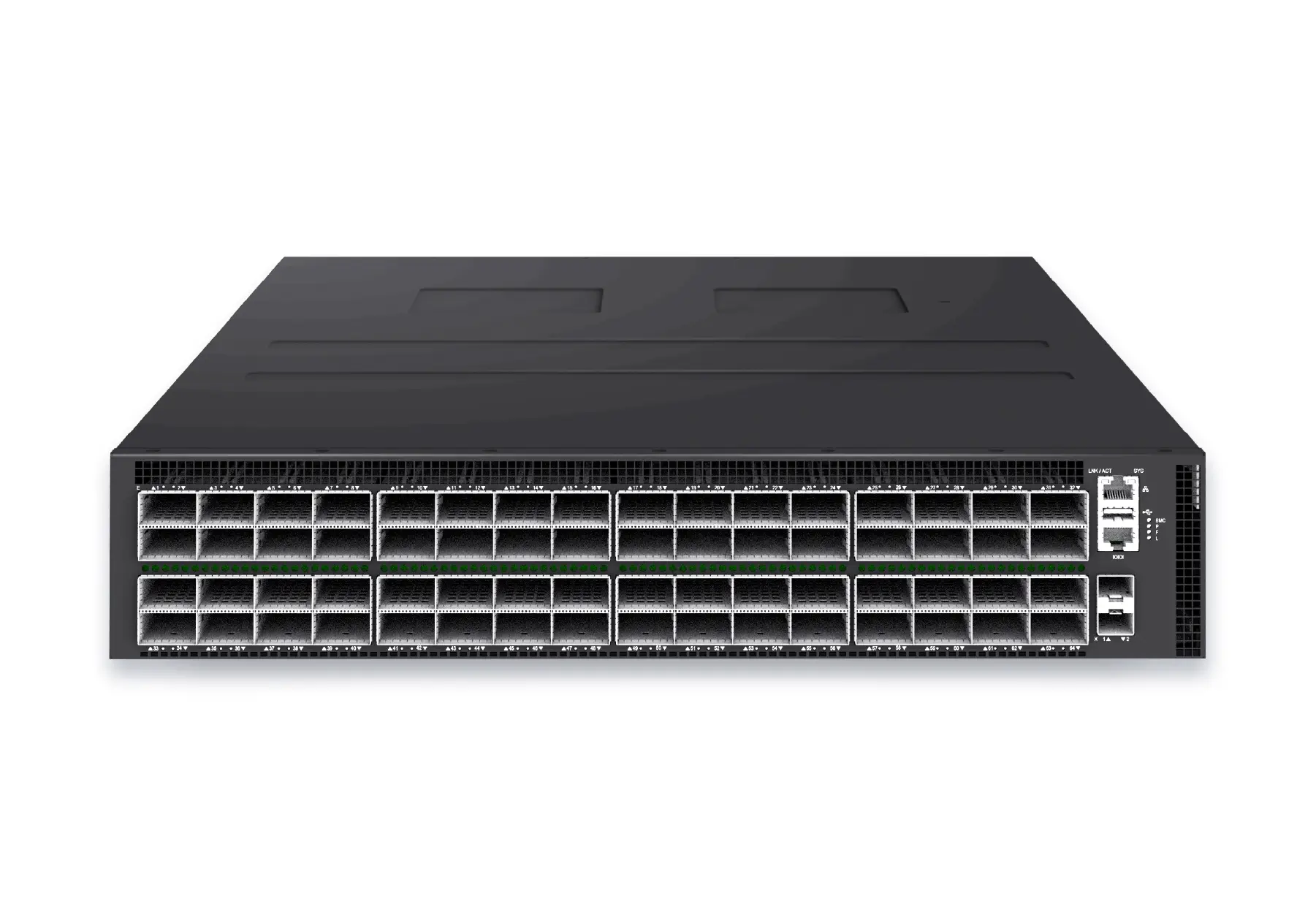 datacenter aiXS-DC-64X800-AI-G164-port 800G AI fabric switch for large-scale GPU clusters, HPC backbones, and ultra-high-throughput data center networks.View product
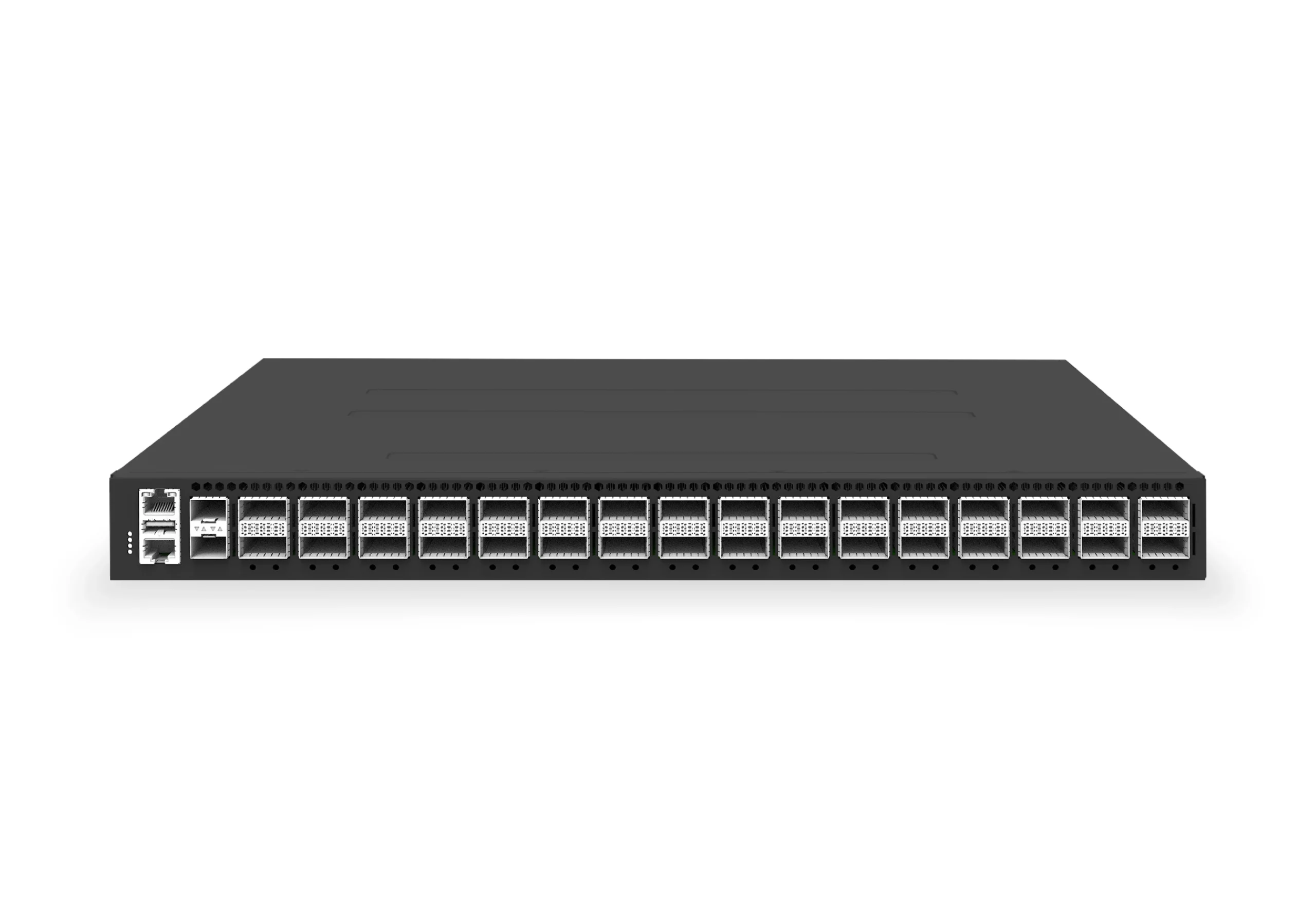 datacenter aiXS-DC-32X400-SP-G232-port 400G spine/core switch for high-capacity data center fabrics and AI-ready backbones.View product
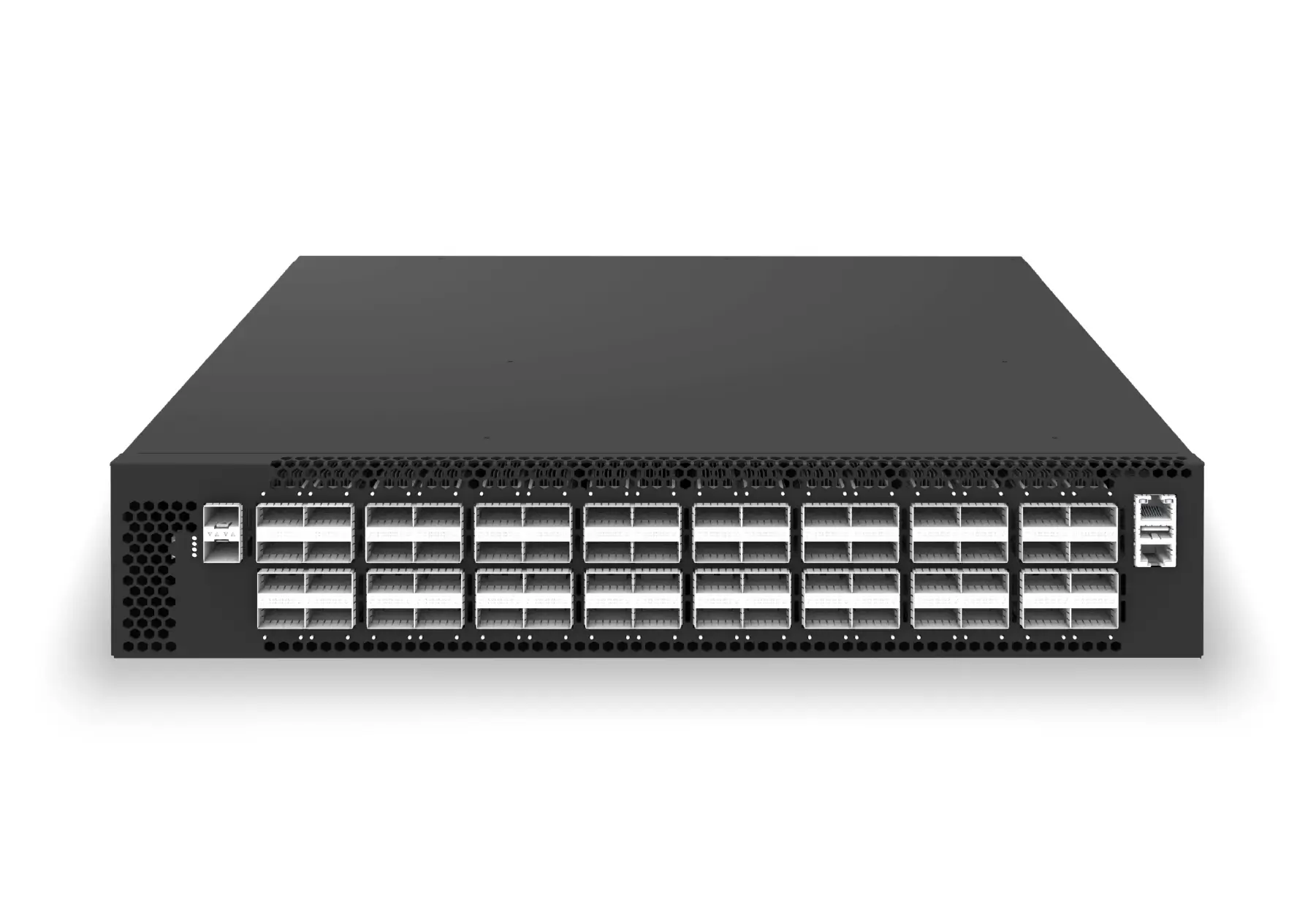 datacenter aiXS-DC-64X200-LS-G164-port 200G leaf/spine switch for high-bandwidth storage, compute, and scale-out data center fabrics.View product
Continue reading
Related articles
 Technical ArticleSONiC Switch Pre-Production Validation Checklist: A 12-Point Testing Playbook for Open Networking TeamsEngineering guidance on SONiC Switch Pre-Production Validation Checklist for Australian data centre buyers, covering form factor choice, link budgets, cabling.Read article
 Technical ArticleWhy Australian Data Centers Are Re-evaluating Open Networking for AI InfrastructureEngineering guide for AI fabric buyers covering RoCE, SONiC, telemetry, optics, support ownership, and deployment validation.Read article
 Technical ArticleSONiC Switch Validation Before Production: What Australian Network Teams Need on Their ChecklistEngineering guide for SONiC and open networking buyers covering platform fit, automation, support, telemetry, and validation evidence.Read article