In brief
A structured risk analysis and pre-purchase validation checklist for Australian enterprise teams evaluating white box and bare-metal switches with SONiC or other open NOS options.
Key takeaways
- White box and bare-metal switches are moving from hyperscaler-only deployments into Australian enterprise, government, and education networks.
- Australia's networking market faces three converging pressures. First, campus and data center refresh cycles are accelerating as Wi-Fi 7, 400G/800G uplinks, and AI inference workloads demand new fabric capacity.
- The following risk domains apply to any enterprise evaluating white box or bare-metal switches, whether for a data center fabric, campus aggregation layer, or branch deployment.
What Is Driving Enterprise Interest in White Box Switches
White box and bare-metal switches are moving from hyperscaler-only deployments into Australian enterprise, government, and education networks. The core promise is hardware-software decoupling: you choose the switching ASIC and the network operating system (NOS) independently, rather than buying both from a single vendor. SONiC (Software for Open Networking in the Cloud), a Linux Foundation project, has become the leading open-source NOS in this space. According to the SONiC Foundation and the project’s GitHub repository, SONiC runs on switches from multiple vendors and multiple ASICs, supports a full suite of network functionality including BGP and RDMA, and has been production-hardened in the data centers of large cloud service providers. The architecture uses the Switch Abstraction Interface (SAI) to decouple hardware from software, and runs each network function in its own Docker container for fault isolation and modular upgrades. For Australian enterprises evaluating campus refresh, data center spine-leaf, or AI fabric builds, the question is no longer whether white box switching is viable at scale. Cloud providers have already answered that. The question is what risks remain for an enterprise team that does not have a hyperscaler’s engineering bench, and what validation steps are non-negotiable before committing to a production deployment.
Why This Matters for Australian Enterprise Buyers Right Now
Australia’s networking market faces three converging pressures. First, campus and data center refresh cycles are accelerating as Wi-Fi 7, 400G/800G uplinks, and AI inference workloads demand new fabric capacity. Second, supply chain diversification is a board-level concern; teams want to avoid single-vendor dependency on both hardware procurement and software licensing. Third, operational budgets are tightening, and the CapEx savings from bare-metal hardware can be significant when paired with an open NOS. However, the gap between a cloud provider’s SONiC deployment and an enterprise’s first white box rollout is real. Hyperscalers have dedicated SONiC engineering teams, custom build pipelines, and in-house ASIC-level debug capability. Most Australian enterprises do not. This analysis does not argue against white box switching. It argues for structured validation before committing, and names the specific risk domains that enterprise teams must close.
The Enterprise Risk Map: Six Domains to Validate
The following risk domains apply to any enterprise evaluating white box or bare-metal switches, whether for a data center fabric, campus aggregation layer, or branch deployment. Each domain includes a validation question that must be answered before purchase commitment.
-
Hardware-NOS Compatibility Matrix Risk: Not every bare-metal switch SKU runs every NOS version reliably. The SONiC project maintains a supported devices and platforms list, but enterprise teams must confirm that their specific switch model, ASIC revision, and target SONiC release are all listed and tested. Buying hardware first and validating NOS compatibility second is a common and costly mistake. Validation question: Has your exact switch model and ASIC revision been tested against your target SONiC release on the official supported platforms list?
-
Production-Readiness vs Lab-Readiness Risk: SONiC has been production-hardened at hyperscaler scale, but that does not mean every feature and every hardware combination has been hardened. The SONiC GitHub repository shows 583 open issues and 306 open pull requests at the time of this analysis. Enterprise teams must distinguish between features that are production-proven in cloud data centers and features that are still community-stage. Validation question: Which specific SONiC features does your deployment require, and what is the maturity status of each feature on your target hardware?
-
Support and Escalation Path Risk: Open-source NOS support is community-driven by default. Enterprise teams need a defined escalation path for P1 incidents. Some bare-metal switch vendors and third-party integrators offer commercial SONiC support, but coverage, SLA, and Australian time-zone availability vary significantly. Validation question: Do you have a contractual support agreement with defined SLAs, escalation tiers, and Australian-hours coverage for your chosen NOS and hardware combination?
-
ASIC Abstraction Layer Maturity Risk: SONiC uses the Switch Abstraction Interface (SAI) to abstract ASIC differences. SAI maturity varies across switch silicon families. Features that work on one ASIC may behave differently or be unavailable on another. The SONiC Foundation documentation describes SAI as accelerating hardware innovation, but enterprise teams must verify feature parity at the ASIC level. Validation question: Has SAI feature parity been confirmed for your required feature set on your target ASIC, including QoS, ACL, VXLAN, and telemetry capabilities?
-
Operational Tooling and Day-2 Management Risk: SONiC supports standard Linux interfaces and tools, CLI, and programmatic configuration via JSON files. However, enterprise teams accustomed to vendor-specific management platforms may find the operational tooling gap significant. NETCONF/YANG support, telemetry export, and integration with existing monitoring stacks must be validated. Automated config backup, drift detection, and compliance reporting are not built-in by default. Validation question: Do you have tested automation for configuration management, telemetry collection, firmware updates, and compliance reporting on your target NOS?
-
Australian Regulatory and Data Sovereignty Considerations Risk: White box switch firmware images, NOS telemetry, and support channels may route data through international infrastructure. Australian government and critical infrastructure buyers must confirm that no operational data, configuration, or telemetry is transmitted to jurisdictions that conflict with data sovereignty requirements. The open-source nature of SONiC gives teams full code-level visibility, which is an advantage, but someone on the team must actually audit and configure telemetry boundaries. Validation question: Has the data path for all NOS telemetry, support uploads, and firmware update channels been audited for Australian data sovereignty compliance?
Validation Checklist: Pre-Purchase Commitment Gate
Before committing budget to white box switches for a production Australian deployment, enterprise teams should complete the following checklist. Each item should be documented with evidence.
Checklist: [ ] Hardware-NOS compatibility confirmed on the official supported platforms list for your exact SKU, ASIC revision, and SONiC release version [ ] Feature maturity confirmed for all required NOS features (BGP, VXLAN, EVPN, QoS, ACL, telemetry) on your target hardware and ASIC [ ] Commercial support agreement executed with defined SLA, escalation path, and Australian-hours coverage [ ] SAI feature parity validated for your required feature set on your target ASIC family [ ] Day-2 operational tooling tested: configuration management, telemetry export, firmware update workflow, compliance reporting [ ] Data sovereignty audit completed for all NOS telemetry, support channels, and firmware update paths [ ] Proof-of-concept or lab validation completed with representative traffic load and failure scenarios [ ] Rollback plan documented: how to revert to incumbent vendor stack if white box deployment fails acceptance criteria [ ] Staff skills assessment completed: identify training gaps for Linux networking, SONiC CLI, JSON configuration, and container-based NOS architecture [ ] Procurement and warranty terms confirmed: bare-metal switch warranty coverage, RMA process, and lead times for Australian delivery
What the SONiC Ecosystem Gets Right for Enterprise
This analysis names real risks, but the SONiC ecosystem also addresses several enterprise concerns that are worth acknowledging. The container-based architecture provides better fault isolation and simplifies upgrades compared to monolithic NOS designs. The open-source license gives teams full code-level visibility, which is a meaningful security and compliance advantage. Multi-vendor and multi-ASIC support means enterprises are not locked to a single silicon vendor’s roadmap. The community is active: the SONiC GitHub repository shows nearly 3,000 commits and a growing contributor base. For Australian enterprises willing to invest in the validation work outlined above, the risk profile of white box switching is manageable and improving with each release cycle.
xSONiC Buyer Angle: Structured Evaluation for Australian Teams
xSONiC positions bare-metal and open-networking switches for enterprise and data center buyers who want the operational benefits of hardware-software decoupling without the hyperscaler engineering overhead. For Australian teams evaluating a campus refresh, data center spine-leaf build, or AI fabric deployment, xSONiC’s approach pairs bare-metal switching hardware with Enterprise SONiC distribution and solution-level guidance. The key differentiator is not the hardware alone. It is the combination of validated hardware-NOS pairings, solution documentation for deployment patterns like EVPN-VXLAN, NETCONF/YANG automation, and AIDC Controller management, and a procurement path that accounts for Australian delivery and support. The validation checklist above is relevant regardless of which bare-metal vendor an enterprise evaluates. It is the minimum due diligence. xSONiC encourages Australian teams to use this checklist as a baseline when comparing open-networking proposals against incumbent vendor quotes.
Engineering Evidence Floor
For SONiC and open networking articles, the acceptance standard is operational proof, not community momentum. The evidence package should name the switch SKU, ASIC, SAI version, ONIE status, SONiC image, optics matrix, automation interface, support path, and rollback procedure. A practical pilot should run for 30 days, include 3 automated configuration changes, validate 100G/400G links where relevant, and prove that a P1 evidence bundle can be assembled within 2 hours.
| Evidence area | What to validate | Acceptance gate | Rework trigger |
|---|---|---|---|
| Platform | SKU, ASIC, ONIE, SAI, image, and optics | 2 platforms boot, upgrade, and rollback | Hardware support is assumed |
| Automation | Source of truth, API/gNMI/NETCONF, backup, and diff | 3 changes pass state readback | CLI drift becomes normal |
| Operations | Logs, telemetry, failure runbook, and escalation owner | P1 bundle ready within 2 hours | Fault isolation depends on one engineer |
| Lifecycle | Patch cadence, CVE process, spare plan, and support SLA | 12 months plan approved | Security and RMA ownership is unclear |
| Commercial | Hardware, support, optics, training, and migration labour | Risk-adjusted TCO is documented | Savings vanish after rework |
Engineering FAQ
What should be validated before a Wi-Fi 6E or Wi-Fi 7 rollout? Validate channel plan, 6 GHz client readiness, PoE budget, uplink capacity, roaming, authentication, RF density, interference, and management tooling. The AP standard alone does not prove campus performance.
Why does backhaul planning matter for modern access points? Wi-Fi 6E and Wi-Fi 7 can expose bottlenecks in access switching, PoE, cabling, and uplink design. Buyers should confirm whether 2.5G, 5G, 10G, and PoE budgets match the real AP deployment plan.
What evidence should vendors provide for enterprise WLAN projects? Ask for supported security modes, firmware lifecycle, controller or cloud management model, RF planning assumptions, client compatibility notes, and a pilot report from a representative building or floor.
Related xSONiC Resources
Sources Reviewed
- Ethernet Network Adapters - ConnectX NICs | NVIDIA
- NVIDIA BlueField Data Processing Unit
- NVIDIA Spectrum-X Ethernet Platform
- OpenConfig gNMI Specification
- OpenConfig
- RFC 7950 - The YANG 1.1 Data Modeling Language
- RFC 6241 - Network Configuration Protocol (NETCONF)
- IEEE 802.11be Wireless LAN Standard
- IEEE 802.3bt Power over Ethernet
- SONiC Project Documentation
- Broadcom Ethernet Switching
- Marvell Switching
- NVIDIA Ethernet Switching
- Open Compute Networking
- SONiC GitHub
- SONiC Foundation
Product fit
Products referenced for evaluation
These products are referenced for evaluation context in the article. Confirm workload, port, optics, software, interoperability, and support requirements against the exact deployment before procurement.
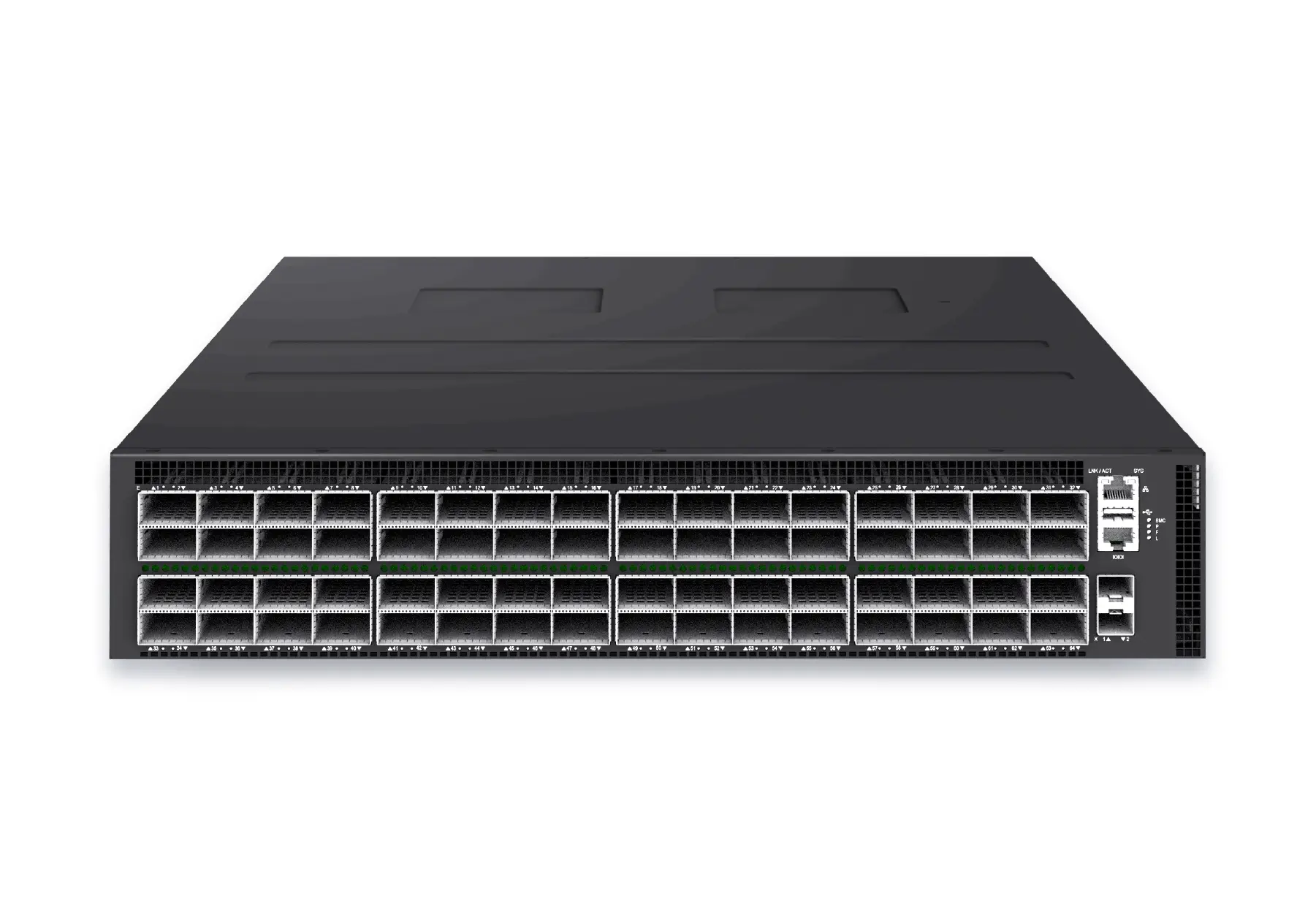 datacenter aiXS-DC-64X800-AI-G164-port 800G AI fabric switch for large-scale GPU clusters, HPC backbones, and ultra-high-throughput data center networks.View product
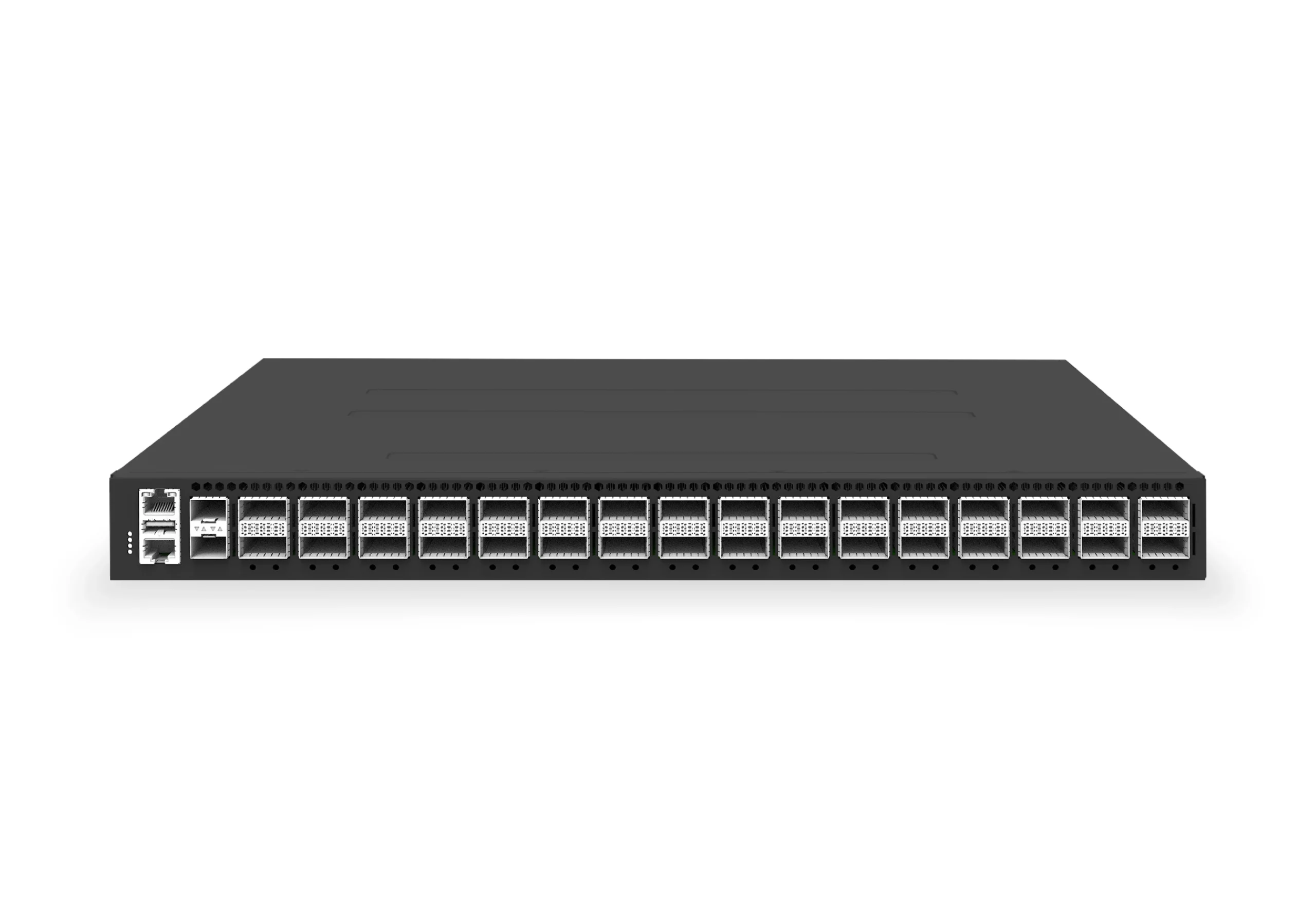 datacenter aiXS-DC-32X400-SP-G232-port 400G spine/core switch for high-capacity data center fabrics and AI-ready backbones.View product
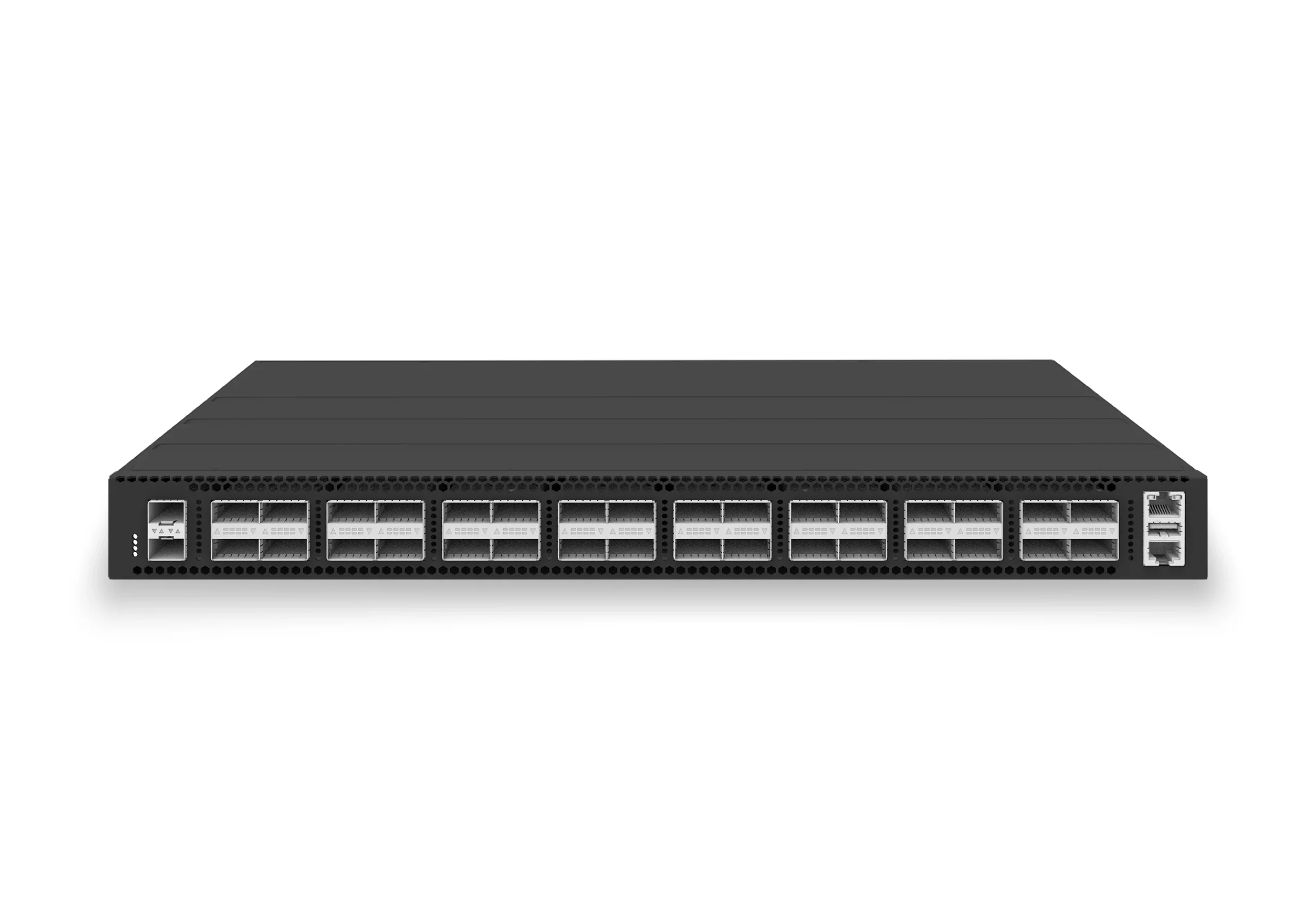 datacenter aiXS-DC-32X100-LS-G232-port 100G leaf/spine switch for VXLAN fabrics, RoCE-ready workloads, and tenant-scale routing.View product
Continue reading
Related articles
 Technical ArticleSONiC Switch Pre-Production Validation Checklist: A 12-Point Testing Playbook for Open Networking TeamsEngineering guidance on SONiC Switch Pre-Production Validation Checklist for Australian data centre buyers, covering form factor choice, link budgets, cabling.Read article
 Technical ArticleWhy Australian Data Centers Are Re-evaluating Open Networking for AI InfrastructureEngineering guide for AI fabric buyers covering RoCE, SONiC, telemetry, optics, support ownership, and deployment validation.Read article
 Technical ArticleSONiC Switch Validation Before Production: What Australian Network Teams Need on Their ChecklistEngineering guide for SONiC and open networking buyers covering platform fit, automation, support, telemetry, and validation evidence.Read article