In brief
Engineering guide for packet broker and visibility planning covering traffic capacity, filtering, tool delivery, resilience, and audit evidence.
Key takeaways
- Every piece of data crossing your network travels as packets. A network packet is a formatted unit of data that includes a header with source and destination addresses, protocol information, and error-checking codes, along with a payload carrying the actual application data.
- But here is the uncomfortable question: how many of your packets actually reach your monitoring and security tools?
- For many Australian enterprises, the answer is worse than they think. As networks scale with microservices architectures, cloud workloads, encrypted traffic, and high-bandwidth AI infrastructure, the gap between what traverses the network and what security and observability teams can actually see is widening.
The Visibility Problem No One Talks About Until Something Breaks
Every piece of data crossing your network travels as packets. A network packet is a formatted unit of data that includes a header with source and destination addresses, protocol information, and error-checking codes, along with a payload carrying the actual application data. Security tools, performance monitors, and compliance systems all depend on seeing those packets clearly and completely.
But here is the uncomfortable question: how many of your packets actually reach your monitoring and security tools?
For many Australian enterprises, the answer is worse than they think. As networks scale with microservices architectures, cloud workloads, encrypted traffic, and high-bandwidth AI infrastructure, the gap between what traverses the network and what security and observability teams can actually see is widening. This is the visibility gap, and it is one of the most underappreciated risks in enterprise network operations today.
This article walks through where visibility gaps form, how to assess your exposure, and how network packet broker architecture can close those gaps without forcing you into another single-vendor dependency.
What Is a Network Packet Broker and Why It Matters
A network packet broker (NPB) is a device that aggregates traffic from multiple network links, then filters, deduplicates, load-balances, and replicates that traffic to the appropriate monitoring and security tools. Think of it as a traffic controller sitting between your production network and your tool layer.
Without a packet broker, monitoring tools are typically connected directly to SPAN ports or TAPs on switches and routers. This works at small scale, but it introduces several problems:
- SPAN port oversubscription: Switch SPAN ports drop packets under load because mirroring traffic is a secondary function of the switch, not its primary job. When network utilization climbs, mirrored traffic gets silently dropped.
- Tool overload: Without filtering and deduplication, every tool receives a firehose of raw traffic, much of which is irrelevant to its specific function. A DDoS detection appliance does not need the same data as an application performance monitor.
- Blind spots in east-west traffic: In modern data centers, the majority of traffic flows laterally between servers and services, not north-south through the perimeter. Traditional monitoring architectures built around perimeter TAPs miss this entirely.
A well-deployed packet broker solves these problems by creating a purpose-built visibility layer. Traffic from TAPs and SPAN ports flows into the broker, which then applies filtering rules, removes duplicates, and delivers only relevant traffic to each tool at the speed the tool can handle.
Where Visibility Gaps Form: A Gap Analysis Framework
Security and observability teams can use the following framework to systematically identify where their current architecture is losing visibility.
Gap 1: The SPAN Port Problem
Many organizations rely on switch SPAN ports as their primary traffic access method. SPAN ports are a mirroring function, not a dedicated monitoring interface. Under congestion, switches deprioritize mirrored traffic. According to foundational networking references, packet switching allows networking equipment to process packets independently, and switches prioritize production forwarding over mirroring. This means your monitoring tools may be receiving incomplete data precisely when you need complete data the most: during traffic spikes, attack events, or incident response.
Assessment question: Do you know what percentage of your monitoring traffic comes from SPAN ports versus dedicated TAPs?
Gap 2: Encrypted Traffic Blindness
The majority of modern network traffic is encrypted using TLS or IPsec. While encryption is essential for data protection, it also creates a significant visibility challenge. Security tools that rely on deep packet inspection cannot analyze encrypted payloads without a decryption capability in the visibility layer. Without inline or out-of-band decryption at the packet broker level, your intrusion detection system, data loss prevention tools, and forensics platforms may be operating on encrypted data they cannot interpret.
Assessment question: What percentage of your east-west and north-south traffic is encrypted, and can your current visibility architecture decrypt it before delivering it to security tools?
Gap 3: East-West Traffic Blind Spots
In data center environments built on microservices, container orchestration, and virtualized infrastructure, the majority of traffic never leaves the data center. Microservices architecture divides applications into small, independent services that communicate over networks using lightweight APIs. Each service handles a specific business function and communicates with other services through standardized protocols. This creates a dense mesh of east-west traffic flows that perimeter-focused monitoring architectures cannot see.
For Australian enterprises running private cloud, hybrid cloud, or AI infrastructure workloads, east-west visibility is critical. Lateral movement by threat actors, unauthorized service-to-service communication, and performance degradation in distributed systems all happen in the east-west corridor.
Assessment question: Can your monitoring tools see traffic between application tiers, between containers, and between virtual machines inside your data center?
Gap 4: Scale Mismatch Between Network and Tools
Network bandwidth is growing faster than monitoring tool capacity. As organizations upgrade to 100G, 400G, and 800G links, many existing security and monitoring tools cannot ingest traffic at line rate. Without a packet broker performing intelligent load balancing and traffic distribution, tools either receive incomplete data or fall behind, creating processing backlogs that result in dropped packets and missed events.
Assessment question: Do your monitoring tools have the capacity to handle the aggregate traffic volume of all the links they need to observe?
Gap 5: Fragmented Visibility Across Domains
Many Australian enterprises operate across multiple sites, data centers, and cloud environments. Visibility architecture that works in a single location often does not extend coherently across a distributed footprint. Without a unified packet broker strategy, each site may use different access methods, different filtering rules, and different tool integrations, making it impossible to correlate events across the environment.
Assessment question: Can your security team trace a packet-level event from a branch office through the WAN to the data center and into the cloud in a single investigation?
How Packet Brokers Close the Gap
A properly architected packet broker deployment addresses each of these gaps through specific capabilities:
- Aggregation: Combining traffic from multiple lower-speed links into a single stream for high-bandwidth tools.
- Filtering: Applying rules so each tool receives only the traffic relevant to its function, reducing load and improving detection accuracy.
- Deduplication: Removing duplicate copies of packets that arrive from multiple TAP or SPAN points, preventing tools from processing the same packet twice.
- Load balancing: Distributing traffic across multiple tool instances so no single tool is overwhelmed.
- Replication: Sending copies of the same traffic to multiple tools simultaneously without impacting the production network.
- Packet slicing: Trimming packet payloads to deliver only headers when full packet content is not needed, reducing storage and processing requirements.
- Tunnel processing: Stripping encapsulation headers from tunneled traffic so tools can inspect the inner packets.
For organizations investing in telemetry-driven operations, packet brokers can also feed data into advanced observability pipelines. xSONiC’s packet broker architecture is designed to integrate with in-band network telemetry (INT) and IPTPath telemetry solutions, enabling security and observability teams to combine packet-level visibility with hop-by-hop network state data across the fabric.
This is particularly relevant for Australian enterprises deploying AI infrastructure or high-performance computing workloads where RoCE v2, EVPN-VXLAN fabrics, and lossless Ethernet configurations demand granular, real-time visibility into both the data plane and the control plane.
Open Architecture vs Single-Vendor Lock-In
One of the most important decisions in building a visibility layer is whether to choose a closed, single-vendor packet broker ecosystem or an open-architecture platform.
Closed vendor ecosystems bundle proprietary hardware, software, and management tools together. This simplifies procurement but creates long-term dependency. Pricing is controlled by the vendor, feature roadmaps are opaque, and integration with third-party tools is often limited or requires additional licensing.
Open-architecture packet brokers, by contrast, are built on interoperable standards and allow organizations to mix and match hardware, software, and tool integrations. This approach aligns with the broader trend toward open networking infrastructure, where enterprises are moving away from proprietary lock-in across switching, routing, and now visibility layers.
For Australian buyers, this is not an abstract architectural preference. Open architecture directly impacts procurement flexibility, total cost of ownership, and the ability to adapt visibility infrastructure as network requirements change. It also avoids the vendor concentration risk that Australian regulators increasingly flag in operational resilience frameworks.
A Practical Visibility Gap Checklist
Use this checklist to assess your current visibility posture:
- Inventory all traffic access points (TAPs, SPAN ports, inline taps) across your network.
- Map each monitoring and security tool to its traffic source and confirm it receives the traffic it needs.
- Identify all encrypted traffic segments and confirm whether decryption capability exists in the visibility layer.
- Measure east-west traffic volume and confirm monitoring coverage inside the data center.
- Compare aggregate traffic volume against tool ingestion capacity and identify any oversubscription.
- Audit visibility architecture across all sites and confirm centralized management and correlation capability.
- Evaluate whether your current packet broker vendor supports open standards, third-party tool integration, and non-proprietary management interfaces.
- Confirm that your visibility architecture can scale to support planned bandwidth upgrades (100G, 400G, 800G).
Visibility Acceptance Matrix
A visibility design is production-ready only when it proves packet delivery, filtering, scaling, and reporting under load. Use this matrix to separate a working architecture from a hopeful diagram.
| Visibility area | What to measure | Passing evidence | Failure signal |
|---|---|---|---|
| Traffic access | TAP/SPAN source, link speed, oversubscription, packet loss, timestamp quality | Source inventory covers north-south and east-west paths with drop counters visible | Security tools depend on undocumented SPAN sessions |
| Broker processing | Aggregation, filtering, deduplication, packet slicing, tunnel handling, load balancing | Broker forwards the right traffic to each tool at expected rate without hidden drops | Tool traffic is copied as a raw firehose |
| Tool capacity | Tool-port speed, ingest limit, replication factor, burst handling, failover | 95th percentile and burst peaks are modeled with headroom | Average bandwidth is used as sizing basis |
| Security and privacy | TLS/IPsec visibility policy, decryption boundary, retention, access control | Decryption and storage rules are approved for Australian privacy/compliance obligations | Packet copies are retained or exported without a data handling decision |
| Incident workflow | NDR/SIEM/APM packet feed, telemetry correlation, evidence export | Incident responders can trace one event from source link to tool record | During an incident, teams cannot prove whether the packet was copied |
Australian Regulatory Context
Australian enterprises face specific regulatory pressures that make visibility gap analysis more than a technical exercise:
- The Privacy Act 1988 and the Australian Privacy Principles require organizations to take reasonable steps to protect personal information. You cannot protect what you cannot see.
- APRA CPS 234 mandates that APRA-regulated entities maintain information security capability commensurate with the size and extent of threats. Gaps in network visibility directly undermine this requirement.
- The Security of Critical Infrastructure (SOCI) Act imposes obligations on operators of critical infrastructure assets to maintain operational visibility and resilience.
- The Notifiable Data Breaches scheme requires rapid detection and reporting. Visibility gaps that delay breach detection can result in regulatory penalties and reputational damage.
Packet broker infrastructure is a foundational layer for meeting these obligations. Without complete, filtered, and intelligently distributed packet data, security tools cannot perform their function and compliance posture degrades.
Taking the Next Step
Visibility gap analysis is not a one-time exercise. As networks evolve with new workloads, new architectures, and new threat landscapes, the gaps shift. The teams that maintain continuous visibility are the ones that detect threats faster, resolve performance issues before users notice, and demonstrate compliance with confidence.
If your organization is evaluating its network visibility architecture, start with the checklist above. Identify where your packets are disappearing. Then evaluate whether your current packet broker approach is closing those gaps or creating new ones through vendor lock-in and architectural rigidity.
For Australian enterprises exploring open-architecture packet broker solutions, xSONiC provides network packet broker infrastructure designed for flexibility, scale, and integration with modern telemetry-driven operations.
Contact the xSONiC team to discuss your visibility requirements or explore xSONiC packet broker solutions for more information.
Engineering FAQ
What should be measured before sizing a packet broker? Measure source link speed, 95th-percentile utilisation, burst peaks, replication factor, filter complexity, tunnel handling needs, and tool-port capacity. Packet broker sizing fails when it is based on average traffic rather than copied and filtered traffic.
What proves that a visibility design is production ready? The design should prove aggregation, filtering, replication, load balancing, packet slicing or deduplication if required, and tool failover under realistic traffic. Security teams should also verify that drops are reported rather than hidden.
Where do Australian buyers most often under-scope visibility projects? The common gaps are east-west data centre traffic, encrypted or tunneled flows, AI cluster bursts, retention requirements, and tool oversubscription. A procurement brief should model those before asking vendors for a bill of materials.
Related xSONiC Resources
Sources Reviewed
- Ethernet Network Adapters - ConnectX NICs | NVIDIA
- NVIDIA BlueField Data Processing Unit
- NVIDIA Spectrum-X Ethernet Platform
- ACSC Essential Eight
- OAIC Notifiable Data Breaches
- APRA CPS 234 Information Security
- NETSCOUT Network Packet Definition
- Cloudflare Network Packet Definition
- SONiC Project Documentation
- Broadcom Ethernet Switching
- Marvell Switching
- NVIDIA Ethernet Switching
- Open Compute Networking
- SONiC GitHub
- SONiC Foundation
Product fit
Products referenced for evaluation
These products are referenced for evaluation context in the article. Confirm workload, port, optics, software, interoperability, and support requirements against the exact deployment before procurement.
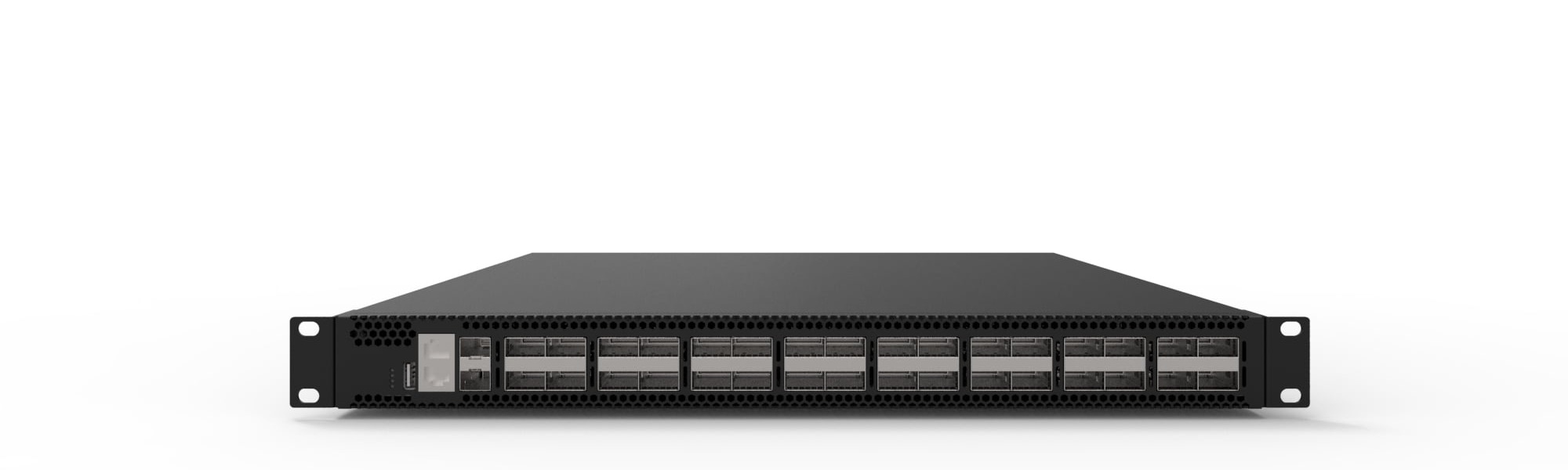 packet brokerXS-PB-32X100-G132x100G network packet broker for high-density traffic aggregation, filtering, correlation, and monitoring tool delivery.View product
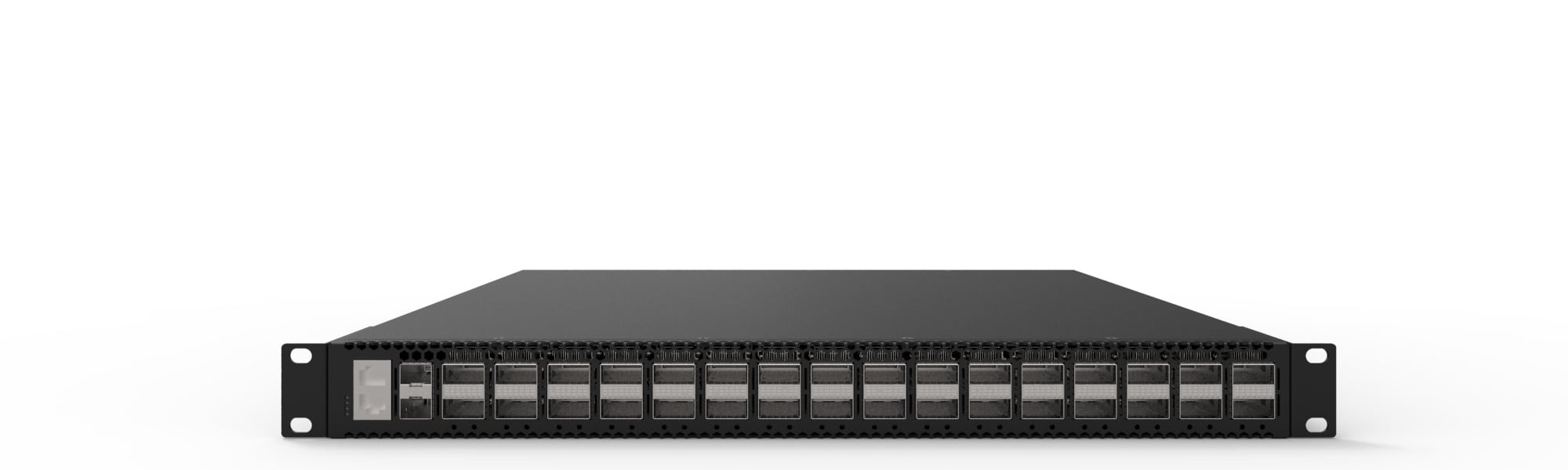 packet brokerXS-PB-32X400-G132x400G network packet broker for backbone-scale traffic visibility, filtering, replication, and high-performance tool delivery.View product
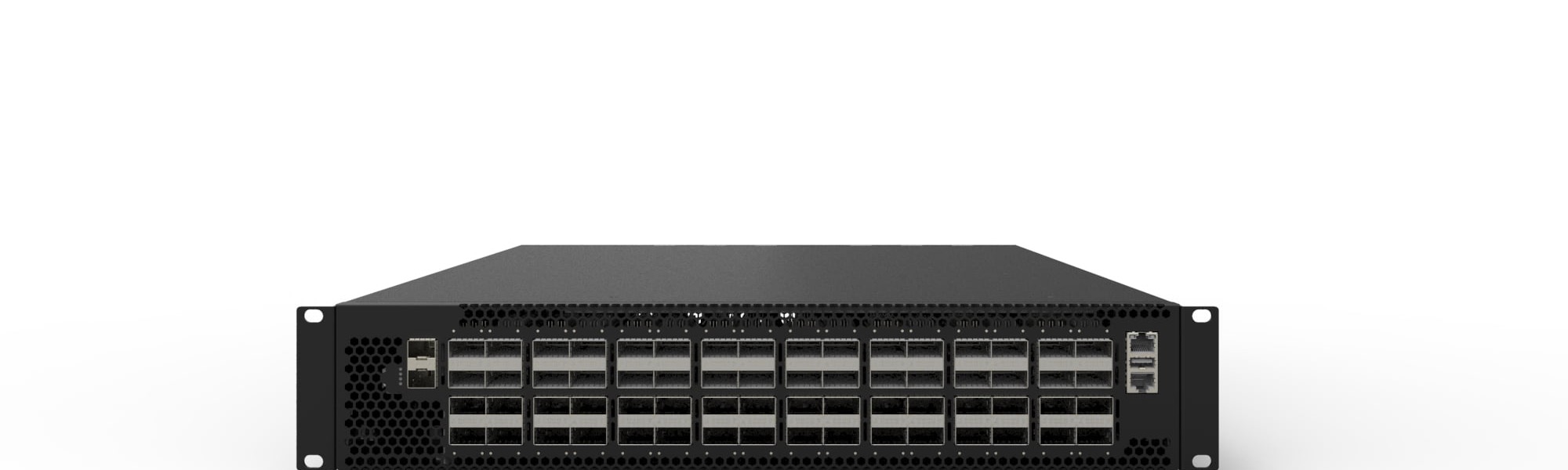 packet brokerXS-PB-64X100-G164x100G network packet broker for high-density data center and enterprise visibility fabrics.View product
Continue reading
Related articles
 Technical ArticlePacket Broker Filtering, Replication, and Load Balancing for Visibility ArchitectureTechnical guide to packet broker filtering, replication, and load balancing for Australian visibility, security, and AI fabric monitoring.Read article
 Technical ArticleWhy Australian MSPs Are Rethinking Network Visibility Before the Next BreachPacket broker architecture guidance for Australian MSPs building network visibility, security monitoring, compliance evidence, and tool delivery.Read article
 Technical ArticlePacket Broker vs Network TAP Aggregation for Security Visibility: Which Layer Do You Need?A practical architecture comparison of network TAPs and packet brokers for security visibility, tool delivery, traffic aggregation, and Australian data centre operations.Read article