
In brief
Packet broker architecture guidance for Australian MSPs building network visibility, security monitoring, compliance evidence, and tool delivery.
Key takeaways
- Australian enterprise networks are under growing scrutiny. Regulatory frameworks such as the Privacy Act review, the Australian Cyber Security Strategy, and the Critical Infrastructure Act are pushing managed service providers (MSPs) and integrators to deliver network-level visibility that many legacy architectures were never designed to provide.
- At the same time, the Australian data center market is expanding rapidly.
- For MSPs and integrators operating in this environment, the question is no longer whether to invest in network visibility.
The Australian Visibility Gap Is Closing
Australian enterprise networks are under growing scrutiny. Regulatory frameworks such as the Privacy Act review, the Australian Cyber Security Strategy, and the Critical Infrastructure Act are pushing managed service providers (MSPs) and integrators to deliver network-level visibility that many legacy architectures were never designed to provide.
At the same time, the Australian data center market is expanding rapidly. David Hirst, CEO of Macquarie Data Centres, noted in a recent Open Compute Project podcast that compliance has become a genuine market differentiator in Australia, not just a box-ticking exercise. Hirst described how Australia’s sovereign approach to data center operations shapes infrastructure decisions from the rack level up, and why operators who treat compliance as a strategic advantage are winning business against those who view it as overhead.
For MSPs and integrators operating in this environment, the question is no longer whether to invest in network visibility. It is how to architect a packet broker layer that can feed security monitoring tools without creating vendor lock-in or blind spots.
What Security Hardening Actually Requires at the Network Layer
Security hardening frameworks describe the outcome, but the infrastructure decisions fall on the teams deploying and operating the network. The CompTIA Security+ V7 certification outline, which maps to U.S. Department of Defense 8140 work roles and is widely adopted by Australian MSPs as a baseline competency framework, identifies several operational domains that depend directly on network visibility:
- Security operations (28% of exam weight): Monitoring tools, computing resource activity analysis, IDS/IPS deployment, NAC, EDR/XDR integration, log data collection, and incident response workflows all require access to raw or filtered network traffic.
- Threats, vulnerabilities, and mitigations (22%): Segmentation, access control enforcement, and patching validation depend on visibility into east-west traffic patterns, not just north-south perimeter flows.
- Security architecture (18%): Applying security principles to infrastructure across on-premises, cloud, virtualization, and IoT environments requires a packet delivery mechanism that can span all of those domains.
The gap between what these frameworks demand and what most MSP tool sets can actually observe is where packet broker architectures become critical infrastructure, not optional add-ons.
Packet Brokers as the Security Monitoring Middle Layer
A network packet broker sits between the network TAPs and SPAN ports where traffic is copied and the security tools that consume that traffic. Its job is to aggregate, filter, deduplicate, load-balance, and replicate packet flows so that each security tool receives exactly the traffic it needs, in the format it expects, without dropping packets under load.
For MSPs managing multiple customer environments, this architecture solves several operational problems simultaneously:
| MSP Operational Challenge | Packet Broker Capability |
|---|---|
| Multiple customers with different tool stacks | Per-customer filtering and replication rules |
| 10G to 100G uplink transitions | Multi-speed aggregation without re-architecture |
| Encrypted traffic inspection requirements | SSL/TLS decryption offload integration |
| Compliance evidence collection | Non-intrusive traffic mirroring for forensics |
| Tool overload from high-bandwidth links | Deduplication, packet slicing, and load balancing |
| East-west traffic blind spots in virtualized environments | Virtual TAP and overlay-aware filtering |
The key design question for Australian MSPs is whether their packet broker infrastructure is programmable and vendor-neutral enough to adapt as customer environments change, or whether it locks them into a single vendor’s management plane and feature roadmap.
The Open Networking Angle
SONiC (Software for Open Networking in the Cloud), the Linux Foundation-backed open source network operating system, has been production-hardened in the data centers of some of the largest cloud service providers. The SONiC project, which is a sub-project of the Open Compute Project’s Networking initiative, decouples network hardware from network software through containerized architecture and standard Linux interfaces.
For packet broker deployments, this architectural approach matters because:
- Programmable traffic handling: Open NOS platforms allow MSPs to script and automate filtering, replication, and load-balancing policies rather than relying on closed vendor CLIs.
- Multi-vendor hardware flexibility: Packet broker hardware can be sourced from multiple switch vendors without changing the management and monitoring toolchain.
- Integration with SONiC-managed networks: When the customer’s data center fabric already runs SONiC or a SONiC-derived distribution, the packet broker layer shares the same operational model, reducing training and tooling overhead.
- Cost structure alignment: Open networking economics let MSPs deploy packet broker capacity where it is needed without the per-port licensing models that proprietary visibility platforms often require.
This is not a hypothetical architecture. The OCP Networking project’s scope explicitly includes SONiC alongside ONIE and SAI as foundational technologies for disaggregated, open networking hardware and software.
Australian Compliance Adds a Layer
The Australian regulatory context shapes how MSPs must think about network visibility differently from their counterparts in other markets. Several factors are specific to the Australian enterprise and data center environment:
Data sovereignty and the Critical Infrastructure Act: Australian organisations classified as critical infrastructure entities must demonstrate network monitoring capabilities and incident response readiness. Packet brokers that can mirror traffic to local forensic and SIEM tools without routing that traffic through offshore processing satisfy both security and sovereignty requirements.
The Privacy Act review and Notifiable Data Breaches scheme: MSPs acting as data processors for their customers need to detect and report breaches within tight timelines. Network visibility that covers east-west lateral movement, not just perimeter ingress and egress, directly supports breach detection obligations.
APRA CPS 234 for financial services: Financial services organisations regulated by APRA must maintain information security capability commensurate with the size and extent of threats. Network packet brokers that deliver full-fidelity traffic to intrusion detection and security analytics tools help MSPs demonstrate this capability on behalf of their financial services customers.
Essential Eight maturity alignment: The Australian Signals Directorate’s Essential Eight framework, while not directly mandating network visibility, relies on monitoring and logging practices that require access to network traffic data. MSPs that cannot provide this data cannot help their customers progress beyond Essential Eight maturity level one.
What This Means for MSP and Integrator Procurement
The news here is not a single product announcement or vendor milestone. The shift is structural. Australian MSPs and integrators who build their security monitoring service offerings on proprietary packet broker platforms are inheriting a cost and flexibility problem that will compound as customer environments scale and diversify.
The alternative approach uses open, programmable packet broker infrastructure that aligns with the same operational model as the data center and campus networks it serves. This approach has three practical implications for procurement teams:
-
Evaluate packet broker hardware on switching silicon and NOS openness, not just feature checklists. A packet broker built on merchant silicon with a SONiC or open NOS foundation offers long-term flexibility that a closed appliance cannot.
-
Map packet broker capabilities to the security tools your customers actually run. IDS/IPS, SIEM, DLP, NAC, and forensics tools each have different traffic ingestion requirements. The broker architecture must serve all of them without forcing a rip-and-replace when a customer changes their security stack.
-
Factor compliance documentation into the TCO model. Packet brokers that generate auditable traffic capture records and integrate with logging and monitoring pipelines reduce the manual compliance evidence collection burden that Australian MSPs carry for regulated customers.
MSP Visibility Acceptance Matrix
For an MSP, packet broker acceptance is also service acceptance. The design needs to prove that customer traffic is isolated, security tools receive useful packets, and evidence survives an incident review.
| Service area | Acceptance evidence | Rework trigger |
|---|---|---|
| Customer isolation | Per-customer policy, VLAN/VRF mapping, and access control reviewed for at least 2 customer profiles | One customer’s mirrored traffic can be delivered to another customer’s tool path |
| Tool delivery | IDS, NDR, SIEM, packet capture, and compliance tools receive filtered traffic sized to their ingest limit | Tool overload creates blind spots during peak traffic or attack conditions |
| Compliance evidence | Drop counters, filter rules, timestamps, change history, and retention workflow documented for incident reports | MSP cannot prove what traffic was captured, filtered, dropped, or forwarded |
| Scale and failure | 10G/25G/100G/400G source links, replication factor, and failover behavior tested before onboarding | New customer growth requires an emergency visibility redesign |
What to Watch Next
Three developments will shape this space over the next 12 to 18 months:
-
Australian data center capacity growth: With operators like Macquarie investing in next-generation facilities designed for AI and high-density workloads, the volume and complexity of traffic requiring monitoring will increase. Packet broker architectures that cannot scale to 400G and 800G aggregation will become bottlenecks.
-
Open networking adoption in Australian enterprise: As SONiC adoption grows beyond hyperscaler environments into enterprise and colocation deployments, the operational model for packet brokers will increasingly align with the network fabric they serve.
-
Security framework evolution: Updates to the Essential Eight, the Australian Cyber Security Strategy implementation, and APRA’s information security prudential standard will continue to raise the bar for network monitoring capabilities. MSPs whose packet broker architecture is already programmable and scalable will adapt faster than those locked into proprietary platforms.
Editorial Position
xSONiC’s perspective is that network packet brokers should be treated as programmable infrastructure, not closed appliances. For Australian MSPs and integrators building security monitoring services, the combination of open networking hardware, a SONiC-aligned NOS, and a well-architected packet broker layer delivers the visibility, flexibility, and compliance alignment that the Australian market now demands.
Engineering FAQ
What should be measured before sizing a packet broker? Measure source link speed, 95th-percentile utilisation, burst peaks, replication factor, filter complexity, tunnel handling needs, and tool-port capacity. Packet broker sizing fails when it is based on average traffic rather than copied and filtered traffic.
What proves that a visibility design is production ready? The design should prove aggregation, filtering, replication, load balancing, packet slicing or deduplication if required, and tool failover under realistic traffic. Security teams should also verify that drops are reported rather than hidden.
Where do Australian buyers most often under-scope visibility projects? The common gaps are east-west data centre traffic, encrypted or tunneled flows, AI cluster bursts, retention requirements, and tool oversubscription. A procurement brief should model those before asking vendors for a bill of materials.
Related xSONiC Resources
Sources Reviewed
- Ethernet Network Adapters - ConnectX NICs | NVIDIA
- NVIDIA BlueField Data Processing Unit
- NVIDIA Spectrum-X Ethernet Platform
- ACSC Essential Eight
- OAIC Notifiable Data Breaches
- APRA CPS 234 Information Security
- NETSCOUT Network Packet Definition
- Cloudflare Network Packet Definition
- SONiC Project Documentation
- Broadcom Ethernet Switching
- Marvell Switching
- NVIDIA Ethernet Switching
- Open Compute Networking
- SONiC GitHub
- SONiC Foundation
Product fit
Products referenced for evaluation
These products are referenced for evaluation context in the article. Confirm workload, port, optics, software, interoperability, and support requirements against the exact deployment before procurement.
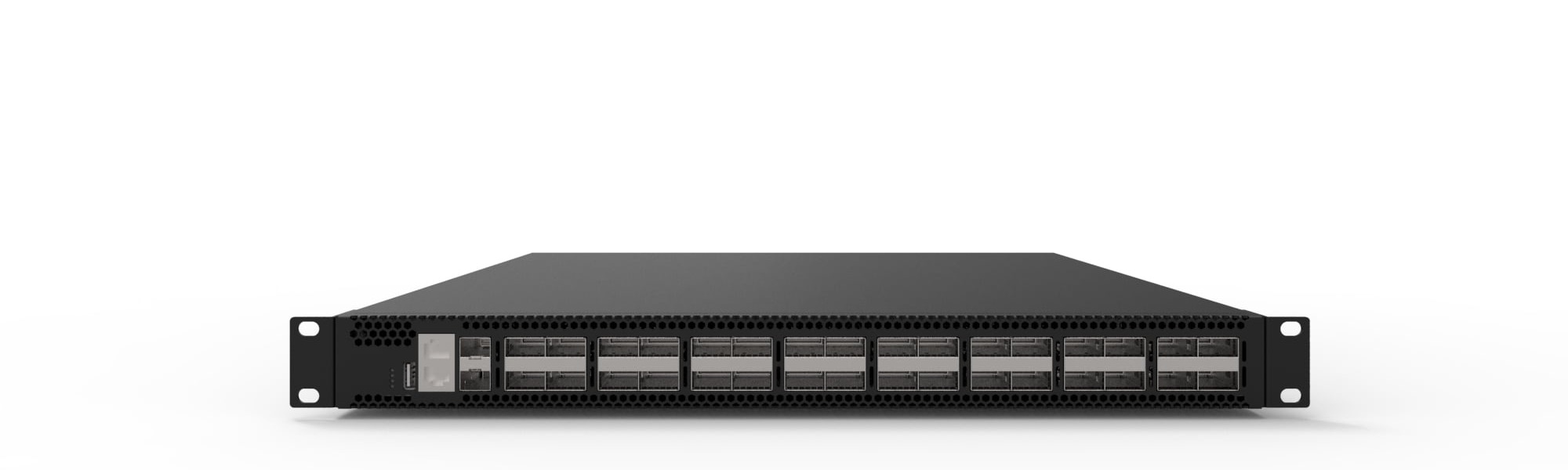 packet brokerXS-PB-32X100-G132x100G network packet broker for high-density traffic aggregation, filtering, correlation, and monitoring tool delivery.View product
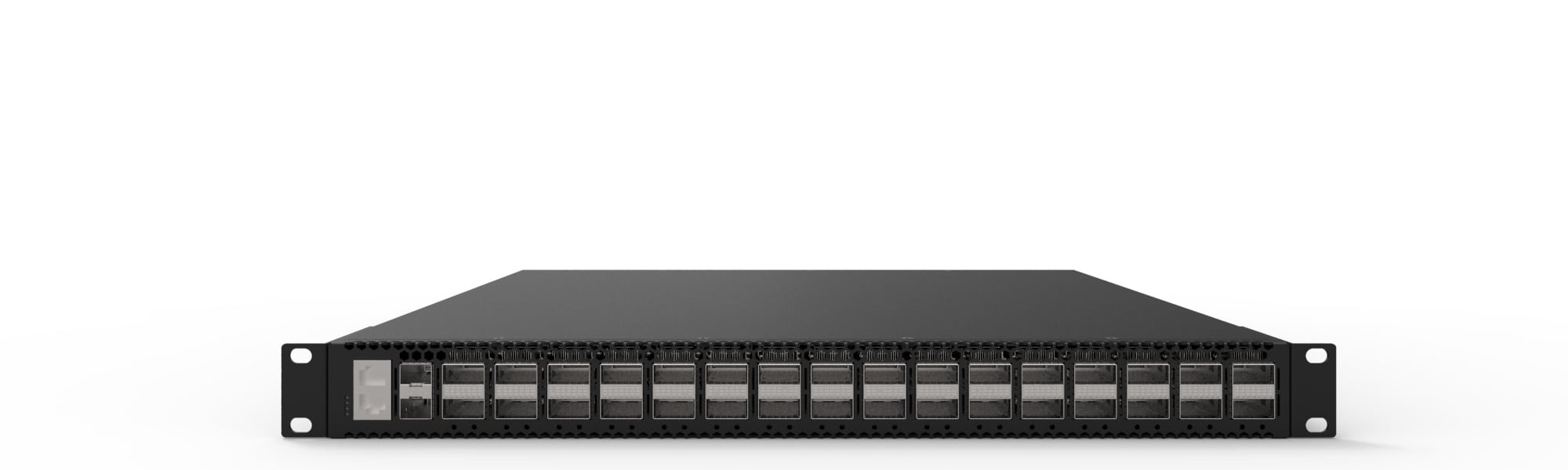 packet brokerXS-PB-32X400-G132x400G network packet broker for backbone-scale traffic visibility, filtering, replication, and high-performance tool delivery.View product
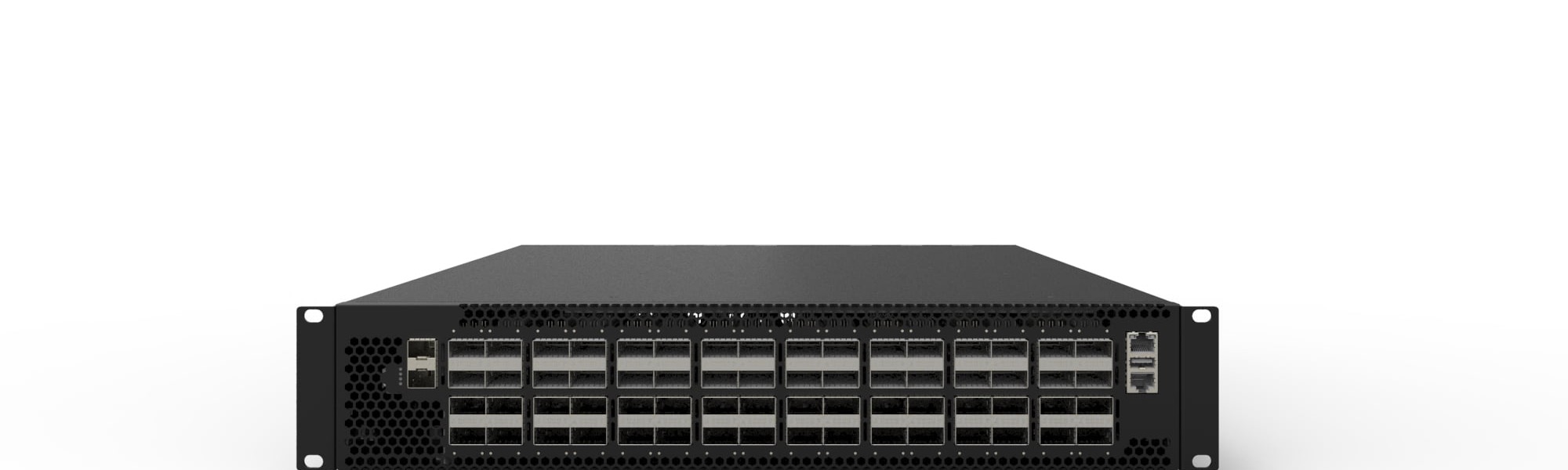 packet brokerXS-PB-64X100-G164x100G network packet broker for high-density data center and enterprise visibility fabrics.View product
Continue reading
Related articles
 Technical ArticleWhere Your Packets Disappear: A Visibility Gap Analysis for Australian Security and Observability TeamsEngineering guide for packet broker and visibility planning covering traffic capacity, filtering, tool delivery, resilience, and audit evidence.Read article
 Technical ArticlePacket Broker Filtering, Replication, and Load Balancing for Visibility ArchitectureTechnical guide to packet broker filtering, replication, and load balancing for Australian visibility, security, and AI fabric monitoring.Read article
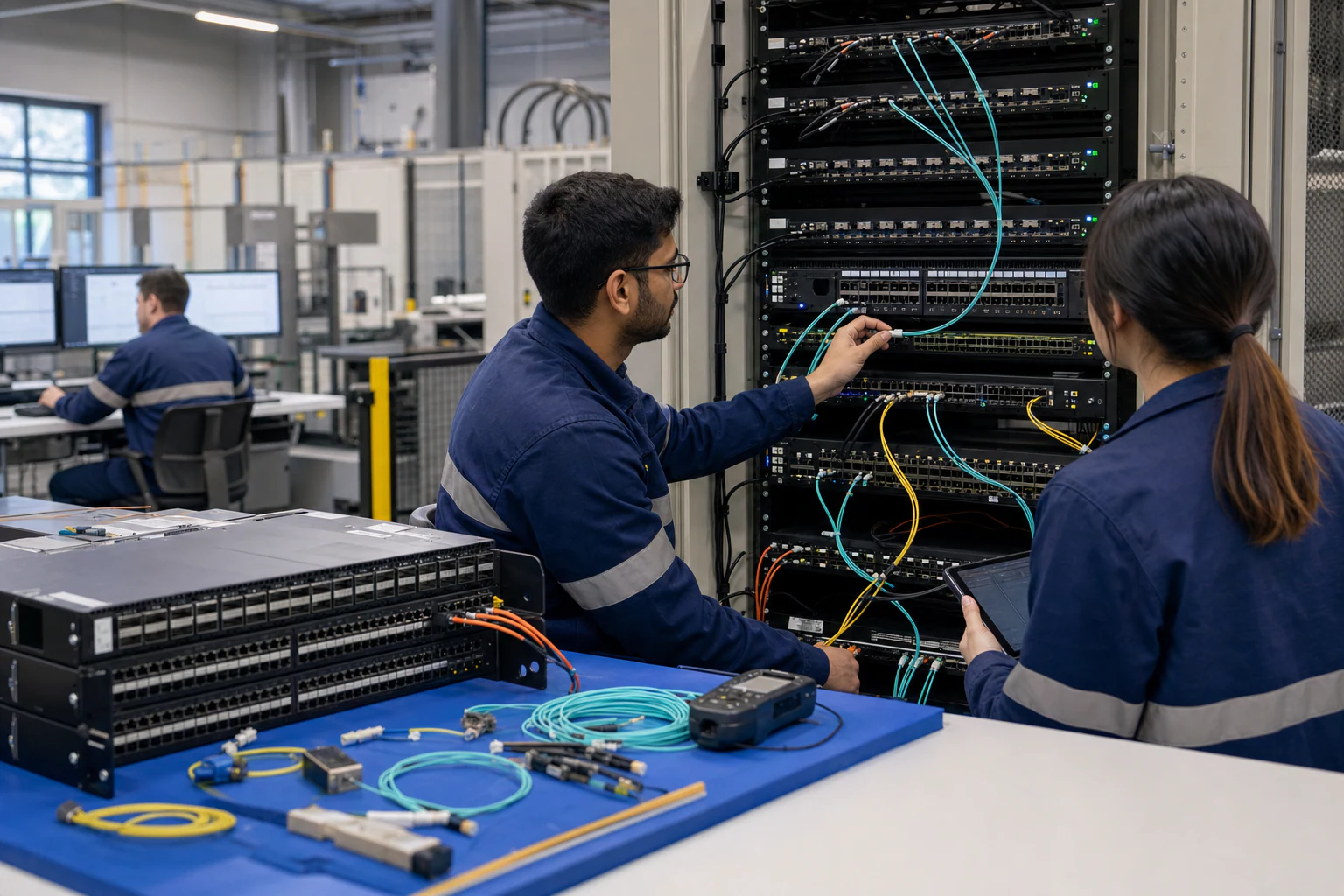 Technical ArticlePacket Broker vs Network TAP Aggregation for Security Visibility: Which Layer Do You Need?A practical architecture comparison of network TAPs and packet brokers for security visibility, tool delivery, traffic aggregation, and Australian data centre operations.Read article