In brief
Plain-English SONiC guide for Australian data centre teams covering open NOS architecture, SAI, automation, support, and deployment validation.
Key takeaways
- For years, data center network teams faced a straightforward but costly trade-off: buy a switch from a single vendor, and accept that vendor's proprietary operating system as part of the deal.
- SONiC, which stands for Software for Open Networking in the Cloud, is an open-source network operating system built on Linux.
- What makes SONiC different from a traditional switch OS is its architecture.
The Rise of SONiC in Modern Data Centers
For years, data center network teams faced a straightforward but costly trade-off: buy a switch from a single vendor, and accept that vendor’s proprietary operating system as part of the deal. That model is changing.
SONiC, which stands for Software for Open Networking in the Cloud, is an open-source network operating system built on Linux. Originally developed within Microsoft to run the networking fabric behind Azure, SONiC was contributed to the Linux Foundation and has since grown into one of the most widely adopted open NOS platforms in production data centers worldwide.
What makes SONiC different from a traditional switch OS is its architecture. Rather than shipping as a monolithic firmware image tied to a single hardware platform, SONiC decomposes network functions into independent Docker containers. Routing protocols, management agents, and platform drivers each run in their own container, communicating over a shared Redis database called the SONiC database (also known as the synchronous shared database or SSD). This containerised design means that a team can upgrade, debug, or replace one function without tearing down the entire switch software stack.
For Australian data center operators, colocation providers, and enterprise network architects, SONiC represents a concrete path away from proprietary lock-in. Instead of being tied to a single vendor’s switch OS and update cycle, teams can choose hardware from multiple vendors that all run the same NOS, use the same configuration model, and share the same operational tooling.
How SONiC Architecture Works
SONiC’s architecture is built on several key design principles that distinguish it from both proprietary NOS platforms and earlier open networking efforts.
Switch Abstraction Interface (SAI). At the hardware abstraction layer, SONiC relies on SAI, a standardised API that sits between the NOS and the switch ASIC. SAI allows SONiC to run on ASICs from multiple silicon vendors, including Broadcom switch silicon, Marvell, and NVIDIA Spectrum. For a network team, this means the same SONiC image can run on bare-metal switches built with different underlying chips. The SAI layer translates SONiC’s northbound configuration intent into ASIC-specific southbound instructions.
Containerised Services. Each major SONiC function runs as a Docker container. This includes:
- BGP and other routing protocol daemons (FRR-based)
- LLDP and link management agents
- DHCP relay
- SNMP and telemetry exporters
- Synchronousd, which manages the shared database
- Teamd for port-channel and LACP handling
Because containers are isolated, a crash in the SNMP agent does not bring down the routing stack. This improves fault isolation and makes in-service upgrades more practical.
Configuration via ConfigDB and JSON. SONiC stores its running configuration in a Redis-based ConfigDB. Operators can configure the switch through a CLI (which translates commands into ConfigDB entries), through direct JSON file editing, or programmatically via management frameworks that write to ConfigDB. This model supports infrastructure-as-code workflows where switch configurations are version-controlled and applied through automation pipelines.
Production-Hardened at Scale. SONiC was not built in a lab and then tested in production. It was built in production, originally inside Microsoft’s Azure data centers, and then open-sourced. This origin story matters because the feature set and reliability expectations were shaped by hyperscaler requirements: BGP-based routing at massive scale, RDMA over Converged Ethernet (RoCE) for storage and AI workloads, and support for high-speed links up to 400G and 800G.
SONiC for AI Fabric and High-Performance Workloads
One of the strongest growth areas for SONiC adoption is AI infrastructure. As organisations deploy GPU clusters for large language model training, inference, and RAG pipelines, the network fabric becomes a critical performance bottleneck. SONiC addresses this in several ways.
RoCE v2 Support. SONiC includes native support for RoCE v2, which enables RDMA (Remote Direct Memory Access) over standard Ethernet. This is essential for GPU-to-GPU communication in AI training clusters where even small increases in network latency can significantly extend model training time. SONiC’s RoCE implementation works with Data Center Bridging Capability Exchange protocol (DCBX) to negotiate priority flow control and congestion notification settings between switches and NICs.
Data Center Bridging and Lossless Ethernet. AI workloads are particularly sensitive to packet loss. SONiC supports Priority Flow Control (PFC), Enhanced Transmission Selection (ETS), and Explicit Congestion Notification (ECN) as part of the DCB feature set. These capabilities allow network operators to build lossless or near-lossless Ethernet fabrics for AI backend traffic while still carrying best-effort traffic on the same physical infrastructure.
In-Band Network Telemetry (INT). For teams that need deep visibility into fabric behaviour, SONiC supports INT, which embeds metadata directly into packet headers as they traverse the network. This allows operators to measure per-hop latency, queue depth, and congestion in real time, data that is invaluable for diagnosing performance issues in AI training clusters where tail latency matters.
Spine-Leaf at Scale. SONiC’s BGP implementation, based on FRRouting (FRR), supports large-scale ECMP (Equal-Cost Multi-Path) spine-leaf topologies. Combined with EVPN-VXLAN for overlay networking, SONiC can support data center fabrics spanning thousands of ports across multiple racks, a scale that aligns with GPU cluster deployment patterns.
Multi-Vendor Hardware Ecosystem
One of SONiC’s most practical advantages is its multi-vendor hardware support. Because SONiC abstracts the ASIC layer through SAI, it can run on bare-metal and white-box switches from a wide range of hardware manufacturers. The SONiC community maintains a supported devices and platforms list that includes switches built on silicon from Broadcom, Marvell, Innovium, and others.
For Australian data center teams, this has several implications:
- Avoiding vendor lock-in. Network teams can select switch hardware based on port density, power consumption, form factor, and price, rather than being forced into a vendor because of its proprietary OS.
- Consistent operations across hardware. If an organisation runs SONiC, it can use the same automation tools, monitoring dashboards, and operational procedures regardless of which hardware vendor supplied the switch.
- Competitive procurement. With multiple hardware vendors supporting SONiC, procurement teams can run competitive tenders that drive better pricing and support terms.
However, it is important to note that not all SONiC features are equally supported across all hardware platforms. Feature parity depends on both the ASIC capability and the quality of the SAI implementation for that platform. Evaluators should verify specific feature support on their target hardware before committing to a deployment.
SONiC vs Proprietary NOS: What Australian Buyers Should Consider
For network architects and procurement teams in Australia evaluating whether to adopt SONiC, the decision involves more than just the NOS itself. Here is a practical comparison framework.
| Factor | SONiC (Open NOS) | Proprietary NOS (e.g., Cisco IOS, Arista EOS) |
|---|---|---|
| Hardware flexibility | Multi-vendor via SAI | Tied to one vendor’s hardware |
| Licensing cost | Open-source, Apache 2.0 | Included with hardware, but vendor-controlled pricing |
| Support model | Community + vendor-provided enterprise support | Vendor TAC and professional services |
| Feature velocity | Community-driven, rapid iteration | Vendor roadmap, slower but tested releases |
| Automation | JSON config, NETCONF, REST API, gNMI | Varies by vendor, often proprietary APIs |
| Ecosystem maturity | Growing rapidly, strong in hyperscale | Mature, broad enterprise features |
| Learning curve | Requires Linux and container knowledge | Familiar CLI for existing teams |
| AI/RDMA features | Strong RoCE, DCB, INT support | Varies by vendor and platform tier |
For organisations already running Linux-based infrastructure and automation pipelines, SONiC’s learning curve is relatively shallow. For teams coming from a traditional CLI-driven networking background, the shift to JSON-based configuration and container operations requires investment in training and tooling.
The Australian market has seen growing interest in open networking, driven by data center expansion in Sydney, Melbourne, and Canberra, and by the increasing adoption of AI infrastructure that demands high-performance, lossless networking. SONiC’s production heritage and multi-vendor support make it a strong candidate for new data center fabric deployments, particularly those that prioritise operational flexibility and cost control.
Getting Started with SONiC: A Practical Path
For teams ready to evaluate SONiC, the adoption path typically follows these steps:
-
Validate hardware compatibility. Check the SONiC supported devices list (maintained on the SONiC GitHub repository and wiki) to confirm that your target switch platform has a tested SONiC image. For bare-metal switches, ONIE (Open Network Install Environment) is the recommended installation method.
-
Set up a lab environment. SONiC can be installed on a physical switch or run in a virtual machine for initial testing. The VM approach allows teams to explore the CLI, configuration model, and routing behaviour without committing hardware.
-
Design your fabric. Define your spine-leaf topology, BGP ASN allocation plan, VLAN/VXLAN mapping, and any DCB or RoCE requirements for AI workloads. SONiC’s FRR-based BGP and EVPN-VXLAN support provide the building blocks for most data center fabric designs.
-
Automate from day one. SONiC’s JSON-based configuration model is well-suited to infrastructure-as-code. Teams can use Ansible, Salt, or custom Python scripts to manage switch configurations, with version control in Git.
-
Deploy monitoring and telemetry. SONiC supports streaming telemetry via gNMI, SNMP, and INT. Integrating SONiC switches into existing monitoring stacks (Prometheus, Grafana, or commercial NMS platforms) ensures operational visibility from the start.
-
Consider enterprise support. While SONiC is open-source, several vendors offer enterprise-grade SONiC distributions with commercial support, validated hardware images, and professional services. For production deployments, especially those supporting critical AI or business workloads, enterprise support is worth evaluating.
Where SONiC Fits in Your Data Center Strategy
SONiC is not the right fit for every network, but for data center teams that value hardware flexibility, operational consistency, and alignment with modern automation practices, it is a compelling option. Its production pedigree from Microsoft Azure, combined with a rapidly growing ecosystem of hardware vendors and silicon partners, makes SONiC one of the most credible open NOS platforms available today.
For Australian organisations building or refreshing data center fabrics, particularly those investing in AI infrastructure with high-performance GPU clusters, SONiC offers a path to build network fabrics that are both operationally efficient and cost-competitive. The key is to start with a clear understanding of your workload requirements, validate hardware compatibility, and invest in the automation and monitoring tooling that makes open networking operational at scale.
The open networking model is no longer a hyperscaler-only proposition. With the right hardware, the right operational practices, and the right support, SONiC can deliver production-grade data center networking for organisations of many sizes.
For a first production-grade assessment, require evidence from at least 2 switch SKUs, 30 days of lab operation, 3 automated configuration changes, one rollback inside 24 hours, and link validation at the intended 100G/400G speed. Those checks keep the SONiC conversation grounded in operating evidence instead of open-source enthusiasm.
Engineering FAQ
What should be proven before adopting SONiC? Prove the exact switch SKU, ASIC, SAI version, SONiC image, optics, routing features, automation method, telemetry, rollback, and support ownership.
Why is SONiC not just a cheaper switch OS? The value is hardware/software disaggregation, automation, transparency, and multi-vendor leverage. The risk is that the buyer must validate the operating model instead of relying on a single-vendor stack.
Where should Australian teams start? Start with a lab or greenfield pod, validate platform support and rollback, confirm APAC support, and only then expand to production fabrics or campus refresh programs.
Related xSONiC Resources
Sources Reviewed
- IEEE 802.1Q Bridges and Bridged Networks
- IEEE 802.1AX Link Aggregation
- Ethernet Network Adapters - ConnectX NICs | NVIDIA
- NVIDIA BlueField Data Processing Unit
- NVIDIA Spectrum-X Ethernet Platform
- OpenConfig gNMI Specification
- OpenConfig
- RFC 7950 - The YANG 1.1 Data Modeling Language
- RFC 6241 - Network Configuration Protocol (NETCONF)
- ACSC Essential Eight
- OAIC Notifiable Data Breaches
- APRA CPS 234 Information Security
- NETSCOUT Network Packet Definition
- Cloudflare Network Packet Definition
- SONiC Project Documentation
- Broadcom Ethernet Switching
- Marvell Switching
- NVIDIA Ethernet Switching
- Open Compute Networking
- SONiC GitHub
- SONiC Foundation
Product fit
Products referenced for evaluation
These products are referenced for evaluation context in the article. Confirm workload, port, optics, software, interoperability, and support requirements against the exact deployment before procurement.
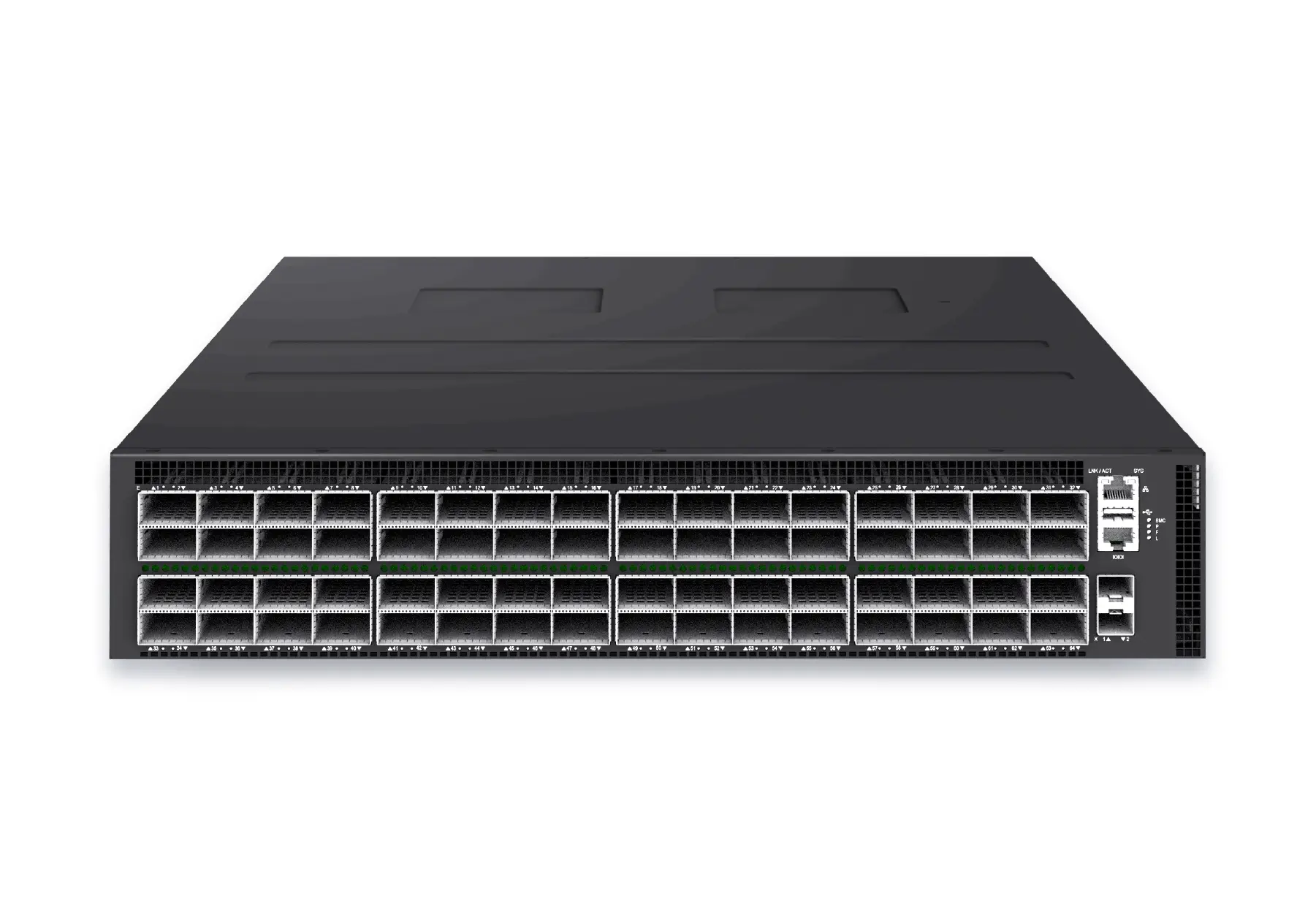 datacenter aiXS-DC-64X800-AI-G164-port 800G AI fabric switch for large-scale GPU clusters, HPC backbones, and ultra-high-throughput data center networks.View product
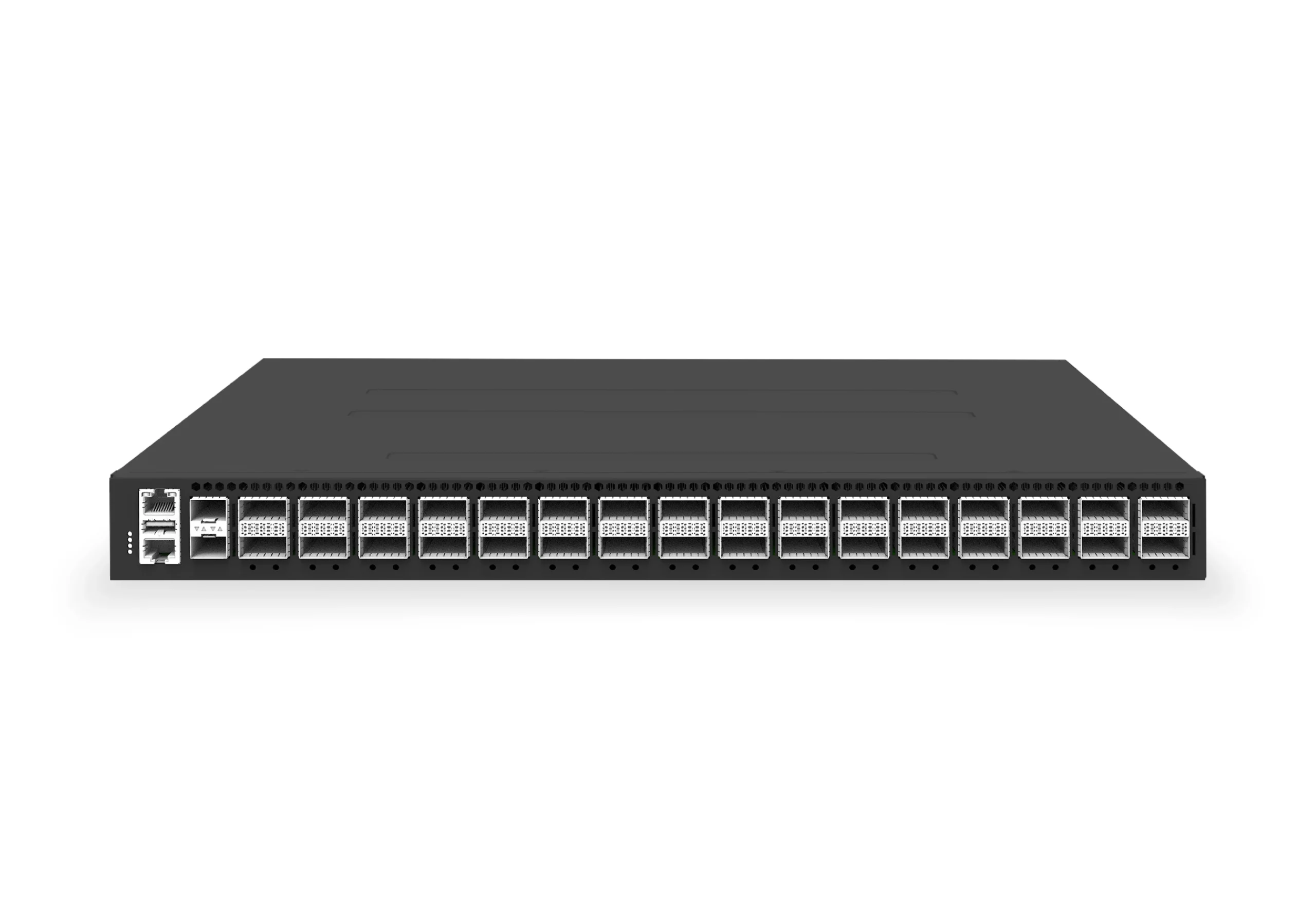 datacenter aiXS-DC-32X400-SP-G232-port 400G spine/core switch for high-capacity data center fabrics and AI-ready backbones.View product
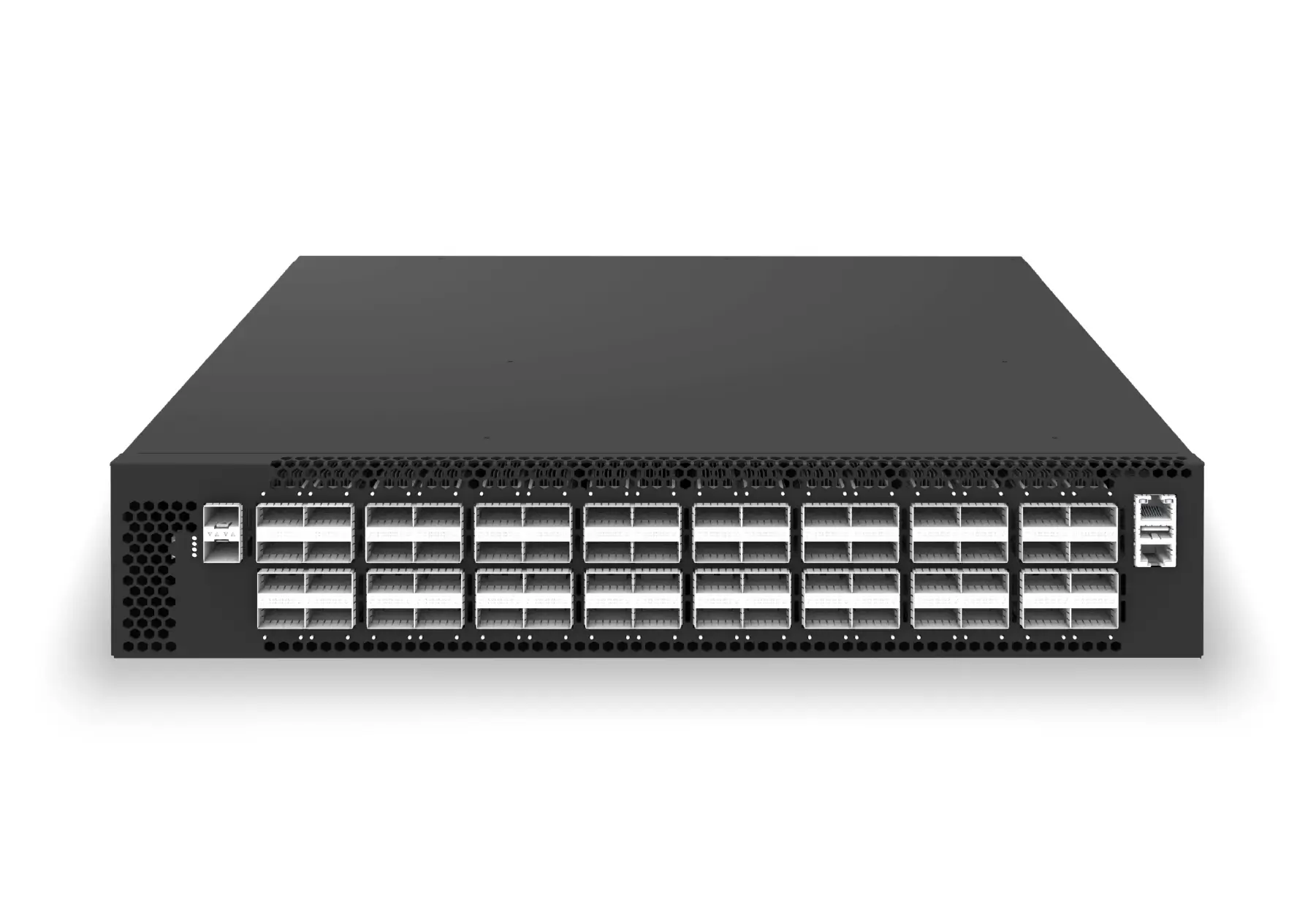 datacenter aiXS-DC-64X200-LS-G164-port 200G leaf/spine switch for high-bandwidth storage, compute, and scale-out data center fabrics.View product
Continue reading
Related articles
 Technical ArticleSONiC Switch Pre-Production Validation Checklist: A 12-Point Testing Playbook for Open Networking TeamsEngineering guidance on SONiC Switch Pre-Production Validation Checklist for Australian data centre buyers, covering form factor choice, link budgets, cabling.Read article
 Technical ArticleWhy Australian Data Centers Are Re-evaluating Open Networking for AI InfrastructureEngineering guide for AI fabric buyers covering RoCE, SONiC, telemetry, optics, support ownership, and deployment validation.Read article
 Technical ArticleSONiC Switch Validation Before Production: What Australian Network Teams Need on Their ChecklistEngineering guide for SONiC and open networking buyers covering platform fit, automation, support, telemetry, and validation evidence.Read article