In brief
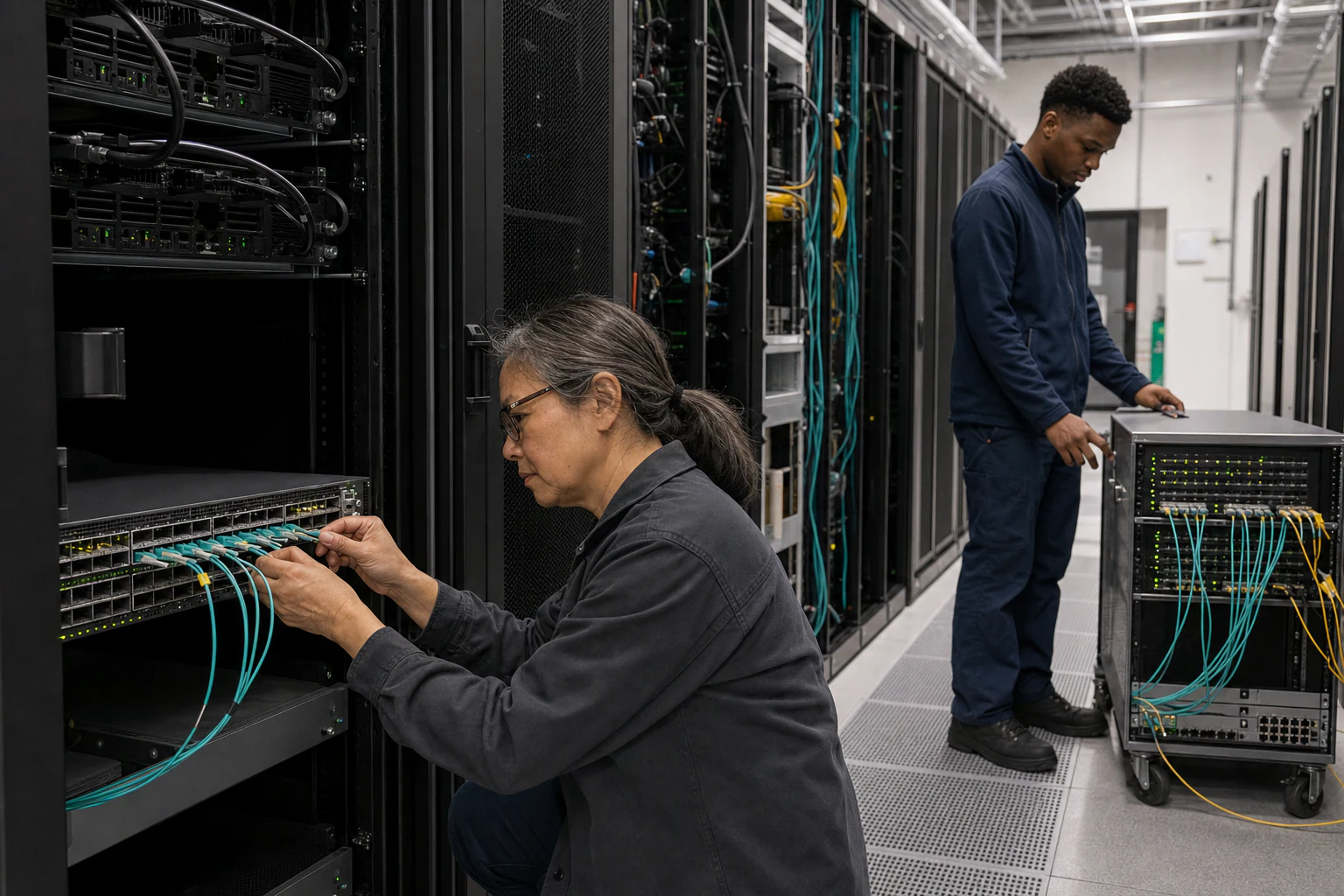
Engineering guidance on Ethernet switch requirements for AI fabric, covering RoCE v2, PFC, ECN, DCBX, buffers, 400G/800G port density, telemetry, and SONiC validation.
Key takeaways
- When an enterprise builds an AI training or inference cluster, the GPUs get the headlines.
- This analysis brief examines what the latest industry sources say about those requirements and why open network operating systems like SONiC -- running on disaggregated switch hardware -- are emerging as the default answer for organizations that want AI-grade fabric without single-vendor lock-in.
- A standard enterprise data center fabric optimizes for north-south traffic, general east-west application flows, and reasonable oversubscription ratios.
The networking bottleneck hiding inside every AI cluster
When an enterprise builds an AI training or inference cluster, the GPUs get the headlines. But the network underneath determines whether those GPUs stay fed with data or stall waiting for it. AI fabric Ethernet is not the same as general-purpose data center switching. It has specific, non-negotiable requirements that many traditional campus or even standard spine-leaf designs do not meet.
This analysis brief examines what the latest industry sources say about those requirements and why open network operating systems like SONiC — running on disaggregated switch hardware — are emerging as the default answer for organizations that want AI-grade fabric without single-vendor lock-in.
What makes AI fabric different from standard data center Ethernet
A standard enterprise data center fabric optimizes for north-south traffic, general east-west application flows, and reasonable oversubscription ratios. AI fabric inverts those priorities.
AI training clusters generate massive, synchronized east-west traffic bursts. Hundreds or thousands of GPUs exchange gradients and model parameters simultaneously. A single slow or dropped packet can force an entire training job to retransmit, wasting expensive GPU cycles.
This creates five non-negotiable switching requirements:
-
Lossless transport via RoCE v2. RDMA over Converged Ethernet (RoCE v2) lets GPUs move data directly between host memory without CPU involvement. But RoCE v2 requires a lossless or near-lossless fabric. That means Priority Flow Control (PFC), ECN-based congestion notification, and Data Center Bridging Capability Exchange (DCBX) must be configured correctly on every hop.
-
Deep packet buffers and intelligent queuing. AI traffic patterns are bursty. Shallow-buffer switches drop packets under microbursts, which collapses RoCE performance. Deep-buffer or shared-memory switch architectures absorb these bursts without packet loss.
-
Low, predictable latency with minimal jitter. AI collective operations (AllReduce, AllGather) are latency-sensitive. The network must deliver consistent tail latency, not just good average latency. Variability is as damaging as high latency.
-
High radix and high bandwidth per port. Modern AI clusters scale to hundreds or thousands of GPUs. Switches need high port density at 400GbE or 800GbE to minimize hop count and oversubscription. NVIDIA’s Spectrum-4 SN5000 series, for example, delivers 64 ports of 800GbE in a 2U form factor with 51.2 Tb/s throughput — the kind of density that keeps AI fabric flat.
-
Programmable telemetry for real-time fabric visibility. In-band Network Telemetry (INT), streaming telemetry, and flow-level visibility let operators detect congestion hotspots before they impact training jobs. Traditional SNMP polling is too slow for AI fabric operations.
What SONiC brings to AI fabric
SONiC (Software for Open Networking in the Cloud) is an open-source network operating system built on Linux and maintained under the Linux Foundation. According to the SONiC Foundation, it is ‘production-hardened in the data centers of some of the largest cloud service providers’ and supports key networking functionality including BGP and RDMA — the two protocols most critical to AI fabric.
SONiC’s architecture is purpose-built for the kind of modularity AI fabric demands. The GitHub repository describes a container-based design where ‘each network function runs in its own Docker container,’ providing fault isolation, easier troubleshooting, and simplified upgrades. For AI fabric operators who need to tune RDMA parameters, update congestion control algorithms, or add telemetry pipelines without risking the entire switch, this modularity is not a nice-to-have — it is operational necessity.
Critically, SONiC decouples hardware from software. The SONiC Foundation highlights that SONiC ‘runs on switches from multiple vendors and ASICs’ and is ‘built on Switch Abstraction Interface’ (SAI). This means an organization can choose switch hardware based on silicon capabilities — buffer depth, port density, latency profile — rather than being locked into a single vendor’s NOS and management stack.
NVIDIA also offers Pure SONiC as a supported NOS on Spectrum switches, explicitly listing it alongside Cumulus Linux as a network OS choice. This is significant: even NVIDIA, which sells its own proprietary NOS (Cumulus), acknowledges that production AI fabric operators want the option to run open-source SONiC.
What this means for Australian data center buyers
Australia’s AI infrastructure market is accelerating. Hyperscale and colocation providers are expanding capacity in Sydney, Melbourne, and Canberra to serve enterprise AI workloads. But many Australian enterprises are building on-premises or collocated AI clusters rather than relying solely on hyperscale cloud — particularly in regulated sectors like financial services, healthcare, and government.
For these buyers, the AI fabric switching decision comes down to three questions:
-
Can I get lossless RoCE v2 fabric without vendor lock-in? SONiC-based switches on commodity ASICs answer yes. You choose the silicon, you choose the optics, you run the open NOS.
-
Can I operationalize it with my existing team? SONiC’s Linux-based, containerized architecture is closer to what Linux and DevOps teams already know than proprietary CLIs. NETCONF/YANG programmability and standard Linux tooling (Ansible, Python, gNMI) reduce the learning curve.
-
Can I get telemetry that actually helps me run AI fabric? INT (In-band Network Telemetry) and streaming telemetry are SONiC-compatible features that give real-time visibility into fabric congestion, packet drops, and latency — the data points AI fabric operators need.
The open networking advantage for AI fabric
The broader trend is clear: AI fabric is driving Ethernet switching requirements beyond what traditional enterprise switching was designed to handle. The combination of SONiC’s open NOS, high-radix switch ASICs from vendors like Broadcom and NVIDIA, and standards-based RoCE v2 transport gives organizations a path to AI-grade fabric that does not require surrendering to a single vendor’s pricing, roadmap, or support model.
For xSONiC data center AI switch customers, this means the open networking stack is not a compromise — it is the architecture that production AI clusters at the world’s largest cloud providers have already validated.
The next step for any organization evaluating AI fabric switching is to map the five requirements above to their specific cluster size, GPU type, and traffic patterns — then test SONiC on candidate switch hardware before committing to a proprietary stack.
AI Fabric Switch Acceptance Matrix
| Requirement | What to verify | Acceptance evidence | Rework trigger |
|---|---|---|---|
| Lossless transport | RoCE v2, PFC, ECN, DCBX, MTU, queue mapping, and NIC profile | Incast and congestion tests with pause, ECN, and drop counters | Any hop keeps a divergent lossless policy |
| Buffer and queue behaviour | Shared buffer profile, queue thresholds, microburst handling, telemetry visibility | 30-minute burst test with queue occupancy and recovery notes | Average bandwidth passes but tail latency spikes |
| Port density | 400G or 800G leaf/spine plan, optics type, breakout, and oversubscription ratio | Topology model for 32, 64, and next expansion node counts | Design requires a spine rebuild at the first GPU expansion |
| SONiC platform fit | ASIC, SAI version, supported image, optics matrix, known caveats | Tested feature matrix for the exact switch SKU | Buyer assumes all SONiC switches expose the same AI fabric behaviour |
| Operations | gNMI/INT telemetry, image upgrade, config rollback, support escalation | Runbook showing 5 fabric health signals and 1 rollback test | Network team cannot explain a GPU job slowdown |
Engineering FAQ
What should be tested before approving an Ethernet switch for AI fabric? Test RoCE v2, PFC, ECN, DCBX, MTU, queue mapping, incast, link failure, optics stability, telemetry export, image upgrade, and rollback on the exact switch and NIC combination.
Why are 400G and 800G ports not enough by themselves? Port speed does not prove AI fabric readiness. The switch must sustain bursty east-west traffic with lossless policy, buffer visibility, congestion response, and predictable failure recovery.
How should Australian buyers structure the pilot? Use the planned GPU server, NIC, optics, switch SKU, SONiC image, and telemetry stack. Run at least one representative training or inference workload, then force congestion and link failure while collecting counters.
Related xSONiC Resources
Sources Reviewed
- Ethernet Network Adapters - ConnectX NICs | NVIDIA
- NVIDIA Spectrum-X Ethernet Platform
- NVIDIA Spectrum-4 SN5000 Switch Systems Introduction
- IEEE 802.1Qbb Priority Flow Control
- IEEE 802.1Qaz Enhanced Transmission Selection and DCBX
- RFC 3168 Explicit Congestion Notification
- OpenConfig gNMI Specification
- OpenConfig
- SONiC Project Documentation
- NVIDIA Ethernet Switching
- Open Compute Networking
- SONiC GitHub
- SONiC Foundation
Product fit
Products referenced for evaluation
These products are referenced for evaluation context in the article. Confirm workload, port, optics, software, interoperability, and support requirements against the exact deployment before procurement.
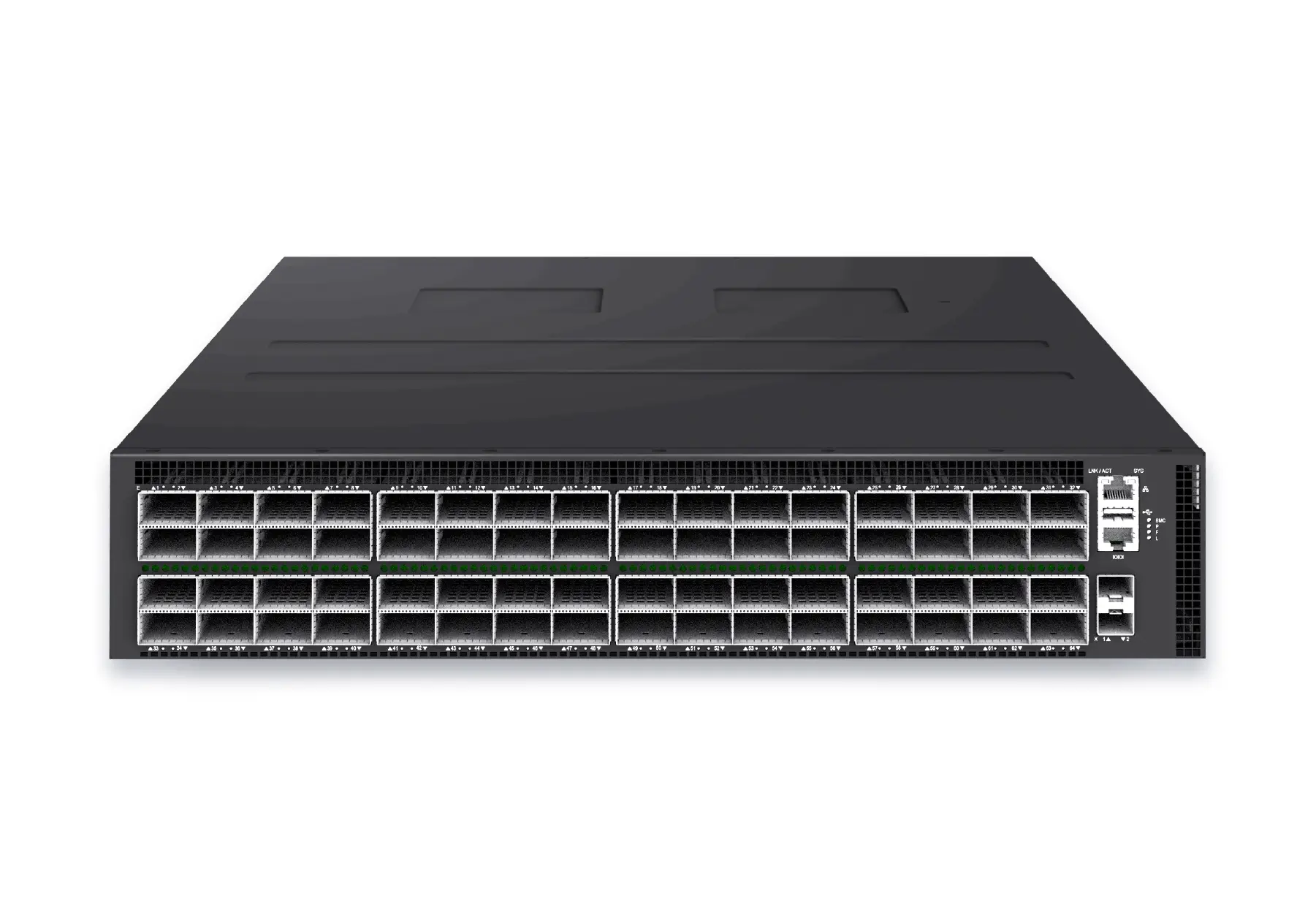 datacenter aiXS-DC-64X800-AI-G164-port 800G AI fabric switch for large-scale GPU clusters, HPC backbones, and ultra-high-throughput data center networks.View product
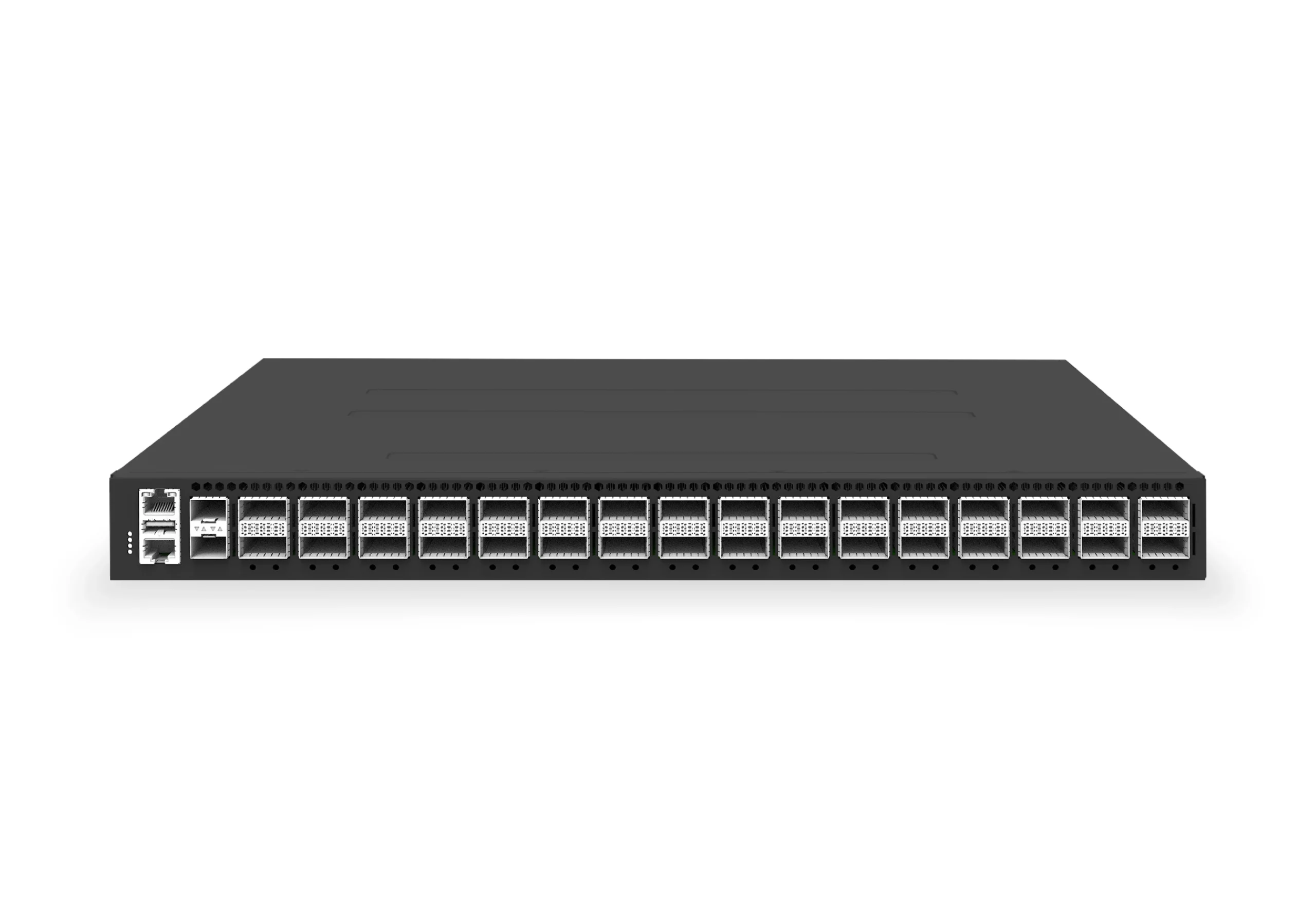 datacenter aiXS-DC-32X400-SP-G232-port 400G spine/core switch for high-capacity data center fabrics and AI-ready backbones.View product
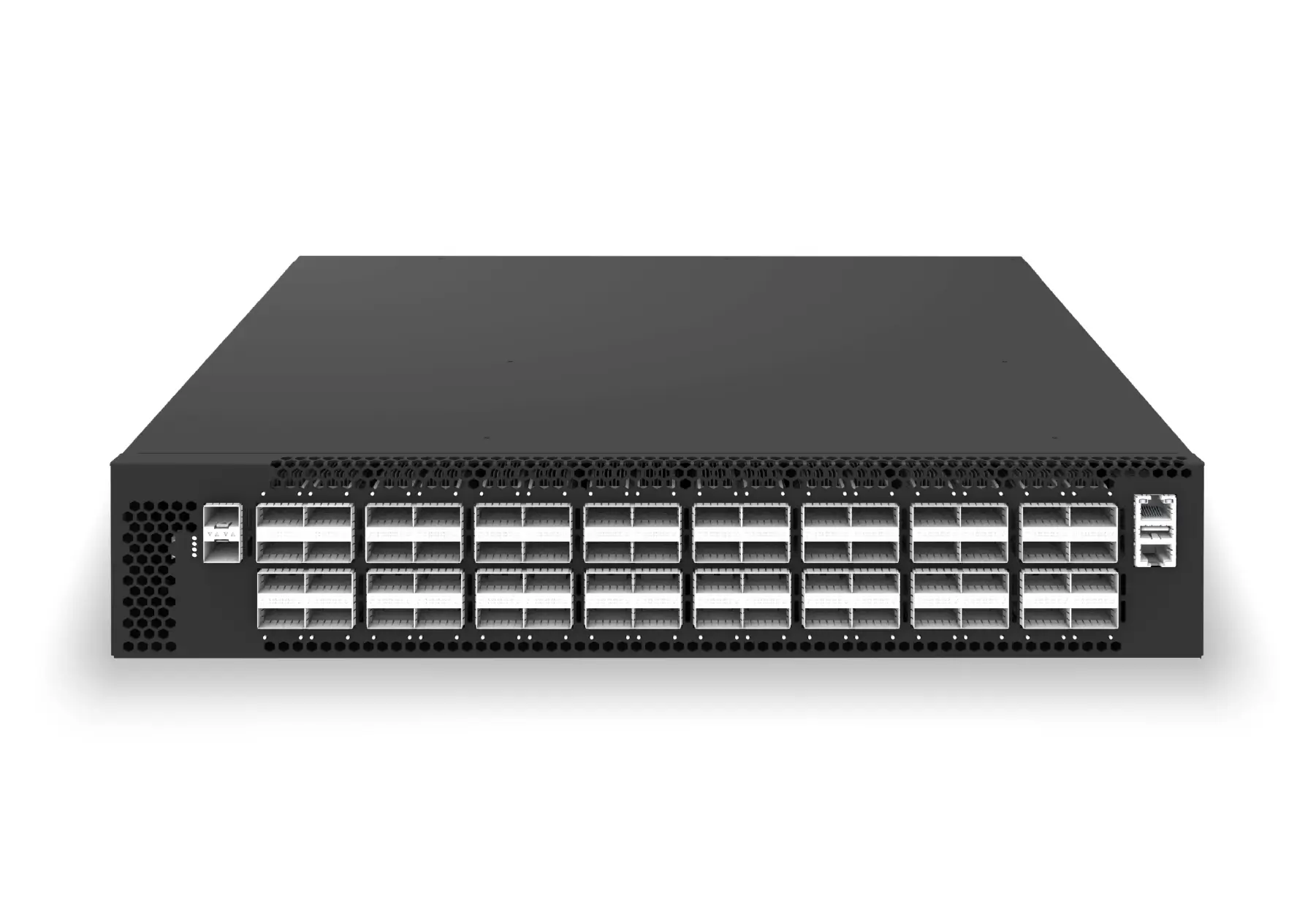 datacenter aiXS-DC-64X200-LS-G164-port 200G leaf/spine switch for high-bandwidth storage, compute, and scale-out data center fabrics.View product
Continue reading
Related articles
 Technical ArticleHow SONiC-Powered 400G and 800G Switches Change AI Data Center Fabric Design in AustraliaEngineering guide for 400G and 800G optics planning covering form factor, reach, telemetry, thermal limits, supply risk, and validation.Read article
 Technical ArticleRoCE v2 GPU Backend Fabrics at 400G and 800G: What Australian Data Center Operators Need to Know in 2026Engineering guide for AI fabric buyers covering RoCE, SONiC, telemetry, optics, support ownership, and deployment validation.Read article
 Technical ArticleWhat Australian Data Center Buyers Need to Know Before Choosing SONiC Switches for 400G and 800G UpgradesEngineering guide for 400G and 800G optics planning covering form factor, reach, telemetry, thermal limits, supply risk, and validation.Read article