In brief
Engineering guide for network telemetry and automation covering gNMI, NETCONF/YANG, observability, rollback, and operating evidence.
Key takeaways
- SONiC - Software for Open Networking in the Cloud - has reached a maturity point where it is no longer just a hyperscaler project.
- For Australian enterprise and service provider teams, this production-hardened pedigree is both encouraging and misleading.
- This brief does not serve as a press release. It outlines the testing categories that enterprise and campus network teams should work through before declaring a SONiC deployment production-ready.
Why SONiC Pre-Production Validation Matters More Than Ever
SONiC - Software for Open Networking in the Cloud - has reached a maturity point where it is no longer just a hyperscaler project. According to the SONiC Foundation, hosted under the Linux Foundation, SONiC is an open-source network operating system based on Linux that runs on switches from multiple vendors and ASICs. It offers a full suite of network functionality including BGP and RDMA, and has been production-hardened in the data centers of some of the largest cloud service providers.
For Australian enterprise and service provider teams, this production-hardened pedigree is both encouraging and misleading. Hyperscalers validate SONiC at a scale and with a rigour that few mid-market or enterprise teams can replicate. Rolling SONiC into production without a structured validation plan introduces risk: silent failures in control plane convergence, firmware mismatches with switch ASICs, telemetry gaps, and rollback uncertainty.
This brief does not serve as a press release. It outlines the testing categories that enterprise and campus network teams should work through before declaring a SONiC deployment production-ready.
Source Context: What the SONiC Foundation and GitHub Tell Us
The SONiC Foundation describes SONiC as the first solution to break monolithic switch software into multiple containerized components, accelerating software evolution. It decouples hardware from software via the Switch Abstraction Interface (SAI), which accelerates hardware innovation across vendors. The SONiC GitHub repository reinforces these points: key features include multi-vendor support, a container-based Docker architecture, standard Linux interfaces and tools, and support for modern network programming paradigms.
The GitHub documentation also lists prerequisites that hint at the validation surface: compatible network switch hardware, basic understanding of Linux networking, and Docker knowledge. Installation methods include ONIE (Open Network Install Environment) for most deployments, Docker installation for development and testing, and virtual machines for learning. Configuration uses JSON-based files and supports both CLI and programmatic methods.
These characteristics - multi-vendor hardware, containerized services, JSON config, SAI abstraction - each create distinct validation requirements that a generic switch deployment checklist does not cover.
The NVIDIA Angle: Spectrum Switches and Pure SONiC
NVIDIA’s Ethernet switching portfolio positions Pure SONiC as a supported network operating system alongside Cumulus Linux for Spectrum-series switches (SN2000 through SN6000). NVIDIA also offers DSX Air, a digital twin platform that allows organizations to build full-stack simulations of their data center infrastructure before a single piece of hardware is unboxed. This includes design, testing, validation, and ongoing operation of network provisioning, automation, and security policies.
For Australian buyers evaluating multi-vendor SONiC fabrics, the existence of DSX Air as a pre-production simulation tool is relevant. It suggests that the industry is moving toward integrated simulation-to-production pipelines for open networking. However, not every hardware platform or SONiC distribution has equivalent digital twin support, which means enterprise teams still need a manual validation checklist.
Important: xSONiC does not resell or endorse NVIDIA products. The NVIDIA reference here serves as source-backed context for the broader SONiC ecosystem.
Validation Checklist: Seven Categories for SONiC Go-Live Readiness
Based on SONiC’s architecture and the production patterns described by the SONiC Foundation and community, the following seven validation categories represent a structured pre-production checklist. Each category should be tested, documented, and signed off before production cutover.
1. Hardware Compatibility and SAI Validation SONiC depends on the Switch Abstraction Interface to communicate with switch ASICs. Verify that your specific switch platform and ASIC vendor are listed on the SONiC supported devices and platforms page. Confirm the SAI version matches the SONiC image version. Run SAI compliance tests for your platform before proceeding.
2. Base Image and Installation Path Confirm the SONiC image builds cleanly for your platform. Validate the ONIE installation path on physical hardware. If using a VM for staging, confirm that VM-based testing accurately reflects physical switch behaviour for your use case.
3. Control Plane Convergence Test BGP session establishment, route advertisement, and convergence time under failover conditions. If using EVPN-VXLAN, validate VTEP discovery, MAC learning, and ARP suppression. For RoCE v2 fabrics, confirm DCBX negotiation, priority flow control (PFC), and ECN marking are functioning correctly. Run convergence tests under both planned and unplanned failover scenarios.
4. Data Plane Forwarding and Traffic Validation Use traffic generators (not just ping) to validate throughput, latency, jitter, and packet loss at line rate. Test microburst behaviour if running AI or HPC backend traffic. Confirm ACLs, QoS policies, and VLAN/VXLAN encapsulation are applied correctly in the forwarding path.
5. Management, Telemetry, and Automation Validate CLI access, JSON configuration push, and NETCONF/YANG-based management. Confirm gNMI telemetry streams are delivering interface counters, BGP state, and buffer statistics to your monitoring stack. Test configuration rollback using configDB snapshots. If using an AIDC-style controller or orchestration platform, validate end-to-end provisioning workflows.
6. High Availability and Failover Test link failure, switch failure, and control plane restart scenarios. Confirm that containerized services (bgp, syncd, swss, teamd) recover cleanly after failure. Validate warm reboot and fast reboot paths if your SONiC version supports them. For dual-switch or MC-LAG topologies, test split-brain and failback behaviour.
7. Security and Compliance Baseline Verify management plane access controls (SSH, SNMP, NETCONF). Confirm ACLs are correctly applied for east-west and north-south traffic. Validate syslog, audit logging, and firmware attestation. For Australian regulated environments, confirm alignment with the Australian Cyber Security Centre (ACSC) Essential Eight or relevant industry compliance frameworks.
This checklist is a starting framework. Each deployment will have additional requirements based on topology, scale, and workload.
Where xSONiC Fits: Hardware and Solution Context
xSONiC’s product families map directly to the validation categories above. Teams deploying SONiC on bare-metal switching hardware should validate against the SAI and platform compatibility requirements outlined in Category 1. Data center AI switch deployments - particularly spine-leaf fabrics for GPU backend or AI training clusters - require rigorous RoCE v2, DCBX, and fast convergence testing as described in Categories 3 and 4.
For campus and aggregation deployments using SONiC-based platforms, Categories 5 and 6 become critical: management plane automation via NETCONF/YANG and high availability under edge failure conditions determine whether a campus SONiC deployment is viable at scale.
Australian enterprise teams evaluating open networking can explore xSONiC’s bare-metal switch options, data center AI switches, and access-aggregate platforms alongside the relevant solution pillar guides for AI fabric, EVPN-VXLAN, NETCONF, and RoCE v2.
The Australian Market Angle: Why This Checklist Matters Locally
Australia’s enterprise networking market has historically been dominated by a small number of incumbent vendors. As open networking gains traction - driven by AI infrastructure buildouts, data sovereignty requirements, and cost optimisation pressure - Australian teams face a knowledge gap. SONiC is production-proven at hyperscaler scale, but the operational playbook for Australian mid-market and enterprise deployments is still forming.
Several factors make pre-production validation especially important in Australia:
- Geographic distance from major SONiC community hubs means slower access to vendor TAC and community support.
- Data sovereignty requirements under the Privacy Act 1988 and APRA CPS 234 for financial services mean that network telemetry, logging, and access control configurations need to be validated against local compliance frameworks.
- AI infrastructure investment in Australia is accelerating, with GPU cluster deployments requiring lossless, low-latency fabrics that depend on precise RoCE v2 and PFC configuration.
A structured validation checklist reduces the risk of production incidents and gives network operations teams confidence in their ability to troubleshoot and recover from failures in an open NOS environment.
What This Is Not: Editorial Boundaries
Any specific SONiC distribution (such as NVIDIA Pure SONiC, Broadcom SONiC, or a community build), hardware platform, or management tool mentioned should be independently evaluated by the deploying team.
Engineering Evidence Floor
For telemetry and automation topics, accept the design only when state, change, and incident evidence are connected. The evidence package should include gNMI or NETCONF/YANG support, telemetry cadence, collector location, alert thresholds, config source of truth, rollback, packet visibility, retention, and escalation ownership. A practical pilot should run 24 hours of streaming telemetry, include 3 automated changes, and prove that an incident bundle can be produced within 2 hours.
| Evidence area | What to validate | Acceptance gate | Rework trigger |
|---|---|---|---|
| State export | gNMI/OpenConfig, NETCONF/YANG, counters, and optics data | 24 hours telemetry stream retained | Dashboards lose data during faults |
| Change control | Source of truth, diff, validation, and rollback | 3 automated changes pass readback | Automation pushes config without proof |
| Incident view | Alerts, logs, packet feeds, and queue/drop counters | Root cause path identified within 15 minutes | Graphs show symptoms but not cause |
| Security | Access control, retention, audit trail, and sovereignty | 30 days evidence policy documented | Telemetry path violates data handling rules |
| Support | Escalation owner, evidence bundle, patching, and RMA | P1 package ready within 2 hours | Vendor handoff lacks data |
Engineering FAQ
What should be tested before moving campus switching to SONiC or open networking? Test PoE behaviour, NAC integration, VLAN and policy design, STP or MC-LAG interaction, multicast, monitoring, upgrade rollback, and help-desk workflows. Campus readiness is an operations test, not only a forwarding test.
Where do campus refresh projects usually carry hidden risk? The risk often sits in closets: power budget, old cabling, undocumented uplinks, mixed endpoint types, voice devices, cameras, badge systems, and change windows. Those details should be inventoried before selecting switch models.
How should Australian campus teams structure a pilot? Choose one representative site or building, document endpoint classes, run PoE and failover tests, verify monitoring, train operations staff, and define rollback steps before expanding to the broader estate.
Related xSONiC Resources
Sources Reviewed
- IEEE 802.1Q Bridges and Bridged Networks
- IEEE 802.1AX Link Aggregation
- Ethernet Network Adapters - ConnectX NICs | NVIDIA
- NVIDIA BlueField Data Processing Unit
- NVIDIA Spectrum-X Ethernet Platform
- OpenConfig gNMI Specification
- OpenConfig
- RFC 7950 - The YANG 1.1 Data Modeling Language
- RFC 6241 - Network Configuration Protocol (NETCONF)
- SONiC Project Documentation
- Broadcom Ethernet Switching
- Marvell Switching
- NVIDIA Ethernet Switching
- Open Compute Networking
- SONiC GitHub
- SONiC Foundation
Product fit
Products referenced for evaluation
These products are referenced for evaluation context in the article. Confirm workload, port, optics, software, interoperability, and support requirements against the exact deployment before procurement.
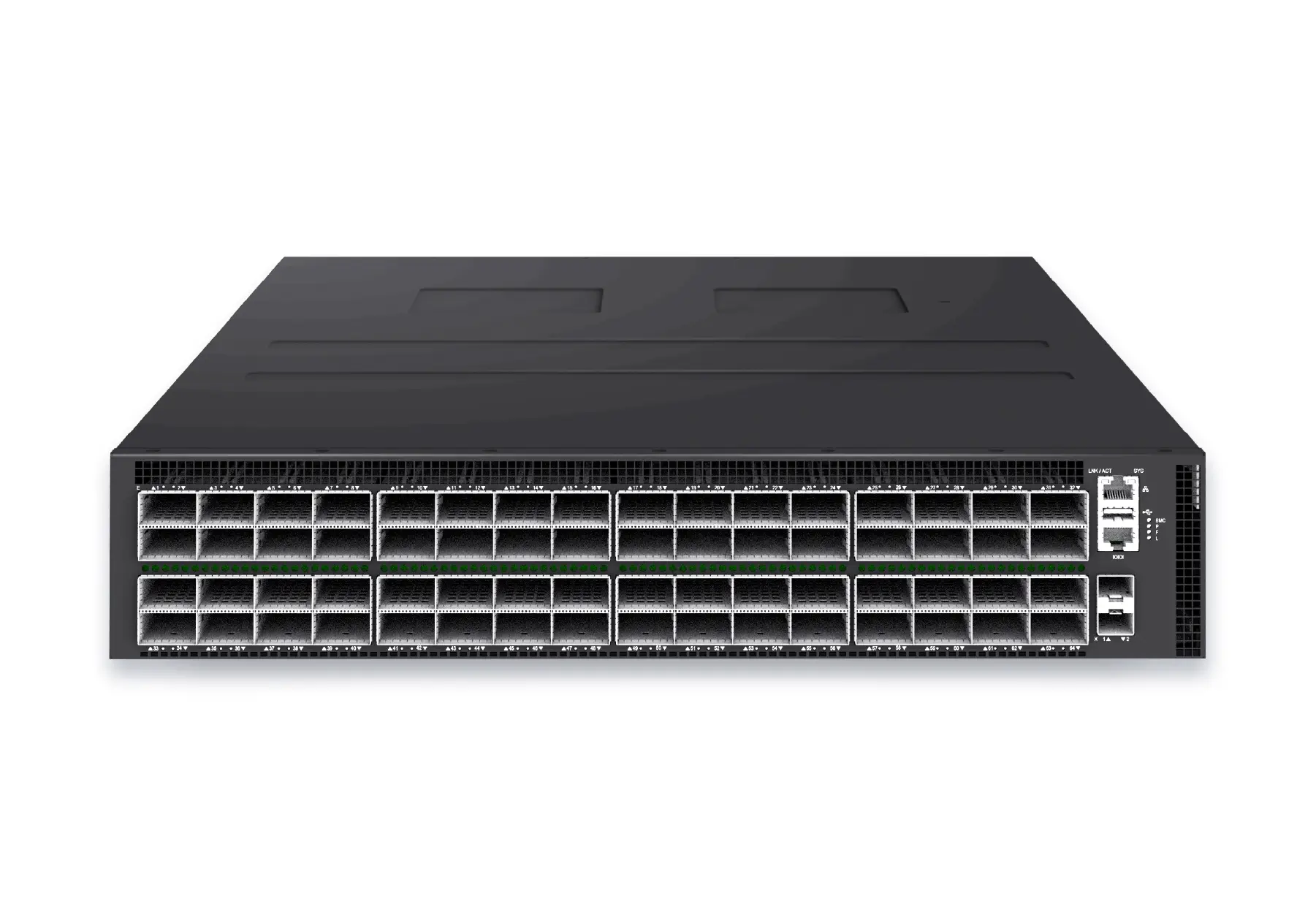 datacenter aiXS-DC-64X800-AI-G164-port 800G AI fabric switch for large-scale GPU clusters, HPC backbones, and ultra-high-throughput data center networks.View product
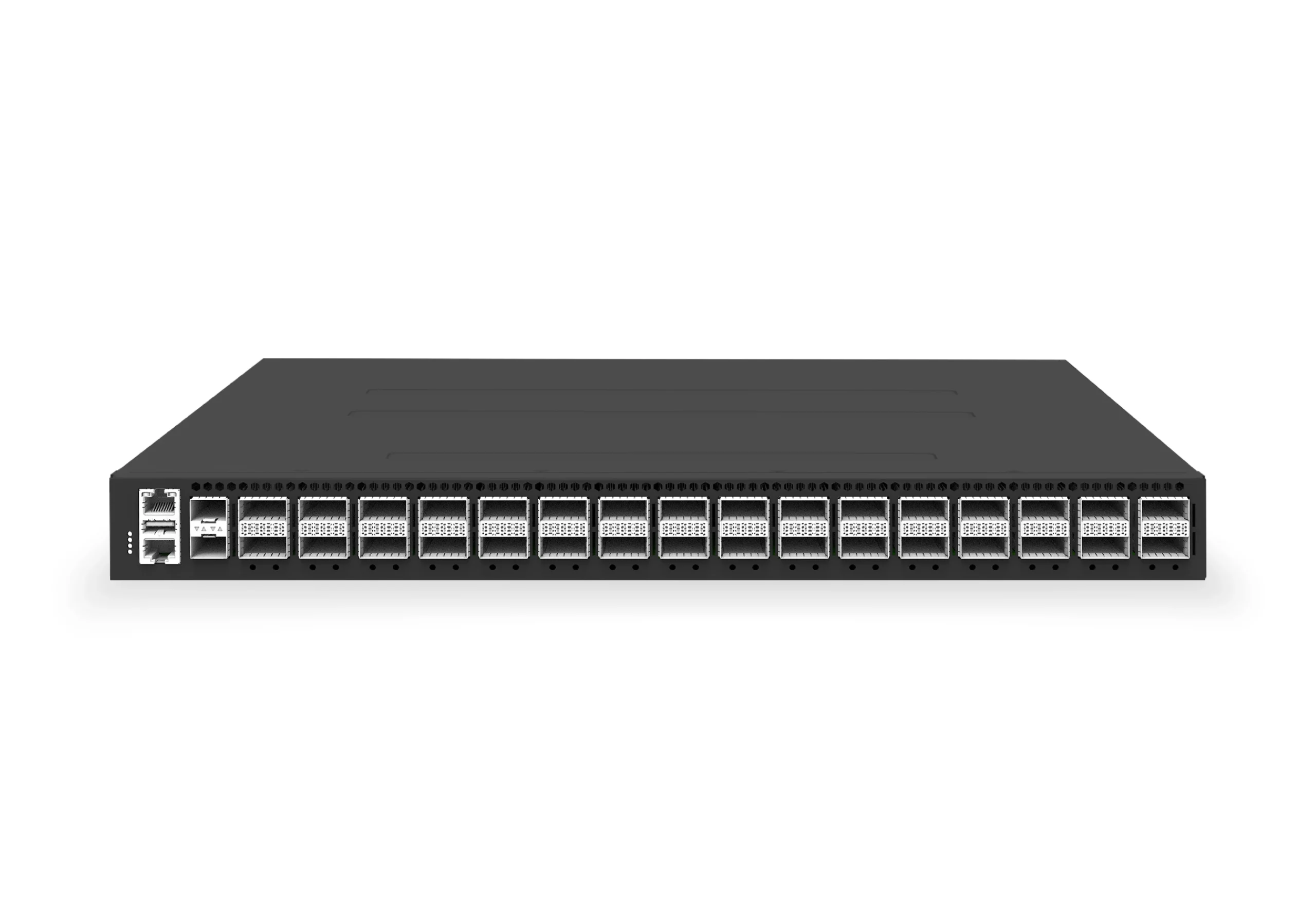 datacenter aiXS-DC-32X400-SP-G232-port 400G spine/core switch for high-capacity data center fabrics and AI-ready backbones.View product
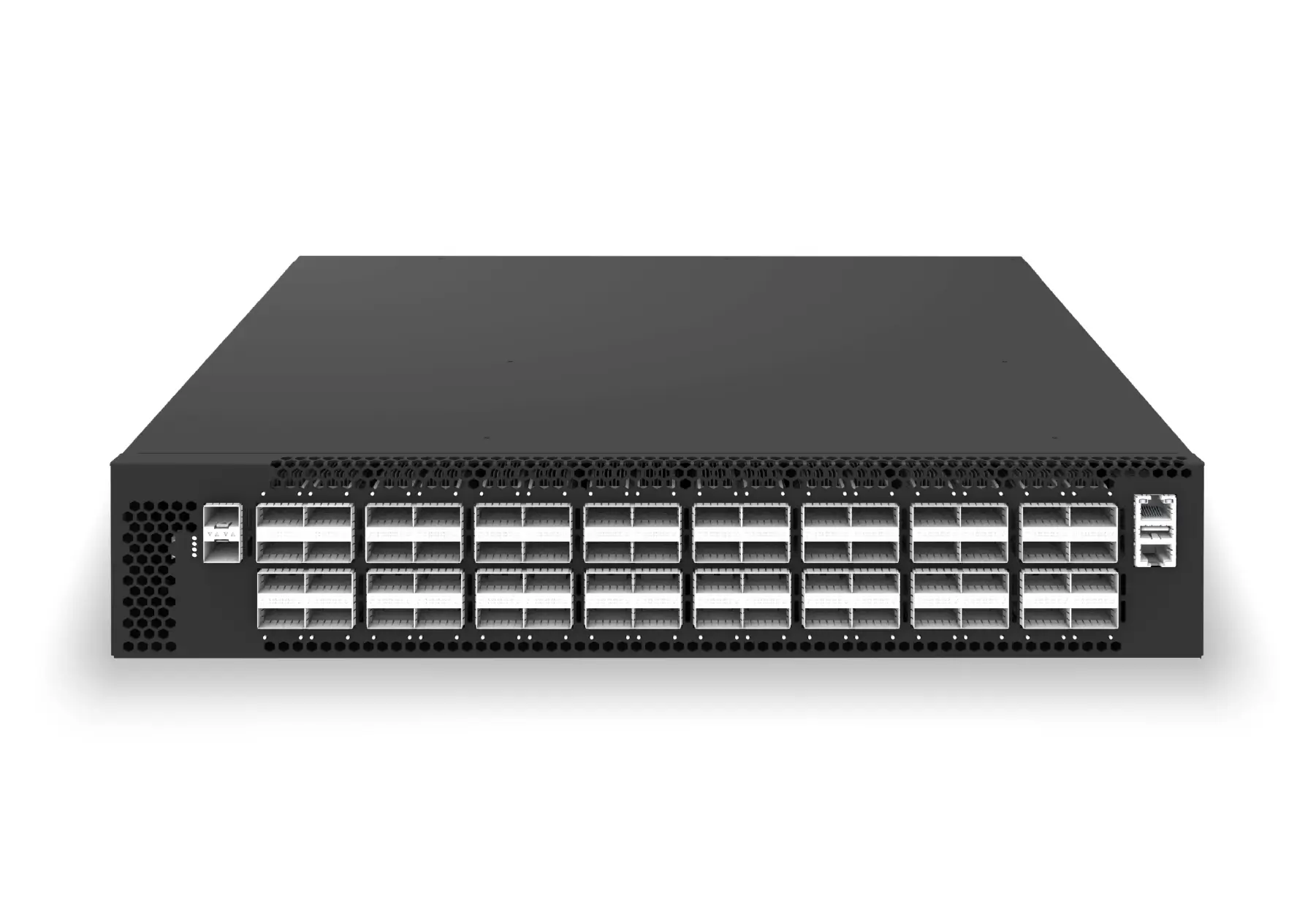 datacenter aiXS-DC-64X200-LS-G164-port 200G leaf/spine switch for high-bandwidth storage, compute, and scale-out data center fabrics.View product
Continue reading
Related articles
 Technical ArticleWhat Enterprise Buyers Actually Get From Open Networking Support: A SONiC Reality CheckA SONiC support reality check for Australian enterprise buyers covering community, commercial distribution, hardware, integration, SLA, and escalation.Read article
 Technical ArticleWarm Reboot and Fast Reboot in SONiC: How to Validate High Availability Without a Full OutageEngineering guide to validating SONiC warm reboot and fast reboot, covering ASIC support, control-plane recovery, traffic loss, telemetry, and rollback.Read article
 Technical ArticleSONiC Security Hardening: A Practical Guide for Data Center Network TeamsA practical SONiC security hardening guide for data center teams covering management access, patching, logging, RBAC, image provenance, telemetry, and audit evidence.Read article