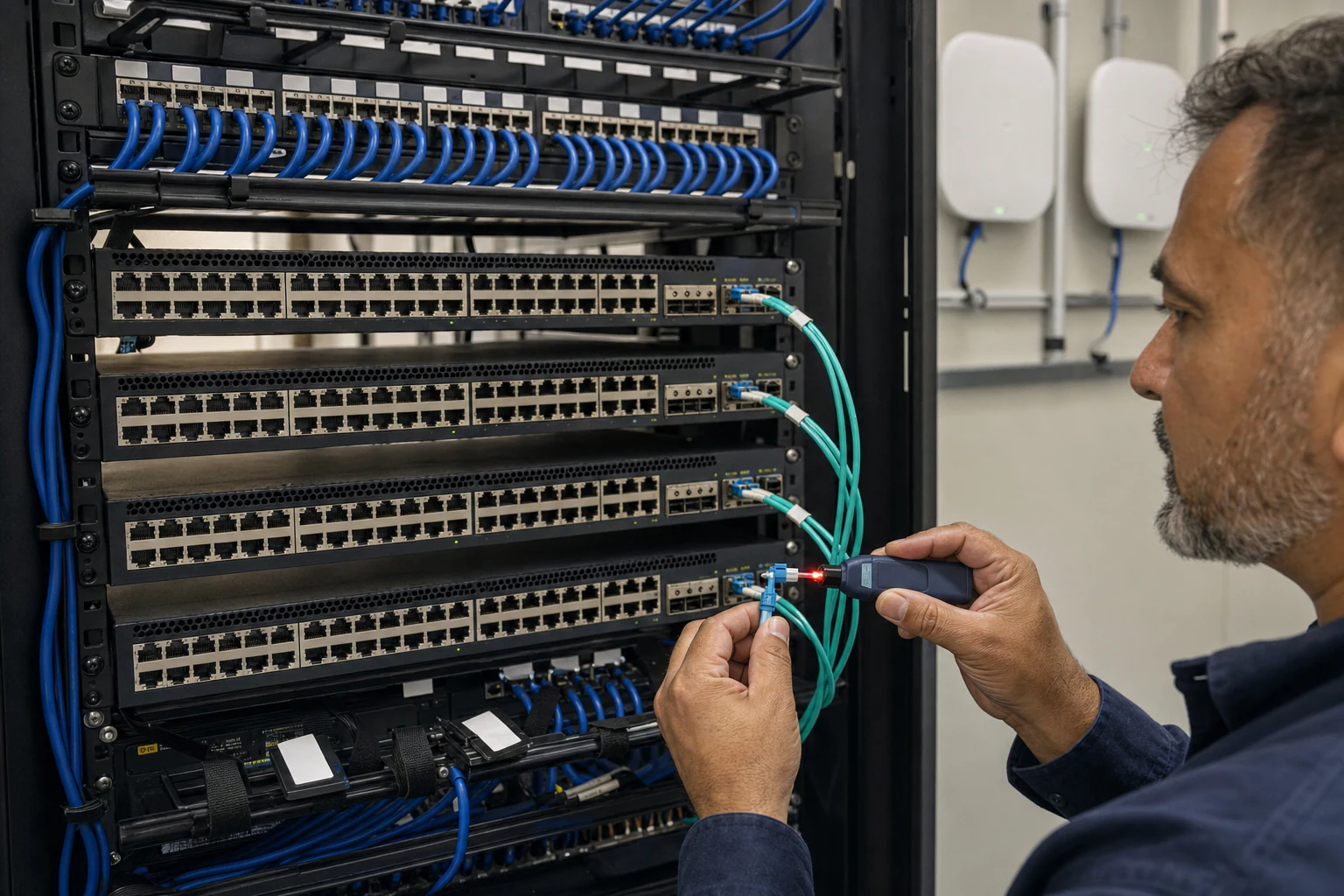
In brief
An engineering guide to virtual chassis without vendor lock-in, covering SONiC campus architecture, MC-LAG, stacking tradeoffs, PoE, 802.1X, and pilot validation.
Key takeaways
- Every three to five years, Australian enterprises face the same uncomfortable question: should we refresh our campus switches with the same vendor, or rip out the entire stack?
- The question is painful because virtual chassis and stack configurations make it nearly impossible to mix vendors at the access and aggregation layers.
- For Australian organisations managing distributed campuses across Sydney, Melbourne, Brisbane, Perth, and regional sites, the lock-in compounds with every deployment.
The Vendor Lock-In Problem Hiding in Your Campus Closets
Every three to five years, Australian enterprises face the same uncomfortable question: should we refresh our campus switches with the same vendor, or rip out the entire stack?
The question is painful because virtual chassis and stack configurations make it nearly impossible to mix vendors at the access and aggregation layers. Cisco StackWise, Aruba VSX, Juniper Virtual Chassis, and similar proprietary clustering technologies bind your switching fabric to a single vendor’s silicon, firmware, and licensing model.
This is not a technical limitation. It is a business model.
For Australian organisations managing distributed campuses across Sydney, Melbourne, Brisbane, Perth, and regional sites, the lock-in compounds with every deployment. A single campus refresh decision echoes through five years of opex, support contracts, and upgrade cycles.
What SONiC Architecture Actually Enables
Software for Open Networking in the Cloud (SONiC) is an open source network operating system built on Linux that runs on switches from multiple vendors and ASICs. The SONiC Foundation, a Linux Foundation project, describes it as offering a full suite of network functionality that has been production-hardened in large-scale cloud environments.
The architectural key is containerisation. SONiC breaks monolithic switch software into multiple Docker containers, each handling a specific network function. This design provides fault isolation, simplified upgrades, and the ability to modify one component without affecting others.
For campus virtual chassis, this matters because:
- Multi-vendor hardware support: SONiC runs on switches from various vendors through the Switch Abstraction Interface (SAI), which decouples the NOS from the underlying silicon.
- Standard Linux tooling: Network teams can use familiar Linux interfaces and tools rather than learning proprietary CLI syntax for each vendor.
- Modular scaling: Adding capacity to a campus cluster could theoretically mean adding any SAI-compatible switch, not just matching model numbers from the same vendor.
NVIDIA’s Spectrum Ethernet switch portfolio demonstrates this flexibility in practice. The company supports both its own Cumulus Linux and community-developed SONiC as NOS options on the same hardware, giving customers choice at the software layer while maintaining hardware compatibility.
The Gap Between Data Center Reality and Campus Promise
Here is where editorial honesty matters more than marketing optimism.
SONiC’s production deployments are overwhelmingly in hyperscale data centres. The architecture was designed for cloud-scale leaf-spine fabrics running BGP, RDMA, and high-speed Ethernet. The campus use case is architecturally adjacent but operationally different.
Campus virtual chassis requirements include:
| Requirement | Data Center SONiC | Campus Virtual Chassis Need |
|---|---|---|
| PoE delivery | Not standard | Essential for APs, phones, IoT |
| User authentication | RADIUS optional | 802.1X, MAB, captive portal mandatory |
| Access control | ACL-focused | Identity-based, dynamic policies |
| Stacking interconnect | Not applicable | High-speed backplane or ring topology |
| Management simplicity | CLI/API acceptable | GUI, zero-touch provisioning expected |
| Scale | Thousands of ports per fabric | Tens to hundreds per building |
The SONiC Foundation’s own documentation and community resources focus on cloud and data center networking. There is no prominent SONiC campus virtual chassis specification in the public roadmap materials reviewed.
This is not a disqualification. It is context. SONiC’s modular architecture means campus features can be added through containerised services without redesigning the core NOS. But Australian enterprises evaluating this path need to confirm which capabilities are available today versus roadmap promises.
Why Australian Enterprises Should Pay Attention Anyway
Three market dynamics make the SONiC campus question urgent for Australian buyers:
1. Refresh cycle alignment
Many Australian organisations completed major campus deployments in 2018-2020, meaning the 2024-2026 refresh window is now open. Every refresh is an opportunity to reconsider architecture assumptions.
2. Skills shortage pressure
Australia’s networking talent pool is constrained. SONiC’s Linux-based tooling aligns with DevOps and infrastructure-as-code skills that are more available than deep vendor-specific CLI expertise. For teams managing multiple campuses, standardised tooling reduces training overhead.
3. Supply chain diversification
Recent supply chain disruptions exposed the risk of single-vendor dependency. Open networking hardware can be sourced from multiple ODMs, potentially improving procurement flexibility for Australian campuses.
What to Evaluate Before Considering SONiC for Campus
For Australian enterprise network architects, the evaluation framework should include:
- PoE capability: Confirm the xSONiC access-aggregate switches support the PoE budget your APs, cameras, and endpoints require.
- Virtual chassis or clustering: Verify whether xSONiC campus switches support stacking, MC-LAG, or virtual chassis modes natively on SONiC.
- 802.1X and identity services: Test authentication, dynamic VLAN assignment, and posture assessment in a lab environment.
- Management plane: Evaluate whether the available management tools meet your operational requirements for multi-site campus management.
- Local support: Confirm Australian-based technical support and professional services availability.
- Migration path: If moving from Cisco, Aruba, or Juniper, map the configuration translation from proprietary syntax to SONiC equivalents.
Virtual Chassis Pilot Matrix
| Pilot Area | Evidence to Capture | Acceptance Target | Rework Trigger |
|---|---|---|---|
| Stack or MC-LAG model | Peer links, keepalive, control-plane ownership, failover logs | One switch failure does not interrupt access-layer service beyond the accepted window | Split-brain, MAC instability, or manual recovery |
| PoE and endpoint recovery | APs, phones, cameras, badge readers, power class, reboot behaviour | Endpoints recover after 3 switch reloads with documented PoE state | Powered devices require manual intervention after recovery |
| Identity and segmentation | 802.1X, MAB, VLAN assignment, guest policy, voice VLAN | Authentication and policy remain stable before and after failover | Identity policy works only in a vendor lab profile |
| Operations and telemetry | Config backup, logs, SNMP/gNMI, alert mapping, rollback plan | Help desk can identify port, user, endpoint class, and fault path | Campus team cannot troubleshoot without vendor-only tools |
| Migration cost | Existing stack config, optics, cabling, training, support, 36-month TCO | Open design shows a clear cost or control advantage over incumbent stack | Vendor lock-in is reduced on paper but operations become riskier |
The Competitive Angle for Incumbent Vendors
Proprietary virtual chassis technologies are not inherently inferior. Cisco StackWise is mature and well-understood. Aruba VSX offers compelling redundancy. Juniper’s Virtual Chassis has strong multi-chassis management.
But each comes with trade-offs that open networking challenges:
- Cisco: Requires matching switch models and firmware versions within a stack. Upgrades are all-or-nothing.
- Aruba: VSX configuration complexity increases with scale. Licensing costs accumulate across the campus.
- Juniper: Virtual Chassis is tightly coupled to Juniper silicon and EX/QFX platforms.
An open networking alternative does not need to be better at everything. It needs to be good enough at campus functions while offering genuine hardware and software choice.
What This Means for xSONiC’s Campus Strategy
For xSONiC, the campus virtual chassis question is not just a feature checkbox. It is a strategic positioning opportunity.
If xSONiC can deliver enterprise campus switches with:
- Reliable PoE for Australian commercial buildings
- Stack or virtual chassis configuration that simplifies multi-switch management
- 802.1X authentication and dynamic policy enforcement
- Australian channel and support presence
Then the brand can credibly challenge the vendor lock-in narrative that incumbent vendors depend on for campus refresh revenue.
The xSONiC Virtual Chassis Guide and Campus Refresh solutions provide the educational content foundation. The product execution and Australian market presence will determine whether the opportunity converts to deployments.
Next Steps for Australian Network Architects
- Request xSONiC campus switch specifications: Confirm PoE budgets, stacking capabilities, and SONiC feature parity for campus use cases.
- Lab a pilot deployment: Test virtual chassis configuration with representative campus workloads before committing to a refresh.
- Evaluate migration tooling: If moving from an incumbent, assess configuration translation and operational workflow changes.
- Assess total cost of ownership: Compare proprietary licensing, support, and upgrade costs against open networking opex over a five-year horizon.
Contact xSONiC to discuss campus refresh requirements for your Australian sites.
Engineering Evidence Floor
For campus and access switching topics, acceptance should be based on endpoint behaviour under real operating constraints. The evidence package should include endpoint classes, PoE budget, NAC/802.1X, LLDP-MED, voice VLANs, multicast, STP or MC-LAG behaviour, uplink capacity, monitoring, rollback, and help-desk workflow. A representative pilot should run at least 48 ports for 30 days, include one planned rollback inside 24 hours, and document support ownership before scale-out.
| Evidence area | What to validate | Acceptance gate | Rework trigger |
|---|---|---|---|
| Endpoint mix | APs, phones, cameras, laptops, IoT, and printers | 48 ports run mixed load for 24 hours | Only laptop traffic is tested |
| Power and uplinks | PoE budget, 1G/2.5G/5G/10G access, and 100G uplinks | No power or uplink bottleneck in pilot | Refresh ignores closet constraints |
| Resilience | STP, MC-LAG, link loss, member loss, and rollback | 3 failure cases captured | Campus works only in steady state |
| Operations | Monitoring, logs, backup, restore, and help-desk runbook | Incident evidence ready within 2 hours | Support depends on informal notes |
| Rollout | Site selection, training, spares, and change windows | 30 days pilot approved before estate rollout | Procurement scales before validation |
Engineering FAQ
What should be tested before moving campus switching to SONiC or open networking? Test PoE behaviour, NAC integration, VLAN and policy design, STP or MC-LAG interaction, multicast, monitoring, upgrade rollback, and help-desk workflows. Campus readiness is an operations test, not only a forwarding test.
Where do campus refresh projects usually carry hidden risk? The risk often sits in closets: power budget, old cabling, undocumented uplinks, mixed endpoint types, voice devices, cameras, badge systems, and change windows. Those details should be inventoried before selecting switch models.
How should Australian campus teams structure a pilot? Choose one representative site or building, document endpoint classes, run PoE and failover tests, verify monitoring, train operations staff, and define rollback steps before expanding to the broader estate.
Related xSONiC Resources
Sources Reviewed
- IEEE 802.1Q Bridges and Bridged Networks
- IEEE 802.1AX Link Aggregation
- Ethernet Network Adapters - ConnectX NICs | NVIDIA
- NVIDIA BlueField Data Processing Unit
- NVIDIA Spectrum-X Ethernet Platform
- IEEE 802.11be Wireless LAN Standard
- IEEE 802.3bt Power over Ethernet
- SONiC Project Documentation
- Broadcom Ethernet Switching
- Marvell Switching
- NVIDIA Ethernet Switching
- Open Compute Networking
- SONiC GitHub
- SONiC Foundation
Product fit
Products referenced for evaluation
These products are referenced for evaluation context in the article. Confirm workload, port, optics, software, interoperability, and support requirements against the exact deployment before procurement.
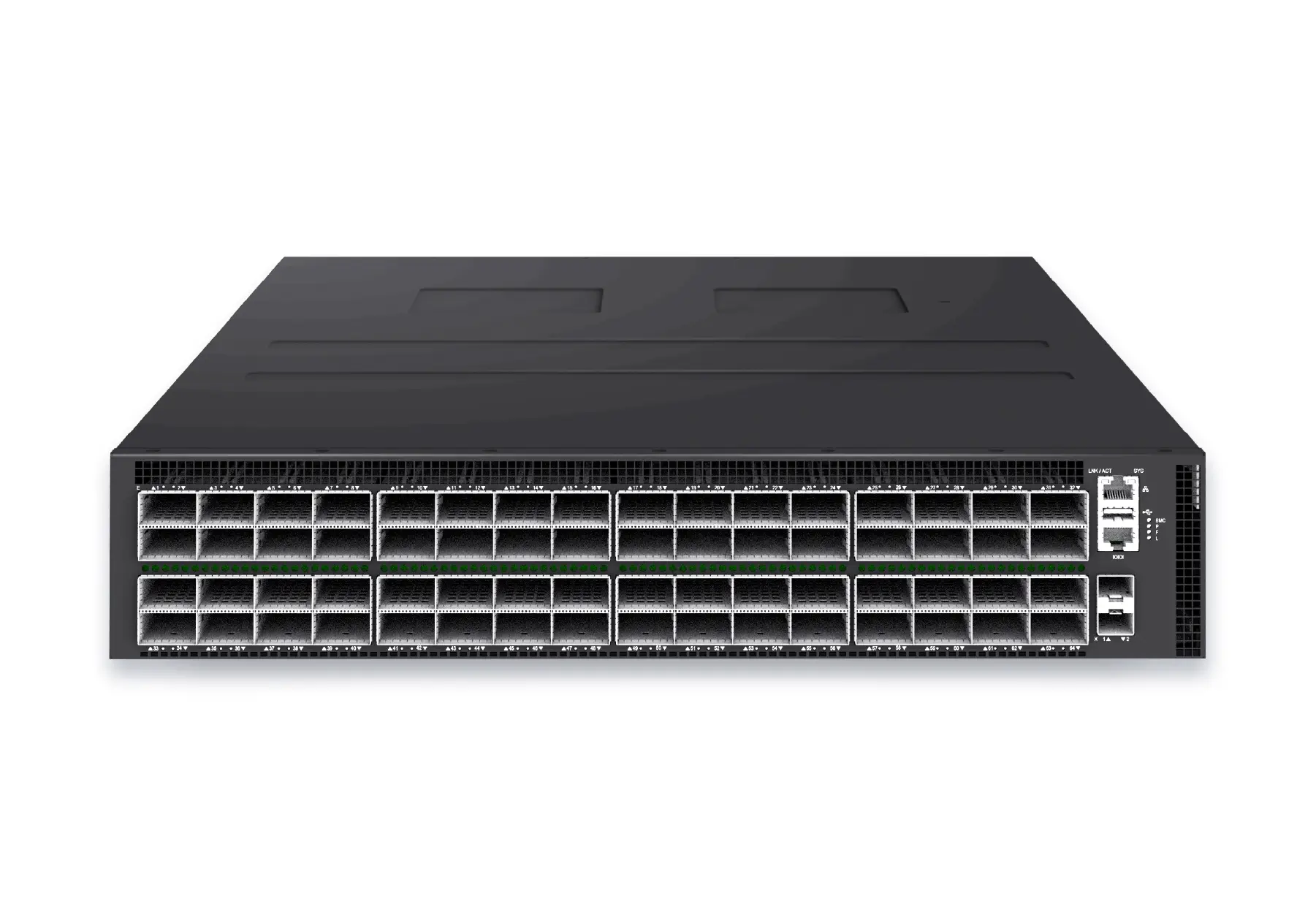 datacenter aiXS-DC-64X800-AI-G164-port 800G AI fabric switch for large-scale GPU clusters, HPC backbones, and ultra-high-throughput data center networks.View product
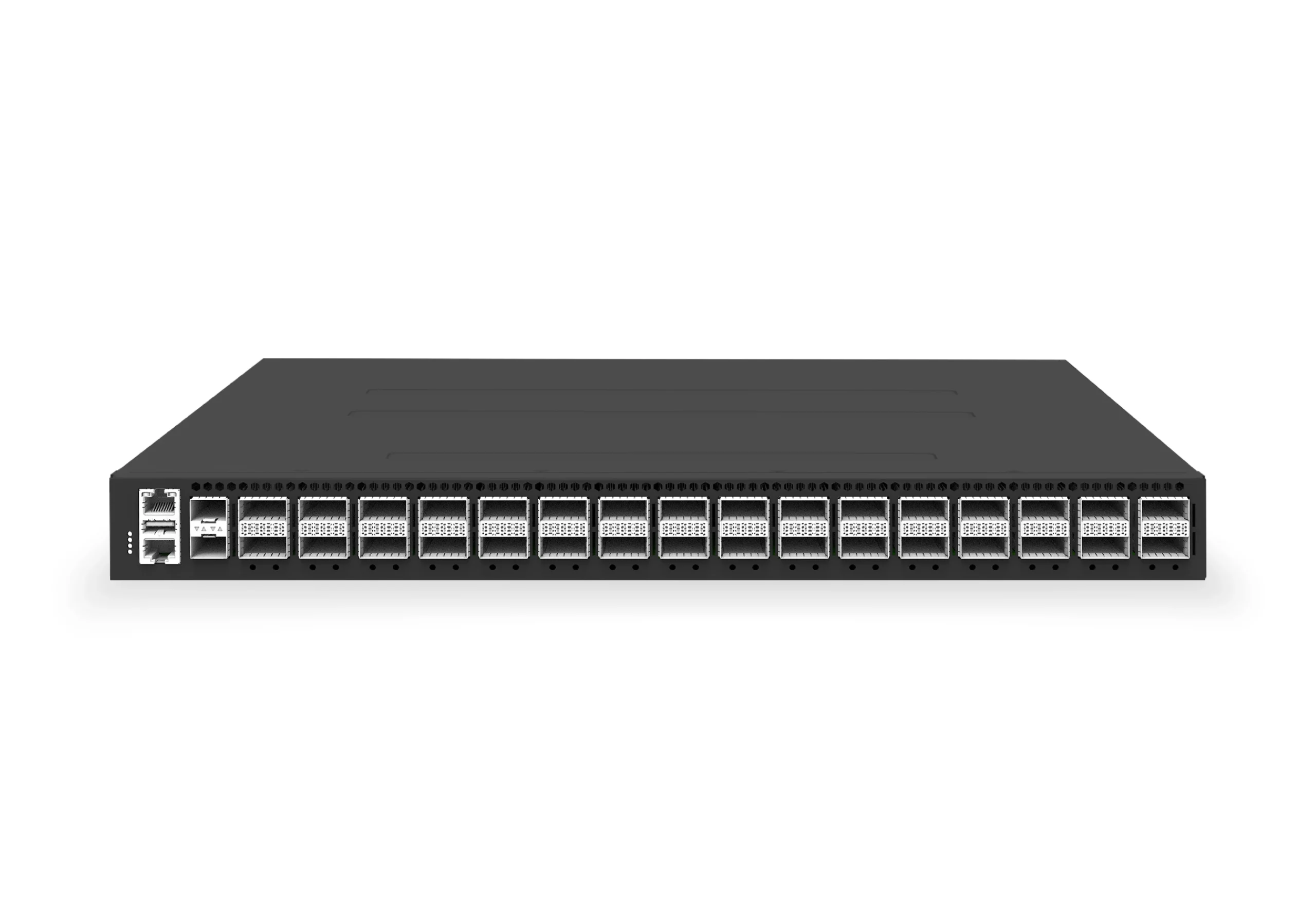 datacenter aiXS-DC-32X400-SP-G232-port 400G spine/core switch for high-capacity data center fabrics and AI-ready backbones.View product
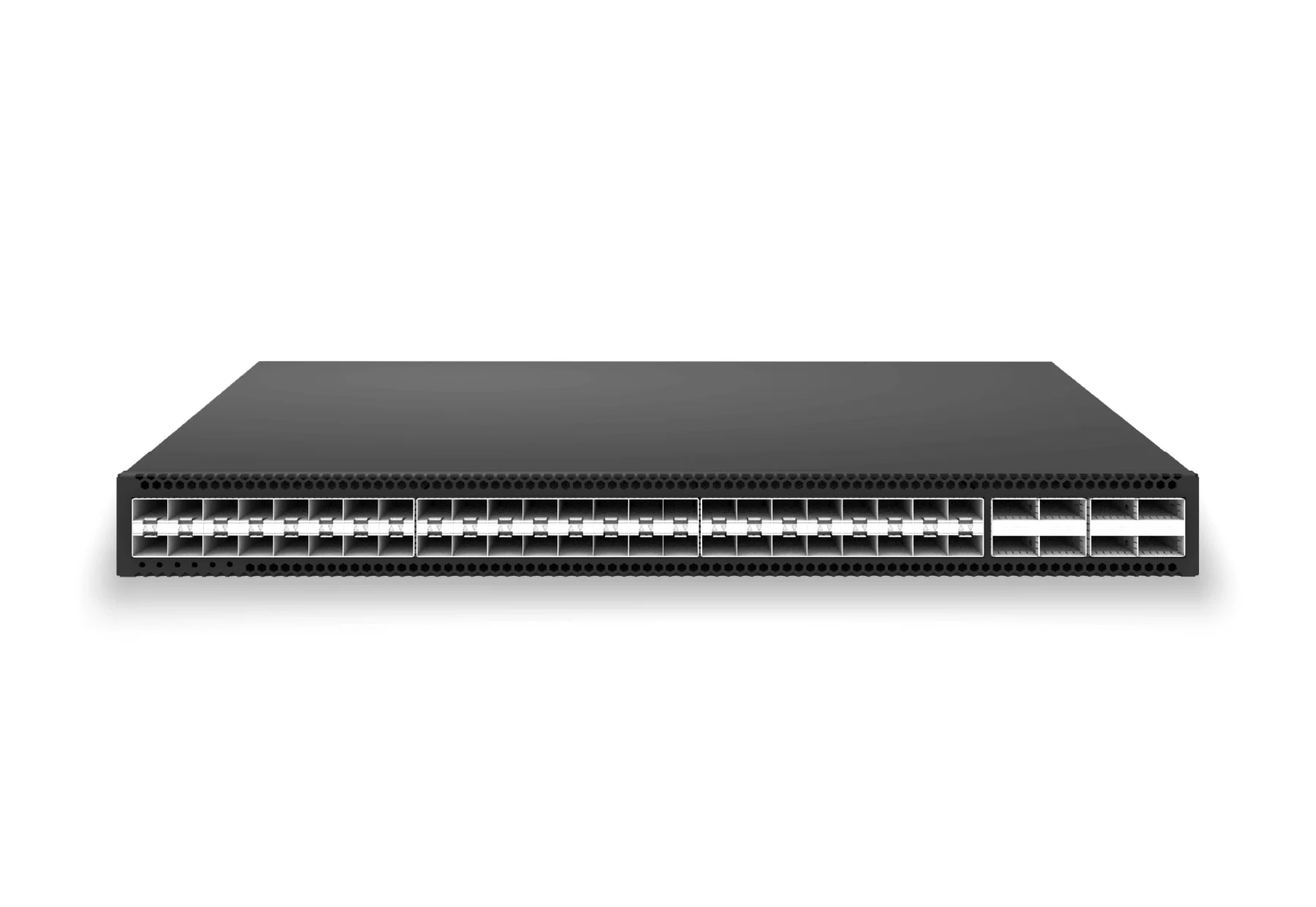 access aggregateXS-AA-48X25-8X100-AGG48x 25G SFP28 aggregation/core switch with 8x 100G QSFP28 for enterprise access and aggregation networks.View product
Continue reading
Related articles
 Technical ArticleWhy Enterprise SONiC Is Gaining Ground in Campus Access and Aggregation: An Australian PerspectiveEngineering guide for campus switching teams covering PoE, access design, MC-LAG/STP risk, telemetry, support, and pilot validation.Read article
 Technical ArticleCampus Access and Aggregation Refresh with Enterprise SONiCEngineering guide for campus switching teams covering PoE, access design, MC-LAG/STP risk, telemetry, support, and pilot validation.Read article
 Technical ArticleEnterprise Campus PoE Refresh with SONiC Open NetworkingEngineering guide for campus switching teams covering PoE, access design, MC-LAG/STP risk, telemetry, support, and pilot validation.Read article