In brief
Engineering guide to NVIDIA Spectrum switch portfolio evaluation for Australian networks, covering port speed, SONiC, RoCE, optics, telemetry, and validation.
Key takeaways
- The Spectrum switch portfolio is a line of Ethernet switches designed to serve a wide range of networking needs - from traditional data centre leaf-spine topologies to high-performance AI and HPC fabric deployments.
- At its core, the portfolio is built on a silicon family that supports standards-based Ethernet with features such as BGP routing and RDMA over Converged Ethernet (RoCE).
- The current Spectrum portfolio spans five hardware generations, each serving distinct deployment scenarios:
What Is the Spectrum Switch Portfolio?
The Spectrum switch portfolio is a line of Ethernet switches designed to serve a wide range of networking needs - from traditional data centre leaf-spine topologies to high-performance AI and HPC fabric deployments. The portfolio spans multiple hardware generations, each optimised for different port speeds, densities, and workload profiles.
At its core, the portfolio is built on a silicon family that supports standards-based Ethernet with features such as BGP routing and RDMA over Converged Ethernet (RoCE). The switches can run multiple network operating systems, giving organisations flexibility in how they manage and automate their infrastructure.
Portfolio Generations at a Glance
The current Spectrum portfolio spans five hardware generations, each serving distinct deployment scenarios:
Spectrum-6 (SN6000 Series) - The newest generation featuring co-packaged silicon photonics optics. Supports up to 800 Gb/s per port with configurations reaching 409.6 Tb/s total throughput in a 5U form factor. Designed for large-scale AI factory deployments.
Spectrum-4 (SN5000 Series) - Purpose-built for AI workloads, connecting GPU compute at speeds up to 800 Gb/s. The SN5600 variant delivers 51.2 Tb/s throughput and 33.3 billion packets per second.
Spectrum-3 (SN4000 Series) - Cloud-scale networking supporting up to 400 Gb/s per port. The SN4700 delivers 12.8 Tb/s throughput in a 1U form factor.
Spectrum-2 (SN3000 Series) - Leaf and spine deployments with port speeds up to 200 Gb/s, designed for full-rack connectivity at any speed.
Spectrum (SN2000 Series) - Entry-level with up to 100 Gb/s ports, integrating into hyperconverged and software-defined storage environments.
Six Key Portfolio Features
The Spectrum portfolio is positioned around six defining characteristics:
-
Accelerated - Zero-touch accelerated RoCE for high-performance, lossless networking. This is particularly relevant for AI training clusters where RDMA traffic must be handled with minimal latency and no packet loss.
-
Optimised - Designed and tested as part of full-stack, end-to-end solutions. This means the switches are validated alongside GPU servers, DPUs, and networking software for coordinated deployment.
-
Open - Supports multiple network operating system choices, including Cumulus Linux and Pure SONiC. This open-NOS approach avoids vendor lock-in and allows teams to use familiar Linux-based tooling.
-
Simulated - Supports data centre digital twin simulation, enabling teams to design, test, and validate network configurations before physical hardware is deployed.
-
Reliable - Features for fairness, predictability, and actionable network visibility through integrated observability tools.
Scale and Capacity Highlights
Published specifications for the Spectrum portfolio include:
- Maximum port speed: 800 Gb/s
- Maximum flow counters: 512K entries
- Maximum ACLs: 512K entries
- NAT capacity: 100K+ entries
- Maximum IPv4 routes: 512K entries
These figures apply to the highest-specification models in the portfolio. Actual achievable scale will depend on the specific model, firmware version, and configuration.
The SONiC Open-Source NOS: What Australian Teams Should Know
A distinguishing feature of the Spectrum switch portfolio is its support for SONiC (Software for Open Networking in the Cloud) - an open-source network operating system based on Linux. Key characteristics include:
-
Multi-vendor and multi-ASIC support - SONiC runs on switches from multiple hardware vendors and across different ASIC families, reducing single-vendor dependency.
-
Container-based architecture - Each network function runs in its own Docker container, providing fault isolation, simplified debugging, and independent upgrade paths for individual components.
-
Production-hardened - SONiC has been deployed in the data centres of some of the world’s largest cloud service providers, handling production traffic at significant scale.
-
Full network functionality - Includes BGP routing, RDMA support, and standard Linux interfaces and tooling.
-
Active open-source community - The project is hosted under the SONiC Foundation (a Linux Foundation project) with contributions from major network chip vendors and an ecosystem of supporting organisations.
-
Licensing - SONiC is licensed under the Apache License 2.0.
For Australian organisations evaluating open networking, SONiC provides a path to decouple hardware procurement from software lifecycle management, potentially simplifying multi-site operations and reducing long-term operational costs.
Software Ecosystem Beyond the NOS
The Spectrum switch portfolio is supported by a broader software ecosystem:
-
Digital twin simulation - Enables full-stack simulation of data centre infrastructure before hardware deployment, covering design, testing, validation, automation, and security policy verification.
-
Network observability - Real-time visibility, troubleshooting, and lifecycle management for modern data centre fabrics.
-
Linux-based network OS (Cumulus) - An alternative to SONiC, offering a commercially supported Linux-based networking operating system with advanced features.
Relevance for Australian Data Centres
Australia’s growing demand for AI infrastructure, cloud services, and high-performance networking makes the Spectrum portfolio’s capabilities particularly relevant:
-
AI workload support - With purpose-built features for GPU-to-GPU communication (zero-touch RoCE) and high-bandwidth interconnects (up to 800 Gb/s), the portfolio is positioned for the AI training and inference clusters being deployed across Australian data centres.
-
Open networking flexibility - SONiC support aligns with the Australian market’s increasing interest in open, disaggregated networking to avoid vendor lock-in and reduce total cost of ownership.
-
Fabric scale - The range from 100 Gb/s (SN2000) to 800 Gb/s (SN6000) allows Australian organisations to right-size infrastructure for campus, enterprise, colocation, and hyperscale environments.
-
Silicon photonics - Co-packaged optics on Spectrum-6 may be relevant for high-density AI clusters where power efficiency and physical space are at a premium.
Considerations for Evaluation
When evaluating Spectrum switches for Australian deployments, teams may want to assess:
- NOS choice - Whether Cumulus Linux (commercially supported) or Pure SONiC (open-source community) better fits operational capabilities and support requirements.
- AI fabric requirements - Whether zero-touch RoCE and the associated congestion management features align with workload characteristics.
- Physical infrastructure - Co-packaged optics (Spectrum-6) vs. pluggable optics for different cabling strategies.
- Operational tooling - Compatibility with existing automation frameworks (Ansible, Terraform, etc.) and integration with monitoring stacks.
- Supply chain and support - Local Australian availability, warranty, and support options.
Spectrum portfolio acceptance matrix
Spectrum portfolio selection should be accepted by workload role, not by the newest generation name. The review should prove that the chosen switch, optics, NOS, telemetry, and support model fit the actual fabric.
| Portfolio decision area | Evidence to capture | Reject or rework if |
|---|---|---|
| Fabric role and speed | Leaf/spine role, port count, 100G/200G/400G/800G requirement, oversubscription ratio, and growth model | A higher-speed switch is chosen without proving server NIC speed, optics plan, or fabric utilisation |
| AI/RoCE readiness | RoCE design, PFC/ECN/DCBX policy, queue profile, congestion test, failure recovery, and telemetry counters | The design relies on “AI-ready” language without tested lossless or congestion behaviour |
| NOS and feature matrix | SONiC or Cumulus choice, image version, SAI/platform support, routing features, ACL scale, and automation interface | Published portfolio scale numbers are applied to a model or NOS combination that has not been validated |
| Optics and physical design | OSFP/QSFP-DD/QSFP28 choice, reach, airflow, thermal limits, cable route, and spare strategy | Port speed is approved before optics availability, thermal impact, or replacement lead time is known |
| Operations and support | Monitoring fields, config backup, upgrade/rollback, support owner, local spares, and caveat register | The switch can be installed but cannot be operated through upgrades, faults, and audit evidence |
Engineering FAQ
How should an Australian buyer choose between Spectrum generations? Start from fabric role, required port speed, switch radix, optics plan, workload type, NOS choice, and support model. The newest generation is not automatically the right generation if the rest of the rack cannot use the bandwidth.
Which evidence matters more than headline Tb/s numbers? Ask for the exact switch SKU, NOS image, optics matrix, route/ACL/counter scale, telemetry fields, and tested RoCE or routing behaviour. Portfolio-level numbers are useful only after they are mapped to the selected model.
When should SONiC be preferred over a commercial NOS on Spectrum? SONiC is attractive when open operations, automation control, and hardware-software separation are strategic goals. A commercial NOS may still fit better when the buyer needs a single-vendor support model and validated tooling from day one.
Related xSONiC Resources
Sources Reviewed
- NVIDIA Spectrum-X Ethernet Platform
- NVIDIA Ethernet Switching
- NVIDIA Ethernet Platform Products
- OpenConfig gNMI Specification
- OpenConfig
- SONiC Project Documentation
- Open Compute Networking
- SONiC GitHub
- SONiC Foundation
Product fit
Products referenced for evaluation
These products are referenced for evaluation context in the article. Confirm workload, port, optics, software, interoperability, and support requirements against the exact deployment before procurement.
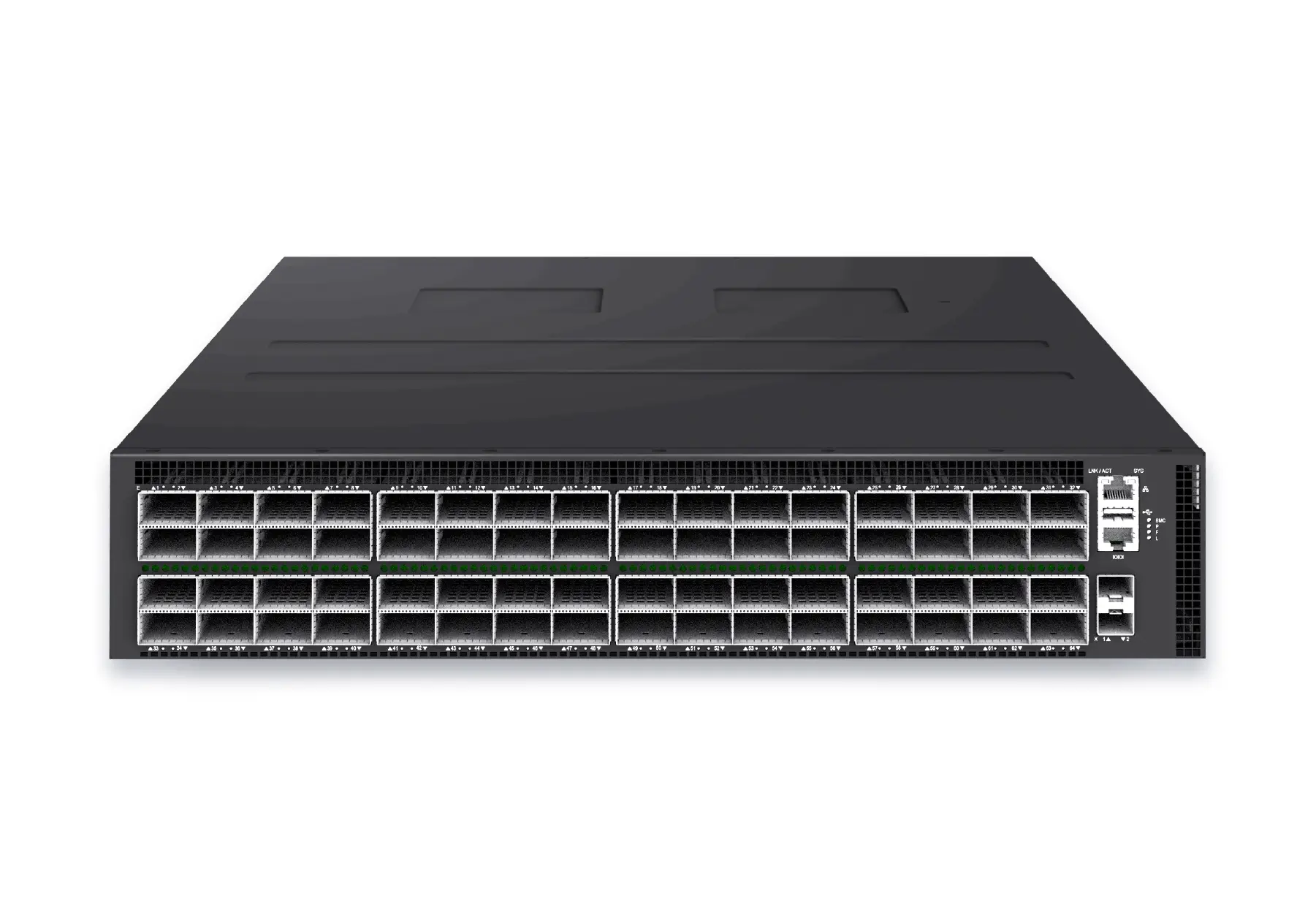 datacenter aiXS-DC-64X800-AI-G164-port 800G AI fabric switch for large-scale GPU clusters, HPC backbones, and ultra-high-throughput data center networks.View product
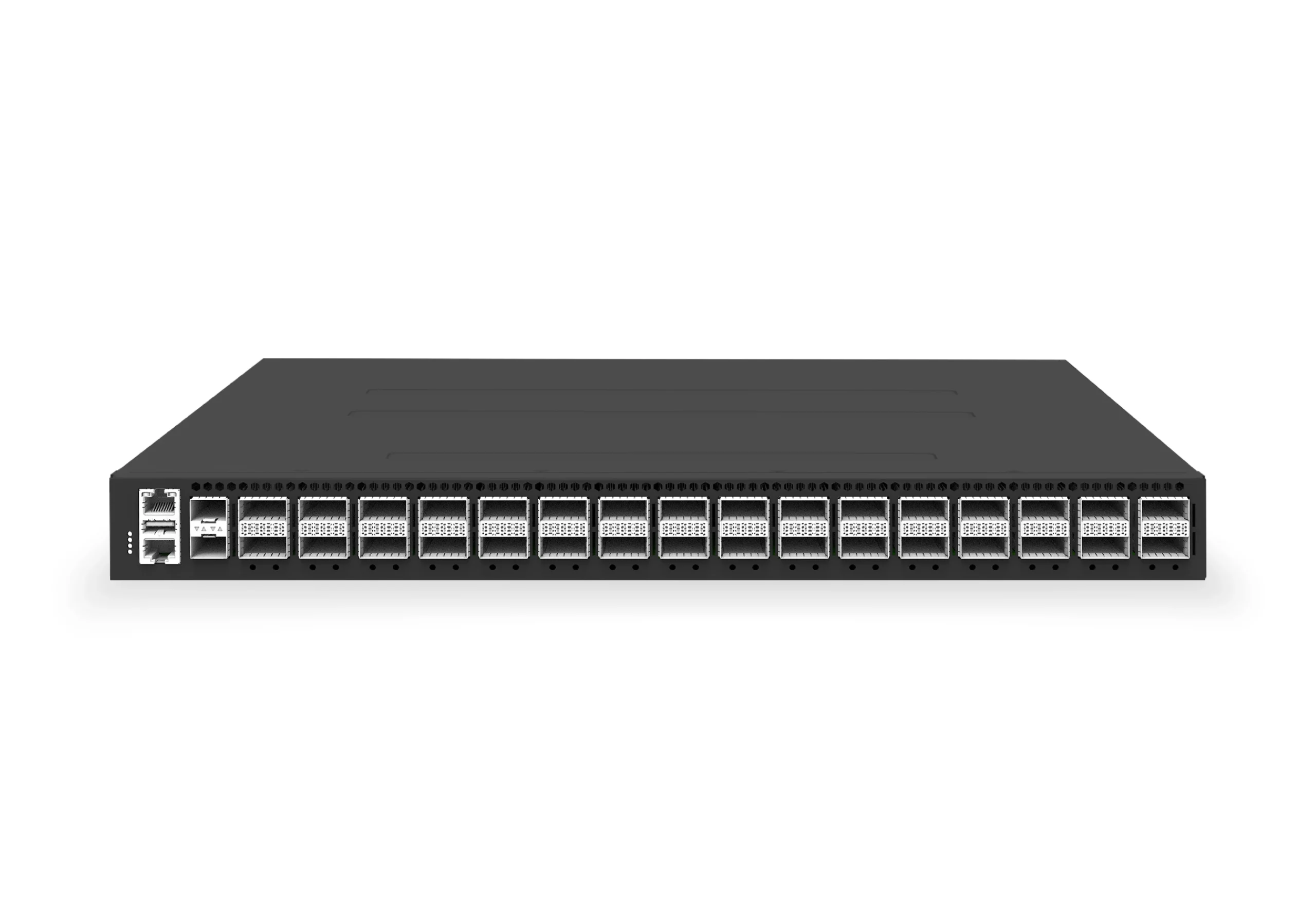 datacenter aiXS-DC-32X400-SP-G232-port 400G spine/core switch for high-capacity data center fabrics and AI-ready backbones.View product
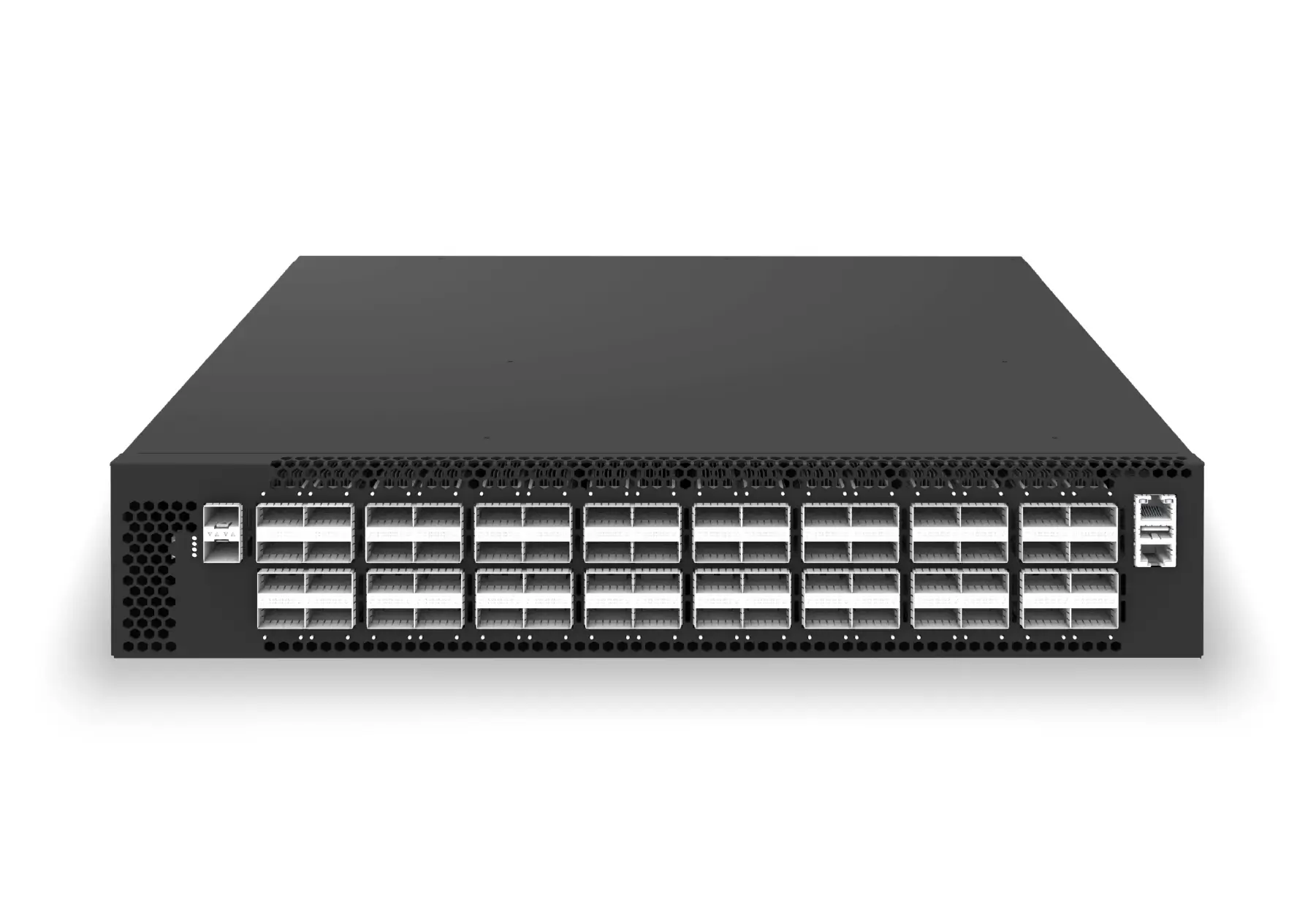 datacenter aiXS-DC-64X200-LS-G164-port 200G leaf/spine switch for high-bandwidth storage, compute, and scale-out data center fabrics.View product
Continue reading
Related articles
 Technical ArticleHow SONiC-Powered 400G and 800G Switches Change AI Data Center Fabric Design in AustraliaEngineering guide for 400G and 800G optics planning covering form factor, reach, telemetry, thermal limits, supply risk, and validation.Read article
 Technical ArticleRoCE v2 GPU Backend Fabrics at 400G and 800G: What Australian Data Center Operators Need to Know in 2026Engineering guide for AI fabric buyers covering RoCE, SONiC, telemetry, optics, support ownership, and deployment validation.Read article
 Technical ArticleWhat Australian Data Center Buyers Need to Know Before Choosing SONiC Switches for 400G and 800G UpgradesEngineering guide for 400G and 800G optics planning covering form factor, reach, telemetry, thermal limits, supply risk, and validation.Read article