In brief
Engineering guide to SONiC on NVIDIA Spectrum switches for Australian data centres, covering open NOS control, SAI, AI fabric readiness, support, and validation.
Key takeaways
- For years, enterprise networking was defined by proprietary lock-in: buy a switch, and you were committed to that vendor's operating system, management tools, and upgrade cycle.
- For Australian organisations evaluating next-generation switching infrastructure, SONiC represents a meaningful shift: the ability to choose best-of-breed hardware without being locked into a single software stack.
- SONiC is not a monolithic firmware image. Its architecture is modular by design: each network function (BGP, LLDP, DHCP relay, and so on) runs in its own Docker container on a Linux host.
The Rise of Open Network Operating Systems
For years, enterprise networking was defined by proprietary lock-in: buy a switch, and you were committed to that vendor’s operating system, management tools, and upgrade cycle. SONiC (Software for Open Networking in the Cloud) challenges that model. Developed under the Linux Foundation, SONiC is a free, open-source network operating system that runs on switches from multiple hardware vendors and across different ASICs. It offers a full suite of production-grade network functionality-including BGP and RDMA-capabilities that have been battle-tested in the data centres of some of the world’s largest cloud service providers.
For Australian organisations evaluating next-generation switching infrastructure, SONiC represents a meaningful shift: the ability to choose best-of-breed hardware without being locked into a single software stack.
What Is SONiC, Exactly?
SONiC is not a monolithic firmware image. Its architecture is modular by design: each network function (BGP, LLDP, DHCP relay, and so on) runs in its own Docker container on a Linux host. This containerised approach delivers several practical benefits:
- Fault isolation: A failure in one service doesn’t necessarily cascade across the switch.
- Simplified upgrades: Individual containers can be updated or rolled back independently.
- Easier debugging: Administrators can inspect and troubleshoot specific services in isolation.
- Scalability: The same architecture scales from leaf switches to spine fabrics.
SONiC uses standard Linux interfaces and tools, making it accessible to teams already familiar with Linux networking. Configuration is managed through JSON-based files, and the system supports both CLI and programmatic configuration methods-appealing to organisations pursuing network automation.
NVIDIA Spectrum: A Multi-Generation Ethernet Switch Portfolio
NVIDIA’s Spectrum family of Ethernet switches spans multiple generations, from 100G-class data centre switching through 400G and 800G platforms for AI-oriented fabrics. The useful engineering distinction is not only port speed. Buyers should identify the ASIC generation, switch SKU, airflow, optics form factor, NOS image, and validated feature matrix before assuming that a Spectrum platform is ready for the target fabric.
Key Spectrum Switch Portfolio Features
NVIDIA highlights scale features across the Spectrum portfolio, including large flow-counter, ACL, IPv4 route, and NAT table capacities on higher-end models. Buyers should treat these as model-specific design inputs rather than universal guarantees. A practical evaluation should request the exact table limits, feature interactions, and counter behaviour for the selected switch and NOS combination.
Why SONiC on Spectrum Matters for Australian Operators
The combination of SONiC and NVIDIA Spectrum hardware is particularly relevant for several categories of Australian organisations:
Cloud and Data Centre Providers: Australia’s data centre market continues to expand, driven by hyperscale cloud adoption, data sovereignty requirements, and growing AI workload demand. SONiC’s production-hardened pedigree-originally developed for hyperscale environments-aligns with the scale and reliability these operators require.
AI and HPC Workloads: As Australian universities, research institutions, and enterprises invest in GPU clusters for AI training and inference, the network becomes a critical bottleneck. Spectrum switches with RoCE support, combined with SONiC’s programmability, offer a path to lossless, high-throughput fabric without proprietary lock-in.
Enterprise IT Teams Pursuing Automation: SONiC’s Linux-based, containerised architecture and JSON configuration model make it a natural fit for infrastructure-as-code workflows. Teams already automating with Ansible, Terraform, or custom tooling can extend those practices to the network layer.
Multi-Vendor Environments: SONiC’s hardware abstraction (via SAI-Switch Abstraction Interface) means organisations can deploy consistent software across switches from different vendors, reducing operational complexity in mixed environments.
Ecosystem and Community Support
SONiC benefits from a broad and growing ecosystem. The SONiC Foundation, a Linux Foundation project, includes premier members and contributing organisations from across the networking industry-including major chip vendors. The project maintains active development on GitHub, with regular community meetings, a Slack workspace, mailing lists, and comprehensive documentation.
Key architectural contributions from the ecosystem include:
- SAI (Switch Abstraction Interface): A standardised API that decouples SONiC from specific ASIC silicon, enabling multi-vendor hardware support.
- Containerised service model: Breaks monolithic switch software into independently manageable components.
- Active community governance: With defined contributor guidelines, a technical charter, security process, and mentorship programme.
This ecosystem breadth matters for Australian adopters: it means long-term software viability is not dependent on any single vendor’s roadmap or financial health.
Getting Started: Considerations for Australian Deployments
Organisations evaluating SONiC on Spectrum switches in Australia should consider the following practical factors:
- Hardware compatibility: SONiC supports a wide range of switches, but not all SONiC features are available on all hardware. Verify that the specific Spectrum model and SONiC image combination supports your required feature set.
- Support and service: SONiC is open-source, but enterprise deployments typically require professional support. Identify whether your organisation will rely on community support, a vendor distribution of SONiC, or a managed service provider.
- Training and skills: SONiC uses Linux-native tools and JSON configuration. Teams without Linux networking experience may require upskilling.
- Local supply chain: Confirm Australian availability and lead times for specific Spectrum switch models through authorised channels.
- Integration with existing infrastructure: SONiC supports standard protocols (BGP, OSPF, VXLAN, EVPN, and others), but integration testing with your existing network fabric is essential.
Spectrum SONiC acceptance matrix
Treat “SONiC on Spectrum” as a tested switch image and fabric design, not as a generic compatibility statement. The exact SKU, Spectrum generation, optics, SONiC image, SAI version, and support boundary must be part of the acceptance record.
| Acceptance item | Evidence to capture | Reject or rework if |
|---|---|---|
| Platform and image fit | Switch SKU, ASIC generation, NOS image, SAI version, platform driver notes, and release caveats | The proposal says “Spectrum supports SONiC” but does not name the validated image and feature matrix |
| AI fabric behaviour | RoCE profile, PFC/ECN/DCBX settings, MTU, congestion test, failure test, and telemetry counters | 400G or 800G port speed is treated as proof without measuring loss, pause behaviour, or recovery |
| Optics and cabling | QSFP/QSFP-DD/OSFP choice, reach, DOM telemetry, compatibility matrix, thermal limits, and spare pool | The switch SKU is approved before optics availability and replacement lead time are confirmed in Australia |
| Operations and lifecycle | Upgrade plan, rollback image, config backup, log bundle, security patch process, and monitoring integration | The team can deploy a demo image but cannot run upgrades, incident response, or audit evidence in production |
| Support ownership | Hardware support, NOS support, ASIC/SAI defect path, optics support, and escalation hours | A production defect can fall between NVIDIA, SONiC community, distributor, and integrator ownership |
The practical test is whether the Spectrum platform behaves predictably when the fabric is stressed, upgraded, and partially failed. A buyer should capture at least 30 minutes of 100G/400G/800G traffic counters, one switch reboot, one link failure, one optics replacement, and one rollback inside a 24 hours lab window. That evidence tells engineering and procurement more than a generic “SONiC supported” claim because it exposes the exact image, driver, support, and optics assumptions that will matter after go-live.
Engineering FAQ
Is SONiC on Spectrum the same as Cumulus Linux on Spectrum? No. Both are Linux-oriented network operating paths, but SONiC is an open NOS with SAI-based hardware abstraction, while Cumulus Linux is NVIDIA’s commercial NOS with a different support and tooling model.
What should be verified before choosing SONiC on a Spectrum switch? Verify the exact switch SKU, ASIC generation, SONiC image, SAI version, feature matrix, optics list, telemetry support, upgrade path, and support owner.
Does SONiC guarantee multi-vendor portability? It improves portability at the NOS layer, but feature parity still depends on ASIC capabilities, SAI implementation quality, platform drivers, and vendor image validation.
Why does this matter for Australian data centres? Local buyers often care about supply chain diversity, support hours, optics replacement lead time, and avoiding a single-vendor refresh path. SONiC can help, but only when operational ownership is explicit.
Related xSONiC Resources
Sources Reviewed
- NVIDIA Spectrum-X Ethernet Platform
- NVIDIA Ethernet Switching
- NVIDIA Ethernet Platform Products
- OpenConfig gNMI Specification
- OpenConfig
- SONiC Project Documentation
- Open Compute Networking
- SONiC GitHub
- SONiC Foundation
Product fit
Products referenced for evaluation
These products are referenced for evaluation context in the article. Confirm workload, port, optics, software, interoperability, and support requirements against the exact deployment before procurement.
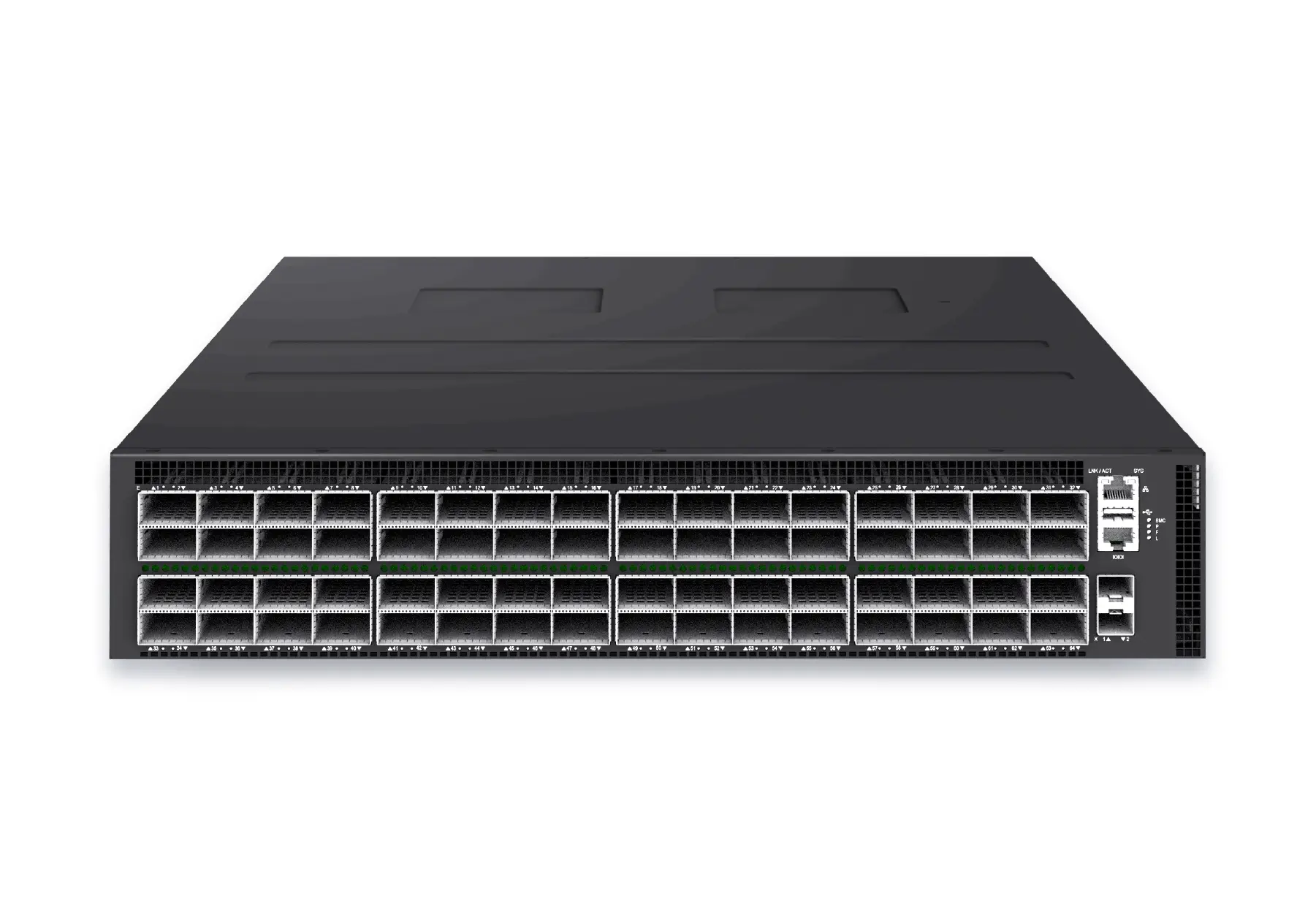 datacenter aiXS-DC-64X800-AI-G164-port 800G AI fabric switch for large-scale GPU clusters, HPC backbones, and ultra-high-throughput data center networks.View product
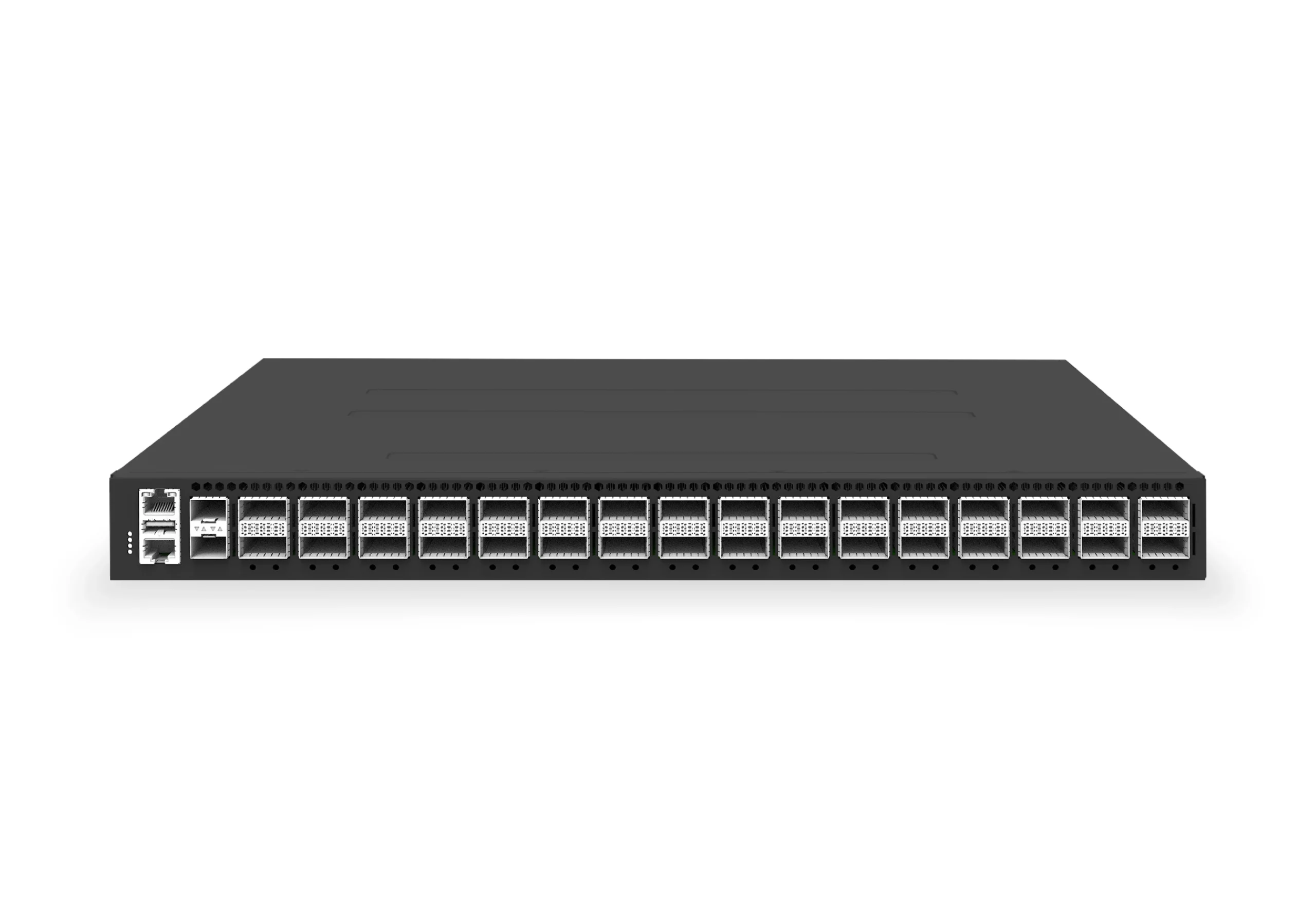 datacenter aiXS-DC-32X400-SP-G232-port 400G spine/core switch for high-capacity data center fabrics and AI-ready backbones.View product
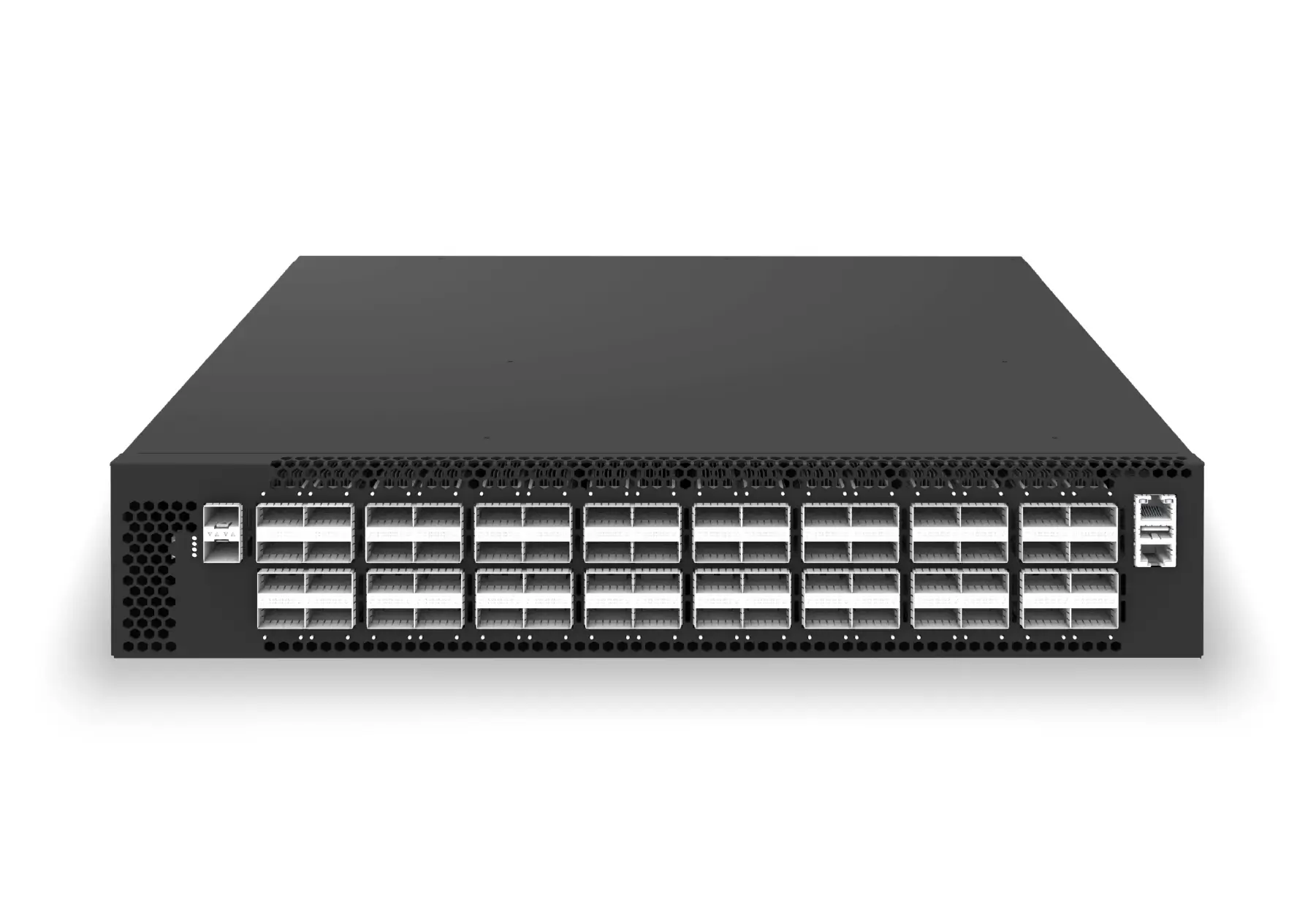 datacenter aiXS-DC-64X200-LS-G164-port 200G leaf/spine switch for high-bandwidth storage, compute, and scale-out data center fabrics.View product
Topic path
NVIDIA Spectrum hardware and SONiC software
This page focuses on:the SONiC operating model, SAI boundary, support ownership, and image-to-platform validation on Spectrum hardware.
NVIDIA Spectrum names switch silicon and systems, SONiC is a network operating system that can run on validated hardware, and Spectrum-X is NVIDIA's integrated AI Ethernet platform. Treat those as separate procurement and validation decisions.
Continue reading
Related articles
 Technical ArticleHow SONiC-Powered 400G and 800G Switches Change AI Data Center Fabric Design in AustraliaEngineering guide for 400G and 800G optics planning covering form factor, reach, telemetry, thermal limits, supply risk, and validation.Read article
 Technical ArticleRoCE v2 GPU Backend Fabrics at 400G and 800G: What Australian Data Center Operators Need to Know in 2026Engineering guide for AI fabric buyers covering RoCE, SONiC, telemetry, optics, support ownership, and deployment validation.Read article
 Technical ArticleWhat Australian Data Center Buyers Need to Know Before Choosing SONiC Switches for 400G and 800G UpgradesEngineering guide for 400G and 800G optics planning covering form factor, reach, telemetry, thermal limits, supply risk, and validation.Read article