
In brief
Engineering overview of NVIDIA Spectrum Ethernet switches, Spectrum-X AI fabrics, SONiC and Cumulus Linux NOS choices, telemetry, optics, and buyer validation.
Key takeaways
- NVIDIA Spectrum is a family of Ethernet switch ASICs and systems designed for data centre networking, spanning use cases from traditional leaf-spine topologies to AI-optimised fabrics.
- A key architectural differentiator is support for multiple network operating systems (NOS), including NVIDIA Cumulus Linux and Pure SONiC (a community-developed, open-source Linux-based NOS).
- The NVIDIA Spectrum portfolio spans six ASIC generations, each targeting different deployment scales and port speed requirements:
What Are NVIDIA Spectrum Ethernet Switches?
NVIDIA Spectrum is a family of Ethernet switch ASICs and systems designed for data centre networking, spanning use cases from traditional leaf-spine topologies to AI-optimised fabrics. The portfolio ranges from the Spectrum (SN2000) series at 100 Gb/s to the latest Spectrum-6 (SN6000) series supporting 800 Gb/s per port. NVIDIA positions Spectrum Ethernet switches as the hardware foundation of its Spectrum-X Ethernet platform, which is purpose-built for AI cloud networking workloads.
A key architectural differentiator is support for multiple network operating systems (NOS), including NVIDIA Cumulus Linux and Pure SONiC (a community-developed, open-source Linux-based NOS). This flexibility allows organisations to choose between vendor-integrated and open-source networking stacks depending on operational preferences.
Spectrum Switch Portfolio: Generations at a Glance
The NVIDIA Spectrum portfolio spans six ASIC generations, each targeting different deployment scales and port speed requirements:
Spectrum-6 (SN6000 Series) - The newest generation featuring co-packaged silicon photonics, 800 Gb/s port speeds, and up to 409.6 Tb/s aggregate throughput in a modular 5U chassis (SN6800). The SN6000 family is designed to scale NVIDIA Rubin-based AI factories. Co-packaged optics are reported to improve power efficiency and uptime by 5x compared to traditional pluggable optics.
Spectrum-3 (SN4000 Series) - Cloud-scale networking with 400 Gb/s port speeds. The SN4700 provides 12.8 Tb/s throughput in a 1U form factor.
Spectrum-2 (SN3000 Series) - Leaf and spine deployments with 200 Gb/s per port. The SN3420 is a 1U switch combining 12x 100GbE QSFP28 with 48x 25GbE SFP28 ports.
Spectrum (SN2000 Series) - Entry-level data centre switching at 100 Gb/s, with the SN2201 offering 48x RJ45 (1G) plus 4x 100GbE QSFP28 ports.
All series support sub-microsecond latency, hardware-accelerated RDMA over Converged Ethernet (RoCE), and features such as up to 512K flow counters, 512K ACLs, 100K+ NAT entries, and 512K IPv4 routes.
Spectrum-X: The AI-Native Ethernet Platform
NVIDIA Spectrum-X is not a single switch but an Ethernet platform that combines Spectrum-4 or newer switches with NVIDIA Ethernet SuperNICs, software, and silicon photonics. It is specifically designed for AI training and inference clusters that require lossless, low-jitter, high-throughput Ethernet fabrics.
NVIDIA also references Multipath Reliable Connection (MRC) as a transport technology proven on Spectrum-X, which NVIDIA has indicated it intends to open to the broader industry.
Network Operating System Options: SONiC and Cumulus Linux
A distinguishing feature of the Spectrum portfolio is NOS flexibility. Two primary options are supported:
Pure SONiC (Software for Open Networking in the Cloud) - SONiC is an open-source, Linux-based network operating system that originated from Microsoft Azure’s data centre requirements and is now a Linux Foundation project. SONiC uses a containerised architecture where each network function (BGP, RDMA, LLDP, etc.) runs in its own Docker container, providing fault isolation, easier troubleshooting, and simplified upgrades. It supports multi-vendor hardware through the Switch Abstraction Interface (SAI) and has been production-hardened at scale in hyperscale cloud environments.
NVIDIA offers ‘Pure SONiC’ as a supported NOS on Spectrum switches, meaning organisations can run a community-developed, vendor-neutral network stack on NVIDIA hardware.
NVIDIA Cumulus Linux - Described by NVIDIA as the world’s most robust open networking operating system, Cumulus Linux is a Linux-based NOS with advanced networking features designed for scale. It is a commercial product with NVIDIA support.
For Australian organisations evaluating open networking, SONiC offers the appeal of community-driven development and multi-vendor portability, while Cumulus Linux provides a commercially supported option with tighter integration into NVIDIA’s software ecosystem (including NetQ for observability and DSX Air for simulation).
Software Ecosystem: DSX Air, NetQ, and DOCA
Beyond the switch hardware and NOS, NVIDIA offers a software ecosystem that integrates with Spectrum switches:
NVIDIA DSX Air - A data centre simulation platform that allows organisations to build full-stack digital twins of their network infrastructure before deployment. This supports design, testing, validation, and ongoing operation of network provisioning, automation, and security policies.
NVIDIA NetQ - A real-time network observability tool providing visibility, troubleshooting, and lifecycle management for modern data centres. It integrates with both Cumulus Linux and SONiC.
NVIDIA DOCA - A software framework for BlueField DPUs and ConnectX adapters, enabling offload and acceleration of networking, storage, and security functions.
For Australian enterprises planning AI or HPC infrastructure, DSX Air offers a way to validate network designs virtually before committing to hardware purchases, which can reduce deployment risk.
Relevance for Australian Data Centres
The NVIDIA Spectrum portfolio is relevant to Australian organisations across several use cases:
-
AI and HPC clusters - Spectrum-X with co-packaged photonics targets the growing demand for AI training infrastructure. Australian hyperscalers, research institutions, and enterprises deploying GPU clusters for machine learning may find the lossless Ethernet fabric capabilities relevant.
-
Cloud and enterprise data centres - The SN3000 and SN4000 series offer leaf-spine architectures at 200-400 Gb/s, suitable for general-purpose data centre networking.
-
Open networking adoption - SONiC support enables Australian organisations that prefer open-source, vendor-neutral networking to deploy Spectrum hardware without being locked into a proprietary NOS.
For xSONiC readers, the useful point is not that Spectrum is “good” or “bad.” It is that Spectrum demonstrates how AI Ethernet buyers now evaluate switching as a system: ASIC, switch SKU, NIC, optics, NOS image, telemetry, congestion-control behaviour and support ownership. A buyer comparing Spectrum to SONiC-based open switching should ask whether the proposed fabric can be reproduced in a lab, whether the telemetry explains failures clearly, and whether the 100G, 400G or 800G optics plan has been tested in the same thermal envelope as the production rack.
Validation Questions Buyers Should Ask
Before treating a Spectrum platform as production-ready, buyers should request evidence in five areas:
| Area | Engineering question |
|---|---|
| Switch generation | Which Spectrum ASIC and switch SKU are proposed, and what port speeds and breakout modes are validated? |
| NOS support | Is the deployment using Cumulus Linux, Pure SONiC, community SONiC, or another image, and who owns defects? |
| AI fabric behaviour | What RoCE, congestion control, PFC, ECN, queue telemetry, and failure recovery tests were run? |
| Optics and thermals | Which OSFP, QSFP-DD, DAC, AOC, and transceiver combinations are qualified under expected rack temperature? |
| Operations | How are upgrades, rollback, security updates, telemetry export, and Australian-timezone escalation handled? |
The acceptance evidence should include one topology diagram, one bill of materials, one tested NOS image, one optics list, one telemetry export sample, one upgrade or rollback procedure, and one failure test. Portfolio pages are useful for orientation; production decisions need deployment-specific evidence.
Engineering FAQ
Is Spectrum-X a single switch model? No. Spectrum-X is an AI Ethernet platform that combines Spectrum switching, NVIDIA Ethernet NICs, software, telemetry, and congestion-management behaviour. The exact bill of materials matters.
Can SONiC run on every Spectrum deployment? SONiC support is platform and image specific. Buyers should confirm the switch SKU, NOS distribution, SAI version, feature matrix, and support path before assuming portability.
What is the biggest risk in reading Spectrum portfolio claims? Treating maximum table scale or aggregate throughput as universal. Limits vary by model, enabled features, packet profile, NOS image, and ASIC resources.
What should an Australian buyer test first? Test optics, airflow, RoCE/PFC/ECN behaviour, telemetry export, image upgrade, and local escalation process before committing a production GPU backend fabric.
Related xSONiC Resources
Sources Reviewed
- Ethernet Network Adapters - ConnectX NICs | NVIDIA
- NVIDIA BlueField Data Processing Unit
- NVIDIA Spectrum-X Ethernet Platform
- ACSC Essential Eight
- OAIC Notifiable Data Breaches
- APRA CPS 234 Information Security
- NETSCOUT Network Packet Definition
- Cloudflare Network Packet Definition
- SONiC Project Documentation
- Broadcom Ethernet Switching
- Marvell Switching
- NVIDIA Ethernet Switching
- Open Compute Networking
- SONiC GitHub
- SONiC Foundation
Product fit
Products referenced for evaluation
These products are referenced for evaluation context in the article. Confirm workload, port, optics, software, interoperability, and support requirements against the exact deployment before procurement.
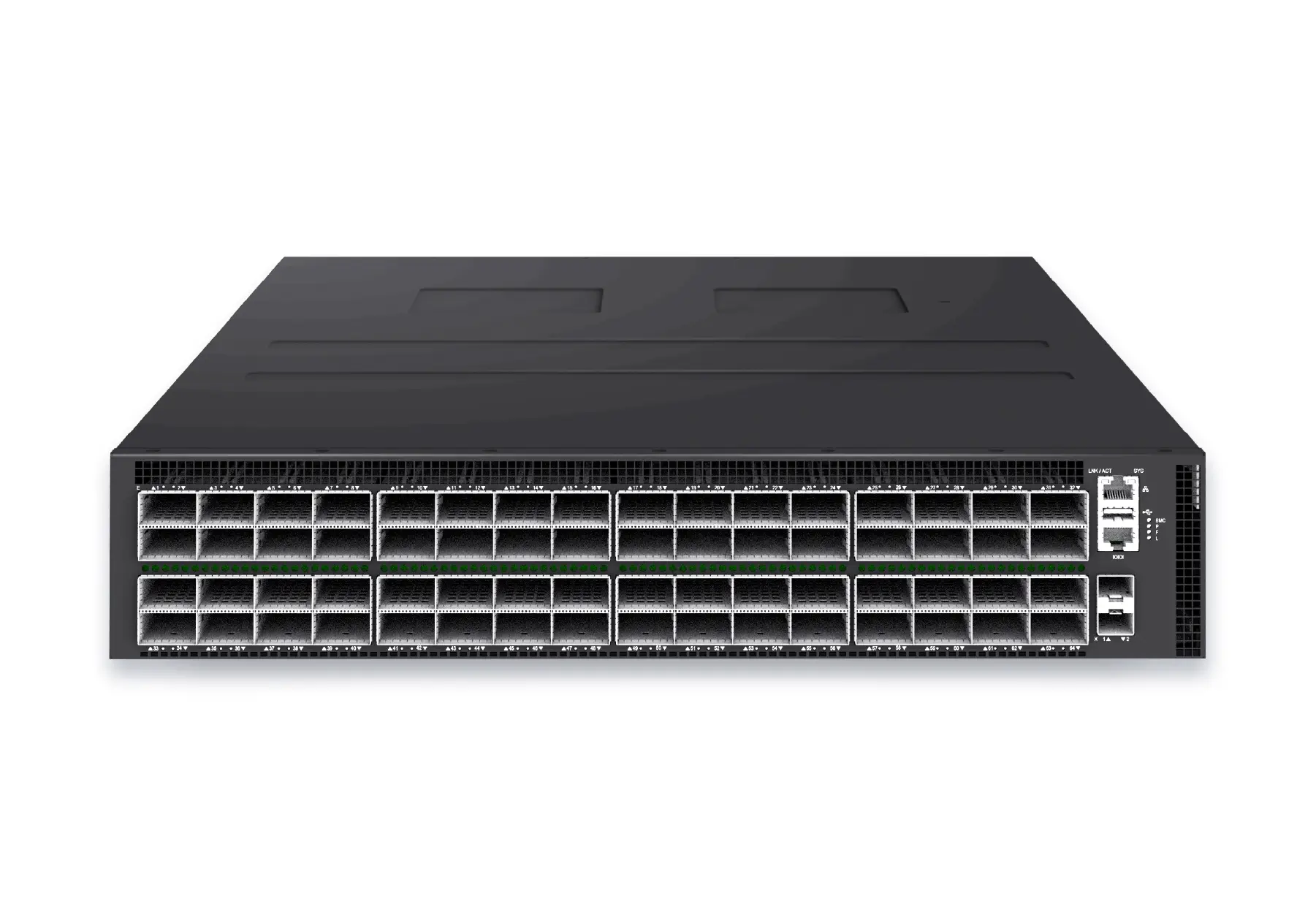 datacenter aiXS-DC-64X800-AI-G164-port 800G AI fabric switch for large-scale GPU clusters, HPC backbones, and ultra-high-throughput data center networks.View product
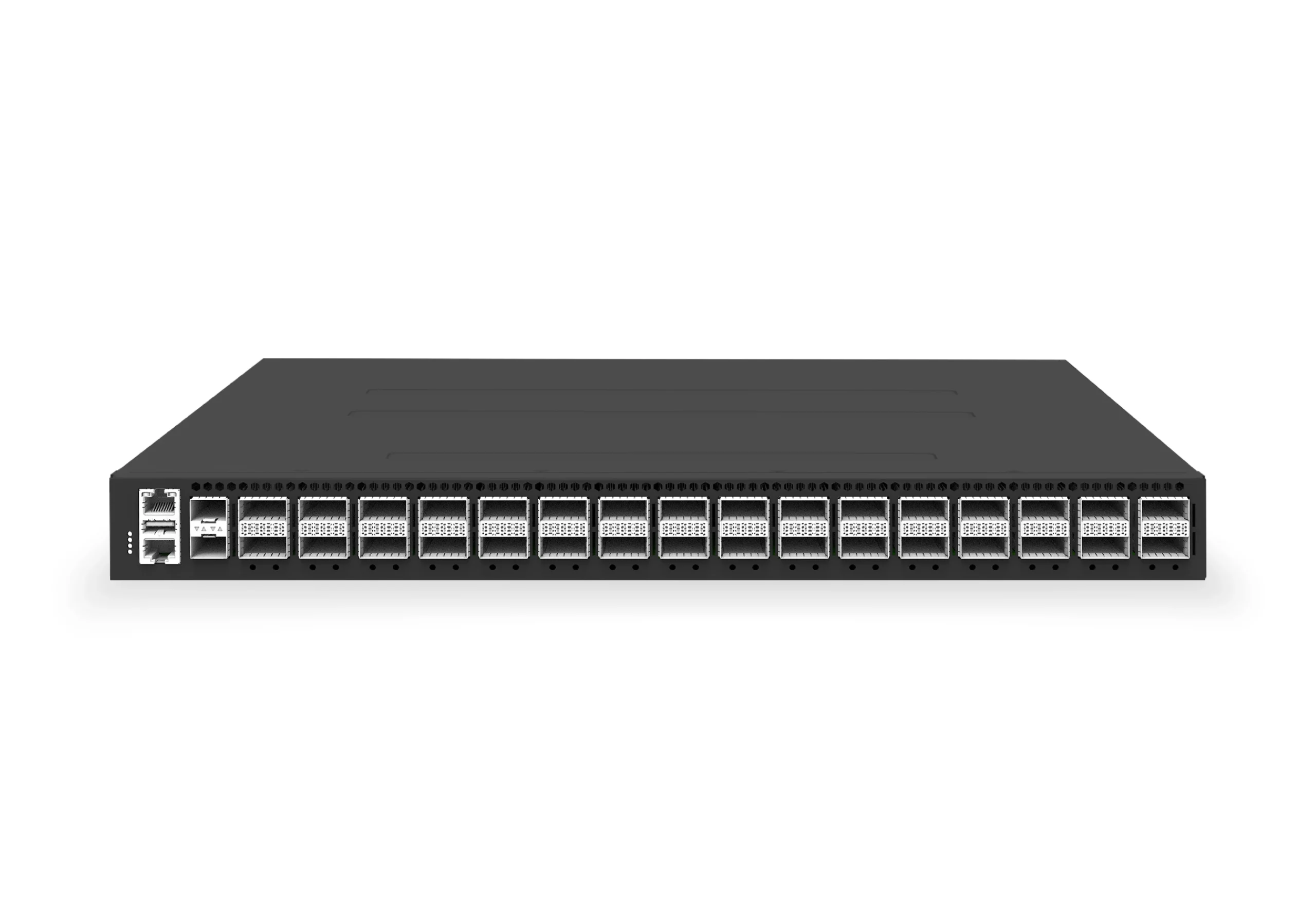 datacenter aiXS-DC-32X400-SP-G232-port 400G spine/core switch for high-capacity data center fabrics and AI-ready backbones.View product
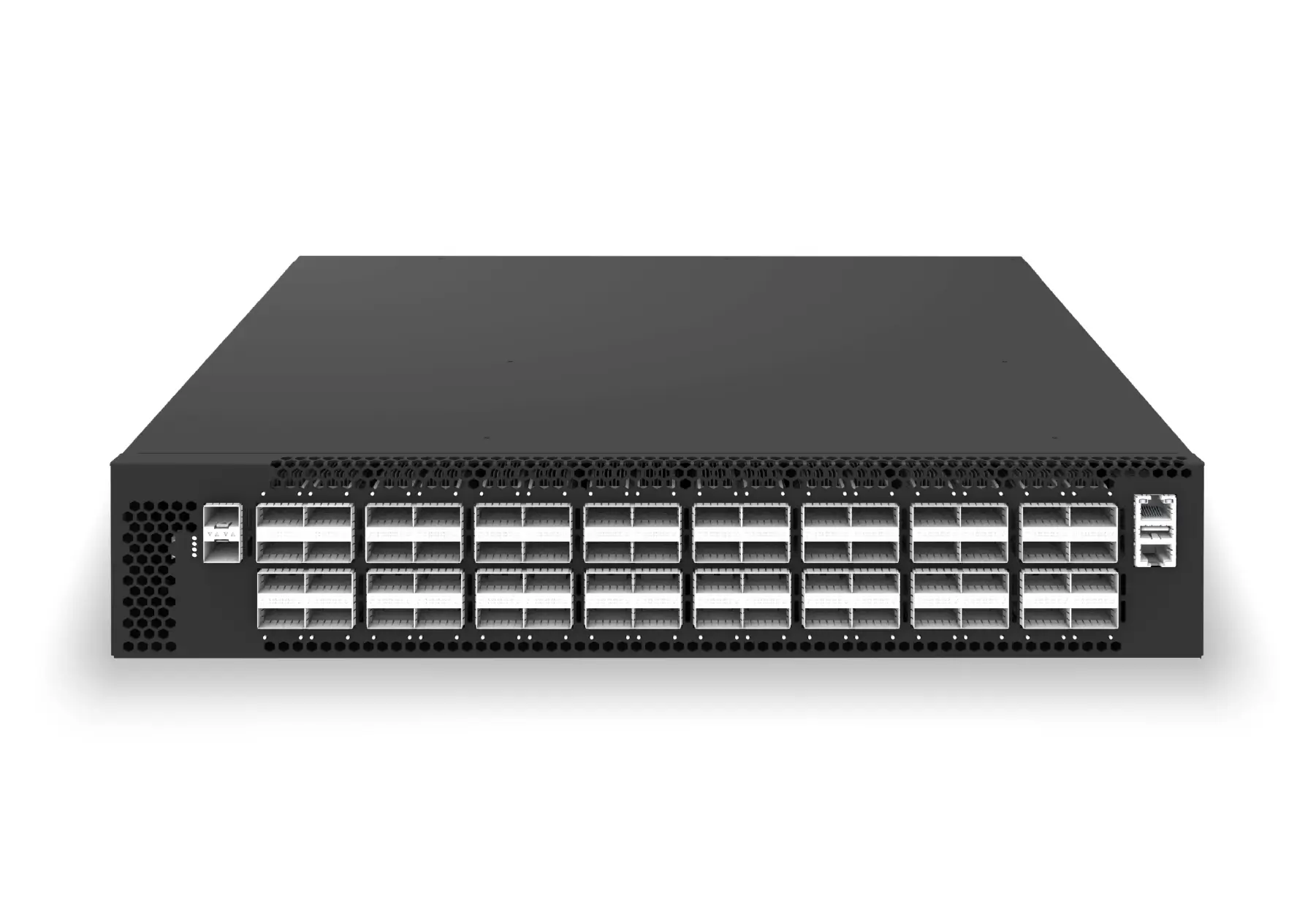 datacenter aiXS-DC-64X200-LS-G164-port 200G leaf/spine switch for high-bandwidth storage, compute, and scale-out data center fabrics.View product
Topic path
NVIDIA Spectrum hardware and SONiC software
This page focuses on:the Spectrum hardware portfolio, architecture, capabilities, and available NOS choices rather than a deployment recipe.
NVIDIA Spectrum names switch silicon and systems, SONiC is a network operating system that can run on validated hardware, and Spectrum-X is NVIDIA's integrated AI Ethernet platform. Treat those as separate procurement and validation decisions.
Continue reading
Related articles
 Technical ArticleHow SONiC-Powered 400G and 800G Switches Change AI Data Center Fabric Design in AustraliaEngineering guide for 400G and 800G optics planning covering form factor, reach, telemetry, thermal limits, supply risk, and validation.Read article
 Technical ArticleRoCE v2 GPU Backend Fabrics at 400G and 800G: What Australian Data Center Operators Need to Know in 2026Engineering guide for AI fabric buyers covering RoCE, SONiC, telemetry, optics, support ownership, and deployment validation.Read article
 Technical ArticleWhat Australian Data Center Buyers Need to Know Before Choosing SONiC Switches for 400G and 800G UpgradesEngineering guide for 400G and 800G optics planning covering form factor, reach, telemetry, thermal limits, supply risk, and validation.Read article