
In brief
Engineering guidance on SONiC Warm Reboot, Fast Reboot, and High Availability Validation for Australian SONiC buyers, covering ASIC capability, SAI maturity, feature.
Key takeaways
- Every data center operator evaluating SONiC for production use faces the same question: can this open-source network operating system deliver zero-downtime upgrades that rival proprietary alternatives?
- SONiC (Software for Open Networking in the Cloud) is a Linux-based, open-source NOS that runs on switches from multiple vendors and ASICs.
- For Australian data center operators deploying SONiC on xSONiC data center AI switches or bare-metal switching hardware, high availability validation is not optional - it is the foundation of any production deployment decision.
Why High Availability Validation Is the Dealbreaker for Open Networking Adoption
Every data center operator evaluating SONiC for production use faces the same question: can this open-source network operating system deliver zero-downtime upgrades that rival proprietary alternatives? For organizations running AI training clusters, cloud infrastructure, or latency-sensitive enterprise workloads, even a few seconds of unplanned control plane disruption can cascade into significant financial loss.
SONiC (Software for Open Networking in the Cloud) is a Linux-based, open-source NOS that runs on switches from multiple vendors and ASICs. It is built on a containerized, modular architecture where each network function runs in its own Docker container, providing fault isolation and simplified maintenance. These architectural choices were designed to support the operational demands of the largest cloud service providers in the world.
For Australian data center operators deploying SONiC on xSONiC data center AI switches or bare-metal switching hardware, high availability validation is not optional - it is the foundation of any production deployment decision. This guide walks through the three key mechanisms - warm reboot, fast reboot, and HA switchover - and explains how to validate each one before your first production traffic cut.
Understanding SONiC Reboot Modes: Warm, Fast, and Cold
SONiC provides three distinct reboot strategies, each with different trade-offs in terms of traffic disruption, implementation complexity, and validation requirements.
Cold reboot is the baseline. It restarts the entire switch - operating system, all Docker containers, and the ASIC - resulting in a full traffic outage lasting anywhere from 60 to 180 seconds depending on hardware, configuration scale, and ASIC initialization time. Cold reboot is the fallback when warm or fast reboot is not supported or fails validation.
Fast reboot is a lighter-weight approach. It restarts the SONiC software stack while preserving ASIC forwarding state for a limited window. During fast reboot, the data plane continues forwarding traffic using existing hardware entries while the control plane restarts. The expected traffic disruption is typically under 30 seconds, though the exact duration depends on the number of routes, interfaces, and configured features. Fast reboot requires that the ASIC supports state preservation across a software restart.
Warm reboot is the most ambitious mode. It performs an in-service software upgrade where both the data plane and control plane remain operational during the transition. The new SONiC version starts alongside the running version, state is synchronized between old and new processes, and traffic forwarding continues with minimal or zero packet loss. Warm reboot supports upgrade scenarios - moving from one SONiC version to another - as well as same-version restarts for configuration recovery.
Each mode requires specific validation steps before production use. A switch that passes cold reboot testing but has never been tested for warm reboot should not be assumed to support warm reboot in production.
Warm Reboot Validation: What to Test and How
Warm reboot validation should cover three dimensions: control plane continuity, data plane continuity, and state consistency after the upgrade completes.
Control plane continuity means that routing adjacencies (BGP sessions, OSPF neighbors) remain established throughout the reboot process or re-establish within a predictable, documented window. For BGP-based fabrics, which are the standard architecture for SONiC spine-leaf deployments, you should monitor BGP session state, route counts, and prefix convergence time during the warm reboot event.
Data plane continuity means that existing traffic flows continue to be forwarded by the ASIC with acceptable packet loss. In a typical validation, you would run continuous bidirectional traffic (for example, using iperf3 or a packet broker with counters) across the switch under test while triggering warm reboot. Measured packet loss should fall within the documented tolerance - ideally zero packets lost for same-version warm reboot, and a bounded, predictable loss window for version upgrades.
State consistency means that after warm reboot completes, the running configuration, routing table, ACL entries, VLAN mappings, and all protocol states match the pre-reboot state exactly. Post-reboot validation should include:
show runningconfiguration allcomparison against the pre-reboot snapshot- BGP route count and best-path selection match
- Interface counters and error counters baseline check
- LLDP neighbor discovery adjacency recovery
- VXLAN/EVPN VTEP and MAC table consistency (for overlay fabrics)
A practical warm reboot validation checklist for an xSONiC data center AI switch deployed in a spine-leaf AI fabric might look like this:
- Capture pre-reboot baseline: BGP routes, interface states, MAC tables, ACL counters
- Start continuous traffic generator at line rate across multiple ports
- Trigger warm reboot via CLI or NETCONF/YANG API
- Monitor control plane state throughout the reboot window
- After reboot completes, compare post-reboot state against baseline
- Record total traffic disruption duration and packet loss count
- Repeat for same-version restart and cross-version upgrade scenarios
Fast Reboot Validation: When and Why to Choose It
Fast reboot occupies a useful middle ground between cold reboot and warm reboot. It is simpler to implement and validate than warm reboot, and it provides meaningful traffic disruption reduction compared to cold reboot. For many production environments, fast reboot is the pragmatic default for software upgrades.
The key architectural advantage of fast reboot is that it preserves the ASIC forwarding table. The switch continues to forward traffic using existing hardware entries while the entire SONiC software stack - all Docker containers - restarts. This means that as long as the restart completes within the ASIC’s state preservation window, the data plane remains operational.
Validation for fast reboot should focus on:
- Restart time: Measure the total time from reboot trigger to full control plane recovery. This should be documented for your specific platform and configuration scale.
- ASIC state preservation: Confirm that the ASIC vendor supports forwarding state preservation across the software restart. Not all ASICs or all versions support this.
- Recovery completeness: After fast reboot, verify that all control plane protocols have recovered, all routes have been re-learned, and all configuration state matches the pre-reboot snapshot.
- Failure behavior: Test what happens if fast reboot fails partway through. Does the switch fall back to cold reboot automatically? Is there a watchdog mechanism?
For Australian operators running SONiC on xSONiC bare-metal switches in aggregation or spine roles, fast reboot validation can typically be completed in a single maintenance window. It provides confidence that routine software updates will not cause extended outages, without the additional complexity of full warm reboot testing.
High Availability Validation for Dual-Supervisor and Multi-ASIC Platforms
Beyond single-switch reboot validation, production data center fabrics require validation of high availability at the system and fabric level. This is especially relevant for multi-ASIC chassis platforms and for fabrics using MC-LAG or similar dual-homing techniques.
SONiC’s containerized architecture contributes to fault isolation: if a single Docker container (for example, the BGP container or the LLDP container) crashes, the other containers continue operating. This is a meaningful improvement over monolithic NOS designs where a single process failure can crash the entire control plane.
For multi-ASIC platforms, high availability validation should include:
- ASIC failover: If the switch contains multiple ASICs, test what happens when one ASIC or its associated container set fails. Does the switch continue forwarding on the remaining ASICs?
- Control plane restart per container: Test restarting individual Docker containers (for example,
docker restart bgp) and verify that the service recovers cleanly without affecting other services. - Supervisor failover (for chassis platforms): If the platform supports dual supervisors, test supervisor switchover and verify that the new supervisor inherits full state.
At the fabric level, high availability validation for a SONiC-based spine-leaf should include:
- Spine switch failure: Simulate a spine switch failure and verify that traffic reroutes through remaining spines within the expected convergence time.
- Link failure and recovery: Shut down individual links and verify BGP/EVPN convergence and traffic recovery.
- Rolling upgrade: Upgrade leaf switches one at a time using warm or fast reboot while maintaining continuous traffic flow across the fabric.
For AI fabric deployments on xSONiC data center AI switches - where RoCE v2 and lossless Ethernet are critical - the HA validation must also cover PFC (Priority Flow Control) state preservation and DCBX negotiation recovery after reboot. A disruption in PFC state during warm reboot can cause RoCE traffic drops that are difficult to diagnose.
Automating HA Validation with NETCONF, YANG, and the AIDC Controller
Manual validation is sufficient for initial platform qualification, but production operations require automated, repeatable HA validation as part of every software upgrade lifecycle.
SONiC supports NETCONF and YANG-based management, which enables programmatic control of reboot operations and state verification. A typical automated validation workflow might look like this:
- Use NETCONF to capture a pre-reboot configuration and state snapshot
- Trigger warm or fast reboot via NETCONF RPC
- Monitor control plane recovery using NETCONF notification streams
- Capture post-reboot state and diff against the pre-reboot snapshot
- Generate a pass/fail report with metrics (convergence time, packet loss, state drift)
The xSONiC AIDC Controller can serve as the orchestration layer for this workflow across an entire fabric. Instead of validating one switch at a time, the AIDC Controller can coordinate rolling validation across all switches in a spine-leaf topology, traffic generators, and monitoring systems.
For Australian enterprise and service provider operators, this automation is particularly valuable because it allows HA validation to be incorporated into CI/CD-style pipelines for network operations. Every SONiC image upgrade can be validated in a staging environment before production deployment, with automated gates that block deployment if warm reboot validation fails.
This approach shifts the HA conversation from “we tested it once during the initial deployment” to “we validate it on every upgrade cycle,” which is a fundamentally stronger operational posture.
Engineering Evidence Floor
For this topic, treat the article as buyer-ready only when the fabric claim is tied to measurable acceptance data. The baseline evidence package should include the selected switch SKU, SONiC image, ASIC/SAI version, NIC firmware, optics list, RoCE policy, telemetry counters, support owner, and rollback method. In a small pilot, capture at least 30 minutes of traffic at the intended 100G/400G/800G speed, one link failure, one switch reboot, one optics fault, and one support handoff. That evidence separates a credible AI fabric plan from a bandwidth brochure.
| Evidence area | What to validate | Acceptance gate | Rework trigger |
|---|---|---|---|
| Transport | PFC, ECN, DCBX, MTU, queue mapping, and CNP counters | 30 minutes load test at 100G/400G/800G | RoCE is asserted but not measured |
| Platform | Switch SKU, ASIC, SAI, SONiC image, and optics list | 2 switch roles pass upgrade and rollback | Generic compatibility is used as proof |
| Failure | Link loss, switch reboot, route convergence, and workload impact | 3 failure cases captured with timestamps | Steady-state throughput is the only evidence |
| Telemetry | Queue depth, drops, optics DOM, gNMI, and packet visibility | Operators explain a slowdown within 15 minutes | GPU and network teams use different data |
| Support | APAC escalation, RMA, spares, and patch lifecycle | 12 months operating plan approved | Ownership splits across vendors |
Engineering FAQ
What should buyers compare when evaluating switch silicon for SONiC? Compare feature support, buffer profile, port speed, optics compatibility, telemetry counters, SAI maturity, SDK release cadence, power and cooling, and vendor image validation. ASIC choice affects operations as much as throughput.
Why is SAI maturity important? SAI is the abstraction layer between SONiC and the ASIC. If a required feature is incomplete or behaves differently on a platform, the open NOS does not remove that limitation. Buyers should ask for tested feature matrices.
What evidence should an Australian buyer request from a switch vendor? Request the exact switch SKU, ASIC family, SONiC distribution, SAI version, optics matrix, known caveats, release notes, support process, and proof that the intended design has been tested.
Related xSONiC Resources
Sources Reviewed
- IEEE 802.1Q Bridges and Bridged Networks
- IEEE 802.1AX Link Aggregation
- Ethernet Network Adapters - ConnectX NICs | NVIDIA
- NVIDIA BlueField Data Processing Unit
- NVIDIA Spectrum-X Ethernet Platform
- OpenConfig gNMI Specification
- OpenConfig
- RFC 7950 - The YANG 1.1 Data Modeling Language
- RFC 6241 - Network Configuration Protocol (NETCONF)
- ACSC Essential Eight
- OAIC Notifiable Data Breaches
- APRA CPS 234 Information Security
- NETSCOUT Network Packet Definition
- Cloudflare Network Packet Definition
- SONiC Project Documentation
- Broadcom Ethernet Switching
- Marvell Switching
- NVIDIA Ethernet Switching
- Open Compute Networking
- SONiC GitHub
- SONiC Foundation
Product fit
Products referenced for evaluation
These products are referenced for evaluation context in the article. Confirm workload, port, optics, software, interoperability, and support requirements against the exact deployment before procurement.
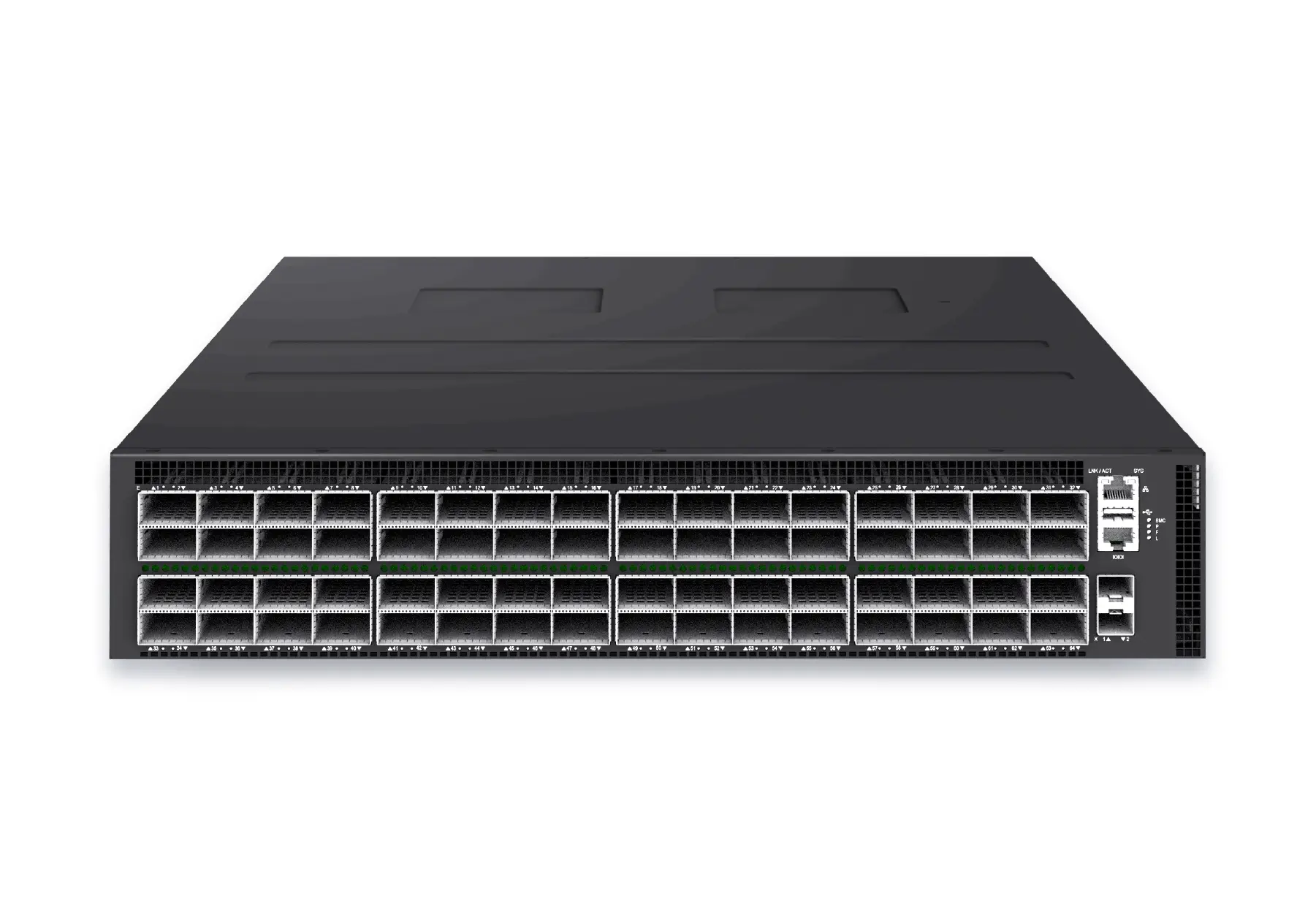 datacenter aiXS-DC-64X800-AI-G164-port 800G AI fabric switch for large-scale GPU clusters, HPC backbones, and ultra-high-throughput data center networks.View product
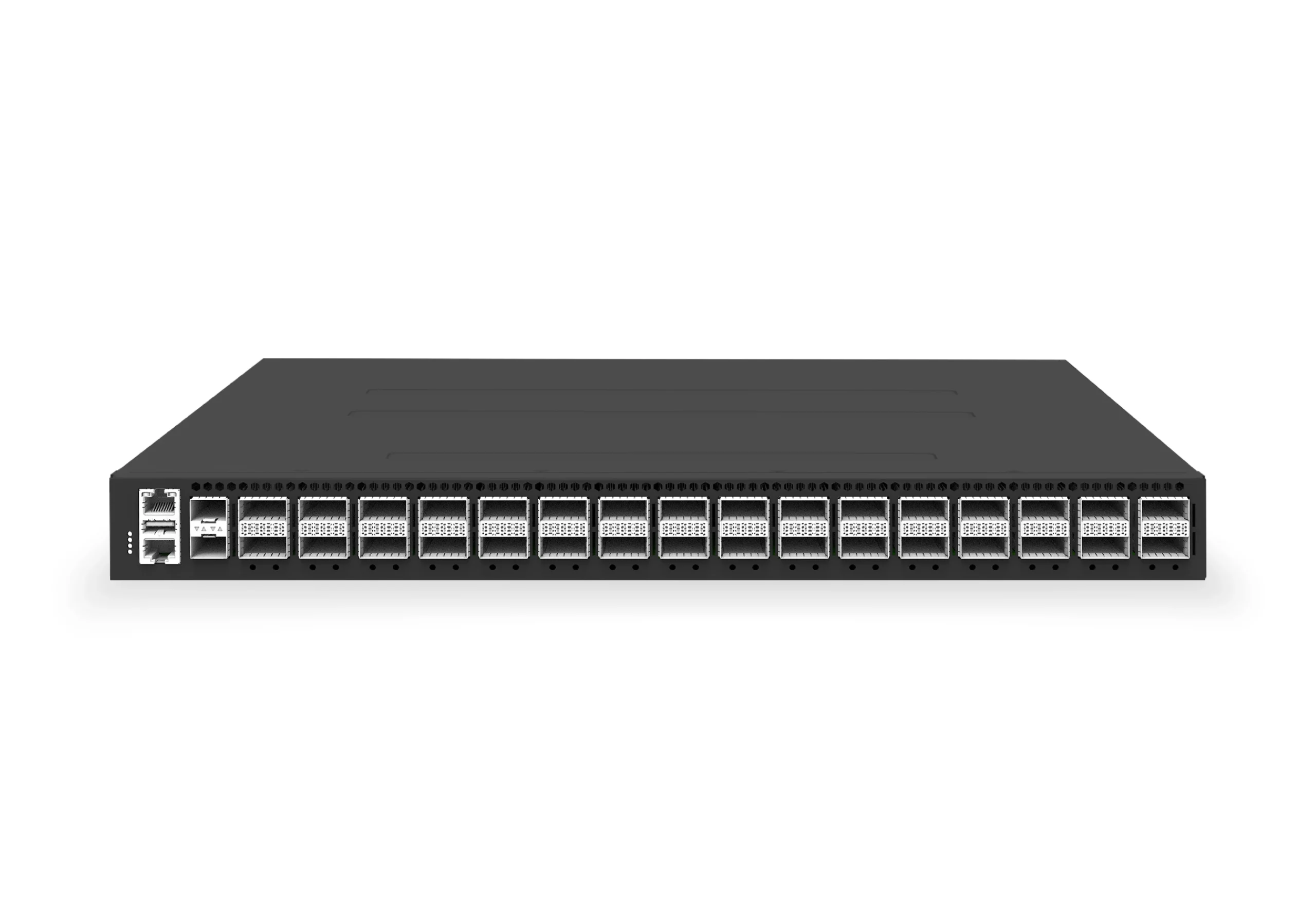 datacenter aiXS-DC-32X400-SP-G232-port 400G spine/core switch for high-capacity data center fabrics and AI-ready backbones.View product
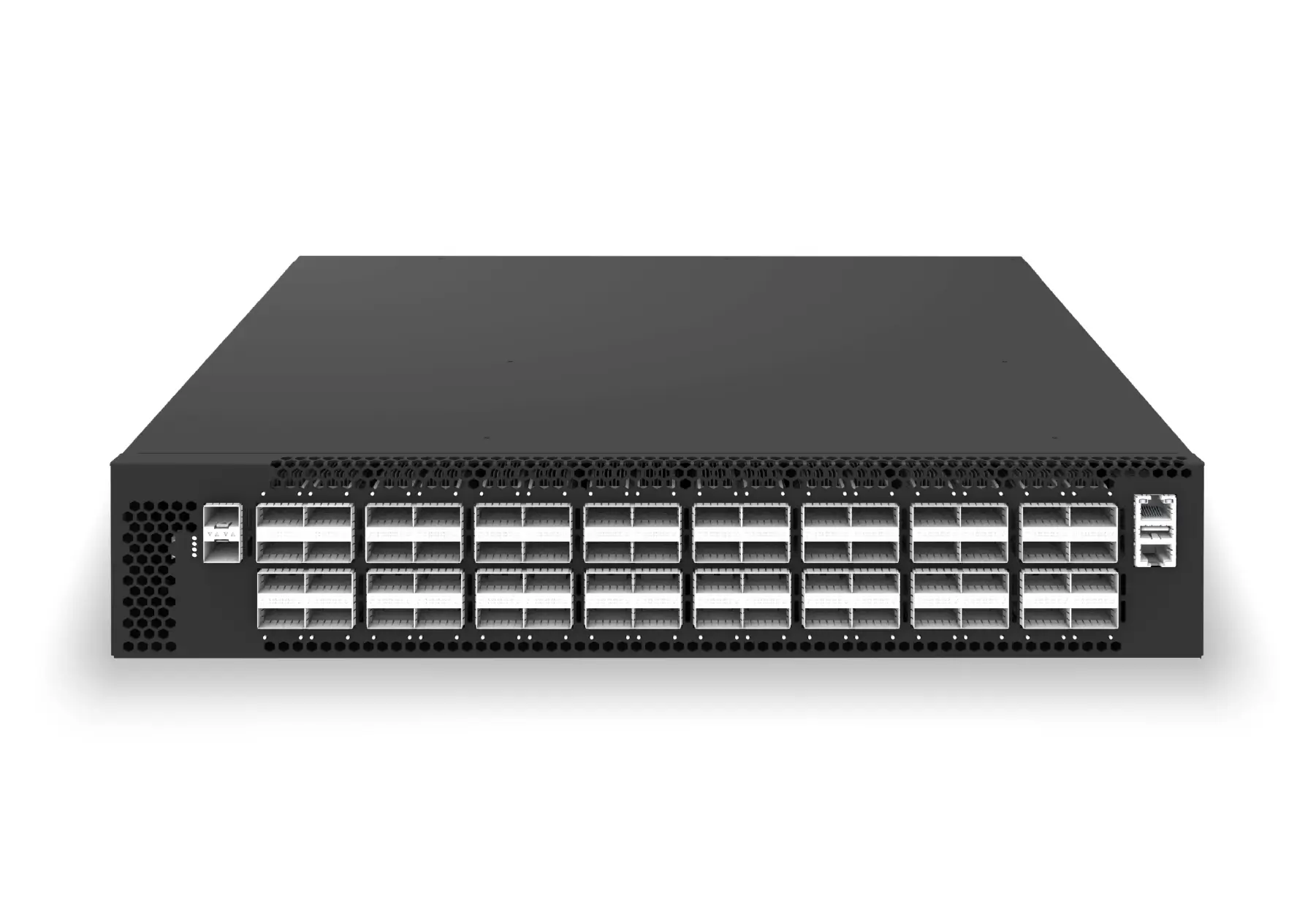 datacenter aiXS-DC-64X200-LS-G164-port 200G leaf/spine switch for high-bandwidth storage, compute, and scale-out data center fabrics.View product
Continue reading
Related articles
 Technical ArticleSONiC Switch Pre-Production Validation Checklist: A 12-Point Testing Playbook for Open Networking TeamsEngineering guidance on SONiC Switch Pre-Production Validation Checklist for Australian data centre buyers, covering form factor choice, link budgets, cabling.Read article
 Technical ArticleWhy Australian Data Centers Are Re-evaluating Open Networking for AI InfrastructureEngineering guide for AI fabric buyers covering RoCE, SONiC, telemetry, optics, support ownership, and deployment validation.Read article
 Technical ArticleSONiC Switch Validation Before Production: What Australian Network Teams Need on Their ChecklistEngineering guide for SONiC and open networking buyers covering platform fit, automation, support, telemetry, and validation evidence.Read article