
In brief
How Australian network teams should validate SONiC warm reboot and fast reboot before relying on high-availability maintenance.
Key takeaways
- Warm reboot and fast reboot are SONiC's two primary mechanisms for upgrading or restarting a switch without tearing down the entire forwarding plane.
- The SONiC project's architecture - modular, container-based, with each network function running in its own Docker container - provides a structural foundation for selective restarts (github.com/sonic-net/SONiC).
- SONiC's container-based architecture is one of the platform's most cited differentiators.
Why Warm Reboot and Fast Reboot Matter for SONiC Buyers
Warm reboot and fast reboot are SONiC’s two primary mechanisms for upgrading or restarting a switch without tearing down the entire forwarding plane. In a warm reboot scenario, the goal is to preserve data plane state so that traffic continues to flow while the control plane restarts. Fast reboot aims to minimize the overall restart window, reducing convergence time after a planned or unplanned event. For any Australian enterprise or service provider considering SONiC-based spine-leaf fabrics or AI cluster backbones, these mechanisms are not abstract engineering details. They are the difference between a maintenance window that causes outages and one that does not.
The SONiC project’s architecture - modular, container-based, with each network function running in its own Docker container - provides a structural foundation for selective restarts (github.com/sonic-net/SONiC). This design delivers better fault isolation, easier debugging, and simplified upgrades compared to monolithic NOS architectures. However, architectural promise and operational validation are not the same thing. Buyers need to understand what has been tested, what is officially supported, and where the gaps remain.
What SONiC’s Container Architecture Enables for High Availability
SONiC’s container-based architecture is one of the platform’s most cited differentiators. The GitHub repository describes a modular design where each network function runs in its own Docker container, providing better fault isolation, easier debugging and troubleshooting, simplified upgrades and maintenance, and enhanced scalability (github.com/sonic-net/SONiC). This architecture is directly relevant to warm reboot capabilities because it allows the control plane components - such as the routing stack (FRR/BGP), the syncd ASIC sync daemon, and various application containers - to be restarted independently or in coordinated sequences.
In practical terms, a warm reboot in SONiC is designed to restart the control plane while preserving the ASIC forwarding state. The syncd container, which interfaces with the switch ASIC via the SAI (Switch Abstraction Interface), plays a critical role. During a warm reboot, the expectation is that syncd preserves the hardware forwarding tables so that packets continue to be switched at line rate even while BGP, LLDP, and other control plane processes restart and reconverge.
Fast reboot, by contrast, takes a different approach: it performs a rapid full restart of the system, leveraging saved state to converge faster than a cold boot. The distinction matters for operational planning. Warm reboot is theoretically less disruptive because the forwarding plane never stops. Fast reboot is a pragmatic fallback when warm reboot is not feasible for a particular upgrade path or hardware platform.
For Australian buyers evaluating SONiC on bare-metal switches or data center AI switches, the key validation question is whether these mechanisms have been tested end-to-end on the specific hardware and ASIC platform under consideration. SONiC’s multi-vendor, multi-ASIC support is a strength, but it also means that HA behavior can vary across switch vendors and silicon generations.
The Validation Gap: What the Sources Do and Do Not Tell Us
Here is where editorial honesty matters. The SONiC Foundation and GitHub documentation describe the platform’s architecture and community governance in broad terms. The Foundation site highlights production-hardening at scale and a rapidly growing ecosystem (sonicfoundation.dev). The GitHub repository details the modular container architecture and lists key features such as multi-vendor support and standard Linux interfaces (github.com/sonic-net/SONiC). NVIDIA’s networking pages confirm that Pure SONiC is offered as a supported NOS option alongside Cumulus Linux on Spectrum Ethernet switches, with hardware spanning the SN2000 through SN6000 product lines at speeds up to 800 Gb/s (nvidia.com/en-us/networking/ethernet-switching).
For Australian network teams, this validation gap is the central editorial point. SONiC’s community codebase includes warm reboot and fast reboot support, but the quality and completeness of that support depends on:
- The specific ASIC vendor and SAI implementation (Broadcom, Marvell, and others each have different SAI maturity levels)
- The switch hardware vendor’s integration testing and firmware alignment
- Whether the deployment uses community SONiC or an enterprise distribution with additional HA validation and support SLAs
- The specific protocol state that must be preserved (BGP sessions, EVPN-VXLAN VTEPs, LLDP neighbors, and so on)
Each of these variables introduces potential divergence between what the SONiC architecture promises and what a specific deployment delivers.
Why This Matters for Australian Data Center and AI Fabric Deployments
Australia’s enterprise and service provider market has specific characteristics that raise the stakes for HA validation. Long geographic distances between data centers, limited on-site engineering capacity at remote sites, and strict uptime expectations from regulated industries (financial services, healthcare, government) mean that a failed warm reboot during a firmware update is not just an inconvenience. It can trigger SLA breaches and compliance incidents.
For teams building AI fabric or GPU backend networks - where SONiC-based spine-leaf architectures are increasingly discussed alongside proprietary alternatives - the HA story is even more critical. AI training jobs are long-running and expensive. A network disruption during a multi-hour GPU training run can waste significant compute resources. The expectation for any NOS running in an AI fabric is that planned maintenance events (firmware upgrades, configuration changes, security patches) should be non-disruptive or near-non-disruptive to the forwarding plane.
SONiC’s container architecture supports this goal in principle. The community has invested in warm reboot and fast reboot features specifically to address the operational needs of hyperscale operators who cannot tolerate maintenance windows. The question for Australian enterprise buyers is whether these capabilities have been validated to enterprise-grade standards on the specific hardware they plan to deploy.
This is where the distinction between community SONiC and enterprise SONiC distributions becomes relevant. NVIDIA’s Pure SONiC offering, for example, is positioned as a community-developed open-source NOS that runs on Spectrum switches. Enterprise distributions from other vendors may include additional HA validation, support contracts, and guaranteed convergence targets. Buyers should demand documented HA test results - not just architectural descriptions - before committing to a specific platform.
What Australian Buyers Should Demand: A Practical Evaluation Checklist
For any Australian enterprise or service provider evaluating SONiC-based infrastructure for data center, AI fabric, or campus deployments, the following HA validation checklist is recommended. Each item should be verified against the specific hardware, ASIC, and SONiC distribution under consideration.
Warm Reboot Validation:
- Does the warm reboot feature preserve BGP session state across the restart?
- Is EVPN-VXLAN VTEP state maintained during warm reboot, and if so, what is the expected reconvergence time?
- Has warm reboot been tested with the specific SAI implementation for the target ASIC (for example, Broadcom SAI on Memory/Memory+ platforms)?
- What is the documented maximum packet loss duration during warm reboot?
- Are warm reboot test results available for the specific switch hardware model and SONiC version?
Fast Reboot Validation:
- What is the documented fast reboot time from initiation to full control plane convergence?
- Does fast reboot preserve any forwarding state, or does it rely on rapid reconvergence?
- Is fast reboot supported for the target upgrade path (for example, SONiC 202311 to 202405)?
General HA Requirements:
- Is there a supported rollback mechanism if a warm or fast reboot fails?
- What monitoring and alerting is available during reboot events?
- Does the SONiC distribution include HA-specific SLAs or support commitments?
- Has the ASIC vendor validated SAI warm boot support for the target silicon generation?
For teams considering SONiC on bare-metal switches for AI fabric or EVPN-VXLAN spine-leaf deployments, these questions should be answered before purchase commitment, not after deployment. The SONiC community’s architecture makes warm and fast reboot technically feasible. Enterprise validation confirms whether they are operationally reliable for a specific deployment.
Reboot Acceptance Matrix
| Test area | Evidence to capture | Rework trigger |
|---|---|---|
| Warm reboot path | Switch SKU, ASIC/SAI version, SONiC image, protocol state, traffic generator result and packet-loss window | Vendor states warm reboot is supported but cannot show the exact hardware and image combination |
| Fast reboot path | Time from command to control-plane convergence, BGP/EVPN state, link state and telemetry alerts | Reboot completes but monitoring cannot explain the outage window |
| Failure rollback | Failed upgrade, image rollback, config restore and support escalation rehearsed in the lab | Rollback requires undocumented commands or supplier-only intervention |
| AI fabric impact | RoCE v2, PFC, ECN, DCBX, optics and 400G or 800G uplinks tested during planned maintenance | GPU job or storage traffic stalls longer than the accepted maintenance target |
The xSONiC Buyer Angle: Open Networking HA Without the Guesswork
xSONiC’s data center AI switch and bare-metal switch families are designed for teams that want the flexibility of open networking - including SONiC compatibility - without sacrificing the operational rigor that enterprise and AI workloads demand. For Australian buyers evaluating a migration from proprietary NOS stacks to SONiC-based infrastructure, the HA story cannot be left to hope and community documentation alone.
The SONiC Foundation’s own description of the platform emphasizes production-hardening at scale and a rapidly growing ecosystem (sonicfoundation.dev). These are real strengths. But production-hardening at a hyperscale cloud provider with hundreds of network engineers is a different proposition from production-hardening at an Australian enterprise with a lean team and strict uptime requirements. The validation bar must be set accordingly.
xSONiC positions its infrastructure products with the understanding that HA validation is a buyer requirement, not a community aspiration. Whether the deployment is a GPU backend fabric for AI training, an EVPN-VXLAN spine-leaf for a multi-tenant data center, or a campus aggregation layer running SONiC, the expectation is that warm reboot and fast reboot capabilities have been tested and documented for the specific hardware and software combination being deployed.
Looking Ahead: What to Watch in the SONiC Community
The SONiC project continues to evolve its HA capabilities with each release cycle. Key areas to watch include:
- SAI warm boot maturity across ASIC vendors: As Broadcom, Marvell, and other silicon vendors update their SAI implementations, warm reboot support becomes more consistent. Buyers should verify SAI warm boot support status for their target ASIC generation.
- Enterprise distribution HA guarantees: Enterprise SONiC distributions are increasingly differentiating on HA validation and support SLAs. Australian buyers should compare community SONiC HA capabilities against enterprise distribution offerings.
- AI fabric-specific HA requirements: As SONiC is deployed in AI cluster backbones, the HA requirements become more stringent. Long-running GPU training jobs cannot tolerate network disruptions during maintenance events.
- Protocol-specific warm reboot support: BGP warm reboot is well-established in the routing community. EVPN-VXLAN warm reboot, including VTEP and VNI state preservation, is a more complex challenge that buyers should verify specifically.
For Australian enterprise and service provider teams, the SONiC HA story is real but requires validation at the deployment level. The architecture supports it. The community is investing in it. But the gap between architectural capability and operational certainty is exactly where informed buyers should focus their evaluation effort.
Engineering FAQ
What should be proven before relying on SONiC warm reboot? Prove the exact switch SKU, ASIC/SAI version, SONiC image, BGP/EVPN state, traffic profile, rollback path and packet-loss window. Warm reboot should be accepted as a tested workflow, not a checkbox.
Why does fast reboot still require a maintenance plan? Fast reboot can reduce outage time, but it still changes control-plane and monitoring state. Teams should define the expected convergence target, alert behaviour and fallback plan before using it on production 100G, 400G or 800G fabrics.
What should be included in a SONiC HA runbook? Include approved image path, warm reboot command, fast reboot command, pre-checks, traffic checks, telemetry fields, rollback commands, log bundle, support owner and a 48 hours post-change observation window.
Related xSONiC Resources
Sources Reviewed
- Ethernet Network Adapters - ConnectX NICs | NVIDIA
- NVIDIA BlueField Data Processing Unit
- NVIDIA Spectrum-X Ethernet Platform
- ACSC Essential Eight
- OAIC Notifiable Data Breaches
- APRA CPS 234 Information Security
- NETSCOUT Network Packet Definition
- Cloudflare Network Packet Definition
- SONiC Project Documentation
- Broadcom Ethernet Switching
- Marvell Switching
- NVIDIA Ethernet Switching
- Open Compute Networking
- SONiC GitHub
- SONiC Foundation
Product fit
Products referenced for evaluation
These products are referenced for evaluation context in the article. Confirm workload, port, optics, software, interoperability, and support requirements against the exact deployment before procurement.
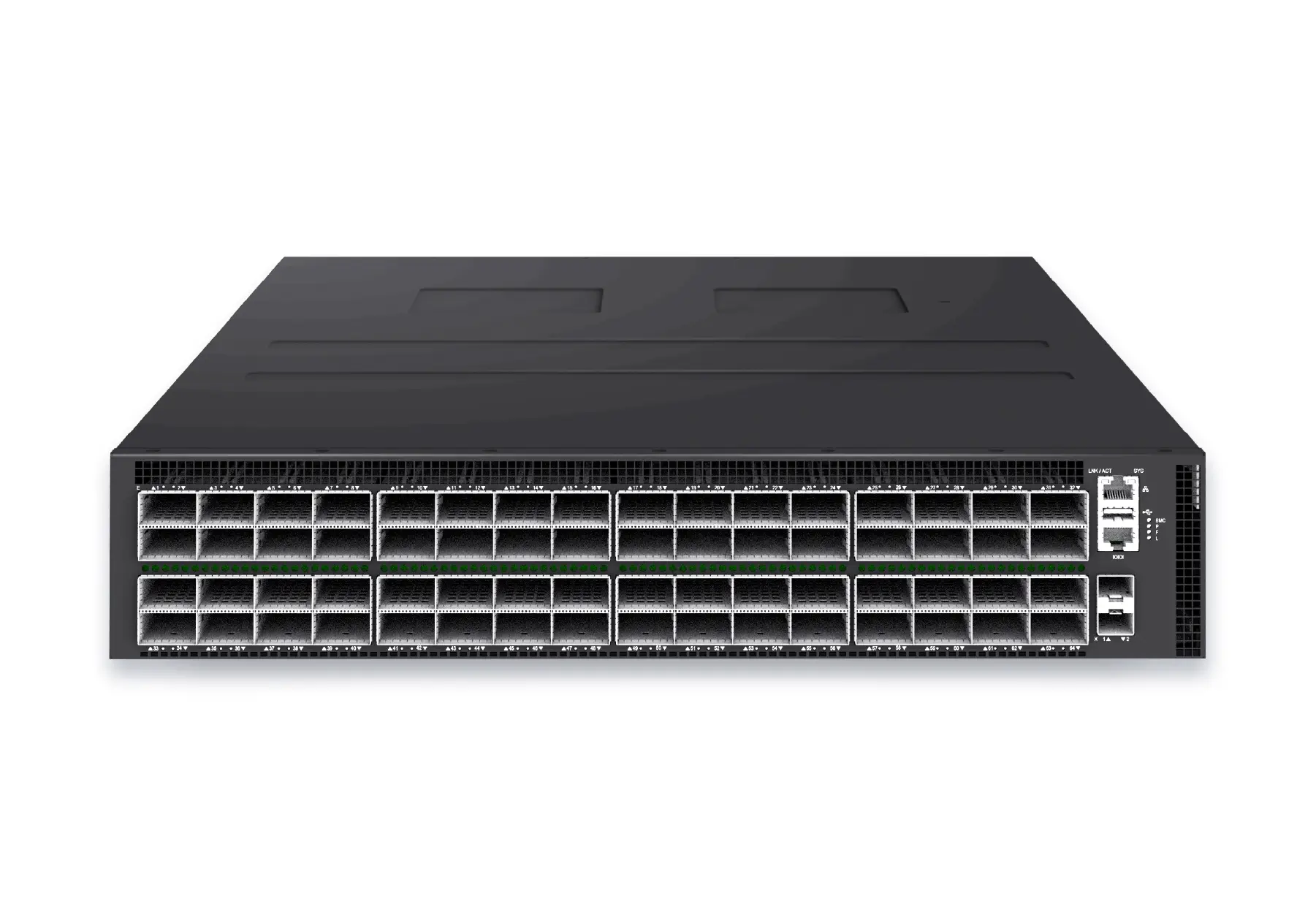 datacenter aiXS-DC-64X800-AI-G164-port 800G AI fabric switch for large-scale GPU clusters, HPC backbones, and ultra-high-throughput data center networks.View product
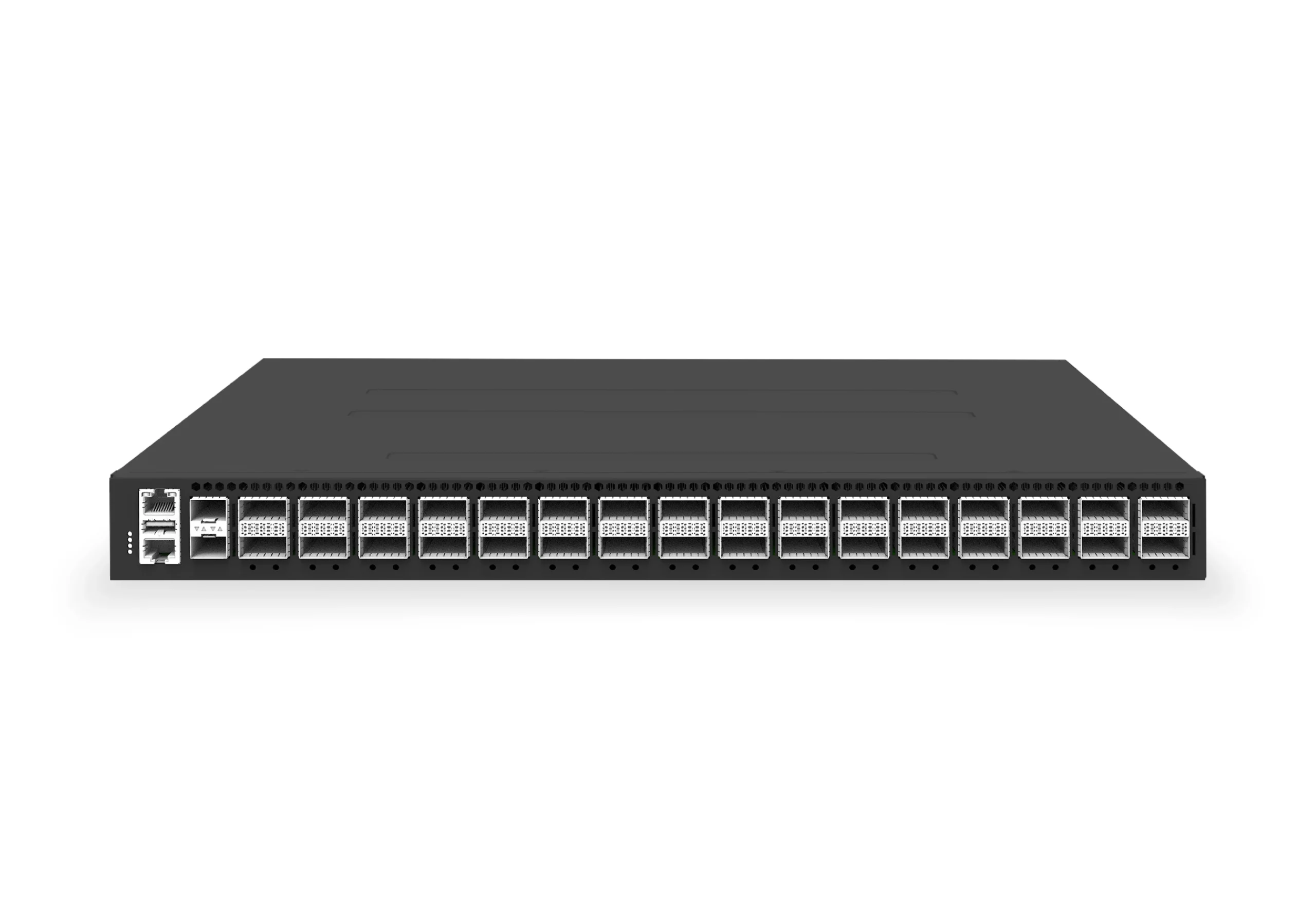 datacenter aiXS-DC-32X400-SP-G232-port 400G spine/core switch for high-capacity data center fabrics and AI-ready backbones.View product
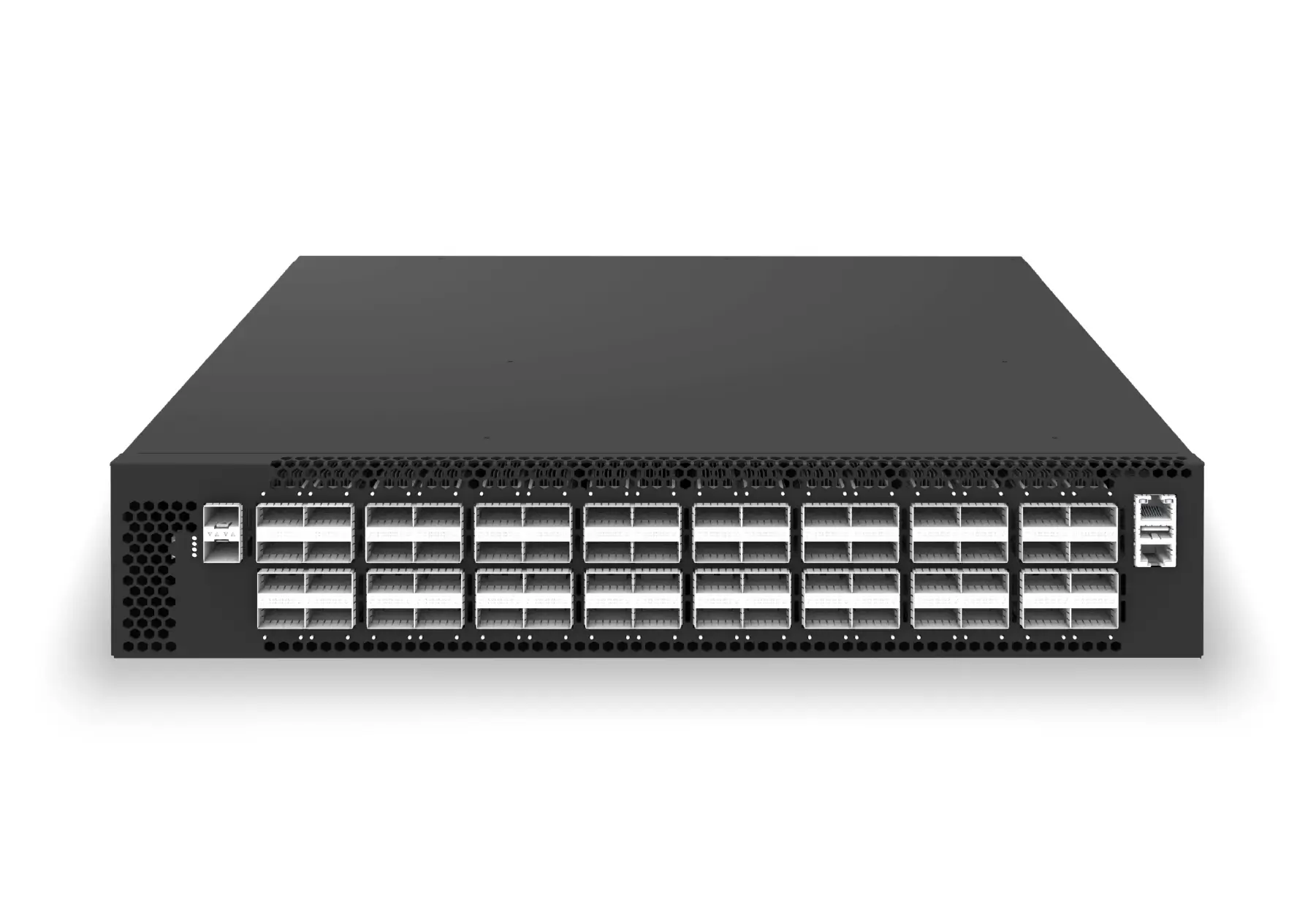 datacenter aiXS-DC-64X200-LS-G164-port 200G leaf/spine switch for high-bandwidth storage, compute, and scale-out data center fabrics.View product
Continue reading
Related articles
 Technical ArticleWhat Enterprise Buyers Actually Get From Open Networking Support: A SONiC Reality CheckA SONiC support reality check for Australian enterprise buyers covering community, commercial distribution, hardware, integration, SLA, and escalation.Read article
 Technical ArticleWarm Reboot and Fast Reboot in SONiC: How to Validate High Availability Without a Full OutageEngineering guide to validating SONiC warm reboot and fast reboot, covering ASIC support, control-plane recovery, traffic loss, telemetry, and rollback.Read article
 Technical ArticleSONiC Security Hardening: A Practical Guide for Data Center Network TeamsA practical SONiC security hardening guide for data center teams covering management access, patching, logging, RBAC, image provenance, telemetry, and audit evidence.Read article