
In brief
Engineering guidance on SONiC Telemetry Automation Is Reshaping Network Teams Monitor Open Switching Fabrics for Australian campus teams, covering PoE budgets.
Key takeaways
- For years, network monitoring was an afterthought layered on top of a switching purchase.
- This shift is especially visible in SONiC (Software for Open Networking in the Cloud), the open-source network operating system that now underpins production infrastructure at some of the world's largest cloud service providers.
- SONiC is built on a modular, container-based architecture where each network function runs in its own Docker container, according to the official SONiC project documentation on GitHub.
Why Network Telemetry Has Become the Open Networking Litmus Test
For years, network monitoring was an afterthought layered on top of a switching purchase. You bought a proprietary NOS, then accepted whatever bundled dashboard or third-party integration the vendor offered. In 2024 and 2025, that model is breaking down. As multi-vendor fabrics scale to support AI training clusters, campus refresh rollouts, and distributed aggregation layers, the quality of telemetry automation is no longer a nice-to-have. It is the operational backbone that determines whether a network team can actually run what they deploy.
This shift is especially visible in SONiC (Software for Open Networking in the Cloud), the open-source network operating system that now underpins production infrastructure at some of the world’s largest cloud service providers. SONiC’s architecture was not originally designed as a telemetry platform. But its containerized, Linux-native, SAI-abstracted design has turned out to be a surprisingly strong foundation for automated operational monitoring — and that has direct implications for Australian enterprise and data center buyers evaluating open networking alternatives.
What SONiC’s Architecture Actually Enables for Telemetry
SONiC is built on a modular, container-based architecture where each network function runs in its own Docker container, according to the official SONiC project documentation on GitHub. This design provides fault isolation, easier debugging, simplified upgrades, and enhanced scalability. But the telemetry implications are less widely discussed.
Because SONiC runs standard Linux interfaces and tools inside those containers, the monitoring and observability stack is not locked to a proprietary API. Network operators can access system state through standard Linux mechanisms: process-level health checks, container resource metrics, and standard socket and interface statistics. This is a meaningful departure from closed NOS environments where the monitoring layer is a black box with a vendor-specific API surface.
The SONiC Foundation describes SONiC as decoupling hardware from software through the Switch Abstraction Interface (SAI), which accelerates hardware innovation while keeping the software layer consistent across vendors. For telemetry, this means that SAI-level counters, state tables, and interface statistics are available through a common abstraction regardless of which ASIC or switch hardware is underneath. A network team monitoring a fabric built on SONiC does not need to learn a different telemetry model for each hardware vendor.
This is not a theoretical advantage. It is an architectural consequence of how SONiC was built.
Open-Source Telemetry Stacks That Run on SONiC
SONiC’s Linux-native design means the open-source telemetry ecosystem integrates more naturally than it does on proprietary NOS platforms. The key protocols and tools that network operations teams deploy on SONiC fabrics include:
- gNMI (gRPC Network Management Interface): A streaming telemetry protocol that pushes structured, model-driven data from the switch to collectors at configured intervals. SONiC supports gNMI through its containerized management framework, enabling real-time visibility into interface counters, BGP state, buffer utilization, and queue depth.
- OpenConfig YANG models: SONiC supports NETCONF and OpenConfig-aligned YANG models, providing vendor-neutral data models for configuration and state retrieval. This is relevant for teams building automation pipelines that need to work across multiple switch platforms.
- sFlow and streaming telemetry: SONiC supports sFlow sampling for flow-level visibility and continuous streaming telemetry for counter and state export. These are complementary: sFlow provides sampled flow data for traffic analysis, while streaming telemetry provides full-rate counter updates for capacity and performance monitoring.
- Prometheus and Grafana: Because SONiC exposes metrics through standard Linux interfaces and exporters, the Prometheus/Grafana stack — widely used in cloud-native infrastructure — can be deployed as the telemetry backend without proprietary adapters.
- Docker container health monitoring: SONiC’s containerized architecture means each service (BGP, LLDP, DHCP relay, telemetry, etc.) can be independently monitored for resource consumption, restart events, and health state.
For Australian data center teams already running Kubernetes or Prometheus for compute infrastructure, the SONiC telemetry model is operationally familiar. This lowers the barrier to adopting open networking in environments where the operations team’s skills are cloud-native, not traditional network-ops.
In-Band Network Telemetry and Path-Level Visibility
Beyond standard counter and state monitoring, SONiC fabrics support advanced telemetry mechanisms that are increasingly relevant for AI training and high-performance workloads.
In-band Network Telemetry (INT) allows switches to embed metadata — such as hop-by-hop latency, queue occupancy, and congestion state — directly into packet headers as they traverse the fabric. This provides per-flow, per-hop visibility without requiring separate out-of-band monitoring infrastructure. INT is particularly valuable in AI/ML training fabrics where tail latency and microbursts can silently degrade job completion times.
INT Path Telemetry extends this concept by providing end-to-end path visibility, enabling operations teams to pinpoint exactly where in the spine-leaf fabric a latency spike or packet drop occurred. For GPU backend fabrics running RoCE v2 traffic, this level of granularity is critical. A single congested link or misconfigured ECMP hash can cause RDMA retransmissions that multiply training job runtimes.
These capabilities are not proprietary add-ons. They are part of the SONiC telemetry framework and can be operationalized through standard automation pipelines. The difference between a vendor that ships INT support as a feature checkbox and one that provides the operational tooling to actually use it is where buyer evaluation should focus.
The Vendor Observability Lock-In Problem
A common pattern in enterprise networking is that the NOS vendor bundles a proprietary monitoring platform — often at additional license cost — that provides deep visibility only into its own switches. Switch to another vendor’s hardware, and you lose your telemetry pipeline. This creates a soft lock-in that is often more binding than the hardware contract itself.
SONiC’s open telemetry model breaks this pattern. Because the monitoring interfaces are based on open standards (gNMI, OpenConfig, sFlow, NETCONF/YANG), the same collector, dashboard, and alerting pipeline works across any SONiC-compatible switch hardware. A network team can replace a spine switch from one vendor with a different vendor’s hardware and retain full telemetry continuity.
For Australian enterprise buyers evaluating data center refresh or campus aggregation upgrades, this has a practical cost implication: the monitoring and observability stack does not need to be re-architected when hardware changes. The telemetry pipeline is portable.
This is not the case for most proprietary NOS platforms, where the observability layer is tightly coupled to the vendor’s hardware and software release cycle.
What This Means for Australian Buyers
The Australian enterprise and data center market has specific characteristics that make SONiC telemetry automation relevant:
- Distributed operations: Many Australian enterprises operate across multiple sites (east coast, west coast, regional) with lean network teams. Automated telemetry that can be centrally collected and analyzed is not a luxury — it is a staffing multiplier.
- Cloud-native skills availability: Australian IT teams increasingly have Kubernetes, Prometheus, and cloud monitoring experience. SONiC’s telemetry model aligns with these existing skills rather than requiring proprietary tooling training.
- AI infrastructure investment: Australian organizations investing in private AI inference and training infrastructure need fabric-level visibility into latency, congestion, and queue behavior. INT and path telemetry on SONiC fabrics provide this without requiring a separate overlay monitoring fabric.
- Vendor diversification pressure: Post-pandemic supply chain concerns and geopolitical factors have increased interest in multi-vendor and open networking strategies across the Australian market. SONiC’s vendor-neutral telemetry model supports this diversification without sacrificing operational visibility.
Operational Monitoring Maturity: Where Most Teams Are Today
Despite SONiC’s telemetry capabilities, operational monitoring maturity varies significantly across organizations. Based on patterns observed in the broader open networking community:
- Basic counter monitoring: Most SONiC deployments use sFlow or streaming telemetry for interface and BGP state monitoring. This is table-stakes.
- Automated alerting: Teams with Prometheus/Grafana stacks have automated alerting on threshold breaches, but proactive anomaly detection is less common.
- INT deployment: INT and path telemetry adoption is concentrated in data center AI fabrics where RoCE v2 and low-latency requirements justify the complexity. Broader enterprise campus and aggregation deployments have lower INT adoption.
- Closed-loop automation: True closed-loop automation — where telemetry data triggers automated remediation (e.g., traffic rerouting, queue reconfiguration, or port flap recovery) — is still aspirational for most organizations.
This maturity gap is an opportunity. The teams that invest in SONiC telemetry automation now will have a significant operational advantage as their fabrics scale. The teams that treat telemetry as a post-deployment add-on will find themselves reactive as complexity grows.
Key Takeaways for Network Operations Decision-Makers
- SONiC’s containerized architecture is inherently telemetry-friendly. Standard Linux interfaces, SAI abstraction, and Docker-based service isolation create a monitoring foundation that proprietary NOS platforms cannot easily replicate.
- Open-source telemetry stacks integrate natively. gNMI, OpenConfig, sFlow, Prometheus, and NETCONF/YANG support means the monitoring pipeline is vendor-portable and aligns with cloud-native operations skills.
- INT and path telemetry are production-grade for AI fabrics. Per-hop latency, queue visibility, and congestion monitoring are available on SONiC fabrics without proprietary add-ons or separate overlay infrastructure.
- Telemetry portability breaks vendor lock-in. The monitoring and observability stack works across any SONiC-compatible hardware, reducing the cost and risk of hardware refresh cycles.
- Australian buyers have specific advantages. Cloud-native skills availability, distributed operations requirements, and AI infrastructure investment all align with SONiC’s telemetry model.
The bottom line: for Australian enterprise and data center buyers evaluating open networking, telemetry automation should be a first-order evaluation criterion, not an afterthought. The monitoring model you choose will outlast the hardware you buy.
Engineering Evidence Floor
For telemetry and automation topics, accept the design only when state, change, and incident evidence are connected. The evidence package should include gNMI or NETCONF/YANG support, telemetry cadence, collector location, alert thresholds, config source of truth, rollback, packet visibility, retention, and escalation ownership. A practical pilot should run 24 hours of streaming telemetry, include 3 automated changes, and prove that an incident bundle can be produced within 2 hours.
| Evidence area | What to validate | Acceptance gate | Rework trigger |
|---|---|---|---|
| State export | gNMI/OpenConfig, NETCONF/YANG, counters, and optics data | 24 hours telemetry stream retained | Dashboards lose data during faults |
| Change control | Source of truth, diff, validation, and rollback | 3 automated changes pass readback | Automation pushes config without proof |
| Incident view | Alerts, logs, packet feeds, and queue/drop counters | Root cause path identified within 15 minutes | Graphs show symptoms but not cause |
| Security | Access control, retention, audit trail, and sovereignty | 30 days evidence policy documented | Telemetry path violates data handling rules |
| Support | Escalation owner, evidence bundle, patching, and RMA | P1 package ready within 2 hours | Vendor handoff lacks data |
Engineering FAQ
What should be tested before moving campus switching to SONiC or open networking? Test PoE behaviour, NAC integration, VLAN and policy design, STP or MC-LAG interaction, multicast, monitoring, upgrade rollback, and help-desk workflows. Campus readiness is an operations test, not only a forwarding test.
Where do campus refresh projects usually carry hidden risk? The risk often sits in closets: power budget, old cabling, undocumented uplinks, mixed endpoint types, voice devices, cameras, badge systems, and change windows. Those details should be inventoried before selecting switch models.
How should Australian campus teams structure a pilot? Choose one representative site or building, document endpoint classes, run PoE and failover tests, verify monitoring, train operations staff, and define rollback steps before expanding to the broader estate.
Related xSONiC Resources
Sources Reviewed
- Ethernet Network Adapters - ConnectX NICs | NVIDIA
- NVIDIA BlueField Data Processing Unit
- NVIDIA Spectrum-X Ethernet Platform
- OpenConfig gNMI Specification
- OpenConfig
- RFC 7950 - The YANG 1.1 Data Modeling Language
- RFC 6241 - Network Configuration Protocol (NETCONF)
- SONiC Project Documentation
- Broadcom Ethernet Switching
- Marvell Switching
- NVIDIA Ethernet Switching
- Open Compute Networking
- SONiC GitHub
- SONiC Foundation
Product fit
Products referenced for evaluation
These products are referenced for evaluation context in the article. Confirm workload, port, optics, software, interoperability, and support requirements against the exact deployment before procurement.
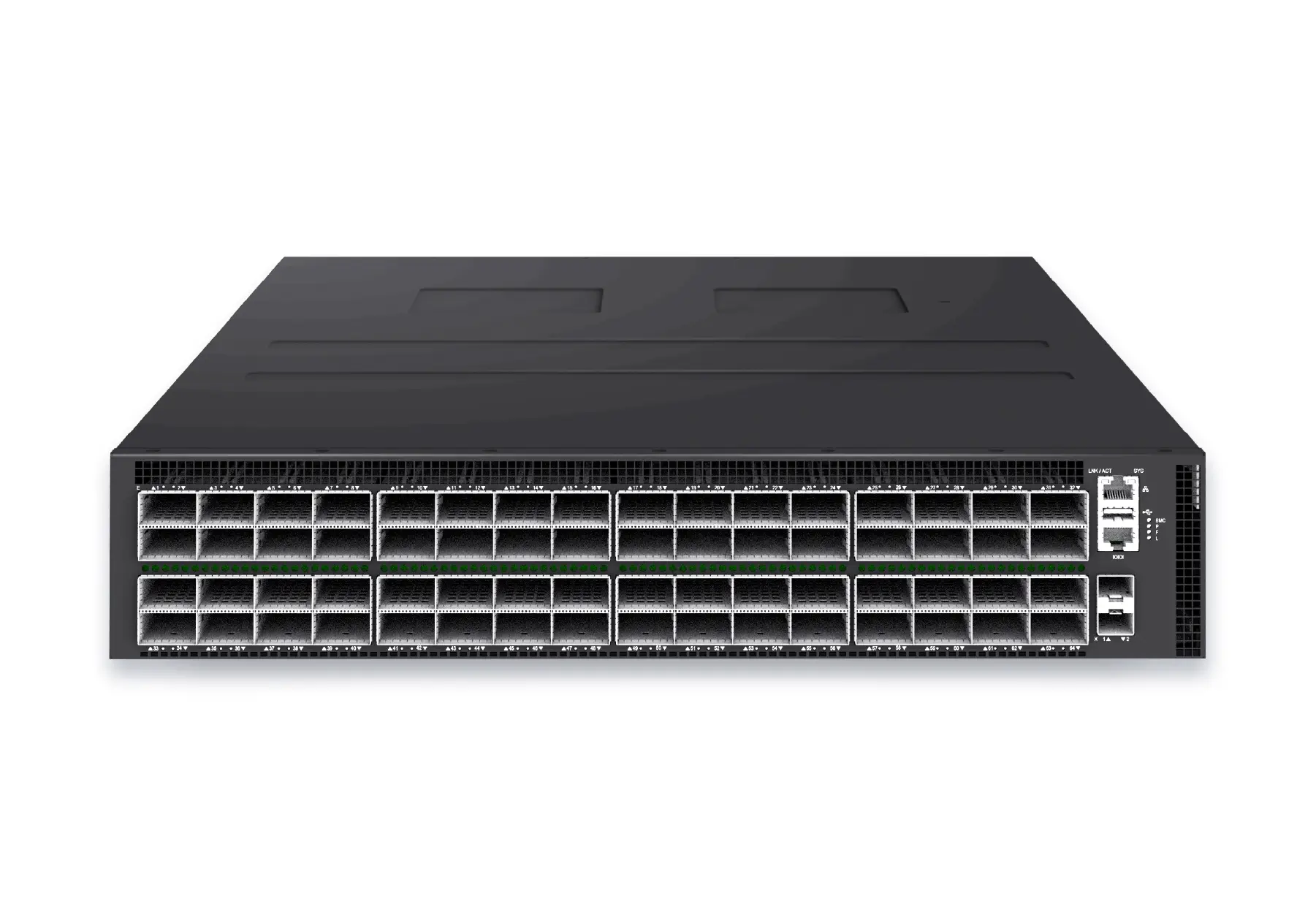 datacenter aiXS-DC-64X800-AI-G164-port 800G AI fabric switch for large-scale GPU clusters, HPC backbones, and ultra-high-throughput data center networks.View product
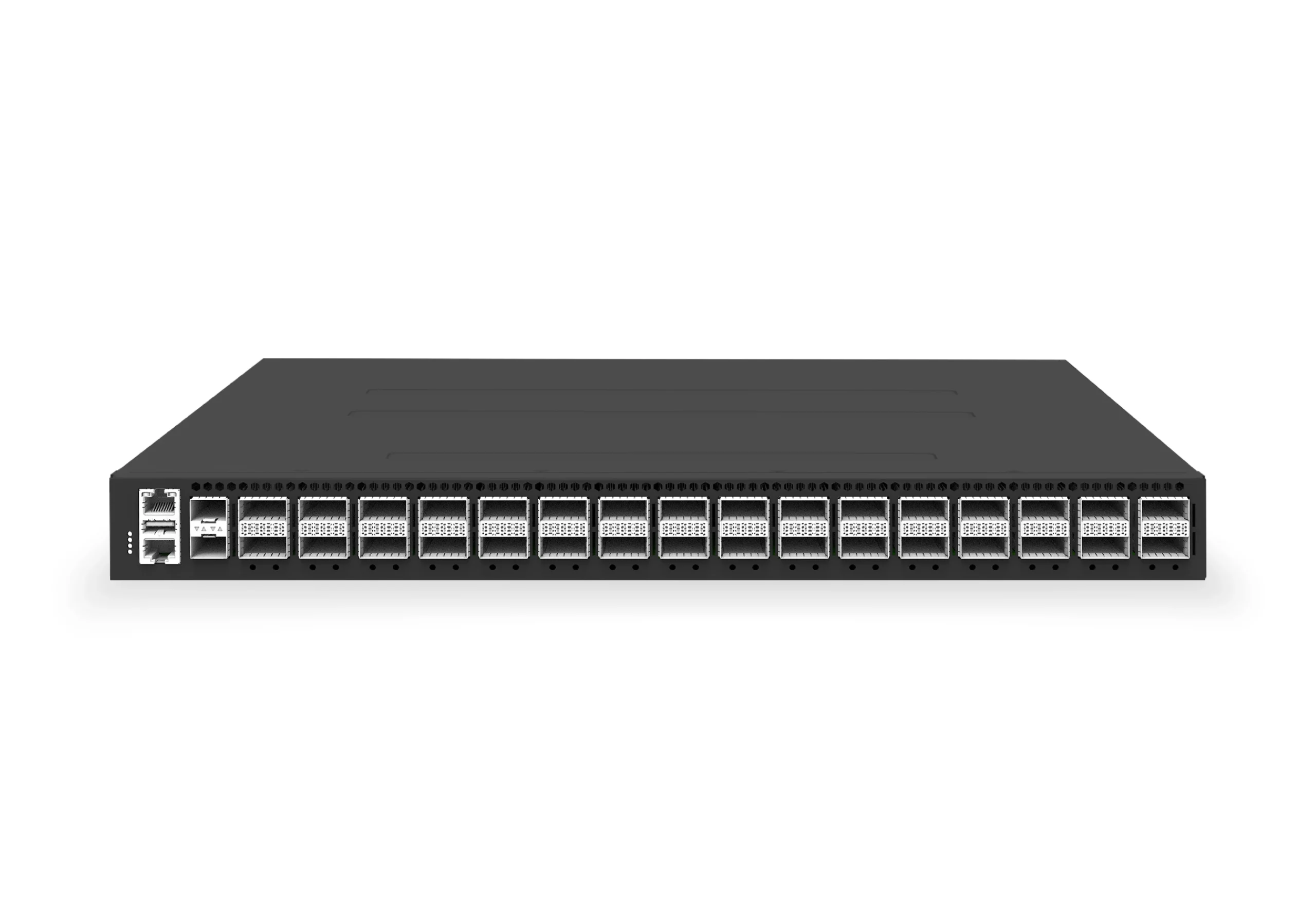 datacenter aiXS-DC-32X400-SP-G232-port 400G spine/core switch for high-capacity data center fabrics and AI-ready backbones.View product
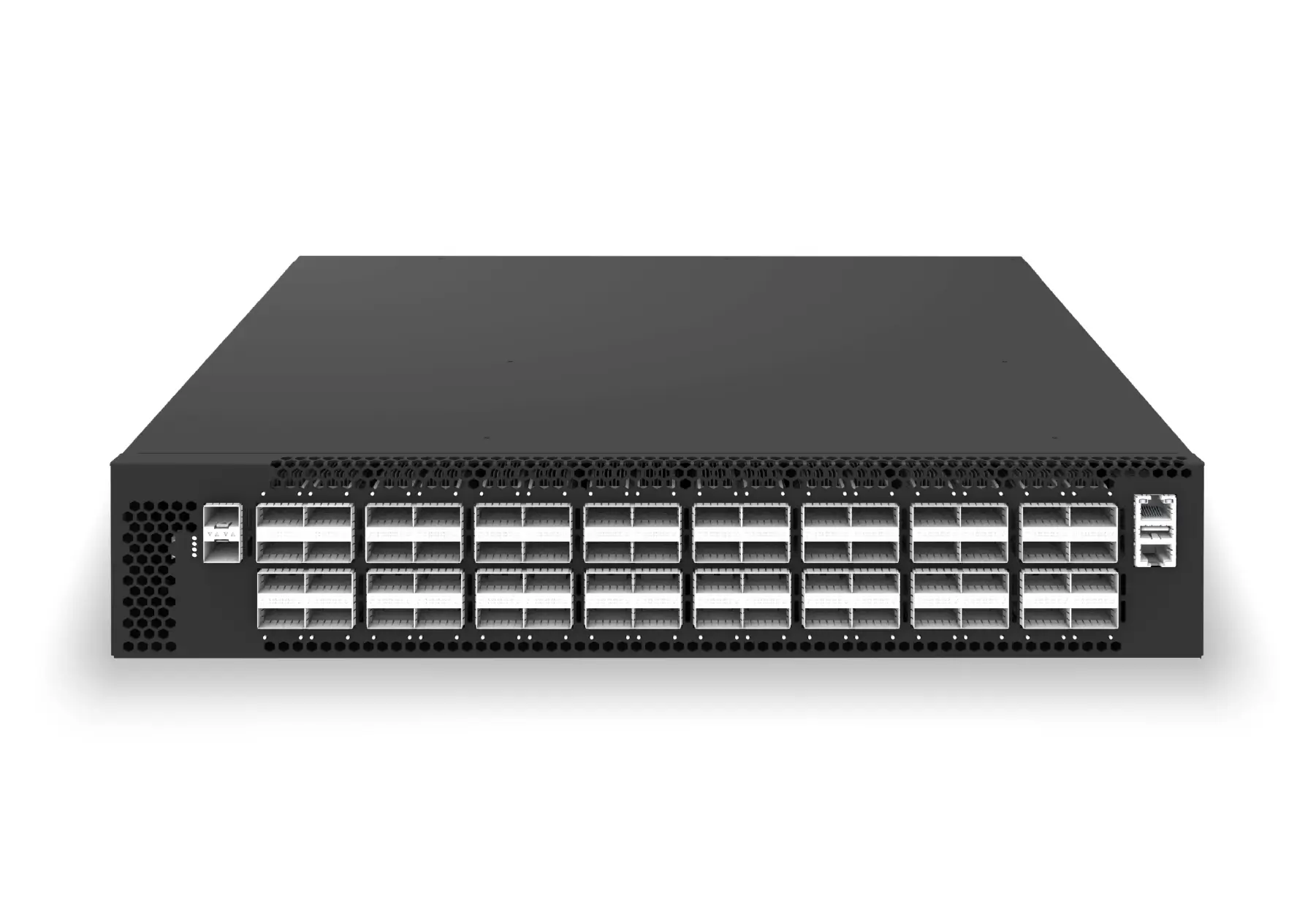 datacenter aiXS-DC-64X200-LS-G164-port 200G leaf/spine switch for high-bandwidth storage, compute, and scale-out data center fabrics.View product
Continue reading
Related articles
 Technical ArticleOpen Networking Support for Enterprise Buyers: How SONiC and Open NOS Models Actually WorkEngineering guidance on Open Networking Support for Enterprise Buyers for Australian campus teams, covering PoE budgets, access-layer resilience, migration risk.Read article
 Technical ArticleFrom Proprietary Lock-In to Open Networking: A Practical Enterprise SONiC Migration PlaybookA practical Enterprise SONiC migration playbook for Australian buyers moving from proprietary switch OS to open networking.Read article
 Technical ArticleWhy Centralized AI Fabric Management Is the Missing Layer in Open NetworkingEngineering guidance on Centralized AI Fabric Management Is the Missing Layer in Open Networking for Australian network teams, covering underlay design, EVPN-VXLAN.Read article