In brief
Engineering guidance on SONiC Telemetry Automation Is Quietly Rewriting Network Operations. Australian Enterprise Teams Should Pay Attention for Australian campus.
Key takeaways
- SONiC (Software for Open Networking in the Cloud), the Linux Foundation-backed open-source network operating system, has seen its telemetry and monitoring capabilities mature significantly in recent releases.
- The SONiC Foundation describes the platform as offering 'a full suite of network functionality, like BGP and RDMA, that has been production-hardened in the data centers of some of the largest cloud service providers.' What is less commonly discussed outside technical circles is how SONiC's telemetry subsystem works in practice: each network function runs in its own Docker container, enabling independent health monitoring, granular metric export, and modular troubleshooting that monolithic NOS architectures struggle to replicate.
- NVIDIA's Ethernet switching page confirms that Pure SONiC is positioned alongside Cumulus Linux and NetQ as part of a broader operational software ecosystem, noting that Spectrum Ethernet switches 'enable operational efficiency with a wide variety of network operating system choices, including NVIDIA Cumulus Linux and Pure SONiC.' The inclusion of NVIDIA NetQ for 'holistic, real-time visibility, troubleshooting, and lifecycle management' alongside SONiC underscores that the telemetry conversation is not just about data collection but about what you do with it operationally.
What Happened: SONiC Telemetry Is Moving Beyond Hyperscaler DIY
SONiC (Software for Open Networking in the Cloud), the Linux Foundation-backed open-source network operating system, has seen its telemetry and monitoring capabilities mature significantly in recent releases. Originally developed and production-hardened inside the data centers of major cloud service providers — as the SONiC Foundation and GitHub repository both document — the platform’s gRPC-based streaming telemetry, OpenConfig model support, and containerized architecture are now drawing attention from enterprise and AI infrastructure teams who need operational visibility without proprietary lock-in.
The SONiC Foundation describes the platform as offering ‘a full suite of network functionality, like BGP and RDMA, that has been production-hardened in the data centers of some of the largest cloud service providers.’ What is less commonly discussed outside technical circles is how SONiC’s telemetry subsystem works in practice: each network function runs in its own Docker container, enabling independent health monitoring, granular metric export, and modular troubleshooting that monolithic NOS architectures struggle to replicate.
NVIDIA’s Ethernet switching page confirms that Pure SONiC is positioned alongside Cumulus Linux and NetQ as part of a broader operational software ecosystem, noting that Spectrum Ethernet switches ‘enable operational efficiency with a wide variety of network operating system choices, including NVIDIA Cumulus Linux and Pure SONiC.’ The inclusion of NVIDIA NetQ for ‘holistic, real-time visibility, troubleshooting, and lifecycle management’ alongside SONiC underscores that the telemetry conversation is not just about data collection but about what you do with it operationally.
Why It Matters: Telemetry Automation Is the Operational Divide
For enterprise and AI data center network teams, the gap between traditional SNMP polling and modern streaming telemetry is not academic. SNMP polling introduces 30-60 second collection intervals, limited metadata, and configuration drift risk. SONiC’s native gRPC streaming telemetry exports interface counters, BGP session state, buffer utilization, queue depth, and system health metrics in near real-time, allowing downstream collectors and analytics platforms to detect anomalies before they become outages.
This matters in the Australian market for several reasons. First, Australian enterprises and service providers face growing data sovereignty and compliance requirements that favor self-hosted monitoring stacks over vendor-cloud telemetry portals. SONiC’s open telemetry export fits this model natively. Second, the rapid growth of AI infrastructure in Australia — driven by mining, financial services, healthcare, and government AI adoption — demands network operational visibility at a scale and granularity that traditional campus switching stacks were never designed to deliver.
The containerized SONiC architecture, where each function runs in its own Docker container, provides what the GitHub repository describes as ‘better fault isolation, easier debugging and troubleshooting, simplified upgrades and maintenance, and enhanced scalability.’ For operations teams, this translates to the ability to monitor and restart individual network services without full switch reboots — a capability that proprietary NOS vendors have historically either charged a premium for or not offered at all.
However, it is important to note that SONiC’s telemetry maturity varies by deployment model. Community SONiC provides the foundational telemetry stack, but enterprise-grade operational tooling — such as automated alerting, topology-aware visualization, and closed-loop remediation — typically requires additional integration work or a commercial controller platform. This is where the gap between ‘open source’ and ‘operations-ready’ becomes a real buyer consideration.
The xSONiC Buyer Angle: Telemetry That Serves AI Fabric and Campus Operations
For network teams evaluating xSONiC data center AI switches and bare-metal platforms, telemetry automation is not a nice-to-have. In AI fabric environments where RoCE v2, RDMA, and lossless Ethernet are mission-critical, the ability to stream buffer utilization, queue depth, and congestion notification metrics in real-time directly impacts GPU cluster performance. INT (In-band Network Telemetry) and IPTPath telemetry provide hop-by-hop visibility into packet latency and path selection — capabilities that are essential for diagnosing fabric-level issues in spine-leaf topologies.
At the campus and aggregation layer, xSONiC access and aggregation switches running Enterprise SONiC benefit from the same telemetry architecture, enabling PoE power monitoring, interface health tracking, and policy-based routing visibility without requiring a separate monitoring appliance for every switch.
For Australian buyers, the operational model looks like this:
| Capability | Traditional Proprietary NOS | SONiC + Open Telemetry Stack |
|---|---|---|
| Telemetry export | Vendor-proprietary MIB or cloud portal | gRPC streaming, OpenConfig YANG models |
| Data ownership | Vendor-hosted or licensed collector | Self-hosted, full data sovereignty |
| Fault isolation | Monolithic, full-switch impact | Container-level, service-level isolation |
| Vendor lock-in | High, tied to NOS vendor lifecycle | Low, standard Linux interfaces and tools |
| AI fabric visibility | Often limited or add-on license | Native INT/IPTPath support in SONiC stack |
| Cost model | Per-feature licensing | Open source base, commercial support optional |
What the Sources Actually Tell Us: SONiC Telemetry Architecture Facts
Grounding this analysis in the available sources:
SONiC Foundation (sonicfoundation.dev) confirms SONiC is an open-source NOS ‘based on Linux that runs on switches from multiple vendors and ASICs’ and that it ‘offers a full suite of network functionality, like BGP and RDMA.’ The Foundation highlights that SONiC ‘decouples hardware and software’ through the Switch Abstraction Interface (SAI) and is ‘the first solution to break monolithic switch software into multiple containerized components that accelerate software evolution.’
GitHub (sonic-net/SONiC) details the architecture: SONiC uses Docker containers for modular design, providing ‘better fault isolation, easier debugging and troubleshooting, simplified upgrades and maintenance, and enhanced scalability.’ The project supports ‘standard Linux interfaces and tools’ and offers ‘programmable’ capabilities supporting ‘modern network programming paradigms.’ Configuration is JSON-based with both CLI and programmatic methods available.
NVIDIA Ethernet Switching (nvidia.com/en-us/networking/ethernet-switching) positions Pure SONiC alongside Cumulus Linux and NVIDIA NetQ as part of the Spectrum switching software ecosystem. NVIDIA describes NetQ as providing ‘holistic, real-time visibility, troubleshooting, and lifecycle management’ and notes that Spectrum switches support ‘both traditional, pluggable, optical connectivity and groundbreaking co-packaged silicon photonics networking.’ The page explicitly states Spectrum switches ‘enable operational efficiency with a wide variety of network operating system choices, including NVIDIA Cumulus Linux and Pure SONiC.‘
The Australian Context: Data Sovereignty and AI Infrastructure Demand
Australia’s network infrastructure market is under pressure from two directions. On one side, the Australian Government’s hosting certification framework and data sovereignty expectations mean that enterprise and public sector buyers increasingly prefer monitoring and telemetry solutions where data does not leave Australian-controlled infrastructure. SONiC’s self-hosted telemetry model aligns with this preference in a way that vendor-cloud monitoring portals often do not.
On the other side, Australia’s AI infrastructure build-out — from hyperscale data centers in Sydney and Melbourne to edge AI deployments in mining, agriculture, and logistics — is creating demand for network operational visibility at scales that campus-era NOS tooling was not built for. When a single AI training cluster may involve hundreds of 400G or 800G switch ports, streaming telemetry is not optional; it is the only viable monitoring approach.
For Australian network teams evaluating open networking as an alternative to incumbent proprietary stacks, the telemetry question is often the make-or-break operational concern. The NOS must not only forward packets; it must prove it can provide the operational visibility that network operations centers (NOCs), security teams, and platform engineering groups depend on. SONiC’s architecture, built from the ground up for hyperscaler operational requirements, provides a foundation that enterprise deployments can build on — but the maturity of the integration layer is what determines operational success.
What to Watch: Controller Integration and Closed-Loop Automation
The next phase of SONiC telemetry is not just data export but closed-loop automation. The question for enterprise buyers is: once you have real-time telemetry streaming from every switch in your fabric, what consumes it, how fast can it act, and who owns the remediation logic?
Commercial controller platforms like the xSONiC AIDC Controller are positioned to bridge this gap, providing topology-aware visualization, automated alerting, and policy-driven remediation on top of SONiC’s native telemetry stack. For Australian buyers, the value proposition is operational: a controller that runs on-premises, consumes open telemetry data, and does not require a return-trip to a vendor cloud for decision-making.
The NETCONF and YANG model standardization that SONiC supports further strengthens this story. Standardized configuration management means that telemetry-driven configuration changes — for example, adjusting buffer allocations in response to congestion telemetry, or rerouting traffic based on INT latency data — can be automated with confidence that the configuration model is consistent across switch vendors.
For network teams planning AI fabric deployments, the telemetry-to-automation pipeline is the strategic asset. The switches are the data plane; the telemetry is the control signal; the controller is the brain. Open networking, done right, gives you ownership of all three layers.
Engineering Evidence Floor
For telemetry and automation topics, accept the design only when state, change, and incident evidence are connected. The evidence package should include gNMI or NETCONF/YANG support, telemetry cadence, collector location, alert thresholds, config source of truth, rollback, packet visibility, retention, and escalation ownership. A practical pilot should run 24 hours of streaming telemetry, include 3 automated changes, and prove that an incident bundle can be produced within 2 hours.
| Evidence area | What to validate | Acceptance gate | Rework trigger |
|---|---|---|---|
| State export | gNMI/OpenConfig, NETCONF/YANG, counters, and optics data | 24 hours telemetry stream retained | Dashboards lose data during faults |
| Change control | Source of truth, diff, validation, and rollback | 3 automated changes pass readback | Automation pushes config without proof |
| Incident view | Alerts, logs, packet feeds, and queue/drop counters | Root cause path identified within 15 minutes | Graphs show symptoms but not cause |
| Security | Access control, retention, audit trail, and sovereignty | 30 days evidence policy documented | Telemetry path violates data handling rules |
| Support | Escalation owner, evidence bundle, patching, and RMA | P1 package ready within 2 hours | Vendor handoff lacks data |
Engineering FAQ
What should be tested before moving campus switching to SONiC or open networking? Test PoE behaviour, NAC integration, VLAN and policy design, STP or MC-LAG interaction, multicast, monitoring, upgrade rollback, and help-desk workflows. Campus readiness is an operations test, not only a forwarding test.
Where do campus refresh projects usually carry hidden risk? The risk often sits in closets: power budget, old cabling, undocumented uplinks, mixed endpoint types, voice devices, cameras, badge systems, and change windows. Those details should be inventoried before selecting switch models.
How should Australian campus teams structure a pilot? Choose one representative site or building, document endpoint classes, run PoE and failover tests, verify monitoring, train operations staff, and define rollback steps before expanding to the broader estate.
Related xSONiC Resources
Sources Reviewed
- Ethernet Network Adapters - ConnectX NICs | NVIDIA
- NVIDIA BlueField Data Processing Unit
- NVIDIA Spectrum-X Ethernet Platform
- OpenConfig gNMI Specification
- OpenConfig
- RFC 7950 - The YANG 1.1 Data Modeling Language
- RFC 6241 - Network Configuration Protocol (NETCONF)
- IEEE 802.11be Wireless LAN Standard
- IEEE 802.3bt Power over Ethernet
- SONiC Project Documentation
- Broadcom Ethernet Switching
- Marvell Switching
- NVIDIA Ethernet Switching
- Open Compute Networking
- SONiC GitHub
- SONiC Foundation
Product fit
Products referenced for evaluation
These products are referenced for evaluation context in the article. Confirm workload, port, optics, software, interoperability, and support requirements against the exact deployment before procurement.
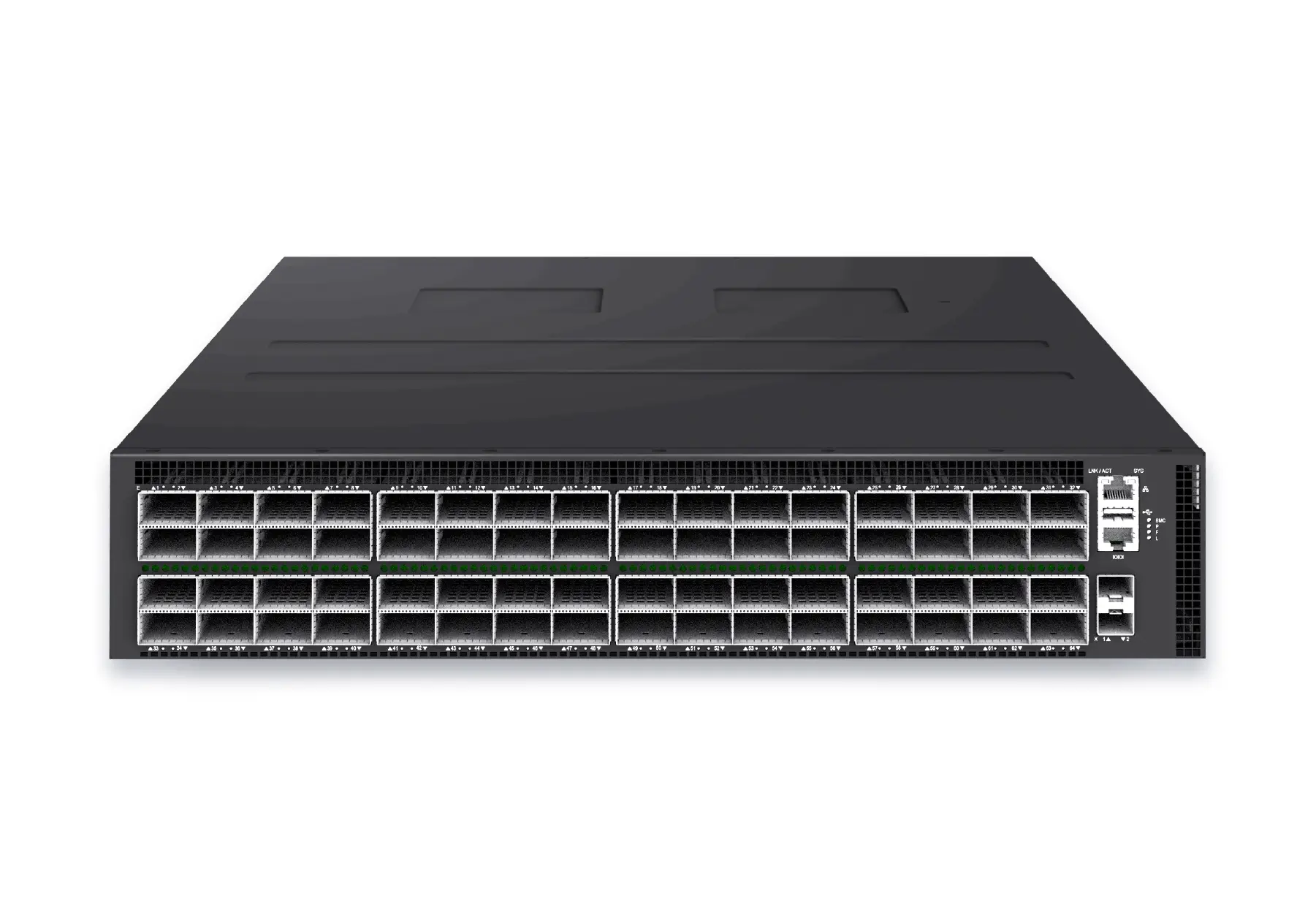 datacenter aiXS-DC-64X800-AI-G164-port 800G AI fabric switch for large-scale GPU clusters, HPC backbones, and ultra-high-throughput data center networks.View product
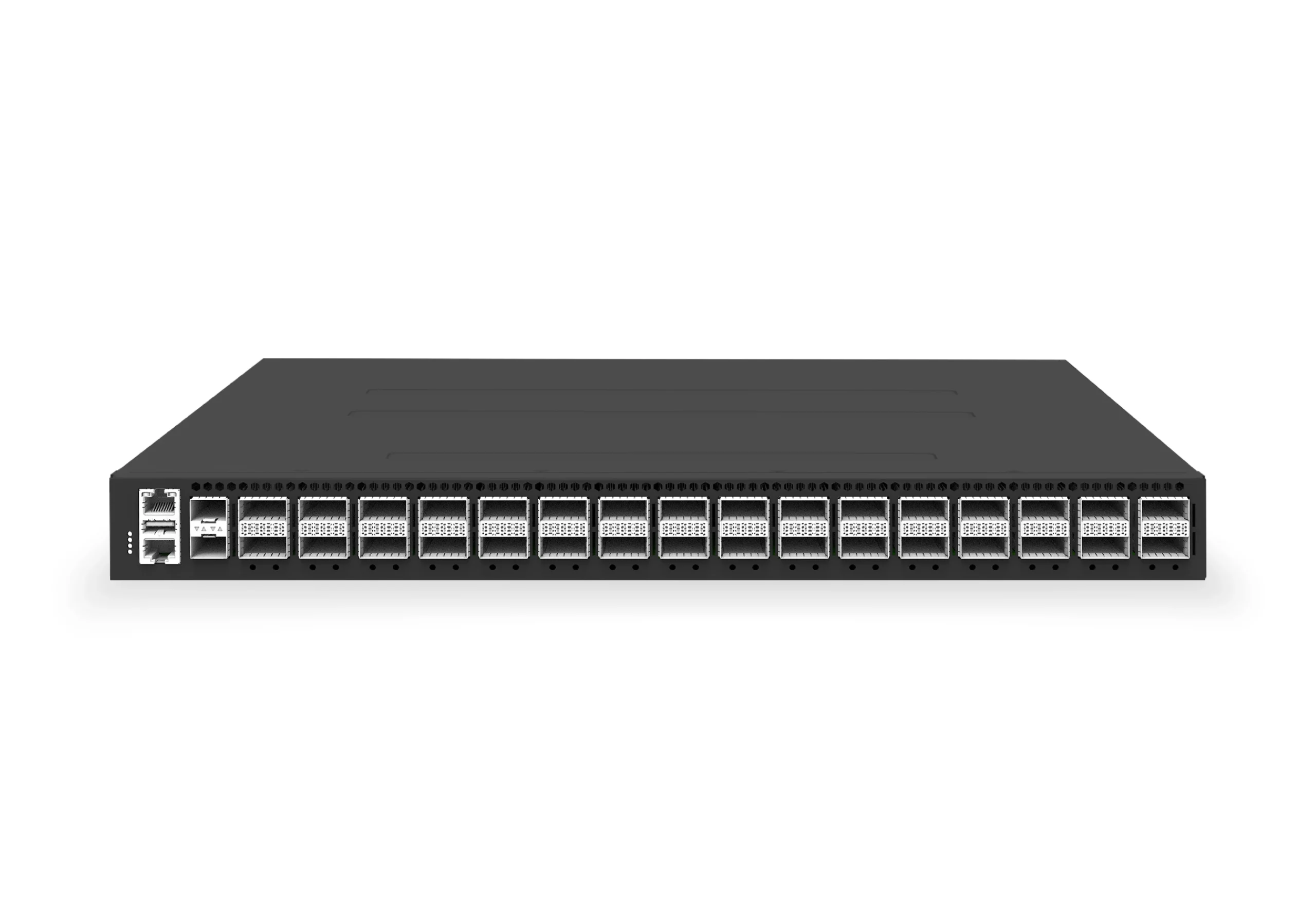 datacenter aiXS-DC-32X400-SP-G232-port 400G spine/core switch for high-capacity data center fabrics and AI-ready backbones.View product
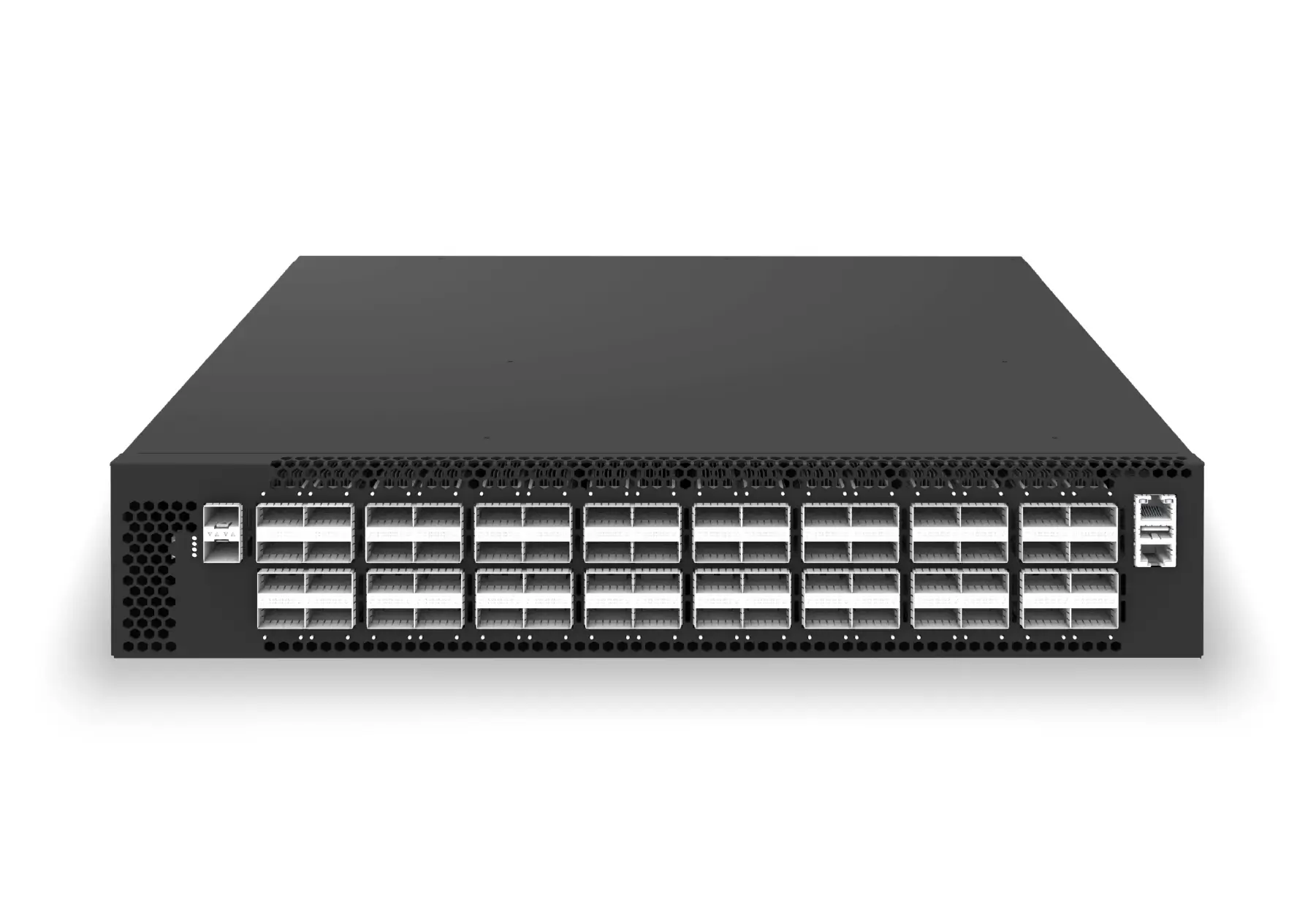 datacenter aiXS-DC-64X200-LS-G164-port 200G leaf/spine switch for high-bandwidth storage, compute, and scale-out data center fabrics.View product
Continue reading
Related articles
 Technical ArticleWhat Enterprise Buyers Actually Get From Open Networking Support: A SONiC Reality CheckA SONiC support reality check for Australian enterprise buyers covering community, commercial distribution, hardware, integration, SLA, and escalation.Read article
 Technical ArticleWarm Reboot and Fast Reboot in SONiC: How to Validate High Availability Without a Full OutageEngineering guide to validating SONiC warm reboot and fast reboot, covering ASIC support, control-plane recovery, traffic loss, telemetry, and rollback.Read article
 Technical ArticleSONiC Security Hardening: A Practical Guide for Data Center Network TeamsA practical SONiC security hardening guide for data center teams covering management access, patching, logging, RBAC, image provenance, telemetry, and audit evidence.Read article