
In brief
Practical SONiC NOS guide for Australian data centre teams covering architecture, SAI, automation, support, telemetry, and deployment validation.
Key takeaways
- Australian data centre operators face a common tension: the need for flexible, cost-effective network infrastructure versus the risk of vendor lock-in.
- This article explains what SONiC is, how its architecture works, and what Australian teams should consider before adopting it.
- SONiC stands for Software for Open Networking in the Cloud. It is a free, open-source network operating system that runs on physical switches in data centre environments.
Introduction
Australian data centre operators face a common tension: the need for flexible, cost-effective network infrastructure versus the risk of vendor lock-in. SONiC — Software for Open Networking in the Cloud — offers an alternative path. As an open-source network operating system built on Linux and hosted by the Linux Foundation, SONiC enables organisations to run the same NOS across switches from different hardware vendors and ASIC families.
This article explains what SONiC is, how its architecture works, and what Australian teams should consider before adopting it.
What is SONiC?
SONiC stands for Software for Open Networking in the Cloud. It is a free, open-source network operating system that runs on physical switches in data centre environments. Unlike proprietary NOS offerings tied to a single hardware vendor, SONiC is designed to be portable across multiple switch platforms.
Key characteristics from the SONiC Foundation and GitHub documentation:
- Open source: Licensed under Apache License 2.0
- Linux-based: Built on Debian Linux, using familiar Linux tooling and interfaces
- Multi-vendor: Supports switches from various hardware manufacturers and ASIC families
- Production-tested: Described by the SONiC Foundation as production-hardened in data centres of some of the largest cloud service providers
- Community-governed: Hosted as a Linux Foundation project with an active contributor community
Architecture: Why Containerisation Matters
One of SONiC’s distinguishing design choices is its container-based architecture. Rather than bundling all network functions into a single monolithic software stack, SONiC breaks each function into its own Docker container.
According to the SONiC GitHub repository, this modular design provides:
- Better fault isolation: A problem in one container (for example, BGP) does not necessarily bring down the entire switch
- Easier debugging and troubleshooting: Operators can inspect, restart, or replace individual containers
- Simplified upgrades: Components can be updated independently without full NOS reinstallation
- Enhanced scalability: The modular approach supports growing network demands
The SONiC Foundation describes this as the first solution to break monolithic switch software into multiple containerised components, accelerating software evolution.
For Australian data centre teams accustomed to traditional switch OS upgrades that require maintenance windows and full reboots, this granular update model is a meaningful operational advantage.
Core Network Capabilities
SONiC provides a full suite of network functionality suited to data centre environments:
| Capability | Description |
|---|---|
| BGP | Full-featured BGP implementation for data centre leaf-spine fabrics |
| RDMA | Remote Direct Memory Access support for high-performance, low-latency workloads |
| SAI (Switch Abstraction Interface) | Hardware abstraction layer that decouples NOS software from specific ASIC hardware |
| JSON-based configuration | Switch configuration stored in structured JSON files, enabling automation |
| Standard Linux interfaces | Uses familiar Linux networking tools and command-line interfaces |
Configuration in SONiC supports both CLI-based operations and programmatic methods, making it suitable for teams that want to integrate switch management into existing automation pipelines.
Multi-Vendor Hardware Ecosystem
SONiC’s portability across hardware platforms is enabled by the Switch Abstraction Interface (SAI). SAI is a standardised API that sits between the SONiC software and the underlying switch ASIC, allowing the same SONiC image to run on hardware from different vendors.
This matters for Australian organisations evaluating switch hardware:
- Reduced lock-in: The ability to choose (or change) switch hardware without replacing the NOS
- Competitive procurement: Multiple hardware vendors can bid on the same SONiC-compatible platform
- Spare parts flexibility: Different switch models can run the same software, simplifying fleet management
As an example of the broader ecosystem, NVIDIA positions SONiC (marketed as Pure SONiC) as one of the supported NOS options alongside Cumulus Linux across its Spectrum Ethernet switch portfolio, which spans from 100Gb/s (SN2000 series) through to 800Gb/s (SN5000 and SN6000 series). Other switch vendors also support SONiC; a full list of supported devices and platforms is maintained on the SONiC Wiki.
Important note: xSONiC product compatibility, pricing, and availability in Australia are not covered in the source materials and require separate verification.
SONiC in Australian Data Centres: Practical Considerations
Before deploying SONiC in an Australian environment, teams should evaluate several factors:
Potential benefits:
- Vendor-neutral NOS reduces long-term hardware dependency
- Open-source model eliminates per-switch NOS licensing costs (hardware cost remains)
- Active community provides documentation, bug fixes, and feature development
- Containerised architecture supports modern operational practices (CI/CD, automation)
Items requiring local verification:
- Support and SLAs: The open-source project offers community support. Australian organisations may need a commercial support arrangement.
- Compliance: Whether SONiC meets Australian data sovereignty, ASD Essential Eight, or other regulatory requirements needs specific assessment.
- Interoperability: Confirm specific switch models and optics are available through Australian distributors.
- Skills availability: SONiC requires Linux and container expertise. Assess team readiness or training needs.
- Local case studies: Source materials describe SONiC as production-hardened in large cloud provider environments but do not name specific Australian deployments.
Getting Started with SONiC
For teams wanting to evaluate SONiC, the project supports several installation methods:
- ONIE Installation: The recommended method for production deployments on bare-metal switches
- Docker Installation: For development and testing purposes
- Virtual Machine: For learning, lab environments, and proof-of-concept work
Prerequisites:
- Compatible network switch hardware (check the Supported Devices list on the SONiC Wiki)
- Basic understanding of Linux networking
- Docker knowledge is recommended
Community resources include the SONiC Wiki, GitHub repository (2.8k stars, 1.3k forks), Slack channel, mailing lists, and weekly community meetings.
Decision Framework: Is SONiC Right for Your Australian Data Centre?
| Factor | Consideration |
|---|---|
| Team has Linux/automation skills | Strong fit — SONiC uses standard Linux tooling |
| Vendor independence is a priority | Strong fit — SAI enables multi-vendor portability |
| Need for commercial support SLA | Requires third-party or vendor support arrangement |
| Regulatory compliance is critical | Requires specific legal/compliance assessment |
| Budget for per-switch NOS licensing | Open-source model removes this cost |
| Time to deploy | Lab evaluation via VM is low-risk; production requires hardware validation |
SONiC Deployment Acceptance Matrix
| Workstream | Evidence to capture | Acceptance gate | Rework trigger |
|---|---|---|---|
| Platform support | Switch SKU, ASIC, ONIE status, SAI version, optics matrix, and target SONiC image | 2 switch models boot, upgrade, rollback, and pass link tests at 100G/400G speed | The device appears on a generic list but the target image and ASIC feature set are not proven |
| Control plane | BGP underlay, route policy, ECMP, management VRF, NTP, AAA, syslog, and config backup | 30 days of lab change records with no unexplained route loss | Operators can configure a demo but cannot reproduce state after reboot |
| Automation | Golden config, CI validation, JSON diff, gNMI or API readback, and rollback procedure | 3 repeatable changes complete with state validation and no manual drift | CLI-only edits become the operational default |
| Operations | Telemetry counters, log bundle, alarm thresholds, upgrade plan, failure runbook, and escalation owner | P1 simulation completed within 24 hours with evidence package ready for support | Fault isolation depends on one engineer’s memory |
| Compliance and lifecycle | Patch process, CVE handling, support SLA, spare plan, audit logging, and ownership model | 12 months lifecycle plan approved before production cutover | The team has no answer for security patch, RMA, or audit evidence requests |
Summary
SONiC represents a maturing open-source option for data centre networking. Its containerised architecture, multi-vendor hardware support, and active community make it a credible alternative to proprietary NOS offerings. For Australian data centre teams, the key next steps are evaluating hardware compatibility, assessing support arrangements, and confirming compliance requirements against local regulations.
Contact xSONiC to discuss SONiC-compatible hardware options for your Australian data centre.
[Internal link suggestion: /contact/ | /products/ | /solutions/]
Engineering FAQ
What should be proven before adopting SONiC in production? Prove the exact switch SKU, ASIC, SAI version, SONiC image, optics, routing features, telemetry, upgrade path, rollback, and support process. A lab boot is not production readiness.
Why does SONiC still need commercial validation if it is open source? The open project provides the NOS foundation, but production risk sits in the tested image, platform drivers, ASIC behaviour, optics qualification, lifecycle policy, and support ownership.
What belongs in the first SONiC operations runbook? Include image version, config source of truth, backup and restore steps, BGP checks, interface and optics checks, telemetry fields, upgrade and rollback commands, log collection, and escalation ownership.
Related xSONiC Resources
Sources Reviewed
- SONiC Foundation
- SONiC GitHub
- SONiC Project Documentation
- Open Compute Networking
- OpenConfig gNMI Specification
- OpenConfig
- ACSC Essential Eight
- OAIC Notifiable Data Breaches
- APRA CPS 234 Information Security
- Broadcom Ethernet Switching
- Marvell Switching
- NVIDIA Ethernet Switching
Product fit
Products referenced for evaluation
These products are referenced for evaluation context in the article. Confirm workload, port, optics, software, interoperability, and support requirements against the exact deployment before procurement.
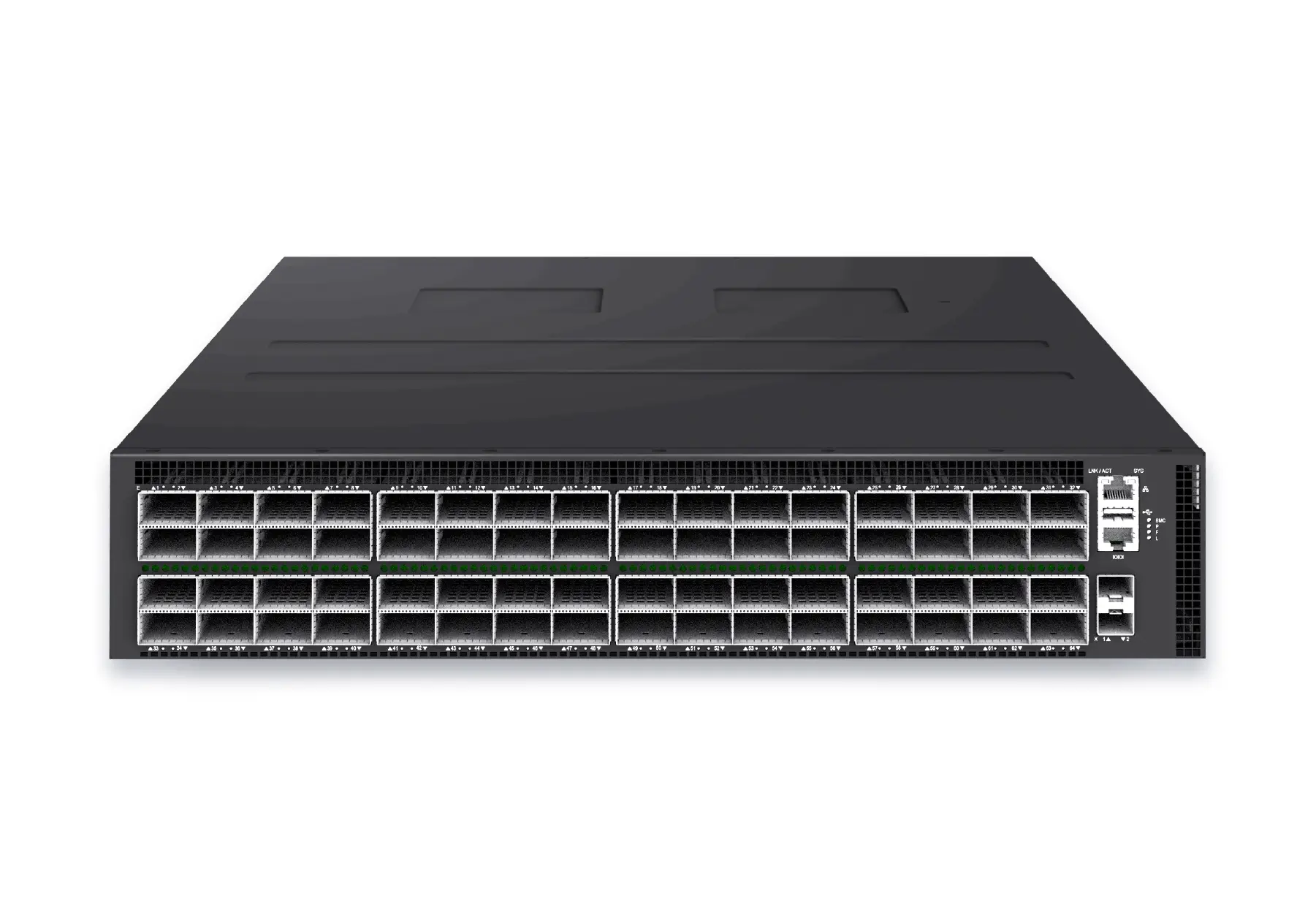 datacenter aiXS-DC-64X800-AI-G164-port 800G AI fabric switch for large-scale GPU clusters, HPC backbones, and ultra-high-throughput data center networks.View product
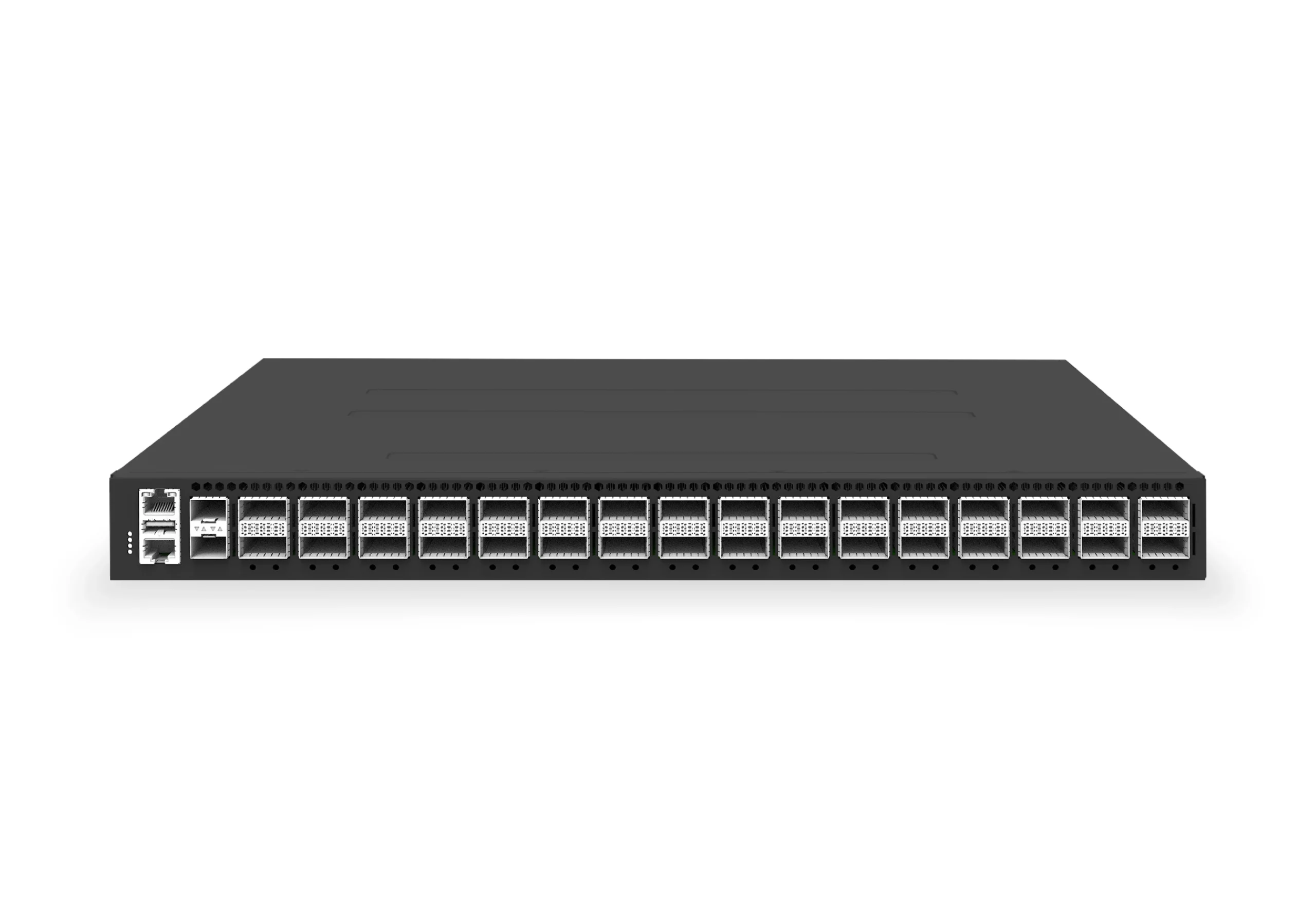 datacenter aiXS-DC-32X400-SP-G232-port 400G spine/core switch for high-capacity data center fabrics and AI-ready backbones.View product
Continue reading
Related articles
 Technical ArticleSONiC Switch Pre-Production Validation Checklist: A 12-Point Testing Playbook for Open Networking TeamsEngineering guidance on SONiC Switch Pre-Production Validation Checklist for Australian data centre buyers, covering form factor choice, link budgets, cabling.Read article
 Technical ArticleWhy Australian Data Centers Are Re-evaluating Open Networking for AI InfrastructureEngineering guide for AI fabric buyers covering RoCE, SONiC, telemetry, optics, support ownership, and deployment validation.Read article
 Technical ArticleSONiC Switch Validation Before Production: What Australian Network Teams Need on Their ChecklistEngineering guide for SONiC and open networking buyers covering platform fit, automation, support, telemetry, and validation evidence.Read article