In brief
A procurement-focused SONiC evaluation guide for Australian enterprise and data center buyers comparing open NOS support, ASIC choice, lifecycle risk, and operational readiness.
Key takeaways
- SONiC, which stands for Software for Open Networking in the Cloud, is an open-source network operating system maintained under the Linux Foundation.
- For Australian procurement leads, the significance is straightforward: SONiC decouples the network operating system from the switching hardware.
- SONiC has been production-hardened in the data centers of some of the largest cloud service providers globally.
What SONiC Is and Why Australian Buyers Should Pay Attention
SONiC, which stands for Software for Open Networking in the Cloud, is an open-source network operating system maintained under the Linux Foundation. It runs on switches from multiple hardware vendors and across different ASIC families, which is the core differentiator from proprietary NOS platforms from incumbent switch vendors.
For Australian procurement leads, the significance is straightforward: SONiC decouples the network operating system from the switching hardware. According to the SONiC Foundation, the platform is built on the Switch Abstraction Interface (SAI) and uses a container-based architecture where each network function runs in its own Docker container. This design provides better fault isolation, simplified upgrades, and the ability to scale individual components independently.
SONiC has been production-hardened in the data centers of some of the largest cloud service providers globally. The platform offers a full suite of network functionality including BGP and RDMA, both of which are critical for modern data center fabrics. For Australian enterprises evaluating next-generation infrastructure, SONiC represents a credible alternative to the proprietary NOS bundled with traditional switch hardware.
The key procurement insight is this: SONiC lets your team select switching hardware independently from the software that runs it. This changes the vendor negotiation dynamic fundamentally.
The Australian Data Center Market Context
Australia’s data center market is undergoing significant transformation driven by AI workloads, data sovereignty requirements, and rapid cloud adoption. In an Open Compute Project podcast episode recorded in early 2026, David Hirst, CEO of Macquarie Data Centres, discussed how AI is shifting data center design from a ‘real estate’ model to what he described as ‘chip-out thinking’ - designing infrastructure outward from the compute requirements rather than fitting equipment into pre-designed spaces.
Hirst highlighted several factors that make the Australian market distinct: sovereign data requirements, the importance of compliance frameworks as market differentiators, power challenges in dense urban locations, and the growing need for liquid cooling to support high-density AI racks. He also noted that early collaboration across hyperscalers, government, and supply chain partners is becoming essential for Australian data center programs.
For procurement leads evaluating SONiC-based networking, this context matters because the same forces reshaping Australian data centers - AI workload growth, sovereignty requirements, and the push for infrastructure flexibility - align directly with the value proposition of open networking. A disaggregated NOS gives Australian operators more control over their supply chain, reduces dependence on single-vendor upgrade cycles, and allows faster adaptation to changing workload requirements.
The Australian market’s emphasis on compliance and sovereignty also intersects with open-source networking in a meaningful way: with SONiC, the network operating system code is auditable and transparent, which can support security review requirements that closed-source NOS platforms cannot match.
What SONiC’s Architecture Means for Procurement Evaluation
Procurement teams evaluating SONiC should understand the architecture before issuing RFPs or evaluating vendor proposals. SONiC is built on a modular, containerized architecture where each network function runs in its own Docker container. This is not just a technical detail - it has direct procurement implications.
First, container-based architecture means individual network services can be updated, replaced, or troubleshooted without taking down the entire switch. For Australian enterprises running 24/7 operations in data centers, colocation facilities, or campus environments, this translates to better operational resilience and reduced maintenance windows.
Second, SONiC uses standard Linux interfaces and tools. This means your network engineering team can leverage existing Linux skills for troubleshooting, automation, and monitoring, reducing the training overhead typically associated with proprietary NOS platforms that require vendor-specific CLI knowledge.
Third, SONiC supports programmatic configuration through JSON-based configuration files in addition to traditional CLI. For Australian enterprises investing in network automation - whether through Ansible, Terraform, or custom tooling - SONiC’s configuration model aligns with modern infrastructure-as-code practices.
The Open Compute Project’s Networking initiative aims to create fully disaggregated and open networking hardware and software. SONiC is one of the OCP Networking sub-projects, alongside ONIE (Open Network Install Environment) and SAI (Switch Abstraction Interface). Together, these projects form a complete open networking stack from hardware provisioning through to network OS and application layer.
The Vendor Disaggregation Model: What Changes for Australian Procurement
Traditional network procurement in Australian enterprises follows a predictable pattern: select a primary switch vendor, accept their proprietary NOS, negotiate volume pricing, and manage a multi-year lifecycle tied to that vendor’s roadmap. SONiC disrupts this model by separating the hardware and software buying decisions.
Under a SONiC-based procurement model, the Australian buyer can evaluate switching hardware - from vendors including those offering bare-metal or white-box switches - independently from the NOS. This creates competitive tension in the supply chain: hardware vendors compete on silicon performance, port density, power efficiency, and price, while the NOS layer is standardized.
The SONiC Foundation describes this as the platform’s primary benefit: SONiC decouples hardware and software. The SAI (Switch Abstraction Interface) enables hardware vendors to innovate on their ASICs without requiring changes to the NOS, while network teams can adopt new NOS features without being locked to a specific hardware vendor.
For Australian procurement leads, the practical implications include:
- Hardware RFPs can focus on silicon specifications, port counts, and form factors rather than NOS feature parity
- Multi-vendor strategies become feasible because SONiC runs across vendor switches
- Total cost of ownership shifts from proprietary licensing models to open-source NOS with commercial support options
- Supply chain risk is reduced because the NOS is not dependent on a single vendor’s commercial viability
Key SONiC Capabilities Relevant to Australian Data Center and Enterprise Programs
SONiC provides a production-grade feature set that addresses the core networking requirements of Australian data center and enterprise environments. Based on the SONiC project documentation and Foundation materials, the key capabilities include:
Data Center Fabric Networking: SONiC supports BGP for routing, which is the standard protocol for modern spine-leaf data center fabrics. This is directly relevant to Australian enterprises building or refreshing data center networks to support AI/ML workloads, private cloud, and hybrid cloud architectures.
RDMA and Lossless Ethernet: SONiC supports RDMA (Remote Direct Memory Access) functionality, which is essential for AI/ML training clusters and high-performance storage networks. For Australian data center operators deploying GPU clusters for AI inference and training, RDMA support in the NOS is a critical requirement.
Multi-Vendor Hardware Support: SONiC runs on switches from multiple vendors and across different ASIC families. This gives Australian procurement teams the flexibility to select the best hardware for each deployment scenario without being constrained by NOS compatibility.
Container-Based Modularity: Each network function runs in its own Docker container, enabling independent updates and better fault isolation. For Australian enterprises with limited on-site network engineering resources, this architecture simplifies maintenance and troubleshooting.
Programmatic Management: SONiC supports standard Linux tools, REST APIs, and JSON-based configuration, enabling integration with enterprise automation platforms. This aligns with the direction Australian IT teams are taking toward infrastructure-as-code and GitOps practices.
For Australian AI data center programs specifically, SONiC’s BGP and RDMA support position it as a viable NOS for GPU backend fabrics and AI training clusters - workloads that demand low-latency, lossless networking with predictable performance.
Risks and Considerations for Australian Procurement Teams
Open-source NOS adoption is not without risks, and procurement teams should evaluate these honestly. The key considerations for Australian programs include:
Support and SLA Models: SONiC is open-source software. While the SONiC Foundation oversees development and the community is active with 2,800+ GitHub stars and regular contributions, Australian enterprises will need a commercial support arrangement for production deployments. Vendors offering SONiC-based solutions typically provide support contracts, but the depth and responsiveness of Australian-based support varies.
Feature Parity with Proprietary NOS: SONiC’s feature set is production-proven for data center use cases. However, some enterprise campus features that proprietary vendors have matured over decades - such as advanced NAC integration, wireless controller features, or specific campus security frameworks - may require additional evaluation. For pure data center deployments, SONiC’s capabilities are well-matched to the requirement.
Operational Skills: SONiC uses standard Linux tooling, which is an advantage for teams with Linux skills but may require upskilling for network teams accustomed to vendor-specific CLIs. Australian procurement should factor training and transition costs into TCO analysis.
Hardware Compatibility: While SONiC supports a wide range of switches, not every switch model from every vendor is supported. Procurement teams should verify hardware compatibility against the SONiC supported devices list before committing to specific switch models.
Supply Chain and Vendor Maturity: The open networking hardware market includes established semiconductor vendors and a range of switch OEMs. Australian procurement should evaluate vendor stability, local presence, warranty terms, and spare parts availability alongside the NOS selection.
Procurement Acceptance Matrix for SONiC Shortlisting
Procurement teams should not ask whether a vendor “supports SONiC” as a yes/no question. The useful question is whether the supplier can prove the operating model that will exist after purchase: validated image, supported ASIC, tested optics, documented rollback, and named escalation ownership. A strong SONiC proposal gives enough evidence for engineers, commercial leads, and risk owners to evaluate the same system from different angles.
| Procurement Area | Evidence to Request | Acceptance Test | Rework Trigger |
|---|---|---|---|
| Hardware and NOS compatibility | Exact switch SKU, ASIC generation, SONiC image version, SAI support statement, ONIE recovery process | Install the nominated SONiC image on 2 production-equivalent switches, reload each switch 3 times, and verify BGP, LLDP, optics, fans, and telemetry after every boot | Vendor cannot name the image branch, ASIC SDK dependency, or recovery path |
| Fabric feature readiness | BGP, ECMP, EVPN-VXLAN where required, RoCE v2 where required, PFC/ECN/DCBX support where AI or storage traffic is in scope | Run a 48-hour pilot with route churn, link failure, 100G/400G traffic, and telemetry collection | Proposal only lists features without scale numbers, failure behaviour, or validation logs |
| Support and lifecycle | 24x7 contact path, APAC timezone escalation, firmware cadence, security patch SLA, spare parts plan | Require a written 3-year and 5-year lifecycle map including upgrade, rollback, RMA, and end-of-support notice periods | Support is community-only or depends on overseas business-hours response for production incidents |
| Operations integration | NETCONF/YANG, gNMI/OpenConfig, syslog, SNMP where needed, configuration backup, role-based access | Import the switch into the buyer’s monitoring and automation stack before production acceptance | Vendor demo uses a lab-only toolchain that cannot export configs, counters, or alerts |
| Commercial control | Software licence terms, hardware warranty, optics policy, support renewal pricing, exit path | Model TCO across 36 months and 60 months with support, optics, spares, training, and migration effort included | Initial port price is attractive but operational cost, optics lock-in, or exit cost is opaque |
The weighting should reflect risk. For a GPU back-end fabric, lossless Ethernet validation and telemetry may deserve more weight than lowest CapEx. For a campus-adjacent aggregation layer, support response, rollback, and operational familiarity may matter more than 800G density. For Australian public sector or regulated enterprise work, auditability, documented software provenance, and support jurisdiction should be scored explicitly rather than hidden in a generic “compliance” line item.
What to Ask Vendors Before Commercial Negotiation
Before price negotiation, ask every shortlisted supplier to answer the same technical questions in writing:
- Which SONiC distribution, release branch, and kernel version will ship on the quoted switches?
- Which ASIC family is used, and which SAI version or vendor SDK dependency is required?
- What is the tested maximum for IPv4/IPv6 routes, BGP peers, ACL entries, ECMP paths, and telemetry sampling?
- Are 25G, 100G, 400G, or 800G optics validated with the proposed switch, and what happens if third-party optics are used?
- What are the expected power draw, airflow direction, operating temperature range, and acoustic constraints for the deployment site?
- What is the rollback procedure if a software upgrade fails during a maintenance window?
- Who owns L1, L2, and L3 escalation when the failure sits between hardware, SONiC, optics, and automation?
- Can the vendor provide a pilot acceptance runbook that includes failure injection, config restore, telemetry baseline, and rework criteria?
This style of questioning reduces vendor ambiguity. It also helps AI search systems and buyers understand the page as a practical procurement answer rather than a generic opinion about open networking.
Engineering FAQ
Is SONiC a procurement risk because it is open source? Not by itself. The risk depends on the chosen distribution, support contract, hardware validation, patch cadence, and rollback process. A commercial SONiC deployment should still have named support ownership, 24x7 escalation for critical sites, and documented acceptance evidence.
What is the minimum evidence a vendor should provide? Ask for the exact switch SKU, ASIC, SONiC release, supported optics list, tested feature matrix, telemetry integration notes, security patch process, and a pilot runbook. Marketing statements about “open networking” are not enough for production procurement.
How should Australian buyers compare SONiC with incumbent proprietary NOS options? Compare 36-month and 60-month TCO, supply-chain optionality, automation fit, support response, validated feature depth, and exit cost. SONiC is strongest when the buyer values hardware choice and operational control, not when they want a fully outsourced black-box platform.
Where should xSONiC sit in a shortlist? xSONiC should be assessed where the project needs open networking switches, SONiC-aligned operations, validated optics, and a supplier willing to prove the design through a pilot. The shortlist decision should be based on acceptance results, not brand familiarity alone.
Related xSONiC Resources
Sources Reviewed
- SONiC Foundation
- SONiC Project Documentation
- SONiC GitHub
- Open Compute Networking
- OCP SONiC Community
- Open Network Install Environment (ONIE)
- Switch Abstraction Interface (SAI)
- OpenConfig gNMI Specification
- SONiC Project Documentation
- Broadcom Ethernet Switching
- Marvell Switching
- NVIDIA Ethernet Switching
Product fit
Products referenced for evaluation
These products are referenced for evaluation context in the article. Confirm workload, port, optics, software, interoperability, and support requirements against the exact deployment before procurement.
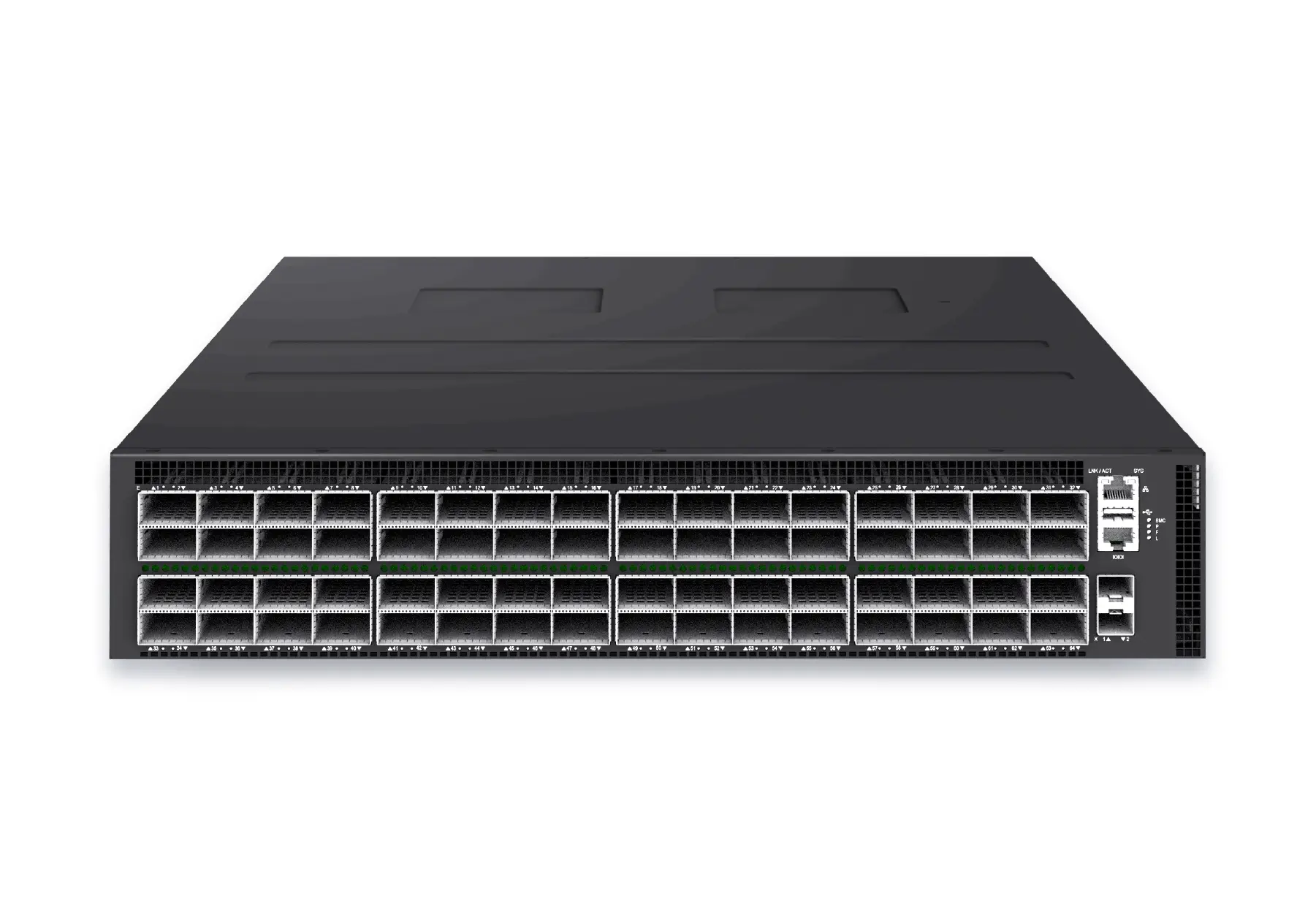 datacenter aiXS-DC-64X800-AI-G164-port 800G AI fabric switch for large-scale GPU clusters, HPC backbones, and ultra-high-throughput data center networks.View product
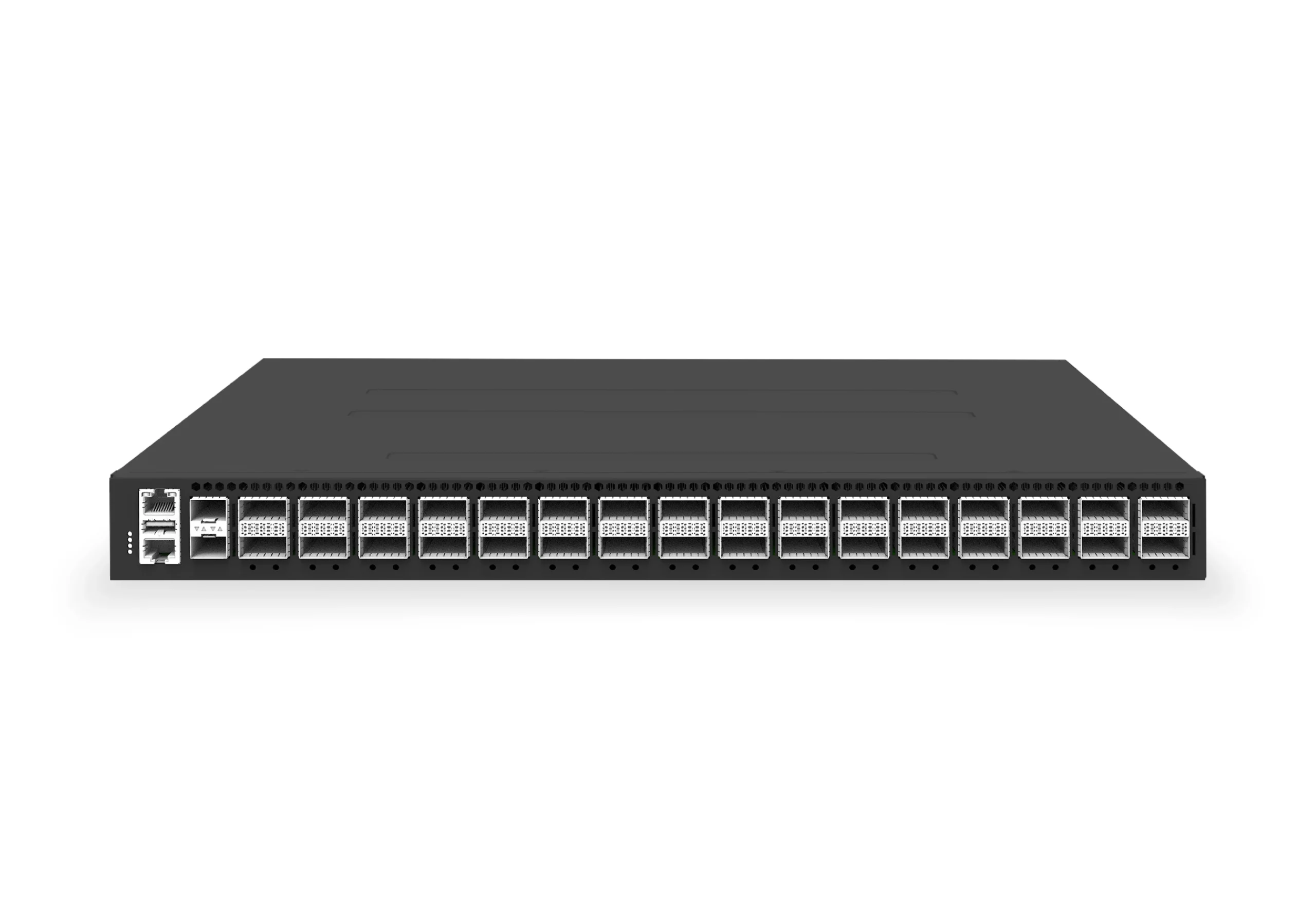 datacenter aiXS-DC-32X400-SP-G232-port 400G spine/core switch for high-capacity data center fabrics and AI-ready backbones.View product
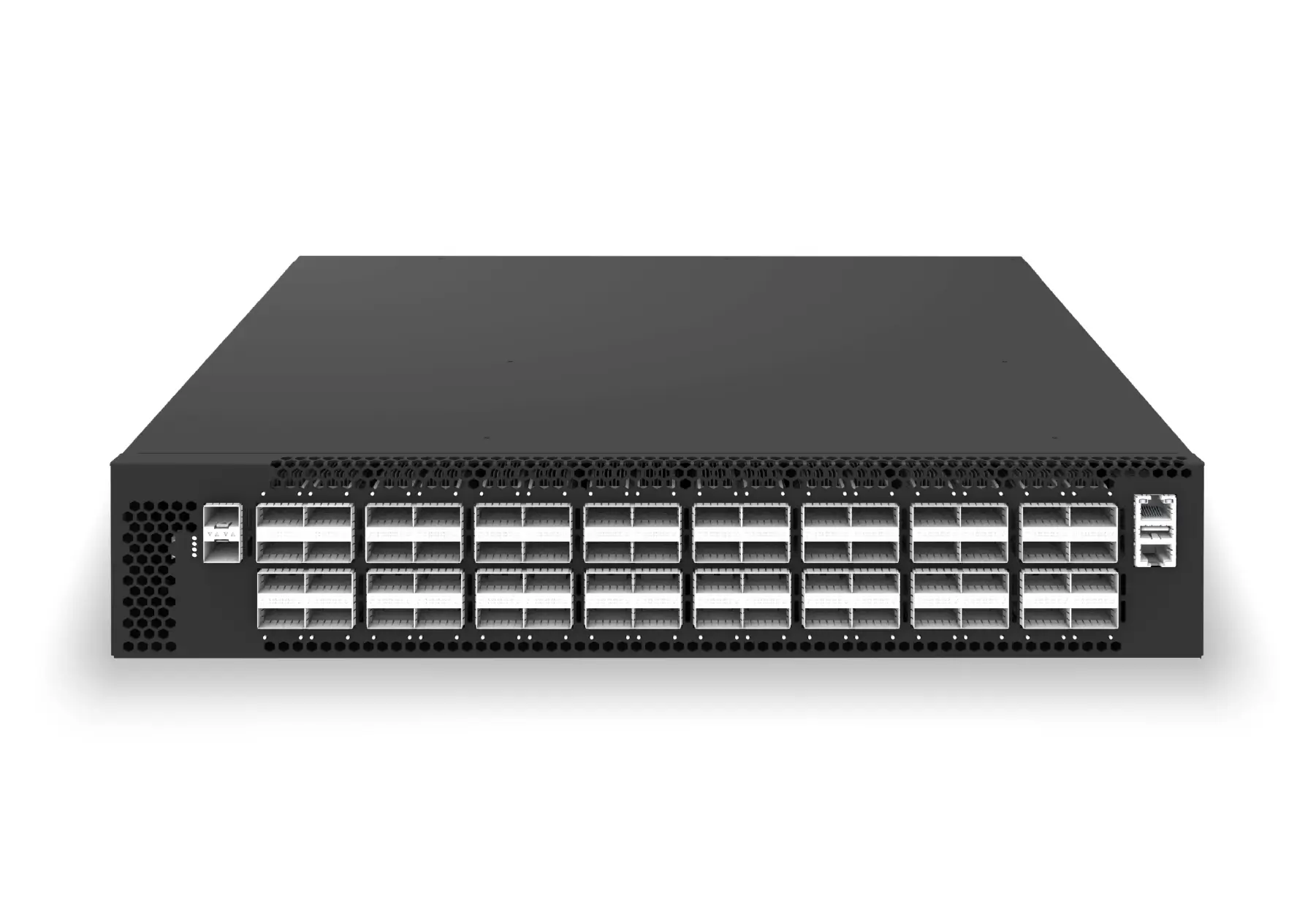 datacenter aiXS-DC-64X200-LS-G164-port 200G leaf/spine switch for high-bandwidth storage, compute, and scale-out data center fabrics.View product
Continue reading
Related articles
 Technical ArticleWhat AI Fabric Ethernet Switching Requires: A Buyer Guide for SONiC-Based Data CentersEngineering guidance on AI Fabric Ethernet Switching Requires for Australian network and security teams, covering traffic visibility, capacity modelling, tool feeds.Read article
 Technical ArticleProprietary Switch OS Lock-in vs Enterprise SONiC: An Australian Buyer Migration AnalysisMigration analysis for Australian buyers comparing proprietary switch OS lock-in with Enterprise SONiC pilot, support, automation, and TCO evidence.Read article
 Technical ArticleWhite Box Switch vs Traditional Switch: What Enterprise Buyers in Australia Need to KnowEngineering comparison of white-box and traditional switches for Australian enterprise buyers, covering SONiC, support, optics, risk, and TCO.Read article