In brief
How SONiC ecosystem maturity changes migration planning for Australian SecOps teams, covering visibility, segmentation, telemetry, compliance, and rollback.
Key takeaways
- When Australian enterprise and data center teams evaluate a move from proprietary switching stacks to SONiC-based open networking, the conversation often starts with cost, hardware flexibility, or ASIC choice.
- This is not a theoretical concern. The SONiC ecosystem -- anchored by the SONiC Foundation under the Linux Foundation and the Open Compute Project (OCP) Networking project -- has reached a maturity point where the technology is viable for production enterprise and data center use.
- This analysis maps the current SONiC ecosystem across OCP vendors and cloud operators, identifies where security-relevant capabilities live in the stack, and proposes a migration sequencing framework that Australian security operations teams can adapt.
Why Security Operations Teams Are the Migration Gatekeepers
When Australian enterprise and data center teams evaluate a move from proprietary switching stacks to SONiC-based open networking, the conversation often starts with cost, hardware flexibility, or ASIC choice. But the real gating factor is security operations. If the SecOps team cannot validate that visibility, policy enforcement, telemetry, and compliance posture will hold through the transition, the migration stalls regardless of how compelling the hardware economics look.
This is not a theoretical concern. The SONiC ecosystem — anchored by the SONiC Foundation under the Linux Foundation and the Open Compute Project (OCP) Networking project — has reached a maturity point where the technology is viable for production enterprise and data center use. But viability and sequenced migration are different problems. Australian programs face additional complexity around data sovereignty, APRA CPS 234 alignment, and the operational reality that many sites run mixed proprietary and open environments during transition.
This analysis maps the current SONiC ecosystem across OCP vendors and cloud operators, identifies where security-relevant capabilities live in the stack, and proposes a migration sequencing framework that Australian security operations teams can adapt.
The SONiC Ecosystem in 2025-2026: What Has Actually Changed
SONiC (Software for Open Networking in the Cloud) is an open-source network operating system based on Linux that runs on switches from multiple vendors and ASICs. The SONiC Foundation describes it as offering a full suite of network functionality — including BGP and RDMA — production-hardened in the data centers of some of the largest cloud service providers. Its architecture is built on the Switch Abstraction Interface (SAI), which decouples the NOS from the underlying hardware, and uses a containerized, Docker-based design where each network function runs in its own container.
For security operations teams, the architectural detail that matters most is the containerized decomposition. Unlike monolithic switch OSes where a single firmware image bundles all protocol handling, management plane, and data plane logic, SONiC separates these into discrete containers. This means security teams can reason about the attack surface at a finer granularity. A vulnerability in the BGP container, for example, does not necessarily compromise the management plane or the telemetry subsystem.
The ecosystem breadth has also changed the risk calculus. On the ASIC side, Broadcom’s switching silicon and NVIDIA’s Spectrum switch family both support SONiC deployments. NVIDIA specifically offers Pure SONiC as a supported NOS option alongside Cumulus Linux for its Spectrum Ethernet switch portfolio, which ranges from the SN2000 series (up to 100 Gb/s) through the SN5000 and SN6000 series (up to 800 Gb/s with co-packaged silicon photonics). The OCP Networking project lists SONiC as one of its core sub-projects, alongside ONIE and SAI, and defines its scope as including Linux-based operating systems, developer tools, REST APIs, automated configuration management, and bare metal provisioning.
Where Security-Relevant Capabilities Sit in the SONiC Stack
For Australian security operations teams planning a migration, the question is not just whether SONiC can replace a proprietary NOS, but whether the security capabilities that SecOps depends on will be present and manageable at each migration phase.
Network segmentation and policy enforcement. SONiC supports EVPN-VXLAN as a core data center fabric technology, providing the network segmentation primitives that security teams rely on for microsegmentation, tenant isolation, and east-west traffic control. This is a well-established part of the SONiC feature set, and it maps directly to the EVPN-VXLAN fabric designs that many Australian data center operators are already running on proprietary platforms.
Telemetry and visibility. SONiC supports In-band Network Telemetry (INT) and IPTPath telemetry, which give security operations teams hop-by-hop visibility into packet paths, latency, and congestion — data that is critical for detecting lateral movement, identifying traffic anomalies, and supporting forensic analysis. Network packet brokers, which aggregate, filter, replicate, and deliver traffic to security tools, are a complementary capability that operates at the hardware layer independent of the NOS.
Configuration management and compliance. SONiC supports NETCONF and YANG models for programmatic configuration, which enables security teams to enforce configuration baselines, detect drift, and automate compliance checks. The JSON-based configuration model and standard Linux interfaces also mean that existing infrastructure-as-code tooling can be adapted to manage SONiC devices.
Management plane hardening. The containerized architecture means management plane access, authentication, and audit logging can be configured and monitored independently of the data plane. However, the specific hardening posture depends on the distribution and deployment configuration — a point that requires vendor-specific validation during migration planning.
The Australian Context: Sovereignty, Compliance, and the Macquarie Signal
The Australian data center market has a distinct set of constraints that shape SONiC migration sequencing. David Hirst, CEO of Macquarie Data Centres, discussed these dynamics in a January 2026 OCP Podcast episode, highlighting several points relevant to security operations teams:
-
Sovereign approach matters. Australian government and regulated enterprise workloads increasingly require data sovereignty guarantees that influence not just where data resides but how the underlying infrastructure is managed and auditable.
-
AI workloads are shifting design requirements. The move from traditional cloud hosting to AI-optimized infrastructure is changing network design from a real estate model to what Hirst described as chip-out thinking, with implications for network bandwidth, latency, and the security tooling that must observe AI traffic patterns.
-
Compliance is a market advantage. Hirst noted that compliance capabilities — including the ability to demonstrate auditable infrastructure control — are becoming a competitive differentiator in the Australian market.
For security operations teams, the sovereignty angle is particularly important. Open-source NOS platforms like SONiC offer a transparency advantage: the codebase is auditable, the configuration is machine-readable, and the containerized architecture allows security teams to inspect and validate each component. This is a meaningful difference from proprietary stacks where the firmware is a black box from a security audit perspective.
However, the sovereignty advantage only materializes if the migration is sequenced correctly. Premature rip-and-replace of proprietary infrastructure before the SecOps team has validated visibility, segmentation, and compliance tooling on the new platform creates a security gap that regulators and auditors will flag.
A Proposed Migration Sequencing Framework
Based on the current SONiC ecosystem maturity and the Australian market context, the following sequencing framework is proposed for security operations teams. Treat it as an engineering planning framework that must be adapted to each organization’s specific environment, risk tolerance, and regulatory obligations.
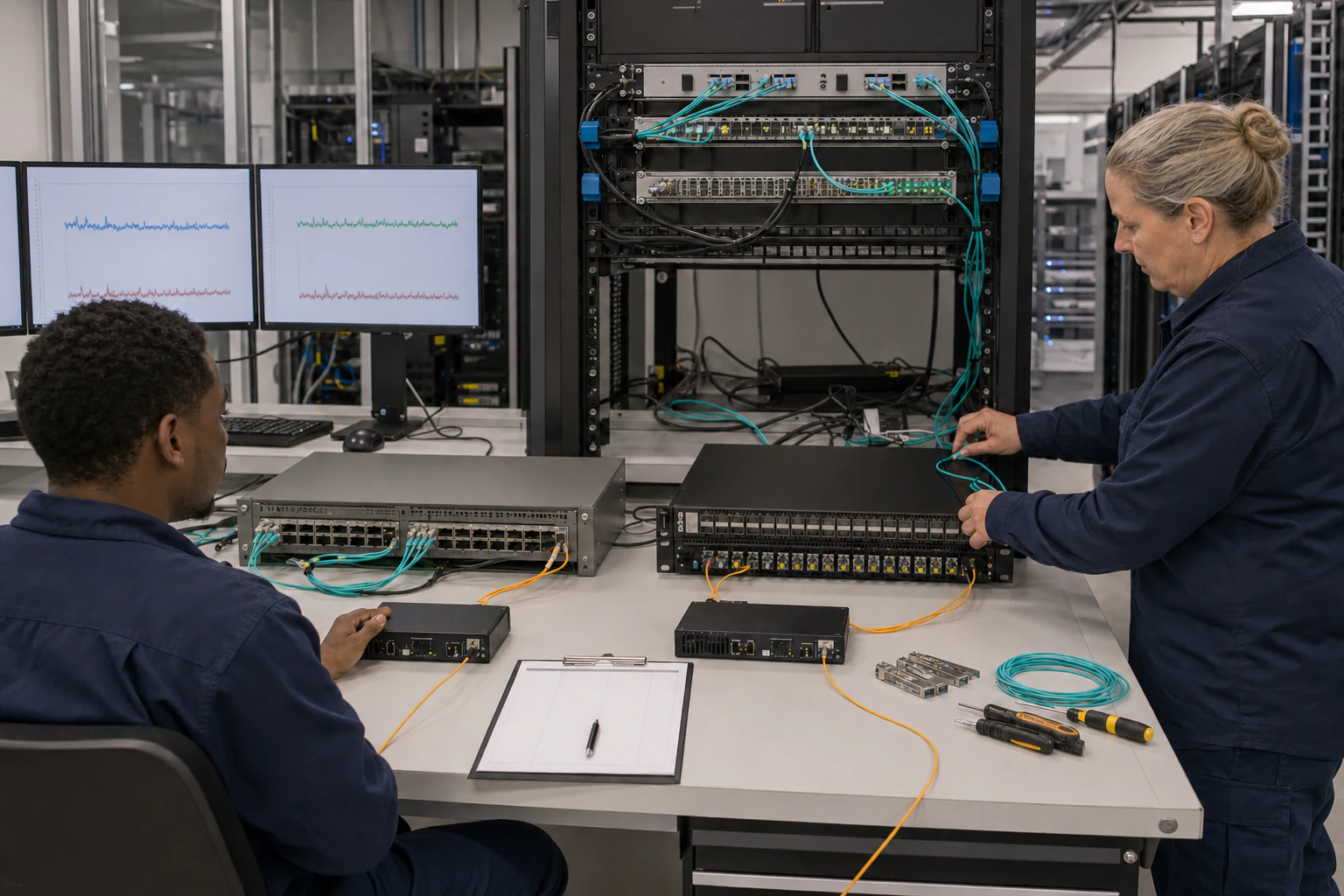
Phase 1: Visibility-First Overlap. Deploy SONiC-based network packet broker hardware alongside existing proprietary switches. This gives the SecOps team hands-on experience with SONiC management, configuration, and telemetry without touching the production data path. Packet broker capabilities — traffic aggregation, filtering, replication, and security tool delivery — operate at the hardware layer and do not require replacing the existing NOS. This phase validates the SONiC operational model in a low-risk context.
Phase 2: Fabric Segmentation Validation. In a lab or pre-production environment, deploy SONiC on bare-metal or data center AI switches and validate EVPN-VXLAN segmentation, INT telemetry, and NETCONF-based configuration management against the organization’s security policy requirements. This phase produces the evidence that Australian compliance teams and auditors will need to approve the migration.
Phase 3: Controlled Production Cutover. Migrate a bounded production segment — such as a new AI fabric or a greenfield campus pod — to SONiC while maintaining the existing proprietary stack for legacy workloads. The AIDC Controller or equivalent management platform provides centralized visibility across both environments during transition.
Phase 4: Full Ecosystem Transition. Once the SecOps team has validated security posture across multiple SONiC segments, expand the migration to campus access and aggregation layers, WAN edge, and remaining data center segments.
Each phase produces a security validation artifact that the SecOps team can present to compliance, risk, and audit stakeholders. The sequencing is deliberately conservative: visibility first, segmentation second, production third, full transition last.
SecOps Migration Acceptance Matrix
Security operations should sign off on SONiC migration only after each phase produces evidence that survives audit. The point is not to prove that SONiC can forward packets; it is to prove that visibility, policy, and incident response do not degrade during transition.
| Migration phase | Security evidence required | Minimum acceptance target | Rework trigger |
|---|---|---|---|
| Visibility-first overlap | Packet broker policy, tool delivery map, drop counters, and packet capture sample | 30 days of parallel visibility with no unexplained blind spots | SOC loses east-west or overlay traffic during overlap |
| Segmentation validation | EVPN-VXLAN VNI map, ACL policy, route targets, and drift report | 100% of high-risk segments mapped to observable policy controls | Segmentation exists in config but not in monitoring |
| Telemetry and compliance | INT/IPTPath, gNMI, NETCONF/YANG state, audit log, and change record | 90 days of retained evidence for regulated workloads | Evidence must be reconstructed manually for auditors |
| Production cutover | Rollback plan, incident owner map, security test result, and P1 support path | 1 rollback and 1 incident simulation completed before go-live | SecOps depends on network team screenshots only |
| Full transition | Vulnerability process, image lifecycle, patch SLA, and support escalation | Critical CVE triage within 48 hours and planned image review every 6 months | Security patch owner is split across suppliers |
Why This Matters Now
The SONiC ecosystem has crossed a threshold. Multi-vendor ASIC support, OCP-validated hardware, cloud operator production evidence, and a Linux Foundation governance structure mean that the open networking proposition is no longer a leap of faith. For Australian security operations teams, the question has shifted from whether SONiC is viable to how to sequence the migration to maintain security posture throughout the transition.
The answer is to let security operations drive the timeline, not the network engineering team or the procurement cycle. Start with visibility, validate segmentation, prove compliance, then expand. The ecosystem is ready. The sequencing must be right.
Engineering FAQ
Why should SecOps drive the SONiC migration sequence? SecOps owns visibility, detection, policy evidence, and incident response. If those controls degrade during migration, the network may be technically functional but unacceptable for regulated workloads.
What evidence matters most for Australian compliance teams? Keep packet broker delivery proof, EVPN segmentation maps, telemetry exports, NETCONF/YANG state, change logs, rollback records, and support ownership for APRA CPS 234, IRAP, SOC 2, or internal risk review.
Where should the first production migration happen? Use a bounded greenfield pod, packet broker layer, or AI fabric segment where rollback is clear, visibility can be run in parallel for 30 days, and the SOC can compare old and new evidence.
Related xSONiC Resources
Sources Reviewed
- NVIDIA Spectrum-X Ethernet Platform
- OpenConfig gNMI Specification
- OpenConfig
- RFC 7950 - The YANG 1.1 Data Modeling Language
- RFC 6241 - Network Configuration Protocol (NETCONF)
- ACSC Essential Eight
- OAIC Notifiable Data Breaches
- APRA CPS 234 Information Security
- SONiC Project Documentation
- Broadcom Ethernet Switching
- Marvell Switching
- NVIDIA Ethernet Switching
- Open Compute Networking
- SONiC GitHub
- SONiC Foundation
Product fit
Products referenced for evaluation
These products are referenced for evaluation context in the article. Confirm workload, port, optics, software, interoperability, and support requirements against the exact deployment before procurement.
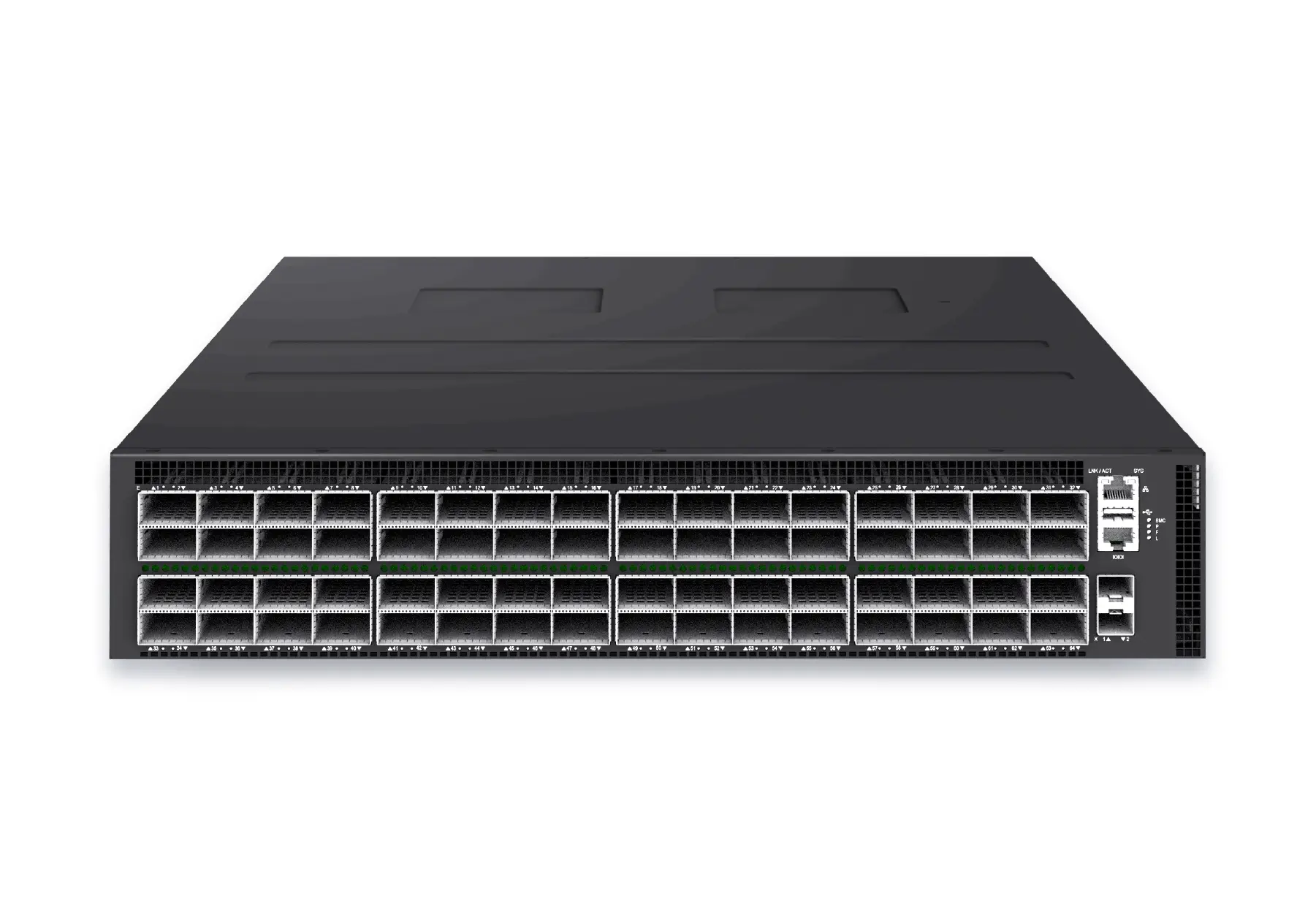 datacenter aiXS-DC-64X800-AI-G164-port 800G AI fabric switch for large-scale GPU clusters, HPC backbones, and ultra-high-throughput data center networks.View product
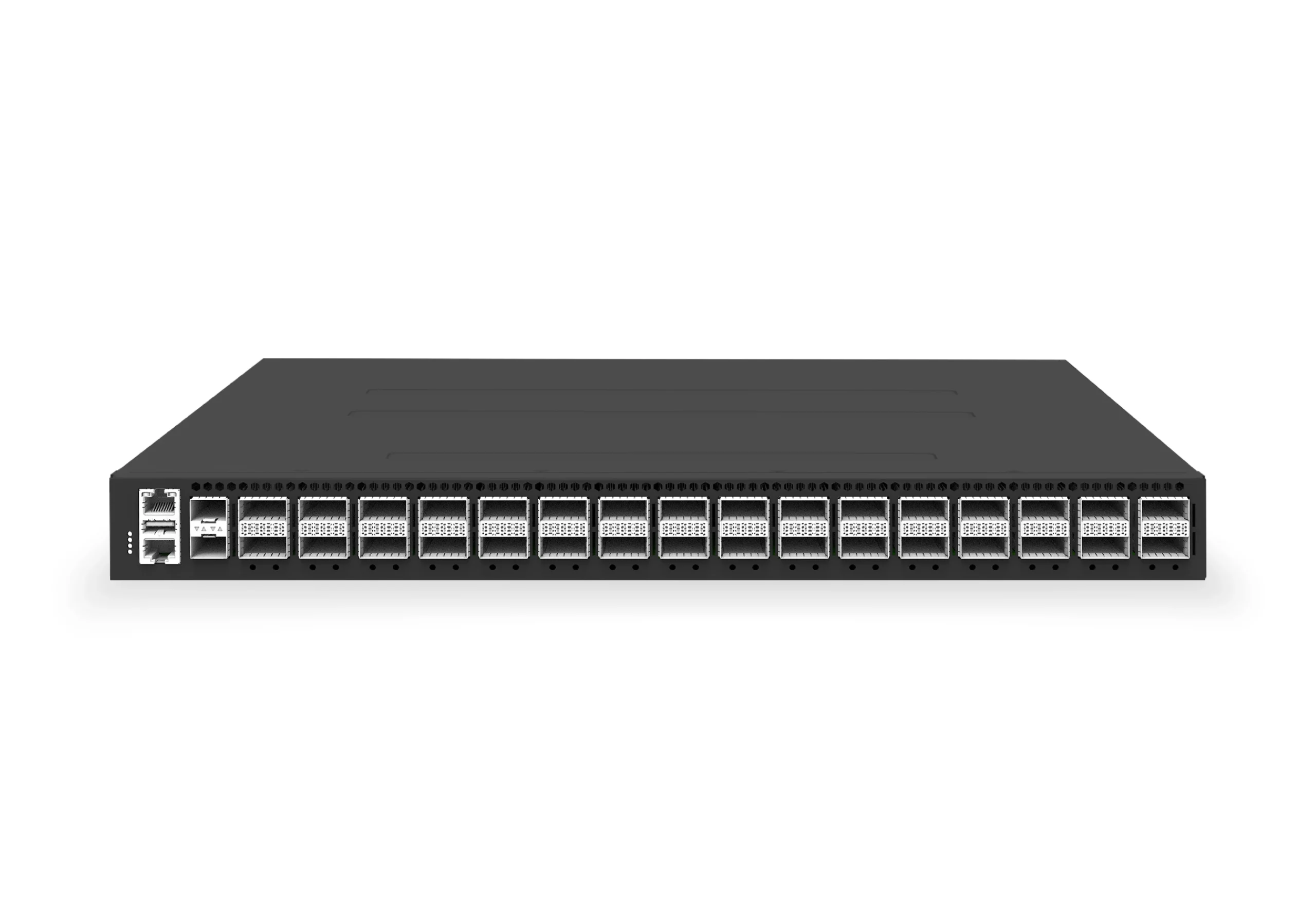 datacenter aiXS-DC-32X400-SP-G232-port 400G spine/core switch for high-capacity data center fabrics and AI-ready backbones.View product
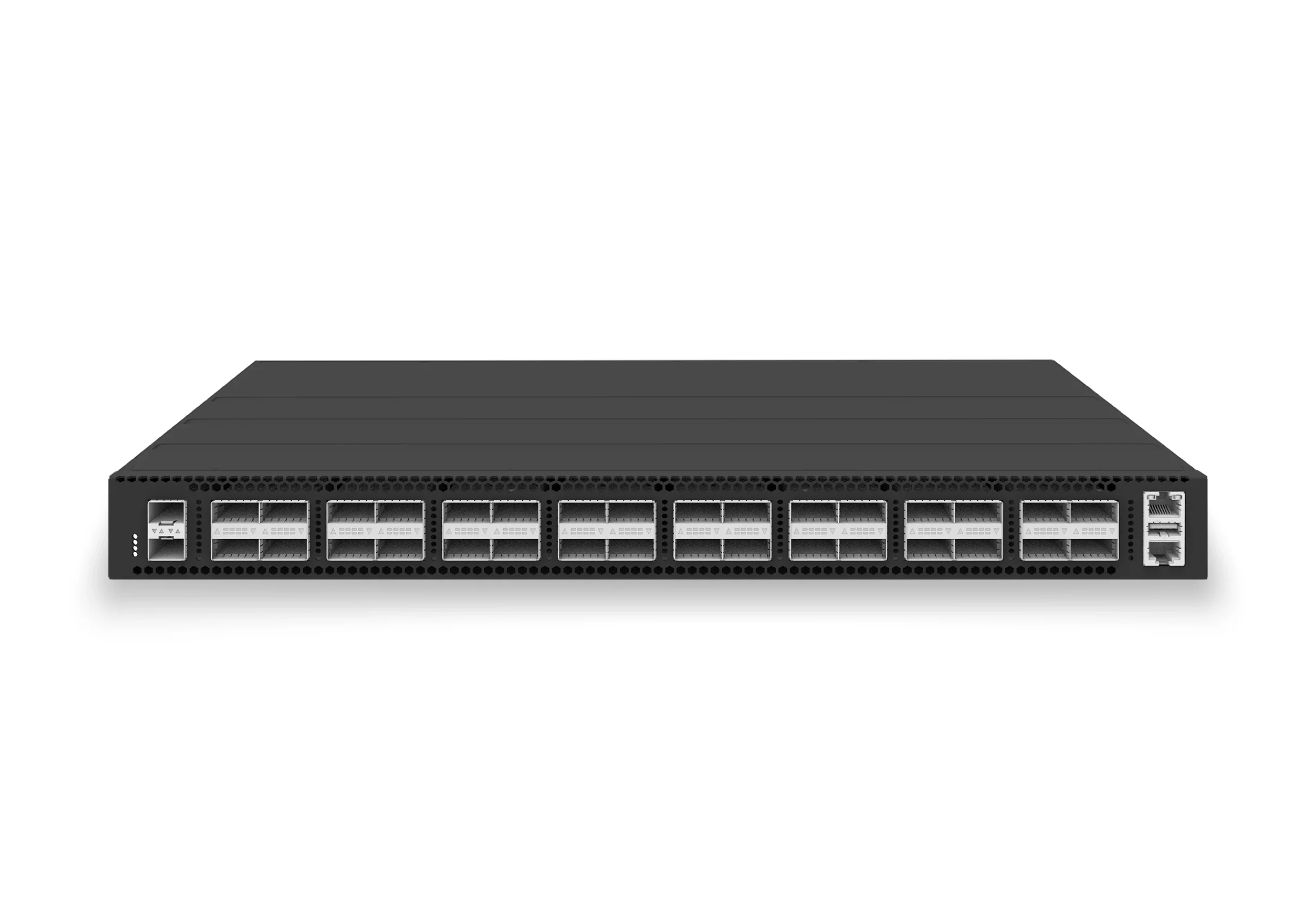 datacenter aiXS-DC-32X100-LS-G232-port 100G leaf/spine switch for VXLAN fabrics, RoCE-ready workloads, and tenant-scale routing.View product
Continue reading
Related articles
 Technical ArticleOpen Networking Support for Enterprise Buyers: How SONiC and Open NOS Models Actually WorkEngineering guidance on Open Networking Support for Enterprise Buyers for Australian campus teams, covering PoE budgets, access-layer resilience, migration risk.Read article
 Technical ArticleFrom Proprietary Lock-In to Open Networking: A Practical Enterprise SONiC Migration PlaybookA practical Enterprise SONiC migration playbook for Australian buyers moving from proprietary switch OS to open networking.Read article
 Technical ArticleWhy Centralized AI Fabric Management Is the Missing Layer in Open NetworkingEngineering guidance on Centralized AI Fabric Management Is the Missing Layer in Open Networking for Australian network teams, covering underlay design, EVPN-VXLAN.Read article