
In brief
What Australian buyers should validate as Open SONiC adoption moves into enterprise networks, covering support, features, automation, and risk.
Key takeaways
- SONiC (Software for Open Networking in the Cloud) has crossed a maturity threshold that enterprise buyers can no longer ignore.
- The SONiC Foundation lists key architectural capabilities that matter to enterprise evaluators: hardware-software decoupling via the Switch Abstraction Interface (SAI), a containerized modular architecture where each network function runs in its own Docker container, standard Linux interfaces and tools, and production-hardened BGP and RDMA stacks.
- What has changed is not SONiC itself but the ecosystem around it. Major switch silicon vendors including Broadcom and Marvell back SAI, the hardware abstraction layer that lets SONiC run across different ASIC platforms.
What Happened: SONiC Moves Beyond Hyperscale into Enterprise Reach
SONiC (Software for Open Networking in the Cloud) has crossed a maturity threshold that enterprise buyers can no longer ignore. Originally developed and production-hardened inside the data centers of the world’s largest cloud service providers, SONiC is now a Linux Foundation project with a formal foundation structure, an Open Compute Project sub-project status alongside ONIE and SAI, and multi-vendor ASIC support that extends well beyond its hyperscale origins.
The SONiC Foundation lists key architectural capabilities that matter to enterprise evaluators: hardware-software decoupling via the Switch Abstraction Interface (SAI), a containerized modular architecture where each network function runs in its own Docker container, standard Linux interfaces and tools, and production-hardened BGP and RDMA stacks. The project’s GitHub repository shows 2,800-plus stars and 1,300-plus forks under an Apache 2.0 license, signaling sustained community investment.
What has changed is not SONiC itself but the ecosystem around it. Major switch silicon vendors including Broadcom and Marvell back SAI, the hardware abstraction layer that lets SONiC run across different ASIC platforms. NVIDIA now offers ‘Pure SONiC’ as a supported NOS option alongside Cumulus Linux on its Spectrum Ethernet switch portfolio, explicitly naming it for production data center use. The OCP Networking project frames SONiC as part of a broader movement toward ‘fully disaggregated and open networking HW and SW,’ a scope that includes universal switch hardware, automated bare-metal provisioning, and programmable networking stacks.
For Australian network architects, the significance is this: SONiC is no longer a hyperscaler experiment. It is an open-source NOS with commercial backing, multi-vendor hardware options, and a governance model that reduces single-vendor dependency risk. The question has shifted from ‘is SONiC production-ready?’ to ‘where does SONiC fit in my next refresh cycle?‘
Why It Matters for Australian Enterprise and Data Center Buyers
Australia occupies a distinctive position in the global data center landscape. The OCP Podcast episode featuring David Hirst, CEO of Macquarie Data Centres, highlights how the Australian market is shaped by data sovereignty requirements, dense urban build constraints, liquid cooling adoption for AI workloads, and a regulatory environment that rewards compliance-capable infrastructure. These same forces create conditions where open networking SONiC deployments can deliver asymmetric value for Australian buyers.
Several factors make the Australian market particularly receptive to SONiC-based white-box switching:
Supply chain diversification. Australian enterprises and government agencies face increasing pressure to reduce dependency on single-vendor networking stacks. SONiC’s multi-vendor ASIC support, backed by the SAI abstraction layer, lets buyers source switching hardware from multiple suppliers while maintaining a consistent NOS and operational model.
AI infrastructure buildout. Australia is experiencing rapid data center expansion driven by AI workloads. Macquarie’s David Hirst describes a shift from ‘real estate thinking’ to ‘chip-out thinking,’ where power density, cooling, and fabric design matter more than floor space. SONiC’s production-hardened RDMA and BGP stacks, combined with container-based modularity, make it a credible NOS for spine-leaf AI fabric deployments using 100G, 400G, or 800G switching.
Cost and operational efficiency. The containerized architecture SONiC provides, where individual network functions run as isolated Docker containers, enables targeted upgrades and simplified troubleshooting. For Australian enterprises managing distributed campus and branch networks alongside data center fabrics, this modularity reduces operational overhead compared to monolithic NOS platforms.
Community governance reduces vendor lock-in risk. SONiC’s placement under the Linux Foundation with a formal technical charter means the NOS roadmap is community-governed, not controlled by a single vendor’s product lifecycle. For Australian organizations planning 3-to-5-year network refresh cycles, this governance model provides greater long-term predictability.
The xSONiC Buyer Angle: Where Open Switching Fits in Australian Network Planning
The maturation of SONiC as an enterprise NOS directly supports xSONiC’s product direction in bare-metal switches, data center AI switches, and access-aggregate platforms running Enterprise SONiC.
For Australian buyers evaluating their next network refresh, the SONiC ecosystem maturity creates several concrete decision points:
Bare-metal switch evaluation. The OCP Networking project’s scope includes ‘universal and multi-form factor switch motherboard hardware’ and ‘fully automated configuration management and bare metal provisioning.’ Australian enterprises and managed service providers can now evaluate white-box or bare-metal switches running SONiC from multiple hardware vendors, reducing switching costs and increasing negotiating leverage.
Campus and branch access. While SONiC’s hyperscale origins center on data center use, the Enterprise SONiC distribution model extends SONiC’s reach into campus access and aggregation layers. For Australian enterprises planning campus refresh cycles, the ability to run a common NOS across data center and campus fabrics simplifies operations, training, and spare-parts management.
Optical and interconnect planning. SONiC’s multi-vendor support extends to the transceiver and cabling layer. Australian data center operators planning 100G-to-400G or 400G-to-800G migration paths need transceiver compatibility matrices that span multiple ASIC platforms, and SONiC’s SAI-based hardware abstraction provides a framework for that planning.
Enterprise SONiC feature parity. The SONiC Foundation and GitHub documentation describe a ‘full suite of network functionality’ including BGP and RDMA. However, feature parity between SONiC distributions (community SONiC, vendor-specific Enterprise SONiC, NVIDIA Pure SONiC) varies. Australian buyers should demand feature-specific compatibility matrices from their chosen switch hardware and SONiC distribution vendors.
Multi-vendor ASIC interoperability in practice. While SAI provides a hardware abstraction layer, real-world interoperability across Broadcom, Marvell, and other ASIC platforms requires testing. The SONiC Foundation lists ‘multi-vendor support’ as a key feature, but Australian deployments at scale should validate this through proof-of-concept trials.
Australian support and supply chain. SONiC is open source under Apache 2.0, but enterprise deployments require commercial support agreements, spare-parts logistics, and local technical expertise. Australian buyers should confirm local channel partner availability, support SLA terms, and hardware lead times before committing to SONiC-based architectures.
Campus SONiC maturity. Enterprise SONiC for campus access and aggregation is an emerging use case. Australian buyers planning campus refresh should verify PoE support, wireless controller integration, multicast handling, and edge security features specific to their Enterprise SONiC distribution.
The Strategic Takeaway: Open Networking Is an Enterprise Decision, Not a Hyperscaler Niche
The convergence of SONiC’s Linux Foundation governance, OCP sub-project status, multi-vendor ASIC support, and commercial NOS offerings from major switch vendors like NVIDIA signals that open networking has moved beyond its hyperscaler origins. For Australian network buyers, this shift creates both opportunity and urgency.
The opportunity is strategic: SONiC-based white-box switching reduces vendor lock-in, enables multi-source hardware procurement, and provides a common NOS across data center and campus domains. For Australian organizations navigating data sovereignty requirements, AI infrastructure buildout, and cost-optimization pressure, these advantages compound over multi-year refresh cycles.
The urgency is competitive: organizations that delay SONiC evaluation risk locking into proprietary NOS platforms just as the open networking ecosystem reaches enterprise readiness. Conversely, organizations that move too fast without validating feature parity, support models, and interoperability risk deployment friction.
The recommended path for Australian enterprise and data center buyers is to include SONiC-based switching in their next RFP evaluation criteria, demand feature-specific compatibility documentation from vendors, and run proof-of-concept trials on representative workloads before committing to full-scale deployment. The SONiC ecosystem is ready for enterprise evaluation. Whether it is ready for any specific Australian deployment depends on the details that only hands-on testing can confirm.
Enterprise SONiC Adoption Acceptance Matrix
SONiC adoption should be treated as a controlled platform decision. The buyer is not only accepting a NOS; it is accepting an operations model, a hardware abstraction layer, and a support boundary.
| Adoption area | Acceptance evidence | Rework trigger |
|---|---|---|
| Feature maturity | Required BGP, EVPN-VXLAN, ACL, QoS, RoCE, telemetry, MC-LAG, or PoE features tested on the exact SONiC image and switch SKU | Feature is listed upstream but absent or unstable in the vendor image |
| ASIC and optics fit | SAI version, ASIC SDK, optics matrix, FEC mode, and port breakout behavior documented for 100G, 400G, or 800G links | Support depends on an unofficial image, unsupported optics, or unclear SDK ownership |
| Operations | Automation, backup, monitoring, upgrade, rollback, and failure runbooks are completed before production cutover | Operations team has to use ad hoc CLI steps that are not recorded or repeatable |
| Support | Local or APAC escalation path, spare process, image owner, and severity response targets are contractually clear | Hardware vendor, SONiC distributor, and integrator can each deny ownership |
| Commercial risk | 36-month and 60-month cost models include hardware, optics, support, lab validation, training, and tooling | Business case only compares switch capex and ignores operating cost |
Engineering FAQ
What should prove that SONiC is ready for an enterprise deployment? Prove the required feature set, ASIC support, optics matrix, automation workflow, telemetry, rollback, and escalation path on the exact hardware and image, not only in upstream documentation.
Where does enterprise SONiC adoption usually fail? It fails at the support boundary: an issue may involve hardware, ASIC SDK, SAI, SONiC image, optics, automation, or integration. The owner of each layer should be named before rollout.
How should Australian buyers reduce adoption risk? Start with a representative pilot, attach acceptance evidence to the RFP, fund training and support, and keep the first production rollout within a defined 2-hour rollback window.
Related xSONiC Resources
Sources Reviewed
- Ethernet Network Adapters - ConnectX NICs | NVIDIA
- NVIDIA BlueField Data Processing Unit
- NVIDIA Spectrum-X Ethernet Platform
- ACSC Essential Eight
- OAIC Notifiable Data Breaches
- APRA CPS 234 Information Security
- NETSCOUT Network Packet Definition
- Cloudflare Network Packet Definition
- IEEE 802.11be Wireless LAN Standard
- IEEE 802.3bt Power over Ethernet
- SONiC Project Documentation
- Broadcom Ethernet Switching
- Marvell Switching
- NVIDIA Ethernet Switching
- Open Compute Networking
- SONiC GitHub
- SONiC Foundation
Product fit
Products referenced for evaluation
These products are referenced for evaluation context in the article. Confirm workload, port, optics, software, interoperability, and support requirements against the exact deployment before procurement.
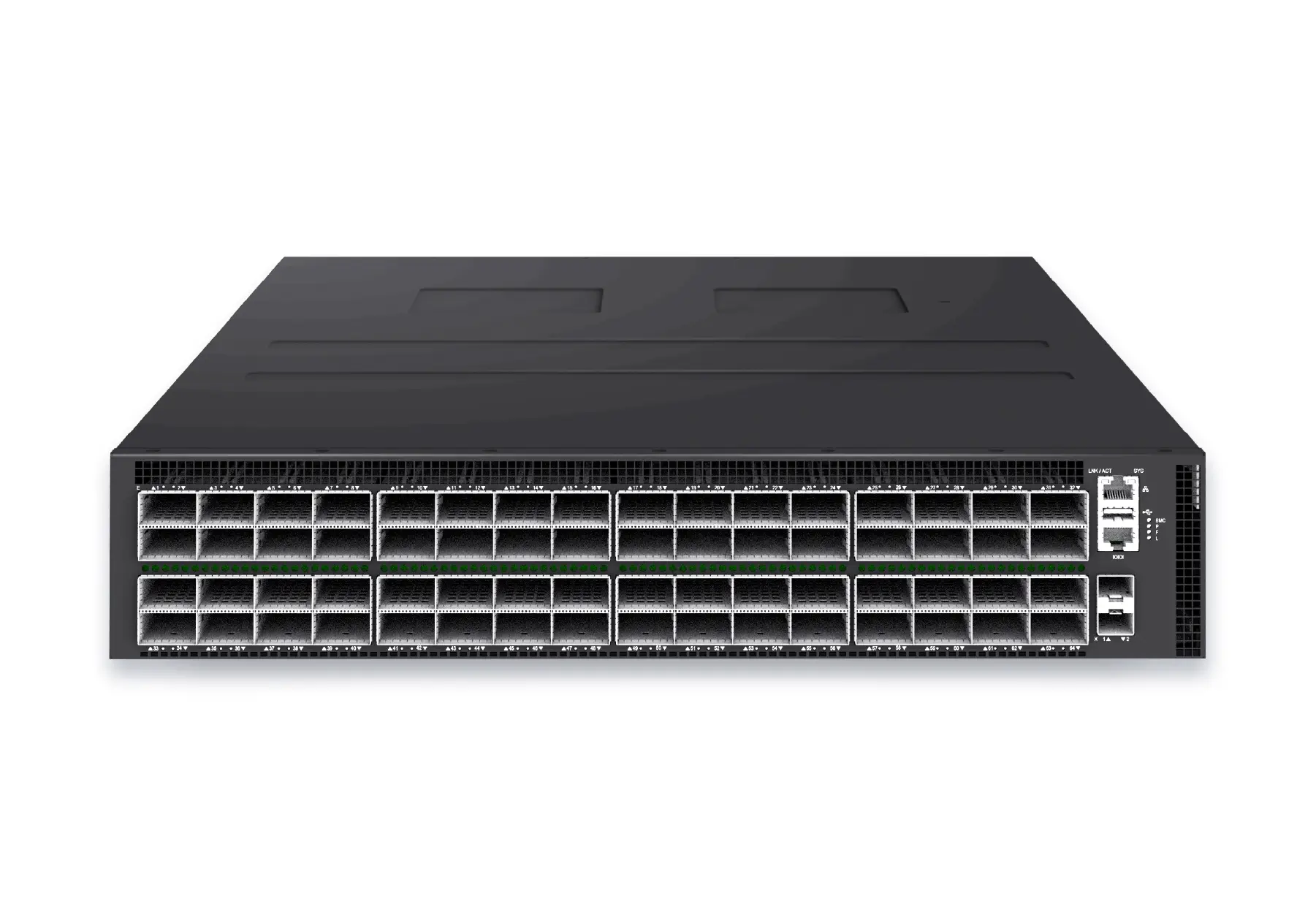 datacenter aiXS-DC-64X800-AI-G164-port 800G AI fabric switch for large-scale GPU clusters, HPC backbones, and ultra-high-throughput data center networks.View product
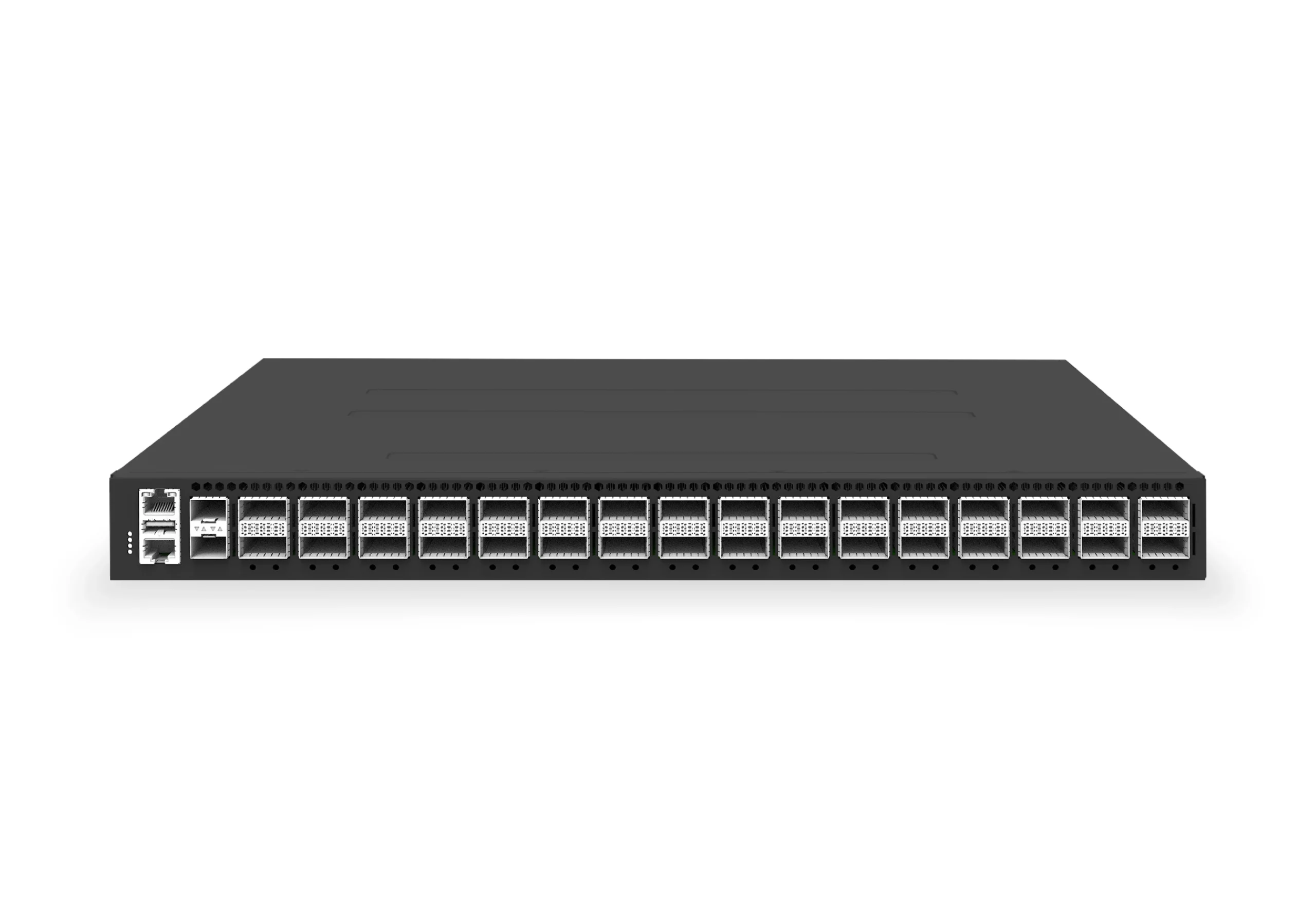 datacenter aiXS-DC-32X400-SP-G232-port 400G spine/core switch for high-capacity data center fabrics and AI-ready backbones.View product
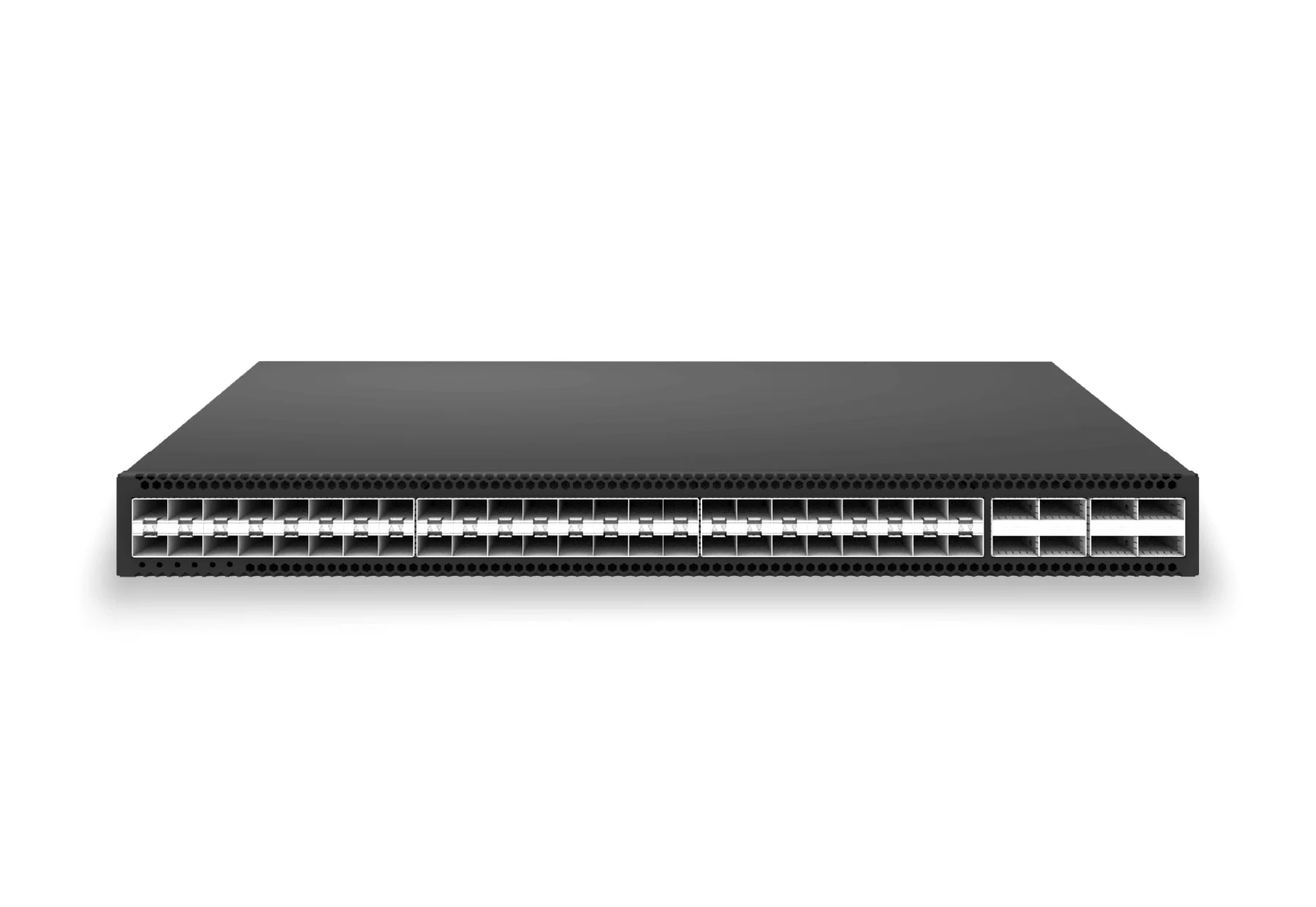 access aggregateXS-AA-48X25-8X100-AGG48x 25G SFP28 aggregation/core switch with 8x 100G QSFP28 for enterprise access and aggregation networks.View product
Continue reading
Related articles
 Technical ArticleWhy SONiC Open Networking on Celestica Data Center Switches Matters for Australian EnterprisesHow SONiC on Celestica data center switches should be evaluated by Australian operators for ASIC fit, support, RoCE, automation, and TCO.Read article
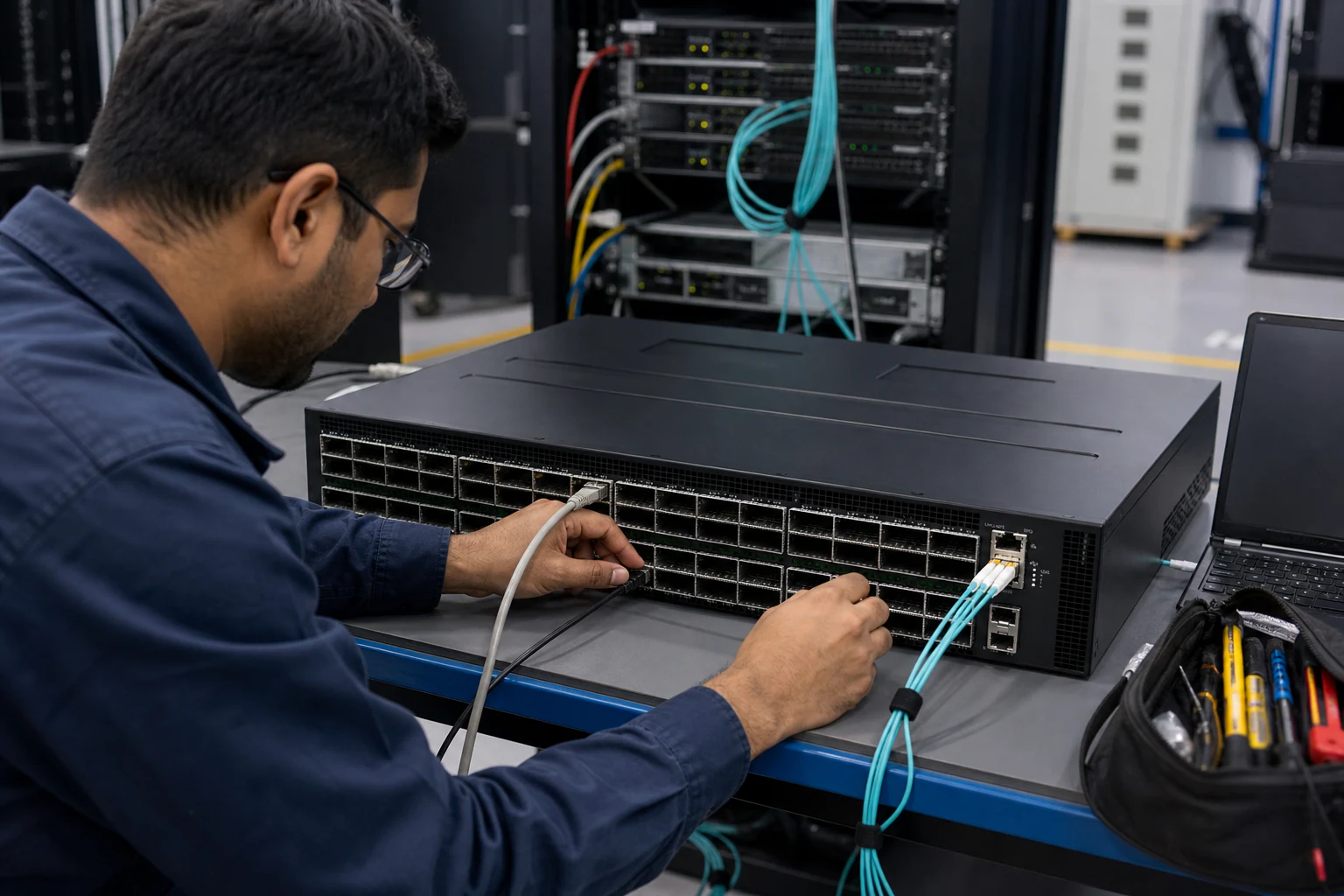 Technical ArticleWhy Enterprise Buyers Are Moving to SONiC on White Box Switches: A Practical Guide for Australian NetworksPractical guide for Australian enterprise buyers evaluating SONiC on white-box switches, covering hardware, ASICs, support, automation, and TCO.Read article
 Technical ArticleSONiC Ecosystem: How Open Networking Runs Across OCP Vendors and Cloud OperatorsA practical guide to the SONiC ecosystem across OCP, SAI, cloud operators, ASIC vendors, and Australian enterprise adoption decisions.Read article