In brief
Engineering guide for SONiC and open networking buyers covering platform fit, automation, support, telemetry, and validation evidence.
Key takeaways
- The SONiC network operating system continues to expand its footprint beyond hyperscaler data centers into enterprise and colocation environments worldwide.
- For Australian enterprise and data center teams, the SONiC conversation carries a distinct local dimension.
- Meanwhile, major switch silicon and platform vendors continue to integrate SONiC support.
What happened
The SONiC network operating system continues to expand its footprint beyond hyperscaler data centers into enterprise and colocation environments worldwide. According to the SONiC Foundation, SONiC is “an open source network operating system (NOS) based on Linux that runs on switches from multiple vendors and ASICs” and offers “a full suite of network functionality, like BGP and RDMA, that has been production-hardened in the data centers of some of the largest cloud service providers” (sonicfoundation.dev). The Open Compute Project lists SONiC as a formal Networking sub-project alongside ONIE and SAI (opencompute.org/projects/networking).
For Australian enterprise and data center teams, the SONiC conversation carries a distinct local dimension. In a January 2026 OCP Podcast episode, David Hirst, CEO of Macquarie Data Centres, described how AI workloads are fundamentally changing Australian data center design, pushing operators from “real estate” thinking toward “chip-out thinking” and driving demand for sovereign, compliant infrastructure. Hirst highlighted that Australia’s regulatory environment, data sovereignty requirements, and community expectations create a different operational context than hyperscaler-dominant markets (opencompute.org/ocp-podcast, Episode 18).
Meanwhile, major switch silicon and platform vendors continue to integrate SONiC support. NVIDIA offers “Pure SONiC” as a community-developed, open-source NOS that runs on its Spectrum Ethernet switch portfolio, spanning Spectrum-2 through Spectrum-6 generations at port speeds from 100GbE to 800GbE (nvidia.com/en-us/networking/ethernet-switching). The SONiC GitHub repository shows an active project with nearly 3,000 commits and over 500 open issues, reflecting both community momentum and the reality of ongoing development complexity (github.com/sonic-net/SONiC).
Why it matters for Australian enterprise and data center teams
Australian organisations face a convergence of factors that make SONiC evaluation both timely and risk-laden in Q2 2026.
1. AI workload expansion is forcing fabric decisions
Hirst noted in his OCP interview that AI workloads behave differently from traditional cloud: they are bursty, unpredictable, and demand much higher per-rack power and bandwidth. He described planning for megawatt-per-rack densities and liquid cooling as near-term realities, not distant forecasts (opencompute.org/ocp-podcast, Episode 18). For Australian enterprises building private AI inference or GPU training environments, the switching fabric underneath these workloads must support RDMA over Converged Ethernet (RoCE), lossless Ethernet features, and 400GbE or 800GbE spine-leaf architectures. SONiC supports BGP and RDMA at the protocol level, but the maturity of RoCE, DCBX, and congestion notification features varies across hardware platforms and SONiC distributions. Teams evaluating SONiC for AI fabric roles must test these features against their specific workload profiles rather than assuming hyperscaler-grade parity.
2. Sovereign data and compliance requirements add risk layers
Hirst emphasised that compliance is a market advantage in Australia, not just a checkbox. He described how local requirements around data sovereignty, community engagement, and regulatory approval shape where and how AI infrastructure gets built (opencompute.org/ocp-podcast, Episode 18). For enterprise teams, this means SONiC deployments must satisfy not only technical feature requirements but also operational compliance obligations: audit trails, change management, security patching cadence, and vendor support escalation paths. An open-source NOS backed by a community foundation has a different support model than a commercially licensed NOS with SLA-backed enterprise support. This is not a disqualifier, but it is a risk that must be explicitly evaluated and mitigated in any Australian data center deployment plan.
3. Multi-vendor portability is real but not automatic
Multi-vendor portability should be treated as a design target, not an assumption. The buyer still needs to validate feature parity, automation behaviour, optics support, telemetry fields, and escalation ownership across each proposed platform.
4. Support and operations readiness is a gap for many enterprise teams
SONiC’s container-based architecture, where each network function runs in its own Docker container, provides modularity and fault isolation advantages (github.com/sonic-net/SONiC). However, operating a containerised NOS requires Linux and Docker skills that many traditional network operations teams may not have. The SONiC community offers mailing lists, Slack channels, weekly meetings, and GitHub issue tracking for support (github.com/sonic-net/SONiC). For enterprise teams that require 24/7 vendor-backed support with defined SLAs, the choice of SONiC distribution and support partner becomes a critical risk factor. Several vendors offer commercially supported SONiC distributions, but feature scope, patch cadence, and Australian-local support availability vary significantly. This must be evaluated on a vendor-by-vendor basis.
5. The Australian data center build-out timeline creates urgency
Hirst’s discussion of Macquarie’s IC3 Super West project and the broader Australian data center construction pipeline suggests that infrastructure decisions being made now will lock in network architectures for five to ten years (opencompute.org/ocp-podcast, Episode 18). Teams that default to proprietary NOS choices today may face higher switching costs when AI workload demands outgrow their initial fabric. Conversely, teams that adopt SONiC without adequate operational readiness risk deployment delays and support gaps during critical build-out phases.
SONiC risk checklist for Australian teams (Q2 2026)
| Risk Area | Key Question | Verification Needed |
|---|---|---|
| RoCE / RDMA support | Does the target SONiC distribution and hardware platform pass lossless Ethernet and RoCE v2 validation for your GPU workload profile? | Lab testing with actual AI workload traffic patterns |
| Compliance and audit | Does the SONiC support model provide audit-ready change logs, CVE patching SLAs, and escalation paths that satisfy Australian regulatory expectations? | Review support contracts and patch history |
| Multi-vendor portability | Has SAI feature parity been validated across your hardware shortlist, including ASIC-specific features like INT telemetry and EVPN-VXLAN scale? | Side-by-side lab validation |
| Operations readiness | Do your network operations teams have Linux, Docker, and NETCONF/YANG skills, or is a training and upskilling plan required? | Internal skills assessment |
| Support SLA | Does the chosen SONiC distribution come with 24/7 enterprise support with Australian-local escalation, and what is the patch-to-deployment cadence? | Vendor support contract review |
| Lifecycle management | What is the upgrade path for containerised SONiC components, and how are rolling upgrades handled in a production spine-leaf fabric? | Vendor documentation and lab testing |
| ASIC and hardware roadmap | Does the switch hardware vendor have a committed SONiC support roadmap that aligns with your five-year infrastructure plan? | Vendor roadmap briefing |
The xSONiC buyer angle
For Australian enterprise and data center teams evaluating open networking as an alternative to proprietary NOS lock-in, the SONiC ecosystem offers genuine advantages in multi-vendor flexibility, community-driven innovation, and cost structure. However, the risk profile is non-trivial, particularly for teams building AI fabric infrastructure where RoCE, congestion management, and telemetry features must work reliably at scale.
xSONiC’s data center AI switch and bare-metal switch product families are designed for teams that want to evaluate SONiC-based open networking on hardware purpose-built for enterprise data center use. The evaluation should focus on:
- AI fabric readiness: Can the switch platform deliver the RoCE v2, DCBX, and congestion notification features needed for GPU cluster backends? See xSONiC’s AI Fabric and GPU Backend Fabric solution guides for evaluation criteria.
- EVPN-VXLAN scale: Does the platform support the EVPN-VXLAN overlay scale required for your multi-tenant or multi-VPC data center design?
- NETCONF/YANG automation: Can the platform be managed through NETCONF/YANG for integration with your existing network automation stack?
- INT telemetry: Does the platform support in-band network telemetry for visibility into AI workload traffic flows?
What to watch next
- OCP APAC Summit 2026: The OCP event calendar lists an APAC Summit for 2026 (opencompute.org). Australian teams should monitor for SONiC-related sessions and local ecosystem announcements.
- SONiC release cadence: Track the SONiC GitHub repository for release updates and feature maturation relevant to enterprise and AI fabric use cases.
- Australian data center capacity pipeline: Monitor announcements from Macquarie Data Centres and other Australian operators for AI infrastructure build-out timelines that may accelerate SONiC adoption decisions.
- Vendor SONiC distribution updates: Evaluate commercially supported SONiC distributions for Australian-local support availability and SLA terms.
Engineering Evidence Floor
For SONiC and open networking articles, the acceptance standard is operational proof, not community momentum. The evidence package should name the switch SKU, ASIC, SAI version, ONIE status, SONiC image, optics matrix, automation interface, support path, and rollback procedure. A practical pilot should run for 30 days, include 3 automated configuration changes, validate 100G/400G links where relevant, and prove that a P1 evidence bundle can be assembled within 2 hours.
| Evidence area | What to validate | Acceptance gate | Rework trigger |
|---|---|---|---|
| Platform | SKU, ASIC, ONIE, SAI, image, and optics | 2 platforms boot, upgrade, and rollback | Hardware support is assumed |
| Automation | Source of truth, API/gNMI/NETCONF, backup, and diff | 3 changes pass state readback | CLI drift becomes normal |
| Operations | Logs, telemetry, failure runbook, and escalation owner | P1 bundle ready within 2 hours | Fault isolation depends on one engineer |
| Lifecycle | Patch cadence, CVE process, spare plan, and support SLA | 12 months plan approved | Security and RMA ownership is unclear |
| Commercial | Hardware, support, optics, training, and migration labour | Risk-adjusted TCO is documented | Savings vanish after rework |
Engineering FAQ
What should be proven before adopting EVPN-VXLAN on SONiC? Prove underlay routing, BGP sessions, VTEP behaviour, MAC/IP learning, route scale, multi-homing design, failure convergence, and observability. The overlay should be accepted as a system, not a feature checkbox.
Why does the underlay design still matter in an overlay network? EVPN-VXLAN depends on a stable routed underlay. MTU, ECMP, addressing, route policy, link failure behaviour, and telemetry determine whether the overlay remains predictable under load and during faults.
What should be included in an EVPN-VXLAN operations runbook? Include naming, IP plan, BGP policy, VNI mapping, change process, rollback commands, failure checks, telemetry fields, backup and restore steps, and escalation ownership for the selected SONiC image.
Related xSONiC Resources
Sources Reviewed
- Ethernet Network Adapters - ConnectX NICs | NVIDIA
- NVIDIA BlueField Data Processing Unit
- NVIDIA Spectrum-X Ethernet Platform
- OpenConfig gNMI Specification
- OpenConfig
- RFC 7950 - The YANG 1.1 Data Modeling Language
- RFC 6241 - Network Configuration Protocol (NETCONF)
- ACSC Essential Eight
- OAIC Notifiable Data Breaches
- APRA CPS 234 Information Security
- NETSCOUT Network Packet Definition
- Cloudflare Network Packet Definition
- SONiC Project Documentation
- Broadcom Ethernet Switching
- Marvell Switching
- NVIDIA Ethernet Switching
- Open Compute Networking
- SONiC GitHub
- SONiC Foundation
Product fit
Products referenced for evaluation
These products are referenced for evaluation context in the article. Confirm workload, port, optics, software, interoperability, and support requirements against the exact deployment before procurement.
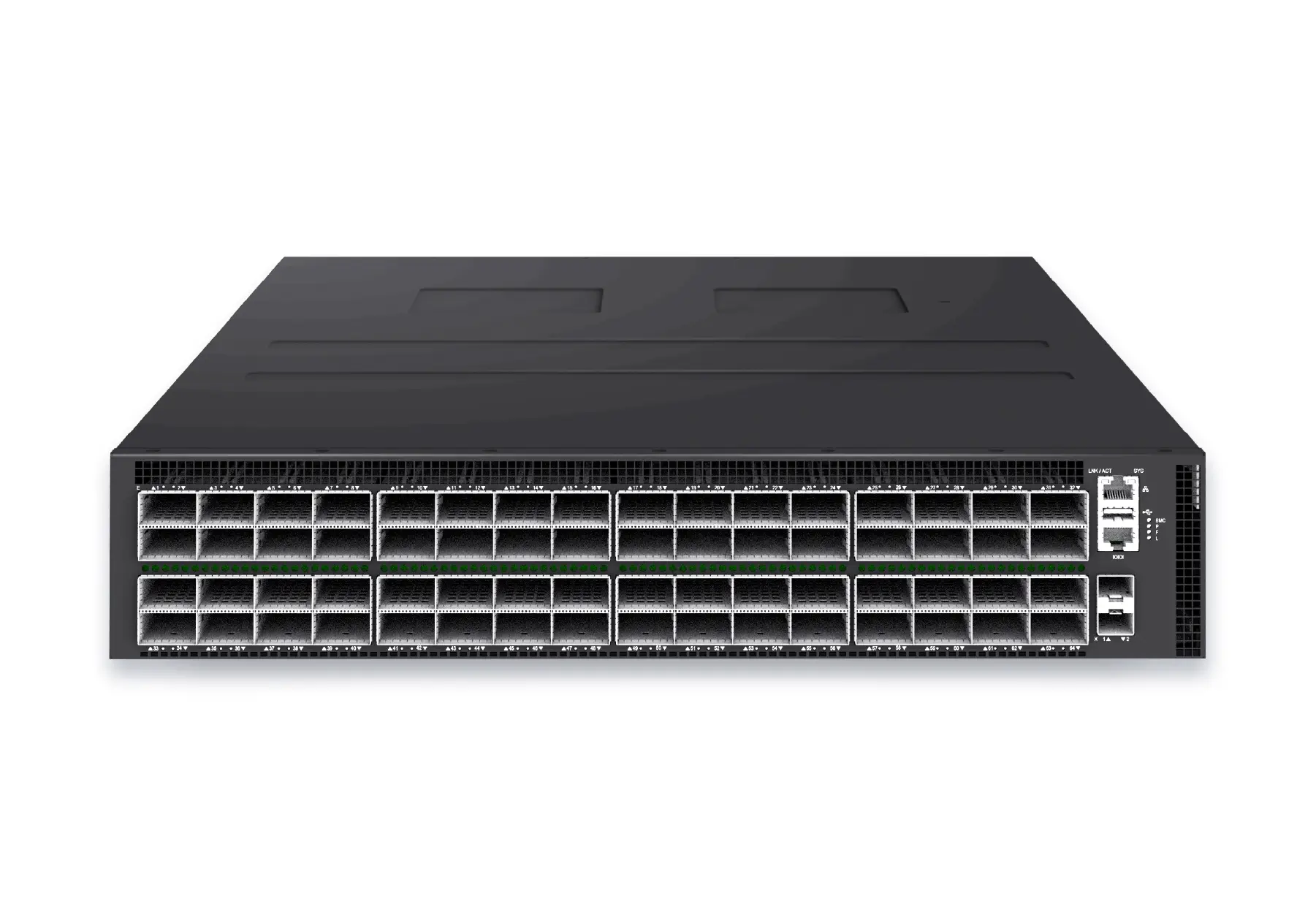 datacenter aiXS-DC-64X800-AI-G164-port 800G AI fabric switch for large-scale GPU clusters, HPC backbones, and ultra-high-throughput data center networks.View product
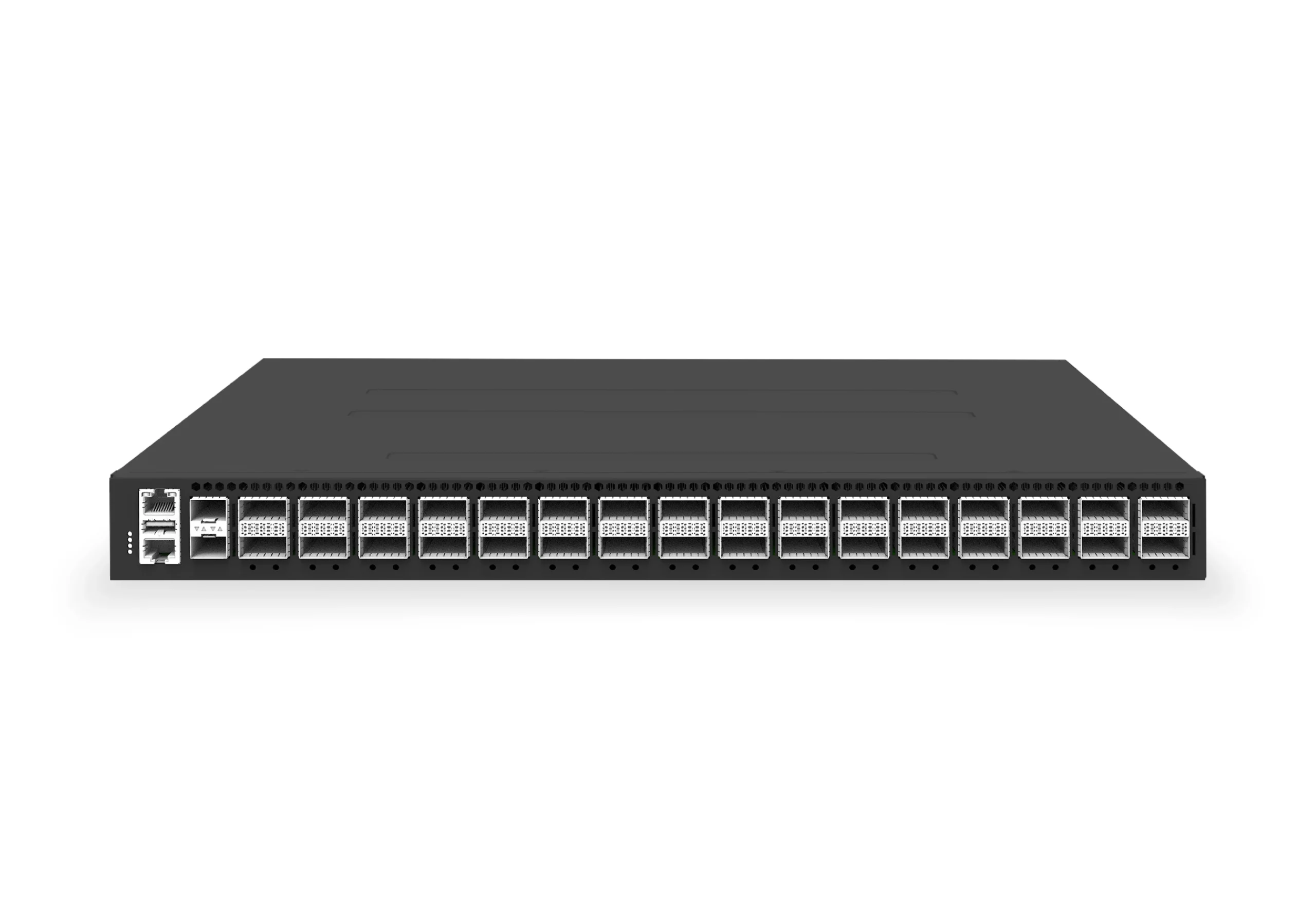 datacenter aiXS-DC-32X400-SP-G232-port 400G spine/core switch for high-capacity data center fabrics and AI-ready backbones.View product
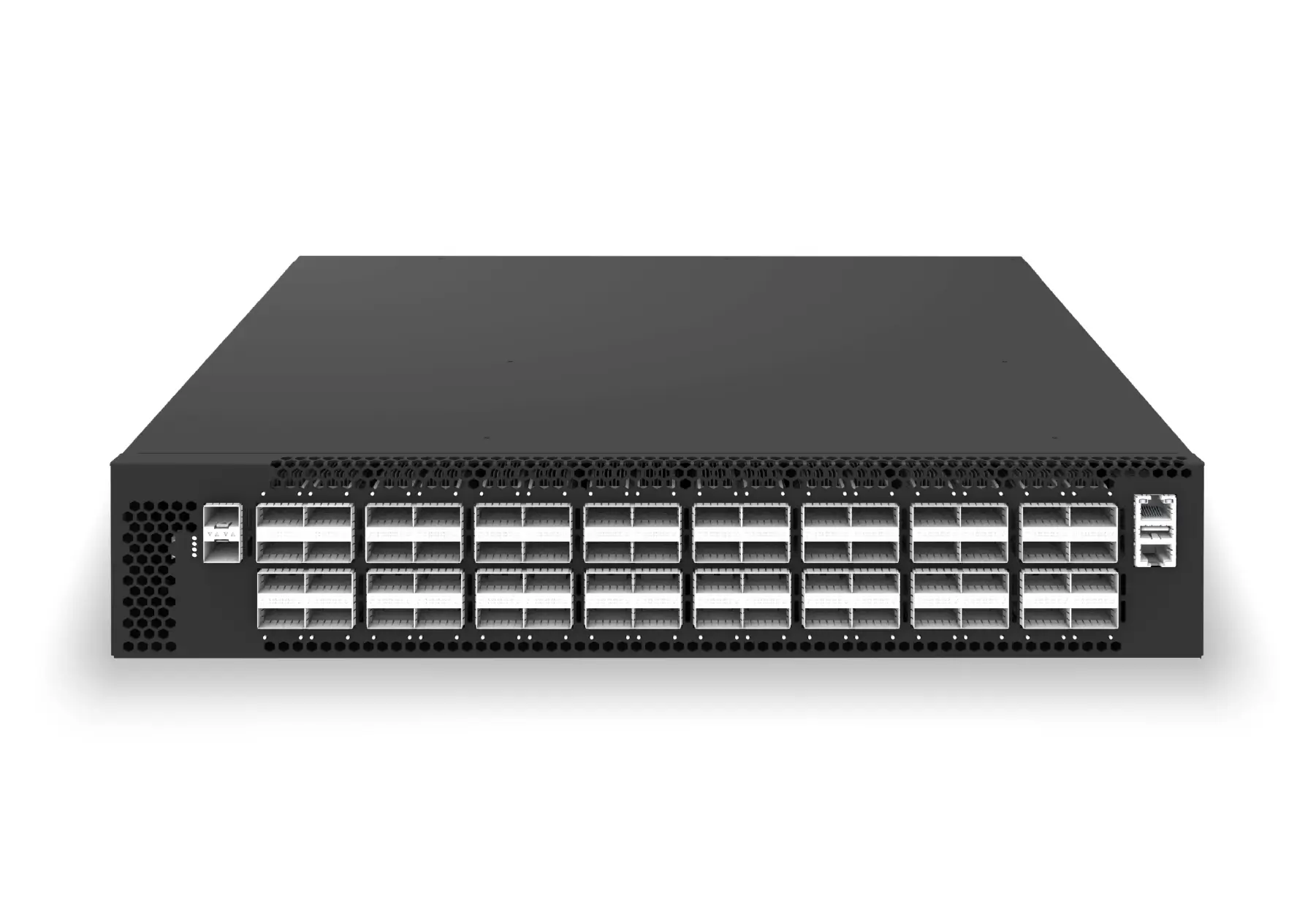 datacenter aiXS-DC-64X200-LS-G164-port 200G leaf/spine switch for high-bandwidth storage, compute, and scale-out data center fabrics.View product
Continue reading
Related articles
 Technical ArticleSONiC Switch Pre-Production Validation Checklist: A 12-Point Testing Playbook for Open Networking TeamsEngineering guidance on SONiC Switch Pre-Production Validation Checklist for Australian data centre buyers, covering form factor choice, link budgets, cabling.Read article
 Technical ArticleWhy Australian Data Centers Are Re-evaluating Open Networking for AI InfrastructureEngineering guide for AI fabric buyers covering RoCE, SONiC, telemetry, optics, support ownership, and deployment validation.Read article
 Technical ArticleSONiC Switch Validation Before Production: What Australian Network Teams Need on Their ChecklistEngineering guide for SONiC and open networking buyers covering platform fit, automation, support, telemetry, and validation evidence.Read article