In brief
Engineering guide for SONiC and open networking buyers covering platform fit, automation, support, telemetry, and validation evidence.
Key takeaways
- The SONiC (Software for Open Networking in the Cloud) ecosystem has matured from a hyperscaler-only project into a viable option for enterprise and colocation data centers worldwide.
- But evaluating SONiC is not the same as evaluating a single vendor platform.
- This guide gives you a structured framework to evaluate SONiC switches for your data center.
Why Australian Data Centers Are Looking at SONiC
The SONiC (Software for Open Networking in the Cloud) ecosystem has matured from a hyperscaler-only project into a viable option for enterprise and colocation data centers worldwide. For Australian operators — whether running AI training clusters in Sydney, colocation in Melbourne, or edge compute in Perth — SONiC offers a path away from proprietary network operating system (NOS) lock-in.
But evaluating SONiC is not the same as evaluating a single vendor platform. SONiC is an open-source NOS built on Linux, using Docker containers to modularize each network function. It runs on switches from multiple hardware vendors and multiple ASIC families. That flexibility is the core value proposition — and the core complexity.
This guide gives you a structured framework to evaluate SONiC switches for your data center.
1. Understand the SONiC Architecture First
Before you compare switch SKUs, understand what you are buying into.
SONiC is built on the Switch Abstraction Interface (SAI), which decouples the NOS from the underlying ASIC. Each network function — BGP, LLDP, DHCP relay, telemetry — runs in its own Docker container. This container-based architecture provides:
- Fault isolation: A crash in one container does not bring down the switch.
- Independent upgrades: You can update individual components without a full NOS reload.
- Easier troubleshooting: Container logs and health checks are standard Linux tools.
- Enhanced scalability: The modular design supports growing network complexity.
SONiC uses JSON-based configuration files and supports both CLI and programmatic configuration methods. It runs on standard Linux interfaces and tools, which means your team’s existing Linux skills transfer directly.
Key takeaway: SONiC is not a monolithic switch OS. It is a containerized, modular platform. Your operational model needs to account for that.
2. Check Hardware Compatibility
SONiC supports a growing list of network switches, but not every switch runs every SONiC feature. The supported devices and platforms list is maintained on the SONiC Wiki and GitHub.
When evaluating hardware, check:
| Evaluation Criteria | What to Verify |
|---|---|
| ASIC vendor | Does the switch use a SONiC-supported ASIC? |
| SAI implementation | Is the SAI driver mature for this ASIC? |
| Feature coverage | Does this platform support the features you need (BGP, RDMA, VXLAN, telemetry)? |
| Port density and speeds | Does the switch match your rack design (100G leaf, 400G spine, 800G AI backend)? |
| Form factor | 1U, 2U, or modular? Does it fit your rack and power budget? |
Multiple vendors offer SONiC-compatible hardware, including bare-metal switch options that give you maximum flexibility in choosing your ASIC and port configuration.
For Australian buyers: Confirm that your chosen hardware vendor has local distribution, RMA capability, and compliance with Australian electrical and safety standards. Global availability does not always mean Australian availability.
3. Evaluate the ASIC Ecosystem
The SAI abstraction layer means SONiC can run on ASICs from multiple silicon vendors. This is a major differentiator from proprietary NOS platforms that are tightly coupled to a single vendor’s silicon.
When evaluating ASIC options, consider:
- Maturity of the SAI driver: A newer ASIC may have a less mature SAI implementation, which means fewer features or more bugs.
- Feature parity: Not all ASICs support the same feature set at the same level. For example, RDMA/RoCE v2 support varies across silicon generations.
- Performance characteristics: Throughput, latency, buffer depth, and programmability differ across ASIC families.
- Roadmap alignment: Does the silicon vendor’s roadmap align with your 2-3 year network evolution plan?
Key insight: The SONiC ecosystem includes major silicon vendors. Spectrum Ethernet switches from vendors like NVIDIA, for example, offer SONiC compatibility alongside their proprietary NOS options, giving buyers flexibility in both hardware and software choices.
4. Plan Your Speed Migration Path
Most Australian data center operators are somewhere on a speed migration journey:
- Current state: 25G/100G leaf, 100G/400G spine
- Near-term target: 100G/400G leaf, 400G spine
- AI/ML target: 400G leaf, 800G spine/backend
SONiC supports this migration because the same NOS runs across multiple speed generations. You can deploy 100G leaf switches today and add 400G or 800G spine switches later without changing your operational tooling.
When planning your migration:
- Audit your current optics and cabling. What connector types do you have (QSFP28, QSFP-DD, OSFP)? What fiber plant?
- Map your ASIC generation to your speed target. Newer ASICs support higher speeds and more advanced features like silicon photonics integration.
- Validate transceiver compatibility. SONiC supports a range of optics, but verify that your chosen transceivers are tested with your platform.
- Consider co-packaged optics. For AI-scale fabrics, co-packaged optics are emerging as a power efficiency and reliability improvement. Evaluate whether your platform roadmap includes this technology.
5. Assess Vendor Lock-In Risk
The core value of SONiC is decoupling hardware from software. But lock-in risk does not disappear — it shifts.
Watch for these lock-in vectors:
| Lock-In Type | Risk | Mitigation |
|---|---|---|
| ASIC coupling | Your SONiC features depend on the SAI implementation for your ASIC | Choose ASICs with mature, widely-used SAI drivers |
| Vendor-specific extensions | Some vendors add proprietary features on top of SONiC | Standardize on open SAI features; document any vendor extensions |
| Support dependency | If your switch vendor provides SONiC support, you depend on their responsiveness | Evaluate SLA terms, local support presence, and community resources |
| Operational tooling | Custom automation built for one SONiC version may break on upgrade | Use standard APIs (REST, gNMI, NETCONF/YANG) and test upgrade paths |
The open networking advantage: Because SONiC is open source under the Apache License 2.0, you can always move to a different hardware vendor while keeping the same NOS. This is the fundamental difference from proprietary NOS platforms where hardware and software are a single procurement decision.
6. Evaluate Operational Readiness
SONiC is not a drop-in replacement for a proprietary NOS. Your team needs to be ready for:
- Linux-based operations: SONiC runs on Debian Linux. Your team needs Linux comfort, not just CLI comfort.
- Container management: Understanding Docker basics is recommended for troubleshooting and upgrades.
- Configuration management: SONiC uses JSON config files. Teams used to vendor-specific CLIs will need to adapt.
- Community resources: The SONiC community includes mailing lists, Slack channels, weekly meetings, and GitHub Issues. These are valuable — but they are not a vendor support contract.
- Programmatic interfaces: SONiC supports modern network programming paradigms. If your team is already using Ansible, Terraform, or custom Python scripts, the transition is smoother.
For Australian teams: Consider whether you need a local integrator or partner with SONiC deployment experience. The SONiC community is global, but time-zone-aligned support matters for production environments.
7. Map SONiC to Your Data Center Use Case
SONiC has been production-hardened in large-scale cloud environments. But not every use case is the same.
Spine-Leaf Data Center Fabric
SONiC’s BGP-based routing and EVPN-VXLAN overlay support make it a strong fit for leaf-spine architectures. This is the most mature SONiC deployment model.
AI/ML Training Clusters
For GPU cluster backends requiring RDMA over Converged Ethernet (RoCE), SONiC supports the full RoCE v2 stack including Data Center Bridging Capability Exchange (DCBX) and congestion notification. Verify that your chosen ASIC and platform have been validated for your RDMA workload.
Colocation and Multi-Tenant
SONiC’s modular architecture and standard APIs support multi-tenant isolation and telemetry. Evaluate feature completeness for your specific tenancy model.
Campus and Edge
For campus environments, validate endpoint diversity, PoE budgets, NAC integration, closet power, uplink design, monitoring, rollback, and operator workflow before scaling beyond a pilot site.
8. Build Your Evaluation Scorecard
Use this framework to structure your SONiC switch evaluation:
| Category | Weight | Questions |
|---|---|---|
| Hardware compatibility | High | Is this switch on the SONiC supported list? Is the SAI driver mature? |
| ASIC maturity | High | How long has this ASIC been in SONiC production? What features are validated? |
| Speed roadmap | Medium | Does this platform support my 12-24 month speed migration target? |
| Vendor support | High | What is the support SLA? Is there Australian local support? |
| Operational fit | High | Does my team have Linux/container skills? What training is needed? |
| Optics compatibility | Medium | Are the transceivers I need validated on this platform? |
| Community health | Low-Medium | Is the ASIC/vendor actively contributing to SONiC? |
| Total cost of ownership | High | Include hardware, optics, support, training, and operational overhead. |
Next Steps for Australian Data Center Teams
- Define your requirements: Speed, port density, ASIC preference, support SLA.
- Shortlist hardware: Cross-reference with the SONiC supported devices list.
- Request evaluation units: Test SONiC on your target hardware in a lab environment.
- Validate your operational model: Run your automation, monitoring, and troubleshooting workflows against SONiC.
- Plan your deployment: Stage the rollout, starting with non-critical workloads.
SONiC is a proven platform for data center networking. The buying decision is not whether SONiC works — it does, at massive scale. The decision is whether your team, your hardware choices, and your operational model are ready to take advantage of it.
Ready to evaluate SONI-based data center switches for your Australian deployment? Contact xSONiC to discuss hardware options, transceiver compatibility, and deployment planning.
Engineering FAQ
What should be proven before adopting EVPN-VXLAN on SONiC? Prove underlay routing, BGP sessions, VTEP behaviour, MAC/IP learning, route scale, multi-homing design, failure convergence, and observability. The overlay should be accepted as a system, not a feature checkbox.
Why does the underlay design still matter in an overlay network? EVPN-VXLAN depends on a stable routed underlay. MTU, ECMP, addressing, route policy, link failure behaviour, and telemetry determine whether the overlay remains predictable under load and during faults.
What should be included in an EVPN-VXLAN operations runbook? Include naming, IP plan, BGP policy, VNI mapping, change process, rollback commands, failure checks, telemetry fields, backup and restore steps, and escalation ownership for the selected SONiC image.
Related xSONiC Resources
Sources Reviewed
- Ethernet Network Adapters - ConnectX NICs | NVIDIA
- NVIDIA BlueField Data Processing Unit
- NVIDIA Spectrum-X Ethernet Platform
- OpenConfig gNMI Specification
- OpenConfig
- RFC 7950 - The YANG 1.1 Data Modeling Language
- RFC 6241 - Network Configuration Protocol (NETCONF)
- SONiC Project Documentation
- Broadcom Ethernet Switching
- Marvell Switching
- NVIDIA Ethernet Switching
- Open Compute Networking
- SONiC GitHub
- SONiC Foundation
Product fit
Products referenced for evaluation
These products are referenced for evaluation context in the article. Confirm workload, port, optics, software, interoperability, and support requirements against the exact deployment before procurement.
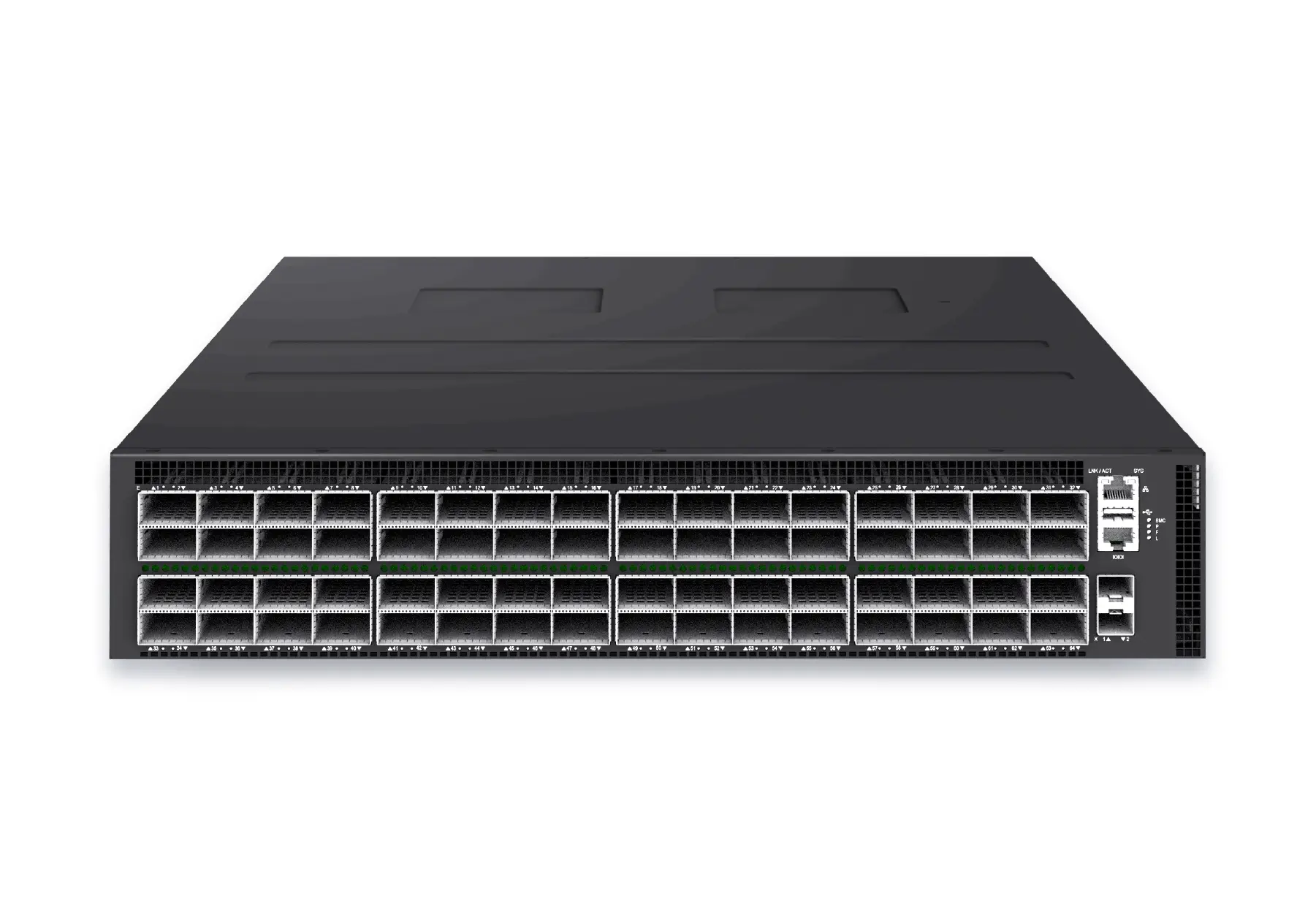 datacenter aiXS-DC-64X800-AI-G164-port 800G AI fabric switch for large-scale GPU clusters, HPC backbones, and ultra-high-throughput data center networks.View product
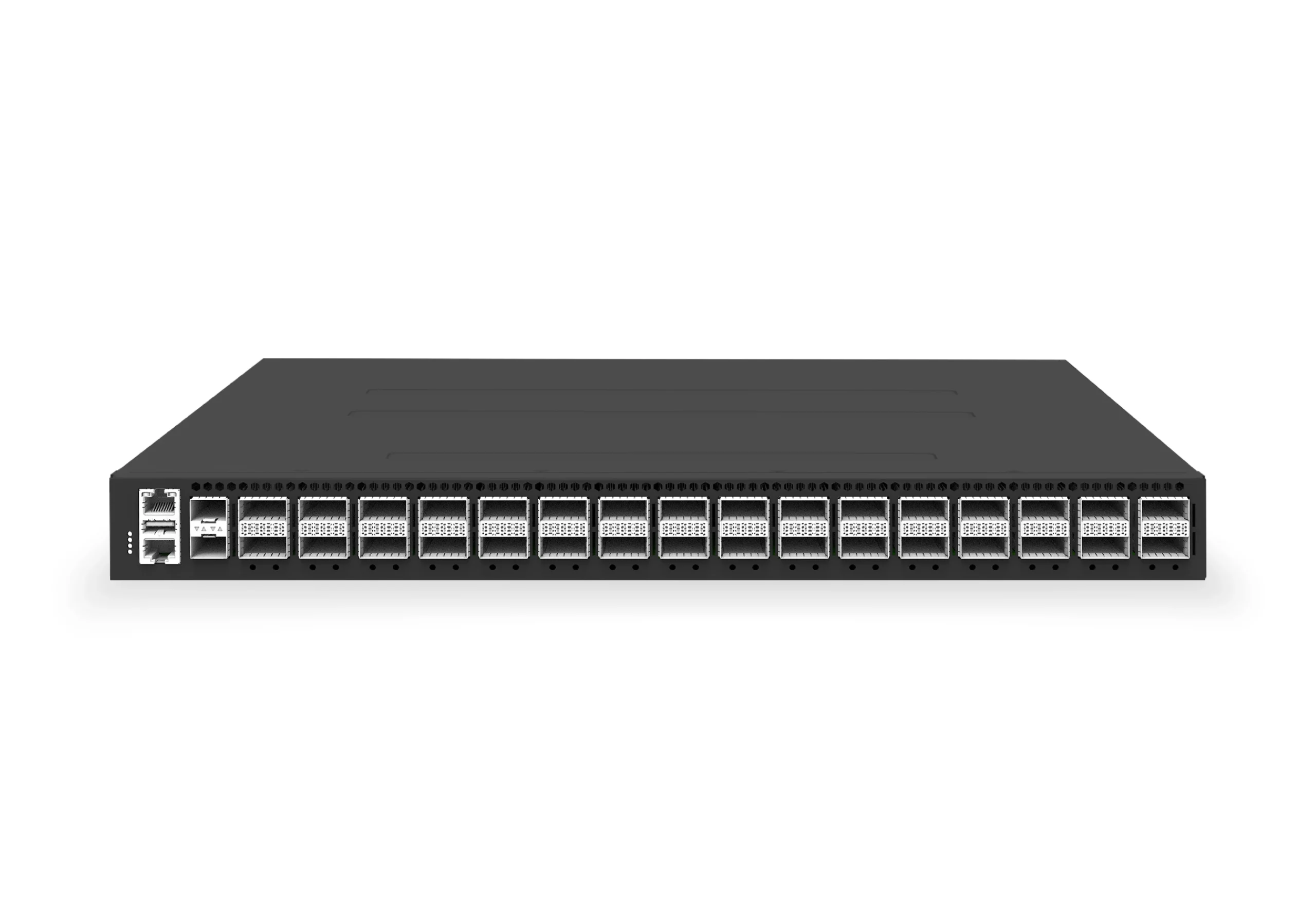 datacenter aiXS-DC-32X400-SP-G232-port 400G spine/core switch for high-capacity data center fabrics and AI-ready backbones.View product
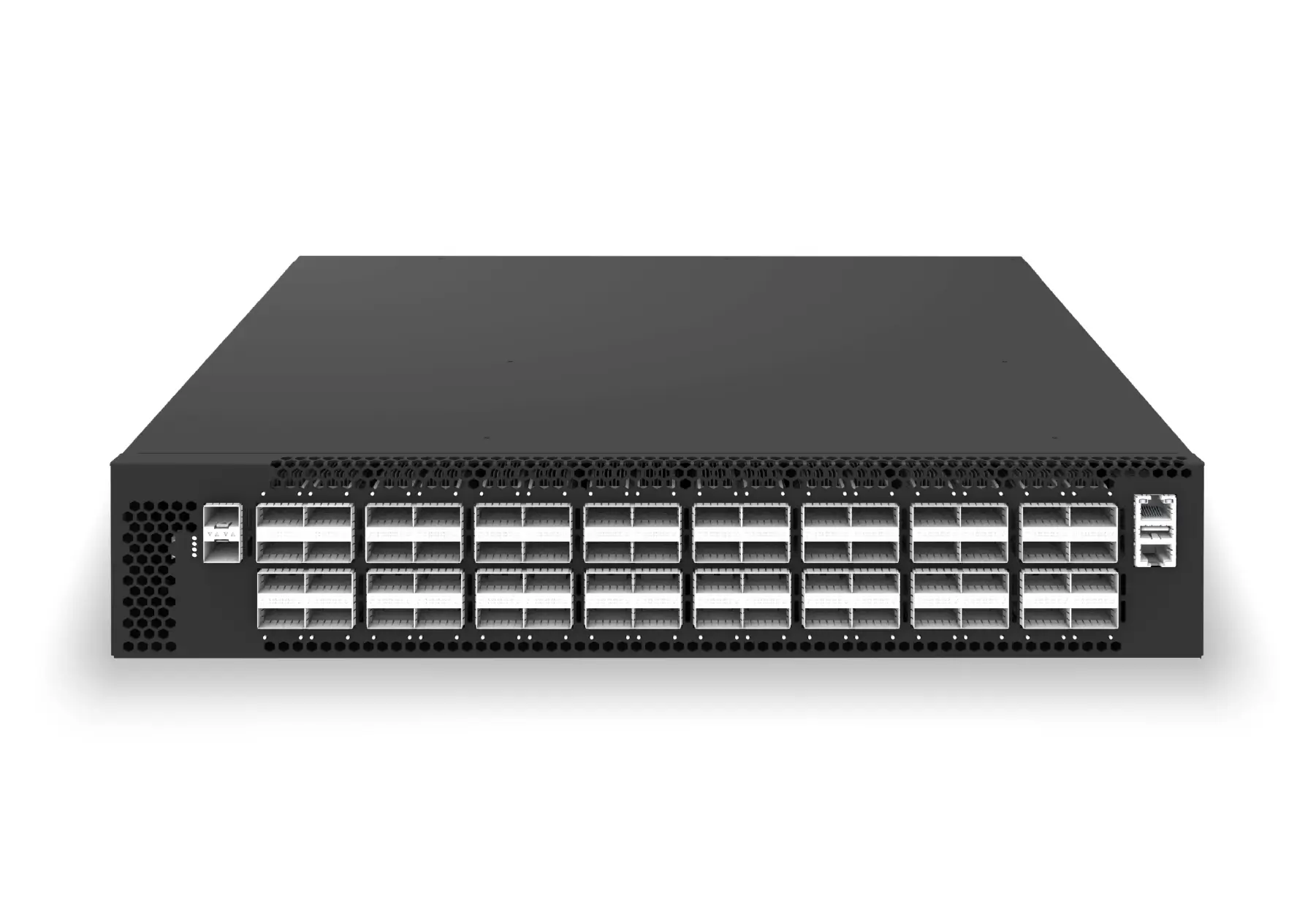 datacenter aiXS-DC-64X200-LS-G164-port 200G leaf/spine switch for high-bandwidth storage, compute, and scale-out data center fabrics.View product
Continue reading
Related articles
 Technical ArticleSONiC Switch Pre-Production Validation Checklist: A 12-Point Testing Playbook for Open Networking TeamsEngineering guidance on SONiC Switch Pre-Production Validation Checklist for Australian data centre buyers, covering form factor choice, link budgets, cabling.Read article
 Technical ArticleWhy Australian Data Centers Are Re-evaluating Open Networking for AI InfrastructureEngineering guide for AI fabric buyers covering RoCE, SONiC, telemetry, optics, support ownership, and deployment validation.Read article
 Technical ArticleSONiC Switch Validation Before Production: What Australian Network Teams Need on Their ChecklistEngineering guide for SONiC and open networking buyers covering platform fit, automation, support, telemetry, and validation evidence.Read article