In brief
SONiC-compatible Ethernet switch hardware selection playbook covering ASIC fit, SAI, optics, power, telemetry, support, and deployment validation.
Key takeaways
- Software for Open Networking in the Cloud (SONiC) is a free, open-source network operating system built on Linux that runs on switches from multiple vendors and multiple ASIC families.
- For Australian network teams, this creates both opportunity and complexity.
- SONiC-compatible Ethernet switches span multiple ASIC families and form factors.
Why Ethernet Switch Hardware Selection Is the First Decision in Any SONiC Deployment
Software for Open Networking in the Cloud (SONiC) is a free, open-source network operating system built on Linux that runs on switches from multiple vendors and multiple ASIC families. SONiC offers a full suite of network functionality — including BGP, RDMA, and containerized modular architecture — that has been production-hardened in the data centers of some of the largest cloud service providers (sonicfoundation.dev). The SONiC architecture decouples hardware from software through the Switch Abstraction Interface (SAI), which means the hardware platform you choose directly determines what features, port densities, and performance tiers your network can deliver.
For Australian network teams, this creates both opportunity and complexity. The opportunity: you are no longer locked into a single vendor’s switch-to-NOS bundle. The complexity: you now need to evaluate switch hardware independently from the network operating system, which means understanding ASIC families, port configurations, power and cooling requirements, and SONiC compatibility matrices before committing to a platform.
Understanding the SONiC Switch Hardware Ecosystem: ASIC Families and Platform Categories
SONiC-compatible Ethernet switches span multiple ASIC families and form factors. The key to hardware selection is understanding which ASIC families support which features, and how those features map to your workload requirements. The following table summarizes the major categories relevant to SONiC deployments:
| ASIC Category | Typical Use Case | Port Speed Range | Key SONiC Features | Ecosystem Maturity |
|---|---|---|---|---|
| NVIDIA Spectrum (Spectrum-1 through Spectrum-4) | Data center leaf/spine, AI fabric, RoCE clusters | 25G to 400G (Spectrum-4 up to 800G capable platforms) | BGP, RDMA/RoCE, VXLAN, SAI support | Mature — widely deployed in hyperscale SONiC environments |
| Broadcom switch ASICs (for example Tomahawk-class platforms) | Data center leaf/spine, enterprise core | 10G to 400G | BGP, MPLS, VXLAN, large table sizes | Mature — broad SONiC SAI support |
| Broadcom DNX (Distributed NeXt-gen) | Modular chassis, large-scale fabric | 100G to 400G per port | High radix, deep buffers, large forwarding tables | Growing SONiC support |
| Marvell Teralynx | Cloud leaf/spine, high-radix fabric | 25G to 51.2T switch capacity | Low latency, programmable pipeline | Active SONiC development |
| Innovium/Marvell Memory | Cloud leaf switches | 100G to 400G | Low power, SONiC SAI support | Available in select platforms |
The Open Compute Project (OCP) Networking project defines scope around ‘fully disaggregated and open networking HW and SW,’ including ‘Linux-based operating systems and developer tools, and REST APIs,’ ‘fully automated configuration management and bare metal provisioning,’ and ‘universal and multi-form factor switch motherboard hardware’ (opencompute.org/projects/networking). OCP-accepted or OCP-inspired switch platforms provide an additional layer of validation that the hardware meets open networking design principles.
For Australian buyers, the practical starting point is the official SONiC supported devices and platforms list maintained in the SONiC Wiki (github.com/sonic-net/SONiC). This list maps specific switch SKUs to ASIC families and SONiC feature support. Any hardware shortlist must be cross-referenced against this list before procurement.
Decision Criteria: Matching Switch Hardware to Your Workload
The right Ethernet switch hardware depends on your deployment scenario. Australian data centers and enterprise campuses have distinct requirements driven by workload type, scale, and compliance obligations. Use the following decision framework to narrow your hardware shortlist.
Decision Factor 1: Workload Type
- AI/ML Training and Inference Clusters: Require switches with RDMA/RoCE v2 support, deep or shared buffers, low cut-through latency, and DCBX capability. Switches based on Spectrum-class or DNX-class ASICs are commonly deployed in these environments. The xSONiC AI Fabric and GPU Backend Fabric solution pillars (xSONiC solutions) provide detailed architecture guidance for these workloads.
- Cloud and Virtualized Data Centers: Require VXLAN/EVPN support, large routing tables, and multi-tenancy capabilities. Most mature SONiC-compatible ASICs support these features.
- Enterprise Campus and Branch: Require PoE support, Layer 2/3 access features, and compact form factors. Fewer SONiC-compatible platforms serve this segment compared to data center use cases.
Decision Factor 2: Port Density and Speed
- 100G/400G leaf-spine fabrics: Standard for modern data center refresh. Most Spectrum-2 and later ASICs, and Broadcom switch silicon 2 and later, provide 100G and 400G port options.
- 25G server access: The dominant server NIC speed for general-purpose cloud and virtualization workloads. Widely available across SONiC-compatible platforms.
- 1G/10G campus and edge: Requires platforms with appropriate SFP/SFP+ options. Fewer open networking platforms serve this tier; verify SONiC compatibility carefully.
Decision Factor 3: Buffer Architecture
- Shared memory (unified buffer): Preferred for AI/ML workloads with bursty east-west traffic patterns. Provides flexible buffer allocation across ports.
- Per-port (fixed) buffer: Simpler, lower cost. Sufficient for predictable traffic patterns in campus or branch deployments.
Decision Factor 4: Power, Cooling, and Rack Space
- Australian data centers face increasing power density constraints, particularly in metro locations like Sydney and Melbourne. Verify switch power consumption (watts per port and total TDP) against your rack power budget.
- Front-to-back or back-to-front airflow options must match your data center cooling design.
- Form factor: 1U fixed switches vs. modular chassis. 1U fixed switches dominate SONiC leaf/spine deployments.
Decision Factor 5: Supply Chain and Local Support
- Verify that the switch vendor or ODM has Australian distribution, warranty, and RMA support.
- Lead times for open networking hardware can vary significantly. Engage suppliers early in your planning cycle.
Hardware Evaluation Checklist for SONiC Switch Platforms
Use this checklist when evaluating any Ethernet switch hardware for a SONiC deployment. Each item should be confirmed with vendor documentation, the SONiC supported devices list, or direct testing before procurement.
ASIC and SONiC Compatibility
- Switch SKU is listed on the official SONiC supported devices and platforms page (github.com/sonic-net/SONiC wiki)
- ASIC family supports your required feature set (BGP, VXLAN, RDMA, etc.)
- SAI (Switch Abstraction Interface) version is compatible with your target SONiC release
- Containerized SONiC image is available for the platform (community or enterprise distribution)
Port Configuration
- Required port speeds are available (1G/10G/25G/100G/400G)
- Port breakout options meet your topology needs (e.g., 1x 100G breakable to 4x 25G)
- SFP/QSFP/QSFP-DD/OSFP cage types are compatible with your transceiver plan
- Sufficient port count for your leaf or spine role
Performance and Scale
- Forwarding table size meets your route and MAC scale requirements
- Buffer depth is appropriate for your workload (AI/ML workloads typically need deeper buffers)
- Cut-through or store-and-forward latency meets your application requirements
- BGP convergence time has been validated for your scale
Physical and Environmental
- Airflow direction (front-to-back or back-to-front) matches your rack cooling design
- Power supply redundancy (1+1 or 2+2) meets your availability requirements
- Total power draw fits within your rack power budget
- Form factor (1U fixed, modular chassis) fits your rack space plan
- Operating temperature range is suitable for your facility
Management and Operations
- Console, SSH, and management Ethernet port are available
- SNMP, gNMI, or telemetry interfaces support your monitoring stack
- ONIE (Open Network Install Environment) bootloader is present for initial SONiC installation
- Firmware and BIOS update process is documented
Australian-Specific
- RCM (Regulatory Compliance Mark) or equivalent electrical safety certification for Australian deployment
- Local RMA and warranty process is available
- Import duties, GST, and shipping costs have been budgeted
- Lead time is confirmed and compatible with your project timeline
Deployment Acceptance Gate
The hardware shortlist should graduate only after it produces evidence, not preference. Test at least 1 leaf role and 1 spine or aggregation role, 3 optics classes, 100G/400G or 800G links where relevant, 24 hours of telemetry collection, and 1 upgrade plus 1 rollback on the target SONiC image. The acceptance record should include switch SKU, ASIC family, SAI version, BIOS/BMC versions, fan/PSU telemetry, DOM fields, route scale, MAC scale, ACL scale, and support owner. Rework the selection if any required feature exists only in a vendor roadmap or if the platform cannot be replaced under the Australian RMA window.
Engineering FAQ
What should be proven before selecting SONiC-compatible switch hardware? Prove the exact switch SKU, ASIC, SAI version, SONiC image, optics, route scale, telemetry, upgrade, rollback, and support path. Do not approve hardware from chipset claims alone.
Why does SAI maturity matter in hardware selection? SAI determines how the NOS reaches ASIC features. If SAI support is incomplete, the switch may boot SONiC but fail on queues, ACLs, telemetry, breakout, or optics behaviour.
What local evidence should Australian buyers request? Request Australian RMA path, spare stock, import lead time, RCM compliance, APAC support hours, and a tested optics matrix for the selected switch role.
Related xSONiC Resources
Sources Reviewed
- Ethernet Network Adapters - ConnectX NICs | NVIDIA
- NVIDIA BlueField Data Processing Unit
- NVIDIA Spectrum-X Ethernet Platform
- OpenConfig gNMI Specification
- OpenConfig
- RFC 7950 - The YANG 1.1 Data Modeling Language
- RFC 6241 - Network Configuration Protocol (NETCONF)
- ACSC Essential Eight
- OAIC Notifiable Data Breaches
- APRA CPS 234 Information Security
- NETSCOUT Network Packet Definition
- Cloudflare Network Packet Definition
- IEEE 802.11be Wireless LAN Standard
- IEEE 802.3bt Power over Ethernet
- SONiC Project Documentation
- Broadcom Ethernet Switching
- Marvell Switching
- NVIDIA Ethernet Switching
- Open Compute Networking
- SONiC GitHub
- SONiC Foundation
Product fit
Products referenced for evaluation
These products are referenced for evaluation context in the article. Confirm workload, port, optics, software, interoperability, and support requirements against the exact deployment before procurement.
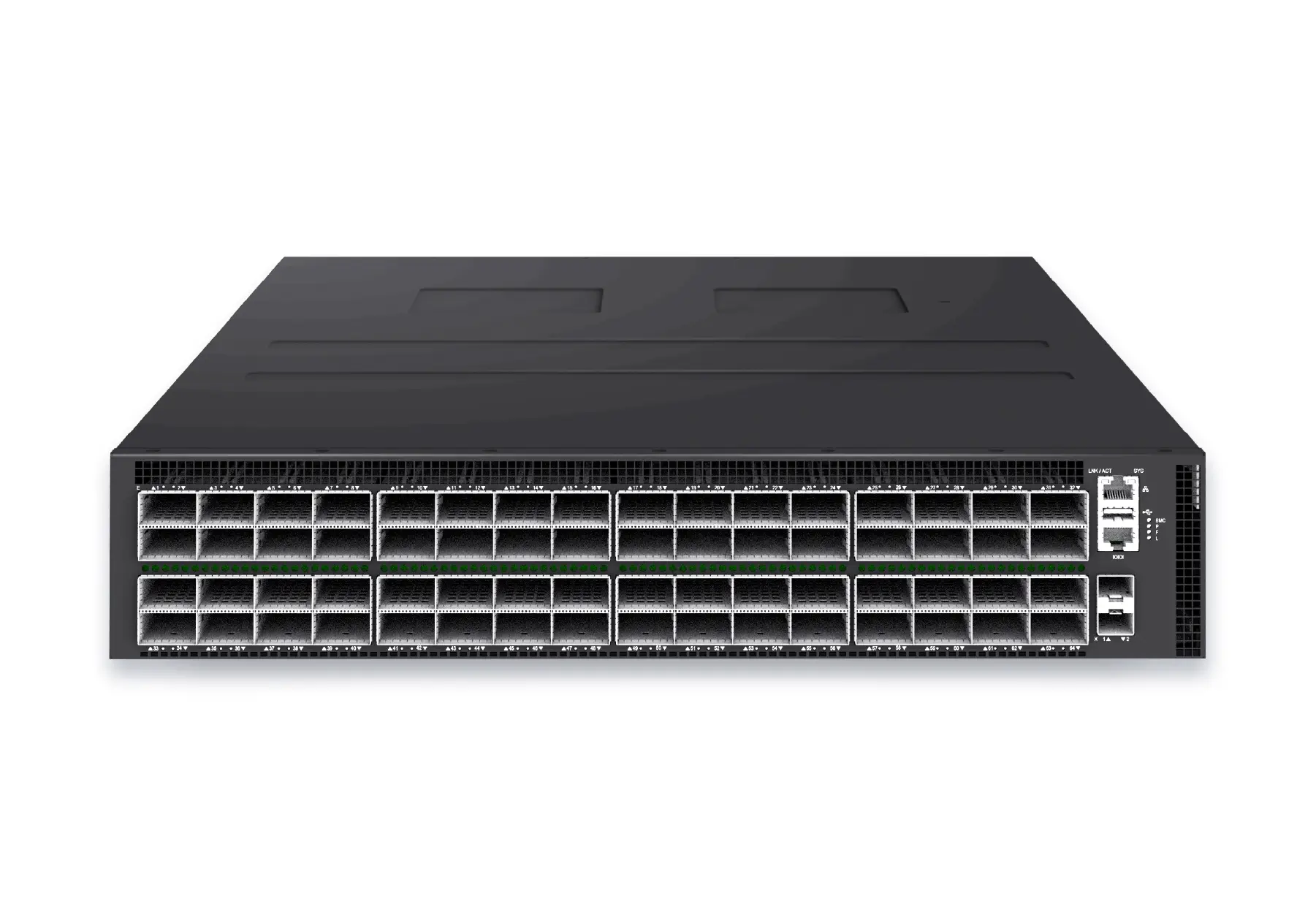 datacenter aiXS-DC-64X800-AI-G164-port 800G AI fabric switch for large-scale GPU clusters, HPC backbones, and ultra-high-throughput data center networks.View product
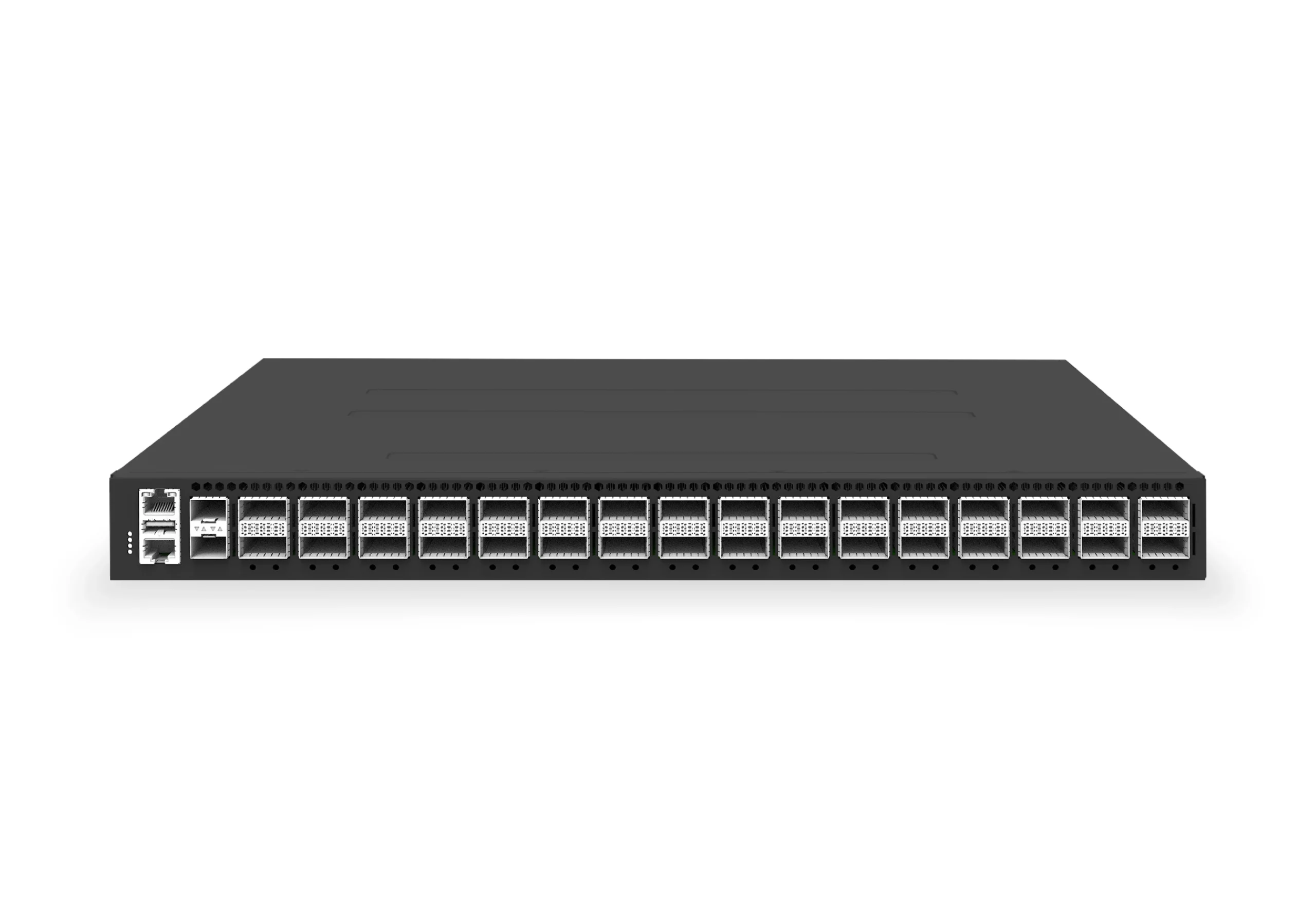 datacenter aiXS-DC-32X400-SP-G232-port 400G spine/core switch for high-capacity data center fabrics and AI-ready backbones.View product
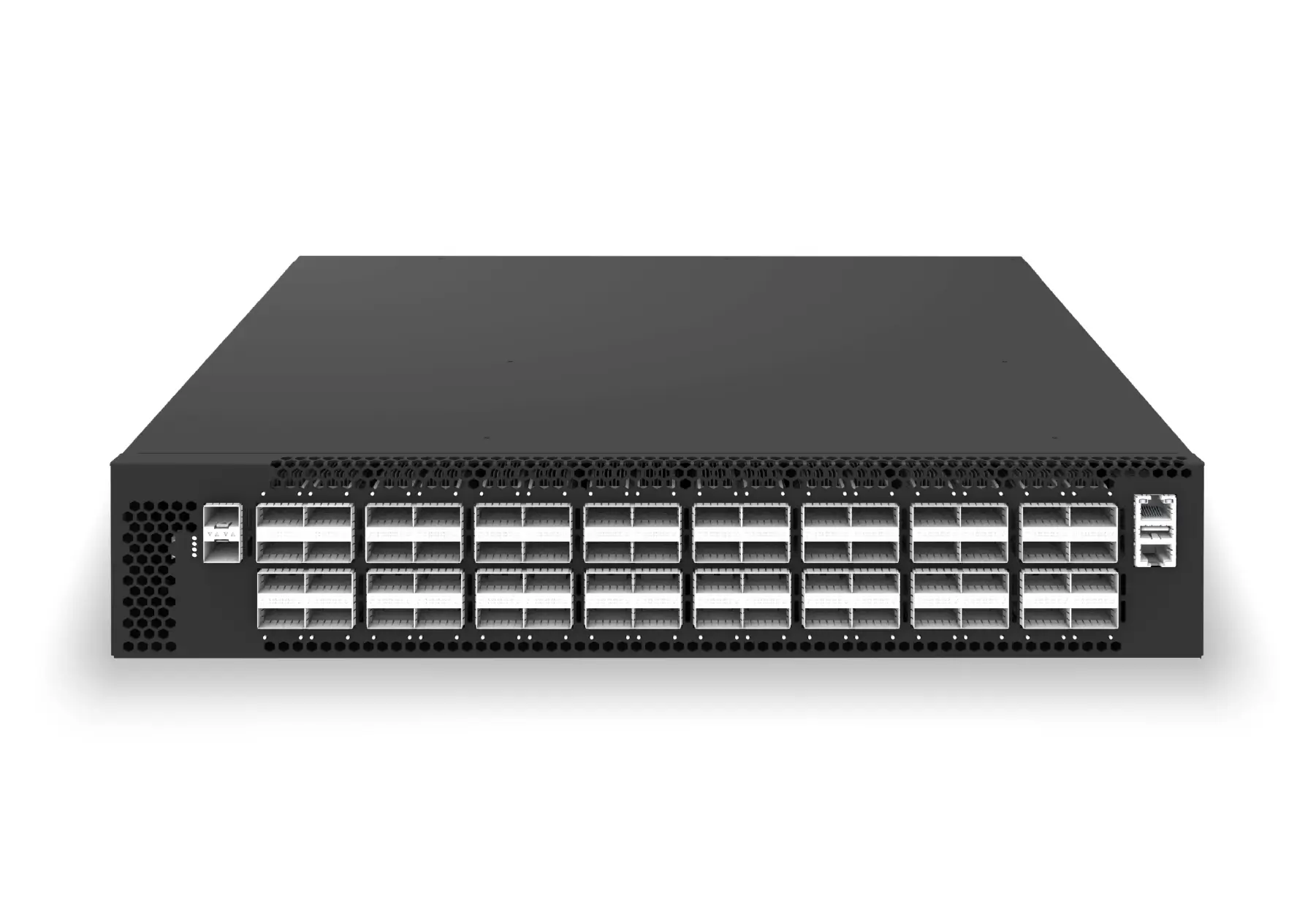 datacenter aiXS-DC-64X200-LS-G164-port 200G leaf/spine switch for high-bandwidth storage, compute, and scale-out data center fabrics.View product
Continue reading
Related articles
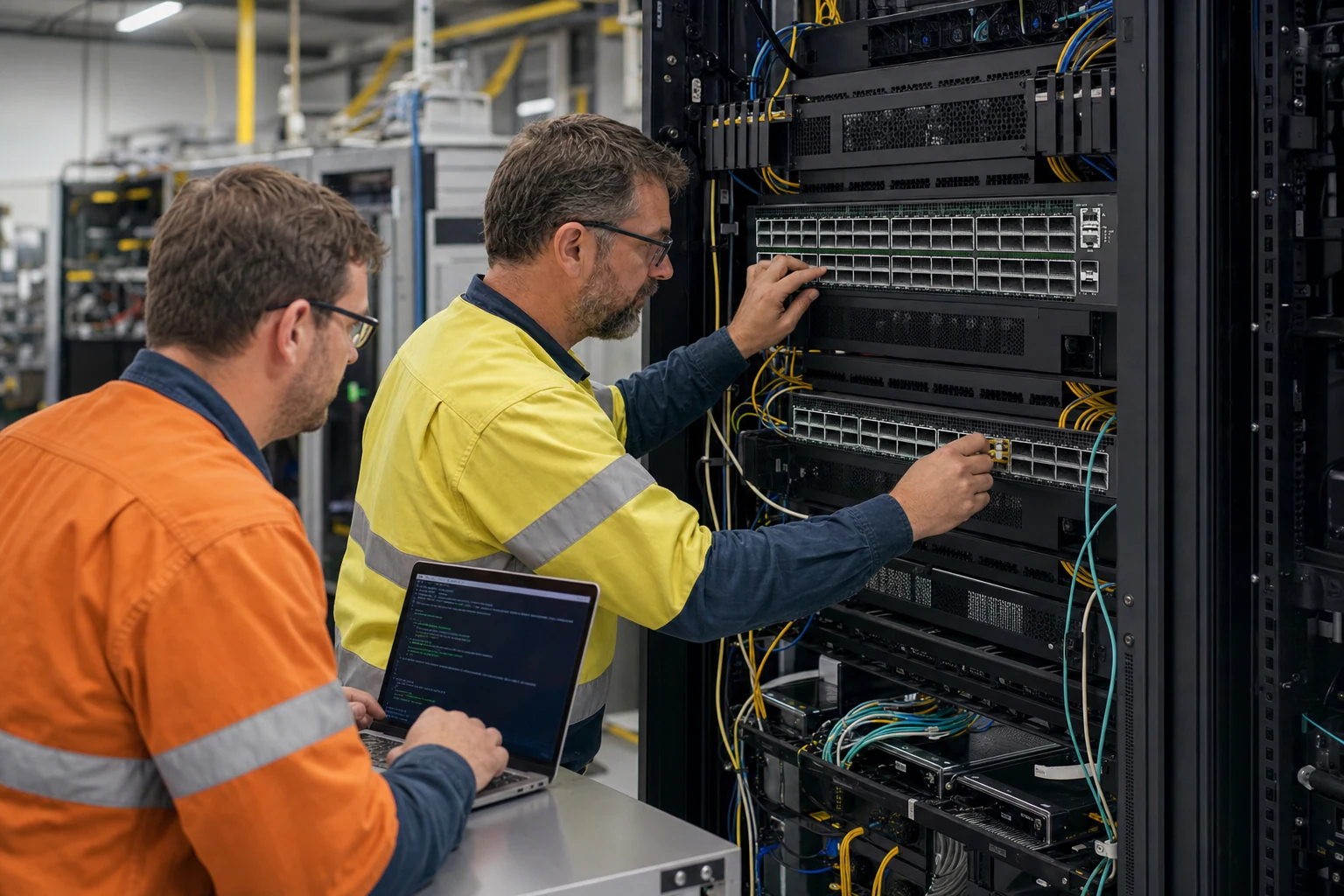 Technical ArticleOpen Networking Support for Enterprise Buyers: How SONiC and Open NOS Models Actually WorkEngineering guidance on Open Networking Support for Enterprise Buyers for Australian campus teams, covering PoE budgets, access-layer resilience, migration risk.Read article
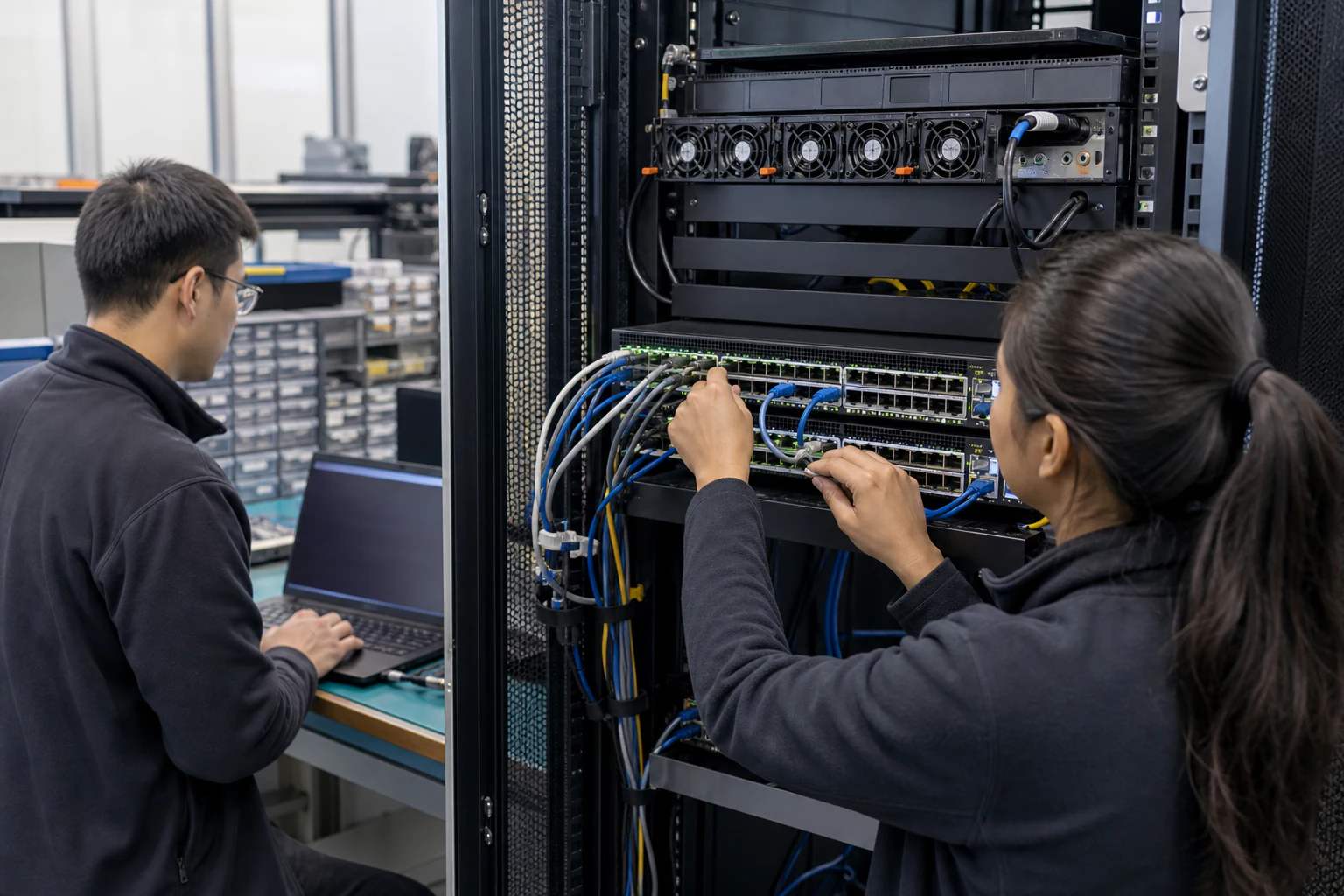 Technical ArticleFrom Proprietary Lock-In to Open Networking: A Practical Enterprise SONiC Migration PlaybookA practical Enterprise SONiC migration playbook for Australian buyers moving from proprietary switch OS to open networking.Read article
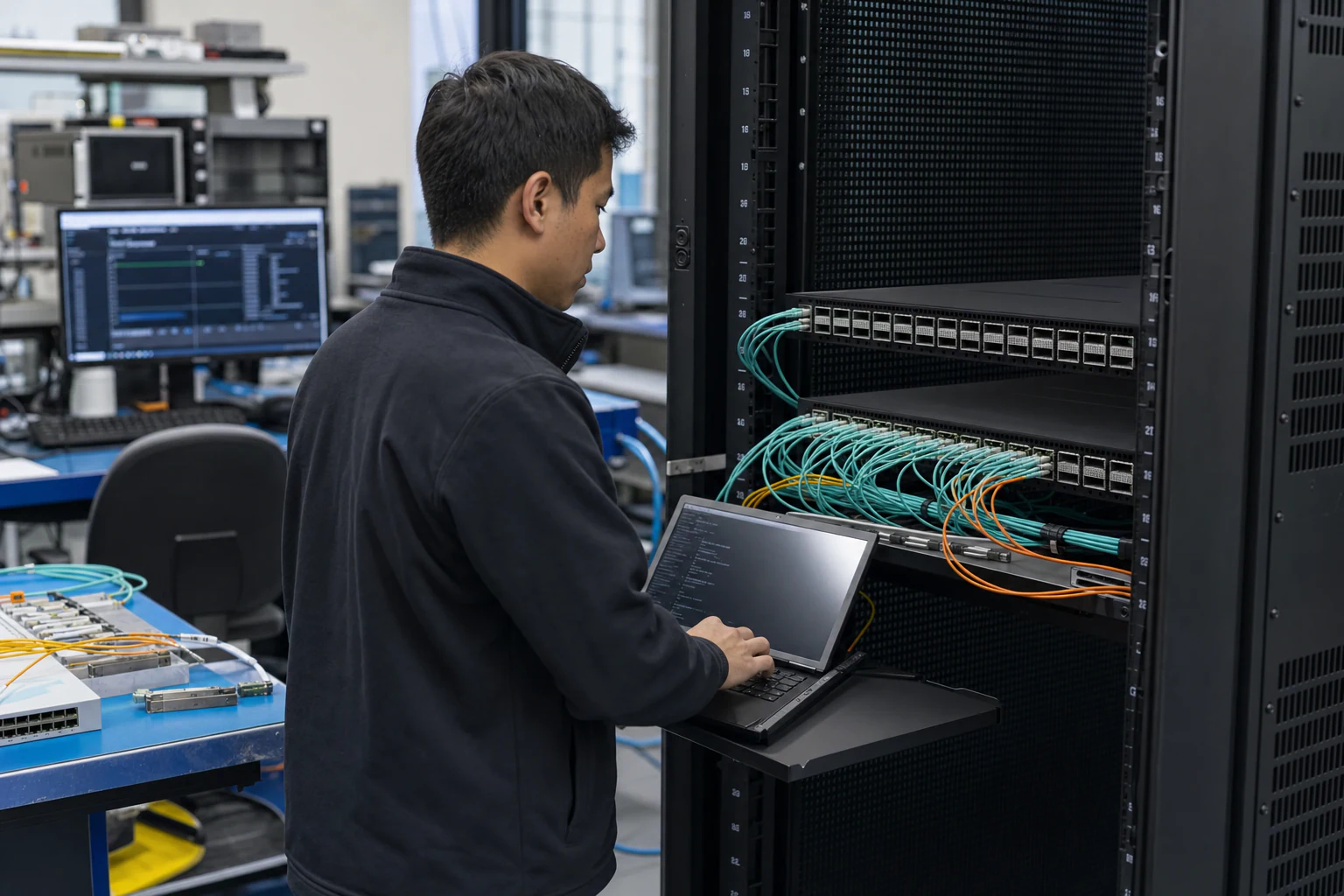 Technical ArticleWhy Centralized AI Fabric Management Is the Missing Layer in Open NetworkingEngineering guidance on Centralized AI Fabric Management Is the Missing Layer in Open Networking for Australian network teams, covering underlay design, EVPN-VXLAN.Read article