In brief
Engineering guidance on SONiC Architecture for AI Data Centers for Australian network teams, covering underlay design, EVPN-VXLAN operations, interoperability.
Key takeaways
- Australian enterprise and data center teams entering 2026 Q2 face a structural networking decision.
- SONiC -- Software for Open Networking in the Cloud -- is an open-source network operating system built on Linux and hosted under the Linux Foundation.
- This matters in the Australian market because sovereign data center requirements and compliance expectations are tightening.
Why SONiC Architecture Matters for Australian AI Data Center Decisions
Australian enterprise and data center teams entering 2026 Q2 face a structural networking decision. AI workloads are reshaping how data centers are designed, built, and operated. The traditional model of buying a proprietary network operating system bundled with switch hardware is colliding with new demands: faster fabric scale-out, multi-vendor ASIC flexibility, and sovereign infrastructure control.
SONiC — Software for Open Networking in the Cloud — is an open-source network operating system built on Linux and hosted under the Linux Foundation. According to the SONiC Foundation, it runs on switches from multiple vendors and ASICs, offering a full suite of network functionality including BGP and RDMA that has been production-hardened in the data centers of large cloud service providers. For Australian teams evaluating AI fabric architecture, SONiC represents a disaggregated approach that separates the NOS from the hardware, allowing teams to choose switching platforms based on port density, latency, power, and cost rather than vendor lock-in.
This matters in the Australian market because sovereign data center requirements and compliance expectations are tightening. David Hirst, CEO of Macquarie Data Centres, told the OCP Podcast in January 2026 that Australia’s sovereign approach to data center infrastructure matters and that AI workloads are shifting design thinking from a real estate model to a chip-out model. For networking teams, this means the fabric layer is no longer just connective tissue. It is a strategic procurement decision with sovereignty, compliance, and operational implications.
SONiC Architecture: What the Container Model Means for AI Fabrics
SONiC’s architecture is built on a modular, container-based design where each network function runs in its own Docker container. The GitHub repository for sonic-net/SONiC describes this as providing better fault isolation, easier debugging and troubleshooting, simplified upgrades, and enhanced scalability. The system uses the Switch Abstraction Interface (SAI) to decouple the NOS from the underlying switching ASIC.
For AI data center fabrics, this architecture has practical implications:
Fault isolation. When a BGP or RDMA container encounters an issue, it can be restarted or updated without affecting the entire switch. In large AI training clusters where a single switch failure can disrupt GPU synchronization, this isolation matters.
Multi-vendor ASIC flexibility. SAI allows SONiC to run on switches built with different merchant silicon. The OCP Networking project page lists SONiC as a sub-project alongside ONIE and SAI, describing the goal of creating fully disaggregated and open networking hardware and software. This means Australian teams can evaluate switches from multiple vendors on a single NOS, reducing dependency on any single ASIC supplier.
RDMA and BGP support. SONiC supports RDMA — critical for RoCE v2-based GPU backend fabrics — and BGP, which is the standard routing protocol for large-scale leaf-spine data center topologies. These are not bolt-on features. They are core capabilities that have been deployed at cloud scale.
The OCP Networking project scope explicitly targets disaggregated and open networking, with SONiC as a key operating system component. The project’s initial goal is developing top-of-rack leaf switches, with future plans covering spine switches and broader hardware and software solutions.
The Australian Market Context: Sovereignty, Compliance, and Scale
Australia’s data center market is entering a phase where sovereignty and compliance are not just policy talking points but procurement requirements. David Hirst of Macquarie Data Centres stated on the OCP Podcast (Episode 18, January 2026) that the Australian market is distinct, with local requirements, power challenges, and regulatory frameworks that influence where and how AI infrastructure gets built. He described compliance as a market advantage and noted that culture, regulation, and geopolitics all shape AI infrastructure decisions in Australia.
For networking teams, this context creates a specific evaluation checklist:
| Factor | Implication for SONiC Architecture |
|---|---|
| Sovereign data requirements | Open-source NOS allows full audit and control of network software stack |
| Compliance-driven procurement | Disaggregated model separates hardware vendor from NOS vendor, reducing single-vendor compliance risk |
| Power and cooling constraints | Liquid cooling and high-density rack designs affect switch form factor and optics choices |
| Supply chain diversity | Multi-vendor ASIC support through SAI reduces dependency on any single silicon supplier |
| Scale-out AI clusters | Container-based architecture supports incremental fabric expansion without forklift NOS upgrades |
Hirst also noted that AI workloads behave differently than traditional cloud workloads, requiring data centers to think from the chip out rather than from the real estate in. For networking architects, this means the switch fabric is not an afterthought. It is part of the core design conversation alongside GPU density, power delivery, and cooling.
What SONiC Does Not Solve: Gaps Australian Teams Must Evaluate
SONiC is not a turnkey solution for every AI data center use case. Australian enterprise teams evaluating SONiC-based architectures in 2026 Q2 should be aware of the following gaps:
Operational maturity. SONiC is production-hardened at hyperscale, but enterprise-scale operational tooling, monitoring integration, and support models vary by distribution. The SONiC Foundation and open-source community provide documentation, Slack channels, and GitHub issue tracking, but Australian enterprises accustomed to vendor TAC support models need to evaluate whether their teams can operate a community-supported NOS or whether they need a commercial SONiC distribution.
Feature completeness for campus and branch. SONiC’s strength is data center switching. Enterprise campus features like PoE management, NAC integration, wireless controller integration, and policy-based routing may require additional NOS components or complementary platforms. The OCP Networking project scope explicitly notes that protocol stacks, virtualization architectures, hardware abstraction layers, and firewall feature sets are out of scope.
800G and next-gen optics readiness. While SONiC supports current-generation switching, Australian teams planning 800G AI fabric backbones need to verify that their target switch hardware and SONiC image support the required optics, including OSFP and QSFP-DD form factors.
Local support ecosystem. Australian teams need to evaluate whether local VARs, integrators, and support partners exist for their chosen SONiC distribution and switch hardware combination. The OCP APAC Summit 2026 may provide an opportunity to assess the regional partner ecosystem.
xSONiC Buyer Angle: Where Open Networking Fits in 2026 Q2 Australian AI Builds
For Australian enterprise and data center teams evaluating AI fabric architecture in 2026 Q2, the SONiC value proposition maps directly to several xSONiC product categories and solution pillars.
Data center AI switches. xSONiC’s data center AI switch portfolio targets the leaf-spine fabric layer where SONiC’s containerized architecture and SAI-based multi-vendor support provide the most value. Teams building GPU backend fabrics for RoCE v2 traffic need switches that support RDMA, congestion management (PFC, ECN, DCBX), and low-latency forwarding. SONiC’s production-hardened RDMA support is a credible foundation for these deployments.
Bare-metal switching hardware. For teams that want full control over their NOS and hardware selection, xSONiC bare-metal switches provide the open hardware platform on which SONiC runs. This aligns with the OCP Networking project’s goal of disaggregated and fully open networking.
Optical transceivers. AI fabric scale-out drives demand for 100G, 400G, and 800G optics across SFP28, QSFP28, QSFP-DD, and OSFP form factors. Australian teams planning multi-rack GPU clusters need optical transceiver sourcing that matches their switch platform and SONiC configuration.
The engineering framing for this decision should be buyer education, not vendor advocacy. Australian teams need decision criteria for evaluating SONiC distributions, switch hardware platforms, optics sourcing, and operational support models before they commit to a production AI fabric. xSONiC’s role is to make those trade-offs explicit and connect the design requirements to switch, optics, and support choices that can be validated in a lab before procurement.
Engineering Takeaways for 2026 AI Fabric Projects
Australian teams planning a SONiC-based AI fabric should treat architecture selection as a validation program, not a brochure comparison. The minimum due diligence should include:
- Hardware and NOS pairing. Confirm the target switch SKU, ASIC, optics, bootloader, SAI version, and SONiC image are supported as a tested combination.
- RoCE v2 behaviour under load. Validate PFC, ECN, DCBX, queue depth, headroom, telemetry, and failure recovery using traffic patterns that resemble the expected GPU workload.
- Operational ownership. Decide who owns lifecycle management for NOS upgrades, configuration templates, monitoring, incident escalation, and spare hardware logistics in Australia.
- Interoperability limits. Test integration with existing routing, EVPN-VXLAN, observability, security, and automation platforms before the first production data hall depends on the fabric.
- Supply chain resilience. Keep second-source options for optics, cables, and compatible switch platforms where the design and support model allow it.
The strongest SONiC deployments are not the ones that assume open networking is automatically cheaper or simpler. They are the ones that define the operating model early, test the exact hardware/software bill of materials, and only then scale the design.
Engineering FAQ
What should be proven before adopting EVPN-VXLAN on SONiC? Prove underlay routing, BGP sessions, VTEP behaviour, MAC/IP learning, route scale, multi-homing design, failure convergence, and observability. The overlay should be accepted as a system, not a feature checkbox.
Why does the underlay design still matter in an overlay network? EVPN-VXLAN depends on a stable routed underlay. MTU, ECMP, addressing, route policy, link failure behaviour, and telemetry determine whether the overlay remains predictable under load and during faults.
What should be included in an EVPN-VXLAN operations runbook? Include naming, IP plan, BGP policy, VNI mapping, change process, rollback commands, failure checks, telemetry fields, backup and restore steps, and escalation ownership for the selected SONiC image.
Related xSONiC Resources
Sources Reviewed
- Ethernet Network Adapters - ConnectX NICs | NVIDIA
- NVIDIA BlueField Data Processing Unit
- NVIDIA Spectrum-X Ethernet Platform
- IEEE 802.11be Wireless LAN Standard
- IEEE 802.3bt Power over Ethernet
- SONiC Project Documentation
- Broadcom Ethernet Switching
- Marvell Switching
- NVIDIA Ethernet Switching
- Open Compute Networking
- SONiC GitHub
- SONiC Foundation
Product fit
Products referenced for evaluation
These products are referenced for evaluation context in the article. Confirm workload, port, optics, software, interoperability, and support requirements against the exact deployment before procurement.
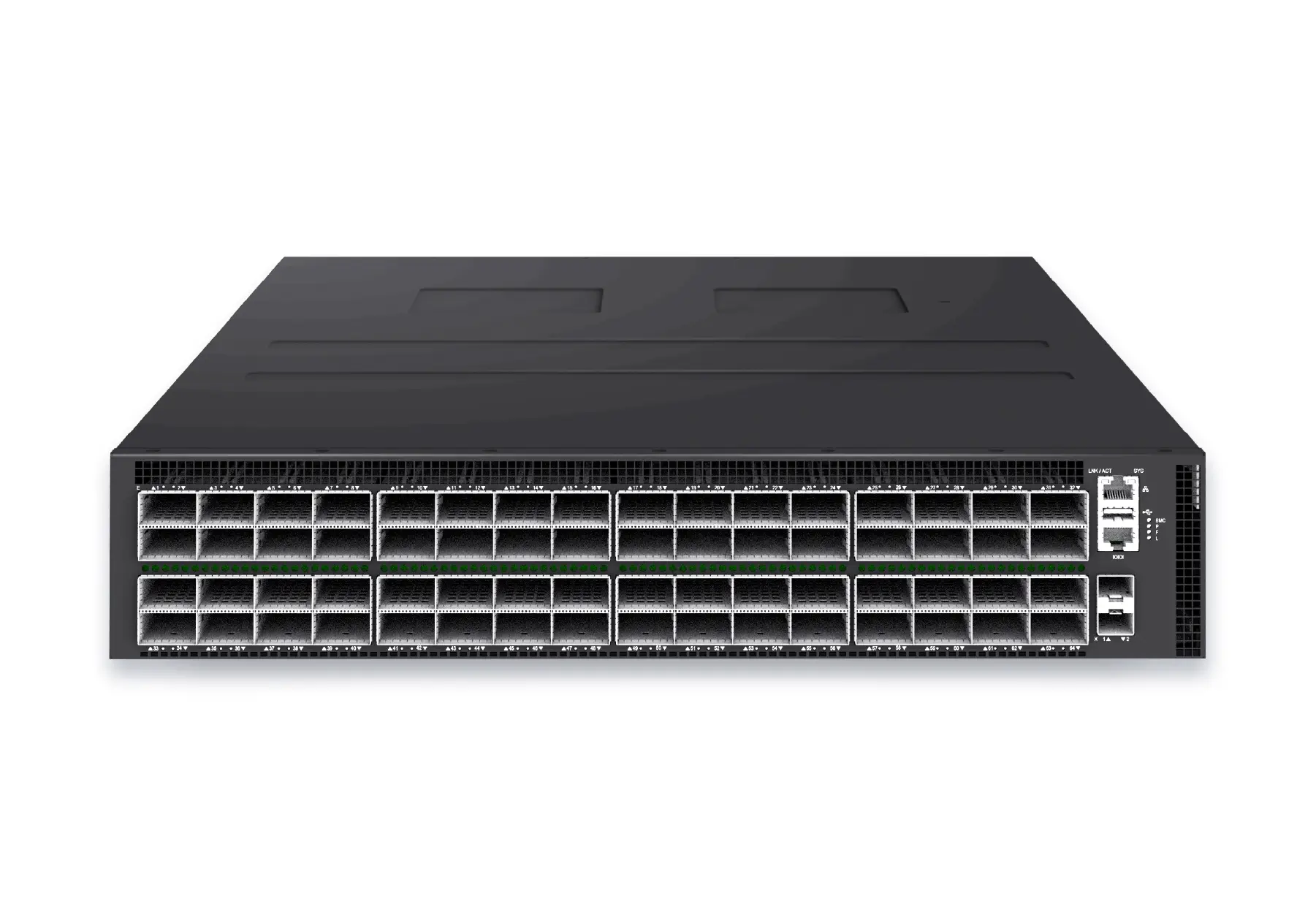 datacenter aiXS-DC-64X800-AI-G164-port 800G AI fabric switch for large-scale GPU clusters, HPC backbones, and ultra-high-throughput data center networks.View product
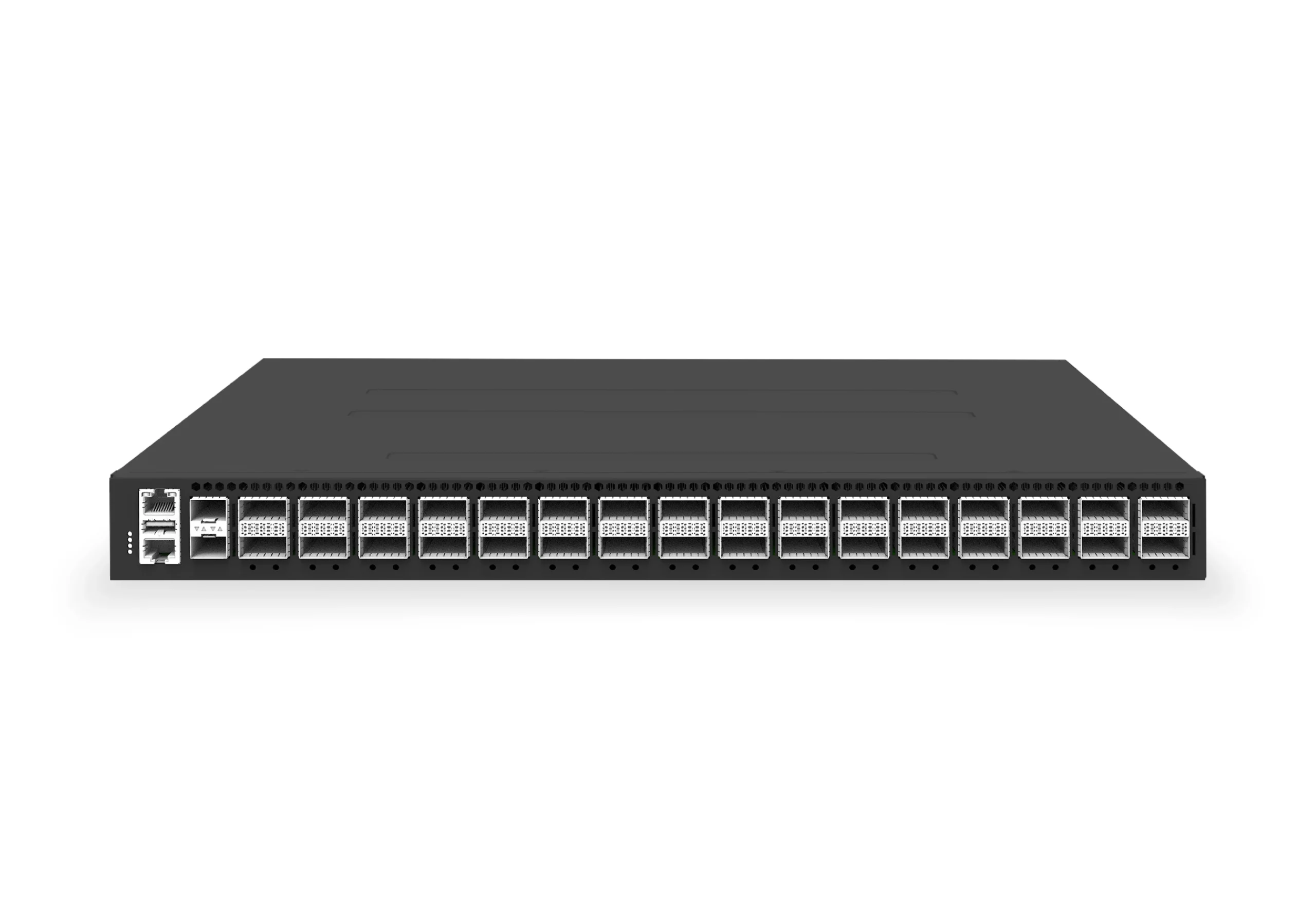 datacenter aiXS-DC-32X400-SP-G232-port 400G spine/core switch for high-capacity data center fabrics and AI-ready backbones.View product
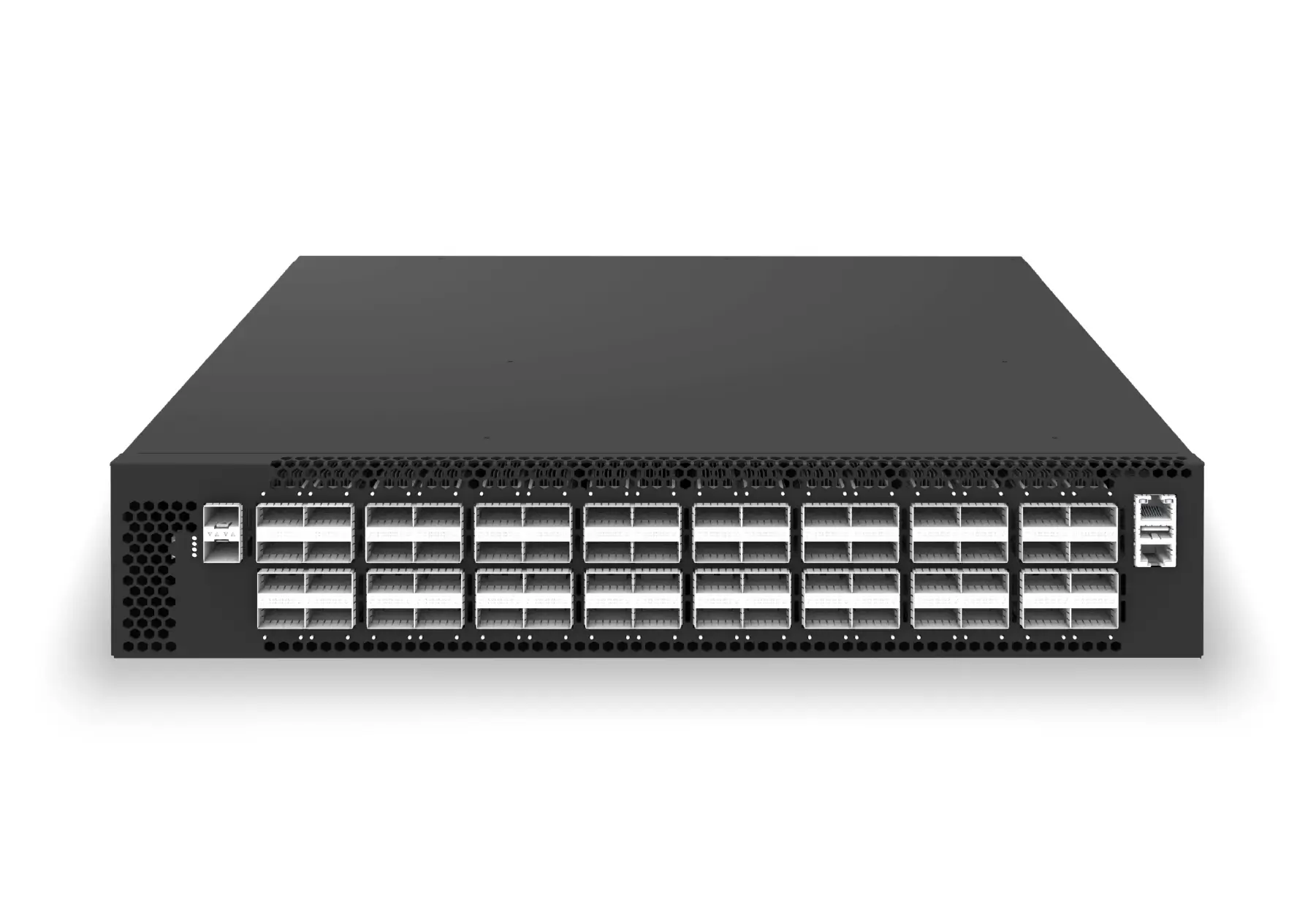 datacenter aiXS-DC-64X200-LS-G164-port 200G leaf/spine switch for high-bandwidth storage, compute, and scale-out data center fabrics.View product
Continue reading
Related articles
 Technical ArticleOpen Networking Support for Enterprise Buyers: How SONiC and Open NOS Models Actually WorkEngineering guidance on Open Networking Support for Enterprise Buyers for Australian campus teams, covering PoE budgets, access-layer resilience, migration risk.Read article
 Technical ArticleFrom Proprietary Lock-In to Open Networking: A Practical Enterprise SONiC Migration PlaybookA practical Enterprise SONiC migration playbook for Australian buyers moving from proprietary switch OS to open networking.Read article
 Technical ArticleWhy Centralized AI Fabric Management Is the Missing Layer in Open NetworkingEngineering guidance on Centralized AI Fabric Management Is the Missing Layer in Open Networking for Australian network teams, covering underlay design, EVPN-VXLAN.Read article