In brief
Engineering guidance on Proprietary Switch OS vs Enterprise SONiC for Australian campus teams, covering PoE budgets, access-layer resilience, migration risk.
Key takeaways
- Australian enterprise and data center network teams face a clearer fork in the road than at any point in the last decade.
- This is not a theoretical debate. The SONiC Foundation describes SONiC as "an open source network operating system (NOS) based on Linux that runs on switches from multiple vendors and ASICs" that "offers a full suite of network functionality, like BGP and RDMA, that has been production-hardened in the data centers of some of the largest cloud service providers" (sonicfoundation.dev).
- Proprietary network operating systems from major vendors bundle hardware, software, support, and feature licensing into a single commercial package.
The networking NOS landscape is splitting in two directions
Australian enterprise and data center network teams face a clearer fork in the road than at any point in the last decade. On one side sit proprietary network operating systems bundled with switch hardware, offering tight integration but locking buyers into single-vendor upgrade cycles and pricing structures. On the other side, open-source SONiC (Software for Open Networking in the Cloud) has moved from hyperscaler-only adoption to a credible enterprise option backed by a Linux Foundation project and a growing hardware ecosystem.
This is not a theoretical debate. The SONiC Foundation describes SONiC as “an open source network operating system (NOS) based on Linux that runs on switches from multiple vendors and ASICs” that “offers a full suite of network functionality, like BGP and RDMA, that has been production-hardened in the data centers of some of the largest cloud service providers” (sonicfoundation.dev). For Australian network architects evaluating their next five-year infrastructure plan, the question is no longer whether SONiC works at scale. The question is whether the migration risk, operational change, and ecosystem maturity justify breaking free from proprietary NOS dependencies.
What proprietary switch OS lock-in actually costs
Proprietary network operating systems from major vendors bundle hardware, software, support, and feature licensing into a single commercial package. The trade-off is familiar: you get validated feature sets, integrated support, and a defined hardware lifecycle, but you also accept:
- Hardware-software coupling: Upgrading your NOS version often requires specific hardware generations. Extending the life of existing switches beyond vendor support windows becomes difficult or impossible.
- Licensing complexity: Feature activation (think advanced telemetry, MPLS, or specific security modules) frequently requires additional license purchases on top of the base switch cost.
- Single-vendor roadmap dependency: Your network evolution path is determined by one vendor’s release cycle, priorities, and pricing strategy.
- Higher per-port costs: When the NOS is tied to a specific hardware platform, the buyer has limited leverage to negotiate competitive pricing across the switching portfolio.
For Australian enterprises running campus, aggregation, and data center switching on proprietary stacks, these costs compound over time. A network refresh that touches 200 to 500 campus access switches or 40 to 80 data center leaf-spine nodes can generate significant capital exposure if every port must carry the full proprietary hardware-plus-software cost.
What Enterprise SONiC changes about the equation
SONiC takes a fundamentally different architectural approach. According to the SONiC project documentation, it is “built on a modular architecture where each network function runs in its own Docker container” providing “better fault isolation, easier debugging and troubleshooting, simplified upgrades and maintenance, and enhanced scalability” (github.com/sonic-net/SONiC).
The key architectural differentiators for enterprise buyers:
Hardware-software decoupling via SAI
SONiC is built on the Switch Abstraction Interface (SAI), which the SONiC Foundation describes as helping “in accelerating hardware innovation” by decoupling the NOS from the underlying switching ASIC (sonicfoundation.dev). In practice, this means an enterprise can evaluate bare-metal or white-box switch hardware from multiple vendors running the same SONiC software stack. The buyer gains hardware pricing leverage and avoids single-vendor dependency.
Containerized, upgradable architecture
Because SONiC runs network functions in isolated Docker containers, teams can update individual components (routing, telemetry, management) without full system downtime. This is a meaningful operational improvement over monolithic proprietary NOS upgrades that require coordinated switch reboots.
Production-hardened at scale
SONiC’s production heritage in hyperscaler data centers gives it credibility for large-scale deployments. The GitHub repository shows active community development with 2,800 stars and 1,300 forks, indicating sustained ecosystem engagement (github.com/sonic-net/SONiC). SONiC is licensed under the Apache License 2.0, which allows commercial use and modification.
Standard Linux tooling
SONiC uses JSON-based configuration and standard Linux interfaces and tools (github.com/sonic-net/SONiC). For network operations teams with Linux skills, this lowers the learning curve compared to proprietary CLI environments. It also simplifies integration with modern automation frameworks, NETCONF/YANG, and telemetry pipelines.
The migration reality: what Australian teams should evaluate
Moving from a proprietary NOS to Enterprise SONiC is not a trivial lift. A responsible migration playbook should address these evaluation criteria:
| Evaluation Area | Proprietary NOS | Enterprise SONiC | Migration Risk |
|---|---|---|---|
| Hardware sourcing | Single vendor | Multi-vendor bare-metal | Low - broader supplier pool |
| Software updates | Vendor-managed release cycle | Community + enterprise distribution | Medium - need tested distribution |
| Support model | Vendor TAC | Open-source community + enterprise support partner | Medium - evaluate support SLAs |
| Feature parity | Mature, validated | Growing rapidly but gaps exist in campus features | Medium - validate against your feature matrix |
| Automation | Vendor-specific APIs | Standard Linux, JSON, NETCONF/YANG | Low - improves automation posture |
| Telemetry | Vendor-proprietary or licensed | INT, IPTPath, open streaming telemetry | Low - stronger open telemetry |
| Campus features | Mature PoE, stacking, NAC | Enterprise SONiC campus support evolving | Medium-High - validate campus use case |
| Data center features | Mature BGP, EVPN-VXLAN, RDMA | Strong BGP, EVPN-VXLAN, RDMA via SAI | Low - proven at hyperscaler scale |
For Australian data center operators running spine-leaf fabrics, EVPN-VXLAN overlays, or AI/ML cluster backends with RoCE/RDMA requirements, the SONiC data center feature set is production-credible. The migration risk is primarily operational (new tooling, new support processes) rather than functional.
For campus and access layer networks, the evaluation is more nuanced. Enterprise SONiC campus support is developing, and Australian buyers should validate PoE management, NAC integration, wireless controller integration, and stacking or virtual chassis feature parity before committing to a campus-wide migration.
Why this matters for Australian buyers now
Several factors make this analysis timely for the Australian market:
-
Data center refresh cycles: Many Australian enterprises and colocation operators are planning or executing 100G to 400G data center upgrades. This is a natural switching point to evaluate SONiC-based alternatives before locking into another five to seven year proprietary cycle.
-
AI infrastructure build-out: The surge in private AI and GPU inference infrastructure demands low-latency, high-bandwidth switching fabrics. SONiC’s RDMA and RoCE capabilities, production-proven in hyperscaler AI clusters, are directly relevant to Australian enterprises building private LLM and RAG infrastructure.
-
Campus network modernization: Australian universities, healthcare networks, and multi-site enterprises with aging campus switching are evaluating PoE access, Wi-Fi 6E/7 backhaul, and policy-based routing upgrades. Proprietary campus stacks carry significant per-port licensing costs at scale.
-
Supply chain resilience: Multi-vendor SONiC hardware compatibility reduces dependence on a single vendor’s supply chain and pricing decisions - a consideration that resonates with Australian buyers managing procurement in a market with longer lead times.
What to do next
If your team is evaluating a network operating system migration, start with these steps:
- Map your current feature requirements against SONiC’s documented capabilities. Focus on the specific protocols, telemetry, and management features your environment depends on.
- Identify pilot candidates: Select a non-critical fabric, lab environment, or new build where SONiC can be evaluated with lower risk.
- Engage an enterprise SONiC distribution or support partner: Community SONiC and enterprise-distributed SONiC have different support and validation models. Understand the difference before committing.
- Evaluate bare-metal hardware compatibility: Check the SONiC supported devices and platforms list (github.com/sonic-net/SONiC) against your preferred switch vendors.
The proprietary switch OS model is not going away, and for some environments it remains the right choice. But for Australian network teams planning their next infrastructure generation, Enterprise SONiC now deserves serious evaluation as a production-ready alternative. The cost of not evaluating it is another cycle of vendor lock-in at a time when the market offers a credible exit path.
Engineering Evidence Floor
For SONiC and open networking articles, the acceptance standard is operational proof, not community momentum. The evidence package should name the switch SKU, ASIC, SAI version, ONIE status, SONiC image, optics matrix, automation interface, support path, and rollback procedure. A practical pilot should run for 30 days, include 3 automated configuration changes, validate 100G/400G links where relevant, and prove that a P1 evidence bundle can be assembled within 2 hours.
| Evidence area | What to validate | Acceptance gate | Rework trigger |
|---|---|---|---|
| Platform | SKU, ASIC, ONIE, SAI, image, and optics | 2 platforms boot, upgrade, and rollback | Hardware support is assumed |
| Automation | Source of truth, API/gNMI/NETCONF, backup, and diff | 3 changes pass state readback | CLI drift becomes normal |
| Operations | Logs, telemetry, failure runbook, and escalation owner | P1 bundle ready within 2 hours | Fault isolation depends on one engineer |
| Lifecycle | Patch cadence, CVE process, spare plan, and support SLA | 12 months plan approved | Security and RMA ownership is unclear |
| Commercial | Hardware, support, optics, training, and migration labour | Risk-adjusted TCO is documented | Savings vanish after rework |
Engineering FAQ
What should be tested before moving campus switching to SONiC or open networking? Test PoE behaviour, NAC integration, VLAN and policy design, STP or MC-LAG interaction, multicast, monitoring, upgrade rollback, and help-desk workflows. Campus readiness is an operations test, not only a forwarding test.
Where do campus refresh projects usually carry hidden risk? The risk often sits in closets: power budget, old cabling, undocumented uplinks, mixed endpoint types, voice devices, cameras, badge systems, and change windows. Those details should be inventoried before selecting switch models.
How should Australian campus teams structure a pilot? Choose one representative site or building, document endpoint classes, run PoE and failover tests, verify monitoring, train operations staff, and define rollback steps before expanding to the broader estate.
Related xSONiC Resources
Sources Reviewed
- Ethernet Network Adapters - ConnectX NICs | NVIDIA
- NVIDIA BlueField Data Processing Unit
- NVIDIA Spectrum-X Ethernet Platform
- OpenConfig gNMI Specification
- OpenConfig
- RFC 7950 - The YANG 1.1 Data Modeling Language
- RFC 6241 - Network Configuration Protocol (NETCONF)
- IEEE 802.11be Wireless LAN Standard
- IEEE 802.3bt Power over Ethernet
- SONiC Project Documentation
- Broadcom Ethernet Switching
- Marvell Switching
- NVIDIA Ethernet Switching
- Open Compute Networking
- SONiC GitHub
- SONiC Foundation
Product fit
Products referenced for evaluation
These products are referenced for evaluation context in the article. Confirm workload, port, optics, software, interoperability, and support requirements against the exact deployment before procurement.
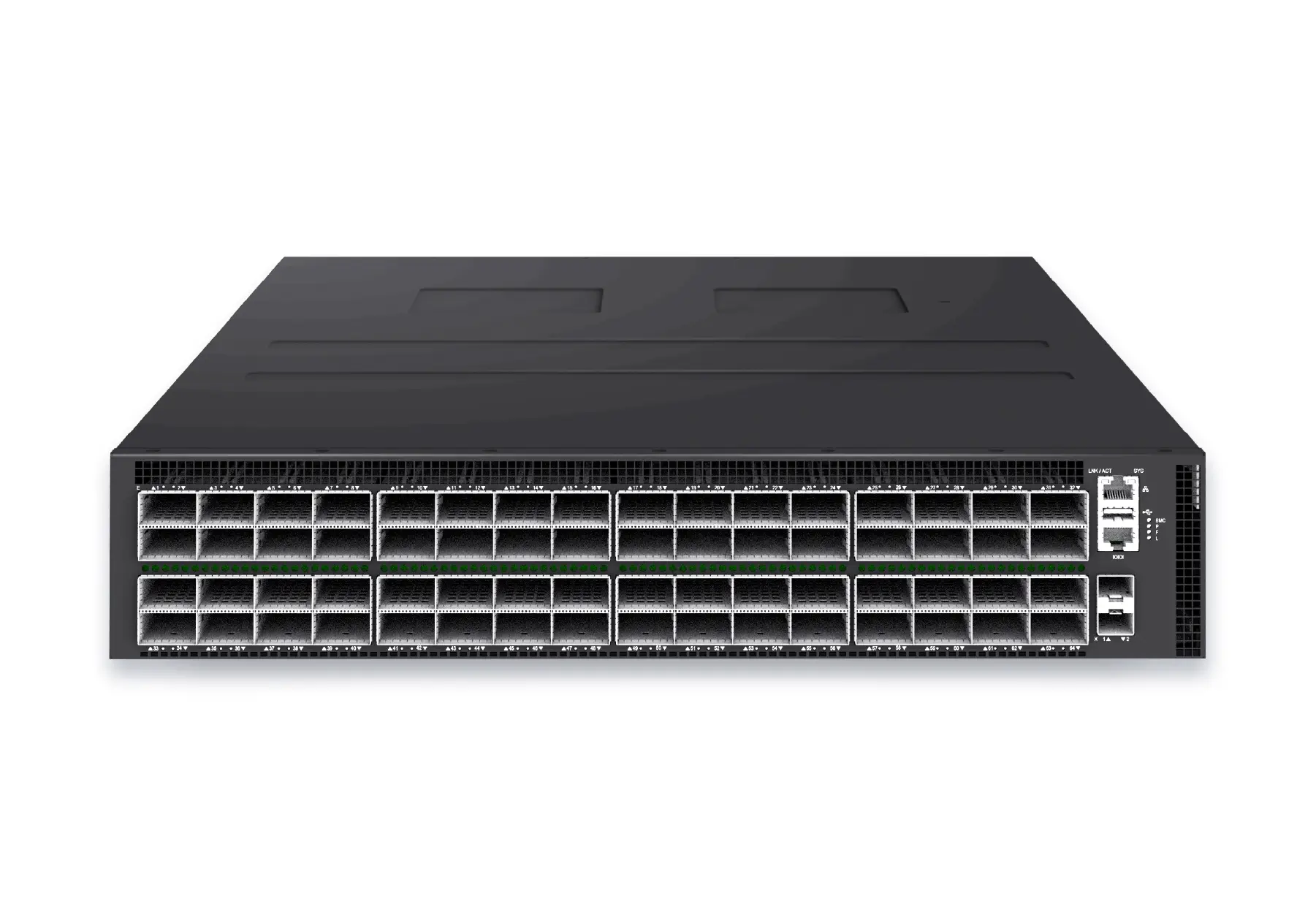 datacenter aiXS-DC-64X800-AI-G164-port 800G AI fabric switch for large-scale GPU clusters, HPC backbones, and ultra-high-throughput data center networks.View product
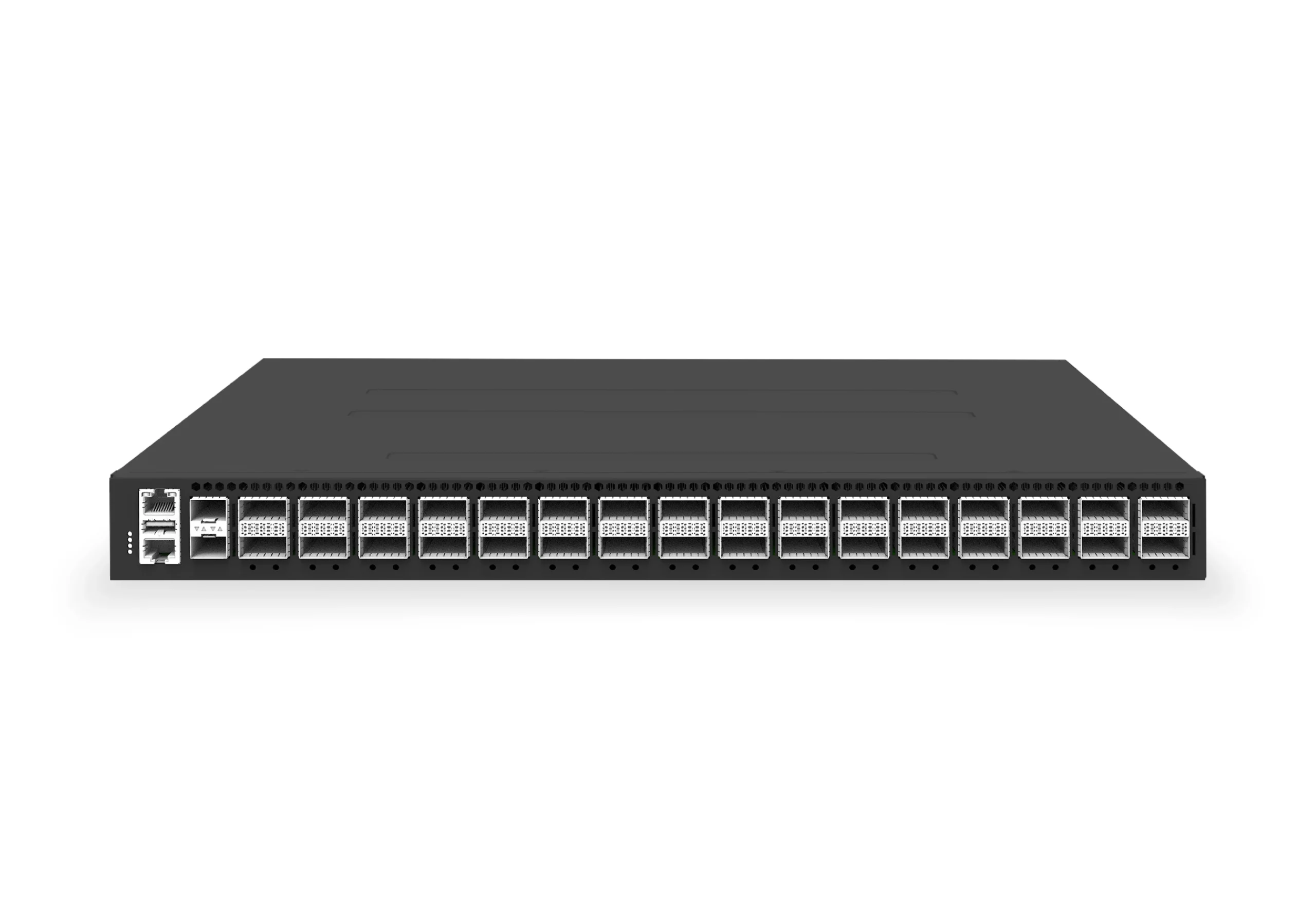 datacenter aiXS-DC-32X400-SP-G232-port 400G spine/core switch for high-capacity data center fabrics and AI-ready backbones.View product
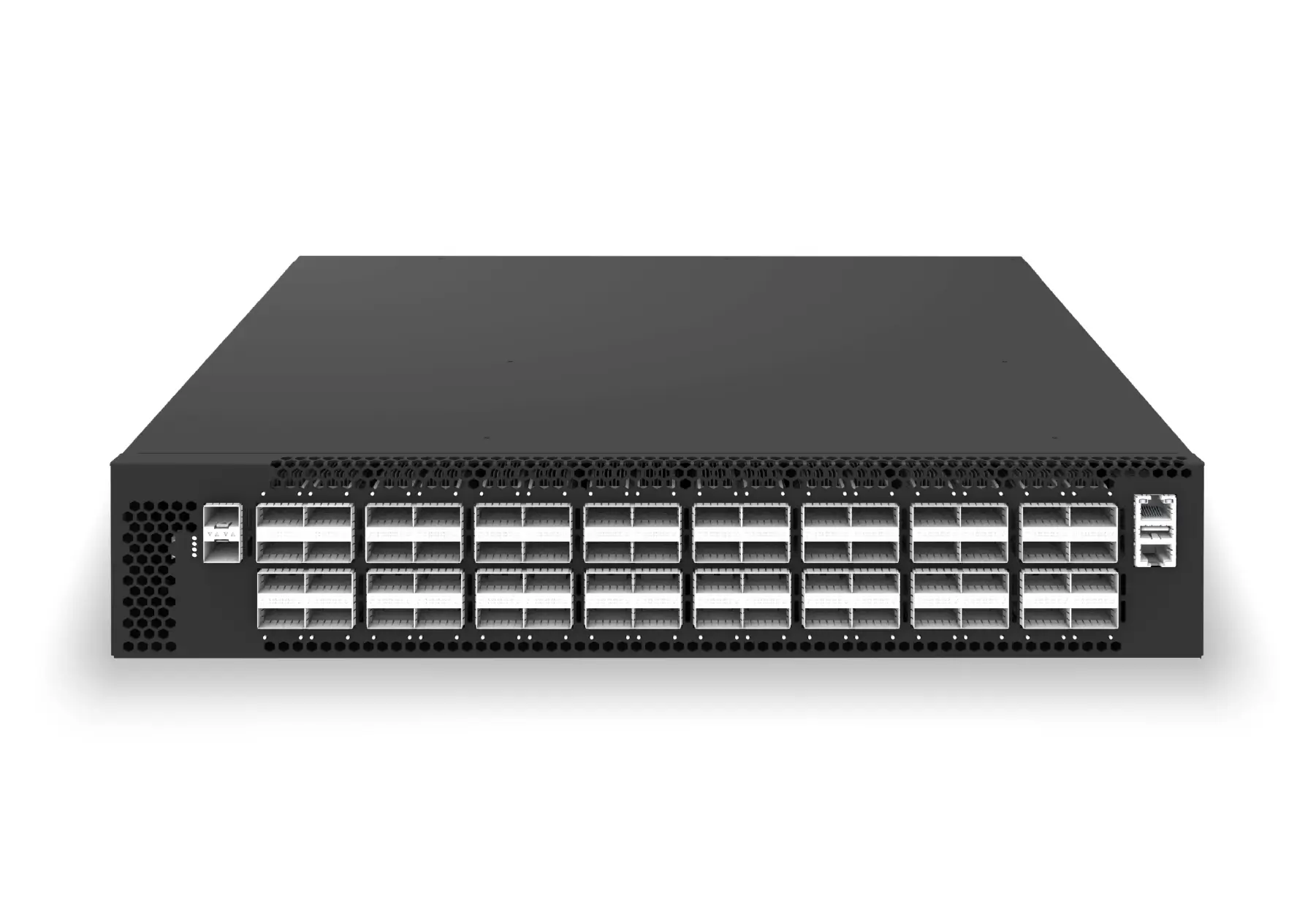 datacenter aiXS-DC-64X200-LS-G164-port 200G leaf/spine switch for high-bandwidth storage, compute, and scale-out data center fabrics.View product
Continue reading
Related articles
 Technical ArticleWhat AI Fabric Ethernet Switching Requires: A Buyer Guide for SONiC-Based Data CentersEngineering guidance on AI Fabric Ethernet Switching Requires for Australian network and security teams, covering traffic visibility, capacity modelling, tool feeds.Read article
 Technical ArticleProprietary Switch OS Lock-in vs Enterprise SONiC: An Australian Buyer Migration AnalysisMigration analysis for Australian buyers comparing proprietary switch OS lock-in with Enterprise SONiC pilot, support, automation, and TCO evidence.Read article
 Technical ArticleWhite Box Switch vs Traditional Switch: What Enterprise Buyers in Australia Need to KnowEngineering comparison of white-box and traditional switches for Australian enterprise buyers, covering SONiC, support, optics, risk, and TCO.Read article