In brief
Engineering guidance on Procurement Scorecard for Australian infrastructure teams, covering form factor tradeoffs, capacity planning, thermal design, endurance, and.
Key takeaways
- Australian enterprise and government programs face a unique intersection of pressures when they move private AI inference workloads from cloud to on-premises GPU servers.
- At the same time, GPU inference servers are not ordinary rack-mount workloads.
- This creates a procurement problem that most campus IT scorecards were never built to solve.
Why Australian IT Teams Need a Dedicated Networking Procurement Scorecard for AI Inference
Australian enterprise and government programs face a unique intersection of pressures when they move private AI inference workloads from cloud to on-premises GPU servers. Data sovereignty requirements, long-haul latency to overseas cloud regions, and tightening compliance expectations under frameworks such as the Australian Privacy Act and the Critical Infrastructure Act mean that many organisations cannot rely solely on hyperscaler inference endpoints.
At the same time, GPU inference servers are not ordinary rack-mount workloads. A single inference cluster running a large language model or RAG pipeline may generate bursty east-west traffic patterns that overwhelm conventional campus or small data center fabrics. As David Hirst, CEO of Macquarie Data Centres, noted in an Open Compute Project podcast recorded in January 2026, Australian AI workloads are shifting data center design from a ‘real estate’ model to a ‘chip-out’ model where power, cooling, and network fabric must be planned from the GPU backward.
This creates a procurement problem that most campus IT scorecards were never built to solve. The networking layer between GPU servers, storage, and management planes must support lossless or near-lossless forwarding for RDMA over Converged Ethernet (RoCE v2), deep buffer or explicit congestion notification (ECN) behaviour, and telemetry that gives operations teams visibility into microsecond-level tail latency. A procurement scorecard that treats the network as an afterthought risks stranded GPU investment.
This article provides a practical scorecard framework for Australian enterprise and data center teams evaluating networking infrastructure for private AI inference deployments, with specific attention to open networking options powered by SONiC (Software for Open Networking in the Cloud) and OCP-aligned switching hardware.
Scorecard Category 1: Network Operating System and Ecosystem Openness
The first procurement question is whether the network operating system (NOS) locks the buyer into a single vendor’s hardware, licensing, and support model. For AI inference fabric, this matters more than in traditional campus switching because the fabric may need to scale from a small proof-of-concept cluster to a multi-rack deployment over 12 to 24 months.
SONiC, a Linux Foundation project, is an open-source NOS that runs on switches from multiple vendors and ASICs. It offers a full suite of network functionality including BGP and RDMA that has been production-hardened in the data centers of large cloud service providers. The SONiC architecture is container-based, where each network function runs in its own Docker container, providing better fault isolation, easier debugging, simplified upgrades, and enhanced scalability compared to monolithic NOS designs.
The Open Compute Project Networking project, which lists SONiC as a sub-project alongside SAI (Switch Abstraction Interface) and ONIE (Open Network Install Environment), aims to create fully disaggregated and open networking hardware and software. This disaggregation means that procurement teams can evaluate switching ASIC platforms and NOS support independently, rather than accepting a bundled proprietary stack.
| Scorecard Criterion | Proprietary NOS | SONiC / Open NOS |
|---|---|---|
| Hardware vendor lock-in | High | Low - multi-vendor ASIC support |
| NOS licensing cost model | Per-device or subscription | Open source (Apache 2.0) |
| Community ecosystem | Vendor-controlled roadmap | Linux Foundation governance, active community |
| RDMA / RoCE v2 support | Vendor-specific implementation | SAI-based, production-proven at cloud scale |
| Automation and programmability | Vendor CLI + limited APIs | NETCONF/YANG, gNMI, standard Linux tooling |
Scorecard Category 2: GPU Backend Fabric Performance for Lossless Ethernet and RoCE v2
Private AI inference workloads require the network fabric to carry RDMA traffic between GPU servers, shared storage, and model-serving orchestration layers. Unlike TCP-based application traffic, RoCE v2 flows are highly sensitive to packet loss, jitter, and microbursts. A single packet drop event can stall a GPU compute operation and cascade into multi-millisecond tail latency across the inference pipeline.
The procurement scorecard must evaluate whether the proposed switching platform supports the following GPU backend fabric requirements:
- RoCE v2 forwarding with hardware-accelerated RDMA: The switch ASIC must handle RoCE v2 encapsulation and decapsulation at line rate without CPU intervention. Check for verified RDMA queue pair scale and completion queue depth.
- Data Center Bridging Capability Exchange (DCBX): DCBX negotiates Priority Flow Control (PFC) and Enhanced Transmission Selection (ETS) parameters between the switch and connected NICs. This is essential for lossless Ethernet behaviour on RoCE v2 traffic classes.
- Explicit Congestion Notification (ECN) and Congestion Notification Packets (CNP): Fast CNP generation at the switch level helps maintain low tail latency during congestion events. Verify whether the switch supports hardware-generated CNP or relies on software-based responses.
- Deep buffer or shared buffer architecture: AI inference traffic patterns are bursty. Switches with shallow buffers may drop packets under microburst conditions even when average utilization is below 50 percent.
- INT (In-band Network Telemetry) support: INT allows the switch to insert per-hop latency and queue depth metadata into packet headers, giving operations teams real-time visibility into fabric health.
NVIDIA’s Spectrum Ethernet switch portfolio, for example, offers zero-touch accelerated RoCE and supports Pure SONiC as a NOS option alongside Cumulus Linux. The Spectrum-4 SN5000 series supports speeds up to 800 Gb/s and is described as suitable for deep learning workloads connecting cloud-scale GPU compute. For Australian buyers evaluating open networking paths, the combination of a multi-vendor SONiC-compatible switching platform with verified RoCE v2 and DCBX capabilities is the procurement target.
| GPU Backend Fabric Criterion | Minimum Requirement | Evaluation Method |
|---|---|---|
| RoCE v2 line-rate forwarding | Verified at target port speed | Request vendor test report or run POC |
| DCBX / PFC / ETS | Hardware-supported, auto-negotiation | Lab validation with GPU NIC vendor |
| ECN and Fast CNP | Hardware CNP generation preferred | Verify ASIC capability, not just NOS feature |
| Buffer depth | Shared buffer or deep per-port buffer | Compare buffer size to expected burst window |
| INT telemetry | Per-hop latency insertion | Request demo or reference architecture |
| Port speed | 100G minimum for leaf, 400G for spine | Match to GPU NIC speed (typically 100G or 200G) |
Scorecard Category 3: Spine-Leaf Architecture and 100G/400G/800G Upgrade Path
Most AI inference fabric designs follow a spine-leaf (Clos) topology. The procurement scorecard must evaluate whether the proposed switching platform supports non-blocking leaf-to-spine uplinks, predictable latency across the fabric, and a clear upgrade path from 100G to 400G or 800G as the inference cluster scales.
Key evaluation points:
- Non-blocking fabric at target scale: Calculate the oversubscription ratio at the leaf tier. For GPU inference, a 1:1 or at most 2:1 leaf-to-spine oversubscription ratio is recommended to avoid RoCE v2 performance degradation.
- 400G and 800G readiness: The procurement should specify whether the switching platform supports 400GbE QSFP-DD or 800GbE OSFP ports at the spine tier, and whether the roadmap includes next-generation speeds without a forklift hardware replacement.
- Optical transceiver compatibility: The scorecard should verify that the switching platform supports multi-source agreement (MSA) compliant optical transceivers (SFP28, QSFP28, QSFP-DD, OSFP) from third-party suppliers. Vendor-locked optics increase per-link cost and complicate spares management.
- Form factor and power density: Australian colocation providers such as Macquarie Data Centres are designing for higher rack power densities driven by AI workloads. The switch form factor must fit within the rack power and cooling envelope.
For teams building small to mid-size inference clusters (8 to 64 GPU servers), a two-tier spine-leaf with 100G leaf and 400G spine ports is a practical starting configuration. Larger deployments targeting 128 or more GPU servers should evaluate 400G leaf and 800G spine configurations.
Scorecard Category 4: Data Sovereignty, Compliance, and Australian Regulatory Context
The Australian market has distinct data sovereignty and compliance considerations that affect networking procurement for AI inference infrastructure.
David Hirst of Macquarie Data Centres explained in the OCP podcast (January 2026) that Australia’s sovereign approach to data center infrastructure matters because AI workloads often process sensitive data including personal information, financial records, and health data subject to Australian privacy and critical infrastructure legislation. He noted that compliance can function as a market advantage: organisations that demonstrate sovereign data processing capabilities can win contracts that overseas-dependent competitors cannot.
The procurement scorecard should include:
| Sovereignty Criterion | Question to Ask Vendors | Risk if Not Addressed |
|---|---|---|
| NOS telemetry and licensing cloud dependency | Does the NOS require cloud connectivity for core operation? | Data leakage, compliance gap |
| Firmware provenance | Can firmware be built from auditable source? | Supply chain risk |
| Hardware specification transparency | Is the hardware validated against open specs (OCP, SAI)? | Undocumented vendor lock-in |
| Local support | Is Australian-timezone support available? | Operational risk for 24/7 inference services |
| Import and export classification | Is the networking hardware subject to restricted export controls? | Supply chain disruption risk |
Scorecard Category 5: Observability, Telemetry, and Day-2 Operations
A procurement scorecard that stops at hardware specifications misses the operational reality of running AI inference fabric. Day-2 operations capabilities (monitoring, troubleshooting, firmware management, automation) determine whether the fabric remains healthy as workload patterns evolve.
The scorecard should evaluate:
- Streaming telemetry: Does the switch support gNMI-based streaming telemetry for interface counters, queue depths, buffer utilization, and RoCE v2 statistics? Push-based telemetry is essential for detecting microburst-induced tail latency before it impacts inference quality of service.
- INT and end-to-end path visibility: In-band Network Telemetry allows per-hop latency measurement embedded in the data plane. This is particularly valuable for GPU backend fabrics where a single congested hop can cause inference SLA violations.
- Network packet broker integration: For security and compliance monitoring, the procurement should specify whether the fabric supports traffic mirroring, aggregation, and filtering to security tools. Dedicated packet broker appliances or switch-embedded packet brokering capabilities reduce the need for separate tap infrastructure.
- Automation and configuration management: SONiC supports standard Linux interfaces, JSON-based configuration, CLI, and programmatic methods including NETCONF/YANG. This gives infrastructure-as-code teams a familiar automation surface.
- Digital twin and simulation: Before deploying changes to a production inference fabric, teams benefit from network simulation tools that can validate configuration changes in a virtual environment.
NVIDIA’s NetQ provides real-time visibility and lifecycle management for SONiC-based fabrics, and DSX Air enables full-stack simulation before hardware deployment. These tools represent the type of Day-2 operational capability that the procurement scorecard should weight significantly.
Engineering FAQ
How should NVMe form factor selection be made? Start with workload profile, usable capacity, serviceability, thermal envelope, write endurance, PCIe generation, slot layout, and replacement process. U.2, E1.S, M.2, and AIC devices solve different mechanical and operational problems.
What matters more than peak sequential speed? Sustained performance, thermal throttling behaviour, write endurance, latency under load, firmware stability, power-loss protection, and fleet manageability usually matter more than a single benchmark number.
How should storage be validated for AI or cloud workloads? Test the selected form factor in the real chassis with expected airflow, queue depth, write mix, temperature range, and monitoring stack. Validation should include steady-state and recovery behaviour, not only fresh-drive performance.
Related xSONiC Resources
Sources Reviewed
- Ethernet Network Adapters - ConnectX NICs | NVIDIA
- NVIDIA BlueField Data Processing Unit
- NVIDIA Spectrum-X Ethernet Platform
- OpenConfig gNMI Specification
- OpenConfig
- RFC 7950 - The YANG 1.1 Data Modeling Language
- RFC 6241 - Network Configuration Protocol (NETCONF)
- ACSC Essential Eight
- OAIC Notifiable Data Breaches
- APRA CPS 234 Information Security
- NETSCOUT Network Packet Definition
- Cloudflare Network Packet Definition
- SONiC Project Documentation
- Broadcom Ethernet Switching
- Marvell Switching
- NVIDIA Ethernet Switching
- Open Compute Networking
- SONiC GitHub
- SONiC Foundation
Product fit
Products referenced for evaluation
These products are referenced for evaluation context in the article. Confirm workload, port, optics, software, interoperability, and support requirements against the exact deployment before procurement.
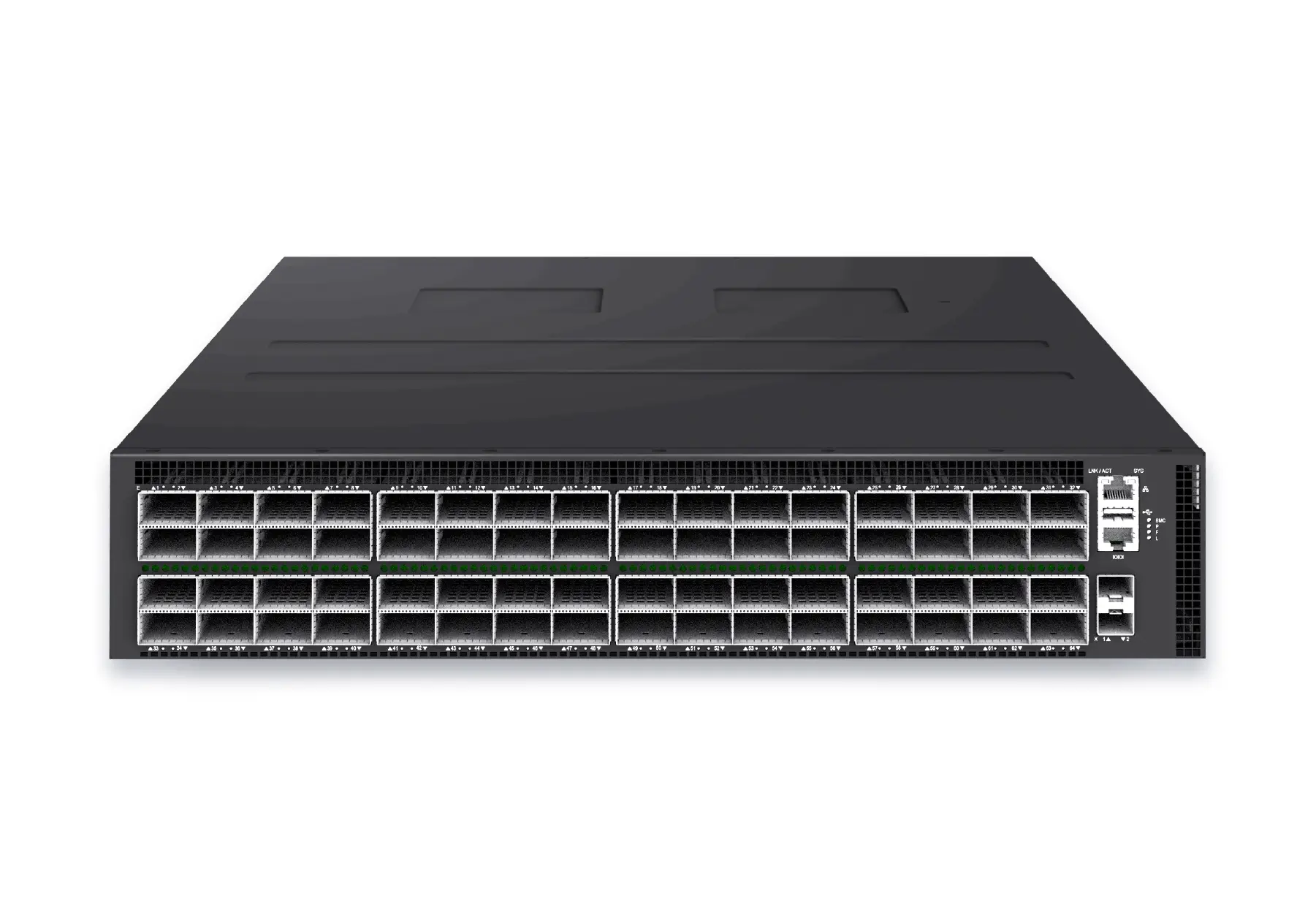 datacenter aiXS-DC-64X800-AI-G164-port 800G AI fabric switch for large-scale GPU clusters, HPC backbones, and ultra-high-throughput data center networks.View product
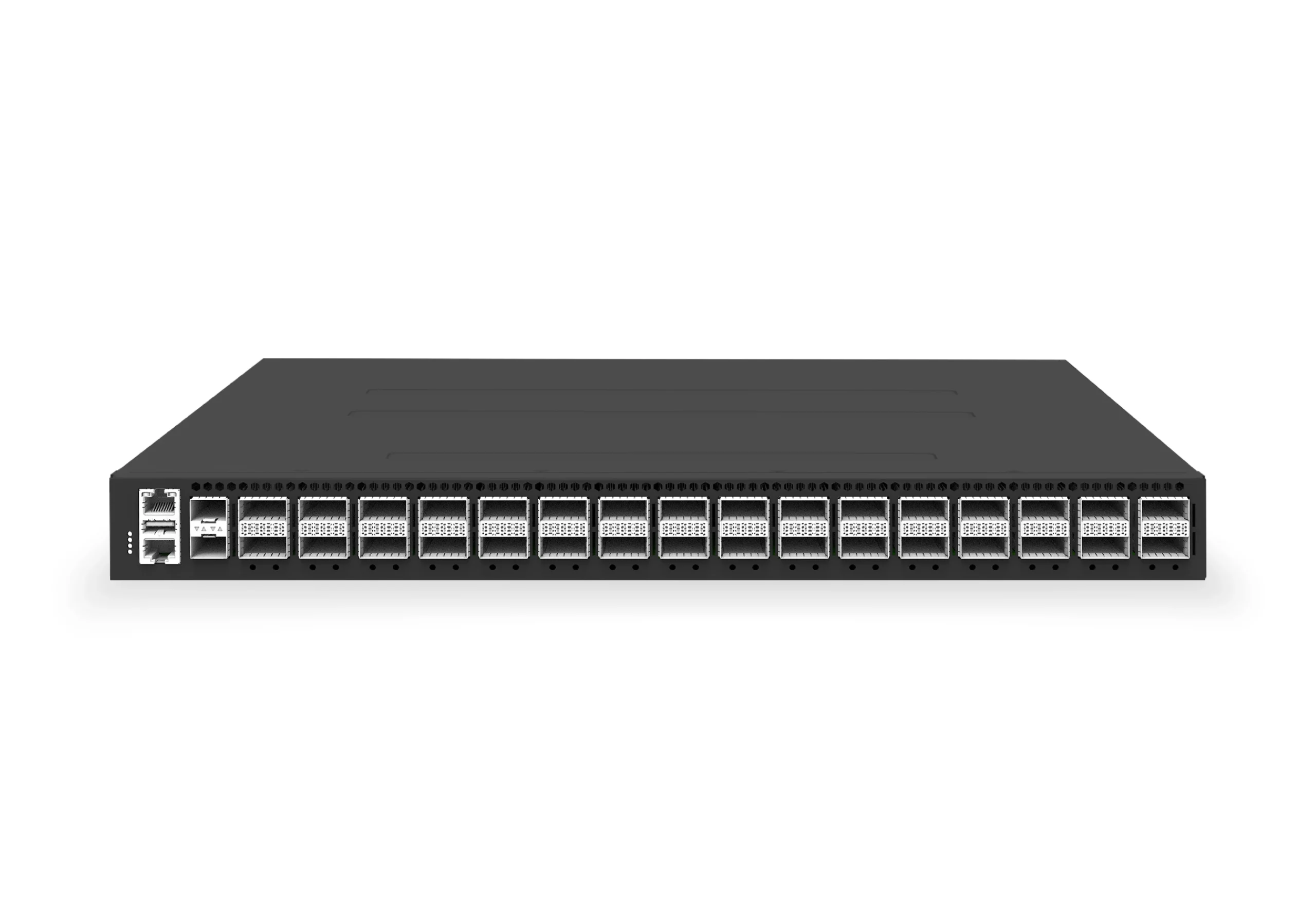 datacenter aiXS-DC-32X400-SP-G232-port 400G spine/core switch for high-capacity data center fabrics and AI-ready backbones.View product
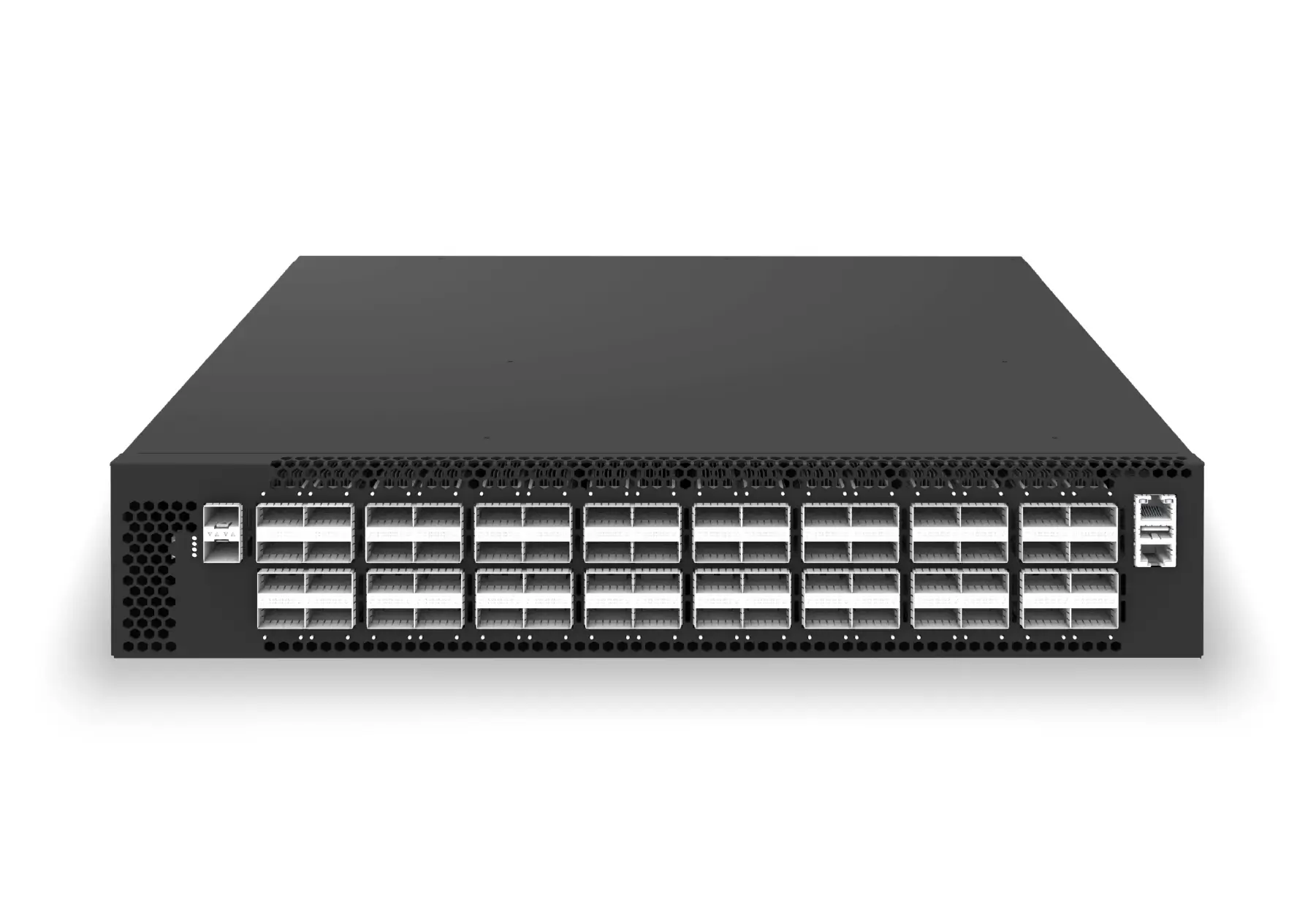 datacenter aiXS-DC-64X200-LS-G164-port 200G leaf/spine switch for high-bandwidth storage, compute, and scale-out data center fabrics.View product
Continue reading
Related articles
 Technical ArticleSONiC Switch Pre-Production Validation Checklist: A 12-Point Testing Playbook for Open Networking TeamsEngineering guidance on SONiC Switch Pre-Production Validation Checklist for Australian data centre buyers, covering form factor choice, link budgets, cabling.Read article
 Technical ArticleWhy Australian Data Centers Are Re-evaluating Open Networking for AI InfrastructureEngineering guide for AI fabric buyers covering RoCE, SONiC, telemetry, optics, support ownership, and deployment validation.Read article
 Technical ArticleSONiC Switch Validation Before Production: What Australian Network Teams Need on Their ChecklistEngineering guide for SONiC and open networking buyers covering platform fit, automation, support, telemetry, and validation evidence.Read article