In brief
A procurement scorecard for Australian campus and data center teams comparing Broadcom, Marvell, and NVIDIA switch silicon for SONiC deployments.
Key takeaways
- SONiC (Software for Open Networking in the Cloud) is an open-source network operating system built on Linux that runs on switches from multiple vendors and ASICs.
- For Australian campus IT teams, this is a structural shift. In traditional vendor-integrated stacks, the ASIC, NOS, management plane, and support contract arrive as a single SKU.
- This means a procurement scorecard for SONiC deployments starts with silicon, not with the NOS distribution or the switch chassis vendor.
Why Switch Silicon Matters More Than You Think in a SONiC Procurement
SONiC (Software for Open Networking in the Cloud) is an open-source network operating system built on Linux that runs on switches from multiple vendors and ASICs. Its architecture relies on the Switch Abstraction Interface (SAI) to decouple the NOS from the underlying hardware, which means the silicon choice is a separate, deliberate procurement decision rather than a side effect of picking a switch vendor.
For Australian campus IT teams, this is a structural shift. In traditional vendor-integrated stacks, the ASIC, NOS, management plane, and support contract arrive as a single SKU. Under SONiC, teams must evaluate each layer independently. The switch silicon determines what forwarding features are available in hardware, how much power the platform draws, what port densities are achievable, and which telemetry and programmability hooks the ASIC exposes.
This means a procurement scorecard for SONiC deployments starts with silicon, not with the NOS distribution or the switch chassis vendor. The two dominant silicon families in the SONiC ecosystem are Broadcom and Marvell Teralynx and Prestera lines. Understanding their respective strengths, feature trade-offs, and roadmap positioning is the foundation of a sound open networking procurement strategy.
SONiC’s SAI Abstraction: What It Means for Campus Procurement
SONiC is built on a modular, container-based architecture where each network function runs in its own Docker container. This design provides fault isolation, simplified upgrades, and enhanced scalability. Critically for procurement, the SAI layer provides a standardized API between SONiC and the switch ASIC.
According to the SONiC Foundation, SAI helps accelerate hardware innovation by allowing SONiC to run across different silicon platforms without rewriting the NOS. The SONiC project on GitHub describes multi-vendor support as a key feature, with production-hardened functionality including BGP and RDMA that has been validated in large-scale cloud service provider environments.
For campus IT teams in Australia, this abstraction has a practical procurement implication: you can shortlist switch platforms based on silicon capabilities, port configurations, and price-performance, then validate SONiC compatibility separately. However, SAI feature parity across ASIC vendors is not uniform. Some hardware features — advanced ACLs, specific QoS behaviors, deep buffer configurations, and certain telemetry capabilities — may be fully implemented on one silicon family and only partially supported on another.
The Open Compute Project Networking project, which includes ONIE, SAI, and SONiC as sub-projects, describes its scope as covering fully disaggregated and open networking hardware and software, including Linux-based operating systems and bare metal provisioning. This ecosystem context matters because it means the silicon evaluation is happening inside a broader industry movement toward open, disaggregated networking — not as an isolated technical exercise.
Broadcom Switch Silicon in the SONiC Ecosystem
Broadcom’s Ethernet switch silicon portfolio is among the most widely deployed in production SONiC environments. The company’s product page lists Ethernet switches and switch fabric devices spanning multiple generations of ASICs.
For campus and data center SONiC deployments, Broadcom silicon is relevant because of its broad installed base and extensive SAI implementation. Cloud service providers running SONiC at scale have historically standardized on Broadcom silicon for spine and leaf roles, which means the SAI layer for Broadcom ASICs is among the most mature and production-tested.
For Australian campus teams, Broadcom-based platforms may offer advantages in ecosystem breadth: more switch hardware vendors build platforms around Broadcom ASICs, which can translate to more competitive pricing and wider availability of form factors suited to campus access, aggregation, and distribution roles.
However, Broadcom silicon procurement comes with considerations that should appear on any scorecard: the maturity of campus-specific feature support in SONiC (such as PoE management, 802.1X integration, and campus QoS profiles), the availability of Australian-localised technical support, and the long-term roadmap alignment with 400G and 800G transitions for data center spine roles.
Marvell Switch Silicon in the SONiC Ecosystem
Marvell’s switch silicon portfolio includes the Teralynx and Prestera families, which target data center and campus use cases respectively. The Marvell switching products page was not accessible during this analysis (HTTP 403), which itself is a procurement signal: Australian teams should verify that Marvell’s silicon documentation, SAI implementation status, and SONiC compatibility data are available through their regional sales channels before committing to a Marvell-based platform shortlist.
In the broader SONiC ecosystem, Marvell has positioned its silicon as an alternative to Broadcom for both cloud-scale and enterprise deployments. For campus IT teams, Marvell’s Prestera line is relevant because it targets access and aggregation roles with features like PoE support, stacking capabilities, and campus-oriented QoS — features that are critical for enterprise campus refresh programs.
For data center roles, Marvell’s Teralynx line competes at 25.6T and 51.2T switching capacities, which aligns with 400G and 800G spine-leaf architectures. The SONiC SAI layer for Marvell silicon is actively developed, but Australian procurement teams should validate the specific feature matrix they need — particularly for RoCE v2, DCBX, and telemetry capabilities — against the current Marvell SAI implementation rather than assuming full feature parity with cloud-provider SONiC deployments.
Australia’s AI Infrastructure Acceleration: Why Timing Matters
Australia’s data center sector is experiencing a structural shift driven by AI workloads. In a recent OCP Podcast episode recorded in January 2026, David Hirst, CEO of Macquarie Data Centres, described how AI has changed data center design from a ‘real estate’ model to a ‘chip-out thinking’ approach, with liquid cooling and megawatt-per-rack designs becoming standard for new builds.
Hirst highlighted that Australia’s sovereign approach to data infrastructure matters, noting that local requirements around compliance, power, and community engagement create a distinct operating environment. He described compliance as a market advantage rather than a cost center, and emphasised that early collaboration across hyperscalers, government, and the supply chain is becoming essential for AI infrastructure build-out.
For campus IT teams evaluating SONiC deployments, this context matters in two ways. First, the AI infrastructure build-out is driving demand for 400G and 800G switching capacity in data centers, which influences silicon roadmap decisions even for campus programs that may eventually interconnect with data center fabrics. Second, Australia’s emphasis on sovereignty and compliance means procurement decisions must account for supply chain transparency, local support availability, and long-term vendor commitment — factors that differ between Broadcom and Marvell channel strategies.
The OCP Podcast discussion also noted that Australia’s data center market has unique characteristics related to dense urban construction, power grid constraints, and the role of long-term operators versus short-term developers. These dynamics create a procurement environment where switch silicon decisions should be evaluated not just on technical specifications but on operational longevity and ecosystem stability.
NVIDIA Spectrum and the SONiC Vendor Landscape
NVIDIA’s Ethernet switching portfolio provides another reference point for SONiC procurement evaluation. NVIDIA offers Pure SONiC as one of its supported network operating systems alongside Cumulus Linux, and its Spectrum switch line spans from the SN2000 series (up to 100 Gb/s) through the new Spectrum-6 SN6000 series (102.4 Tb/s with co-packaged optics).
NVIDIA positions its Spectrum switches as supporting ‘operational efficiency with a wide variety of network operating system choices, including NVIDIA Cumulus Linux and Pure SONiC.’ This is relevant for campus and data center procurement teams because it demonstrates that SONiC support is not limited to white-box or bare-metal platforms — integrated switch vendors also support SONiC as a NOS option.
For Australian procurement teams, NVIDIA’s Spectrum portfolio offers a third silicon path alongside Broadcom and Marvell. NVIDIA’s SN3000 series targets leaf and spine roles with port speeds up to 200 Gb/s, while the SN5000 series supports up to 800 Gb/s for AI workloads. The SN4000 series addresses cloud-scale networking up to 400 Gb/s.
However, NVIDIA’s silicon is vertically integrated with its switch hardware, which means the procurement trade-off is different from Broadcom or Marvell silicon that appears across multiple switch vendors. Campus IT teams should evaluate whether NVIDIA’s integrated approach provides better operational outcomes or whether the multi-vendor silicon ecosystem enabled by Broadcom and Marvell provides better long-term flexibility and competitive pricing.
Silicon Procurement Scorecard
Campus and data center teams should score the ASIC separately from the switch vendor. SONiC reduces NOS lock-in, but the ASIC still determines buffering, telemetry, feature depth, power, port layout, and failure behaviour.
| Scorecard Area | Broadcom Evaluation | Marvell Evaluation | NVIDIA Evaluation | Evidence Required |
|---|---|---|---|---|
| SAI maturity | Broad deployment base and many ODM platforms | Validate feature parity by chip generation | Validate Spectrum SONiC release and support model | SONiC release, SAI version, ASIC SDK notes, feature test results |
| Campus feature fit | PoE, ACL, QoS, MC-LAG, STP, PBR support by platform | Prestera/campus feature status by platform | Less campus-oriented; stronger data center/AI orientation | 48-port access pilot with PoE, failover, telemetry, and rollback |
| AI fabric fit | 100G/400G/800G options depending on generation | Validate RoCE, DCBX, PFC, ECN, buffers, telemetry | Spectrum-X/SN5000/SN6000 strength for AI Ethernet | 24-48 hour RoCE traffic test with ECN/PFC/drop counters |
| Supply chain | Broad platform ecosystem may improve sourcing options | Useful second-source path if local availability is proven | Integrated stack may simplify support but reduce hardware optionality | APAC lead time, spare availability, RMA path, support owner |
| Lifecycle cost | Competitive hardware breadth, support varies by OEM | Competitive option where feature fit is validated | Potentially higher integration value for AI stacks | 36-month and 60-month TCO including support, optics, spares, training |
The buyer should reject any proposal that treats “SONiC support” as a blanket claim. The right question is narrower: does this ASIC generation, in this switch SKU, with this SONiC image, expose the features required by this campus or AI fabric design?
Engineering FAQ
Does SAI make Broadcom, Marvell, and NVIDIA silicon interchangeable? No. SAI gives SONiC a common abstraction layer, but feature maturity, scale limits, telemetry, buffers, and support still vary by ASIC generation and vendor implementation.
What should campus teams test before choosing switch silicon? Test PoE, 802.1X or NAC integration, MC-LAG, STP, PBR, ACLs, QoS, telemetry, config restore, and rollback on the exact switch SKU and SONiC release.
What should data center or AI teams test? Test BGP scale, ECMP, RoCE v2, DCBX, PFC, ECN, queue telemetry, optics, thermal behaviour, link failure, switch reload, and support escalation.
Where does xSONiC fit in silicon evaluation? xSONiC should disclose the switch SKU, ASIC family, SONiC image, validated optics, feature coverage, and support path so the buyer can score the platform on evidence.
Related xSONiC Resources
Sources Reviewed
- Ethernet Network Adapters - ConnectX NICs | NVIDIA
- NVIDIA BlueField Data Processing Unit
- NVIDIA Spectrum-X Ethernet Platform
- ACSC Essential Eight
- OAIC Notifiable Data Breaches
- APRA CPS 234 Information Security
- NETSCOUT Network Packet Definition
- Cloudflare Network Packet Definition
- IEEE 802.11be Wireless LAN Standard
- IEEE 802.3bt Power over Ethernet
- SONiC Project Documentation
- Broadcom Ethernet Switching
- Marvell Switching
- NVIDIA Ethernet Switching
- Open Compute Networking
- SONiC GitHub
- SONiC Foundation
Product fit
Products referenced for evaluation
These products are referenced for evaluation context in the article. Confirm workload, port, optics, software, interoperability, and support requirements against the exact deployment before procurement.
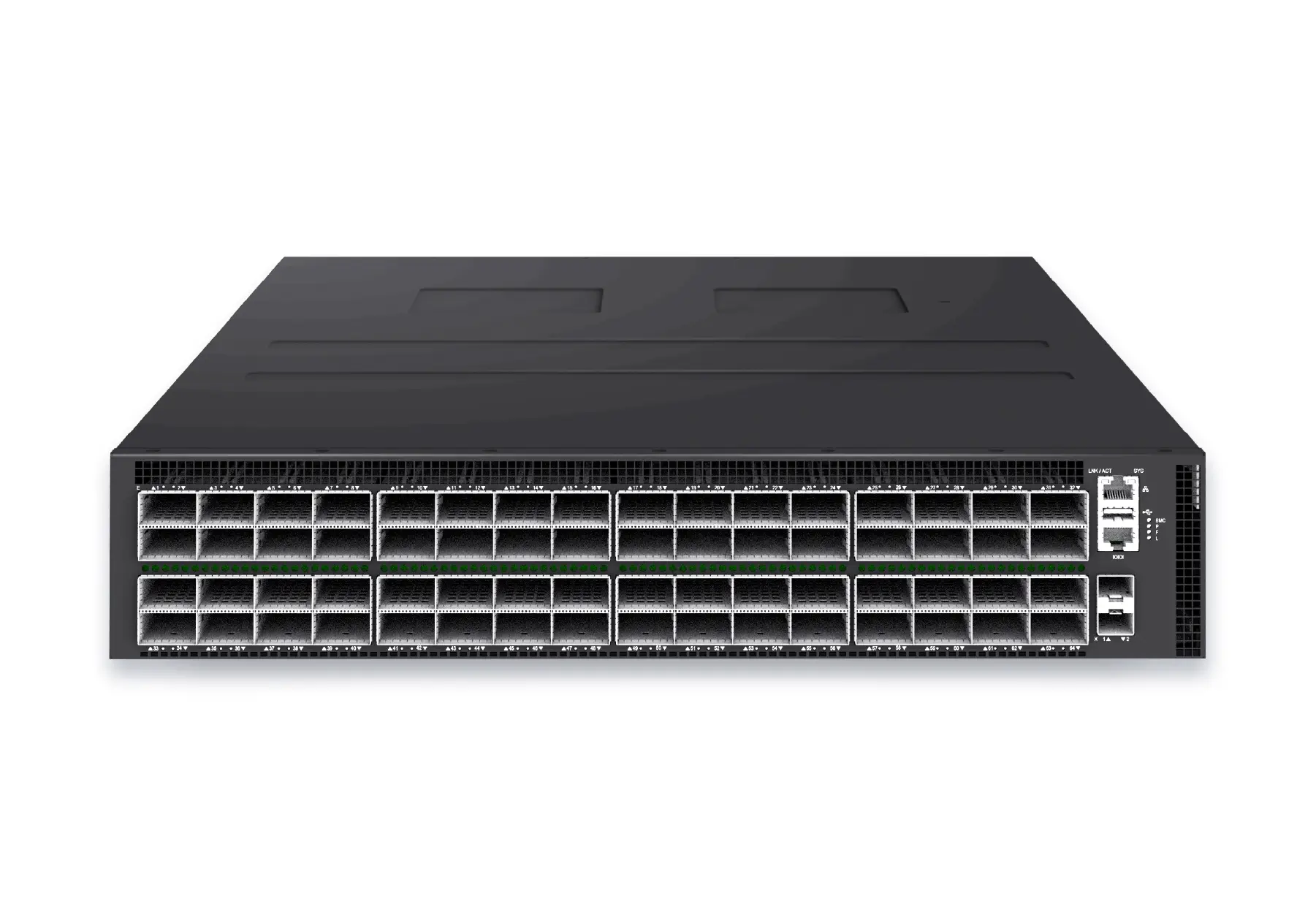 datacenter aiXS-DC-64X800-AI-G164-port 800G AI fabric switch for large-scale GPU clusters, HPC backbones, and ultra-high-throughput data center networks.View product
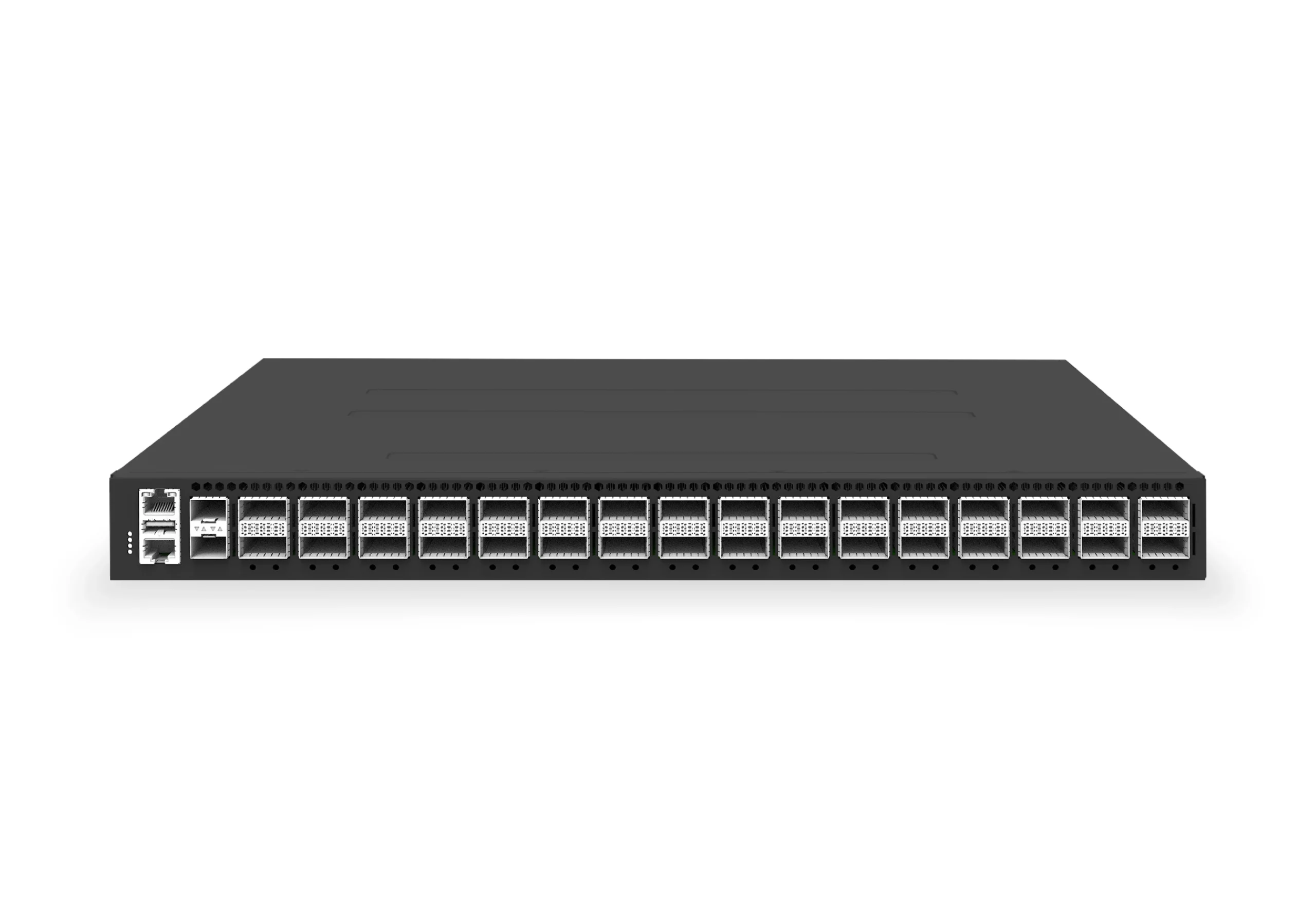 datacenter aiXS-DC-32X400-SP-G232-port 400G spine/core switch for high-capacity data center fabrics and AI-ready backbones.View product
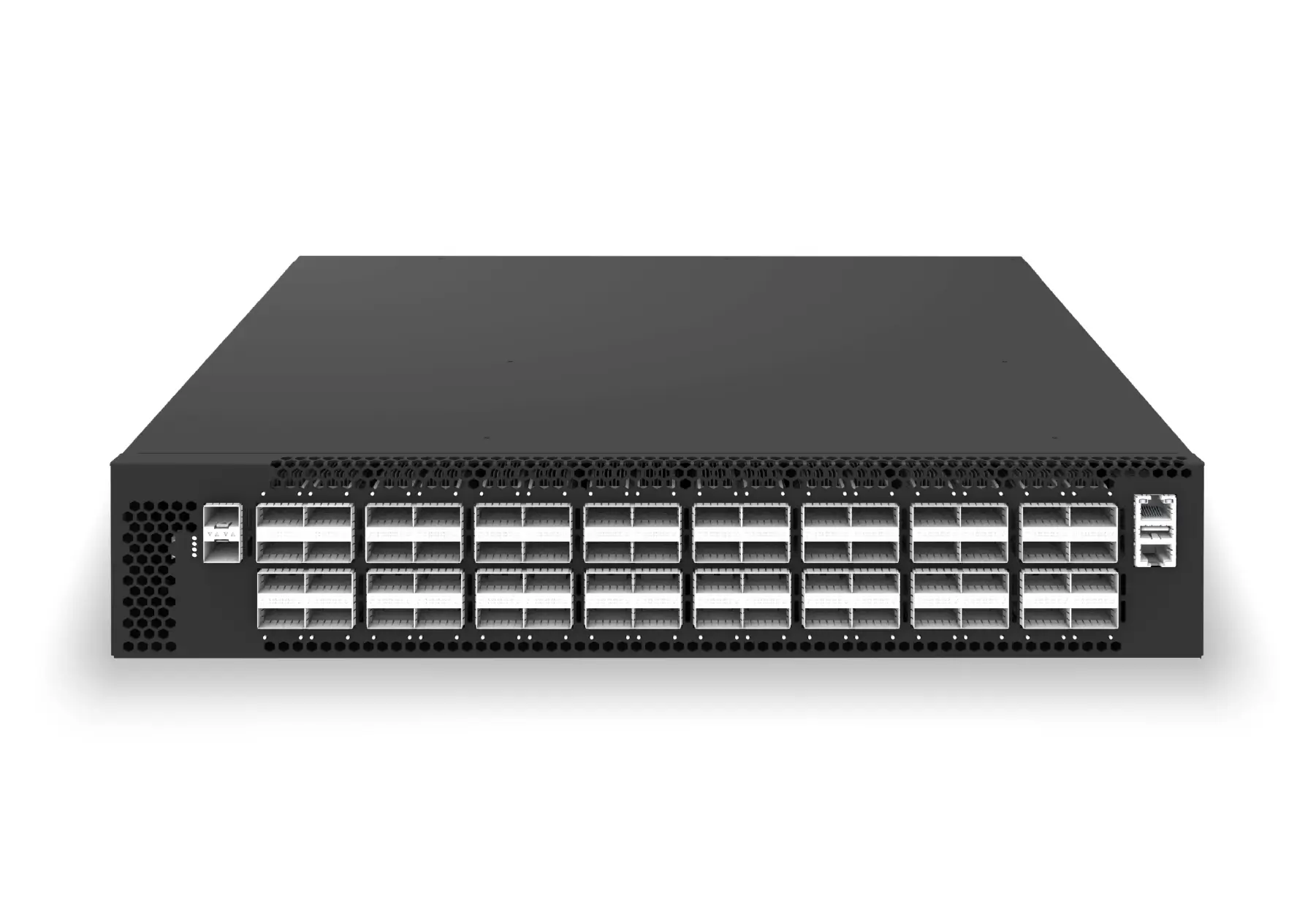 datacenter aiXS-DC-64X200-LS-G164-port 200G leaf/spine switch for high-bandwidth storage, compute, and scale-out data center fabrics.View product
Continue reading
Related articles
 Technical ArticleWhy Enterprise SONiC Is Gaining Ground in Campus Access and Aggregation: An Australian PerspectiveEngineering guide for campus switching teams covering PoE, access design, MC-LAG/STP risk, telemetry, support, and pilot validation.Read article
 Technical ArticleWhy Australian Enterprises Are Rethinking Campus Switching with Enterprise SONiCEngineering guide for campus switching teams covering PoE, access design, MC-LAG/STP risk, telemetry, support, and pilot validation.Read article
 Technical ArticleEthernet Switch Speeds Explained: Choosing the Right Network Fabric from 1G Campus Access to 800G AI BackbonesEngineering guide for campus switching teams covering PoE, access design, MC-LAG/STP risk, telemetry, support, and pilot validation.Read article