In brief
Engineering guidance on Open Networking White Box Switch Deployment with Enterprise SONiC for Australian campus teams, covering PoE budgets, access-layer resilience.
Key takeaways
- For years, enterprise networking in Australia has been dominated by a small number of proprietary switch vendors.
- SONiC (Software for Open Networking in the Cloud) is a free and open-source network operating system built on Linux that runs on switches from multiple vendors and ASIC families.
- For Australian network teams, SONiC on white box switches offers several concrete advantages:
Why Australian Enterprises Are Moving to SONiC on White Box Switches
For years, enterprise networking in Australia has been dominated by a small number of proprietary switch vendors. Buyers accepted locked-in operating systems, limited CLI customization, and vendor-controlled feature roadmaps because the alternative was unproven. That calculus is changing.
SONiC (Software for Open Networking in the Cloud) is a free and open-source network operating system built on Linux that runs on switches from multiple vendors and ASIC families. Originally developed for hyperscale cloud data centers, SONiC has been production-hardened at some of the world’s largest cloud service providers. The SONiC Foundation, a Linux Foundation project, oversees its governance and ecosystem growth (sonicfoundation.dev).
For Australian network teams, SONiC on white box switches offers several concrete advantages:
-
Hardware-software decoupling: You can select switching ASICs and hardware from one vendor while running SONiC as your NOS. If one hardware supplier raises prices or exits the market, you switch hardware without retraining your entire operations team on a new CLI.
-
Containerized architecture: SONiC runs each network function (BGP, LLDP, DHCP relay, telemetry, etc.) in its own Docker container. This means you can upgrade or restart a single service without rebooting the switch. For teams managing distributed campus or data center fabrics across Sydney, Melbourne, Brisbane, or Perth, this modularity reduces mean time to recovery.
-
Standards-based programmability: SONiC supports standard Linux interfaces, JSON-based configuration, and programmatic access through REST APIs and NETCONF/YANG models. This aligns with the infrastructure-as-code practices that Australian DevOps and NetOps teams increasingly adopt.
-
Multi-vendor ecosystem: The SONiC project lists supported devices and platforms from multiple hardware vendors across a range of ASIC families (sonic-net/SONiC). This broadens your sourcing options, which matters in a market where supply chain lead times can stretch across the Asia-Pacific region.
This guide is a deployment playbook, not a product pitch. It will help your team evaluate whether SONiC on white box switches is right for your environment, plan a proof of concept, and move through lab validation to production deployment with structured checklists and decision criteria at each stage.
Understanding the SONiC Architecture for Enterprise Use
Before selecting hardware or planning a deployment, your team needs to understand how SONiC is structured. SONiC is not a monolithic firmware image in the traditional sense. It is a modular system where each major network function runs inside its own Docker container, orchestrated by a central management framework.
Core Architecture Components
SONiC is built on the Switch Abstraction Interface (SAI), which provides a standardized API layer between the NOS and the underlying switching ASIC. This is the key enabler for multi-vendor hardware support. SAI abstracts the ASIC-specific details so that SONiC code runs the same way on switches using Broadcom, Marvell, or other silicon.
The main architectural layers are:
- SAI (Switch Abstraction Interface): Hardware abstraction API. SAI translates SONiC’s high-level network state into ASIC-specific forwarding table entries.
- Redis Database (Redis DB): Central state store. All network state — interface status, BGP neighbors, VLAN memberships, ACL entries — is stored in Redis. Containers read from and write to Redis, which acts as the single source of truth.
- Orchestrator (orchagent): Translates high-level configuration from Redis into SAI calls. The orchestrator is the bridge between your intended configuration and the actual hardware forwarding plane.
- Docker Containers: Each major function runs in its own container. Examples include
bgp(FRRouting-based BGP),teamd(link aggregation),lldp(neighbor discovery),snmp,telemetry,dhcp_relay, andpmon(platform monitoring). - ConfigDB and config_db.json: SONiC uses a JSON-based configuration database. You define your intended network state in ConfigDB, and the orchestrator enforces it.
What This Means for Operations
The containerized design has practical operational benefits for Australian enterprise teams:
- Fault isolation: If the LLDP container crashes, your BGP sessions and data plane forwarding continue unaffected.
- Independent upgrades: You can patch or upgrade a single service container without a full switch reboot.
- Troubleshooting: Each container has its own logs. You can exec into a container to debug a specific protocol without affecting others.
- Automation: JSON configuration and standard Linux tooling (Ansible, Salt, custom Python scripts) work natively with SONiC.
Enterprise SONiC vs. Community SONiC
It is important to distinguish between Community SONiC and Enterprise SONiC distributions. Community SONiC is the open-source baseline maintained by the SONiC Foundation and its contributing members. Enterprise SONiC distributions are commercial builds offered by hardware or software vendors that may add proprietary features, support contracts, and validated hardware compatibility lists.
For Australian buyers evaluating xSONiC bare-metal switches or data center AI platforms, the key question is: which SONiC distribution runs on your target hardware, and what level of operational support do you need? This guide focuses on the deployment workflow regardless of distribution, but we call out distribution-specific considerations where relevant.
Evaluation Criteria: Choosing White Box Hardware for SONiC
Selecting the right white box switch hardware is the most consequential decision in a SONiC deployment. Get this wrong, and you will spend months debugging ASIC driver incompatibilities or platform-specific gaps instead of building your fabric.
Decision Matrix: Hardware Evaluation Criteria
Use the following criteria to evaluate white box switches for your SONiC deployment:
| Criterion | Questions to Ask | Why It Matters |
|---|---|---|
| SONiC compatibility | Is the switch listed in the SONiC supported devices and platforms list? Which SONiC versions are validated? | Unlisted hardware means you are the beta tester. Stick to validated platforms for production. |
| ASIC family | Which switching ASIC does the switch use (Broadcom switch silicon, Marvell Teralynx, etc.)? Is the SAI implementation mature for this ASIC? | SAI maturity varies by ASIC. Broadcom has the longest SONiC track record. Newer ASICs may have gaps in advanced features. |
| Port density and speed | How many ports at what speeds do you need? 25G/100G/400G? SFP28, QSFP28, QSFP-DD, OSFP? | Match to your current and 3-year growth plan. Overbuying port speed wastes budget; underbuying forces an early refresh. |
| Form factor | 1U fixed, modular, or pizza-box? Does it fit your rack depth and power budget? | Australian data centers vary in rack depth. Confirm physical fit before ordering. |
| Power and cooling | What is the typical and maximum power draw? Does the switch support front-to-back or back-to-front airflow? | Airflow direction must match your hot-aisle/cold-aisle layout. Australian climate zones affect cooling requirements. |
| Management interface | Does the switch support a serial console, dedicated management port (100M/1G), and IPMI/BMC for out-of-band management? | OOB management is critical for remote sites. Confirm before deploying to branch or edge locations. |
| Memory and CPU | How much RAM and what CPU does the switch have? Can it run your intended SONiC version with headroom? | Large BGP tables, telemetry streams, and container workloads need adequate compute resources on the switch. |
| Optical transceiver support | Does the switch support third-party transceivers, or does it lock you to OEM optics? | Vendor-locked optics destroy the cost advantage of open networking. Confirm multi-source optics compatibility. |
ASIC Landscape for SONiC White Box Switches
The SONiC ecosystem is built on SAI, and ASIC maturity varies significantly:
- Broadcom-based switches: The most mature SONiC target in many white-box deployments. Broad SAI support, extensive production validation, and wide ODM availability make Broadcom-based platforms a common baseline for lab validation.
- Other switching ASICs: SONiC support varies by vendor, ASIC generation, and SAI implementation. Check the specific ASIC and platform against SONiC release notes instead of relying on vendor-family assumptions.
- Marvell Teralynx and Prestera: Growing SONiC support. Some advanced features may lag Broadcom at the ASIC level.
- Other ASIC vendors: SONiC support varies. Always validate against the SONiC supported platforms list.
Optical Transceiver Planning
White box switches almost always accept SFP, SFP+, SFP28, QSFP28, QSFP-DD, and OSFP transceivers. However, SONiC’s transceiver management depends on the platform’s transceiver EEPROM support in SAI. For Australian deployments where you may source optics from local distributors or import from Asia-Pacific suppliers, confirm that your target SONiC platform supports the transceiver vendor and part type you plan to use.
Internal link suggestion: For transceiver selection guidance, see the xSONiC Optical Transceiver product family.
Pre-Deployment Checklist: Lab Planning and Proof of Concept
A structured proof of concept (PoC) is essential before committing to SONiC in production. Do not skip the lab phase. The cost of discovering a compatibility gap or operational shortfall in production far exceeds the cost of a 4-6 week lab exercise.
Lab Environment Checklist
Hardware:
- Minimum 2-4 white box switches matching your target production platform
- At least one spare switch for destructive testing and firmware experiments
- Appropriate transceivers and DAC/AOC cables for inter-switch links
- Server or VM with sufficient resources to run SONiC in virtual mode (KVM/QEMU) for config prototyping
- Serial console cables and a console server or USB-to-serial adapter
- Dedicated management switch or VLAN for OOB management access to switch consoles and management ports
Software:
- SONiC image matching your target production version (Community or Enterprise distribution)
- ONIE (Open Network Install Environment) pre-installed on switches, or recovery plan if not
- Configuration management tooling (Ansible recommended; confirm SONiC module support)
- Telemetry collection stack (Telegraf/InfluxDB/Grafana, Prometheus, or equivalent)
- Git repository for config version control
Network Design:
- Documented target topology (spine-leaf, campus core-aggregation-access, or hybrid)
- IP addressing plan for management, loopback, and inter-switch links
- BGP ASN plan (if using BGP underlay/overlay)
- VLAN and VXLAN plan (if using EVPN-VXLAN overlay)
- ACL and QoS policy baseline
Personnel:
- At least one engineer with Linux CLI proficiency (not just traditional network CLI)
- Access to SONiC community resources: Slack channel, mailing list, GitHub issues
- Defined escalation path if lab testing reveals hardware or software gaps
Proof of Concept Test Plan
Your PoC should validate the following before moving to production:
- Basic boot and ONIE install: Can you install SONiC on the target switch via ONIE? Does the switch boot cleanly?
- Management access: Can you reach the switch over SSH and serial console? Does the management VRF work correctly?
- Interface bringup: Do all ports come up at the expected speed? Do transceivers negotiate correctly?
- Layer 2 forwarding: Do VLANs, trunk ports, and LAGs (port channels) function as expected?
- Layer 3 routing: Does BGP establish adjacencies? Does OSPF converge? Are static routes applied correctly?
- Overlay (if applicable): Does EVPN-VXLAN establish VTEPs and advertise MAC/IP routes? Does Layer 2 and Layer 3 VXLAN forwarding work?
- Failover and resilience: What happens when you pull a cable, reboot a peer switch, or restart a SONiC container? Does the data plane recover? How fast?
- Configuration persistence: Does your configuration survive a reboot? Does config_db.json load correctly?
- Upgrade path: Can you perform a SONiC image upgrade (warm reboot or cold reboot) without losing configuration?
- Telemetry and monitoring: Are interface counters, BGP state, and system health metrics flowing to your monitoring stack?
Acceptance gate: Do not proceed to production planning until all 10 PoC test categories pass with documented results. Any failure must be root-caused and either resolved or explicitly accepted as a known limitation before moving forward.
Engineering FAQ
What should be tested before moving campus switching to SONiC or open networking? Test PoE behaviour, NAC integration, VLAN and policy design, STP or MC-LAG interaction, multicast, monitoring, upgrade rollback, and help-desk workflows. Campus readiness is an operations test, not only a forwarding test.
Where do campus refresh projects usually carry hidden risk? The risk often sits in closets: power budget, old cabling, undocumented uplinks, mixed endpoint types, voice devices, cameras, badge systems, and change windows. Those details should be inventoried before selecting switch models.
How should Australian campus teams structure a pilot? Choose one representative site or building, document endpoint classes, run PoE and failover tests, verify monitoring, train operations staff, and define rollback steps before expanding to the broader estate.
Related xSONiC Resources
Sources Reviewed
- IEEE 802.1Q Bridges and Bridged Networks
- IEEE 802.1AX Link Aggregation
- Ethernet Network Adapters - ConnectX NICs | NVIDIA
- NVIDIA BlueField Data Processing Unit
- NVIDIA Spectrum-X Ethernet Platform
- OpenConfig gNMI Specification
- OpenConfig
- RFC 7950 - The YANG 1.1 Data Modeling Language
- RFC 6241 - Network Configuration Protocol (NETCONF)
- SONiC Project Documentation
- Broadcom Ethernet Switching
- Marvell Switching
- NVIDIA Ethernet Switching
- Open Compute Networking
- SONiC GitHub
- SONiC Foundation
Product fit
Products referenced for evaluation
These products are referenced for evaluation context in the article. Confirm workload, port, optics, software, interoperability, and support requirements against the exact deployment before procurement.
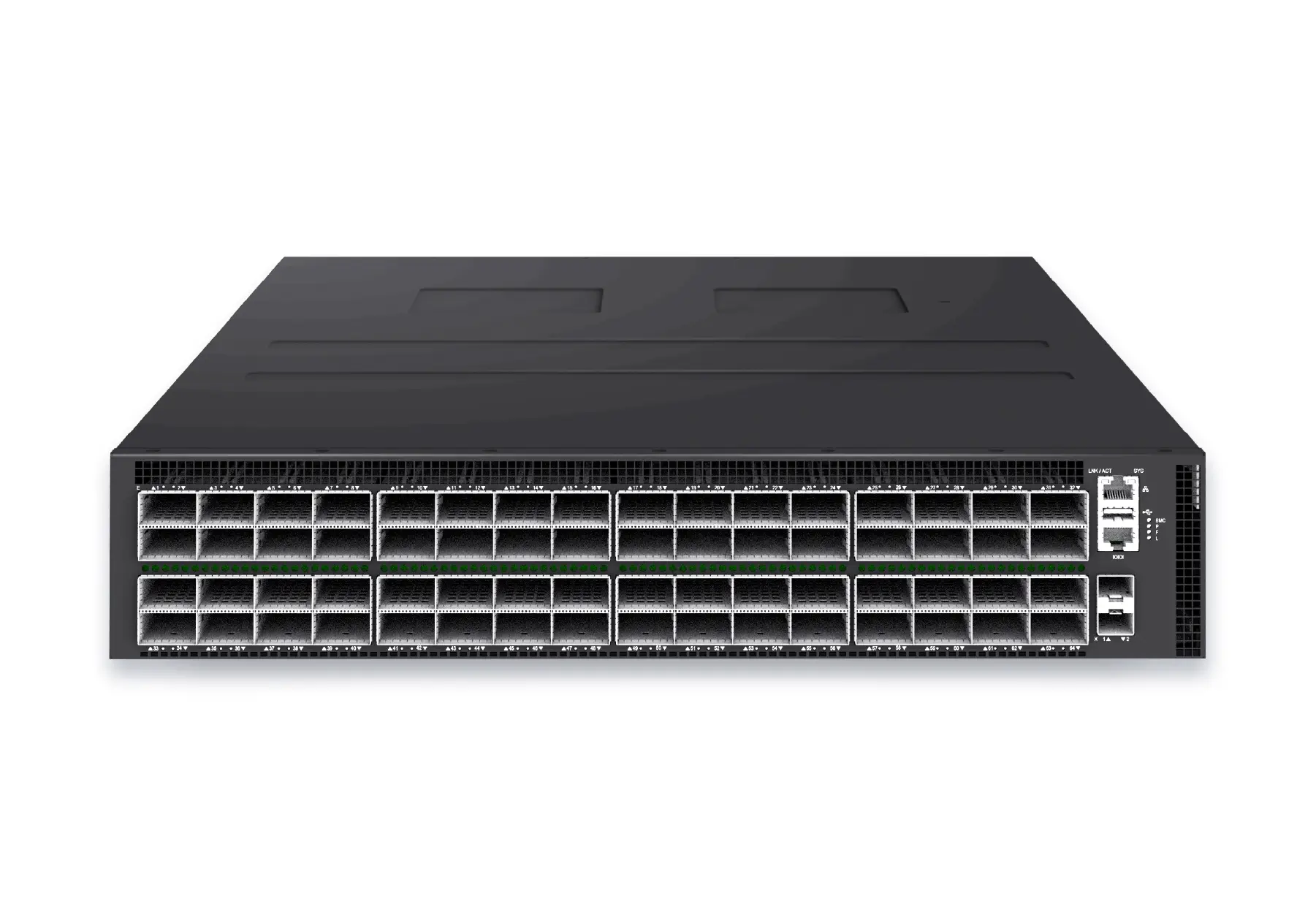 datacenter aiXS-DC-64X800-AI-G164-port 800G AI fabric switch for large-scale GPU clusters, HPC backbones, and ultra-high-throughput data center networks.View product
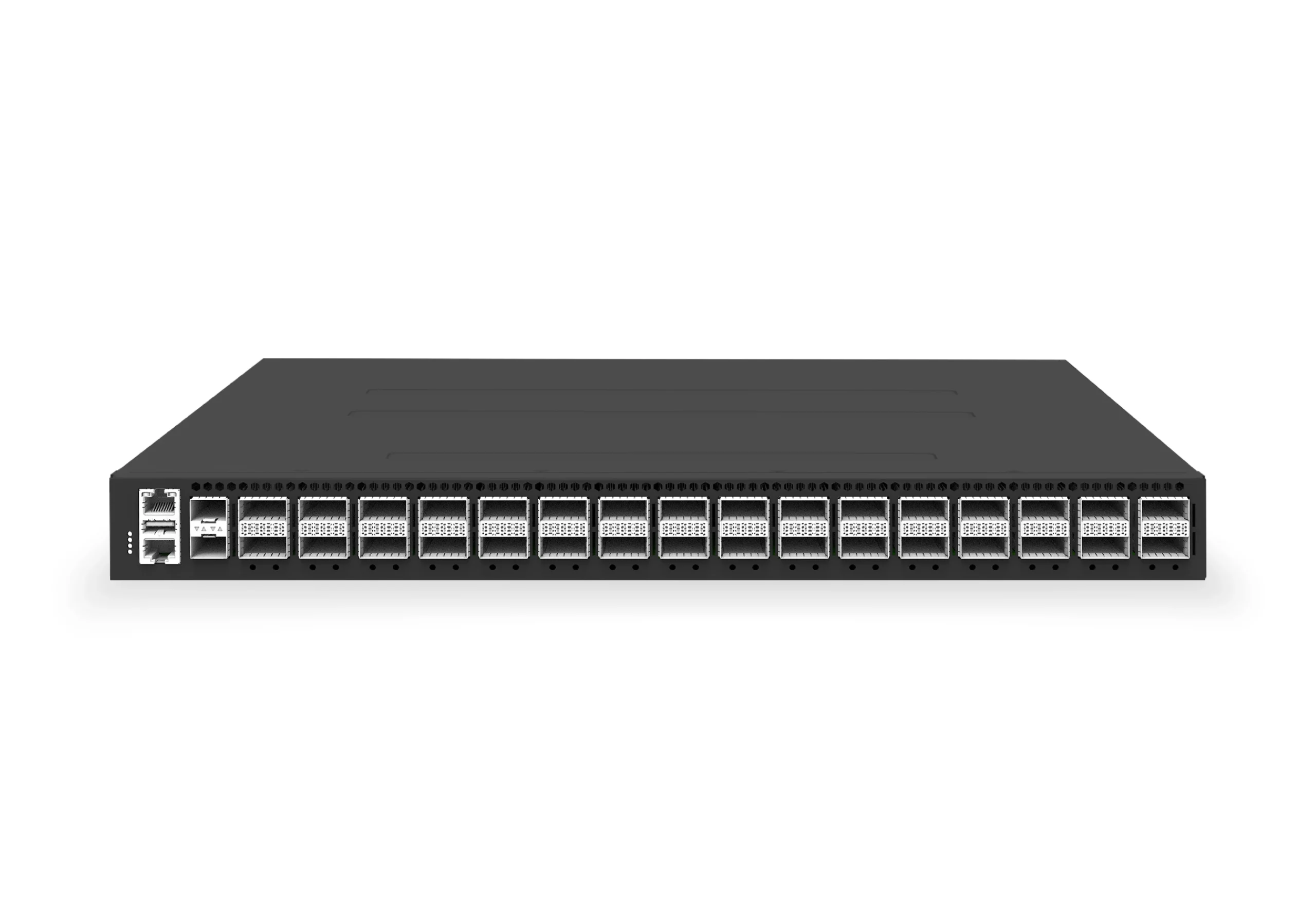 datacenter aiXS-DC-32X400-SP-G232-port 400G spine/core switch for high-capacity data center fabrics and AI-ready backbones.View product
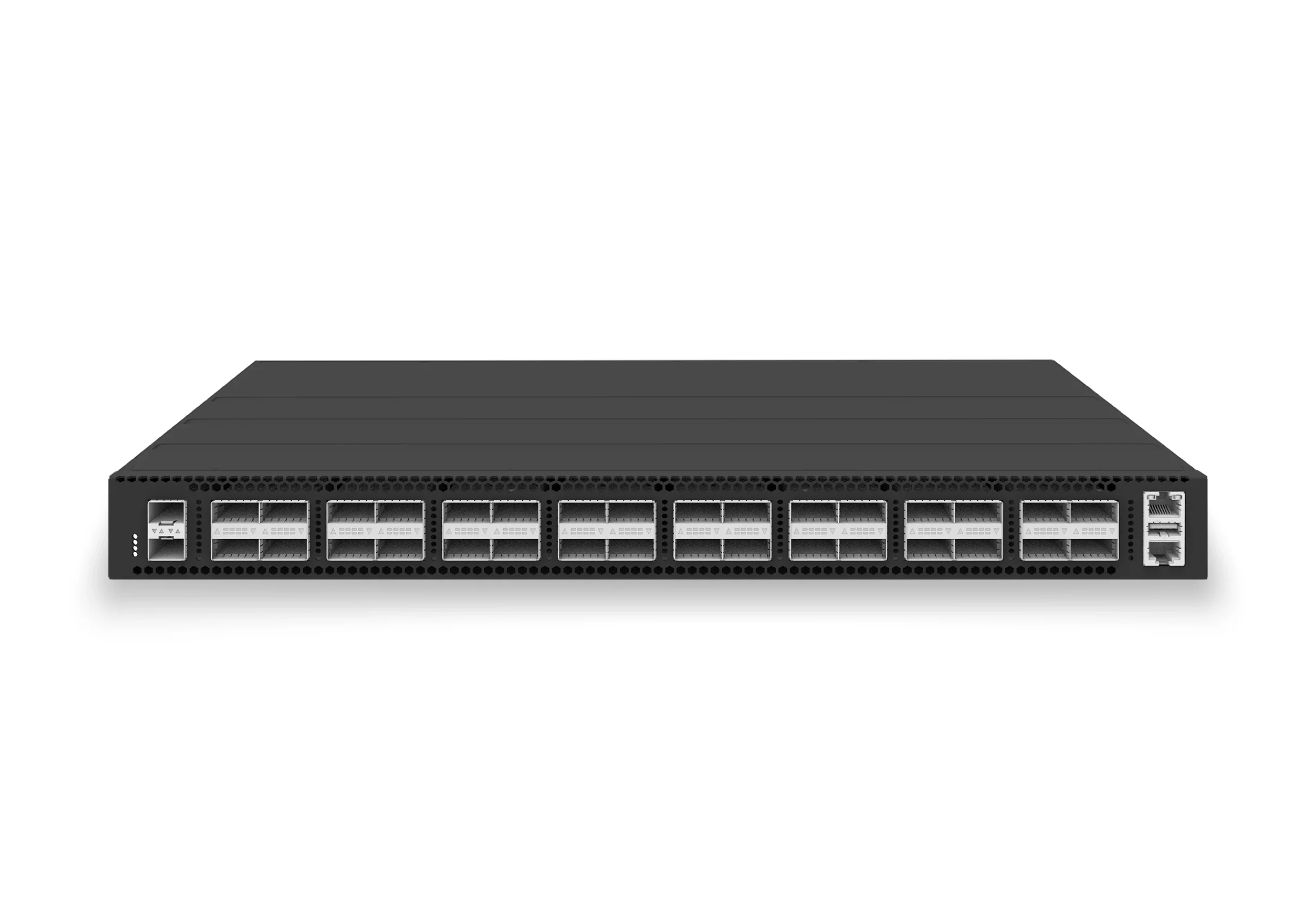 datacenter aiXS-DC-32X100-LS-G232-port 100G leaf/spine switch for VXLAN fabrics, RoCE-ready workloads, and tenant-scale routing.View product
Continue reading
Related articles
 Technical ArticleOpen Networking Support for Enterprise Buyers: How SONiC and Open NOS Models Actually WorkEngineering guidance on Open Networking Support for Enterprise Buyers for Australian campus teams, covering PoE budgets, access-layer resilience, migration risk.Read article
 Technical ArticleFrom Proprietary Lock-In to Open Networking: A Practical Enterprise SONiC Migration PlaybookA practical Enterprise SONiC migration playbook for Australian buyers moving from proprietary switch OS to open networking.Read article
 Technical ArticleWhy Centralized AI Fabric Management Is the Missing Layer in Open NetworkingEngineering guidance on Centralized AI Fabric Management Is the Missing Layer in Open Networking for Australian network teams, covering underlay design, EVPN-VXLAN.Read article