In brief
Engineering guide for AI fabric buyers covering RoCE, SONiC, telemetry, optics, support ownership, and deployment validation.
Key takeaways
- NVIDIA's Australian homepage now positions Ethernet networking as a core data center pillar alongside InfiniBand, listing both under its Networking section with distinct value propositions.
- More notably, NVIDIA's Data Center section highlights 'Spectrum-X: AI-Native Ethernet Fabric' with a feature on 'Gigascale AI' and 'Multipath Reliable Connection (MRC),' described as 'proven on NVIDIA Spectrum-X Ethernet, now open to industry.' This represents a strategic expansion of NVIDIA's networking narrative: Ethernet is no longer just for the front-end management network in AI clusters.
- The company's 'Vera Rubin DSX AI Factory Reference Design' further reinforces this direction, described as 'a guide for building codesigned AI infrastructure that delivers maximum token per watt and accelerated time to first production.'
What Happened: NVIDIA Signals Ethernet Is a First-Class AI Fabric Option
NVIDIA’s Australian homepage now positions Ethernet networking as a core data center pillar alongside InfiniBand, listing both under its Networking section with distinct value propositions. The company describes its Ethernet offering as delivering ‘Ethernet performance, availability, and ease of use across a wide range of applications,’ while InfiniBand is framed for ‘high-performance networking for supercomputers, AI, and cloud data centers.’
More notably, NVIDIA’s Data Center section highlights ‘Spectrum-X: AI-Native Ethernet Fabric’ with a feature on ‘Gigascale AI’ and ‘Multipath Reliable Connection (MRC),’ described as ‘proven on NVIDIA Spectrum-X Ethernet, now open to industry.’ This represents a strategic expansion of NVIDIA’s networking narrative: Ethernet is no longer just for the front-end management network in AI clusters. NVIDIA is now marketing it as viable for the GPU backend fabric.
The company’s ‘Vera Rubin DSX AI Factory Reference Design’ further reinforces this direction, described as ‘a guide for building codesigned AI infrastructure that delivers maximum token per watt and accelerated time to first production.’
This is a significant market signal. For years, the default assumption in AI cluster networking has been InfiniBand for backend GPU-to-GPU traffic. NVIDIA’s own product lineup now explicitly challenges that assumption by positioning Ethernet as AI-ready.
Why It Matters: The Ethernet vs. InfiniBand Decision Just Got More Complex
For Australian data center buyers evaluating AI cluster networking, NVIDIA’s dual-track positioning creates a genuine decision problem.
InfiniBand has long been the assumed fabric for large-scale AI training. Its RDMA capabilities, congestion management, and latency characteristics are well-understood. But InfiniBand also means committing to a specialized networking stack with limited vendor choice.
Ethernet, by contrast, offers broader interoperability, a larger ecosystem of switch and NIC vendors, and more familiar operational tooling. The trade-off has historically been that standard Ethernet lacked the lossless, low-latency behavior AI workloads demand.
Key questions for Australian buyers:
- What is the actual latency and throughput delta between Spectrum-X and InfiniBand for transformer model training at 1,000+ GPU scale?
- Does ‘MRC open to industry’ mean third-party SONiC switches can participate in a Spectrum-X fabric, or only NVIDIA-qualified hardware?
- What are the licensing and support costs for Spectrum-X software features compared to open-source SONiC with RoCE v2?
The SONiC Angle: What Open Networking Brings to the AI Fabric Table
While NVIDIA frames the AI networking conversation around its own Spectrum-X and InfiniBand products, the open networking ecosystem offers a parallel path that is worth evaluating.
SONiC (Software for Open Networking in the Cloud) is described by the SONiC Foundation as ‘a free and open-source network operating system based on Linux that runs on switches from multiple vendors and ASICs.’ The GitHub repository confirms it offers ‘a full-suite of network functionality, like BGP and RDMA’ and is ‘battle-tested in large-scale cloud environments.’
The key differentiator for buyers is vendor decoupling. The SONiC Foundation states SONiC ‘decouples hardware and software’ through the Switch Abstraction Interface (SAI), ‘accelerating hardware innovation.’ In practice, this means a buyer can choose switch hardware from multiple vendors and run SONiC as the common NOS.
For an Australian data center operator building an AI cluster, this translates to a concrete procurement advantage: you are not locked into NVIDIA switch hardware to get lossless Ethernet fabric behavior. You can source SONiC-compatible switches from multiple vendors, potentially accessing better pricing, local support, and supply chain diversity.
Buyer Education: How to Evaluate AI Fabric Options Without Vendor Lock-In
Australian buyers evaluating AI cluster networking should consider the following framework, drawing on what the sources confirm and what remains unverified.
Decision criteria for AI fabric evaluation:
| Criterion | What to verify |
|---|---|
| Workload fit | Training, inference, storage-heavy RAG, or mixed AI platform traffic profile. |
| Fabric behaviour | RoCE, congestion control, queue telemetry, ECMP distribution, and failure recovery under load. |
| NOS ownership | SONiC, Cumulus Linux, vendor SONiC, or another NOS, plus named escalation owner. |
| Hardware flexibility | Whether the fabric can run across multiple switch vendors or depends on one full-stack platform. |
| Tooling | Telemetry, packet broker feeds, simulation, rollback, and configuration automation. |
| Commercial risk | Licensing, support contract, local sparing, lead time, and Australian-timezone support. |
Spectrum-X vs SONiC Evidence Gate
The fair test is not whether one stack has better marketing language. It is whether each option can prove the same workload, failure, telemetry, and support outcomes.
| Evidence gate | NVIDIA/Spectrum-X proof to request | SONiC/open fabric proof to request | Rework trigger |
|---|---|---|---|
| Workload scale | Tested GPU count, NIC generation, switch SKU, link speed, and MRC configuration | Same GPU count, NIC generation, switch SKU, link speed, and RoCE policy | Claims use different scale or different traffic |
| Congestion control | ECN/PFC or equivalent counters, adaptive routing evidence, and p99/p99.9 latency | ECN/PFC/CNP counters, queue telemetry, ECMP distribution, and p99/p99.9 latency | Average latency only |
| Failure recovery | 1 link failure, 1 spine failure, 1 optics replacement, and recovery timing | Same 3 failure cases with BGP/ECMP state and telemetry | Failover is described but not timed |
| Operations | Upgrade path, rollback, log bundle, support owner, and licensing scope | SONiC image, SAI version, rollback, log bundle, and support owner | Incident ownership is split or undocumented |
| Commercial risk | 3-year stack cost including switch, NIC, optics, licenses, and support | 3-year cost including switch, optics, support, training, and integration | Comparison excludes software or optics cost |
The Vendor Gap: What NVIDIA’s Marketing Does Not Address
NVIDIA’s homepage positioning is polished, but it leaves several gaps that matter for buyers evaluating open networking alternatives.
First, the Ethernet vs. InfiniBand framing is presented as a vendor-internal choice within NVIDIA’s portfolio. The implicit message is: whichever fabric you choose, buy it from NVIDIA. The sources do not address what happens when a buyer wants Ethernet fabric behavior without NVIDIA switch hardware.
Third, NVIDIA’s ‘AI Factory Reference Design’ framing suggests a full-stack approach: GPU, switch, NIC, and software designed as a unit. This is a valid engineering approach, but it also concentrates procurement risk in a single vendor. For Australian operators concerned about supply chain resilience and vendor negotiation leverage, this concentration is a meaningful consideration.
The open networking path via SONiC offers a structural counter-position: disaggregate the NOS from the hardware, choose switch ASICs independently, and retain the ability to switch vendors without rewriting the network fabric. The SONiC Foundation describes this as ‘the first solution to break monolithic switch software into multiple containerized components that accelerate software evolution.‘
What Australian Buyers Should Do Next
The NVIDIA Ethernet push for AI clusters is a market development worth tracking, not a signal to rush into a purchasing decision. Here is a practical next-step checklist for Australian data center teams:
-
Request NVIDIA Spectrum-X technical documentation that goes beyond the homepage marketing. Specifically, ask for latency, throughput, and congestion management data for MRC at the GPU scale you are planning.
-
Evaluate SONiC-based alternatives by requesting proof-of-concept access from xSONiC or other open networking vendors. Test RoCE v2 performance on your target GPU workload before committing to a fabric.
-
Define the support model for the switch hardware, NOS image, ASIC SDK, SAI layer, optics, NICs, and security updates. A fast fabric with unclear ownership is not production-ready.
-
Compare total cost of ownership, including switch hardware, NICs, software licensing, support contracts, and operational training. Do not compare fabric options based on switch price alone.
-
Assess supply chain risk. For Australian deployments, consider lead times, local support availability, and the ability to source replacement hardware from multiple vendors.
-
Verify telemetry and observability capabilities. AI fabrics need real-time visibility into congestion, packet loss, and path performance. Compare INT/IPTPath telemetry capabilities in SONiC-based fabrics against NVIDIA’s proprietary telemetry tools.
Engineering Evidence Floor
For this topic, treat the article as buyer-ready only when the fabric claim is tied to measurable acceptance data. The baseline evidence package should include the selected switch SKU, SONiC image, ASIC/SAI version, NIC firmware, optics list, RoCE policy, telemetry counters, support owner, and rollback method. In a small pilot, capture at least 30 minutes of traffic at the intended 100G/400G/800G speed, one link failure, one switch reboot, one optics fault, and one support handoff. That evidence separates a credible AI fabric plan from a bandwidth brochure.
| Evidence area | What to validate | Acceptance gate | Rework trigger |
|---|---|---|---|
| Transport | PFC, ECN, DCBX, MTU, queue mapping, and CNP counters | 30 minutes load test at 100G/400G/800G | RoCE is asserted but not measured |
| Platform | Switch SKU, ASIC, SAI, SONiC image, and optics list | 2 switch roles pass upgrade and rollback | Generic compatibility is used as proof |
| Failure | Link loss, switch reboot, route convergence, and workload impact | 3 failure cases captured with timestamps | Steady-state throughput is the only evidence |
| Telemetry | Queue depth, drops, optics DOM, gNMI, and packet visibility | Operators explain a slowdown within 15 minutes | GPU and network teams use different data |
| Support | APAC escalation, RMA, spares, and patch lifecycle | 12 months operating plan approved | Ownership splits across vendors |
Engineering FAQ
Does Spectrum-X make open networking irrelevant? No. Spectrum-X is a strong full-stack AI Ethernet option, while SONiC-based fabrics remain relevant when buyers need hardware flexibility, open operations, or a different support and procurement model.
What is still unclear from high-level vendor messaging? Buyers still need implementation detail: supported topologies, NIC requirements, licensing, telemetry APIs, congestion-control behaviour, third-party interoperability, and incident ownership.
When is a full-stack vendor fabric the right answer? It can be the right answer when the organisation values one validated stack, one support path, and tight GPU/NIC/switch integration more than multi-vendor flexibility.
How should a buyer compare Ethernet options fairly? Run the same workload-like PoC across options, using the same GPU count, traffic profile, failure cases, telemetry requirements, and acceptance criteria.
Related xSONiC Resources
Sources Reviewed
- Ethernet Network Adapters - ConnectX NICs | NVIDIA
- NVIDIA BlueField Data Processing Unit
- NVIDIA Spectrum-X Ethernet Platform
- ACSC Essential Eight
- OAIC Notifiable Data Breaches
- APRA CPS 234 Information Security
- NETSCOUT Network Packet Definition
- Cloudflare Network Packet Definition
- SONiC Project Documentation
- Broadcom Ethernet Switching
- Marvell Switching
- NVIDIA Ethernet Switching
- Open Compute Networking
- SONiC GitHub
- SONiC Foundation
Product fit
Products referenced for evaluation
These products are referenced for evaluation context in the article. Confirm workload, port, optics, software, interoperability, and support requirements against the exact deployment before procurement.
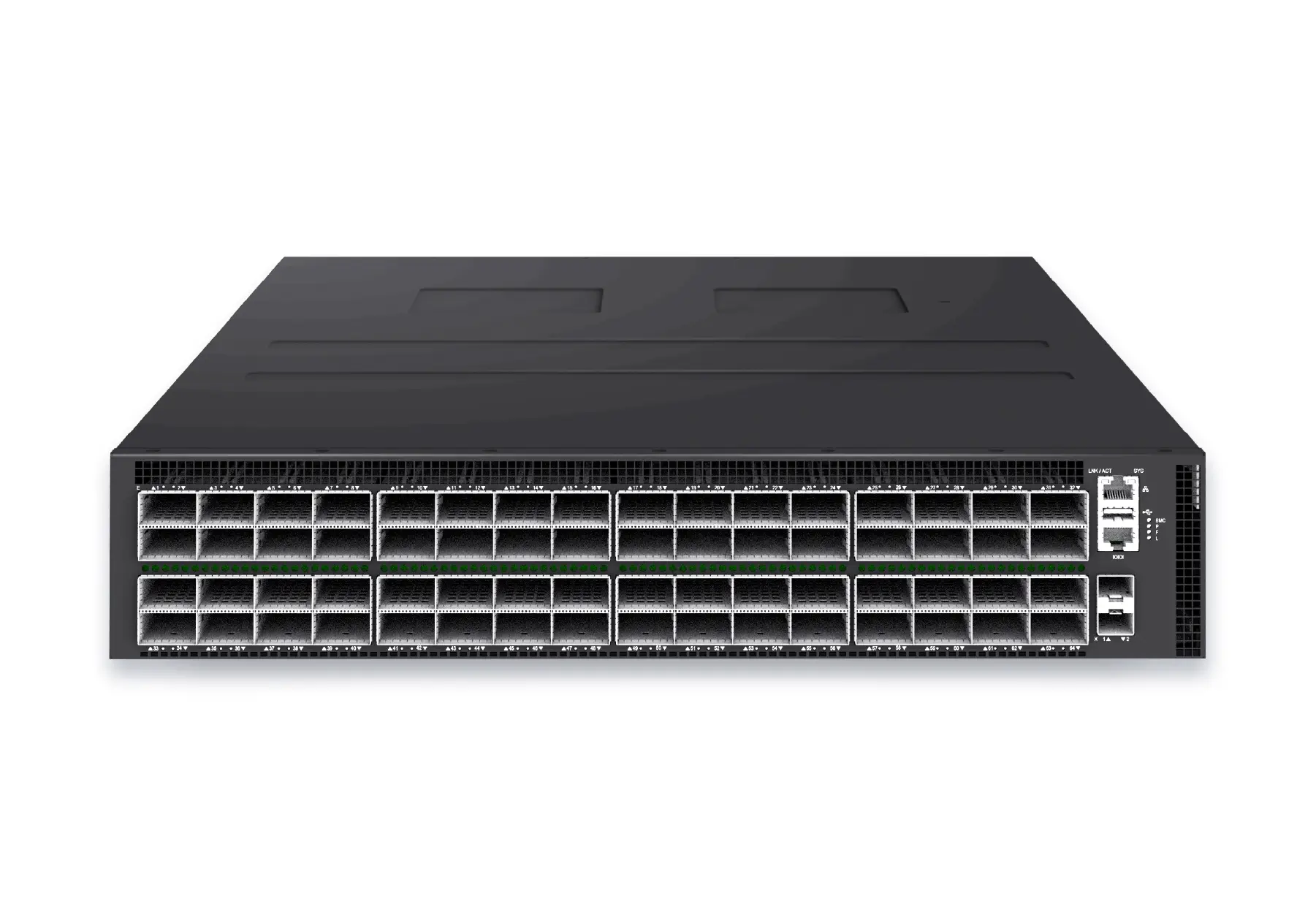 datacenter aiXS-DC-64X800-AI-G164-port 800G AI fabric switch for large-scale GPU clusters, HPC backbones, and ultra-high-throughput data center networks.View product
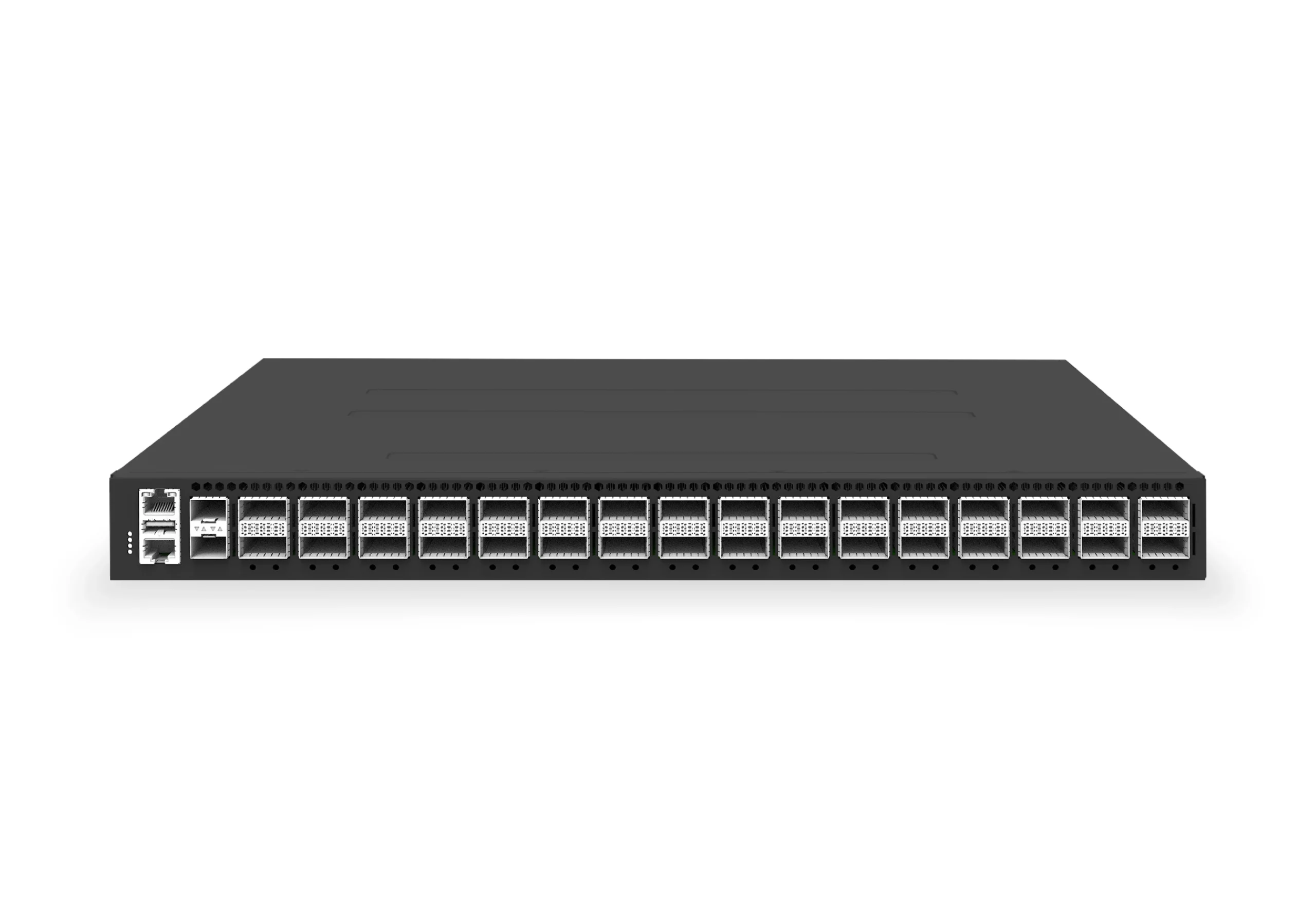 datacenter aiXS-DC-32X400-SP-G232-port 400G spine/core switch for high-capacity data center fabrics and AI-ready backbones.View product
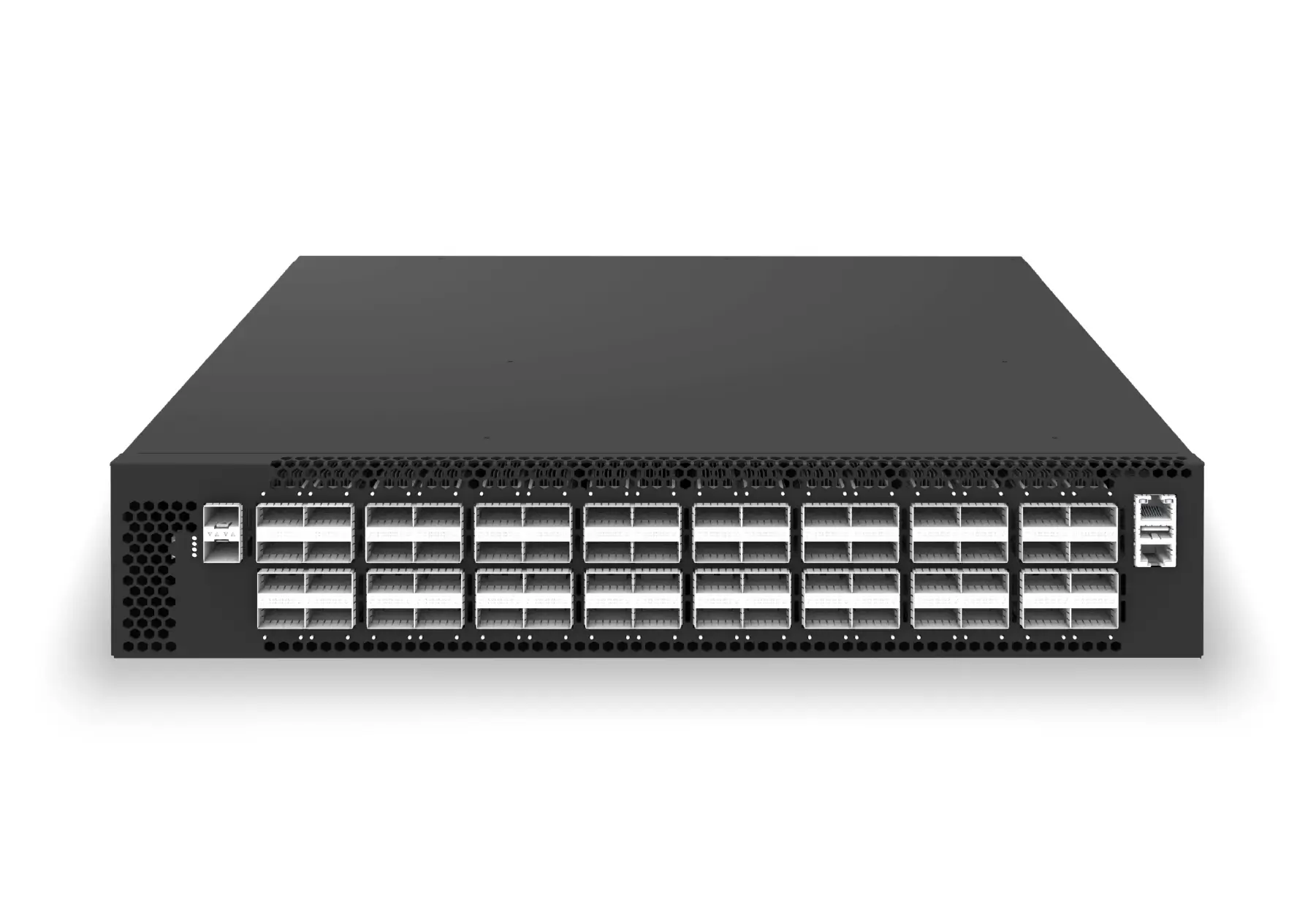 datacenter aiXS-DC-64X200-LS-G164-port 200G leaf/spine switch for high-bandwidth storage, compute, and scale-out data center fabrics.View product
Continue reading
Related articles
 Technical ArticleHow SONiC-Powered 400G and 800G Switches Change AI Data Center Fabric Design in AustraliaEngineering guide for 400G and 800G optics planning covering form factor, reach, telemetry, thermal limits, supply risk, and validation.Read article
 Technical ArticleRoCE v2 GPU Backend Fabrics at 400G and 800G: What Australian Data Center Operators Need to Know in 2026Engineering guide for AI fabric buyers covering RoCE, SONiC, telemetry, optics, support ownership, and deployment validation.Read article
 Technical ArticleWhat Australian Data Center Buyers Need to Know Before Choosing SONiC Switches for 400G and 800G UpgradesEngineering guide for 400G and 800G optics planning covering form factor, reach, telemetry, thermal limits, supply risk, and validation.Read article