In brief
Engineering guide to NVIDIA Ethernet switching choices for AI clusters, comparing Spectrum hardware, SONiC, Cumulus Linux, telemetry, support, and proof-of-concept validation.
Key takeaways
- Large-scale AI training and inference clusters demand deterministic, low-latency networking with high bandwidth and congestion management.
- NVIDIA's Spectrum-X Ethernet platform is explicitly designed for this use case.
- For Australian organisations building or expanding GPU clusters, this means Ethernet is no longer a compromise choice-it is a deliberate architectural option with specific AI-oriented enhancements.
The AI Networking Challenge: Why Ethernet Is Contending for AI Fabrics
Large-scale AI training and inference clusters demand deterministic, low-latency networking with high bandwidth and congestion management. Traditionally, InfiniBand has dominated this space. However, Ethernet has advanced significantly, with vendors now positioning it as a viable alternative for GPU-to-GPU communication in AI data centres.
NVIDIA’s Spectrum-X Ethernet platform is explicitly designed for this use case. According to NVIDIA, Spectrum-X improves AI networking performance by 1.6x compared to standard Ethernet approaches, while increasing predictability and power efficiency. The platform supports RDMA over Converged Ethernet (RoCE) with zero-touch acceleration, meaning RDMA traffic is prioritised and optimised through the platform rather than treated as ordinary best-effort Ethernet.
For Australian organisations building or expanding GPU clusters, this means Ethernet is no longer a compromise choice-it is a deliberate architectural option with specific AI-oriented enhancements.
NVIDIA Spectrum Switch Portfolio: From Cloud-Scale to AI Factory
NVIDIA offers a tiered Ethernet switch portfolio spanning multiple generations, each targeting different deployment scales:
Key technical specifications across the portfolio include up to 512K flow counters, 512K ACL entries, 512K IPv4 routes, and 100K+ NAT entries at the high end.
For Australian AI clusters, the relevant question is often whether the Spectrum-4 or Spectrum-6 tier aligns with the planned GPU density and interconnect requirements.
The NOS Decision: SONiC vs. Cumulus Linux on NVIDIA Hardware
A significant differentiator in NVIDIA’s Ethernet switching story is NOS flexibility. NVIDIA hardware supports multiple network operating systems:
SONiC (Software for Open Networking in the Cloud):
- Open-source, Linux-based NOS hosted under the Linux Foundation.
- Runs on switches from multiple vendors and ASICs, not just NVIDIA silicon.
- Uses a containerised, modular architecture where each network function runs in its own Docker container, providing fault isolation and simplified upgrades.
- Built on the Switch Abstraction Interface (SAI), which decouples hardware and software, accelerating hardware innovation independently of software evolution.
- Production-hardened in hyperscale cloud provider data centres.
- Licensed under Apache 2.0.
- Supports BGP and RDMA-both critical for AI cluster networking.
NVIDIA Cumulus Linux:
- NVIDIA’s commercial, Linux-based NOS.
- Described by NVIDIA as the world’s most robust open networking operating system.
- Comprehensive advanced networking features built for scale.
- Backed by NVIDIA enterprise support.
NVIDIA Pure SONiC:
- NVIDIA’s commercially supported distribution of SONiC.
- Bridges the gap between community SONiC and enterprise support requirements.
The choice between these options involves trade-offs between community flexibility, commercial support, vendor lock-in risk, and operational complexity. For Australian organisations, local support availability and team expertise with Linux-based network operations are relevant factors.
Containerised NOS Architecture: Why It Matters for AI Operations
SONiC’s containerised architecture represents a meaningful operational advantage for teams running AI clusters where uptime and rapid iteration matter. By decomposing monolithic switch software into independent Docker containers, each network function (e.g., BGP daemon, DHCP relay, telemetry agents) can be:
- Debugged and restarted independently without full switch reboots.
- Upgraded on a rolling basis with reduced blast radius.
- Scaled or modified to match specific deployment requirements.
This architecture also aligns with the operational practices of teams already running containerised AI workloads (e.g., Kubernetes-based training clusters), creating a consistent operational paradigm from compute to network layers.
SONiC’s modular design was one of the first solutions to break the monolithic switch software model, according to the SONiC Foundation. The project has seen growing industry support, with major network chip vendors contributing to the ecosystem.
For AI clusters specifically, the ability to independently manage and monitor RDMA and RoCE-related network functions without disrupting other switch operations is operationally valuable during training job scheduling and network troubleshooting.
Simulation and Observability: NVIDIA DSX Air and NetQ
Beyond switching hardware and NOS, NVIDIA offers complementary tools for AI data centre networking:
- NVIDIA DSX Air: Enables full-stack simulation of data centre infrastructure before hardware deployment-covering design, testing, validation, and ongoing operation of network provisioning, automation, and security policies. This is particularly relevant for Australian organisations planning new AI cluster deployments where physical hardware lead times may be extended.
- NVIDIA NetQ: Provides real-time, holistic visibility, troubleshooting, and lifecycle management for data centre networks.
Together, these tools address the full lifecycle from pre-deployment validation to production monitoring. For AI workloads, where network bottlenecks directly impact GPU utilisation and training throughput, this visibility layer is critical for operational efficiency.
Practical Considerations for Australian AI Infrastructure Teams
When evaluating NVIDIA Ethernet switching for AI clusters in Australia, several practical factors deserve attention:
-
Workload scale: Validate whether the planned cluster is inference-heavy, storage-heavy, or training-heavy. The traffic pattern changes the topology, buffer, and congestion-management requirements.
-
NOS expertise: Running SONiC requires Linux networking proficiency. If your team lacks this experience, NVIDIA Cumulus Linux or Pure SONiC with commercial support may reduce operational risk.
-
Multi-vendor strategy: SONiC’s SAI-based architecture offers protection against vendor lock-in, but inter-vendor ASIC feature parity for RDMA/RoCE features should be validated per deployment.
-
Telemetry and simulation: Require evidence for queue counters, congestion visibility, optic health, and failure replay before a GPU cluster is moved into production.
-
InfiniBand as an alternative: Organisations should evaluate whether their AI workload scale and latency requirements genuinely favour Ethernet over InfiniBand, which remains an important option for very large training clusters.
NOS Choice Acceptance Matrix for NVIDIA Ethernet Fabrics
| NOS option | Recommended fit | Evidence to request | Acceptance test |
|---|---|---|---|
| NVIDIA Cumulus Linux | Teams wanting NVIDIA commercial lifecycle and Linux-style operations | Supported switch list, NetQ integration, release notes, security update process | Push 3 fabric changes, roll back 1 failed change, and verify telemetry readback |
| NVIDIA Pure SONiC | Teams wanting SONiC model with NVIDIA support boundary | Pure SONiC image scope, SAI/ASIC caveats, optics matrix, support SLA | Validate BGP, RoCE, PFC, ECN, DCBX, image upgrade, and rollback on the target SKU |
| Community SONiC | Engineering-led labs or buyers with strong internal NOS ownership | Supported devices status, GitHub issue history, build process, known caveats | Run a 30-day lab with config backup, telemetry export, and failure recovery |
| Open SONiC on non-NVIDIA switch | Buyers prioritising multi-vendor leverage | Comparable port speed, buffer, telemetry, optics, and SAI evidence | Compare 400G/800G behaviour against the NVIDIA candidate under the same traffic profile |
| InfiniBand alternative | Very large training clusters with specialised operations | Quantum platform design, UFM/Subnet Manager runbook, support model | Compare real workload completion time, not only synthetic bandwidth |
Engineering Evidence Floor
For this topic, treat the article as buyer-ready only when the fabric claim is tied to measurable acceptance data. The baseline evidence package should include the selected switch SKU, SONiC image, ASIC/SAI version, NIC firmware, optics list, RoCE policy, telemetry counters, support owner, and rollback method. In a small pilot, capture at least 30 minutes of traffic at the intended 100G/400G/800G speed, one link failure, one switch reboot, one optics fault, and one support handoff. That evidence separates a credible AI fabric plan from a bandwidth brochure.
| Evidence area | What to validate | Acceptance gate | Rework trigger |
|---|---|---|---|
| Transport | PFC, ECN, DCBX, MTU, queue mapping, and CNP counters | 30 minutes load test at 100G/400G/800G | RoCE is asserted but not measured |
| Platform | Switch SKU, ASIC, SAI, SONiC image, and optics list | 2 switch roles pass upgrade and rollback | Generic compatibility is used as proof |
| Failure | Link loss, switch reboot, route convergence, and workload impact | 3 failure cases captured with timestamps | Steady-state throughput is the only evidence |
| Telemetry | Queue depth, drops, optics DOM, gNMI, and packet visibility | Operators explain a slowdown within 15 minutes | GPU and network teams use different data |
| Support | APAC escalation, RMA, spares, and patch lifecycle | 12 months operating plan approved | Ownership splits across vendors |
Engineering FAQ
Is NVIDIA Ethernet automatically equivalent to InfiniBand for AI training? No. Spectrum-X is a strong AI Ethernet platform, but the correct fabric still depends on GPU scale, workload communication pattern, NIC choice, software stack, congestion behaviour, and operational support.
When does SONiC make sense on NVIDIA hardware? SONiC makes sense when the buyer values open NOS control, Linux-style operations, automation, and reduced switch software lock-in, and when the selected Spectrum switch has a supported image and tested feature set.
What should be tested in a Spectrum Ethernet PoC? Test RoCE traffic classes, PFC and ECN behaviour, incast, ECMP distribution, optics and FEC stability, telemetry export, failure recovery, image upgrade, and rollback.
What is the commercial support question? Buyers need a named owner for hardware, NOS image, ASIC SDK, SAI behaviour, optics qualification, and security updates. Community SONiC alone is usually not enough for production AI clusters.
Related xSONiC Resources
Sources Reviewed
- Ethernet Network Adapters - ConnectX NICs | NVIDIA
- NVIDIA BlueField Data Processing Unit
- NVIDIA Spectrum-X Ethernet Platform
- NVIDIA Spectrum-4 SN5000 Switch Systems Introduction
- NVIDIA Spectrum-4 SN5000 Switch Systems Specifications
- IEEE 802.1Qbb Priority Flow Control
- IEEE 802.1Qaz Enhanced Transmission Selection and DCBX
- SONiC Project Documentation
- NVIDIA Ethernet Switching
- Open Compute Networking
- SONiC GitHub
- SONiC Foundation
Product fit
Products referenced for evaluation
These products are referenced for evaluation context in the article. Confirm workload, port, optics, software, interoperability, and support requirements against the exact deployment before procurement.
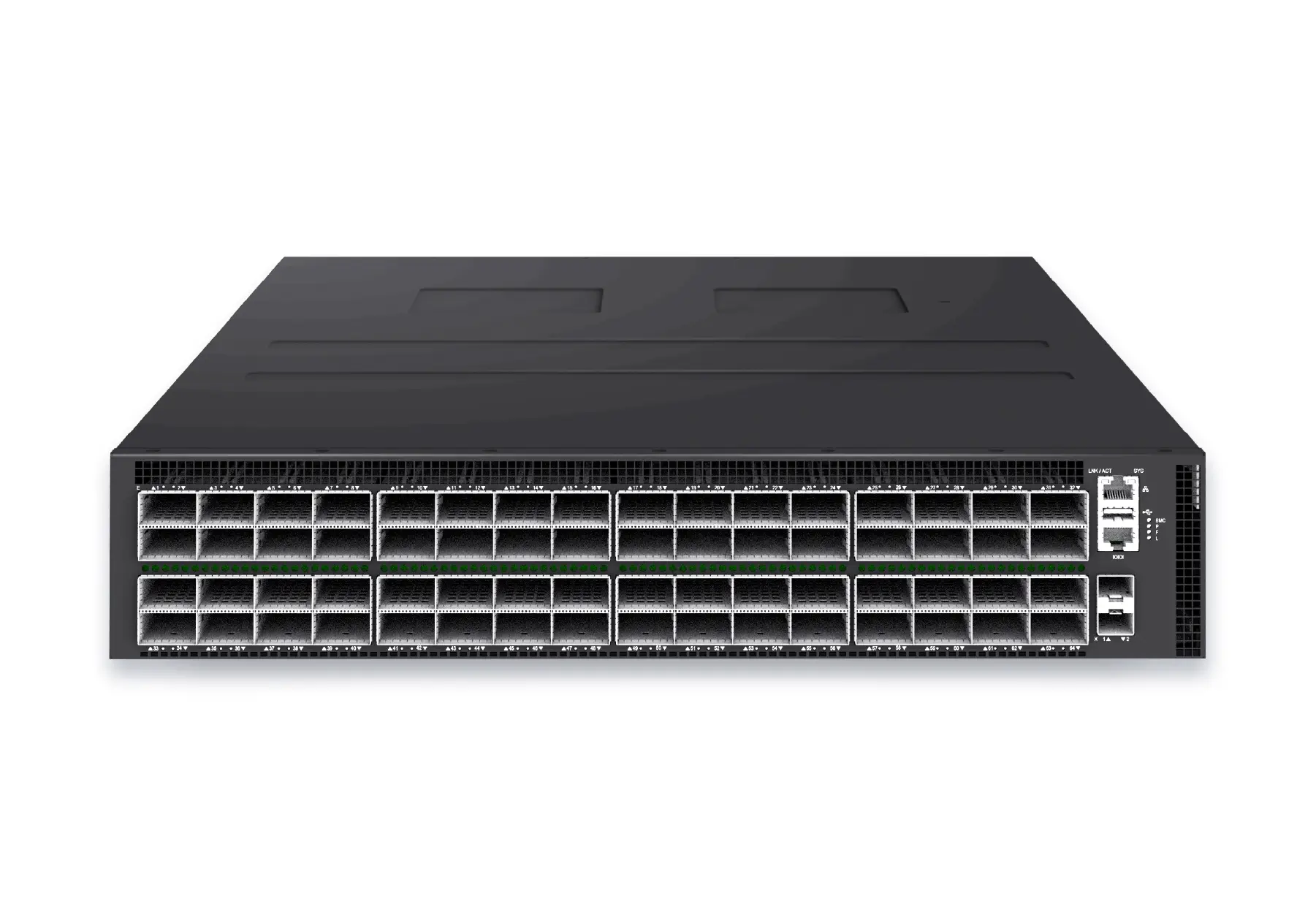 datacenter aiXS-DC-64X800-AI-G164-port 800G AI fabric switch for large-scale GPU clusters, HPC backbones, and ultra-high-throughput data center networks.View product
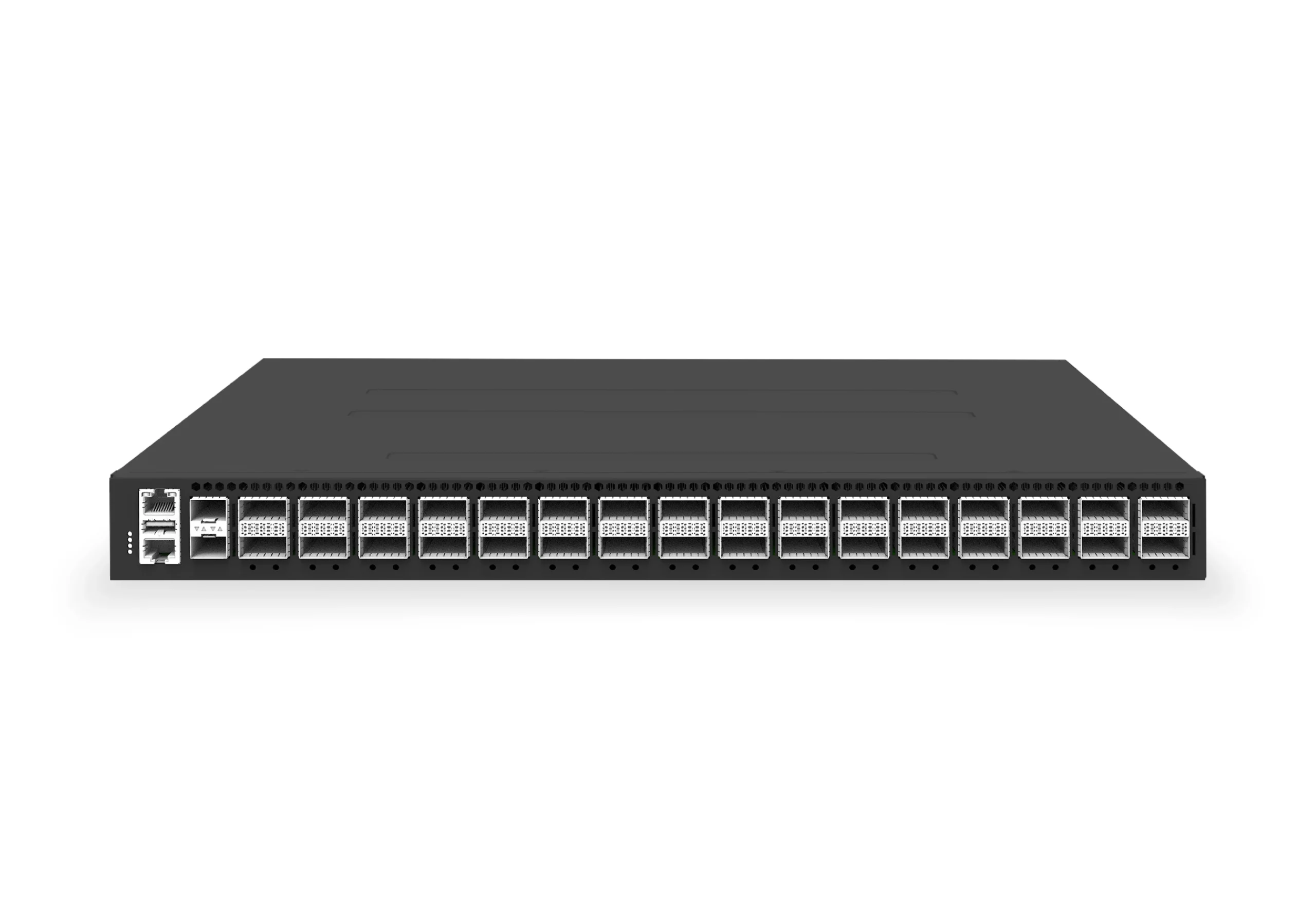 datacenter aiXS-DC-32X400-SP-G232-port 400G spine/core switch for high-capacity data center fabrics and AI-ready backbones.View product
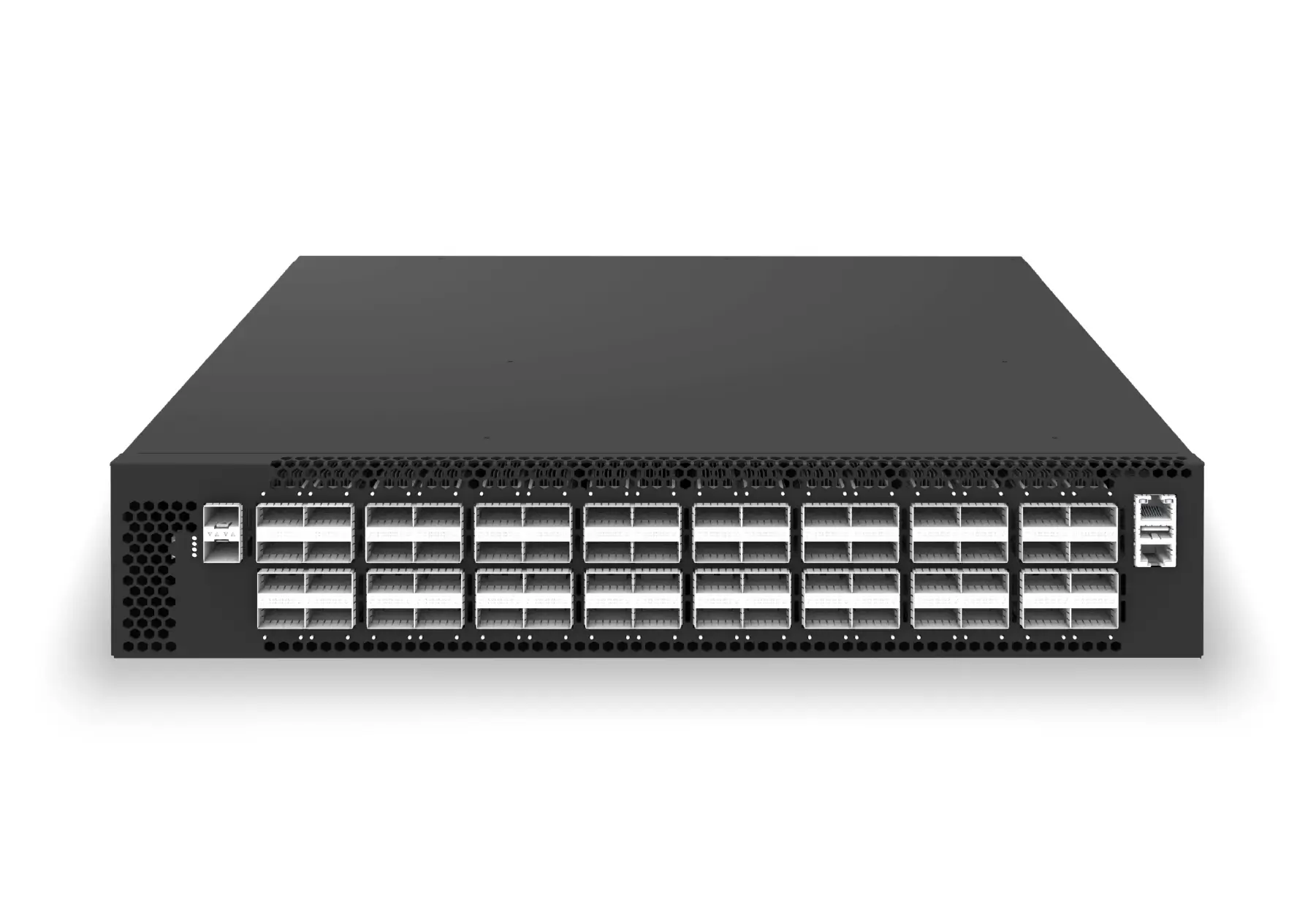 datacenter aiXS-DC-64X200-LS-G164-port 200G leaf/spine switch for high-bandwidth storage, compute, and scale-out data center fabrics.View product
Continue reading
Related articles
 Technical ArticleSONiC Switch Pre-Production Validation Checklist: A 12-Point Testing Playbook for Open Networking TeamsEngineering guidance on SONiC Switch Pre-Production Validation Checklist for Australian data centre buyers, covering form factor choice, link budgets, cabling.Read article
 Technical ArticleWhy Australian Data Centers Are Re-evaluating Open Networking for AI InfrastructureEngineering guide for AI fabric buyers covering RoCE, SONiC, telemetry, optics, support ownership, and deployment validation.Read article
 Technical ArticleSONiC Switch Validation Before Production: What Australian Network Teams Need on Their ChecklistEngineering guide for SONiC and open networking buyers covering platform fit, automation, support, telemetry, and validation evidence.Read article