In brief
Engineering guidance on NVIDIA Ethernet for AI clusters, covering Spectrum-X, SONiC, RoCE v2, 400G/800G fabrics, telemetry, support boundaries, and Australian PoC validation.
Key takeaways
- NVIDIA's networking division continues to invest heavily in Ethernet as an AI cluster fabric.
- Critically for the open networking discussion, NVIDIA also lists 'Pure SONiC' as a supported NOS on its Ethernet switches.
- NVIDIA's own portfolio includes both Ethernet and InfiniBand options for AI networking, which creates an interesting internal tension.
What NVIDIA Announced for Ethernet AI Networking
NVIDIA’s networking division continues to invest heavily in Ethernet as an AI cluster fabric. The company’s Spectrum-X platform, built around Spectrum-series ASICs, is positioned as an Ethernet-native solution for GPU-to-GPU communication in large-scale AI training and inference environments. The platform includes purpose-built switches, Ethernet SuperNICs (ConnectX-based), BlueField DPUs, and associated software such as Cumulus Linux, NetQ for observability, and DSX Air for digital twin simulation.
Critically for the open networking discussion, NVIDIA also lists ‘Pure SONiC’ as a supported NOS on its Ethernet switches. Pure SONiC is NVIDIA’s branded, supported distribution of the community SONiC project, which is a Linux-based, containerised network operating system originally developed by Microsoft and now governed by the SONiC Foundation under the Linux Foundation.
The Ethernet vs InfiniBand Question for AI Clusters
NVIDIA’s own portfolio includes both Ethernet and InfiniBand options for AI networking, which creates an interesting internal tension. The Quantum-X800 InfiniBand platform is still pitched for ‘giant AI clusters’ with the highest bandwidth density and lowest latency. But Ethernet, via Spectrum-X, is increasingly being positioned as the pragmatic, standards-based choice for organisations that cannot or do not want to build InfiniBand-specific expertise.
This matters in the Australian market, where many enterprises and research institutions operate mixed-vendor environments and value operational simplicity. InfiniBand fabrics typically require specialised skills and tighter hardware-software coupling. Ethernet fabrics, by contrast, benefit from a much larger talent pool, broader tooling support, and the ability to run the same fabric for AI workloads and general data centre traffic.
The SONiC angle is important here. SONiC is built on the Switch Abstraction Interface (SAI), which decouples the network operating system from the underlying switch ASIC. This means organisations can evaluate SONiC on switches powered by Broadcom, Marvell, NVIDIA Spectrum, or other supported merchant silicon rather than tying the operating model to one ASIC family. For Australian buyers evaluating AI fabric options, this decoupling is a significant architectural advantage: it preserves the ability to change hardware vendors without rewriting the entire network automation stack.
What SONiC Brings to the AI Networking Table
SONiC (Software for Open Networking in the Cloud) is not a niche project. According to the SONiC Foundation, it has been production-hardened in the data centres of some of the largest cloud service providers globally. The platform offers a full suite of network functionality including BGP, RDMA, and container-based modular architecture where each network function runs in its own Docker container. This design provides better fault isolation, easier troubleshooting, and simplified upgrades.
For AI cluster networking specifically, the relevant SONiC capabilities include:
- RDMA over Converged Ethernet (RoCE v2) for GPU-to-GPU low-latency data transfer
- Data Center Bridging Capability Exchange Protocol (DCBX) for lossless Ethernet configuration
- In-band network telemetry (INT) for real-time fabric visibility
- BGP and EVPN-VXLAN for scalable overlay networking
- Multi-vendor hardware support via SAI abstraction
The Lock-In Question: NVIDIA Stack vs Open Networking
NVIDIA’s preferred AI networking architecture is deliberately vertically integrated. Spectrum switches connect to ConnectX NICs (or Ethernet SuperNICs), communicate through BlueField DPUs, are managed by Cumulus Linux or Pure SONiC, observed by NetQ, and simulated by DSX Air. Each component is designed to work optimally with the others.
For buyers who choose the open networking path, the trade-off is different. An xSONiC Enterprise SONiC-based data centre switch combined with standard 400GbE or 800GbE optical transceivers and compatible NICs from multiple vendors delivers RoCE v2, lossless fabric capabilities, and deep telemetry without locking the entire network stack to one silicon vendor. The performance ceiling may be comparable, but the operational model prioritises vendor independence over tight integration.
The right choice depends on the buyer’s risk appetite, existing skill sets, and whether they view the network as a strategic asset or a commodity layer. NVIDIA’s integrated stack reduces integration risk for organisations that want a single throat to choke. Open SONiC-based fabrics reduce long-term switching costs and preserve competitive tension among hardware suppliers.
What This Means for Australian AI Infrastructure Buyers
Australia’s data centre market is growing rapidly, driven by AI workload demand from enterprise, government, and research sectors. The networking fabric decision for GPU clusters is becoming as important as the GPU selection itself. A poorly designed fabric can starve GPUs of data, leaving expensive compute idle.
For Australian organisations evaluating AI cluster networking, this analysis suggests several actions:
First, do not default to the vendor’s integrated stack without evaluating open alternatives. NVIDIA’s Ethernet push validates that Ethernet is viable for AI fabrics, but it does not mean the only viable Ethernet option is NVIDIA hardware with NVIDIA software.
Second, evaluate SONiC as a fabric operating system for AI networking. Its multi-vendor hardware support, production-hardened RDMA stack, and active community make it a credible alternative to vendor-locked NOS options.
Third, plan optics and cabling infrastructure separately from switch vendor selection. Whether you choose 400GbE or 800GbE, the optical transceiver and cabling plan should be vendor-agnostic wherever possible. This is one area where open networking consistently outperforms proprietary stacks on total cost of ownership.
Finally, run a proof-of-concept before committing at scale. NVIDIA offers DSX Air for digital twin simulation of its stack. For SONiC-based alternatives, test actual RoCE v2 performance, DCBX configuration, and telemetry visibility on candidate switch hardware before production deployment.
NVIDIA Ethernet vs Open SONiC Acceptance Matrix
| Decision area | NVIDIA integrated stack evidence | Open SONiC evidence | Acceptance test |
|---|---|---|---|
| AI fabric performance | Spectrum-X workload result, NIC/switch profile, supported software release | RoCE v2 test on selected SONiC switch/NIC/optics combination | Compare job completion time, tail latency, ECN marks, and recovery under congestion |
| Capacity planning | 400G or 800G port plan, spine-leaf oversubscription, optics type | Same topology modeled across at least 2 switch suppliers where practical | Validate a 32-GPU or 64-GPU pilot before scaling design assumptions |
| Lossless Ethernet | PFC, ECN, DCBX, CNP/Fast CNP behaviour and telemetry | PFC/ECN/DCBX configuration parity across the chosen SONiC image | Incast and link-failure test with queue and pause-frame counters |
| Operations | NetQ, DSX Air, Cumulus/Pure SONiC support boundary | gNMI/INT telemetry, rollback, image lifecycle, support owner | Operator can diagnose a GPU slowdown from fabric telemetry within the runbook |
| Lock-in exposure | Single vendor support and validated bundle | Multi-vendor optics, switch, and NOS strategy | Procurement can identify which layer can be changed without redesigning the fabric |
Engineering Evidence Floor
For this topic, treat the article as buyer-ready only when the fabric claim is tied to measurable acceptance data. The baseline evidence package should include the selected switch SKU, SONiC image, ASIC/SAI version, NIC firmware, optics list, RoCE policy, telemetry counters, support owner, and rollback method. In a small pilot, capture at least 30 minutes of traffic at the intended 100G/400G/800G speed, one link failure, one switch reboot, one optics fault, and one support handoff. That evidence separates a credible AI fabric plan from a bandwidth brochure.
| Evidence area | What to validate | Acceptance gate | Rework trigger |
|---|---|---|---|
| Transport | PFC, ECN, DCBX, MTU, queue mapping, and CNP counters | 30 minutes load test at 100G/400G/800G | RoCE is asserted but not measured |
| Platform | Switch SKU, ASIC, SAI, SONiC image, and optics list | 2 switch roles pass upgrade and rollback | Generic compatibility is used as proof |
| Failure | Link loss, switch reboot, route convergence, and workload impact | 3 failure cases captured with timestamps | Steady-state throughput is the only evidence |
| Telemetry | Queue depth, drops, optics DOM, gNMI, and packet visibility | Operators explain a slowdown within 15 minutes | GPU and network teams use different data |
| Support | APAC escalation, RMA, spares, and patch lifecycle | 12 months operating plan approved | Ownership splits across vendors |
Engineering FAQ
Does NVIDIA’s Ethernet push mean InfiniBand is no longer relevant? No. InfiniBand remains a strong option for tightly integrated, very large training environments. The point is that Ethernet has become a serious AI fabric candidate when teams need standard tooling, broader skills availability, and integration with existing data centre operations.
What should be tested in an Ethernet AI fabric proof-of-concept? Test RoCE v2 throughput, congestion control, PFC/ECN behaviour, packet loss, link failure recovery, telemetry visibility, optics compatibility, and job-level GPU utilisation. A synthetic bandwidth test is useful, but the real question is whether the fabric keeps GPUs fed during representative workloads.
Where does SONiC reduce lock-in, and where does it not? SONiC reduces lock-in at the NOS and automation layer by using an open operating model across supported hardware. It does not remove the need to validate ASIC SDK behaviour, optics qualification, NIC firmware, congestion tuning, and vendor support for the exact platform combination.
Where does xSONiC fit in an NVIDIA-heavy AI environment? xSONiC can be evaluated as an open Ethernet fabric option for buyers who want SONiC operations, multi-vendor optics strategy, and local integration flexibility. It can also coexist with NVIDIA NICs or DPUs, provided RoCE, telemetry, and support boundaries are tested before production.
Related xSONiC Resources
Sources Reviewed
- Ethernet Network Adapters - ConnectX NICs | NVIDIA
- NVIDIA BlueField Data Processing Unit
- NVIDIA Spectrum-X Ethernet Platform
- NVIDIA Spectrum-4 SN5000 Switch Systems Introduction
- NVIDIA Spectrum-4 SN5000 Switch Systems Specifications
- IEEE 802.1Qbb Priority Flow Control
- RFC 3168 Explicit Congestion Notification
- SONiC Project Documentation
- NVIDIA Ethernet Switching
- Open Compute Networking
- SONiC GitHub
- SONiC Foundation
Product fit
Products referenced for evaluation
These products are referenced for evaluation context in the article. Confirm workload, port, optics, software, interoperability, and support requirements against the exact deployment before procurement.
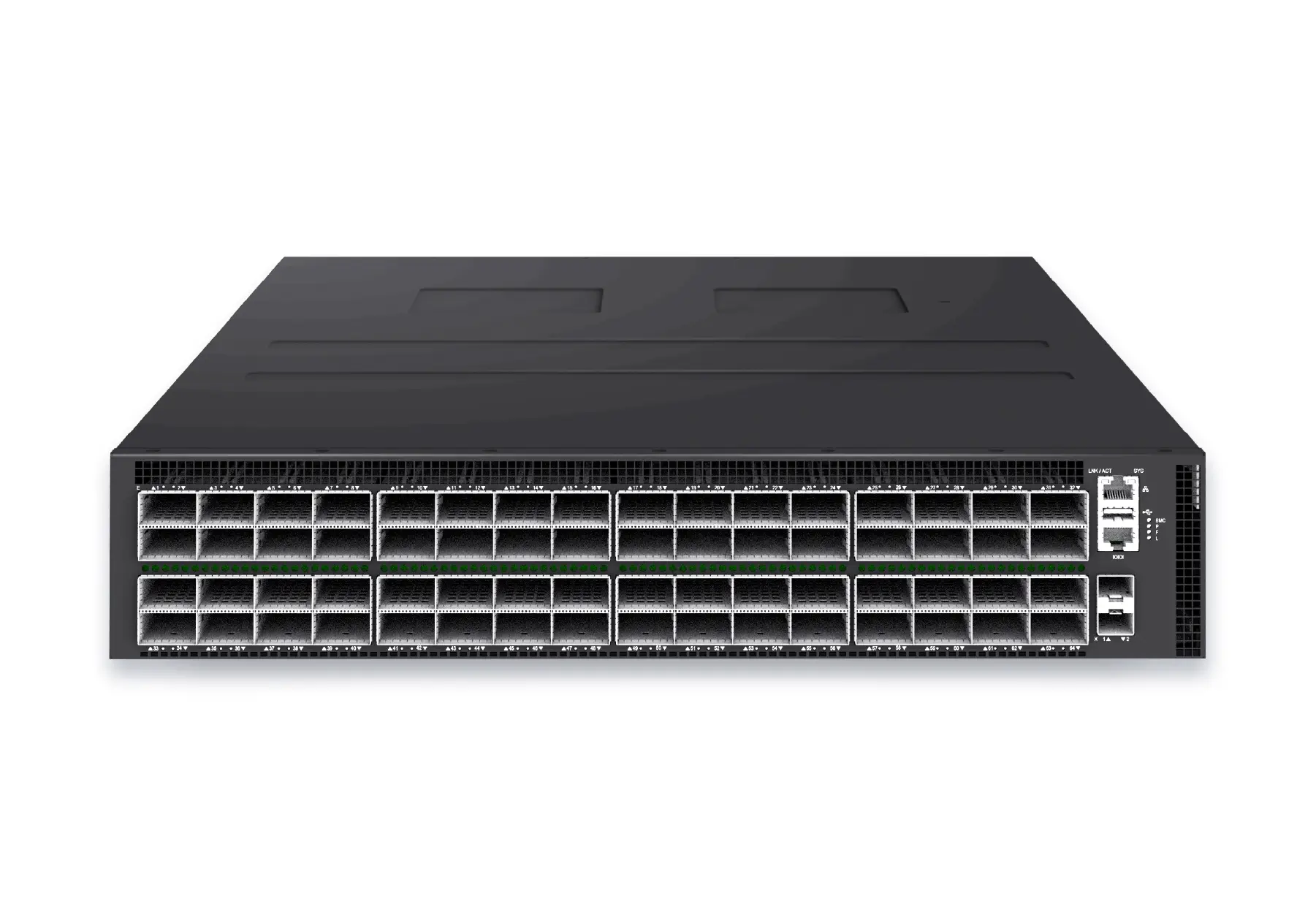 datacenter aiXS-DC-64X800-AI-G164-port 800G AI fabric switch for large-scale GPU clusters, HPC backbones, and ultra-high-throughput data center networks.View product
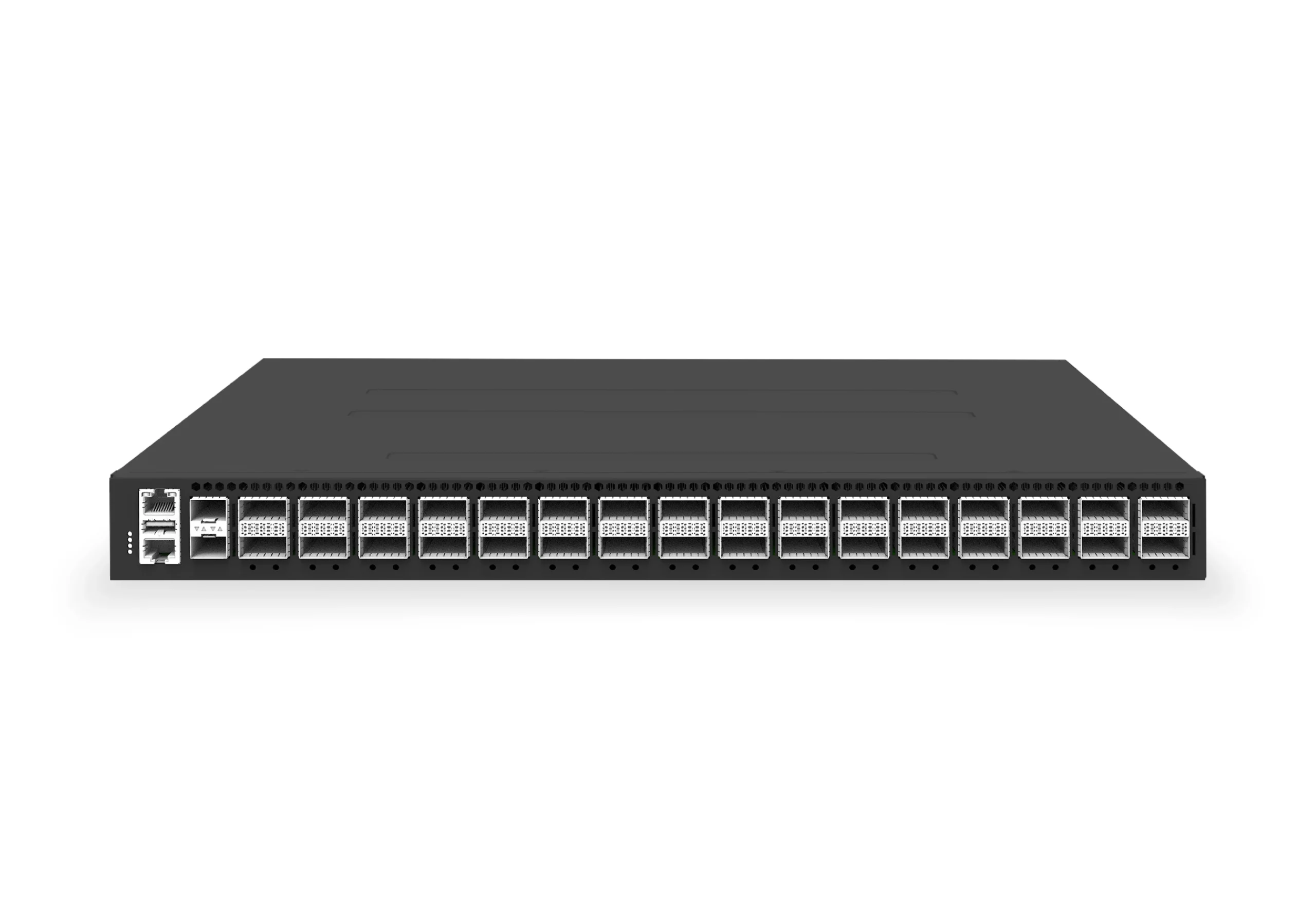 datacenter aiXS-DC-32X400-SP-G232-port 400G spine/core switch for high-capacity data center fabrics and AI-ready backbones.View product
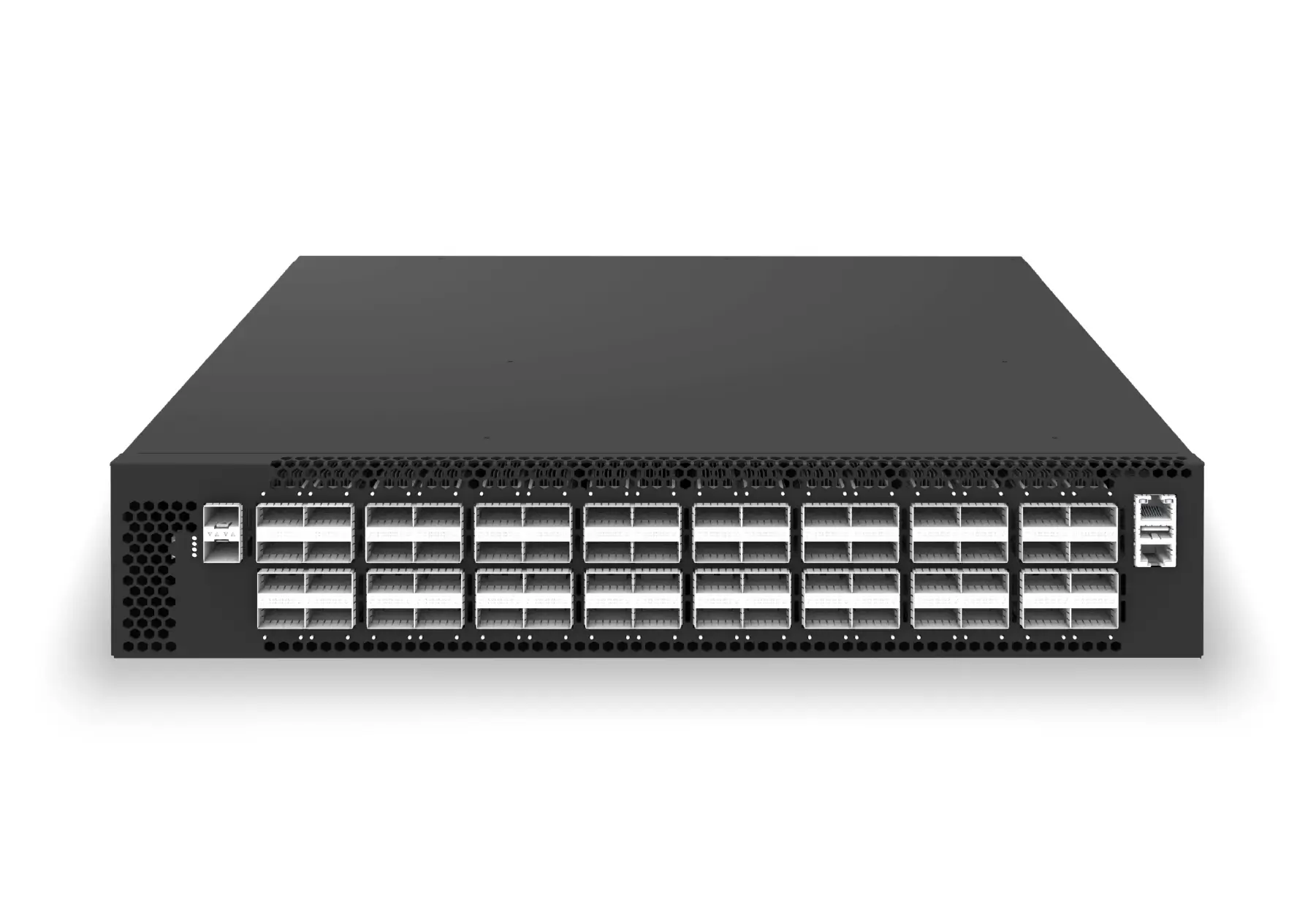 datacenter aiXS-DC-64X200-LS-G164-port 200G leaf/spine switch for high-bandwidth storage, compute, and scale-out data center fabrics.View product
Continue reading
Related articles
 Technical ArticleHow SONiC-Powered 400G and 800G Switches Change AI Data Center Fabric Design in AustraliaEngineering guide for 400G and 800G optics planning covering form factor, reach, telemetry, thermal limits, supply risk, and validation.Read article
 Technical ArticleRoCE v2 GPU Backend Fabrics at 400G and 800G: What Australian Data Center Operators Need to Know in 2026Engineering guide for AI fabric buyers covering RoCE, SONiC, telemetry, optics, support ownership, and deployment validation.Read article
 Technical ArticleWhat Australian Data Center Buyers Need to Know Before Choosing SONiC Switches for 400G and 800G UpgradesEngineering guide for 400G and 800G optics planning covering form factor, reach, telemetry, thermal limits, supply risk, and validation.Read article