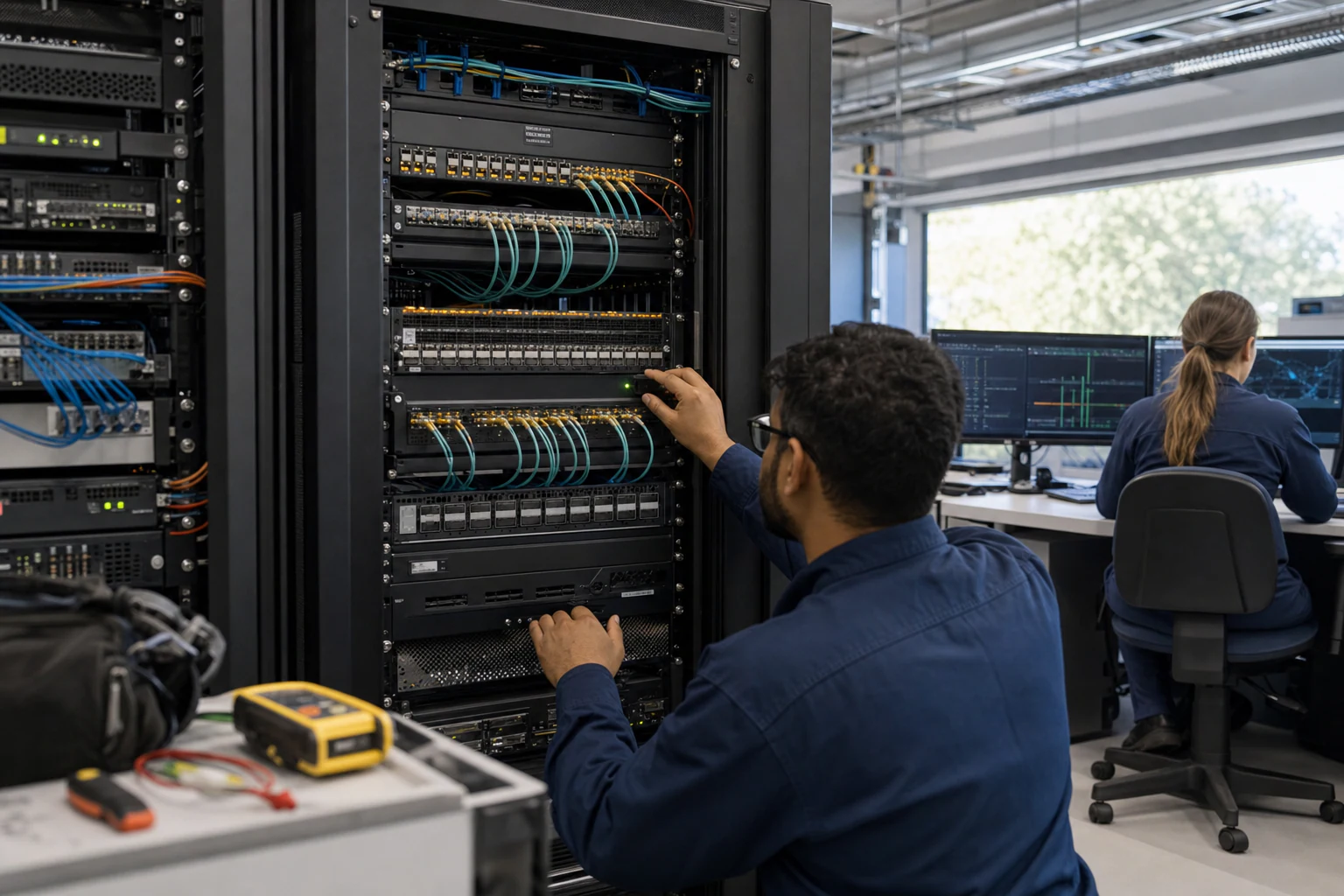
In brief
A practical engineering guide for Australian network architects and security teams deploying packet brokers for TAP/SPAN aggregation, filtering, tunnel handling, and tool delivery.
Key takeaways
- A packet broker deployment succeeds when the visibility plane has the same engineering discipline as the production network: known capacity, explicit policy, measurable loss, deterministic tool delivery, and documented change control.
- The design goal is not "send everything everywhere." The design goal is to send the minimum complete evidence set to each tool while preserving flow integrity and auditability.
- Do not start with port count. Start with evidence requirements:
Engineering Position
A packet broker deployment succeeds when the visibility plane has the same engineering discipline as the production network: known capacity, explicit policy, measurable loss, deterministic tool delivery, and documented change control. Australian teams should treat a network packet broker (NPB) as a traffic-conditioning device between TAP/SPAN sources and downstream IDS, NDR, SIEM, packet capture, performance monitoring, and forensic tools.
The design goal is not “send everything everywhere.” The design goal is to send the minimum complete evidence set to each tool while preserving flow integrity and auditability.
Design Inputs Before Hardware Selection
Do not start with port count. Start with evidence requirements:
- Observation points: internet edge, data centre leaf/spine, WAN aggregation, campus core, wireless controllers, OT/IoT segments, or AI fabric racks.
- Traffic rates: average, 95th percentile, peak burst, packet size distribution, jumbo frame use, and east-west versus north-south split.
- Tool capacity: licensed throughput, physical port speed, accepted encapsulations, supported packet truncation depth, and retention limits.
- Protocols and overlays: VLAN, QinQ, VXLAN, GRE, ERSPAN, MPLS, IPv6, RoCEv2, and tenant identifiers such as VNI.
- Compliance boundaries: whether payload should be stripped, masked, retained, or excluded for privacy and regulatory reasons.
- Operational model: CLI-only, API-driven, NETCONF/YANG, SNMP, syslog, role-based access control, and configuration backup.
NIST SP 800-137 frames continuous monitoring as ongoing awareness of security status, threats, vulnerabilities, and control effectiveness. A packet broker is not the whole monitoring program, but it determines whether the program receives credible packet evidence.
Core Packet Broker Functions
| Function | Engineering use | Acceptance test |
|---|---|---|
| Aggregation | Combine TAP/SPAN feeds from many links into fewer tool-facing feeds. | Replay multi-source traffic and prove no unexpected ingress or egress drops. |
| Filtering | Send only relevant traffic to each tool by VLAN, IP, port, protocol, TCP flags, direction, or tunnel metadata. | Compare configured filters with captured output pcaps and tool counters. |
| Replication | Copy the same flow to IDS, packet capture, NDR, and performance tools without extra SPAN sessions. | Confirm identical packet order and content across replicated outputs. |
| Load balancing | Distribute flows across multiple tool instances. | Verify both directions of a conversation reach the same tool member when required. |
| Deduplication | Remove repeated packets captured from overlapping observation points. | Inject known duplicate streams and measure retained versus removed packets. |
| Packet slicing | Forward headers only, often 128 or 256 bytes, to reduce storage and privacy exposure. | Confirm truncated length, checksum behaviour, and tool parsing results. |
| Tunnel processing | Decode or match inner headers for VXLAN, GRE, MPLS, and similar encapsulations. | Test against real overlay traffic, not only unencapsulated packets. |
Decision Criteria
| Decision Criteria | Key Questions | Weight Guidance |
|---|---|---|
| Port density and speed | How many 1G/10G/25G/40G/100G/400G ports do you need? What will change in the next refresh cycle? | Critical. Undersizing causes early replacement. |
| Aggregate throughput | Can the broker sustain peak ingress and egress while filtering, replicating, and slicing? | Critical. Validate with production-like traffic. |
| Filtering granularity | Does it match L2-L4 headers, IPv6 fields, VLANs, TCP flags, and tunnel metadata? | High. Tool usefulness depends on filter precision. |
| Encapsulation handling | Does it process VXLAN, GRE, ERSPAN, MPLS, and site-specific overlays? | Critical for data centres and service providers. |
| Deduplication | Can it remove duplicates across overlapping TAP/SPAN sources without hiding real retransmissions? | High for multi-observation designs. |
| Load balancing | Is hashing flow-stable and symmetric where tools require both directions? | High for clustered IDS/NDR/capture. |
| Management and automation | CLI, web GUI, SNMP, REST API, NETCONF/YANG, syslog, and configuration export? | Medium to high for operations maturity. |
| HA and failover | Redundant power, management, bypass behaviour, and documented upgrade process? | Critical for inline or high-value segments. |
| Privacy controls | Can payload be sliced or excluded before delivery to lower-trust tools? | High for regulated data. |
| Support model | Australian support path, RMA process, firmware cadence, and escalation process? | Critical for production networks. |
Australian Market Considerations
Australian organisations evaluating packet brokers should also consider:
- Data sovereignty and privacy: Packet payload capture can contain personal or regulated information. Use packet slicing, scoped filters, access controls, and retention policies deliberately.
- APRA CPS 234: Financial services organisations must test information security controls systematically and maintain incident response plans. Packet broker policy and capture evidence should support those control tests.
- ASD Essential Eight: Essential Eight is a baseline hardening model, not an NPB standard. Monitoring feeds are often needed to verify control outcomes and investigate events around those controls.
- Local support: Confirm spare availability, replacement lead time, and whether escalation reaches engineers who can interpret filter, ASIC, optics, and tool-delivery failures.
Deployment Architecture Patterns
Pattern 1: Inline TAP with centralised broker. Passive optical or copper TAPs are placed on key links, and copies are sent to a central packet broker. This is the preferred model when production-path safety and capture fidelity matter more than deployment speed.
Pattern 2: SPAN aggregation. Production switches mirror selected traffic to the packet broker. This is useful for pilots and campus environments, but it must be capacity-tested because mirror destinations can oversubscribe silently under load.
Pattern 3: Inline brokering with failover. The broker sits in the production path to steer traffic through inline security tools. This requires bypass design, failure-mode testing, and change windows because the broker becomes part of the forwarding path.
Pattern 4: Distributed brokers with central management. Large enterprises can deploy brokers per site or data centre and manage policy centrally. This is useful when WAN backhaul of raw packet feeds is impractical.
Overlay and AI Fabric Handling
Modern packet broker designs must understand encapsulated traffic. RFC 7348 defines VXLAN for overlay networks in virtualised data centres; RFC 2784 defines GRE; RFC 3031 defines MPLS; and RFC 7432 defines EVPN procedures. If the packet broker cannot match or strip the relevant headers in the customer’s actual design, downstream tools may only see outer tunnel endpoints instead of the workload flow that matters.
AI fabrics add another constraint: the production RoCEv2 or GPU backend path should not be slowed by visibility tooling. For AI and HPC fabrics, out-of-band capture through TAPs or switch mirroring into a broker is usually safer than inline inspection. Use filters for rack, VNI, VLAN, IP range, port, or test window so packet capture does not overwhelm the tool tier.
xSONiC Alignment
xSONiC packet broker platforms should be evaluated with the same evidence pack as the production switching layer: port map, optics plan, filter matrix, tool delivery matrix, automation model, failure modes, and support process. Where the same environment also uses xSONiC data center switches, AI fabric, INT telemetry, or NETCONF/YANG automation, the packet broker should be part of the visibility architecture rather than a disconnected appliance.
Deployment Acceptance Checklist
- Capture source-to-tool traffic matrix, including every TAP, SPAN source, broker ingress, broker egress, and tool port.
- Run line-rate and production-like replay tests for the target packet-size mix.
- Verify filter correctness with pcaps from each output port.
- Prove flow-stable load balancing across tool clusters.
- Confirm tunnel processing with real VXLAN, GRE, MPLS, or EVPN traffic from the environment.
- Test deduplication with known duplicate streams and retransmission scenarios.
- Validate counters for ingress drops, filter drops, egress congestion, and tool-port backpressure.
- Export configuration and logs into the existing change-management and SIEM process.
- Document privacy handling for full-payload capture, packet slicing, and retention.
Engineering FAQ
What should be measured before sizing a packet broker? Measure source link speed, 95th-percentile utilisation, burst peaks, replication factor, filter complexity, tunnel handling needs, and tool-port capacity. Packet broker sizing fails when it is based on average traffic rather than copied and filtered traffic.
What proves that a visibility design is production ready? The design should prove aggregation, filtering, replication, load balancing, packet slicing or deduplication if required, and tool failover under realistic traffic. Security teams should also verify that drops are reported rather than hidden.
Where do Australian buyers most often under-scope visibility projects? The common gaps are east-west data centre traffic, encrypted or tunneled flows, AI cluster bursts, retention requirements, and tool oversubscription. A procurement brief should model those before asking vendors for a bill of materials.
Related xSONiC Resources
Sources Reviewed
- Ethernet Network Adapters - ConnectX NICs | NVIDIA
- NVIDIA BlueField Data Processing Unit
- NVIDIA Spectrum-X Ethernet Platform
- OpenConfig gNMI Specification
- OpenConfig
- RFC 7950 - The YANG 1.1 Data Modeling Language
- RFC 6241 - Network Configuration Protocol (NETCONF)
- ACSC Essential Eight
- OAIC Notifiable Data Breaches
- APRA CPS 234 Information Security
- NETSCOUT Network Packet Definition
- Cloudflare Network Packet Definition
- SONiC Project Documentation
- Broadcom Ethernet Switching
- Marvell Switching
- NVIDIA Ethernet Switching
- Open Compute Networking
- SONiC GitHub
- SONiC Foundation
Product fit
Products referenced for evaluation
These products are referenced for evaluation context in the article. Confirm workload, port, optics, software, interoperability, and support requirements against the exact deployment before procurement.
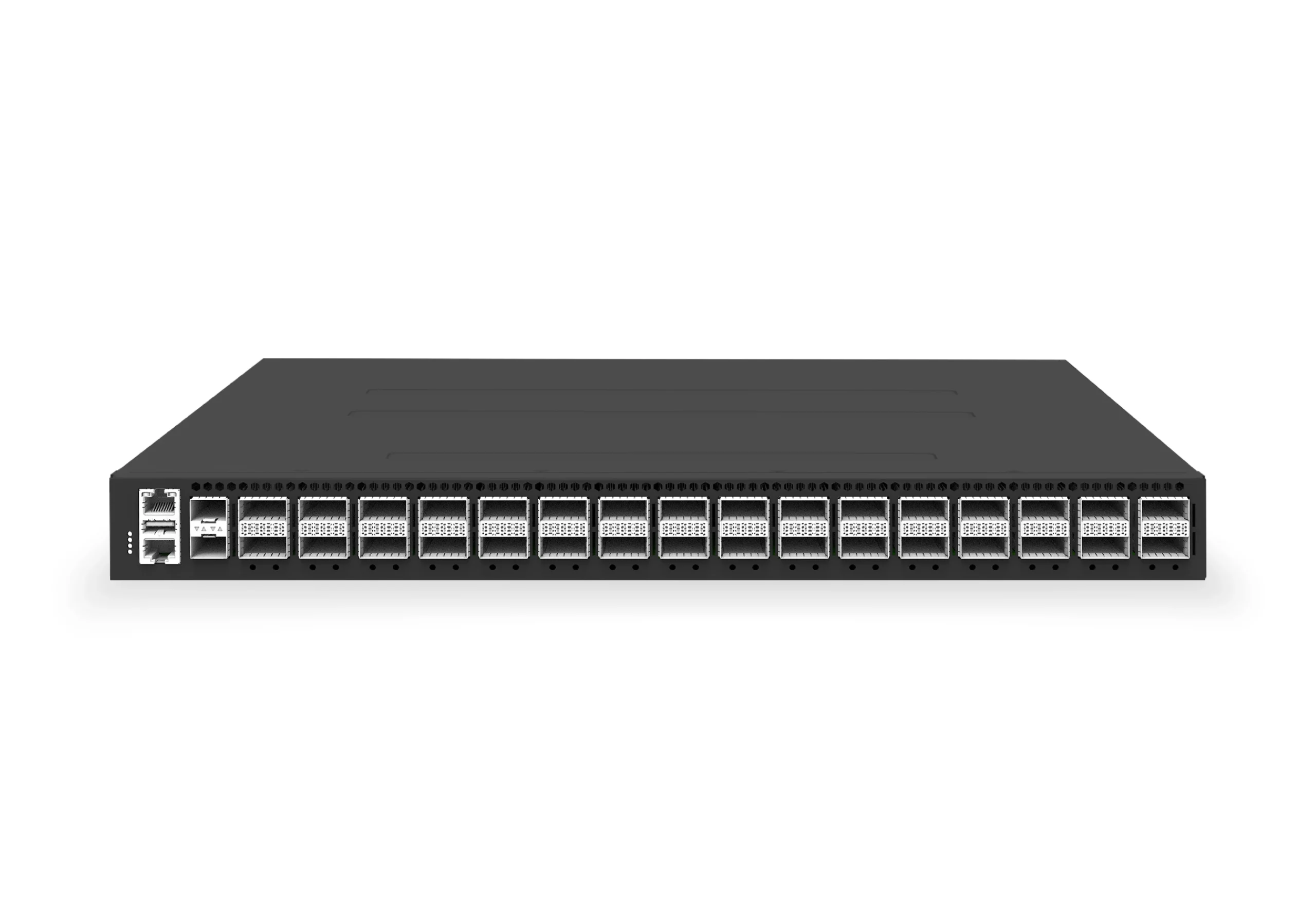 datacenter aiXS-DC-32X400-SP-G232-port 400G spine/core switch for high-capacity data center fabrics and AI-ready backbones.View product
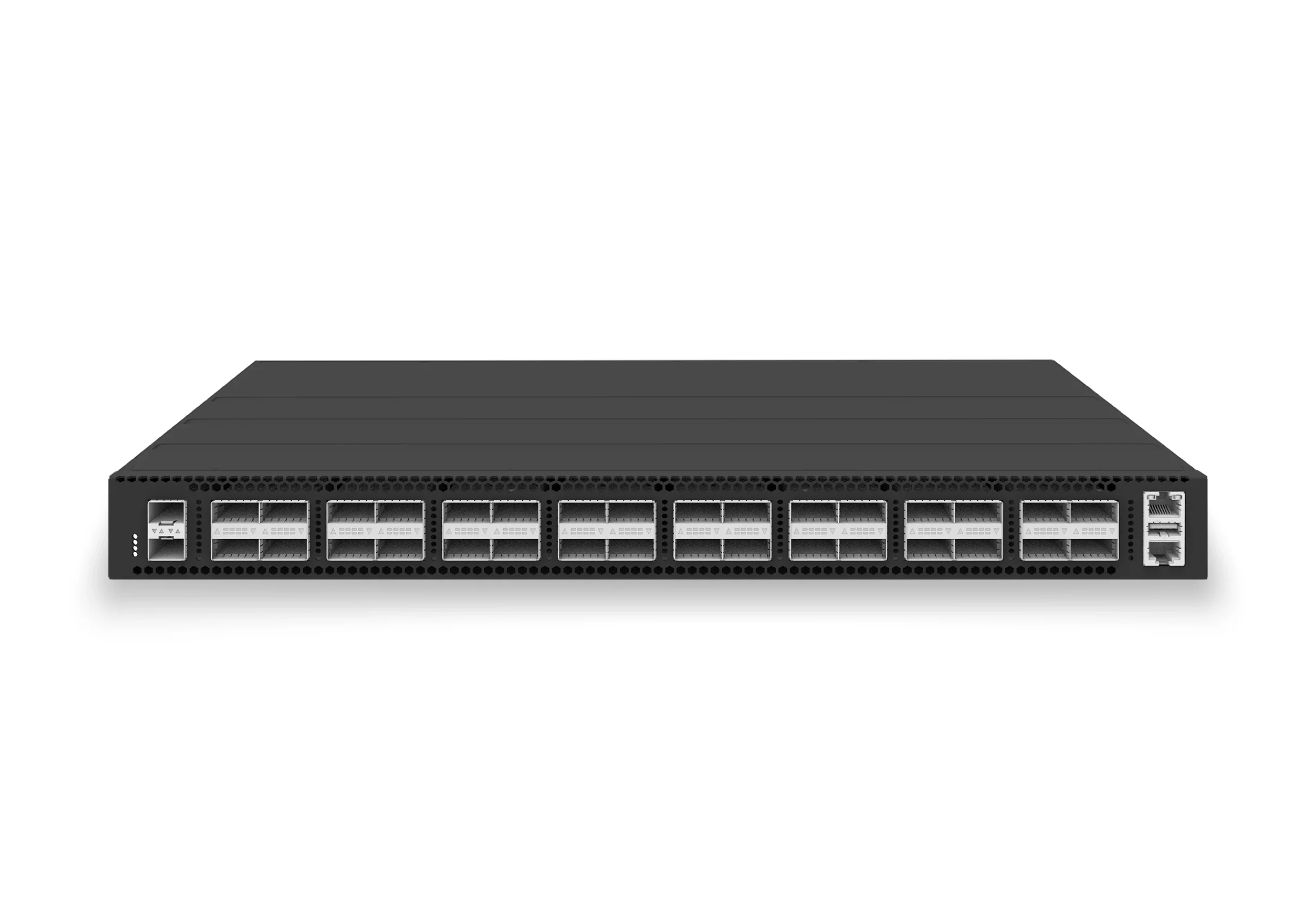 datacenter aiXS-DC-32X100-LS-G232-port 100G leaf/spine switch for VXLAN fabrics, RoCE-ready workloads, and tenant-scale routing.View product
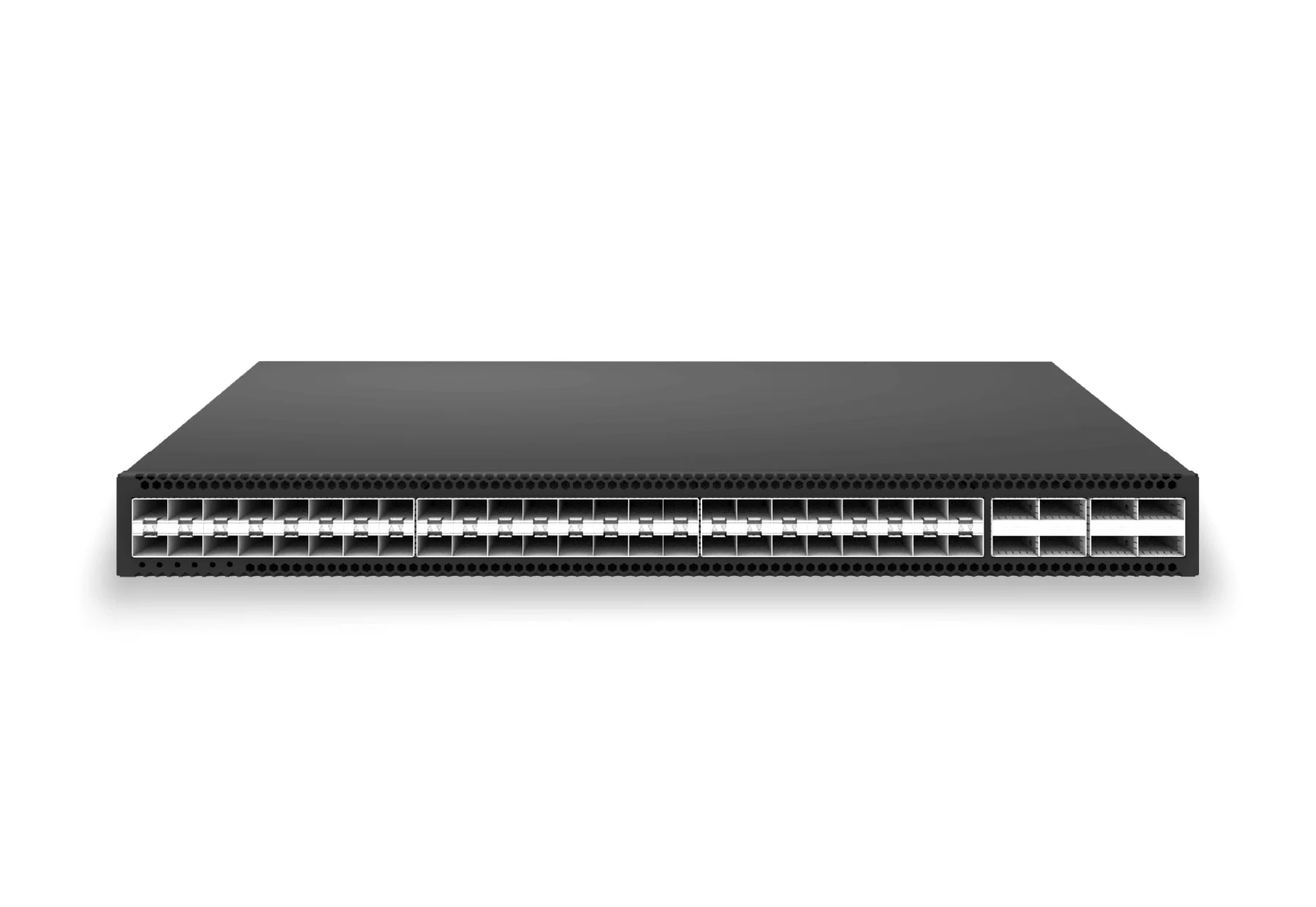 access aggregateXS-AA-48X25-8X100-AGG48x 25G SFP28 aggregation/core switch with 8x 100G QSFP28 for enterprise access and aggregation networks.View product
Continue reading
Related articles
 Technical ArticleClosing the Packet Broker Visibility Gap: A Practical Analysis for Security and Observability TeamsA practical engineering analysis of where packet visibility gaps form, how packet brokers reduce them, and what Australian security teams should validate before deployment.Read article
 Technical ArticleHow Packet Brokers Filter, Replicate and Load-Balance TrafficEngineering guide for packet broker and visibility planning covering traffic capacity, filtering, tool delivery, resilience, and audit evidence.Read article
 Technical ArticlePacket Broker versus Network TAP Aggregation: Failure-Mode Risks Australian Network Architects Cannot IgnoreEngineering guide for packet broker and visibility planning covering traffic capacity, filtering, tool delivery, resilience, and audit evidence.Read article