In brief
Engineering guide for packet broker and visibility planning covering traffic capacity, filtering, tool delivery, resilience, and audit evidence.
Key takeaways
- Every byte that crosses an enterprise network travels inside packets. A packet carries control information in headers and user data in the payload, allowing switches, routers, firewalls, and monitoring systems to process traffic independently as it moves across the network.
- In modern enterprise and data center environments, the volume of these packets is staggering.
- A packet broker is a hardware or software appliance that directs traffic from TAPs, SPAN ports, or network links and manipulates that traffic so monitoring and security tools receive the flows they can actually process.
Why Network Visibility Starts with the Packet
Every byte that crosses an enterprise network travels inside packets. A packet carries control information in headers and user data in the payload, allowing switches, routers, firewalls, and monitoring systems to process traffic independently as it moves across the network.
In modern enterprise and data center environments, the volume of these packets is staggering. Australian organizations running hybrid cloud architectures, campus networks, and AI inference clusters face a common challenge: how to capture, inspect, and act on network traffic without degrading performance. This is the problem that network packet brokers solve.
What Is a Network Packet Broker?
A packet broker is a hardware or software appliance that directs traffic from TAPs, SPAN ports, or network links and manipulates that traffic so monitoring and security tools receive the flows they can actually process. Packet brokers gather traffic from numerous links, then filter and redirect individual packets to the right monitoring, security, or observability tool.
Without a packet broker, organizations typically connect monitoring tools directly to switch SPAN (mirror) ports. This approach has hard limits: SPAN ports drop traffic under load, offer minimal filtering, and force teams to buy duplicate tool licenses for every physical link. A packet broker sits between the network fabric and the tool layer, creating a dedicated visibility infrastructure.
For Australian enterprises evaluating open networking options, xSONiC packet broker products provide traffic aggregation, filtering, replication, load balancing, tunnel processing, packet slicing, and deduplication in a single visibility platform. This lets security and operations teams get the right traffic to the right tools at the right time.
Filtering: Sending Only the Traffic That Matters
Network filtering is the first and most impactful capability a packet broker provides. Filtering lets operations teams define rules that select specific traffic flows based on criteria such as source or destination IP address, VLAN tag, protocol type, port number, or even deep packet attributes.
Why filtering matters:
- Tool efficiency. Security tools such as intrusion detection systems (IDS), data loss prevention (DLP), and forensics appliances process every packet they receive. Sending them irrelevant traffic wastes CPU cycles and storage. Filtering ensures each tool receives only the traffic it needs to analyze.
- Cost control. Many monitoring and security tools are licensed by throughput (Gbps). Reducing the volume of traffic delivered to each tool can directly lower licensing costs.
- Noise reduction. Network operations center (NOC) and security operations center (SOC) teams face alert fatigue when tools process excessive benign traffic. Filtering reduces false positives and helps analysts focus on real issues.
In a campus or branch deployment, filtering might mean sending only HTTP/HTTPS traffic to a web application firewall while directing VoIP traffic to a call quality monitoring appliance. In a data center, filtering might isolate east-west traffic between application tiers for microsegmentation analysis.
Replication: Delivering One Flow to Many Tools
Replication copies selected traffic streams and sends them to multiple monitoring or security tools simultaneously. This is essential because different tools need to see the same traffic for different purposes.
Consider a typical Australian enterprise data center where the security team needs a copy of all internet-bound traffic for threat detection, the compliance team needs the same traffic for regulatory logging, and the network team needs it for performance baselining. Without a packet broker, each team would demand its own SPAN port or tap, multiplying hardware and cabling costs.
With replication at the packet broker layer:
- A single copy of traffic is captured from the network link.
- The packet broker replicates that traffic and delivers it to multiple tool destinations.
- Each tool receives a complete, unmodified copy of the traffic it needs.
Replication also supports redundancy. If a primary monitoring tool fails, replicated traffic can be redirected to a standby appliance without reconfiguring network taps or switches.
Load Balancing: Scaling Monitoring Infrastructure
As network speeds increase from 10G to 25G, 40G, 100G, and beyond, individual monitoring tools may not be able to process all traffic at line rate. Load balancing solves this problem by distributing traffic across a pool of tools.
Packet broker load balancing typically works by hashing on packet attributes such as the 5-tuple (source IP, destination IP, source port, destination port, protocol). This ensures that all packets belonging to the same flow are delivered to the same tool, preserving session state for stateful inspection.
Benefits of packet broker load balancing:
- Horizontal scaling. Add more tool instances as traffic grows, rather than replacing existing tools with faster (and more expensive) models.
- Higher throughput. A pool of four 10G tools can collectively process 40G of traffic, enabling organizations to match monitoring capacity to network speed.
- Resilience. If one tool in the pool goes offline, the packet broker can redistribute its flows across remaining tools.
For Australian data center operators upgrading to 100G or 400G spine-leaf fabrics, load balancing at the packet broker layer is a practical way to protect existing monitoring tool investments while scaling network capacity. This is especially relevant for organizations running AI/ML training clusters where burst traffic patterns can overwhelm single-tool deployments.
Observability: Turning Packets into Actionable Intelligence
Observability goes beyond simple monitoring. It is the ability to understand the internal state of a system from its external outputs. In networking, observability means extracting meaningful metrics, logs, and traces from packet flows to answer questions that dashboards alone cannot.
Packet brokers contribute to observability in several ways:
- Traffic aggregation. By combining traffic from multiple links into a unified view, packet brokers eliminate blind spots that occur when monitoring individual segments in isolation.
- Packet slicing. Rather than forwarding entire packets (which may include large payloads), a packet broker can truncate packets to header-only or header-plus-N-bytes. This reduces bandwidth to monitoring tools while preserving the metadata needed for flow analysis.
- Deduplication. When the same packet is captured from multiple network paths (common in redundant topologies), deduplication removes copies before they reach tools, preventing double-counting and inflated metrics.
- Tunnel processing. Many enterprise networks encapsulate traffic in GRE, VXLAN, or IPsec tunnels. Packet brokers can strip outer tunnel headers and deliver the inner payload to tools that do not support decapsulation natively.
For organizations investing in INT (In-band Network Telemetry) and IPTPath telemetry, the packet broker serves as a critical collection and forwarding point. INT-enabled switches embed metadata such as hop latency, queue depth, and egress timestamps directly into packet headers. A packet broker that understands INT metadata can extract, aggregate, and forward this telemetry to analytics platforms without requiring changes to the production switching fabric.
Security Tool Delivery: The Convergence of Filtering, Replication, and Load Balancing
In practice, the capabilities described above work together to form a security tool delivery architecture. A packet broker applies filtering rules to select relevant traffic, replicates that traffic to multiple security tools, and load balances across tool pools to match throughput requirements.
NETSCOUT notes that improving network traffic delivery increases the effectiveness of monitoring and security tools. That is the core value proposition: the packet broker does not replace security tools, but it ensures those tools receive complete, relevant, and manageable traffic streams.
Packet-level security threats include packet sniffing, packet injection, DDoS attacks, IP spoofing, and man-in-the-middle attacks. A well-deployed packet broker architecture supports detection and response for these threats by ensuring that IDS, SIEM, and forensics tools receive the traffic they need to identify malicious activity.
Deployment Considerations for Australian Enterprises
When evaluating packet broker solutions, Australian buyers should consider:
| Consideration | What to evaluate |
|---|---|
| Port density and speed | Does the broker support 10G/25G/40G/100G/400G interfaces matching your current and planned fabric? |
| Filtering granularity | Can you filter on L2-L4 headers, VLAN tags, MPLS labels, and VXLAN VNI? |
| Tunnel support | Does the broker decapsulate GRE, VXLAN, IPsec, and other tunneling protocols your network uses? |
| Management | Is there a CLI, web GUI, REST API, or NETCONF/YANG interface for automation? |
| Redundancy | Does the solution support high-availability pairs, failover, and hitless firmware upgrades? |
| Telemetry integration | Can the broker extract and forward INT or IPTPath metadata to your analytics stack? |
Connecting Packet Brokers to Your Broader Network Strategy
A packet broker is not an isolated purchase. It sits at the intersection of your physical network fabric, your monitoring and security tool stack, and your operational workflows. For organizations building AI data center fabrics with 100G/400G spine-leaf topologies, the packet broker is the visibility layer that makes those fabrics observable.
For campus networks undergoing refresh with PoE edge switches and wireless access point upgrades, a packet broker at the aggregation layer ensures that east-west campus traffic is visible to security tools without requiring inline insertion.
xSONiC packet broker products are designed to integrate with open networking fabrics built on Enterprise SONiC switching, providing a visibility infrastructure that matches the programmability and automation posture of the underlying network.
To discuss how packet broker capabilities map to your specific Australian network environment, contact the xSONiC team.
Engineering FAQ
What should be measured before sizing a packet broker? Measure source link speed, 95th-percentile utilisation, burst peaks, replication factor, filter complexity, tunnel handling needs, and tool-port capacity. Packet broker sizing fails when it is based on average traffic rather than copied and filtered traffic.
What proves that a visibility design is production ready? The design should prove aggregation, filtering, replication, load balancing, packet slicing or deduplication if required, and tool failover under realistic traffic. Security teams should also verify that drops are reported rather than hidden.
Where do Australian buyers most often under-scope visibility projects? The common gaps are east-west data centre traffic, encrypted or tunneled flows, AI cluster bursts, retention requirements, and tool oversubscription. A procurement brief should model those before asking vendors for a bill of materials.
Related xSONiC Resources
Sources Reviewed
- Ethernet Network Adapters - ConnectX NICs | NVIDIA
- NVIDIA BlueField Data Processing Unit
- NVIDIA Spectrum-X Ethernet Platform
- OpenConfig gNMI Specification
- OpenConfig
- RFC 7950 - The YANG 1.1 Data Modeling Language
- RFC 6241 - Network Configuration Protocol (NETCONF)
- ACSC Essential Eight
- OAIC Notifiable Data Breaches
- APRA CPS 234 Information Security
- NETSCOUT Network Packet Definition
- Cloudflare Network Packet Definition
- IEEE 802.11be Wireless LAN Standard
- IEEE 802.3bt Power over Ethernet
- SONiC Project Documentation
- Broadcom Ethernet Switching
- Marvell Switching
- NVIDIA Ethernet Switching
- Open Compute Networking
- SONiC GitHub
- SONiC Foundation
Product fit
Products referenced for evaluation
These products are referenced for evaluation context in the article. Confirm workload, port, optics, software, interoperability, and support requirements against the exact deployment before procurement.
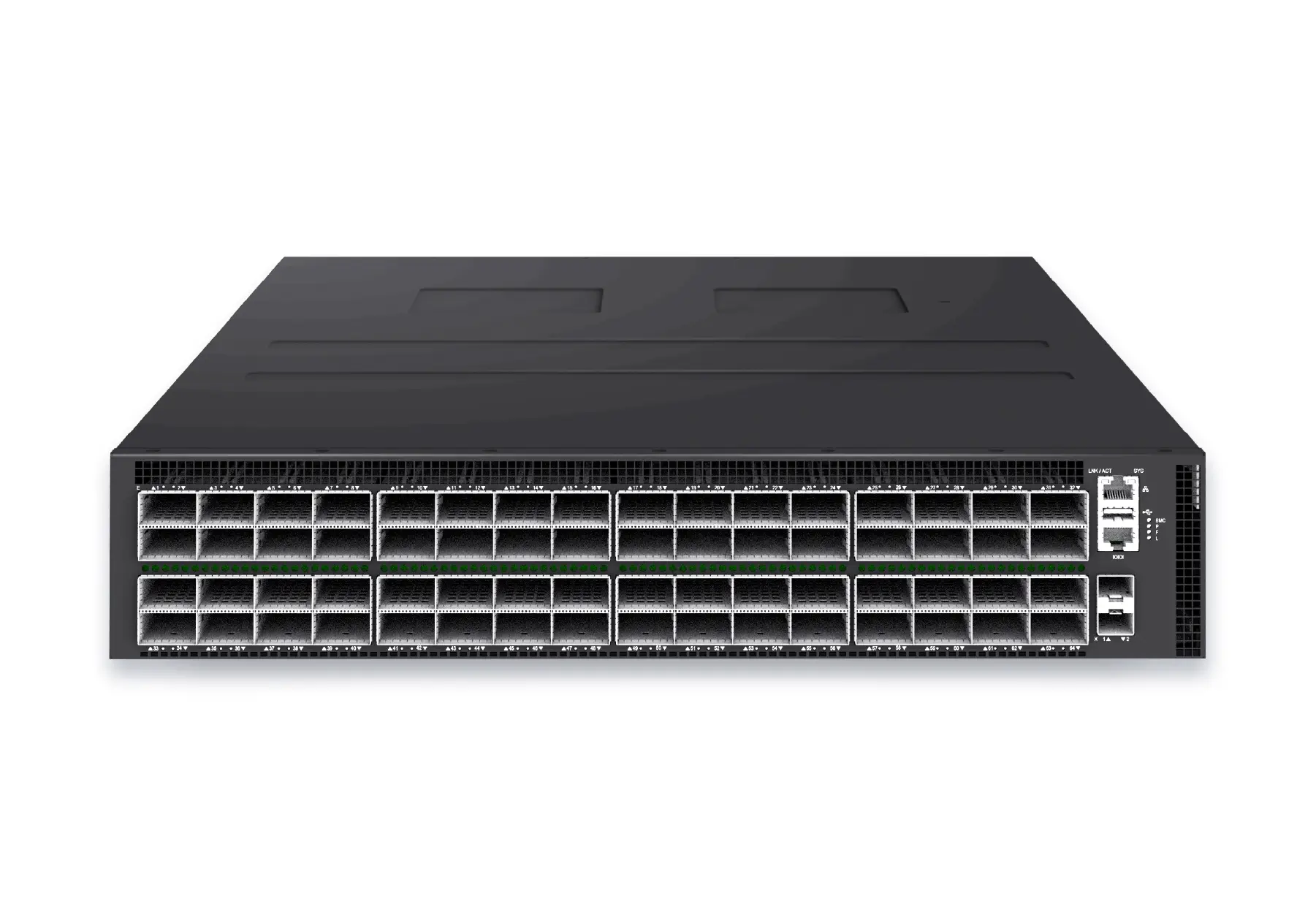 datacenter aiXS-DC-64X800-AI-G164-port 800G AI fabric switch for large-scale GPU clusters, HPC backbones, and ultra-high-throughput data center networks.View product
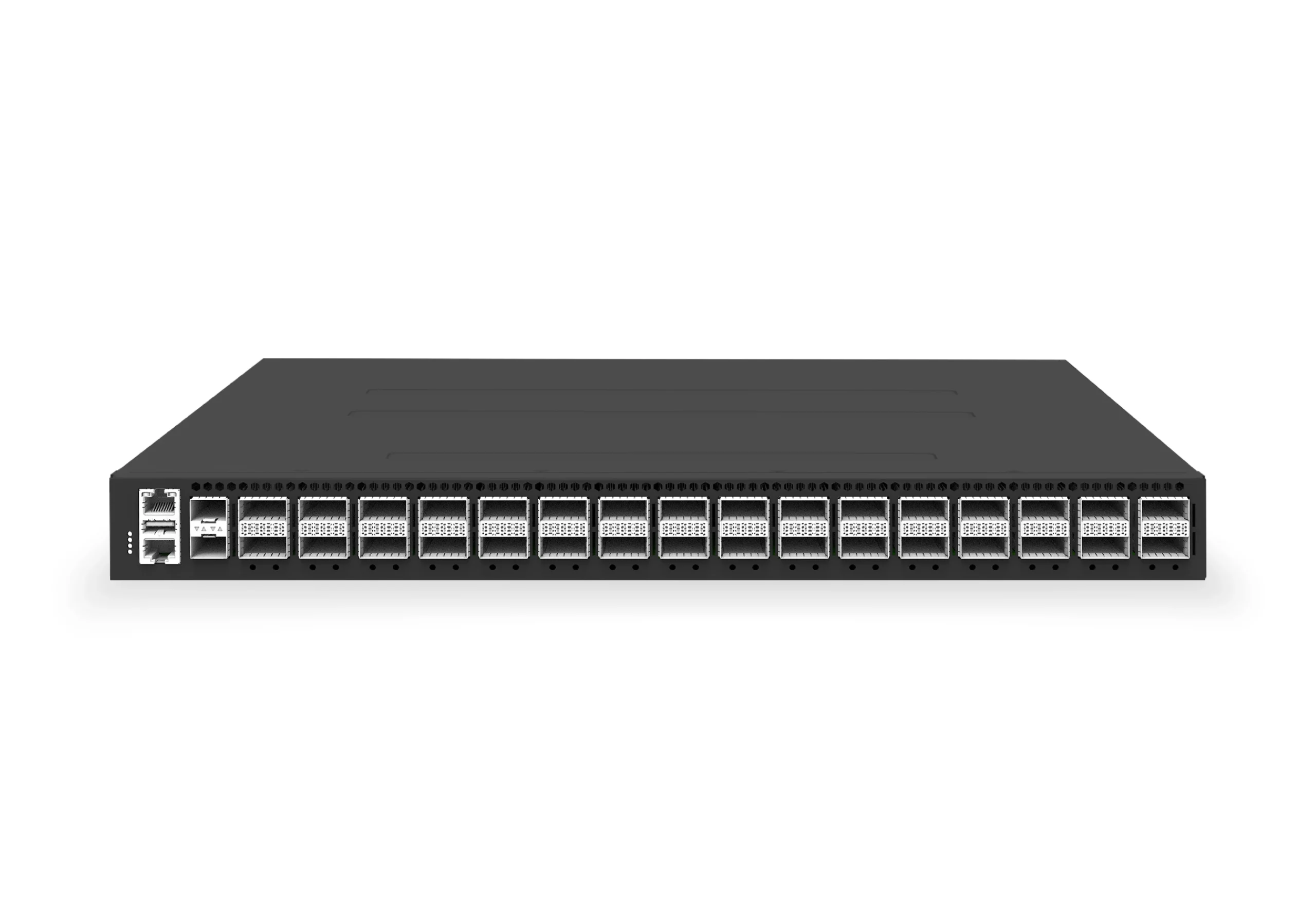 datacenter aiXS-DC-32X400-SP-G232-port 400G spine/core switch for high-capacity data center fabrics and AI-ready backbones.View product
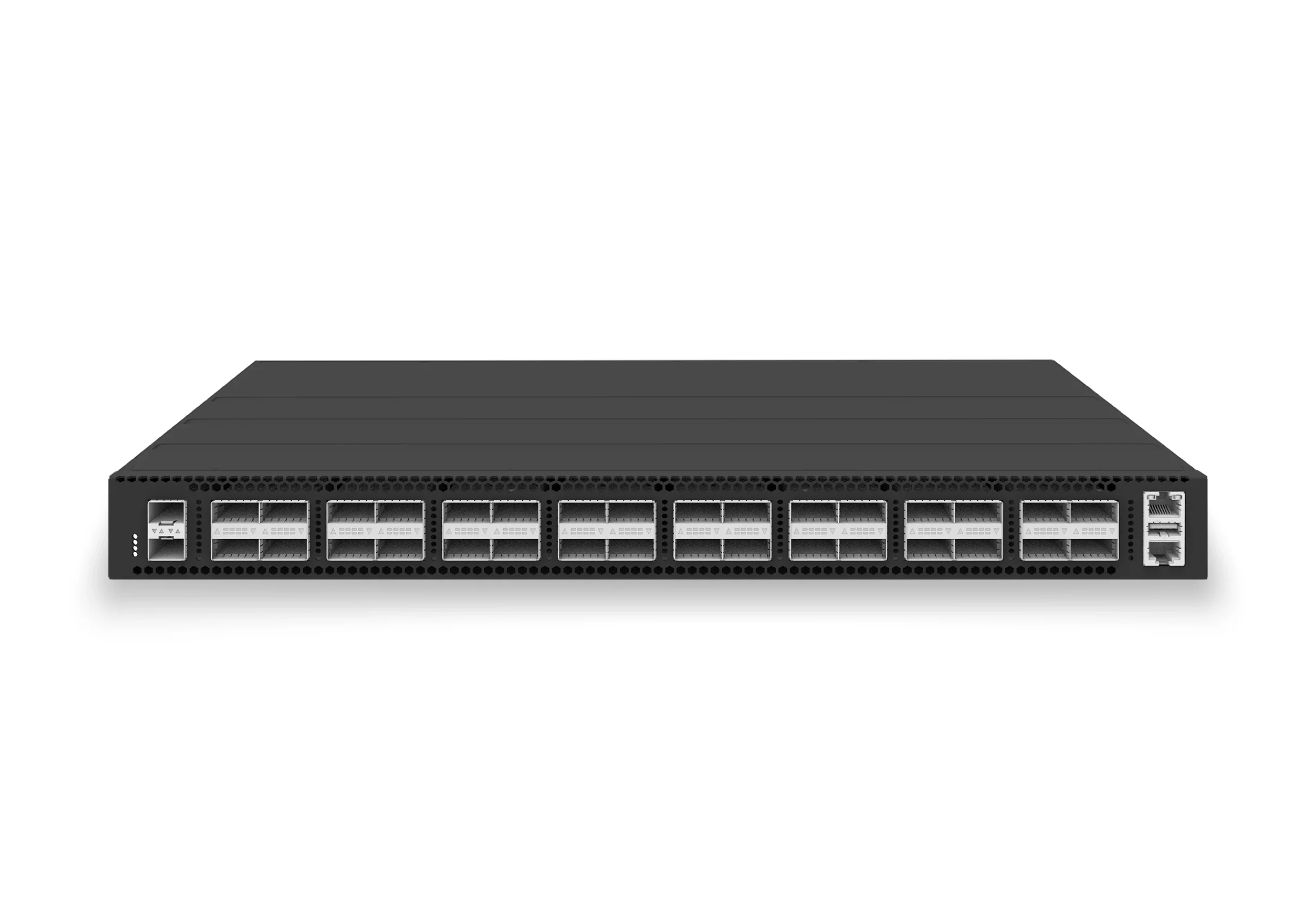 datacenter aiXS-DC-32X100-LS-G232-port 100G leaf/spine switch for VXLAN fabrics, RoCE-ready workloads, and tenant-scale routing.View product
Continue reading
Related articles
 Technical ArticlePacket Broker Use Cases for Network Visibility and Observability: A Practical Guide for Australian EnterprisesEngineering use cases for packet brokers in observability, performance troubleshooting, AI fabrics, compliance capture, and multi-tool delivery.Read article
 Technical ArticleWhy AI Data Centers Need In-Band Network Telemetry -- And Where Open SONiC FitsINT and path telemetry guide for AI fabric observability, covering SONiC support, RoCE congestion, telemetry pipelines, and buyer risk.Read article
 Technical ArticleINT Telemetry and Path Visibility: Why AI Data Centers Need Hop-by-Hop Insight on SONiC FabricsEngineering guide to INT telemetry and path visibility for AI data centers, covering hop latency, queue depth, RoCE, packet brokers, and SONiC.Read article