In brief
Engineering guide for packet broker and visibility planning covering traffic capacity, filtering, tool delivery, resilience, and audit evidence.
Key takeaways
- Australian enterprise and data center network architects face a deceptively simple question when building security visibility layers: should the program rely on passive network TAP aggregation, or invest in a packet broker platform?
- The question sounds like a procurement checkbox. In practice, it is an architectural decision with direct consequences for threat detection uptime, compliance posture, operational complexity, and long-term cost.
- This analysis breaks down the failure-mode profiles of each approach, drawing on OCP and SONiC ecosystem context, and frames the decision for Australian programs where data sovereignty, APRA CPS 234, and critical infrastructure obligations raise the stakes.
Why the Visibility Architecture Decision Matters More Than Most Buyers Realise
Australian enterprise and data center network architects face a deceptively simple question when building security visibility layers: should the program rely on passive network TAP aggregation, or invest in a packet broker platform?
The question sounds like a procurement checkbox. In practice, it is an architectural decision with direct consequences for threat detection uptime, compliance posture, operational complexity, and long-term cost. The wrong choice does not fail on day one. It fails under load, during an incident, or when the security stack needs to scale faster than the network team can re-cable.
This analysis breaks down the failure-mode profiles of each approach, drawing on OCP and SONiC ecosystem context, and frames the decision for Australian programs where data sovereignty, APRA CPS 234, and critical infrastructure obligations raise the stakes.
What a Passive Network TAP Aggregation Stack Actually Delivers
A passive network TAP (Test Access Point) copies traffic at the physical layer. Optical or copper TAPs sit inline and mirror a full-duplex link to one or more monitoring ports without introducing latency or altering packet flow. For a small number of monitored links, TAPs are simple, deterministic, and well-understood.
The aggregation step comes when an organisation connects multiple TAP outputs to a basic aggregation switch or matrix to feed security tools such as intrusion detection systems (IDS), network detection and response (NDR), packet capture, or SIEM packet forwarders.
For a handful of links, this works. For dozens or hundreds of monitored segments, the architecture starts to strain.
Where TAP Aggregation Fails: The Hidden Risk Profile
The failure modes of passive TAP aggregation are not dramatic. They are quiet, compounding, and often invisible until an incident exposes them.
Physical Layer Fragility
Every TAP is a passive optical or electrical splitter. Each split introduces signal loss. Over a multi-hop TAP and aggregation chain, optical budget can be exhausted, especially on longer fibre runs common in Australian campus and metro DC interconnects. A degraded optical link does not generate a clear alarm in many TAP platforms. It produces intermittent packet loss that degrades IDS signature matching and NDR behavioural analysis without triggering a tool-level alert.
No Filtering, No Deduplication, No Load Balancing
Passive TAP aggregation forwards every packet on every monitored link to the attached tool ports. There is no mechanism to filter irrelevant traffic, deduplicate mirrored frames from overlapping TAP placements, or balance load across multiple tool instances. In high-throughput environments — particularly as Australian DC programs scale toward 100G and 400G spine-leaf fabrics for AI workloads — the volume of unfiltered traffic can overwhelm tool ingestion capacity. The result is silent packet drops at the tool NIC, which means the security team sees partial data without knowing it is partial.
Management Blindness at Scale
Passive TAPs have no management plane. There is no centralised visibility into which TAPs are active, which ports are passing traffic, or whether a TAP has been physically disconnected during a rack move or maintenance window. In a multi-site Australian enterprise with DC, campus, and branch segments, the TAP fleet becomes an unmanaged asset. When an incident occurs, the security operations centre (SOC) must first determine whether the relevant TAPs are even operational before it can investigate the event.
Single Points of Failure in Aggregation Layers
Many TAP aggregation deployments use a commodity switch to combine TAP outputs. If that switch fails, reboots for a firmware update, or hits a forwarding ASIC bug, all attached monitoring tools lose visibility simultaneously. There is no failover path. The switch is not designed for high-availability visibility operations.
What a Packet Broker Platform Adds
A packet broker — sometimes called a network packet broker (NPB) — is purpose-built for the visibility layer. It sits between the network TAP or SPAN source and the security or monitoring tools. Unlike a passive aggregation switch, a packet broker provides:
- Traffic filtering at L2-L4, so tools receive only relevant flows
- Deduplication to remove redundant copies from overlapping TAP placements
- Load balancing across multiple tool ports or tool instances
- Packet slicing to strip payload when only header analysis is needed
- Tunnel processing to decapsulate GRE, VXLAN, or ERSPAN before tool ingestion
- Replication to send the same filtered flow to multiple tools simultaneously
- Centralised management with visibility into every port, every filter, and every drop
These capabilities directly address the failure modes of passive TAP aggregation. Filtering prevents tool overload. Deduplication restores signal-to-noise ratio. Load balancing extends tool lifespan. Centralised management gives the SOC confidence that the visibility layer is operational.
Packet Broker Failure Modes: A Different Risk Profile
Packet brokers are not risk-free. Network architects should evaluate:
- Active component dependency: Packet brokers are active devices with CPUs, firmware, and configuration state. A firmware bug or misconfigured filter can drop or misdirect traffic. Change management discipline is required.
- Cost and complexity: Purpose-built packet broker appliances carry higher per-port cost than passive TAPs and commodity aggregation switches. The operational benefit must justify the spend.
- Vendor lock-in risk: Proprietary packet broker platforms may use closed APIs and non-portable filter syntax. Open or SONiC-aligned packet broker platforms reduce this risk by leveraging standard Linux interfaces and programmable data planes.
- Oversubscription traps: If the aggregate input bandwidth exceeds the packet broker backplane capacity, internal oversubscription causes silent drops. Sizing must account for peak burst, not average throughput.
The key distinction is that packet broker failure modes are observable, manageable, and auditable. Passive TAP aggregation failure modes are often invisible until they degrade an investigation or compliance audit.
The Australian Context: Why the Stakes Are Higher
Australian enterprise and data centre programs operate under specific obligations that make visibility architecture decisions more consequential than in less regulated markets.
APRA CPS 234 requires regulated entities to maintain information security capability commensurate with the size and extent of threats. Silent gaps in network visibility undermine the evidentiary basis for CPS 234 compliance.
Critical Infrastructure legislation (Security of Critical Infrastructure Act 2018, as amended) imposes risk management obligations on operators of critical infrastructure assets, including data centres and telecommunications networks. A visibility architecture that cannot demonstrate operational integrity under audit is a liability.
Data sovereignty requirements mean Australian programs cannot simply mirror traffic to offshore analytics platforms as a workaround for poor on-premises visibility. The packet broker or TAP layer must support local tool deployment with full traffic fidelity.
The OCP Podcast episode featuring David Hirst, CEO of Macquarie Data Centres (January 2026), highlighted that Australian DC operators are designing for AI-era workloads with sovereign compliance as a first-order constraint. Visibility architectures must keep pace with these designs.
Decision Framework for Network Architects
The following criteria help Australian network architects evaluate which approach fits their program:
| Criterion | Passive TAP Aggregation | Packet Broker Platform |
|---|---|---|
| Monitored links under 12 | Low risk, low cost | Optional, adds filtering value |
| Monitored links over 24 | Management blindness, tool overload risk | Centralised control, filtering, dedup |
| 100G/400G fabric segments | Optical budget and oversubscription risk | Purpose-built for high-throughput ingestion |
| Multi-tool security stack | Replication requires physical cabling changes | Software-defined replication and load balancing |
| VXLAN/GRE tunnel overlay | Tools must handle encapsulated traffic natively | Broker decapsulates before tool delivery |
| Compliance audit requirement | No centralised evidence of visibility integrity | Port-level status, filter logs, and drop counters |
| Open networking alignment | No NOS or API integration | SONiC-compatible broker platforms support NETCONF/YANG programmability |
What This Means for xSONiC Packet Broker Evaluation
xSONiC packet broker platforms are designed for the visibility layer of enterprise and data center networks. For Australian programs evaluating security visibility architectures, the packet broker value proposition is strongest when:
- The monitored fabric exceeds a dozen segments
- Security tools must receive filtered, deduplicated traffic
- VXLAN or GRE tunnel overlays are in use
- Compliance evidence for APRA CPS 234 or SOCI Act obligations is required
- The program is building on open networking infrastructure where SONiC compatibility and programmable management reduce vendor lock-in risk
Editorial Position: TAPs Are Not Enough at Scale
The industry default of deploying passive TAPs and hoping the aggregation layer holds is a bet against failure-mode complexity. For small, static environments, the bet may hold. For Australian enterprise and data center programs scaling into AI-era fabric densities, compliance obligations, and multi-tool security stacks, the bet is increasingly dangerous.
Packet broker platforms are not a luxury. They are the operational backbone of a defensible visibility architecture. The risk of not deploying one is not that the network fails. It is that the SOC does not know the network has failed until it is too late.
Engineering FAQ
What should be measured before sizing a packet broker? Measure source link speed, 95th-percentile utilisation, burst peaks, replication factor, filter complexity, tunnel handling needs, and tool-port capacity. Packet broker sizing fails when it is based on average traffic rather than copied and filtered traffic.
What proves that a visibility design is production ready? The design should prove aggregation, filtering, replication, load balancing, packet slicing or deduplication if required, and tool failover under realistic traffic. Security teams should also verify that drops are reported rather than hidden.
Where do Australian buyers most often under-scope visibility projects? The common gaps are east-west data centre traffic, encrypted or tunneled flows, AI cluster bursts, retention requirements, and tool oversubscription. A procurement brief should model those before asking vendors for a bill of materials.
Related xSONiC Resources
Sources Reviewed
- Ethernet Network Adapters - ConnectX NICs | NVIDIA
- NVIDIA BlueField Data Processing Unit
- NVIDIA Spectrum-X Ethernet Platform
- OpenConfig gNMI Specification
- OpenConfig
- RFC 7950 - The YANG 1.1 Data Modeling Language
- RFC 6241 - Network Configuration Protocol (NETCONF)
- ACSC Essential Eight
- OAIC Notifiable Data Breaches
- APRA CPS 234 Information Security
- NETSCOUT Network Packet Definition
- Cloudflare Network Packet Definition
- SONiC Project Documentation
- Broadcom Ethernet Switching
- Marvell Switching
- NVIDIA Ethernet Switching
- Open Compute Networking
- SONiC GitHub
- SONiC Foundation
Product fit
Products referenced for evaluation
These products are referenced for evaluation context in the article. Confirm workload, port, optics, software, interoperability, and support requirements against the exact deployment before procurement.
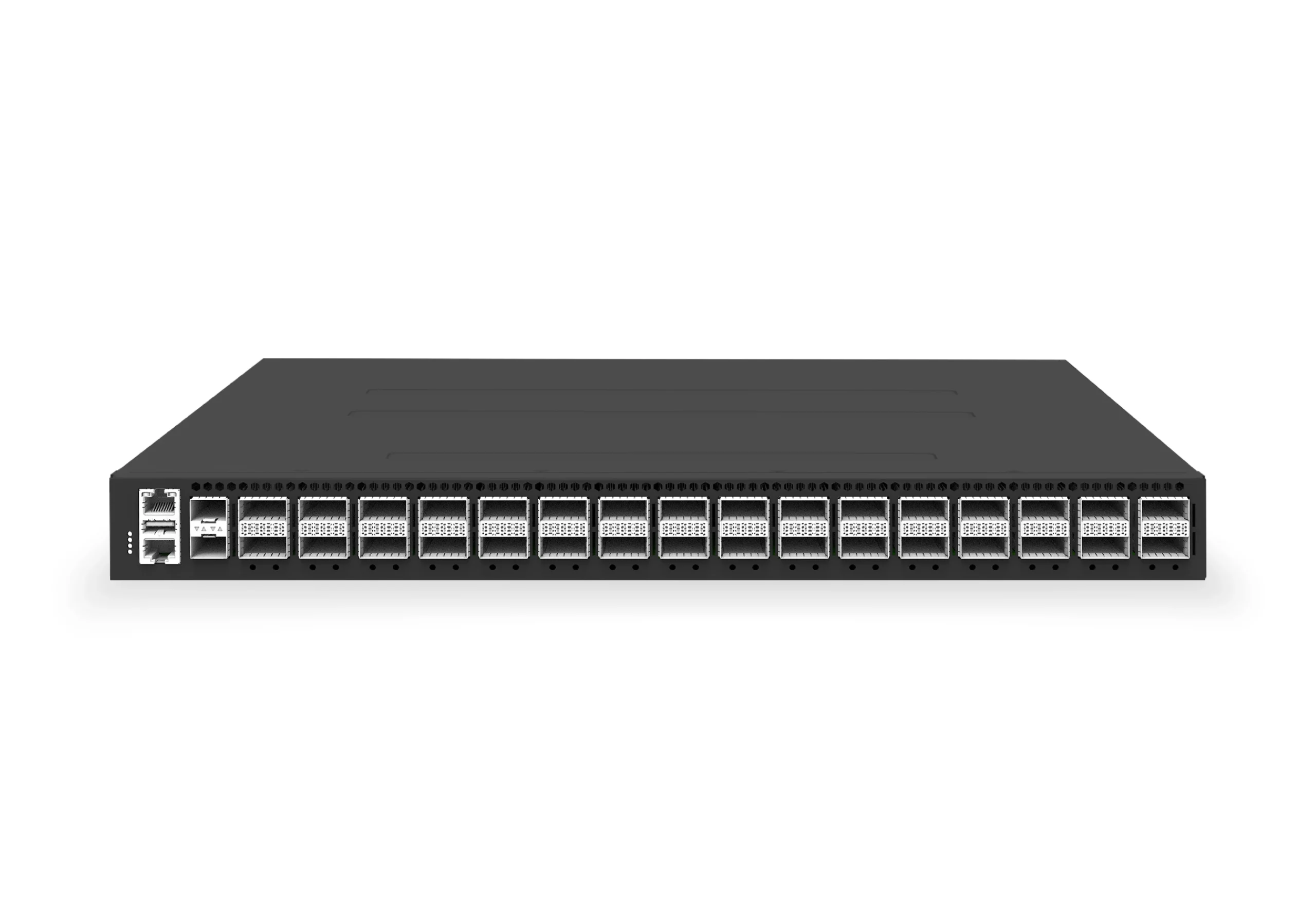 datacenter aiXS-DC-32X400-SP-G232-port 400G spine/core switch for high-capacity data center fabrics and AI-ready backbones.View product
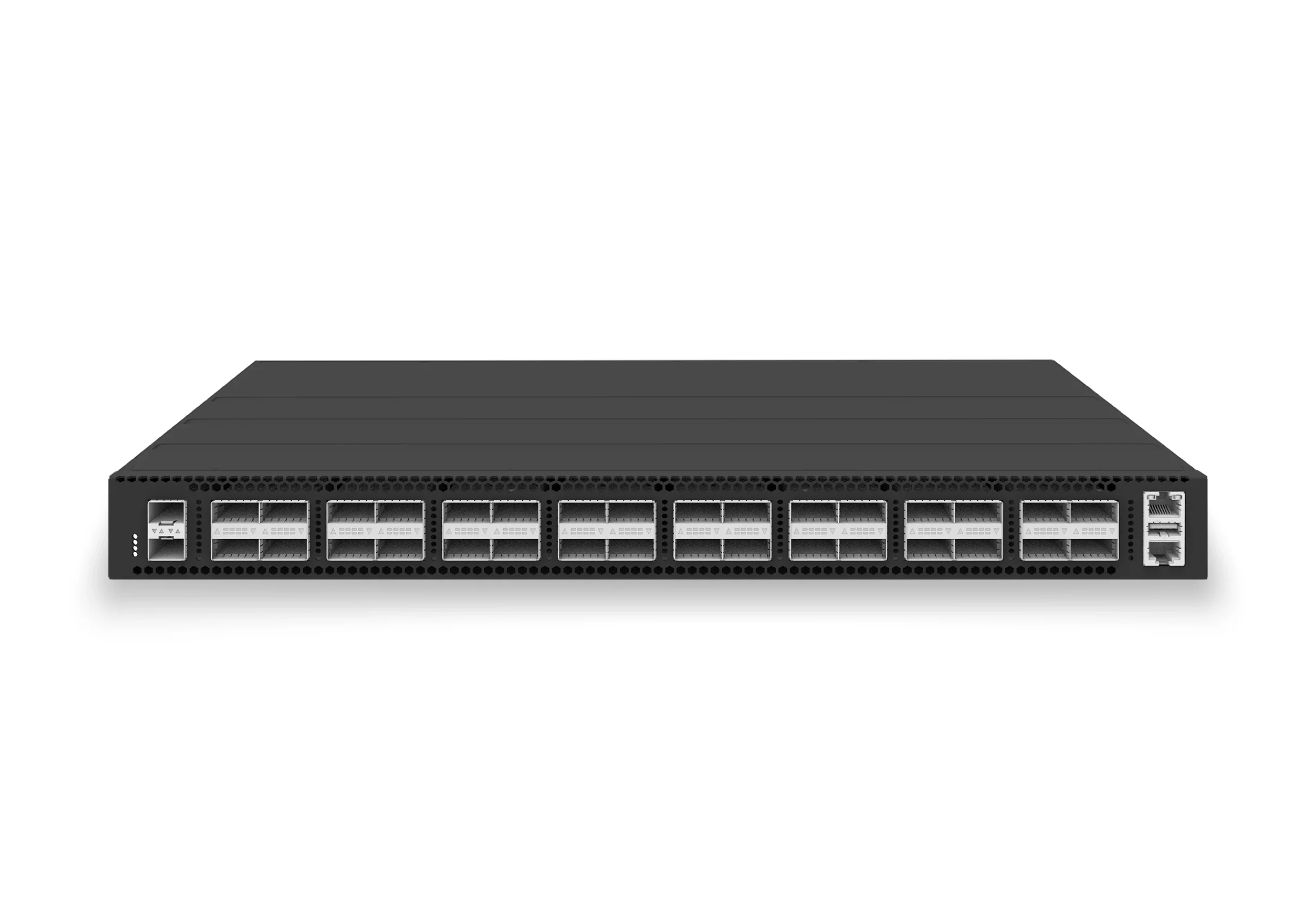 datacenter aiXS-DC-32X100-LS-G232-port 100G leaf/spine switch for VXLAN fabrics, RoCE-ready workloads, and tenant-scale routing.View product
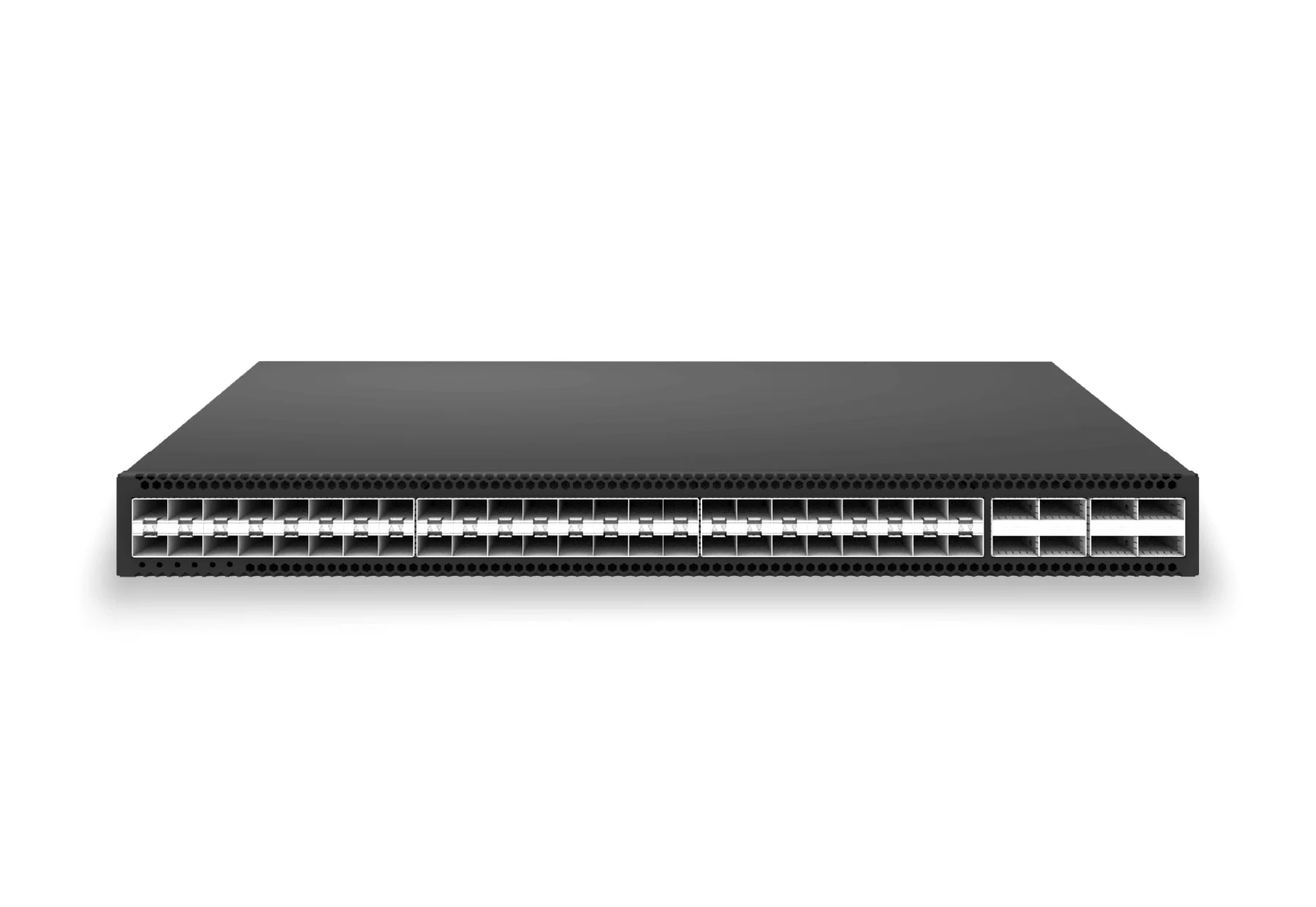 access aggregateXS-AA-48X25-8X100-AGG48x 25G SFP28 aggregation/core switch with 8x 100G QSFP28 for enterprise access and aggregation networks.View product
Continue reading
Related articles
 Technical ArticleHow Packet Brokers Filter, Replicate and Load-Balance TrafficEngineering guide for packet broker and visibility planning covering traffic capacity, filtering, tool delivery, resilience, and audit evidence.Read article
 Technical ArticleNetwork Packet Broker Deployment Playbook for Australian Enterprise NetworksA practical engineering guide for Australian network architects and security teams deploying packet brokers for TAP/SPAN aggregation, filtering, tunnel handling, and tool delivery.Read article
 Technical ArticleClosing the Packet Broker Visibility Gap: A Practical Analysis for Security and Observability TeamsA practical engineering analysis of where packet visibility gaps form, how packet brokers reduce them, and what Australian security teams should validate before deployment.Read article